
REVIEW · TRABI & VINTAGE CAR TOURS
Berlin: 75-minute Trabi Safari
The Trabant turns Berlin into a rideable time machine. In this 75-minute Trabi Safari, you drive an icon of the GDR era past major landmarks with live radio help, plus you finish with an official-style Trabi driver’s license.
I especially like the way it blends car culture with city orientation: you come away understanding Berlin’s layout fast, without doing a long walking slog. Another highlight for me is the classic DDR-style route, including areas tied to the Berlin Wall and the East Side Gallery.
There’s one thing to consider first: this is an old-school machine with quirks. If you hate loud engines, manual driving stress, or tight real-car seating, you may feel more anxious than amused—though the guides set you up to succeed.
In This Review
- Key highlights
- Berlin from the Driver’s Seat: Why a Trabi Safari Works
- Where It Starts: TrabiWorld Meeting Point and Your First Minutes
- The Drive Itself: Learning the Trabant Without Getting Stressed
- Driver swap (if you’re sharing)
- Staying Together in a Convoy: The System That Prevents Chaos
- Route Highlights: From Potsdamer Platz to Checkpoint Charlie
- Potsdamer Platz: Where Modern Berlin Shows Up Fast
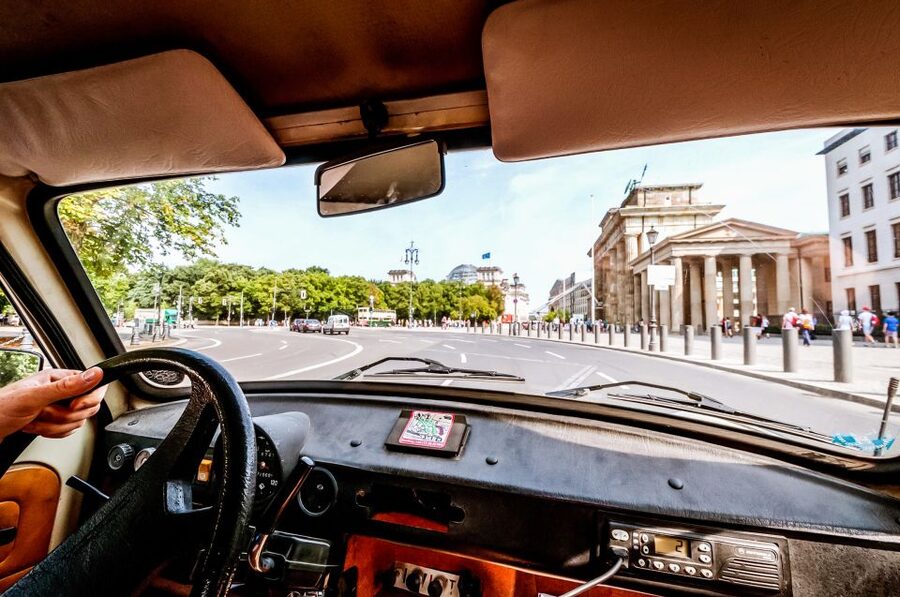
- Brandenburg Gate: A Landmark You Can Actually Feel
- Unter den Linden and the Berlin Cathedral Area: Classic Berlin Streets
- Red City Hall and the TV Tower: Power Symbols, Up Close
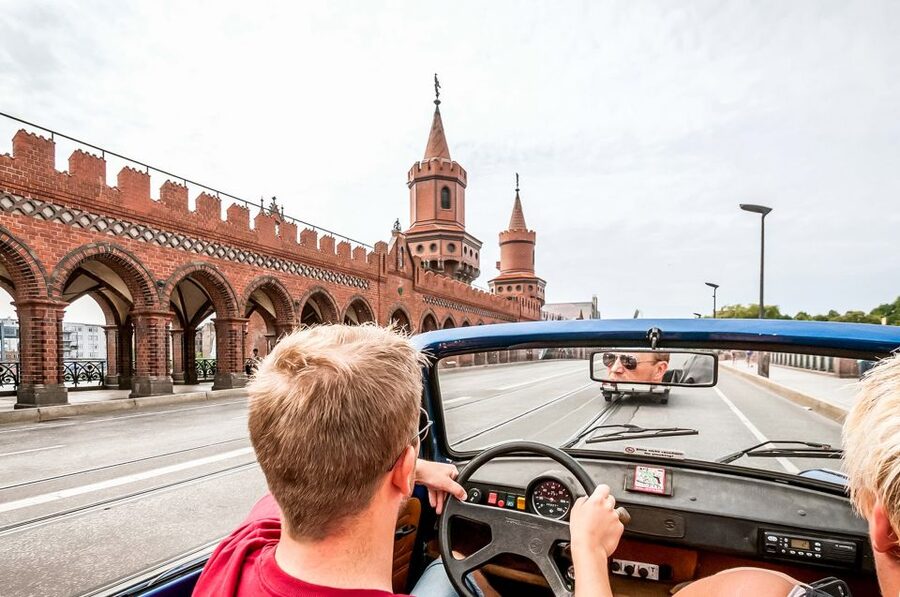
- East Side Gallery and Oberbaum Bridge: The DDR Feeling Peaks
- Checkpoint Charlie: The End-Credit Landmark
- What You Actually Get for the Price: Value Beyond the Novelty
- About that “premium for novelty”
- Guides Matter: Humor, Patience, and Real Car-Carrying Confidence
- Who Should Book It (and Who Might Want a Backup Plan)
- Physical fit and seating
- Best Times to Do It: Use 75 Minutes Like a First-Day Tool
- Pairing Idea: Trabi Museum at Trabi World
- Should You Book the Berlin 75-Minute Trabi Safari?
- FAQ
- What’s included in the Trabi Safari?
- How long is the tour?
- Where do I meet the tour?
- Do I need to share a car with other participants?
- What do I need to drive?
- What landmarks does the route include?
Key highlights
- Trabi driver’s license handed out to every new driver as a souvenir
- Live radio commentary in each car, so you get the story without craning your neck
- East and West Berlin landmarks in one compact loop, including Brandenburg Gate and the Berlin Wall area
- Convoy driving support, with a guide at the front to keep cars together
- Two-stroke and manual gearbox intro before you hit the streets
More Berlin from behind the wheel of a Trabi
- Berlin: Sightseeing Tour in Classic Volkswagen T1 Samba Bus★ 4.9 · 993 reviews
- Berlin Self-Drive Trabi Tour with Guide★ 4.5 · 410 reviews
- Berlin City Tour in a Mini Hotrod★ 4.5 · 283 reviews
- Berlin: City Sightseeing Tour in a Unique BedBike★ 5.0 · 280 reviews
Berlin from the Driver’s Seat: Why a Trabi Safari Works
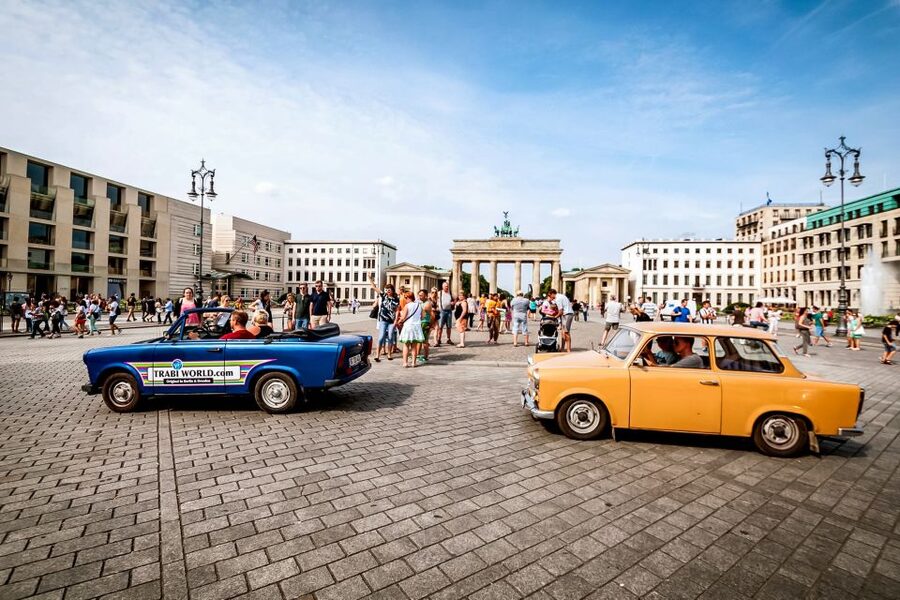
There’s a reason people get hooked: you’re not just watching Berlin from the sidewalk. You’re driving a Trabant, a car that instantly makes you part of the scene. And because it’s a guided convoy, you get the fun without feeling lost.
What makes this experience especially good is the mix of perspective and pacing. You cover big sights in a short time, and the radio commentary keeps the meaning of each place clear while you’re focused on driving.
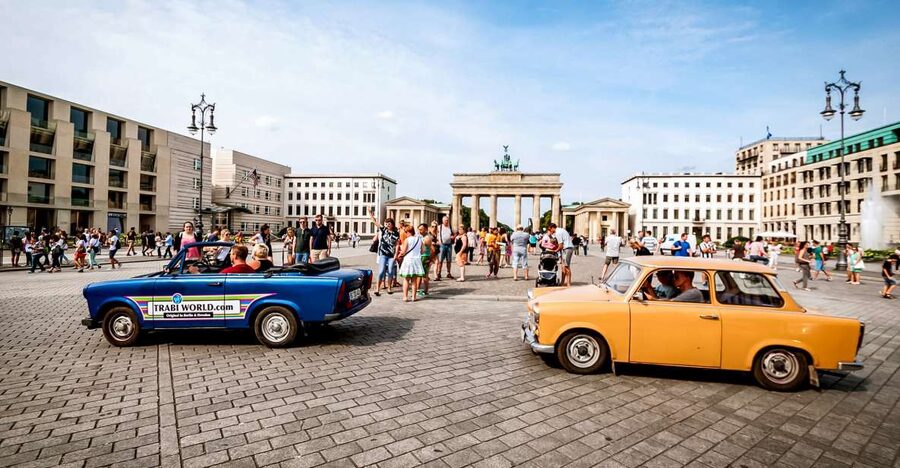
And yes, you’ll be photographed. You’ll see people point cameras your way, and that’s part of the experience. The car is quirky enough to feel like Berlin theatre—without needing tickets to anything.
One practical upside: if walking is tough for you, this gives you movement, street-level views, and landmark context without the long routes. Just remember you still need to be fit to drive if you’re going behind the wheel.
Where It Starts: TrabiWorld Meeting Point and Your First Minutes
You meet at TrabiWorld, Zimmerstraße 97–100 at the corner of Wilhelmstraße. This matters because it’s simple to find and easy to anchor your day around. You’re not hopping between transfer points or guessing where the group is gathering.
Before you drive, there’s an intro that focuses on two things: the two-stroke engine basics and the manual gearbox. They also provide technical instruction, so you’re not guessing how to operate an unfamiliar machine once you’re moving through real traffic.
For you, the key is mindset. This isn’t a calm, modern rental-car experience. You’re learning a classic setup where feel matters—clutch control, shifting rhythm, and handling on city surfaces.
Also note the practical vehicle rule: each booking has your own personal car and won’t be shared with other people. You’ll still ride in the same broader convoy as other Trabis, but your group stays together in your car.
The Drive Itself: Learning the Trabant Without Getting Stressed
If you’ve never driven a column stick shift or a left-hand-drive setup, the start can feel a little awkward. That’s normal. Reviews repeatedly mention how quickly people adapt once they’re rolling and the instructors guide them through it.
The good part is that you’re not left alone to figure it out. You’re in a group setting with a guide at the beginning of the convoy, plus live radio commentary in each car. That radio help is more than entertainment—it keeps you confident about what’s next and reduces the mental load while you focus on the road.
Driving a Trabant in Berlin also changes how you experience the city. Cobblestones and tight corners can make the car feel more intense than you expected. But that intensity is the point: it turns famous streets into a living memory lesson.
Driver swap (if you’re sharing)
If you have two adults in your car, there’s often a chance to switch drivers during the route. Several people describe a swap point about halfway, so both of you can get behind the wheel. Still, if driver rotation matters for your plan, ask when you arrive so you can coordinate in your group.





Staying Together in a Convoy: The System That Prevents Chaos
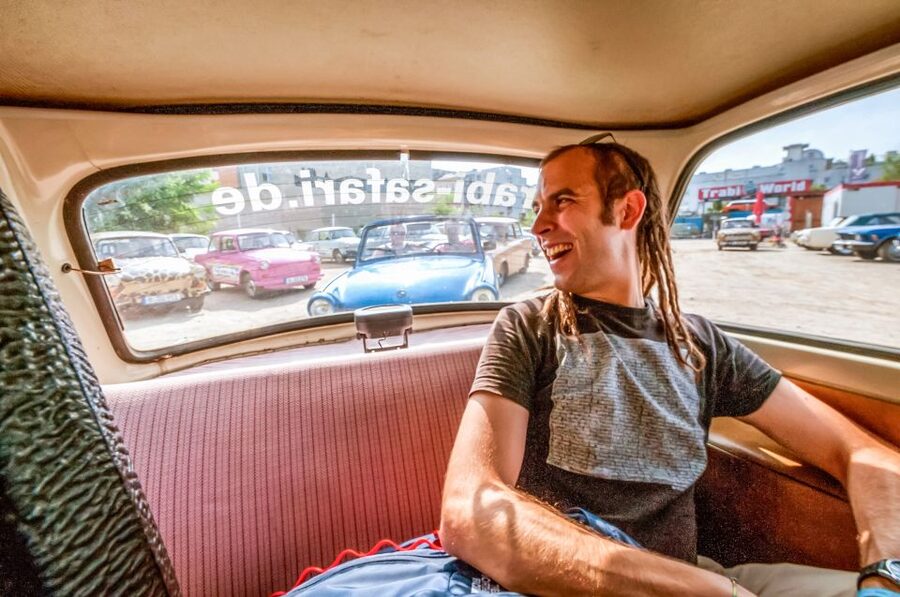
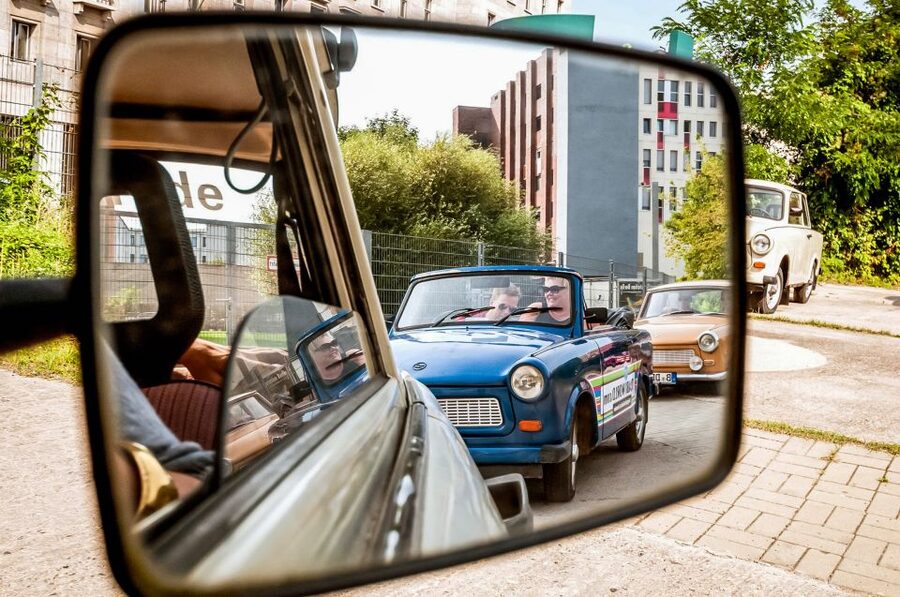
A convoy can sound messy—cars stretching out, signals separating you, and everyone worrying they’ll get separated. The setup here is designed to avoid that.
You’ll have:
- a guide at the beginning of the convoy
- radio communication in each car
- convoy timing that accounts for traffic lights and city delays
In real traffic, lights can split cars. What you’ll appreciate is that the convoy management is built for regrouping. People report never feeling like they were truly lost, because the system keeps vehicles from vanishing down side streets.
There’s also a small but real confidence boost: the guides help with safety and pacing so you don’t feel pressured. Several write-ups describe guides staying upbeat, funny, and attentive—especially when the road or the car feels a bit challenging.
And if you’re the kind of person who likes to know what’s happening, the radio commentary helps you stay oriented. You’re hearing what you’re passing right now, rather than trying to read signs while concentrating on driving.
Route Highlights: From Potsdamer Platz to Checkpoint Charlie
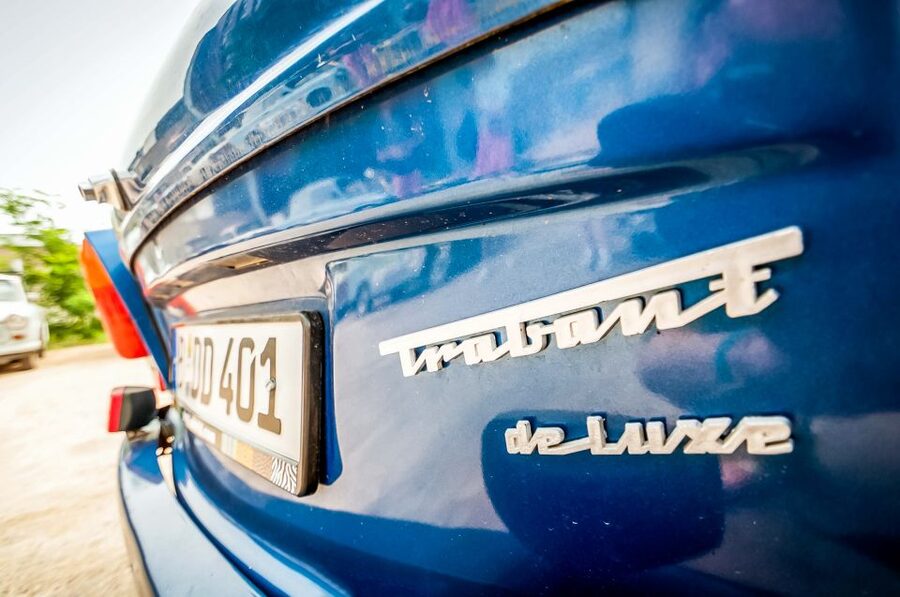
This is a short tour, so you’re not stopping long at every stop. You’re passing key landmarks at driving speed, which is perfect for first-time orientation. You get the visual hits plus enough context to understand why each place mattered.
Here are the standout sights you’ll drive by, and why they’re worth it from the driver’s seat:
Potsdamer Platz: Where Modern Berlin Shows Up Fast
You start with a major hub like Potsdamer Platz, which gives you an immediate sense of how Berlin mixes eras in one place. Coming in a Trabant makes the contrast even sharper: old car, modern city center energy.
This is also a good early warm-up moment. You’re still building comfort with the car, and a central area helps you focus on the driving rhythm before you hit the more emotionally charged parts of the route.
Brandenburg Gate: A Landmark You Can Actually Feel
Seeing the Brandenburg Gate from a vehicle is different than looking at it on foot. The scale stays obvious, but the experience becomes more about movement—how the city funnels you past one of its most iconic symbols.
Expect lots of cameras. The Trabant look turns the gate into a photo moment, but it also makes the street feel cinematic, like you’re part of a living postcard.
Unter den Linden and the Berlin Cathedral Area: Classic Berlin Streets
Driving along Unter den Linden is one of those moments that tells you this city has a clear “big-street” identity. From the Trabant, the street rhythm feels slower and more personal—less like a tourist loop, more like you’re moving through an important corridor.
You’ll also pass the area around Berlin Cathedral and get a sense of how the city’s monumental spaces align.
A small practical note: driving these areas means you’re moving in dense traffic. That’s where the radio commentary and convoy pacing help keep you calm and steady.
Red City Hall and the TV Tower: Power Symbols, Up Close
Passing the Rotes Rathaus (Red City Hall) and the TV Tower gives you quick landmarks that anchor modern Berlin’s civic and skyline identity. From inside a Trabant, you notice details you might miss on a walking route—building edges, street widths, and how view lines open and close as you drive.
This is also one of the reasons the 75 minutes feels “worth it.” You don’t leave wondering if you saw the essentials—you just pass them.
East Side Gallery and Oberbaum Bridge: The DDR Feeling Peaks
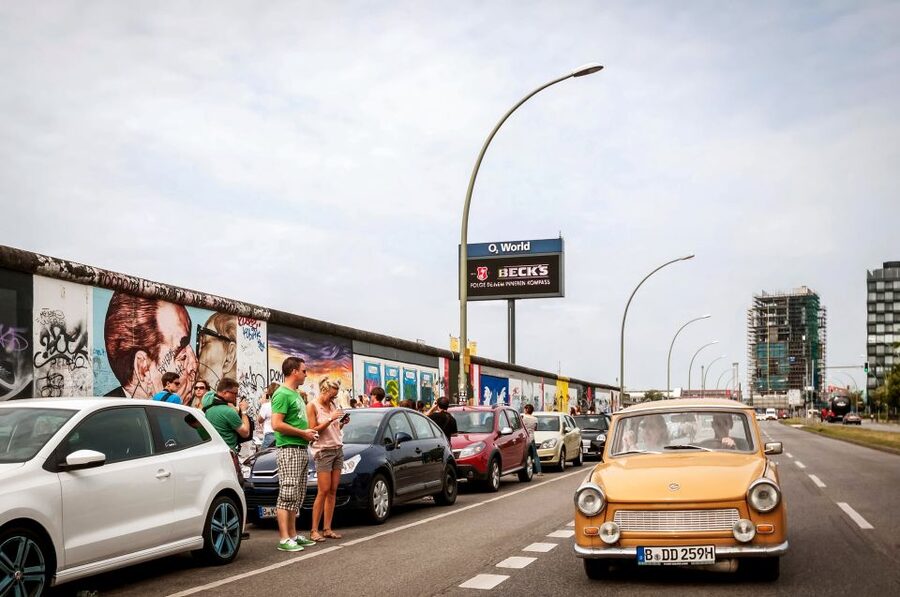
The route’s emotional center hits around the East Side Gallery. This is where the Trabant perspective really clicks, because you’re driving through a city section that still communicates the past in clear visual ways.
Then comes Oberbaum Bridge, which is a real contrast moment: the bridge structure and river crossing feel dramatic from road level. You’ll get a strong sense of geography here—where Berlin’s boundaries feel more physical.
Multiple people highlight that this part of the loop makes the whole trip feel like something from the DDR era, not just an imitation.
Checkpoint Charlie: The End-Credit Landmark
Finishing with Checkpoint Charlie lands the tour with a heavyweight historical stop. Again, you’re not doing a long visit; you’re passing it with context, which is ideal when you only have 1.5 hours.
It’s a good finish because it helps you connect the route into a story: city core, symbols of the state, and the border-era atmosphere.
What You Actually Get for the Price: Value Beyond the Novelty
At $93 per person for 75 minutes, you’re paying for more than the idea of driving a Trabant. The value is that the package supports you before and during the drive.
Here’s what’s included that makes the cost feel more reasonable:
- Technical instruction before you go
- a guide at the start of the convoy
- live radio commentary in each car
- free miles and gas
- a Trabi driver’s license for every new driver
- 3rd-party vehicle damage insurance with an 850 EUR deductible
That last part is the one many people appreciate after they consider what it means to drive an old vehicle in city traffic. The deductible is there, but the insurance coverage is still a major part of the “you’re not on your own” feeling.
Also, your time is tight in a good way. Many Berlin activities either take a half day or require lots of walking. This gives you concentrated landmark exposure plus a hands-on activity.
About that “premium for novelty”
Yes, the novelty factor is real. But the reason people keep rating it so highly is that the novelty is layered on top of actual city context delivered while you drive. You’re not just playing tourist by riding in a themed car. You’re learning the route and seeing the landmarks in order.
If you want Berlin history as a slow museum crawl, this isn’t that. If you want a memorable, street-level orientation with a DDR-style twist, it often lands perfectly.
Guides Matter: Humor, Patience, and Real Car-Carrying Confidence
One of the most praised parts of this Safari is the guide experience. Names that come up again and again include Thomas, Axel, Harold, and Simon. People describe them as funny, supportive, and focused on keeping everyone safe while still making it enjoyable.
That combo matters. When your car feels unfamiliar, you want instruction that’s clear, calm, and practical. When the road feels busy, you need guidance that keeps the convoy moving without panic.
Also, don’t overlook the small service touches. Several write-ups mention the guide taking photos during the ride—usually by key backdrops like the Berlin Wall art area and near Brandenburg Gate. That’s a nice way to get memories without having to stop your own driving attention.
Who Should Book It (and Who Might Want a Backup Plan)
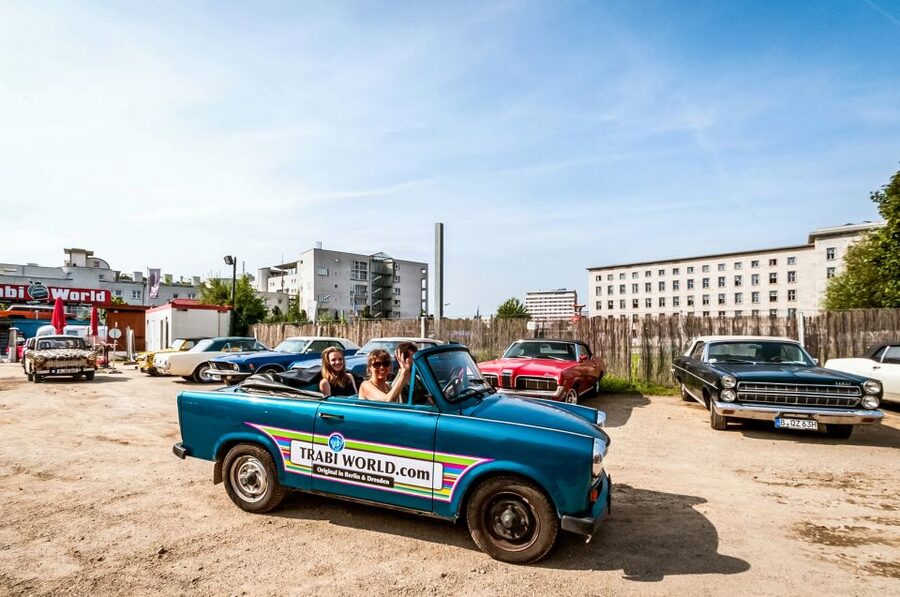
I think this Safari fits best if you:
- want a hands-on way to see Berlin’s main sights
- enjoy quirky vehicles and a DDR-era theme (without needing museums all day)
- like driving and want the challenge in a guided setting
- need an alternative to long walking tours
It may be less ideal if you:
- hate manual driving in dense city traffic
- get very bothered by noise and the feel of a two-stroke-era engine
- expect a smooth modern-car ride (this is a classic, so you’ll feel it)
Physical fit and seating
Because the Trabant was built for a different era, taller riders may find seating tight. Reviews mention the need to stretch and the awkwardness for larger frames. The car is also limited to a maximum of 4 people or 330 kg, so seating and comfort will depend on your group size.
If mobility is a concern, the safest approach is to make sure you’re honest about what you can do before committing. You do need to be fully fit to drive if you’re taking the driver seat.
Best Times to Do It: Use 75 Minutes Like a First-Day Tool
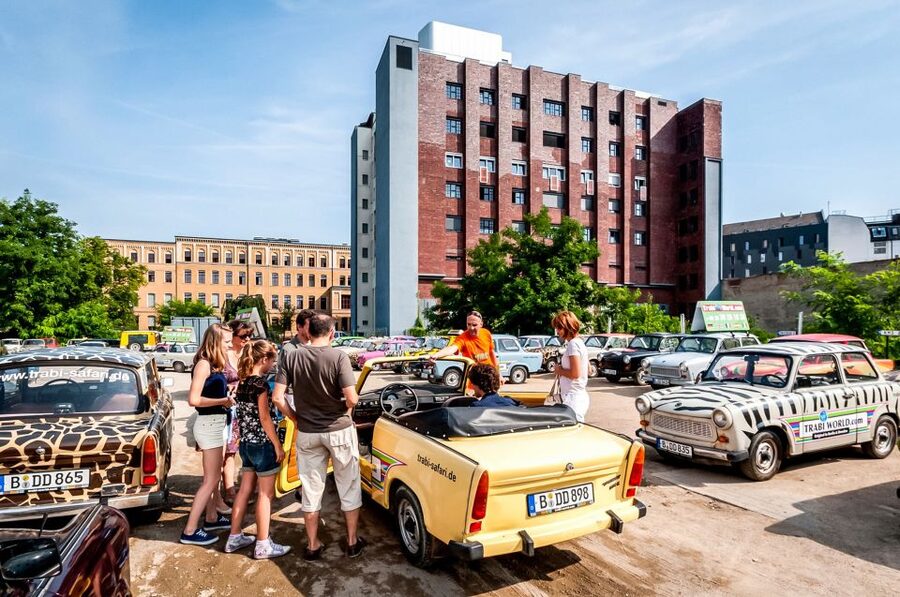
This is one of those activities that works well early in your trip. People often describe it as a way to get their bearings. When you drive past the center and then hit key landmarks tied to Berlin’s divide, you start to understand distances and neighborhoods faster for everything else you plan.
If you can, choose a day with less traffic. One review calls out a Sunday as feeling easier. Even if you can’t control the day, you’ll feel the difference when the convoy has fewer interruptions.
Pairing Idea: Trabi Museum at Trabi World
If you still want more Trabi culture after the drive, you can follow up with the Trabi Museum at Trabi World. It’s a smart pairing because you’ll already have the car context in your head. The museum then helps you translate what you just drove into deeper meaning—without needing another full activity slot.
It’s also convenient since it ties to the same base location.
Should You Book the Berlin 75-Minute Trabi Safari?
If you want one standout, memorable, driving-centered activity in Berlin, I’d book it. The combination is hard to beat: official Trabant experience, live radio guidance, major landmarks like Brandenburg Gate and Checkpoint Charlie, plus the Trabi driver’s license.
I’d especially recommend it for first-time visitors who want quick orientation and for anyone who can’t do long walking days but still wants city views. The price isn’t cheap, but the package includes instruction, gas, and support that turns a novelty idea into a well-run experience.
Book it with open eyes: it’s loud, it’s old, and manual driving quirks are part of the fun. If that sounds like your kind of adventure, you’ll likely leave smiling and already plotting your next photo stop.
FAQ
What’s included in the Trabi Safari?
You get technical instruction, a guide at the beginning of the convoy, live radio commentary in each car, free miles and gas, a Trabi driver’s license for every new driver, and 3rd-party vehicle damage insurance (with an 850 EUR deductible).
How long is the tour?
The tour runs for 75 minutes.
Where do I meet the tour?
You meet at TrabiWorld, Zimmerstraße 97–100, at the corner of Wilhelmstraße.
Do I need to share a car with other participants?
No. Each booking has its own personal car and will not be shared with other people. Other guests may be in other Trabis in the same convoy.
What do I need to drive?
You need a valid driver’s license class B and must be fully fit to drive. The minimum age to drive is 18.
What landmarks does the route include?
The tour passes major sights including Potsdamer Platz, Brandenburg Gate, Unter den Linden, Berlin Cathedral, Rotes Rathaus, the TV Tower, East Side Gallery, Oberbaum Bridge, and Checkpoint Charlie.
More Tour Reviews in Berlin

Berlin in a Trabi


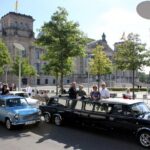

Round out your days in Berlin

Trabi & Vintage Car Tours, compared.
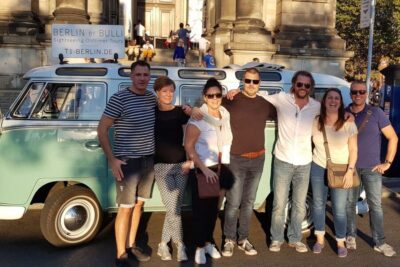 ★ 4.9Sightseeing Tour in Classic Volkswagen T1 Samba BusFrom $51993 reviews
 ★ 4.5Berlin Self-Drive Trabi Tour with GuideFrom $95410 reviews
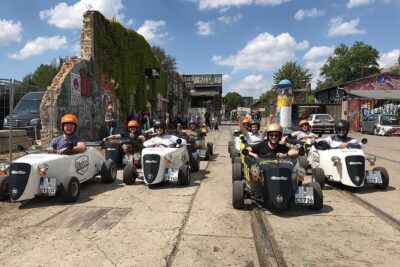 ★ 4.5Berlin City Tour in a Mini HotrodFrom $131283 reviews
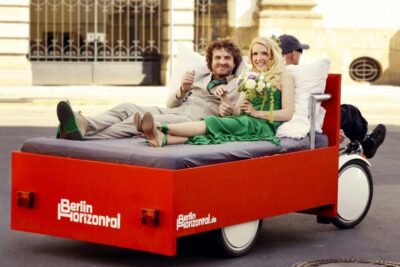 ★ 5.0City Sightseeing Tour in a Unique BedBikeFrom $81280 reviews
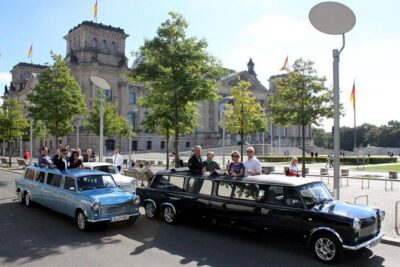 ★ 5.0Private Tour: Berlin by Trabant Stretch-LimousineFrom $299186 reviews
 ★ 4.9Private Sightseeing Tour in Iconic Oldtimer VW BusFrom $347184 reviews
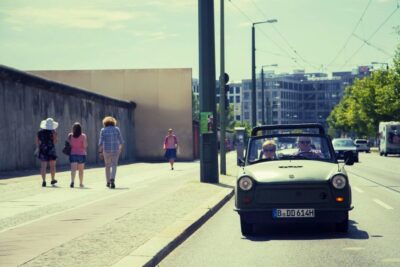 ★ 4.7The Wall Ride Guided Trabi TourFrom $116157 reviews
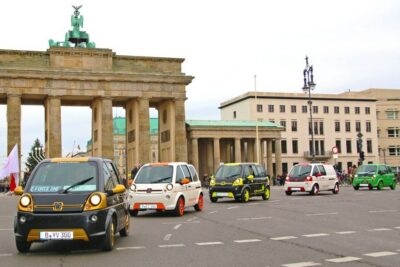 ★ 4.8E-Trabi City TourFrom $81127 reviews
Browse the lists this tour appears in