
REVIEW · BERLIN HIGHLIGHTS & HIDDEN GEMS
Discover Berlin Half-Day Walking Tour
History in Berlin, taught on foot. This half-day walking tour strings together Berlin’s eras—from Prussians to Imperial days, Nazi Germany, and the Cold War—so you don’t just see famous landmarks, you understand how they connect. I especially like the way you move along Unter den Linden with the big political story unfolding behind every turn.
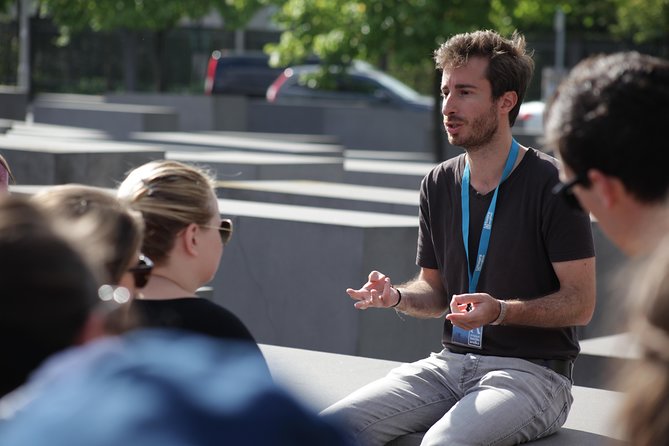
I also really enjoy the tour’s heavier stops, where the guide slows down and adds context, not slogans—especially around the Holocaust Memorial and the Topography of Terror site. Guides in this program often bring their own style (names you may hear in the group include Amanda, Emma, Georgia, and Tobi), but the common thread is clear explanations and lots of room for questions.
One thing to consider: this is a long walk with many quick pauses. If you want to spend lots of time inside major buildings, you’ll probably need to plan follow-up visits on your own afterward.
In This Review
- Key highlights worth your attention
- Walking Berlin’s timeline: the idea behind the route
- Start at Neue Promenade 3 and get oriented fast
- Unter den Linden to Brandenburg Gate: where politics shows on the street
- Museum Island and the surrounding landmarks: quick stops that guide your future plans
- The Nazi-era stops: where the tour balances facts and respect
- Berlin Wall symbolism, “death strip” context, and Checkpoint Charlie
- Top-to-bottom route flow: how the stops stay manageable
- Price and value: what $24.19 buys you in Berlin time
- Who this tour is best for (and who should consider something else)
- Should you book this Berlin half-day walking tour?
- FAQ
- FAQ
- What’s the duration of the tour?
- How much does the tour cost?
- Where do you meet your guide?
- What language is the tour offered in?
- Is a guide included?
- How big is the group?
- Is food and drinks included?
- Does the tour end at the same place it starts?
- Can I cancel and get a full refund?
Key highlights worth your attention
- A four-era storyline that links Prussian/Imperial power, Nazi terror, and Cold War division
- Big-photo monuments plus context at the places you’ve seen in photos before
- Unter den Linden + Museum Island area for a strong first-time orientation
- Topography of Terror + Checkpoint Charlie for the 20th-century story in full detail
- A small group size (max 25) that makes it easier to ask questions and keep a good pace
The big Berlin sights, and a few quieter corners
- Berlin: Discover Berlin Walking Tour★ 4.9 · 5,998 reviews
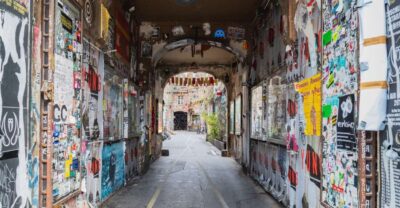
- Berlin: Hidden Backyards Guided Walking Tour★ 4.8 · 5,360 reviews
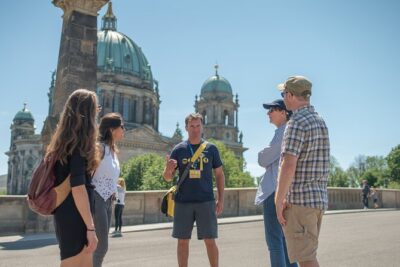
- Explore Berlin: See All The Iconic Sights & Some Hidden Gems★ 5.0 · 4,429 reviews
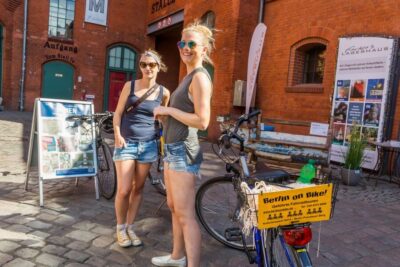
- Berlin: Sights and Highlights Bike Tour with a Local Guide★ 4.8 · 2,698 reviews
Walking Berlin’s timeline: the idea behind the route
This tour works because it treats Berlin like a layered timeline you can walk through. You start in central Berlin and keep moving toward monuments that represent different political eras. The point isn’t to memorize dates. It’s to get the logic of the city: who had power, what they built, what they erased, and how Berlin rebuilt.
You’ll see the Prussian-to-Imperial style of state power in the grand-looking street plan and ceremonial spaces. Then the story pivots into the violence and propaganda of the Nazi period. Finally, the Cold War split becomes physical—borders, checkpoints, and the symbolism of walls—before you reach the locations that force you to confront what happened and why it mattered.
That mix can be emotionally intense, but it’s also one of the most practical ways to understand Berlin. If you arrive and try to explore randomly, you’ll miss the “why.” On this walk, the “why” comes right with the landmarks.
Start at Neue Promenade 3 and get oriented fast
Meeting at Neue Promenade 3 puts you right in the thick of things, and it helps you start your visit with momentum. With a guide leading the way and a group capped at 25, the tour stays manageable even when the streets get busy.
You’ll have a mobile ticket, so you’re not hunting for paper, and the meeting point is near public transportation (helpful when Berlin weather does what Berlin weather does). The biggest practical advantage is orientation: after 3.5 hours of walking, you’ll know where major sights sit relative to each other and which direction you want to return.
One small caution: the tour ends in a different location. So if you’re planning dinner or onward travel, keep a little flexibility in your schedule. The tour is designed to leave you close to the next part of your day, but it won’t be a neat loop back to your starting corner.
Unter den Linden to Brandenburg Gate: where politics shows on the street
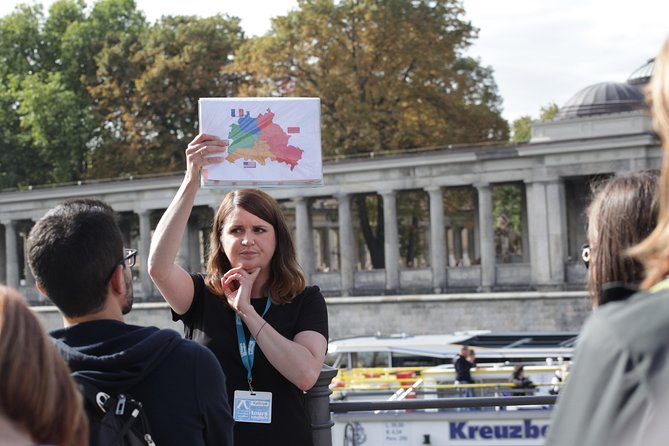
Unter den Linden is the tour’s spine. Walking it is a fast way to understand how Berlin likes to stage power: long sightlines, monumental buildings, and the sense that the city is built for ceremonies and decisions.
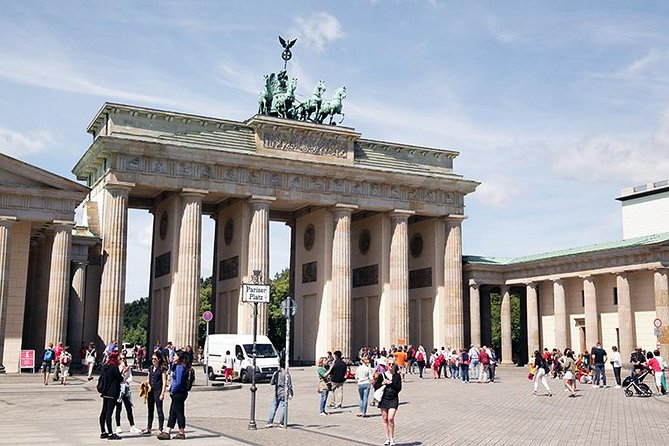
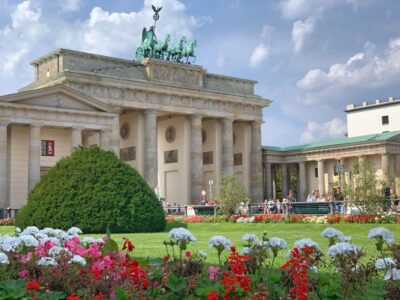
As you head toward the heart of the city, you’ll connect several key dots. The route links historic royal spaces toward Pariser Platz and Brandenburg Gate, which means the guide can explain how the “front stage” of Berlin evolved over time. This isn’t just architecture appreciation. It’s also about how leaders used space—where parades happened, where crowds were directed, and how public views were shaped.
Near the Museum Island area, you’ll get quick stops tied to major institutions and memorial sites. One notable detail included on this walk is a pause at the Berlin State Library, described as the workplace of Albert Einstein. Even if you don’t go inside, that kind of context changes how you read the street and buildings: suddenly it’s not just stone; it’s the setting for thinking, politics, and public life.
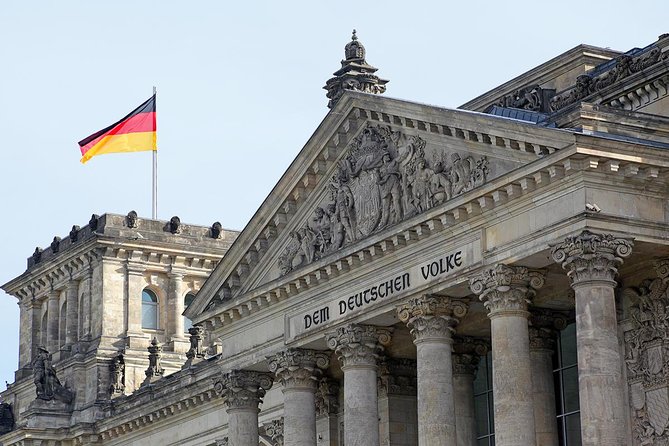
Then comes the moment you’ll recognize instantly: traveling beneath Brandenburg Gate and seeing the nearby political center that connects you to Germany’s parliamentary life. The guide’s narration helps you see why this area matters beyond postcard value.
Museum Island and the surrounding landmarks: quick stops that guide your future plans

A lot of Berlin’s best-known sights cluster around Museum Island. This tour uses that cluster in a smart way: instead of trying to cram museum time into a half-day, you get short, focused explanations that help you decide what’s worth a deeper ticket later.
You may pause at places tied to Jewish history and community life in the city, including the Stiftung Neue Synagoge Berlin – Centrum Judaicum. You also pass through viewpoints and landmarks that represent Berlin’s different eras of culture and identity, with quick orientation stops along the way.
Other stops in this area include major museum exteriors such as the Neues Museum, Pergamonmuseum, and Altes Museum. You’ll also catch the big cathedral presence of Berliner Dom and the university influence around Humboldt University (Humboldt Universitat). In a shorter walking tour, that’s the key value: you learn what you’re looking at and what each site is known for, so you’re not wandering blind later.
If you’re a first-time visitor, this section is especially useful. You’ll finish the tour with a short list of where you want to spend real time. If you already visited a few museums, it still works because the guide ties each stop back to Berlin’s larger political story.
More of Berlin on foot

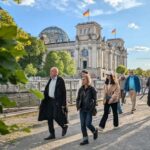

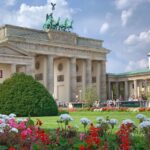
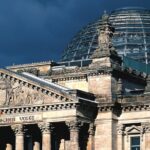
The Nazi-era stops: where the tour balances facts and respect
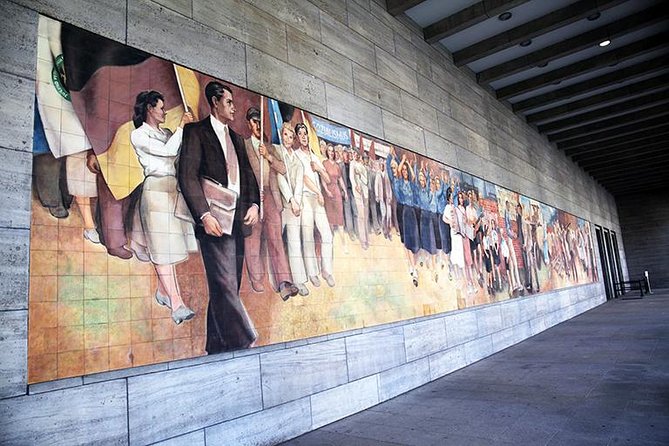
Berlin doesn’t handle its Nazi past lightly, and this route doesn’t treat it like a checklist. You’ll pass through memorial and historical sites that force the story into focus, and the guide’s tone matters here.
Pariser Platz is one of the most striking examples. The guide explains the area’s connection to Hitler’s bunker, which is heavy context to hear while you’re standing in a bright open public square. Next, the walk brings you to the Holocaust Memorial, the Memorial to the Murdered Jews of Europe. It’s not the kind of place you can truly absorb in a few minutes, but the guide’s framing helps you understand what you’re meant to take in: remembrance, scale, and the reality behind the name.
You also stop at Bebelplatz, tied to the 1933 book burnings. That’s an uncomfortable but important lesson: censorship isn’t just a policy; it’s something people enforce, publicly, with an audience. Seeing where it happened gives that history a specific address.
Later, the tour moves into even more direct confrontation with Nazi terror through Topography of Terror. This is located at what used to be Gestapo and SS headquarters, and the walk includes time at the museum site plus a look down into the excavated cellars. Those cellars are described as places where political prisoners were once tortured and killed. The value of including this stop on a walking route is that it connects ideology to infrastructure—the idea becomes a building, then a system.
Berlin Wall symbolism, “death strip” context, and Checkpoint Charlie
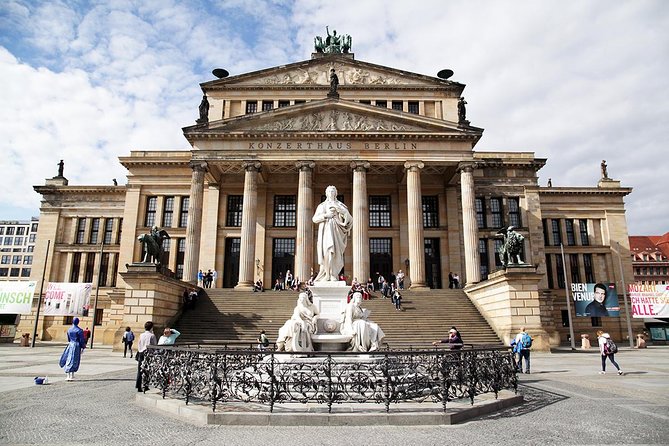
One of the tour’s strongest moves is getting you to think about division as something physical, not abstract. The Berlin Wall parts of the route—plus the memorial points along the way—make it easier to picture what East and West Berlin meant day to day.
You’ll be guided along the path tied to the boundary line, and the guide explains its downfall in 1989. That makes the story feel less like a single event and more like a long pressure that eventually snapped. You’ll also hear details that connect the Wall to the idea of controlled movement.
Then comes Checkpoint Charlie and the crossing point story between East and West Berlin. The tour references the “death strip” route, which is one of those Berlin phrases you’ve probably heard before, but hearing it explained at the right location lands differently. It’s one thing to know a border existed. It’s another to understand how that border was policed.
This is also where you’ll see why the tour works well as a first-day activity. After you leave, Berlin feels like it has directions you can understand. You’ll know why the city’s layout is the way it is, and you’ll be better at picking which neighborhoods to explore next.
Top-to-bottom route flow: how the stops stay manageable
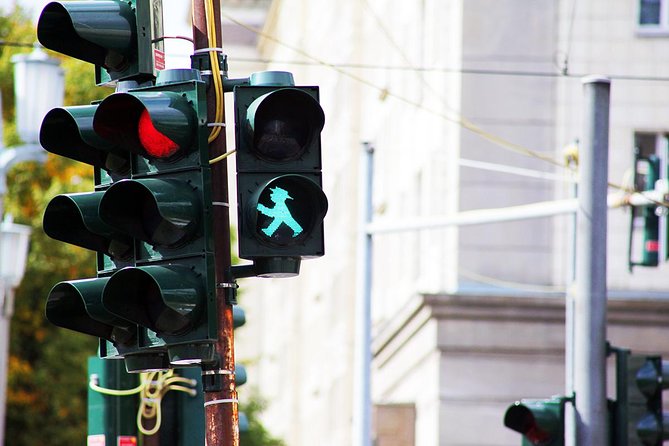
With so many sights, you might worry it will feel chaotic. The trick here is that most stops are short. You get a pause, the guide gives the key facts and context, and then you move on. That keeps energy up and prevents the common problem of a long tour that turns into one long lecture.
The pacing also seems designed for real walking conditions. You’ll cover a lot of ground around central landmarks, including spots such as Staatsoper Unter den Linden, Rotes Rathaus, Nikolaiviertel, and areas near the Staatsoper corridor. You’ll also see Cathedral of St. Hedwig – Domgemeinde St. Hedwig and other central points that help you understand Berlin’s geography beyond the most famous squares.
The tour includes plenty of “walk-and-listen” time, but it also builds in enough breaks that the group can regroup. In the past, guides on this route have been praised for being humorous and respectful at the same time. That matters in a city like Berlin, where the emotional tone can shift fast.
And yes, if you’re cold, you’ll likely think about that. This is a walking tour, not a ride. Bring layers you can handle.
Price and value: what $24.19 buys you in Berlin time
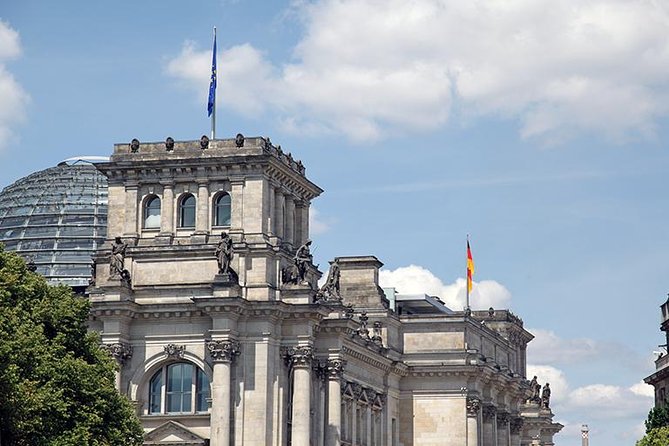
At $24.19 per person, the tour is priced like a practical, high-value way to get context without paying for big museum tickets and long guided museum sessions. For the time on foot—about 3 hours 30 minutes—you’re paying for a guide who can connect the dots between eras and monuments.
If you tried to do this solo, you could see many of the same sights, but you’d lose the “connective tissue.” Berlin is full of memorials, plaques, and buildings with stories that aren’t obvious unless someone explains what to notice. Paying for a guide here is about saving your brainpower and getting the story in the right order.
Two signals tell me it’s a solid value. First, it’s often booked in advance (an average of 27 days). Second, the guide-led approach gets strong repeat interest, especially because the route covers both the dramatic monuments and the darker sites that need careful explanation.
Who this tour is best for (and who should consider something else)
This tour is a great fit if you want a strong Berlin foundation without turning your trip into a museum day. It’s ideal for:
- First-timers who need orientation and a route logic
- History-minded visitors who want Nazi Germany and Cold War Berlin explained at the sites tied to those events
- People who like walking tours but don’t want to commit to an all-day schedule
It may be less ideal if you want deep indoor time at major institutions. The stops are structured for fast context, not prolonged viewing. You’ll likely want to add time later at the places you care about most—especially if a particular museum theme catches you after the tour.
Should you book this Berlin half-day walking tour?
I’d book it if you want Berlin to make sense quickly and you appreciate a guide who brings structure to a complicated past. The best part is the way the route ties together major monuments with the political shifts behind them—so you can keep exploring afterward with confidence.
Book it early in your trip. That’s when the orientation payoff is biggest, and you’ll be able to return to your favorite spots with better instincts. If you’re sensitive to heavy topics, go in ready for emotional material, but do know the tour handles it with care and clear context.
FAQ
FAQ
What’s the duration of the tour?
It runs for about 3 hours 30 minutes (approx.).
How much does the tour cost?
The price is $24.19 per person.
Where do you meet your guide?
You start at Neue Promenade 3, 10178 Berlin, Germany.
What language is the tour offered in?
The tour is offered in English.
Is a guide included?
Yes, a professional guide is included.
How big is the group?
The tour has a maximum of 25 people.
Is food and drinks included?
Food and drinks aren’t included unless specified.
Does the tour end at the same place it starts?
No, the activity ends in a different location.
Can I cancel and get a full refund?
Yes. You can cancel up to 24 hours in advance for a full refund. If you cancel less than 24 hours before the start time, it won’t be refunded.
More Tours in Berlin





More Tour Reviews in Berlin

Berlin's Icons and Its Quiet Corners



Round out your days in Berlin

Berlin Highlights & Hidden Gems, compared.
 ★ 4.9Discover Berlin Walking TourFrom $235,998 reviews
 ★ 4.8Hidden Backyards Guided Walking TourFrom $235,360 reviews
 ★ 5.0Explore Berlin: See All The Iconic Sights & Some Hidden GemsFrom $244,429 reviews
 ★ 4.8Sights and Highlights Bike Tour with a Local GuideFrom $412,698 reviews
★ 4.9Explore Berlin: See All The Iconic Sights & Some Hidden GemsFrom $182,018 reviews
★ 4.8Sights and Highlights Bike Tour with a Local GuideFrom $412,698 reviews
★ 4.9Explore Berlin: See All The Iconic Sights & Some Hidden GemsFrom $182,018 reviews
 ★ 5.0Berlin Highlights 3-Hour Bike TourFrom $42948 reviews
★ 4.9Berlin Highlights: 3-Hour Bike TourFrom $37809 reviews
★ 5.0Berlin Highlights 3-Hour Bike TourFrom $42948 reviews
★ 4.9Berlin Highlights: 3-Hour Bike TourFrom $37809 reviews
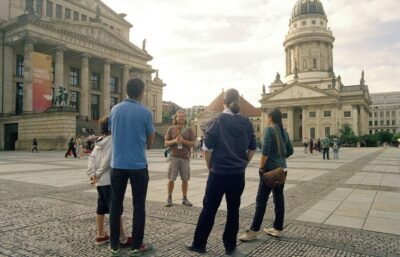 ★ 4.9Berlin Historical Highlights Walking TourFrom $389657 reviews
Browse the lists this tour appears in