REVIEW · BERLIN
Berlin: DIY & Subculture Sightseeing in a 1972 Ford Van!
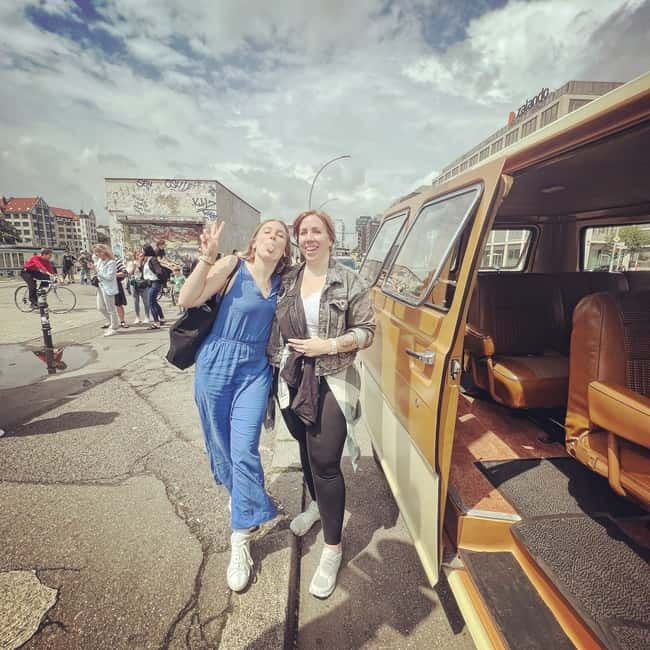
Berlin’s DIY past feels close, not dusty. This small-group ride in a 1972 Ford Econoline takes you past the famous murals and then points you toward the back doors, basements, and makeshift venues where Berlin’s punk-and-beyond spirit actually grew. I especially like the DIY & subculture focus and the way the guide uses stories plus past photos and videos on your smartphone. One thing to plan for: the van has no air conditioning (fan only), and it runs rain or shine.
The trip is guided by the people behind Ramones Museum Berlin, which gives it a lived-in music angle rather than just general sightseeing. You’ll start near the East Side Gallery by the Spree, then move through the cultural, political, and musical past and present tied to places like Friedrichshain and Kreuzberg. And since the group is limited to 6, you get room for questions without feeling like you’re packed in.
I also appreciate the practical setup: you’ll have window seats for photos, you’ll get a free drink, and you’ll have an easy way to keep up with background info using your charged smartphone. Just remember the tour ends where it starts, so you can reconnect with your own dinner plans without losing the whole evening to logistics.
In This Review
- Key things you will notice on this DIY Van Tour
- Why a 1972 Ford van works for Berlin’s DIY story
- Meeting at the van, then starting at East Side Gallery
- Friedrichshain and Kreuzberg: where the scene turned into a lifestyle
- The “behind the shop windows” part: backyards and basements
- Görlitzer Bahnhof and May 1st: the political side you can’t ignore
- Smartphone photos and videos: the easiest way to see the past
- The van time, the pacing, and when you get dropped back
- Price and value: why 85 USD can still feel fair
- Comfort and weather reality: bring your patience and a fan-proof plan
- Who should book this van tour (and who should skip it)
- Should you book the DIY & Subculture Van Tour?
- FAQ
- How long is the Berlin DIY and subculture van tour?
- Where does the tour start and end?
- Do I need a smartphone?
- Is food allowed during the tour?
- What languages are available for the live guide?
- Is the tour weather-dependent?
- What’s the group size?
Key things you will notice on this DIY Van Tour
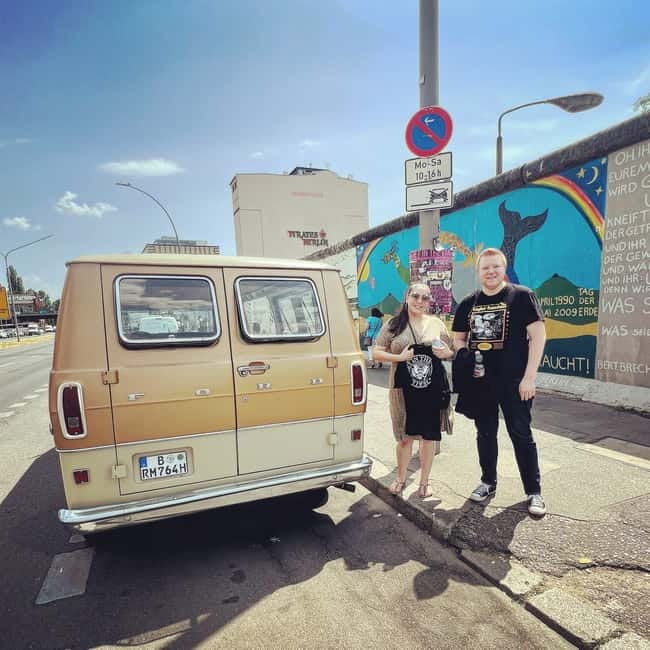
- 1972 Ford Econoline window seating for street views and photo stops
- East Side Gallery start right by the Spree, then straight into the scene areas
- Behind-shop-window stops that lead to backyards and basement-level stories
- Friedrichshain and Kreuzberg focus, including Kreuzberg squats and May 1st riots near Görlitzer Bahnhof
- Smartphone history media (photos and videos from earlier decades) during the ride
- Small group size (max 6) with English or German guiding
Still narrowing down your days in Berlin? Here are more tours to weigh up.
- Berlin: Reichstag, Dome and Government District Guided Tour★ 4.7 · 18,288 reviews
- Berlin: 1-Hour City Tour by Boat with Guaranteed Seating★ 4.3 · 16,993 reviews
- Berlin: TV Tower Standard Entrance Ticket★ 4.4 · 15,883 reviews
- Berlin: Boat Tour Along the River Spree★ 4.4 · 11,252 reviews
Why a 1972 Ford van works for Berlin’s DIY story
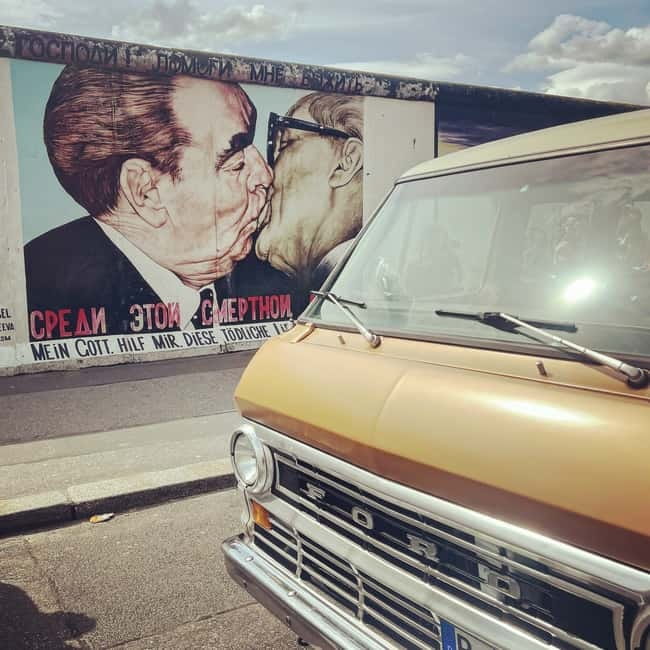
This tour isn’t trying to be a museum with a seat belt. The 1972 Ford Econoline is part of the vibe: old, practical, and a little rough around the edges, like the city’s DIY culture itself. When you ride through Berlin’s neighborhoods in a vehicle that looks like it belongs in a band documentary, the whole message lands faster.
What I like most is that you’re not just told what Berlin used to be. You get a connection between music, politics, and everyday survival—especially around the DIY club, bar, restaurant, and shop scene. If you like Berlin because it still feels personal and independent, this format matches that feeling.
The small-group size (limited to 6) matters more than it sounds. In a big bus, you get a route. Here, you’re more likely to get the kind of street-level stories that explain why a place exists the way it does.
Meeting at the van, then starting at East Side Gallery
You meet at the Van itself: a beige/brown 1972 Ford Econoline. The tour starts there, then you get moving with the East Side Gallery as the opening anchor. This matters because it sets the tone right away: the longest remaining piece of the Berlin Wall is not just a photo spot here. It’s a landmark for Berlin’s political shifts, and the guide uses it to point you toward what came next.
East Side Gallery sits along the Spree River, so you get that clean “Berlin geography” feeling early—water, street texture, and neighborhoods close together. Then the route heads into the areas most associated with the underground energy you’re looking for: Friedrichshain and Kreuzberg.
If you’re the kind of traveler who needs a few moments to orient, arrive about 15 minutes early. The meeting point is simple, but you’ll have a better start if you’re not rushing.
Friedrichshain and Kreuzberg: where the scene turned into a lifestyle
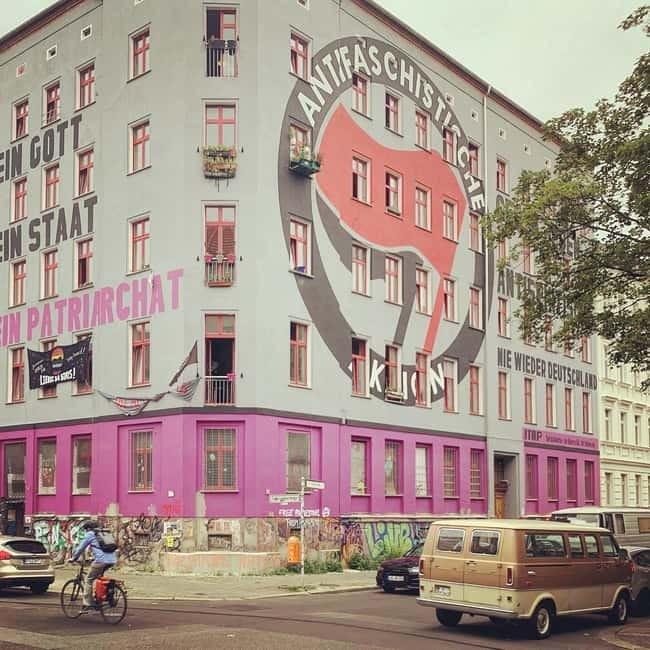
This is where the tour earns its DIY title. Friedrichshain and Kreuzberg aren’t treated like names on a map. You learn how the city’s social dynamics fed the music scene and how the music scene fed back into everyday life.
You’ll hear about key eras of Berlin’s DIY spirit, from the 1970s onward, tied to bands and artists the guide references as part of the broader story (including names like Bowie and Beatsteaks). Even if you don’t know every reference, the tour helps you connect the dots: art and music weren’t just entertainment, they were a tool for identity, community, and sometimes resistance.
And because the guide stops in front of many places for photos, you’re not just listening while the city slides by. You’ll often pause, look around, and then get the meaning behind what you’re seeing. That’s one of the most practical parts of the tour: it trains your eyes for Berlin, so later you can spot the themes on your own.
The “behind the shop windows” part: backyards and basements
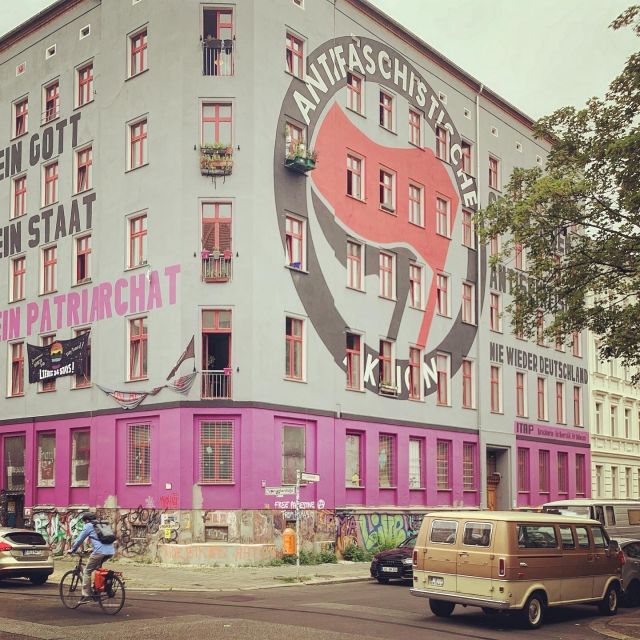
One of the biggest selling points here is the theme of seeing what’s usually hidden. The tour focuses on the DIY impulse to create space where there is none—so you go behind shop windows and toward backyards and basements where the culture actually happened.
These are the moments that turn a “cool neighborhoods” tour into a story with substance. A storefront can look like just another street level door. In Berlin, it might be the edge of a much bigger world: improvised bars, venues, and spaces people built because mainstream options didn’t fit.
Also, the guide brings in the time contrast on purpose. You’ll hear about the then-and-now difference and how Berlin’s people and dynamics shifted over time. Even if the physical spaces have changed, you can understand what stayed: the need to make your own corner of the city.
Just keep your expectations grounded. You won’t be exploring secret rooms like a spy movie. But you will get that street-front reality check: how to read the neighborhood context and what to look for later.




Görlitzer Bahnhof and May 1st: the political side you can’t ignore
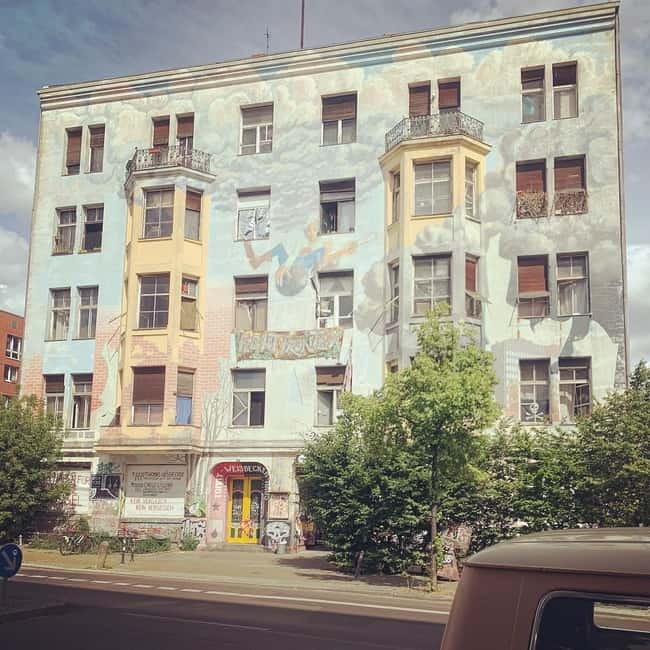
Berlin’s underground culture has always had a political backbone, and the tour makes sure you get that. One of the explicitly mentioned story threads is around May 1st riots near Görlitzer Bahnhof. This isn’t presented as history trivia. It’s part of the explanation for why certain areas became magnets for DIY culture.
Then the route ties into Kreuzberg squats and the broader culture of people taking space—sometimes with conflict, often with creativity. Even if you’re just in Berlin for music and nightlife, this context helps. It explains why certain venues and scenes feel both rebellious and community-driven at the same time.
You’ll also connect these events with what happened in different decades, from the 1970s to today. That time span is important because it keeps Berlin from feeling like one story. Instead, it feels like repeated waves of people rebuilding culture under pressure.
Smartphone photos and videos: the easiest way to see the past
You’ll use your own charged smartphone during the tour. The guide provides background information including photos and videos from earlier decades. That’s a smart choice for a city like Berlin, where you can stand in one spot and see how much changed.
This also helps you follow along without guessing. If you’re trying to understand improvised bars and underground venues, it’s hard to build the picture from memory alone. With past visuals, you can connect what you’re seeing today with what used to happen there.
Practical tip: make sure your phone battery is truly topped up before you go. Between photos, maps, and reading the guide’s background info, you’ll use energy. And if your phone is almost dead at the start, you’ll feel it quickly.
The van time, the pacing, and when you get dropped back
The tour is listed as 1.5 hours in the main details, with starting times depending on availability. The included section also mentions a duration of 2 hours, so I’d plan for roughly 1.5–2 hours in the real world and double-check the exact time shown when you book.
Pacing feels built for street stops. The van tour format gives you enough movement to cover key areas, but not so much speed that you lose the context. Because it’s limited to 6 participants, stops don’t become chaotic.
You end back at the meeting point, so you’re not stuck trying to figure out where the guide leaves you. That’s a small detail, but it makes your overall day easier.
Price and value: why 85 USD can still feel fair
The listed price is $85 per person, but there’s a note that if you book directly through www.getinthevanberlin.com you only pay 59 Euros. Either way, the value story depends on what you want out of Berlin.
For me, the strongest value drivers are:
- Small group size (max 6), which makes the experience feel personal instead of broadcast
- A 1972 Ford van that matches the tour theme
- One free drink per person
- An exclusive Get In The Van T-Shirt
- Guiding from the founders of Ramones Museum Berlin, which adds credibility to the music-and-scene angle
If you’re the kind of traveler who likes your history tied to people and places (not just plaques), you’ll probably feel the price is reasonable. If you only want big highlights and famous landmarks, you might find it less useful than a standard tour.
Comfort and weather reality: bring your patience and a fan-proof plan
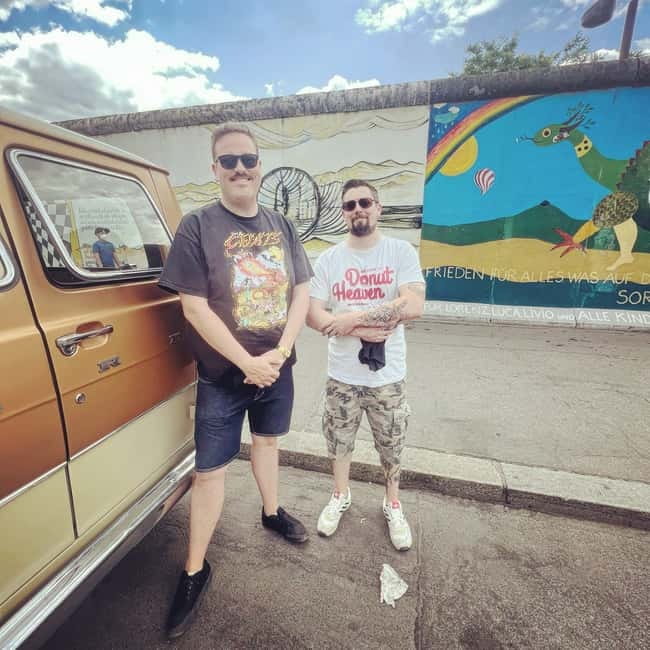
This tour runs rain or shine, so you’ll want a plan for Berlin weather. The van has no air conditioning—only a fan—so warm days can get stuffy. Berlin can also surprise you with cool evenings even in spring and summer, but you still won’t have modern climate control to rely on.
Also note: no food is allowed in the vehicle. If you’re doing this as part of a longer day, eat before you go and keep snacks for after.
One more practical point: it’s wheelchair accessible, and the group size stays small, which generally makes it easier for everyone to move around at stop points. Still, if you have mobility needs, it’s smart to mention them when you book.
Who should book this van tour (and who should skip it)
This experience fits best if you want Berlin’s creative underground seen through the lens of DIY culture and local scene history. It’s great for travelers who love music stories, neighborhood context, and the real-life meaning behind places.
If you’re bringing a friend who thinks Berlin is just museums and checkpoints, this tour can flip that idea. The mix of political background, punk-and-music references, and street-level stop points helps you understand why Berlin became known for individual lifestyles and creative persistence.
You might skip it if:
- You want a strict “museum-style” explanation with minimal street-level storytelling
- You hate being in a non-air-conditioned vehicle for up to about 1.5–2 hours
- You’re only interested in the most famous monuments and don’t care about nightlife culture
Should you book the DIY & Subculture Van Tour?
Yes, if you want Berlin with context and attitude, not just checklists. I’d book it if you like learning how the DIY scene grew from real conditions—then and now—and you’re happy to use your smartphone as part of the experience.
If the no-AC comfort factor sounds like a dealbreaker, or if you prefer silent, self-guided walks over guided stops, then a different kind of tour might suit you better.
FAQ
How long is the Berlin DIY and subculture van tour?
The tour is listed as 1.5 hours, with starting times depending on availability. The included details also mention a 2-hour duration, so plan for about 1.5–2 hours.
Where does the tour start and end?
It starts at the meeting point at the Van: a beige/brown 1972 Ford Econoline. It ends back at the same meeting point.
Do I need a smartphone?
Yes. You should bring a charged smartphone, because the tour provides background information, including photos and videos.
Is food allowed during the tour?
No. Food is not allowed in the vehicle.
What languages are available for the live guide?
The live guide speaks English and German.
Is the tour weather-dependent?
No. The tour takes place rain or shine.
What’s the group size?
It’s a small group limited to 6 participants.