
Berlin in one port day is a sprint. This 10-hour coach outing turns Rostock-Warnemünde into a fast tour of Berlin’s biggest landmarks, with an air-conditioned coach and a certified English-speaking guide to keep the story straight. The main thing to know is that the day packs in serious sights with short stops, so you’ll need patience (and comfortable shoes) for the schedule.
You’ll see everything from Prussian-era splendor to the darkest parts of 20th-century Germany, including the exterior of Charlottenburg Palace, the Brandenburg Gate, the Holocaust Memorial, and Berlin Wall–era sites like Checkpoint Charlie and Topography of Terror. I like that the route doesn’t just look impressive on a postcard; it’s built to give context, even when you only have minutes at each point.
In This Review
- Key moments that make this tour worth a cruise-day slot
- Berlin from Warnemünde: why this works as a cruise excursion
- The value question: is $222 a good deal for Berlin highlights?
- The long coach ride: use it to get bearings fast
- Charlottenburg Palace exterior: Prussia’s summer residence vibe
- Kurfürstendamm and Victory Column pass-bys: Berlin’s big boulevard energy
- Reichstag facade: Germany’s parliament as a landmark you can read
- Brandenburg Gate and the Holocaust Memorial: where sightseeing meets gravity
- Fuhrerbunker area: serious ground, plus a real lunch break
- Alexanderplatz and Museum Island: quick hits of modern Berlin and UNESCO architecture
- Bebelplatz and Unter den Linden: Nazi book burnings on a central stage
- Checkpoint Charlie: the Cold War as street-level theater
- Topography of Terror: SS and Gestapo headquarters on the edge of memory
- Returning to Warnemünde: plan for the fatigue drop
- What to pack and how to survive the schedule like a pro
- Logistics and risk points: where things can go sideways
- Who this Berlin day trip is best for
- Should you book this Berlin day trip from Rostock-Warnemünde?
- FAQ
- How long is the total tour?
- How long is the coach ride from Warnemünde to Berlin?
- Is the tour guided in English?
- Is lunch included?
- Is the tour wheelchair accessible?
- Will the tour return you to your ship on time?
Key moments that make this tour worth a cruise-day slot
- Warnemünde-to-Berlin transport built in: about 3 hours each way by comfortable coach, so you’re not guessing how to get around.
- Big-name Berlin stops, but with human pacing: brief guided time at places like the Brandenburg Gate and the Holocaust Memorial.
- Charlottenburg Palace exterior: you get the architectural feel without a long museum slog.
- Cold War and Nazi-era stops in the same circuit: Fuhrerbunker area, Bebelplatz, Checkpoint Charlie, and Topography of Terror.
- A real lunch break after Fuhrerbunker: the guide helps you find food and restrooms before moving on.
More time out on the Spree
- Berlin: Boat Tour Along the River Spree★ 4.4 · 11,252 reviews
- Berlin: 1-hr Boat Tour with Bilingual Live Guide (DE/EN)★ 4.7 · 5,653 reviews
- Berlin: 3.25-Hour Spree & Landwehrkanal Boat Tour★ 4.6 · 4,311 reviews
- Berlin: 1-Hour City Sightseeing Cruise★ 4.4 · 2,210 reviews
Berlin from Warnemünde: why this works as a cruise excursion
If your ship is docking at Rostock-Warnemünde and you want Berlin without stress, this kind of day trip makes sense. You’re trading a full day of independent transit for a guided circuit plus the simple fact that someone else handles the timing and return.
The heart of the experience is the contrast: one day you’re riding past classic Berlin boulevards, and the next you’re standing near sites tied to the Nazi regime and the end of World War II, then pivoting to Cold War Germany. The tour hits those moments in a single flow, which is useful when you only have a limited window in the city.
Still, there’s no way around it: you’re on a coach. You won’t linger. Some stops are more about seeing and understanding than soaking up the place for hours. If that sounds like you, you’ll probably love the momentum.
The value question: is $222 a good deal for Berlin highlights?
For many cruise passengers, $222 can feel high—until you price out the reality: long-distance coach time from Warnemünde, a certified English-speaking guide, and guaranteed return to the ship on time.
What you’re paying for here is the “time tax” being removed from your day. Berlin is not small, and your day trip is effectively built around getting you to the right places with minimal guesswork. If you want the major landmarks plus the deeper historical stops, a single-day guided circuit can be good value compared to piecing together transit, tickets, and guided interpretation yourself.
The long coach ride: use it to get bearings fast
You start at Warnemünde Cruise Center and you’re on the bus for about 3 hours toward Berlin. This is a lot, but it’s also your warm-up. I’d treat that time like part of the tour, not downtime.
A helpful mindset: by the time you hit the city sights, you already have the basic orientation in your head. The guide’s job is to connect what you’re seeing later—like the Reichstag facade or the Memorial locations—to what you’ll learn as you move through the day.
Also, keep your expectations realistic about comfort and breaks. There’s no food included, so plan for the fact that you might need snacks or water depending on your personal pace. The coach ride is air-conditioned, which helps, especially on warm days or if you’re sensitive to temperature changes.
Charlottenburg Palace exterior: Prussia’s summer residence vibe
Your first major Berlin stop is the exterior of Charlottenburg Palace for about 30 minutes. Even if you don’t go inside, this matters. Charlottenburg gives you the “why Berlin looks like Berlin” feeling—this is the city as a capital with big ambitions.
The palace was built in the 17th century and became the summer residence for Sophie Charlotte, the Queen consort of Prussia. That detail is not just trivia. It helps you understand that Berlin’s power and prestige were built over time, and the architecture carries that story forward.
One drawback: because it’s exterior-focused, you won’t get the full payoff you might if you were touring rooms and collections. But for a cruise-day schedule, the exterior stop is efficient and helps you reset your expectations after the coach ride.
More Berlin day trips from the Warnemünde pier
Kurfürstendamm and Victory Column pass-bys: Berlin’s big boulevard energy
Next you ride along Kurfürstendamm, a shopping and cultural thoroughfare that stretches about 3.5 kilometers. This is one of those Berlin streets where you can feel layers—cafes, theaters, international designer storefronts, and city life.
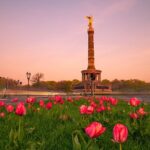
Then comes a pass by Victory Column (Siegessäule) topped with the golden statue of Victoria. This stop is brief, but it works because columns and monuments like this are meant to be seen from a distance. It’s the kind of landmark that helps you understand how power chose to advertise itself in earlier eras.
Don’t expect deep interpretation here; it’s more about setting the stage visually. If you like architecture and city layout, these pass-bys give you useful context before the tour moves into more serious territory.
Reichstag facade: Germany’s parliament as a landmark you can read
You get around 15 minutes at the Reichstag building facade, home to the German Bundestag. Even a short look can be powerful because the Reichstag is more than an office building. It’s a symbol of German political identity—built, damaged, and reinterpreted through history.
I find this kind of quick exterior stop works well on a cruise day. You’re not trapped inside. Instead, you’re looking at the building as part of the city’s public story.
The practical tip: this is one of the spots where pictures are easy but crowding can happen. If your goal is photos, keep moving when the group moves. If your goal is to understand, listen for the guide’s framing rather than trying to read every detail yourself on the fly.
Brandenburg Gate and the Holocaust Memorial: where sightseeing meets gravity
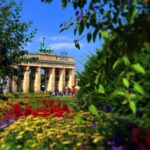
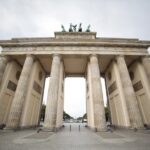
You’ll see the Brandenburg Gate for about 10 minutes. It’s one of Berlin’s most recognizable landmarks, and it helps to treat it as a marker, not a full destination. In a single-day tour, that short stop is about helping you locate the city’s political and historical center.
Then you head to the Holocaust Memorial for about 15 minutes. This is the Peter Eisenman-designed memorial with 2,711 concrete slabs spread across a large expanse. This is the first moment where the tour stops feeling like a sightseeing checklist and starts feeling like a remembrance visit.
What makes this stop worth your attention is that you’re not just looking at something famous—you’re stepping into a design meant to make you feel disoriented and reflective. In a group schedule, the temptation is to rush to the next place. I’d resist that as much as possible. Let the memorial do its job for a few minutes.
Fuhrerbunker area: serious ground, plus a real lunch break
The tour includes a Fuhrerbunker visit for about 1 hour, with a brief walk to the bunker site. This is tied to the final chapter of Adolf Hitler’s regime, and it’s naturally heavy.
The guide then builds in time for a lunch break, and you’ll get help locating a place with convenient dining options and restroom facilities. That’s a smart part of the itinerary. It acknowledges that after heavy history stops, you need a reset—both for your body and for your attention span.
If you don’t want lunch to eat up your energy, consider keeping your meal simple and moving on quickly when the time comes. This is also where you’ll want to be mentally ready for the rest of the day: you’ll still visit multiple Cold War and Nazi-era related stops.
Alexanderplatz and Museum Island: quick hits of modern Berlin and UNESCO architecture
After the heavy stuff, the tour shifts into city texture.
You’ll pass by Alexanderplatz, one of Berlin’s major squares, with notable features like the World Clock and the Fernsehturm (TV Tower) in view. This isn’t a long hangout, but it’s a fast way to show you modern Berlin’s skyline and energy.
Next is Museum Island for about 15 minutes. It’s recognized as a UNESCO World Heritage Site, and the area includes buildings like the Berlin Cathedral and the Old Museum. Even with limited time, Museum Island is a classic “look at the city’s ambition” moment. You’re seeing how Berlin organized knowledge and culture in a very visible way.
Because your time is short here, focus on what the guide points out: sight lines, the architecture grouping, and how the island functions as a cultural center.
Bebelplatz and Unter den Linden: Nazi book burnings on a central stage
You’ll visit Bebelplatz for about 10 minutes, where Nazi book burnings took place in 1933. This stop is emotionally direct, and it’s also historically specific, which helps. It’s not an abstract concept; it’s tied to a real place in the city.
Then you’ll ride along Unter den Linden, one of Berlin’s key historical avenues. This kind of drive-by matters because it turns the city into a timeline. You can start seeing Berlin not as separate attractions, but as a connected map of events and regimes.
Checkpoint Charlie: the Cold War as street-level theater
You get about 20 minutes at Checkpoint Charlie, the famous crossing point between East and West Berlin during the Cold War. This is one of those sites that attracts lots of attention, but the value here is context: it’s a tangible reminder that borders weren’t just lines on a map—they shaped daily life.
In short time, you’ll likely capture the iconic look and then move on. Still, it’s worth pausing to think about what a “crossing point” meant for people at the time. The guide’s explanations help keep it from turning into mere photo scenery.
Topography of Terror: SS and Gestapo headquarters on the edge of memory
Your last major stop is Topography of Terror for about 15 minutes. You’re looking at the former headquarters of the SS and Gestapo, and you’ll be encouraged to consider the lasting effects tied to the Berlin Wall.
Fifteen minutes is short, but Topography of Terror is designed for information and reflection. On a cruise-day schedule, you won’t have time to read everything. So go in with this approach: pick a couple of panels or themes the guide calls out, then let those examples anchor your understanding.
I also like that the day ends with history that’s still present in the city’s physical footprint. It’s one thing to hear about the past; it’s another to stand near what remains of it.
Returning to Warnemünde: plan for the fatigue drop
After Topography of Terror, you head back to Warnemünde, with about 3 hours on the coach. This leg is where many people feel the day catch up: the pace, the walking, the mental intensity of the historical sites.
The good news is that the tour includes guaranteed return to your ship on time. That matters a lot for cruise passengers, where missing the sailing is the nightmare scenario. Knowing someone is managing the return schedule lets you focus on the sights instead of the clock.
What to pack and how to survive the schedule like a pro
This is not a leisurely stroll day. It’s a guided day trip with a lot of walking at key stops and long coach time between them.
I’d bring:
- Comfortable walking shoes for memorials and bunker-area terrain
- A light layer for outdoor waiting time
- Water and maybe a small snack, since food and beverages aren’t included
- Any day-pack basics for restrooms and quick breaks, especially after the lunch break window
The most important mindset shift: treat each stop as a chapter. If you expect full-length museum experiences, you’ll feel rushed. If you treat it like a guided city story with fast stops, it clicks.
Logistics and risk points: where things can go sideways
This tour is built around cruise timing, and that helps. But two real-world factors can still affect your day.
First, the day depends on getting into the port and meeting on time. In at least one documented case, a trip was cancelled because the ship could not get into port, and the refund situation was not provided the way that customer expected. That’s not something you can control, but it is a risk worth keeping in mind for any port-day excursion.
Second, timing can slip even with good planning. One account described delays early in the day that reduced time before they recovered and still covered the promised sights, with an excellent guide helping smooth the transition. Translation: if you’re someone who gets stressed by schedule changes, you’ll want a calm plan—mentally and physically—for the possibility of a late start.
Who this Berlin day trip is best for
This tour is a good fit if you:
- Want the major Berlin landmarks plus the key WWII/Cold War sites
- Prefer a guided explanation in English
- Like structured time when you’re limited to about 10 hours
- Are comfortable with short stop durations and coach travel
It’s probably not the best fit if you:
- Need long free time at museums
- Have mobility limitations that make walking and standing difficult (this tour is listed as not wheelchair accessible)
- Expect food to be included (it isn’t)
Should you book this Berlin day trip from Rostock-Warnemünde?
My take: book it if you want a smart, high-impact Berlin overview built for cruise timing. The pairing of Brandenburg Gate, the Holocaust Memorial, and Cold War stops like Checkpoint Charlie and Topography of Terror gives you a fuller view of the city than most quick “highlights only” tours.
I’d hold back if you hate packed schedules or you know you’ll be upset by delays. And if port access is a concern for your specific sailing day, it’s worth checking your plans carefully so you’re not caught off guard.
Bottom line: this is a strong choice when you want direction, not independence—someone else drives, someone else organizes the stops, and you focus on absorbing a very big city in one long day.
FAQ
How long is the total tour?
The duration is 10 hours, including transportation to and from Berlin.
How long is the coach ride from Warnemünde to Berlin?
The coach ride is about 3 hours one way from Warnemünde Cruise Port.
Is the tour guided in English?
Yes. You get a certified English-speaking guide in Berlin.
Is lunch included?
No. Food and beverages are not included, though you’ll have an opportunity for a lunch break after the Fuhrerbunker visit and your guide can help you find dining and restrooms.
Is the tour wheelchair accessible?
No. It is not wheelchair accessible, though strollers are allowed.
Will the tour return you to your ship on time?
Yes. The tour includes guaranteed return to your ship on time.
More Tour Reviews in Berlin

Berlin From the Warnemünde Pier
More Hours on the Spree

Round out your days in Berlin
Spree River Cruises, compared.
 ★ 4.31-Hour City Tour by Boat with Guaranteed SeatingFrom $2516,993 reviews
 ★ 4.4Boat Tour Along the River SpreeFrom $3411,252 reviews
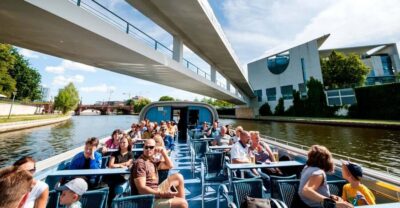
 ★ 4.71-hr Boat Tour with Bilingual Live Guide (DE/EN)From $225,653 reviews
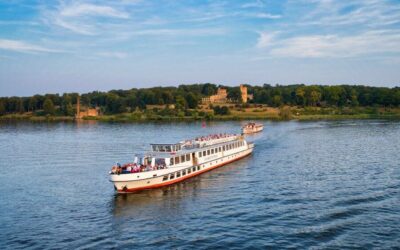
 ★ 4.63.25-Hour Spree & Landwehrkanal Boat TourFrom $384,311 reviews
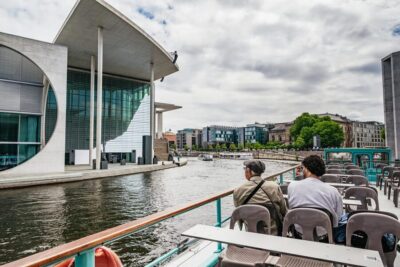
 ★ 4.5Potsdam: Palace Tour by BoatFrom $272,369 reviews
 ★ 4.41-Hour City Sightseeing CruiseFrom $252,210 reviews
 ★ 4.42.5-Hour East Side Boat Cruise with CommentaryFrom $352,016 reviews
 ★ 4.6Spree Boat Tour to MüggelseeFrom $251,973 reviews
Browse the lists this tour appears in