REVIEW · BERLIN
Berlin: The Feuerle Collection Meditation Experience
One hour of quiet can change how you see art. This Berlin experience is built for a mobile detox and deep stillness, where you meditate (or simply sit and watch) in front of an unusual mix of Khmer sculptures, Imperial and scholar Chinese furniture, and contemporary artworks. You also move through a Sound Room passage and into an underground Lake Room, so the hour shifts your attention in a very physical way.
What I love most is how calmly you’re allowed to use your own senses instead of waiting for explanations, and how the collection’s mix of eras makes the art feel like a conversation rather than a textbook. One note to consider: this is not a guided tour, so if you want a host to tell you what to think, you’ll need to bring your own curiosity and pace.
In This Review
- Key things to know
- The 1-hour silent flow: how the experience actually feels
- Sound Room passage: where silence becomes part of the artwork
- Lake Room walk in an underground calm
- Khmer sculptures and Chinese furniture: slow looking with purpose
- Contemporary works in the same quiet hour
- No guided tour: why that can be a feature, not a flaw
- Comfort items and what to bring your body (and mind)
- Price and value: $25 for a one-hour reset
- Accessibility and who this experience fits best
- Should you book the Feuerle Collection Meditation Experience?
- FAQ
- How long is the Feuerle Collection Meditation Experience?
- Is meditation mandatory?
- Is there a guided tour of the exhibition?
- What’s included with the ticket?
- What areas do you move through during the session?
- What kinds of artworks are included?
- Is the experience wheelchair accessible?
- Is it suitable for children?
- Can I cancel or pay later?
Key things to know
- Silent, self-guided pacing: meditation is offered, but not mandatory.
- Sound Room + Lake Room route: you’ll physically pass through spaces that change your mood.
- Khmer sculptures (7th–13th century): early works that invite slow looking.
- Imperial and scholar Chinese furniture (2nd century B.C.–17th century A.D.): forms made for contemplation as much as function.
- Contemporary artists in the mix: including Anish Kapoor, Cristina Iglesias, Adam Fuss, Zeng Fanzhi, James Lee Byars, and Nobuyoshi Araki.
Still narrowing down your days in Berlin? Here are more tours to weigh up.
- Berlin: Reichstag, Dome and Government District Guided Tour★ 4.7 · 18,288 reviews
- Berlin: 1-Hour City Tour by Boat with Guaranteed Seating★ 4.3 · 16,993 reviews
- Berlin: TV Tower Standard Entrance Ticket★ 4.4 · 15,883 reviews
- Berlin: Boat Tour Along the River Spree★ 4.4 · 11,252 reviews
The 1-hour silent flow: how the experience actually feels
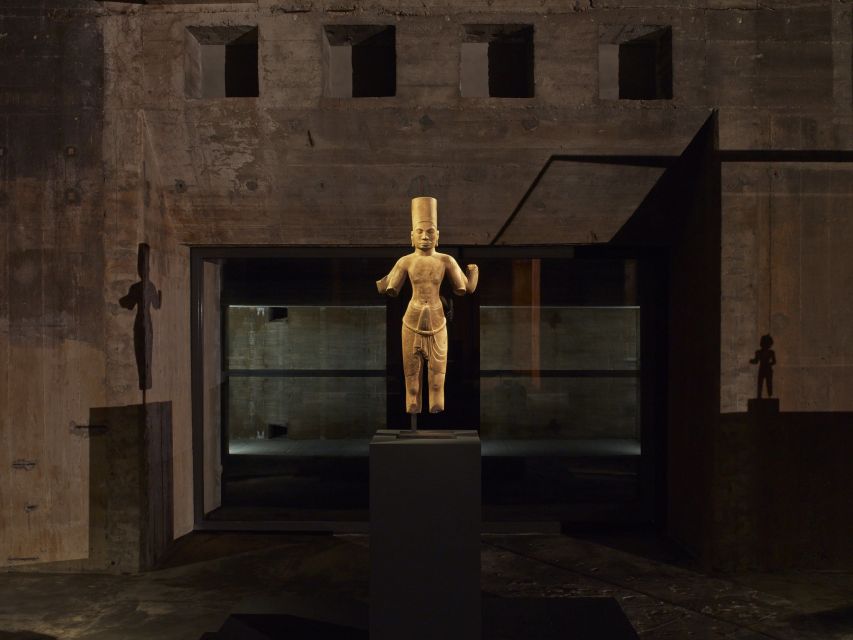
This is a quiet, open mediation experience in a private-feeling setting. You’ll spend about an hour inside The Feuerle Collection, moving gently between rooms and stopping to meditate among the artworks. The vibe is simple: lower your phone volume, slow your steps, and let the space do some of the work.
You don’t have to commit to formal meditation the whole time. If sitting still isn’t your thing, you can also move around quietly and enjoy the art at your own tempo. You’ll be given a yoga mat and a blanket, which matters more than you’d think—comfort makes it easier to stay present without constantly readjusting your body.
Practical tip: plan to arrive ready to be offline. Even if you’re not the type to get obsessive about devices, the whole point here is a break from constant input. Think of it as a reset button for your attention.
Sound Room passage: where silence becomes part of the artwork
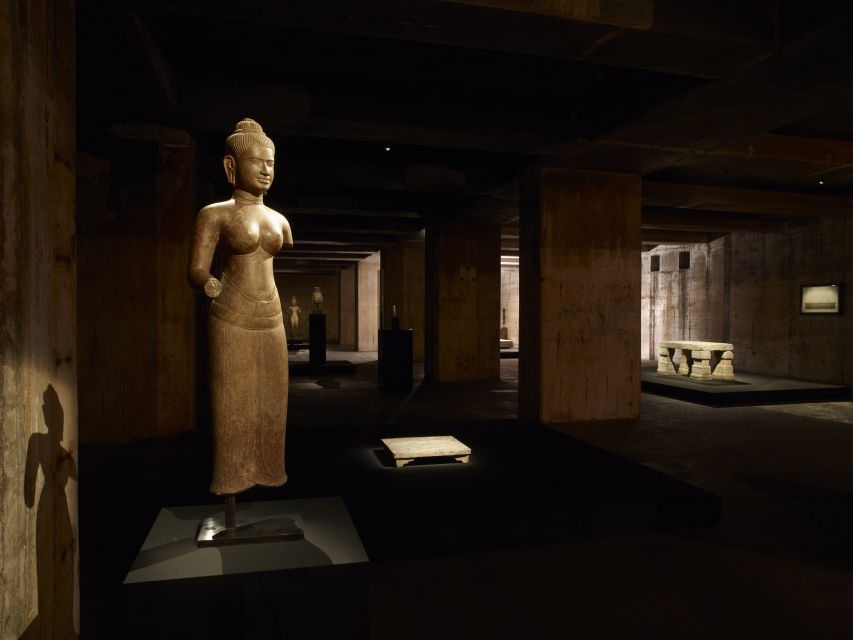
The first emotional shift happens as you move toward the Sound Room. Even without a spoken guide, the room transition sets expectations: this isn’t just a gallery walk. You’re moving through the experience like a sequence—step, pause, listen, notice.
What to do in practice: when you reach the Sound Room passage area, don’t force meditation immediately. Let your body settle first. If you find your mind racing, that’s normal—silence doesn’t erase thoughts, it just removes the distractions. The space encourages you to observe your own mental noise the way you’d observe brushstrokes: without arguing with it.
A possible drawback? If you usually enjoy museums because of commentary, labels, and background context, you might feel like something’s missing. But that’s also why this works: the audio-quiet setting makes the experience more about awareness than information.
Lake Room walk in an underground calm
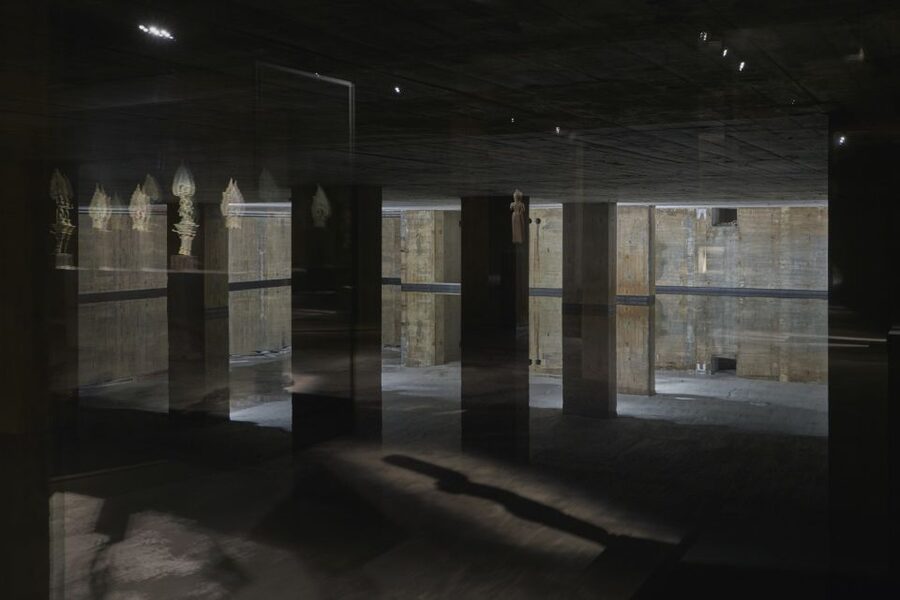
After the Sound Room, you make your way through the Lake Room, which you walk through rather than simply view from one spot. That detail changes the feel of the hour. You’re not only looking with your eyes—you’re walking with your attention.
The underground setting typically gives you a natural instinct to slow down. Less visual stimulation often means more sensitivity to subtle things: your breathing, the way you move, and the quiet rhythm of stopping and continuing. It’s the kind of environment that nudges you toward stillness without needing instructions.
How to get the most out of it: treat the Lake Room like a short journey inside the larger experience. When you stop, stop fully. When you walk, walk without multitasking. The underground space is the moment where the hour starts to feel less like a museum visit and more like a deliberate pause.
Khmer sculptures and Chinese furniture: slow looking with purpose
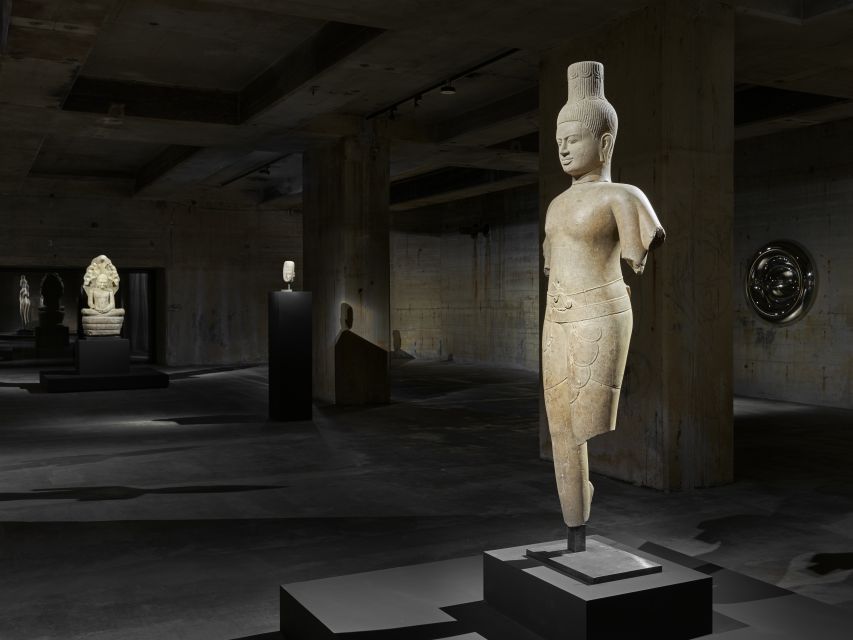
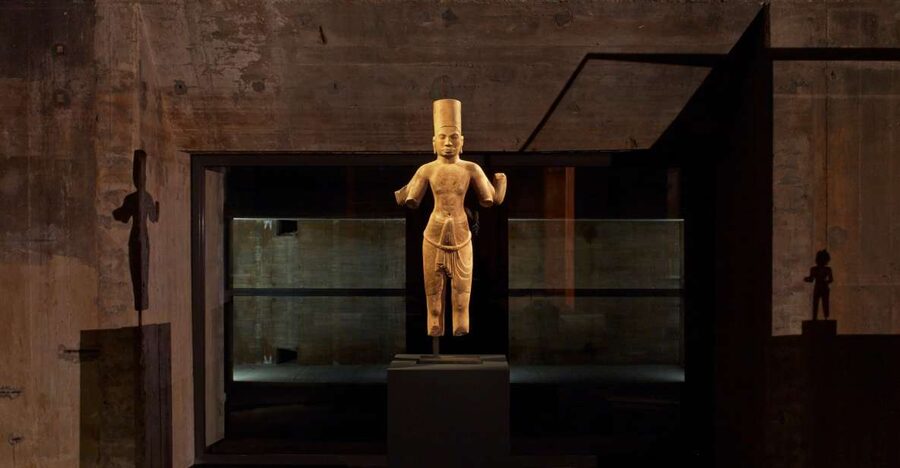
One of the strongest reasons to book this is the art itself—and the way it’s placed in a meditation context. You’ll enter to see early Khmer sculptures (7th–13th century A.D.) and Imperial and scholar Chinese furniture (2nd century B.C.–17th century A.D.). Those time periods can feel worlds apart, but the silent format ties them together.
Here’s what I like about this pairing for a non-guided experience: it gives you multiple entry points. Khmer sculpture often pulls your eye through form and presence. Chinese furniture often invites you to notice craftsmanship and shape—pieces designed for use, but also for atmosphere. When you’re not being told what to focus on, you can choose the questions your mind wants to ask:
- Is it weighty or light in your perception?
- Do you feel drawn to curves, edges, or surface texture?
- Does your attention slow down when you look up close?
And that’s the value of doing it in silence: you’re not rushing to cover material. You’re training your awareness to stay with what’s in front of you.





Contemporary works in the same quiet hour
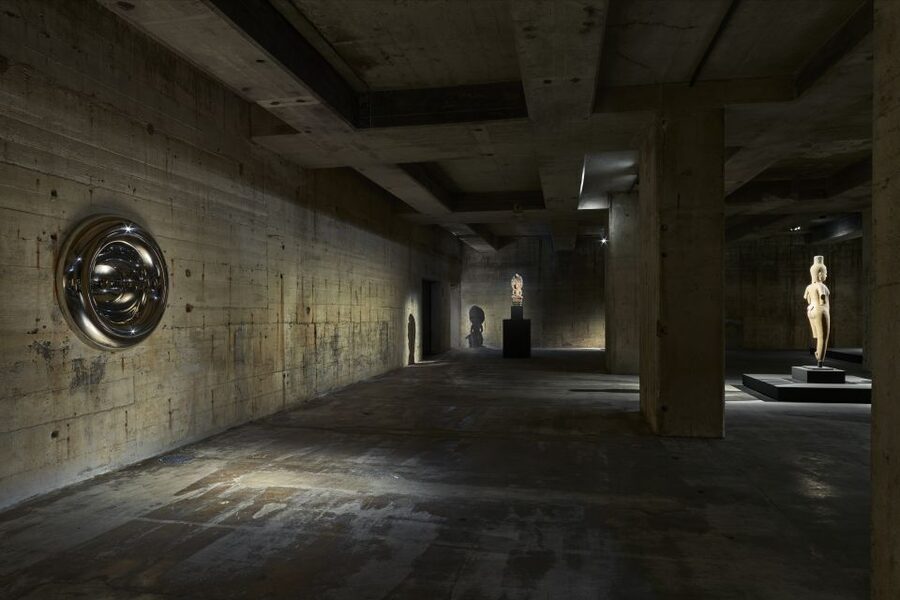
The Feuerle Collection doesn’t stop at ancient art. You’ll also encounter contemporary pieces by Anish Kapoor, Cristina Iglesias, Adam Fuss, Zeng Fanzhi, James Lee Byars, and Nobuyoshi Araki. The collection uses that jump in eras on purpose, creating juxtapositions that feel surprising—but not chaotic.
In a guided tour, these contrasts might turn into a lesson plan. Here, they tend to land more personally. One moment you’re in an atmosphere of ancient sculpture and furniture; the next you’re facing contemporary work that can provoke a different kind of attention—sometimes emotional, sometimes purely visual.
One review also flagged the experience as a good fit for people who enjoy Chinese art and also erotic art. Given that Nobuyoshi Araki is part of the contemporary mix, that’s worth noting if that topic might make you uncomfortable. If you’re sensitive to intimate or sexual themes, you should consider that before booking.
No guided tour: why that can be a feature, not a flaw
This is not a guided tour. The collection is open only for meditation. That sounds strict, but it also explains why so many people rate the experience extremely highly: you’re not being marched through.
If you want a host to explain each object, you won’t get that here. But if you like museums where the art does the talking, this format can feel refreshing. You’re free to sit, breathe, and look without worrying about missing facts.
Here’s how I’d approach it so you don’t get stuck thinking you’re supposed to do something:
- Give yourself a starting point: pick one work and stay with it for a few minutes before moving on.
- If your mind wanders, treat it like part of the practice. Come back to the artwork and let your attention re-set.
- Don’t judge the hour by how fast you feel peaceful. Some people get calm quickly; others need time to settle.
It’s also worth remembering that meditation is not mandatory. Even if you just quiet your body and walk respectfully, you still get the benefit of stepping out of constant input.
Comfort items and what to bring your body (and mind)
You’ll be provided a yoga mat and a blanket, which suggests the experience expects you to sit or lie down for at least part of the hour. That’s a big help, especially in an environment where you’ll want to stay still.
Because the focus is quiet, I recommend you show up with a simple mental setup: arrive with fewer plans for the rest of your day. If you go straight back into crowds and notifications, the detox won’t stick as well. Think of this as your runway for the city.
Also, this experience isn’t for children under 16. That matches the silent, adult-paced concept. If you’re traveling with teens and wondering if it’s worth it, check ages and expectations first.
Price and value: $25 for a one-hour reset
At $25 per person for a 1-hour session, the value comes from what you’re actually buying: access to the collection in silence, plus the comfort gear to make stillness easier. You’re not paying for a lecturer or a timed museum tour. You’re paying for an environment designed to slow you down.
That’s a good deal if you want a calmer kind of art encounter in Berlin—especially if you’ve already done a lot of sightseeing and you’re starting to feel museum fatigue. It’s also good value if you’re specifically drawn to the art mix here: Khmer sculptures, Chinese furniture, and contemporary names like Kapoor and Araki.
If you’re the type who loves context more than calm, the price might feel higher than it needs to, because you don’t get an official guided explanation. This is more about experience than education.
Accessibility and who this experience fits best
The venue is wheelchair accessible, which makes it more widely usable than many niche meditation-style activities. If you can navigate slowly between spaces, you’ll likely do well in the Sound Room passage and Lake Room walk.
Best match:
- Adults who want a quiet, phone-free hour
- People who like art but prefer to experience it without a script
- Fans of Chinese art and Khmer sculpture, plus those curious about contemporary work
- Anyone who wants a structured pause without needing a full-day retreat
Not ideal if:
- You need a guide to explain the artworks
- You hate silence or find it hard to sit still
- You’re traveling with children under 16
And here’s the honest bottom line: you don’t have to be a meditation expert. The experience is built for regular people who want the chance to feel their attention settle.
Should you book the Feuerle Collection Meditation Experience?
I’d book it if you want something different from the typical Berlin museum day: one hour, quiet rules, and a focused route that includes both a Sound Room passage and the underground Lake Room. The art selection alone is compelling—especially the combination of Khmer sculptures and Imperial/scholar Chinese furniture—then the contemporary artists make the hour feel alive, not stuck in the past.
Skip it if you’re craving narration and factual explanations. This isn’t that. But if you’re okay letting the artworks meet you slowly, this is exactly the kind of thoughtful detour that makes Berlin feel human.
FAQ
How long is the Feuerle Collection Meditation Experience?
It lasts 1 hour.
Is meditation mandatory?
No. Meditation is not mandatory. You can also move quietly and enjoy the art.
Is there a guided tour of the exhibition?
No. This experience is not a guided tour, and the collection is open only for meditation.
What’s included with the ticket?
You receive a yoga mat and a blanket.
What areas do you move through during the session?
You’ll pass through the Sound Room and then walk in the Lake Room, with meditation stops among the artworks.
What kinds of artworks are included?
You’ll see early Khmer sculptures (7th–13th century A.D.), Imperial and scholar Chinese furniture (2nd century B.C.–17th century A.D.), and contemporary pieces by Anish Kapoor, Cristina Iglesias, Adam Fuss, Zeng Fanzhi, James Lee Byars, and Nobuyoshi Araki.
Is the experience wheelchair accessible?
Yes, it’s wheelchair accessible.
Is it suitable for children?
No, it’s not suitable for children under 16.
Can I cancel or pay later?
You can cancel up to 24 hours in advance for a full refund. You can also reserve now and pay later.