REVIEW · BERLIN
Daily First Rickshaw promotion in Combi Vehicle public Group 90€
Berlin by rickshaw feels like cheating. You get comfort and easy photo stops while a guide lines up the big sights.
For me, the sweet spot is how you skip the worst crowd-pressure and still cover serious landmarks in one smooth loop.
I especially like the small-group setup, with room for up to two people and add-on rickshaws if you’re traveling with more. One thing to consider: the route includes a lot of major history moments, and you’ll be moving through the city at a steady pace for about 4 hours.
If you want Berlin’s highlights with less stress, this is a practical way to do it.
In This Review
- Key things I’d watch for
- Why a rickshaw tour works in Berlin
- Price and value: what you’re paying for
- The route at a glance: from Fernsehturm to the Gate
- Stop-by-stop: what each place is good for
- 1) Berliner Fernsehturm (Alexanderplatz area)
- 2) Museum Island (UNESCO zone, multiple museums)
- 3) Bebelplatz and the book-burning memory
- 4) Gendarmenmarkt and its twin cathedrals
- 5) Checkpoint Charlie
- 6) Topography of Terror
- 7) Potsdamer Platz and post-reunification transformation
- 8) The Holocaust Memorial (Memorial to the Murdered Jews of Europe)
- 9) Brandenburg Gate and the surrounding government district
- Comfort details that actually matter
- The guide factor: friendly, safe, and photo-minded
- When to book and how far ahead to plan
- Who should book this rickshaw loop
- A quick, honest “should I do it?” checklist
- FAQ
- How long is the Berlin rickshaw tour?
- What does the price include for a group?
- Is the tour offered in English?
- Where does the tour start and end?
- How many people can join the tour?
- Are museum or monument tickets included?
- Are tips included in the price?
- What if I cancel last minute?
Key things I’d watch for
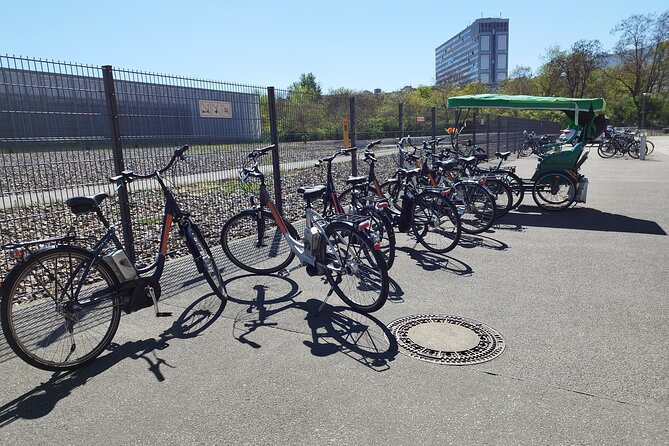
- Small-group comfort with a maximum of 2 people, plus add-on rickshaws for bigger groups
- Photo-friendly stops where you can stay in the rickshaw or get close to monuments
- No-fuss admissions: Berliner Fernsehturm ticket is not included; other listed stops are free
- English-speaking guide with onboard WiFi, bottled water, and even alcoholic drinks
- Rain-ready setup, including a roof and blanket mentioned in a past experience
Still narrowing down your days in Berlin? Here are more tours to weigh up.
- Berlin: Reichstag, Dome and Government District Guided Tour★ 4.7 · 18,288 reviews
- Berlin: 1-Hour City Tour by Boat with Guaranteed Seating★ 4.3 · 16,993 reviews
- Berlin: TV Tower Standard Entrance Ticket★ 4.4 · 15,883 reviews
- Berlin: Boat Tour Along the River Spree★ 4.4 · 11,252 reviews
Why a rickshaw tour works in Berlin
Berlin is built for walking, but walking all day can turn into a blur of crosswalks, lines, and the same selfie angles. A rickshaw tour is a smart middle ground. You still get eyes-on landmarks, but your body isn’t doing all the work. That matters most if you have limited time or you want to see the city without planning every turn.
What makes this option especially practical is the pacing. You’re not sprinting between stops. Instead, the guide takes you place to place and uses short photo stops so you can actually look at what you’re seeing. And if you’re not up for stepping out, you can still get very close from the rickshaw.
I also like that the vibe stays safe and controlled. The rickshaw driver is described as skilled at maneuvering, and the tour is framed as relaxing rather than chaotic. That’s a big deal when you’re mixing famous squares, busy intersections, and memorial areas.
Price and value: what you’re paying for
The price shown is about $216.74 per group (up to 2 people) for roughly 4 hours. On paper, that can look high versus a standard city bus tour. Here’s how I’d think about value:
- You’re paying for private, small-group attention. With only up to two people, you’re far less likely to feel like you’re part of a loud herd.
- You’re paying for transport plus a guide in one package. The driver handles the “getting there,” and the guide handles the context.
- You’re also getting perks that don’t come with many street tours: WiFi on board, bottled water, and alcoholic beverages.
Admissions are not all the same. Berliner Fernsehturm is listed as not included. Museum Island and the other stops you’ll hit are listed as free. So you can plan your spending without guessing.
There’s also a note about a separate daily First Rickshaw promotion in a Combi public group for €90. If that’s an option you’re considering, it likely changes the overall setup (public-group style vs. this private, up-to-2 structure). Either way, the key point is this: for the comfort and tight control of the route, you’re paying for a smoother experience.
The route at a glance: from Fernsehturm to the Gate
This tour is built around a loop that stitches together Berlin’s major “you can’t miss this” landmarks. You start in the Alexanderplatz area and work through key Central and former East Berlin zones. Along the way, you’ll pass major squares, Cold War memory spots, and the Holocaust Memorial area, then finish at the Brandenburg Gate zone.
Stops are brief, often 5–15 minutes, which is exactly right for a rickshaw tour. You’re not meant to “live” in one museum block. You’re meant to get your bearings fast, see what matters, and decide if you want to come back later for longer time inside.
Also, the tour ends back at the meeting point on Weinbergsweg 6, which makes planning the rest of your day easier.
Stop-by-stop: what each place is good for
1) Berliner Fernsehturm (Alexanderplatz area)
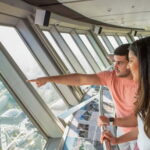
You start at Berliner Fernsehturm, Berlin’s TV Tower at 365 meters. This is a great first stop because it anchors the whole trip. You get a skyline reference point immediately, and from here your guide can connect the city’s old layers to what you’ll see next.
You’ll pass by sights like the Red Town Hall, Marien Church, and Neptunes Brunn on the way to Museum Island. It’s a useful “orientation by landmarks” approach.
Practical note: the Fernsehturm admission ticket is not included, and the stop is about 5 minutes. If you want to go up, you’ll need to budget that separately. If you don’t, you’ll still get solid views and photo angles.
2) Museum Island (UNESCO zone, multiple museums)
Museum Island is one of the big names in European museum geography, and the tour gives you a short taste of the area. The time here is about 15 minutes, and it’s listed as free.
You’ll be in the orbit of major institutions like Berlin Cathedral, City Palace, Altes Museum, Bode Museum, and Neues Museum. Even if you don’t go inside, the setting helps you understand why this part of Berlin is such a magnet for art and history.
What I like about doing it by rickshaw: you see the architectural layout without fighting ticket lines across multiple museums. If you later want to choose one museum to focus on, you’ll be able to pick with more confidence.
3) Bebelplatz and the book-burning memory
Bebelplatz is a sobering moment. The guide’s framing here matters because the site is tied to the Nazi book-burning ceremony on May 10, 1933, when the regime tried to erase voices by destroying books labeled un-German.
This is not the kind of stop you rush through for photos. It’s a moment for listening and letting the story land.
Small caution: it’s easy to feel emotionally heavy at memorial sites. If you’re traveling with kids or you prefer lighter commentary, you might want to mentally plan for that shift in tone.
4) Gendarmenmarkt and its twin cathedrals
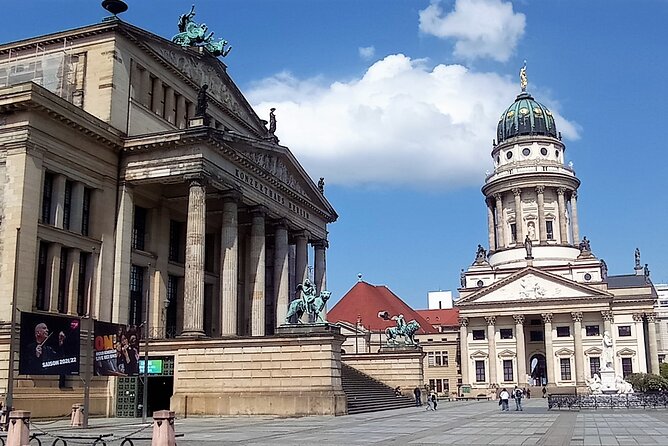
Then you move into a much prettier scene: Gendarmenmarkt. The square centers on a former Royal Concert Hall, framed by the German Cathedral on one side and the French Cathedral on the other. It’s one of those Berlin places where the buildings look like they belong in a picture book.
This stop is about 10 minutes and is listed as free. It’s a good break from the earlier darker context, and it’s also a strong photography stop because the architecture gives you clean composition lines.
5) Checkpoint Charlie
Checkpoint Charlie is one of the most famous Berlin symbols of Cold War division. The tour treats it as a reminder of the long years when the Berlin Wall divided families, friends, and enemies, and how the wall finally fell in 1989.
You get a short visit (about 5 minutes). That’s enough to orient yourself and understand why it’s still emotionally charged.
My practical tip: if you want deeper details, plan a longer stop later on a separate outing. Here, the rickshaw approach is more about getting the meaning and context than fully exhausting the site.
6) Topography of Terror
Topography of Terror is a documentation center focused on Nazi-era atrocities. This stop is about 10 minutes and is listed as free.
This is another point where the rickshaw style works in a smart way: you get the arrival and context without turning it into a long walking slog. But the subject is heavy, so the time window still lets you process what you’re seeing rather than racing.
The area also connects to the Martin-Gropius-Bau exhibition center nearby, which the tour info references with examples of international exhibitions.
If you only do a quick look here: you’ll still leave with a clear sense of what this place documents and why it’s preserved.
7) Potsdamer Platz and post-reunification transformation
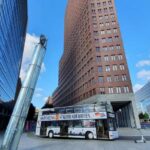
Potsdamer Platz is next, with about 10 minutes on the schedule and listed as free. After reunification in 1990, it became a symbol of Germany’s power and potential. The area had been in disrepair after World War II, and it transformed into a modern zone with skyscrapers and future-facing design.
The guide info specifically calls out the Sony Center as the main landmark here.
This stop is a useful contrast piece. After memorial gravity, Potsdamer Platz gives you a “how Berlin remade itself” moment.
8) The Holocaust Memorial (Memorial to the Murdered Jews of Europe)
Then you reach the Holocaust Memorial, opened in 2005 to commemorate the murder of more than six million Jews under National Socialism. It’s listed as free, and your stop is about 10 minutes.
Even though the visit is short, this memorial deserves time for reflection. The design—made of stelae—invites you to slow down, look around, and sit with the meaning. You can do that within the time box if you don’t try to turn it into a checklist.
9) Brandenburg Gate and the surrounding government district
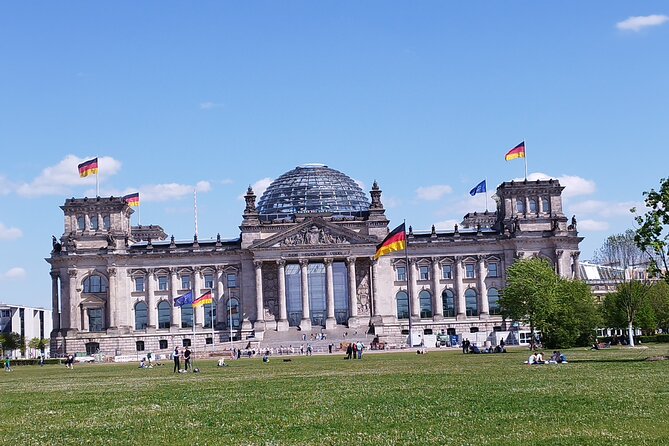
You finish at Brandenburg Gate. After that, the route mentions leaving the former Eastern part of Berlin and heading toward the Memorial to the Murdered Sinti and Roma, the government district (Reichstag/Bundestag and Chancellery).
This end stretch is about closing the loop with one of Berlin’s most recognizable landmarks and a sense of how modern governance sits near the layers of painful memory nearby.
Stop time is about 10 minutes and is listed as free.
Comfort details that actually matter
This tour isn’t just “transport with a guide.” It includes comfort choices that change your day:
- Rickshaw roof and a blanket: one experience note says that even during a rain storm, the roof and blanket kept almost everyone dry. Berlin weather is unpredictable, so this is more than a nice-to-have.
- You can minimize walking: the tour is described as ideal for less mobile visitors. You enter the rickshaw in a few steps, and the guide can stop for photos so you don’t have to step out every time.
- Close viewing without full detours: the guide can stop anywhere you want for memorable pictures. Even without stepping out, you can come very close to monuments, and in some cases you can touch them.
This matters if you’re traveling with someone who gets tired quickly, or if you’d rather spend energy on the story than on uneven city sidewalks.
The guide factor: friendly, safe, and photo-minded
The guide isn’t just reciting facts. A couple of the most praised elements center on style and safety. One named guide, Levi, is highlighted as accommodating interests and delivering a memorable tour. Another comment praises a guide who handled a rain storm with humor and pulled over to teach more about Berlin.
There’s also a recurring theme: the tour is kept fun and relaxing, not stiff. And one experience specifically calls out a guide who’s a fantastic photographer. If photography matters to you, that’s a real advantage because small changes in angle can mean the difference between flat photos and strong compositions.
When to book and how far ahead to plan
This is typically booked about 5 days in advance. That tells me it’s popular enough to plan ahead, especially if you’re visiting during a busy week.
If your schedule is tight, I’d still aim to book early because you’re working with a small-group format (maximum of 2). If you’re flexible, try to align with the time you’ll have the fewest competing plans afterward—this tour is long enough that you’ll want a calm landing time.
Who should book this rickshaw loop
This tour is a good fit if you:
- Want major Berlin sights in a single morning/afternoon block without long transit effort
- Prefer a small group and a guide who can adjust to what you want to see
- Are not thrilled by museum line chaos, but still want a clear map of where you’ll want to return
- Travel with someone who’d benefit from less walking
It’s also a strong choice if you care about photos and want stops that make sense for pictures, not just for traffic flow.
It might be less ideal if you:
- Want deep, long museum visits at each stop (this is more “overview with context” than full-on museum time)
- Don’t handle historical memorial topics well, since the route includes multiple heavy memory sites
A quick, honest “should I do it?” checklist
Book this tour if your goal is to understand Berlin quickly, comfortably, and with photo-friendly pacing. It’s especially worth it because you’re not just moving through the city—you’re getting context at each major stop, from Cold War markers to Holocaust remembrance.
Skip it (or pair it with other plans) if you prefer to spend most of your time inside buildings rather than outdoors/at the perimeter. You’ll see the most important areas, but the stops are timed for an overview.
FAQ
How long is the Berlin rickshaw tour?
It’s about 4 hours.
What does the price include for a group?
The price includes the rickshaw, an experienced tour guide, WiFi on board, bottled water, and alcoholic beverages.
Is the tour offered in English?
Yes, it’s offered in English.
Where does the tour start and end?
It starts at Weinbergsweg 6, 10119 Berlin, Germany, and ends back at the same meeting point.
How many people can join the tour?
The maximum is 2 people.
Are museum or monument tickets included?
Berliner Fernsehturm admission ticket is not included. Museum Island is listed as free, and the other listed stops are also free.
Are tips included in the price?
No, tips are not included.
What if I cancel last minute?
You can cancel for a full refund up to 24 hours in advance. If you cancel less than 24 hours before the start time, the amount paid is not refunded.