
REVIEW · POTSDAM DAY TRIPS
In the Forbidden City – Potsdam Walking Tour
Potsdam gets serious about Cold War secrets. This 2.5-hour walking tour links WWII and Cold War landmarks in one logical route, from the Potsdam Conference site to Cold War exchange points and Soviet restricted areas. I love how you get up close with the locations that shaped the CIA–KGB era, and I especially like the focus on the Soviet side, including a former KGB prison. The main trade-off: you see Schloss Cecilienhof from the outside rather than going inside.
I also like the small-group feel (maximum 15 travelers) and that it works in real life. It runs in all weather, so you’ll just dress for the conditions and keep moving, with a moderate fitness level recommended. You get a mobile ticket, which makes day-of logistics easier.
One more practical note: the tour starts at Glienicker Brücke in Berlin and finishes in Potsdam near bus 603. Transportation to and from the stops isn’t included, so you’ll want to plan how you’ll get there and then back into Potsdam center afterward.
In This Review
- Key things to know before you go
- A Soviet-history route that starts at Glienicke Brücke
- Glienicker Brücke, the Bridge of Spies and CIA–KGB exchanges
- Schwanenallee and the Berlin Wall’s shadow on Potsdam villas
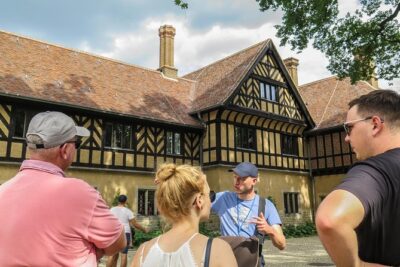
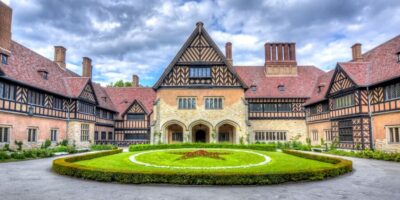
- Schloss Cecilienhof outside: the Potsdam Conference without the palace tour
- Neuer Garten UNESCO grounds with Cold War border fortifications
- Leistikowstraße and Soviet military town No. 7, including a former KGB prison
- Timing, pace, and what your body will feel
- Price and value: $23.72 for a guided Cold War circuit
- Who this Potsdam Soviet history walking tour suits best
- Should you book the Forbidden City in Potsdam walking tour?
- FAQ
- How long is the Forbidden City in Potsdam walking tour?
- Where does the tour start and where does it end?
- How much does the tour cost?
- Is admission included for the stops?
- Do I need to arrange transportation between attractions?
- What group size should I expect?
- Can I cancel and get a refund?
Key things to know before you go
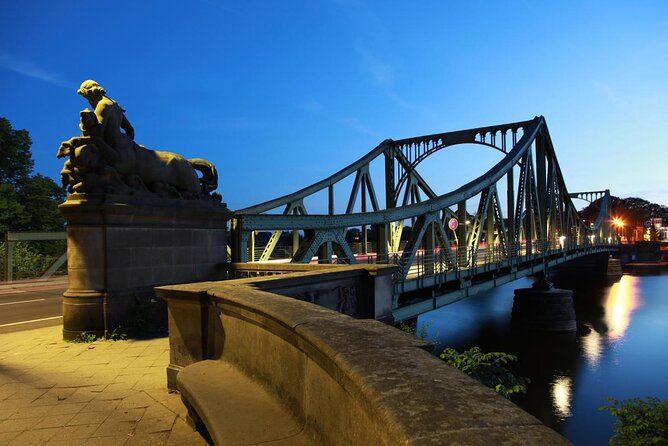
- Bridge of Spies at Glienicke Brücke: the CIA–KGB agent exchange crossing, also used as a movie filming location.
- Schwanenallee and the Berlin Wall’s riverbank effect: see how the wall sheltered houses, and how today’s villas sit where restrictions once were.
- Cecilienhof Palace outside views only: you’ll learn the Potsdam Conference story without entering the palace.
- UNESCO Neuer Garten with Cold War borders in the park: border fortifications ran through the historic grounds.
- Leistikowstraße Soviet military town No. 7: a longtime forbidden city setting, including a former KGB prison area.
More palace-and-park days out in Potsdam
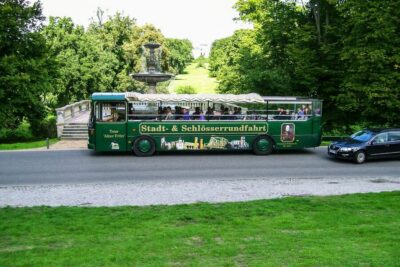
- Potsdam: City and Castles Tour★ 4.7 · 3,721 reviews
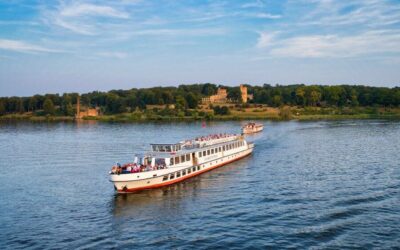
- Potsdam: Palace Tour by Boat★ 4.5 · 2,369 reviews
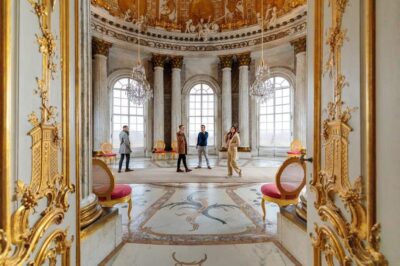
- Potsdam: Sanssouci Palace and Prussian Palaces Entry Ticket★ 4.5 · 2,101 reviews
- Potsdam by Boat: Island Cruise★ 4.6 · 1,308 reviews
A Soviet-history route that starts at Glienicke Brücke
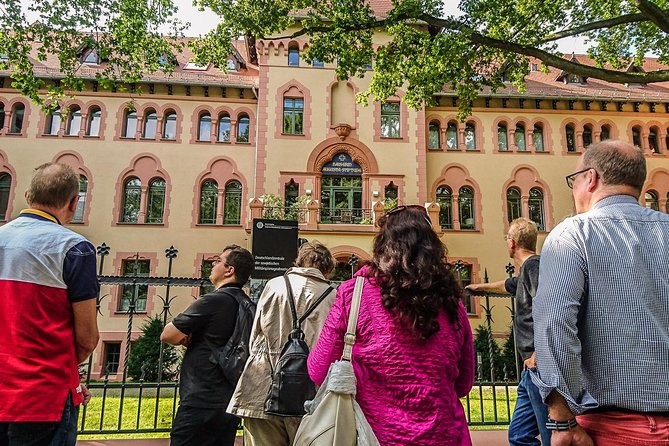
This tour is built for people who want context, not just photos. Potsdam is famous for gardens and palaces, but in the 20th century it also mattered in big ways during World War II and the Cold War. The route helps you see that shift in a straightforward order: from the agent-exchange border crossing to restricted zones tied to Soviet intelligence.
You’ll begin at Glienicker Brücke (meeting at Königstraße 14467, Berlin) and end near Leistikowstraße 1 in Potsdam. The ending point is handy if you want to re-center your day: the tour finishes close to bus 603 at Langhansstraße/ Große Weinmeisterstraße, which can get you back toward Potsdam’s city core.
The group stays small (up to 15), so the guide can keep the story tied to what you’re actually standing near. The tour runs about 2 hours 30 minutes, and you’ll be on your feet for most of it, so comfortable shoes matter.
Glienicker Brücke, the Bridge of Spies and CIA–KGB exchanges
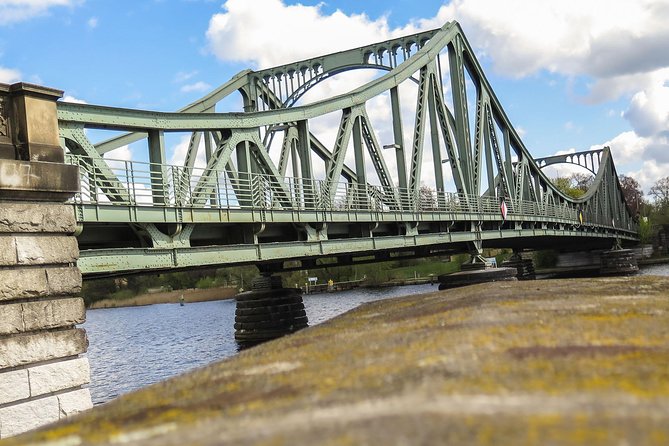
Your first major stop is Glienicker Brücke, known as the Bridge of Spies. During the Cold War, this crossing was used by the CIA and KGB to exchange agents. That alone is a dramatic hook, but it also helps you understand why this bridge was so heavily controlled.
What I’d focus on here: imagine the bridge as a border line. The information you’ll get during the walk explains that it was the border between the GDR and the American sector in West Berlin. Until the fall of the Berlin Wall, it was described as a heavily secured restricted area—exactly the kind of place where ordinary sightseers would never wander.
There’s also a pop-culture detail that’s useful rather than gimmicky. The Hollywood movie Bridge of Spies was shot here. Even if you’re not a movie person, it’s a helpful way to remember that this wasn’t just political talk; it was the real geography of the Cold War.
Photo tip: aim to capture the bridge with enough surroundings to show you’re at a boundary crossing, not just a bridge in the distance. The story lands better when the setting looks like a checkpoint world.
Schwanenallee and the Berlin Wall’s shadow on Potsdam villas
Next you’ll walk to Schwanenallee. This is the kind of stop where the guide’s explanation changes how you see what’s in front of you.
The key idea: Schwanenallee was once located directly next to the Berlin Wall. The wall shielded houses from the riverbank. Today the area is described as prime, with villas in a prime spot. Standing there now, it can feel like “just another elegant street.” But the lesson is that this beauty came with a history of barriers and protection-by-restriction.
I like stops like this because they show how Cold War decisions shaped daily life. It’s not only about prisons and conferences. It’s also about where people could live comfortably—and where they weren’t supposed to go.
Practical note: because this stop is about location and perspective, you’ll get the most out of it if you slow down and look in the directions your guide points out. The wall’s position relative to the river is the whole point.
Schloss Cecilienhof outside: the Potsdam Conference without the palace tour
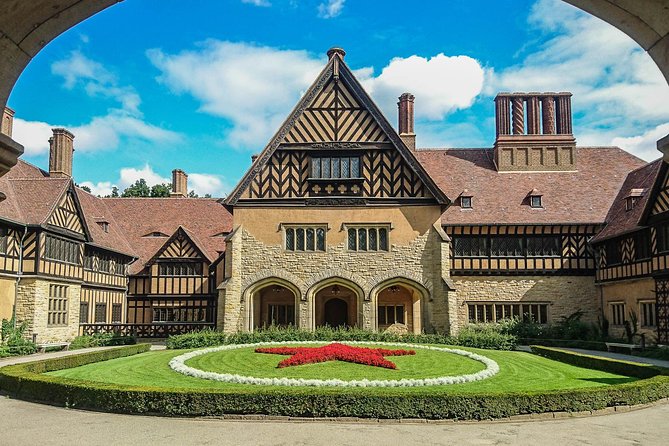
Schloss Cecilienhof is one of the loudest names in your route, and it’s handled thoughtfully. You’ll see it from the outside, not enter the palace.
Why that matters: in summer 1945, US President Harry S. Truman, British Prime Minister Winston Churchill, and Soviet head of state Josef Stalin met here. The Potsdam Conference was described as an end point of World War II, and also a starting point of the Cold War.
So even without entering, you’re in the right place for the big turning point. This is where the narrative clicks: the same meeting room idea that brought the end of one era also set the stage for the next standoff.
What to watch for: from the outside viewpoint, try to take in how the palace sits within its surroundings. The guide’s talk frames it as a shift in power and policy, not just a pretty building.
This stop is also a reminder to manage expectations. If your dream is to tour the inside rooms, this isn’t that format. But if you want the historical story anchored to the real location, it works well.
More of Berlin on foot


Neuer Garten UNESCO grounds with Cold War border fortifications
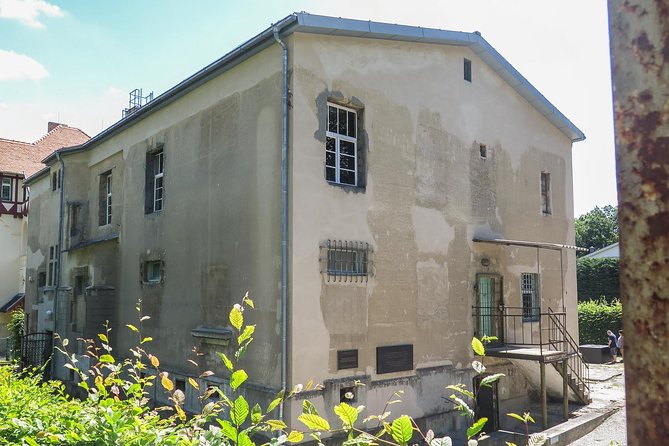
From Cecilienhof, the tour moves to Neuer Garten. This is a UNESCO World Heritage Site, and it carries an extra layer of Cold War meaning because it was restricted for a long time.
One of the most striking details you’ll learn: border fortifications of the Berlin Wall ran through the park with its historic palaces. That means you’re not just walking through a landscaped attraction. You’re walking through a place where the border was physically present in the landscape.
I appreciate that this stop doesn’t treat UNESCO grounds as separate from politics. It connects the prestige and the design with what happened when access became controlled and movement became dangerous.
How to get more out of it: let the guide’s explanation guide where you look. With a park like this, it’s easy to drift into “pretty views mode” if you’re not listening for what made the area restricted.
Drawback to consider: parks can mean walking on uneven ground or spending time outside while waiting for the group to reposition. The tour is designed to move through it, but you’ll still feel the outdoors part.
Leistikowstraße and Soviet military town No. 7, including a former KGB prison
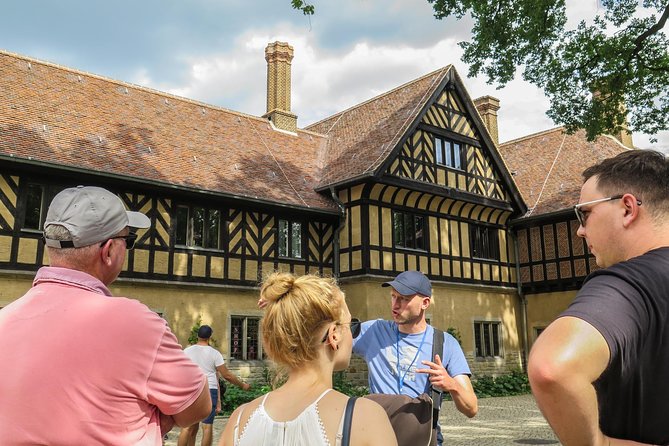
The final and longest stop is a real turning point in tone. You’ll visit Gedenk- und Begegnungsstatte Leistikowstraße, also tied to what’s described as Soviet military town No. 7—a forbidden city.
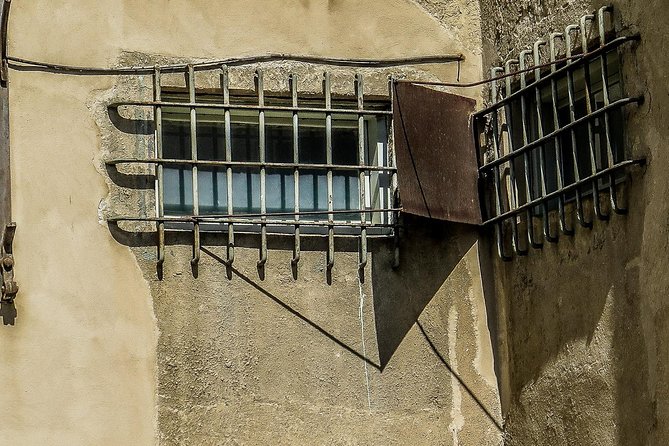
Here’s what makes it powerful: the area is described as one of the most important intelligence sites of the Soviets during the Cold War. You’ll learn that a former KGB prison is located in this area, and you’ll discover the neighborhood that, for almost 50 years, was a Soviet restricted area in the middle of Potsdam.
I like how the tour builds you up to this. After seeing the public-facing symbolism of the bridge and the palace, you end with the places where control and detention were part of the system.
Also, this is where the tour’s Soviets-and-intelligence emphasis becomes very concrete. Your guide ties together the idea of restricted geography with what intelligence work meant on the ground—helping you understand why this wasn’t just a political slogan in books.
If you’re the type who likes asking questions, this is a good moment to do it. The setting gives the guide something real to point to, and the story has enough weight that you’ll probably leave thinking about it long after the walk ends.
Timing, pace, and what your body will feel
The route is organized into short chunks, which helps you stay comfortable. The stops are listed with time on the tour plan: about 15 minutes at Glienicke Brücke, 15 at Schwanenallee, 30 at Schloss Cecilienhof, 30 at Neuer Garten, and 45 at Leistikowstraße.
At roughly 2 hours 30 minutes total, it’s a good choice for a day where you still want time for Potsdam’s gardens afterward. But you should plan for outdoors time and walking between points. The activity notes recommend a moderate physical fitness level, so if you have mobility limits, you’ll want to think about whether a continuous walking day is realistic for you.
Weather-wise, it operates in all weather conditions. That’s a big deal. You don’t just read that and ignore it—you dress accordingly. Bring layers you can adjust fast, and keep something rain-ready if the forecast looks iffy.
Group size is small, which can be a comfort win. You’re not stuck behind a huge crowd, and the guide can keep eyes on the group.
Price and value: $23.72 for a guided Cold War circuit
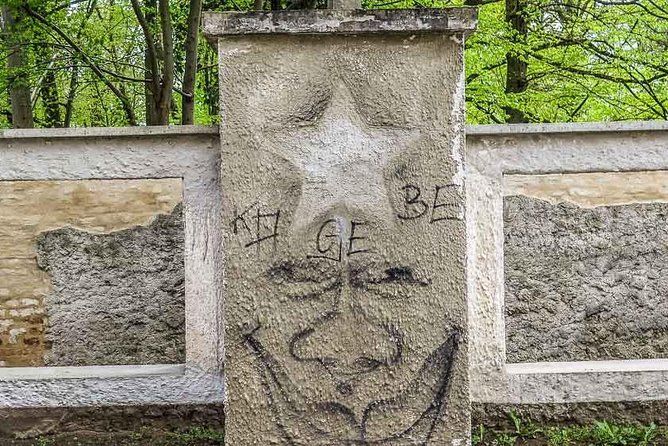
At $23.72 per person, this is priced like a budget-friendly history walk, not a fancy private tour. And the value comes from the structure: you get guide-led interpretation across multiple major sites that are normally hard to connect if you’re doing it alone.
Another value factor: the tour’s listed stops are marked as free admission. That means you’re paying mainly for the guide and the organization, not for entry fees at each location.
Two extra value points matter, too. First, you get both a local guide and a professional guide. Second, the tour focuses on a specific theme—WWII and Cold War Soviet history in Potsdam—rather than trying to cover everything under the sun.
The one caution is that it averages being booked 121 days in advance. That doesn’t mean panic-buying, but it does mean planning ahead helps. If your schedule is tight, locking in a spot earlier is smart.
Who this Potsdam Soviet history walking tour suits best
This tour is a great fit if you:
- like history that’s tied to real places, not just museums
- want Cold War context in a manageable 2.5-hour format
- enjoy small-group walking tours where the guide can keep the story moving
- want to see Cold War sites in Potsdam without stitching together a complicated self-guided route
It’s also a solid option if you’re combining time in Berlin and Potsdam. Starting at Glienicker Brücke (Berlin) and ending near bus 603 in Potsdam can fit neatly into a longer trip day.
If you only want palaces and gardens with no heavy WWII/Cold War focus, this might feel too serious for you. But if you’re curious about how Potsdam changed from 1945 into the decades that followed, it’s built for that exact question.
Should you book the Forbidden City in Potsdam walking tour?
I’d book this if you want a clear story about Potsdam’s 20th-century turning points, especially the Soviet side. The route takes you from the Bridge of Spies agent-exchange setting to the Potsdam Conference meeting place, and then down into the Soviet restricted neighborhood tied to intelligence work and a former KGB prison area.
Skip it if you’re hoping for palace interior access or a lighter, garden-only day. You’ll spend time outside, and the tone moves toward restricted zones and intelligence history by the end.
If you’re deciding on one short guided walk to anchor your understanding of Potsdam’s WWII/Cold War role, this is a strong bet for your time and money.
FAQ
How long is the Forbidden City in Potsdam walking tour?
It runs for about 2 hours 30 minutes.
Where does the tour start and where does it end?
It starts at Glienicker Brücke on Königstraße, 14467 Berlin, and it ends at Leistikowstraße 1, 14469 Potsdam, near bus 603 (Langhansstraße/ Große Weinmeisterstraße).
How much does the tour cost?
The price is $23.72 per person.
Is admission included for the stops?
The listed stops show free admission, and the tour ticket is mobile.
Do I need to arrange transportation between attractions?
Transportation to and from the attractions is not included, so you’ll need to plan how you’ll get from the end of the walk back into Potsdam center.
What group size should I expect?
The tour has a maximum of 15 travelers.
Can I cancel and get a refund?
Yes, cancellation is free up to 24 hours in advance of the experience start time for a full refund. If you cancel later than that, you don’t get a refund.
More Tours in Potsdam


More Tour Reviews in Potsdam

A Day in Potsdam
Round out your days in Potsdam

Potsdam Day Trips, compared.
 ★ 4.7Potsdam: City and Castles TourFrom $293,721 reviews
 ★ 4.5Potsdam: Palace Tour by BoatFrom $272,369 reviews
 ★ 4.5Potsdam: Sanssouci Palace and Prussian Palaces Entry TicketFrom $252,101 reviews
 ★ 4.53-Hour World Heritage Cruise to PotsdamFrom $251,569 reviews
 ★ 4.6Sachsenhausen Concentration Camp and Potsdam TourFrom $651,334 reviews
 ★ 4.6Potsdam by Boat: Island CruiseFrom $421,308 reviews
 ★ 4.7From Berlin: Potsdam and Sanssouci Palace Tour with EntryFrom $751,219 reviews
 ★ 4.2Potsdam: City Sightseeing Hop-On Hop-Off Bus TourFrom $23864 reviews
Browse the lists this tour appears in