
REVIEW · SPREE RIVER CRUISES
Rickshaw Tour-Cruise Ship guests arrive 9.30 upto 11.30 am Berlin
Berlin looks different from a rickshaw seat.
This private 3-hour Berlin Mitte route puts major landmarks within reach fast, with English-speaking guides who explain what you’re seeing in plain language and stop for photos. I especially like the comfort extras—blanket plus bottled drinks—because you can focus on the city, not logistics.
One watch-out: it’s a tight highlight circuit with lots of brief stop time, and some spots have admission tickets not included (like the TV Tower), so you’ll be choosing between seeing from the outside vs. going inside.
In This Review
- Key things I’d plan around
- The 9:30–11:30 Berlin window: built for cruise-ship arrivals
- Private rickshaw comfort: close, calm, and easier than walking
- Price and value: $264.35 per group, but what you’re really buying
- Stop 1: Berliner Fernsehturm at Alexanderplatz
- Stop 2: Museum Island and the culture stretch along Unter den Linden
- Stop 3: Bebelplatz and the Memorial to May 10, 1933 book burnings
- Stop 4: Gendarmenmarkt, German Dom, and French Dom views
- Stop 5: Checkpoint Charlie, the Wall era in one concentrated moment
- Stop 6: Topography of Terror and the former SS and Gestapo area
- Stop 7: Potsdamer Platz and the European construction-site story
- Stop 8: The Holocaust Memorial for the murdered Jews of Europe
- Stop 9: Brandenburg Gate—Berlin’s most recognizable “then and now”
- Stop 10: Reichstag/Bundestag government district and the Sinti and Roma memorial area
- Stop 11: The Führerbunker area for context, not spectacle
- Stop 12–13: Unter den Linden, the Opera area, and Berliner Dom
- Guide quality: the difference between seeing Berlin and understanding it
- Timing and expectations: how to get the most out of brief stop time
- Who should book this Berlin rickshaw tour
- Should you book this tour?
- FAQ
- What time does the tour run for cruise ship guests?
- How long is the tour?
- Is this a private tour?
- Is pickup available?
- What language is the tour offered in?
- Are admissions included for all stops?
- What’s included in the price?
- How does the tour handle mobility needs?
- How many rickshaws are provided for larger groups?
- Is cancellation free?
- FAQ
- How do tickets work for the tour?
- Where does the tour end?
- Do I need to bring tips?
Key things I’d plan around
- Pickup-to-rickshaw setup so you spend less time herding yourself through Berlin traffic
- Mobility-friendly design for people who use a walker or want to minimize steps
- Short, photo-focused stops at world-famous memorials and landmarks
- Museum Island + Unter den Linden combo for big-city culture without long transfers
- Guides who adapt on the fly if you’re more into history, photos, or quieter streets
- Drinks and blanket included to make a 3-hour outdoor tour feel easier
More time out on the Spree
- Berlin: Boat Tour Along the River Spree★ 4.4 · 11,252 reviews
- Berlin: 1-hr Boat Tour with Bilingual Live Guide (DE/EN)★ 4.7 · 5,653 reviews
- Berlin: 3.25-Hour Spree & Landwehrkanal Boat Tour★ 4.6 · 4,311 reviews
- Berlin: 1-Hour City Sightseeing Cruise★ 4.4 · 2,210 reviews
The 9:30–11:30 Berlin window: built for cruise-ship arrivals
If you’re arriving with a cruise, timing is everything. This rickshaw experience is set up so Berlin can fit into that late-morning window, with arrival from about 9:30 up to 11:30. That matters because it reduces the stress of hunting for transport right when you step off the ship.
What I like about this format is that you’re not stuck with a rigid, whole-day grind. The tour is about 3 hours (approx.), and the guide builds the route around what you actually care about and how far you want to go by rickshaw. If you want the classic highlights, you’ll get them. If you want more photo time or more context at fewer sites, you can ask.
You also end back near where you started, so you don’t lose time later figuring out your next move.
Private rickshaw comfort: close, calm, and easier than walking
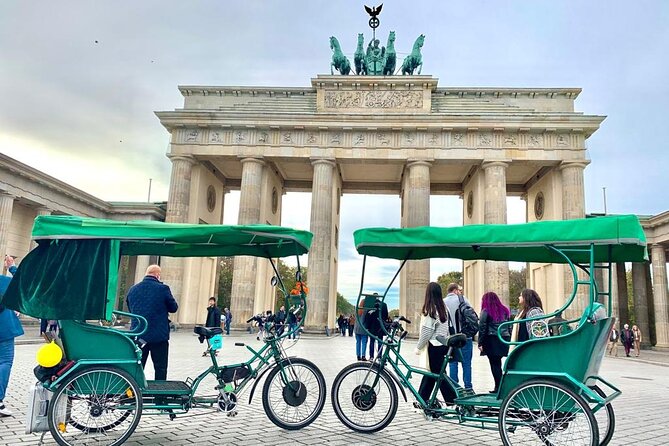
This is a private tour/activity, meaning it’s just your group. That changes the vibe. You can ask to slow down at a memorial moment, tell your guide you want more photos, or request a gentler pace if you’re tired.
The rickshaws are also described as a good option for less mobile guests. You take only a few steps to get in, and you can bring your walker along. The practical part: you can stay in the rickshaw and still get very close to monuments—close enough that touching them is possible where appropriate.
That closeness is a big deal in Berlin. Many sights are spread out, and walking from one to the next can turn into a lot of time on sidewalks. From the rickshaw, you get a steadier rhythm: arrive, look, learn, snap a photo, then roll on.
Included comfort helps too. You get a cozy blanket plus bottled water, and there are soft drinks and Berlin beer mentioned as part of what’s provided. If the day is cold or breezy, that blanket can be the difference between enjoying the tour and rushing to warm up.
Price and value: $264.35 per group, but what you’re really buying
The price is listed as $264.35 per group (up to 2). On the surface, that’s not a cheap museum ticket. But in Berlin, you’re not paying for admission. You’re paying for private guiding, private transport, and time.
When the guide is taking you from Alexanderplatz-area landmarks to the Brandenburg Gate and the Government District, you’re effectively buying speed plus interpretation. A big bus can cover distances, but you won’t get the same stop-and-photo control or the same ability to tailor the route to your pace.
Also, the included extras matter. Water, soft drinks/beer, and a blanket are not small details when you’re outdoors for a few hours. If you’re traveling as a couple, this pricing structure can start to feel more reasonable than you’d expect, especially compared with the cost of piecing together taxis plus a guided walking tour.
Main drawback for value: some of the top add-ons you might want to do inside major buildings aren’t included. For example, the Berliner Fernsehturm stop notes an admission ticket is not included. So you’re mostly buying great views, context, and access from street level.
Stop 1: Berliner Fernsehturm at Alexanderplatz
The tour kicks off at Berliner Fernsehturm, Berlin’s tall TV tower, in the square around Alexanderplatz. Starting here is smart. You get an instant orientation point. It’s a landmark you can recognize later too, which helps your brain map the city.
From there, you pass key sights while the guide points out what mattered historically and what looks important today. Along the way, the route is designed to connect dots: you’ll go past the Red Town Hall, Marien Church, and the Neptune Fountain, then continue toward Museum Island.
This first leg works best when you like momentum. You’re not waiting around. You’re getting your “Berlin bearings” early, plus photo chances before the tour turns into heavier memorial territory later.
One consideration: the TV Tower admission ticket isn’t included here, so if you want to go up inside, you’ll need to plan for that separately. For many people, the outside views and the walking-less transport are enough.
More boat trips around Berlin

Stop 2: Museum Island and the culture stretch along Unter den Linden
At Museum Island, you’re in one of Berlin’s big cultural zones. It’s called out as a UNESCO World Heritage Site, and the tour focuses on the grand setting and the historic streets nearby.
This stop also has a useful practical angle: museum admission is free for this stop as described, so you aren’t being forced into ticket decisions just to enjoy the experience. You can still look at the main façades and appreciate the layout.
You’ll also see Unter den Linden, the historic boulevard tied to state power and big-city formality. That’s the kind of street where Berlin’s “old plus new” story shows up fast, because it’s lined with institutional buildings and monumental sightlines.
What you might notice in the area is how many museum names you’ve heard before. The tour references major institutions including the Old Museum, Old National Gallery, Pergamon Museum, and Bode Museum. Even without going inside, the architecture and spacing help you understand why this area is so central to Berlin’s reputation.
If you’re the type who likes art and institutions but doesn’t want a full museum day, this is a good compromise.
Stop 3: Bebelplatz and the Memorial to May 10, 1933 book burnings
After the island, the route heads to Bebelplatz, where the Memorial to May 10, 1933 Nazi Book Burning is located. This is one of the tour’s more emotionally serious stops.
The guide area includes nearby context too, pointing to the Forum Fridericianum complex: places like the State Opera, parts connected to Humboldt University, the State Library, and St. Hedwig’s Cathedral. You’re not just looking at a single plaque. You’re seeing how the institutions of the era cluster in the same city fabric.
Why this matters: it’s a reminder that culture can be targeted, and political power can reshape knowledge. The memorial is tied to the 1933 book burnings, and that connection gives the street a heavier meaning than it might on a first glance.
This stop is also often where pacing becomes personal. If you want a few extra minutes for reflection, rickshaw time is easier to adjust than rigid walking group schedules.
Stop 4: Gendarmenmarkt, German Dom, and French Dom views
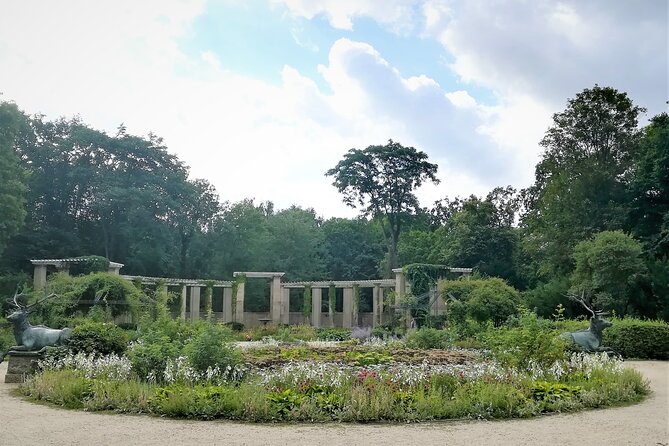
Next comes Gendarmenmarkt, widely considered one of Berlin’s most beautiful squares. You’ll be able to see the German Dom and the French Dom framing the former Royal Concert Hall area.
Here’s why I think this stop is valuable: it offers a reset. After memorial seriousness, you get architecture that feels designed for beauty and ceremony. It’s the kind of place where photos come out well even if the light is not perfect, because the square’s symmetry and façades do a lot of the work.
Also, it’s a good example of how Berlin layers time. The square is historic and grand, but you still feel the city’s modern energy around it.
Stop time is short, so you’ll want to be ready with your camera and your best angle. The rickshaw position helps, but you’ll still benefit from arriving mentally ready to shoot.
Stop 5: Checkpoint Charlie, the Wall era in one concentrated moment
Then you reach Checkpoint Charlie, one of the best-known border crossings connected with the Berlin Wall era. The tour description emphasizes how close the world came to escalation, and it connects the site to the uneasy tension of Cold War geography.
Even if you’ve read about the Wall, seeing this location in real space changes the scale of the story. It’s not just concept history anymore—it’s streets, barriers, and movement.
This is another quick stop designed for a snapshot and a short explanation. If you want to go deeper with exhibits, you can later add a museum stop on your own. In this 3-hour structure, the value is getting your mind oriented fast.
Stop 6: Topography of Terror and the former SS and Gestapo area
After that, the route runs along the former border strip toward Topography of Terror, a documentation site connected to the period of National Socialism and the former headquarters of the SS and Gestapo. The stop description also mentions Prussian Parliament nearby and the Martin-Gropius-Bau building, which has hosted major international exhibitions.
This part of the tour hits a key pattern: Berlin forces you to remember, but it also forces you to read the city as a historical document. Buildings and institutional spaces aren’t neutral. They carry roles and memories.
Stop time is listed as brief, but for many people it’s enough to absorb a few core points: how power operated, and why the “border line” mattered so much.
If you’re sensitive to heavy content, plan your energy. This tour mixes beauty and brutality, so you’ll want to pace yourself.
Stop 7: Potsdamer Platz and the European construction-site story
At Potsdamer Platz, you get a different Berlin chapter. The tour describes it as Europe’s largest construction site for a long stretch, then points to modern ensembles like the Sony Center.
This is where Berlin shows its “rebuilt after division” story in architectural form. You’re not looking at a memorial first. You’re looking at how a city retools space when history changes direction.
Even on a short stop, it helps to ask yourself a simple question: what replaced what? Potsdamer Platz is a good place to see that in layout.
Stop 8: The Holocaust Memorial for the murdered Jews of Europe
Next comes the Memorial to the Murdered Jews of Europe, also known as the Holocaust Memorial. It opened in 2005, commemorating the murder of more than 6 million Jews during National Socialism.
This stop is emotionally central. What I’d plan for: give yourself a moment rather than treating it like a quick photo stop. The rickshaw helps you get close, but the memorial asks for attention.
Short timing can still work if you use it well—look first, read the surrounding info if you can, then take your photo once you’ve taken in the shape and scale.
Stop 9: Brandenburg Gate—Berlin’s most recognizable “then and now”
After that, you roll to Brandenburg Gate, one of the most famous landmarks in Berlin. This is the big postcard moment, but it’s not just for postcards. It’s a symbol loaded with meaning.
In Berlin, the same monument can feel different depending on what era you’re thinking about. That’s why the guide’s narrative here matters. The tour is built to connect earlier stops to the emotional impact of this one.
A short stop is likely all you’ll have in the 3-hour structure, but it’s enough to get the landmark moment without turning the day into a museum crawl.
Stop 10: Reichstag/Bundestag government district and the Sinti and Roma memorial area
Then you enter the Government District area around Reichstag/Bundestag and the Chancellery, and the route also references the Memorial to the Murdered Sinti and Roma.
This is another “read the city” moment. Berlin’s governmental power sits in the physical space where earlier eras left scars. Seeing it in sequence with checkpoints and memorials helps you understand how Berlin turns history into civic identity.
The stop time described is brief, but the key is that you’re being oriented, not “tour-mugged.” You’re getting the explanation that makes the buildings feel connected, not random.
Stop 11: The Führerbunker area for context, not spectacle
The itinerary includes a stop connected to the Führerbunker area. It’s listed as a parking/time-focused stop rather than a long visit, so think of it as contextual grounding.
In a 3-hour route, you’re not getting a full historical site tour here. You’re getting a grounding moment so the rest of the day lands better.
Stop 12–13: Unter den Linden, the Opera area, and Berliner Dom
Finally, you drift toward Unter den Linden, the royal boulevard again, and toward the Opera House area. The tour then ends at Berliner Dom, the Berlin Cathedral.
This late-stage route works because it ends with “big Berlin” sightlines: grand buildings, strong silhouettes, and a sense of finale after memorial intensity.
Why it’s a good ending: it gives you something visually uplifting to carry with you when you leave. Even if you’ve spent the day with heavy topics, you’re still ending in a place that feels like the city’s present is strong.
Also, finishing with Berliner Dom can be handy. It’s a recognizable landmark, so it’s easier to continue your independent sightseeing afterward.
Guide quality: the difference between seeing Berlin and understanding it
The biggest reason people rave about this kind of private rickshaw tour is the guide. Names that show up include Levent and Gregor, and the common theme is that they combine historical explanation with a friendly, professional manner.
I’d treat this as a practical decision too. If you’re short on time, you don’t want a guide who just points. You want someone who can explain why each stop matters and how it connects to the next one.
The reviews you provided also highlight things like safe guidance through traffic and stopping when you want photos. One guide even handled a cold, icy day with full professionalism. That’s not trivia. That’s the difference between a fun afternoon and a miserable one.
If you’re the type who likes humor mixed into history, you should feel right at home here. If you prefer straight facts, you can steer the guide toward that too.
Timing and expectations: how to get the most out of brief stop time
Because many stops are listed at 5 to 10 minutes, you’ll want a simple strategy:
- Pick your top two stops for photos and give them your best attention.
- For the rest, treat it like a quick museum label moment: look, listen, then move.
- Ask the guide for extra time if one site hits you.
The “best” route is rarely the fastest. In this case, you can manage it. The tour is described as customizable based on your interests, the duration, and the distance you can comfortably cover by rickshaw.
If you want more depth, the operator also mentions longer formats where you’d include more areas like Tiergarten Park and along the River Spree. For a 3-hour version, the focus stays on the most essential highlights.
Who should book this Berlin rickshaw tour
This tour fits you well if:
- You want a private, guided Berlin overview without long walks.
- You care about the connection between landmarks and events, including memorial sites.
- You want mobility-friendly sightseeing where you can stay seated most of the time.
- You like photo stops that don’t feel rushed by a crowd.
It may be less ideal if:
- You want long museum interiors and detailed on-site exhibits during these same 3 hours.
- You strongly prioritize going inside the TV Tower or other paid attractions on the spot, since some admissions are not included.
Should you book this tour?
Yes—if your goal is to see Berlin’s hardest and most famous places in one logical loop and you value guidance that turns locations into understanding. The comfort extras and the mobility-friendly approach make it feel easier than the usual “run around Berlin” plan.
Book it with the right mindset: this is a highlights + interpretation tour, not a deep museum day. If you want to add indoor time later, you can. This tour sets you up fast.
FAQ
What time does the tour run for cruise ship guests?
The tour arrival window is listed as 9:30 up to 11:30 am Berlin time.
How long is the tour?
The duration is listed as about 3 hours.
Is this a private tour?
Yes. It’s described as a private tour/activity, with only your group participating.
Is pickup available?
Pickup is offered. The rickshaws can arrive at your hotel or designated meeting point.
What language is the tour offered in?
The tour is offered in English.
Are admissions included for all stops?
No. The TV Tower stop notes an admission ticket is not included. Museum Island is listed as free for this stop.
What’s included in the price?
Included items are a cozy blanket, bottled water, Berlin beer, and soft drinks.
How does the tour handle mobility needs?
The tour is described as ideal for less mobile guests. You enter the rickshaw in a few steps, and your walker can be taken with you. You can also stop for photos and get very close to monuments.
How many rickshaws are provided for larger groups?
For groups of 3 to 4 people, 2 rickshaws are provided with drivers. For groups of 5 to 6, 3 rickshaws are arranged (you’re asked to contact the provider).
Is cancellation free?
Yes. Free cancellation is available up to 24 hours in advance for a full refund.
FAQ
How do tickets work for the tour?
A mobile ticket is offered.
Where does the tour end?
It ends back at the meeting point.
Do I need to bring tips?
Tips are listed as not included.
More Tours in Berlin

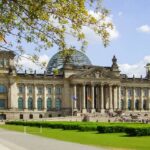
More Tour Reviews in Berlin
More Hours on the Spree

Round out your days in Berlin
Spree River Cruises, compared.
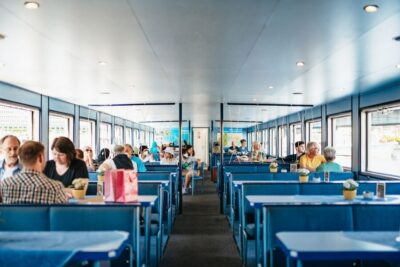 ★ 4.31-Hour City Tour by Boat with Guaranteed SeatingFrom $2516,993 reviews
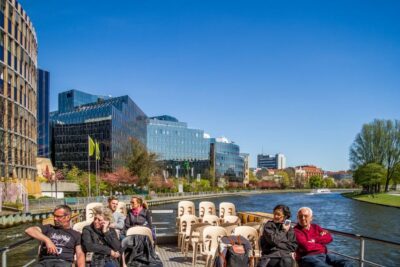 ★ 4.4Boat Tour Along the River SpreeFrom $3411,252 reviews
 ★ 4.71-hr Boat Tour with Bilingual Live Guide (DE/EN)From $225,653 reviews
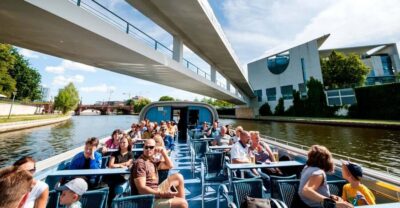 ★ 4.63.25-Hour Spree & Landwehrkanal Boat TourFrom $384,311 reviews
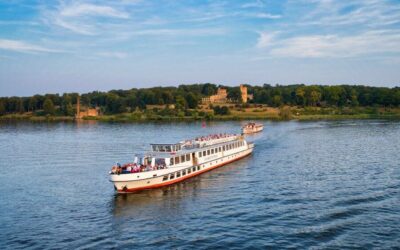 ★ 4.5Potsdam: Palace Tour by BoatFrom $272,369 reviews
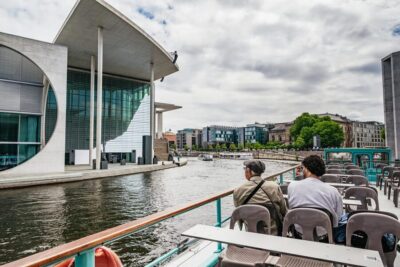 ★ 4.41-Hour City Sightseeing CruiseFrom $252,210 reviews
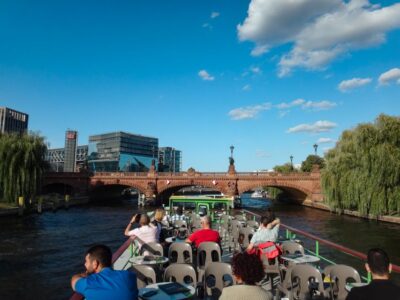 ★ 4.42.5-Hour East Side Boat Cruise with CommentaryFrom $352,016 reviews
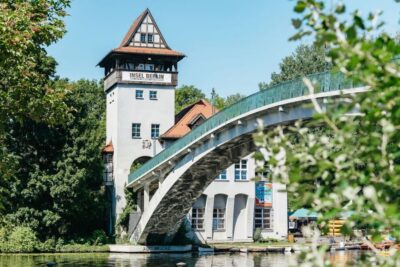 ★ 4.6Spree Boat Tour to MüggelseeFrom $251,973 reviews
Browse the lists this tour appears in