
REVIEW · TV TOWER & PANORAMIC VIEWS
All of Berlin (city panorama)
Berlin hits you fast. That’s why this route works. You get a smart, time-saving loop through major landmarks, with a guide connecting what you see to what Berlin went through. I especially like the big-sights coverage in about four hours and the way the stops are chosen to make sense together, from Alexanderplatz to Brandenburg Gate. One thing to plan for: this is a walking-heavy city center tour, so it’s not ideal if you can’t handle long distances on foot.
What makes it feel worth the money is the focus on orientation. You don’t just pass by famous buildings—you learn what they represent, what they used to be, and why they’re placed where they are. I also like that you’ll stand in front of major history touchpoints without having to build an itinerary yourself, and that the group is kept to a manageable max size. The main drawback is straightforward: the tour is operated just in Spanish, so if you don’t follow Spanish well, you’ll miss a lot of the value.
In This Review
- Key highlights you’ll feel during the walk
- Four Hours That Actually Give You Bearings in Berlin
- Meeting at Berlin TV Tower and the Practical Pace
- Alexanderplatz, Neptune Fountain, and Rotes Rathaus: Starting Where Berlin Shows Off
- Nikolaiviertel, Berliner Dom, and Lustgarten: Old Berlin Meets the Center
- Unter den Linden and Bebelplatz: Culture and Consequences in the Same Corridor
- Neue Wache and Käthe Kollwitz: A Memorial That Keeps Changing With Time
- Gendarmenmarkt, Checkpoint Charlie, and Potsdamer Platz: From Elegance to the Wall Era
- Brandenburg Gate Finale and the Holocaust Memorial Walk-By With Meaning
- Price and Value for $25.58: What You’re Really Paying For
- Language, Mobility, and Who This Tour Fits Best
- Should You Book This Berlin Panorama Tour?
- FAQ
- What is the starting location for All of Berlin (city panorama)?
- What time does the tour begin?
- How long is the tour?
- How much does the tour cost?
- Is there a guide included?
- Is the tour available in English or another language?
- Do I need to pay admission at each stop?
- Is private transportation included?
- What group size should I expect?
- Can I cancel and get a full refund?
Key highlights you’ll feel during the walk
- Alexanderplatz to Brandenburg Gate in one coherent loop that helps you understand where things are
- A Spanish-speaking local guide who explains what you’re seeing, not just the photo stops
- UNESCO museum-complex area and major civic landmarks along the way
- Memorial stops placed in context, including the work by Käthe Kollwitz at Neue Wache
- Checkpoint Charlie gets real time so it isn’t just a quick photo
- Great city-center sights you can’t fully reproduce by car, since much of the route is on foot
More of Berlin from up high
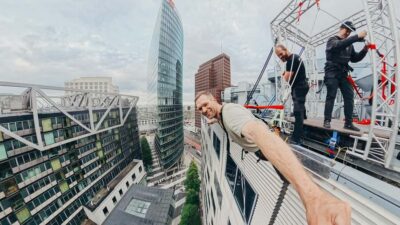
- Berlin: Highest Swing in Europe★ 4.8 · 1,661 reviews
- Berlin: “Pergamonmuseum. The Panorama” Exhibition Tickets★ 4.6 · 1,245 reviews
- Berlin: TV Tower SPHERE Restaurant Tim Raue Entry Ticket★ 4.2 · 940 reviews
- Berlin: Ticket for World Balloon with Perfect View★ 3.5 · 737 reviews
Four Hours That Actually Give You Bearings in Berlin
Berlin can be overwhelming at first. The streets are wide, the distances feel big, and the history is layered in a way that doesn’t show itself in one museum visit. This tour helps you get your bearings fast by linking central landmarks into a single story you can remember.
The payoff for your time is the structure. In roughly 4 hours, you’ll cover classic city icons and the places where the 20th century left visible marks. That’s the core value here: you’re not buying “a bus ride and a few stops.” You’re buying a guided route designed for orientation, with commentary that explains why each site matters.
And yes, a good chunk of the sightseeing is built around places you can see without juggling tickets. Many stops are listed as free with no special admission needed, so your day stays simple. You’ll still need to accept the pacing and walking level, because the tour is designed to move.
Meeting at Berlin TV Tower and the Practical Pace
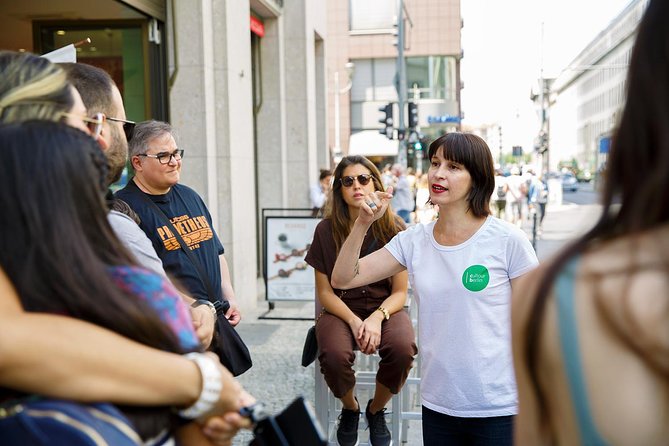
You start at Berlin TV Tower (Fernsehturm) area, at Panoramastraße 1A, and the meeting point is right by the TV Tower entrance. The tour kicks off at 10:00 am and returns back to the same meeting area.
Most travelers can participate, but here’s the practical reality: you should expect “long enough walking to matter.” The tour explicitly notes it’s not recommended if you’re not able to walk properly for long distances. If you’re the type who can do a city marathon of small blocks, you’ll likely be fine. If your legs get angry after an hour, plan a slower day or pair this with lots of rest.
Group size is capped at 25 travelers, which usually means you’ll hear the guide clearly and can stay close without feeling lost. You’ll also get a mobile ticket, which keeps the whole thing easy before you even leave your hotel.
One more useful planning note: it’s near public transportation. That matters because Berlin center can be tricky to navigate without a plan. If you need to hop on/off trains before or after, the location makes that easier.
Alexanderplatz, Neptune Fountain, and Rotes Rathaus: Starting Where Berlin Shows Off
The tour begins at Alexanderplatz, a huge square and a natural “center of gravity” for the city. This is where the city’s scale becomes obvious. You’ll see it in context—how the square looks now, what it’s been through, and why it became such a major landmark.
From there, you’ll move to the Neptune Fountain in the middle of Alexanderplatz. The key here isn’t just the statue itself; it’s the symbolism. Berlin loves to place meaning in public art, and this fountain is a good early example of how the city uses imagery to communicate power and identity.
Next is Rotes Rathaus, the red town hall building. The tour focuses on the role of Berlin’s council—again, not just exterior sightseeing. You’ll want to pay attention to what the guide says about civic authority, because Berlin’s government buildings often come with stories attached to how the city was run and by whom.
There’s also a stop tied to a UNESCO World Heritage complex of buildings and museums. The tour frames it as an important heritage area, so even if you don’t go inside anything, you’ll understand why the area matters and how it fits into the city’s identity.
If you like photo stops, you’ll get them. If you like understanding what you’re photographing, you’ll get that too.
Nikolaiviertel, Berliner Dom, and Lustgarten: Old Berlin Meets the Center
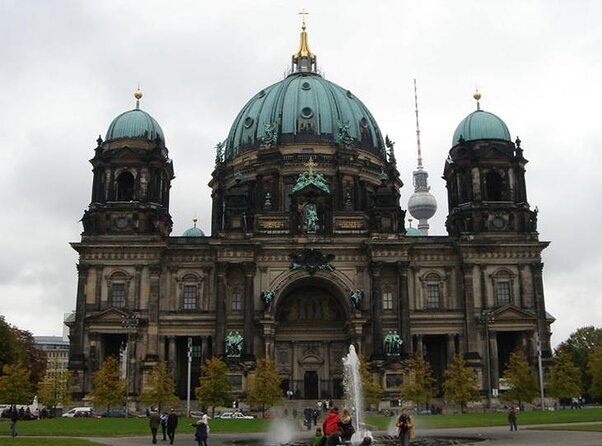
After the broad civic start, the tour turns toward the “older” feeling of the city. You’ll visit Nikolaiviertel, which is presented as one of Berlin’s more original areas and tied to the city’s founding history. The stop includes a quick focus on what the name St Georg means in the square. That kind of detail is small, but it helps the area stick in your mind when the day gets full.
Then comes Berliner Dom, Berlin’s cathedral. This is one of those stops that makes the walking feel justified. The tour points out the building’s dome and decoration and frames the question of church history and who made it possible. Even if you don’t go inside, you’ll leave with a better grasp of why the architecture is so central to Berlin’s image.
Right after that is Lustgarten, a key green space in the city center. You’ll learn what it is, why it’s located exactly there, and why the name matters. Lustgarten is one of those places where you can easily miss the importance if you only treat it as a park. With the guide’s explanation, it becomes a meaningful pause in the route.
This part of the itinerary helps you connect three things: Berlin’s religious landmark, the city’s central public space, and the older neighborhoods that remind you Berlin isn’t just modern blocks.
More Berlin tours to line up side by side

Unter den Linden and Bebelplatz: Culture and Consequences in the Same Corridor
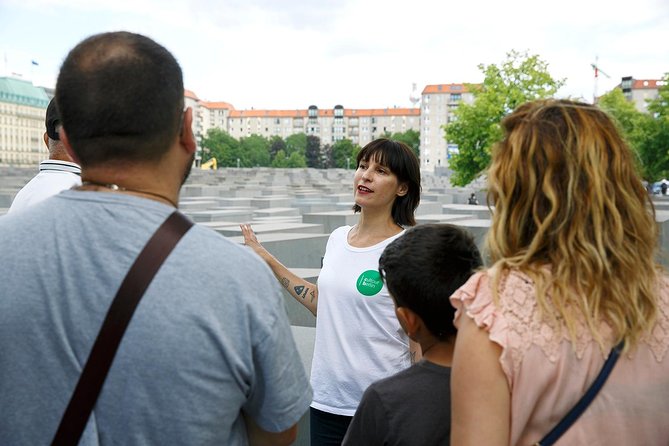
One of the strongest segments is Unter den Linden, a famous street that used to function as a royal way from the palace toward the Tiergarten. Today it’s one of Berlin’s most visited areas, and the tour treats it as more than a corridor for strolling.
The route includes Staatsoper Unter den Linden, the opera house. You’ll admire its cultural presence and get context for why it belongs on a list of top Berlin landmarks. Even if opera isn’t your thing, it’s worth hearing the story, because this building represents how the city projects culture—and how that projection has changed over time.
Then you arrive at Bebelplatz, a square tied to the 20th century. The tour calls out what made this place important during that period and focuses on a memorial in the middle of the square. It also explains the role of Hitler’s propaganda minister connected with that moment. This stop has emotional weight, and the guide’s job here is to keep it from turning into just another dramatic photo.
If you want a practical tip for this section: don’t rush the square. Let a minute of stillness happen before you keep moving. It’s the kind of place where your understanding grows when you stop thinking like a tourist for a second.
Neue Wache and Käthe Kollwitz: A Memorial That Keeps Changing With Time
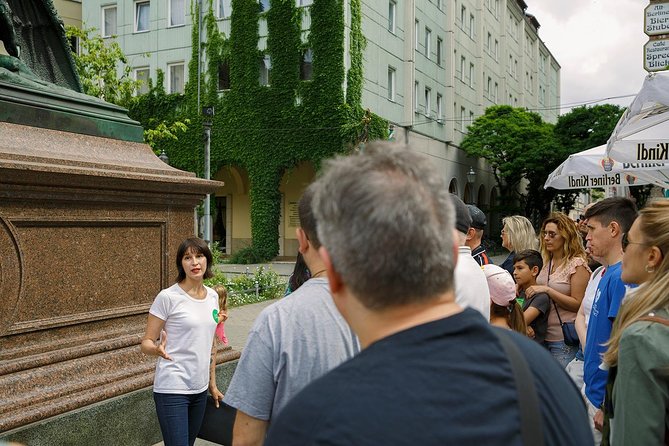
From Bebelplatz, the tour heads to Neue Wache, described as a memorial that’s been adapted across different historical periods. This is valuable because it highlights something people often miss: memorials aren’t always fixed forever. They evolve as societies reinterpret what they want to remember.
Here, you’ll see a piece by Käthe Kollwitz. The tour frames it as a central artistic element, and that matters because Kollwitz’s work is strongly tied to human suffering and resilience. Even when you’re standing outside a memorial, you’re still learning how Berlin chooses to represent trauma and reflection in public space.
The stop is also noted as having admission included. So this is one of the few points where you can expect something more than a quick look from the sidewalk.
Gendarmenmarkt, Checkpoint Charlie, and Potsdamer Platz: From Elegance to the Wall Era
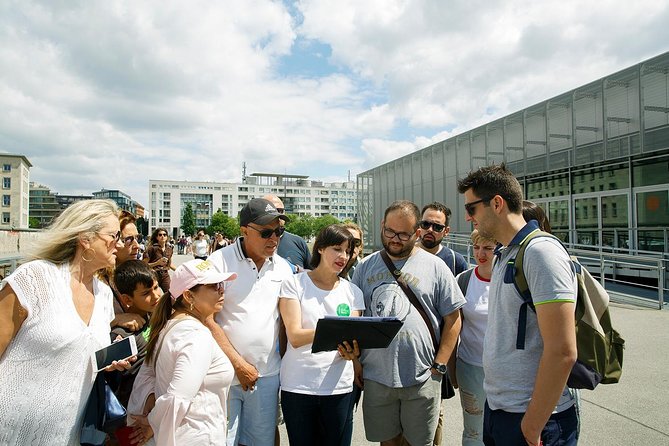
Next comes Gendarmenmarkt, often described as one of Berlin’s most beautiful public squares. The tour emphasizes the harmonious ensemble of the concert house and two church buildings, all with towers that visually balance the scene. This is a “breathing” stop after the heavier memorial sites. You can appreciate design, geometry, and how central squares create identity.
Then the tour moves to Checkpoint Charlie. This is one of the most recognizable Cold War reminders in Berlin. The tour spends about 25 minutes here, which is long enough to absorb the context and not just snap one picture and run. You’ll learn how the checkpoint ties to Cold War tension and the partition of Berlin.
After that, you’ll head to Potsdamer Platz, which the tour explains in terms of how it started versus what it is today. This is Berlin’s modern face in the middle of a city that still carries major historical scars. It’s a good contrast stop that helps you remember Berlin isn’t stuck in the past.
This sequence works because it alternates emotional tone and visual tone. You get beauty, then tension, then modern energy—without spending the whole day mentally exhausted.
Brandenburg Gate Finale and the Holocaust Memorial Walk-By With Meaning
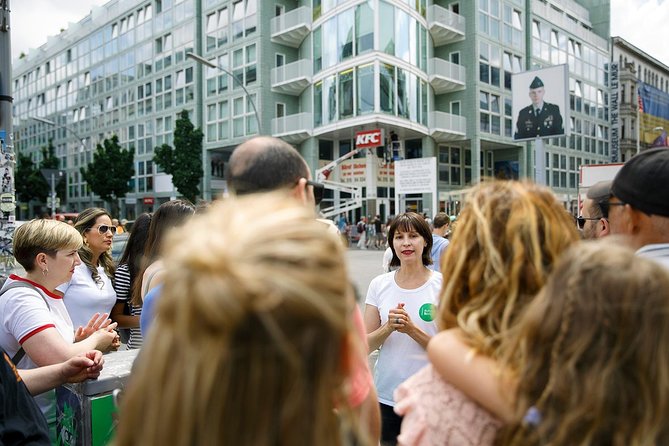
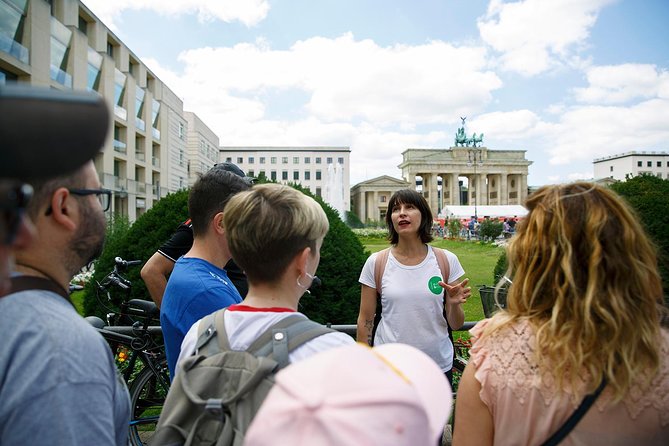
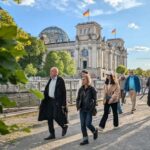
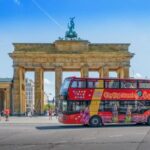
The final stretch brings you close to one of the biggest symbols in the city: Brandenburg Gate. The tour sets it up as an ending with a “magnificent view” toward the Tiergarten, and also points out the Parisien square and the area near the Adlon Hotel.
Before you reach the Gate, there’s an important stop: the Memorial to the Murdered Jews of Europe. The tour emphasizes that it’s very important and located next to Brandenburg Gate, and it also guides you toward understanding the meaning behind the author’s work. This is the kind of stop where the guide’s framing changes what you see. Those angles and lines aren’t random; they’re part of the memorial’s language.
When the group finishes at Brandenburg Gate, you’ll have the sense that the tour loop is complete. You’ve moved from central public space and civic buildings, through cultural institutions, past Cold War and memorial sites, and ended at the landmark that visually represents a turning point in Berlin’s story.
Price and Value for $25.58: What You’re Really Paying For
At $25.58 per person, this tour prices itself as a budget-friendly way to cover major sights with a live guide. The value isn’t “luxury”—it’s efficiency plus interpretation.
Here’s what you’re getting:
- A local Spanish-speaking guide (that’s the main ingredient)
- About four hours of organized walking and stop-by-stop context
- A route that hits top central highlights like Brandenburg Gate and the Holocaust Memorial
- Many stops listed as free for admission, which helps keep your day from turning into surprise costs
Some admissions are marked differently. For example, Neue Wache is noted as admission included, while Rotes Rathaus is listed as admission not included. Translation: you’re not being sold a “pay-at-each-stop” experience; most of the time you’re seeing and learning from the outside or from included entries where specified.
Private transportation isn’t included, but honestly you don’t need it for a city-center walking loop like this. The “can’t access everything by car or bus” element matters here. Walking lets you get close to squares and streets that don’t translate well from inside a vehicle.
Language, Mobility, and Who This Tour Fits Best
This is a Spanish-only experience. The guide is operated just in Spanish, and it’s explicitly stated as a Spanish-speaking local guide. So you should treat the language factor as the #1 decision point.
If you speak Spanish well enough to follow history explanations, you’ll likely love how much the guide packs into short stops. One standout from the feedback is Juan, who’s praised for giving a lot of historical information about the places on the route. That matches how this kind of tour is built: quick stops need strong narration, and the guide is the whole product.
If you don’t speak Spanish, you might still enjoy the sights visually, but you won’t get the full value of the commentary. In that case, consider whether you’d be happier with an English-friendly tour or a museum day instead.
On mobility: the tour isn’t recommended if you can’t walk properly for long distances. That doesn’t mean you must be young and athletic—it just means you should be honest about your stamina. The tour covers a cluster of major sites in central Berlin, so the walking adds up.
Good news: service animals are allowed, and it’s near public transportation.
Should You Book This Berlin Panorama Tour?
I’d book it if:
- You’re short on time and want a guided loop through the city’s biggest landmarks
- You want a quick history-and-context orientation rather than hours inside museums
- You like meeting a city through its streets and squares, not only through ticketed attractions
- Spanish is your language (or you’re comfortable enough with it to follow the guide)
I’d think twice if:
- You don’t walk well for long distances
- Spanish is a deal-breaker for you
- You’re looking for a deep, museum-by-museum day instead of a broad city overview
If your goal is to return to your hotel with a clearer mental map and a better sense of what Berlin’s landmarks mean, this route is built for that.
FAQ
What is the starting location for All of Berlin (city panorama)?
The tour starts at Berlin TV Tower, Panoramastraße 1A, 10178 Berlin, Germany.
What time does the tour begin?
The start time is 10:00 am.
How long is the tour?
The duration is about 4 hours.
How much does the tour cost?
The price is $25.58 per person.
Is there a guide included?
Yes. It includes a Spanish-speaking local guide.
Is the tour available in English or another language?
No. The guide operates just in Spanish.
Do I need to pay admission at each stop?
Most stops are listed as free, but Rotes Rathaus is listed as admission not included, and Neue Wache is listed as admission included.
Is private transportation included?
No. Private transportation is not included.
What group size should I expect?
The tour has a maximum of 25 travelers.
Can I cancel and get a full refund?
Yes—free cancellation is available. You can cancel up to 24 hours in advance for a full refund.
More City Tours in Berlin

More Tour Reviews in Berlin

Berlin From Above



Round out your days in Berlin

TV Tower & Panoramic Views, compared.
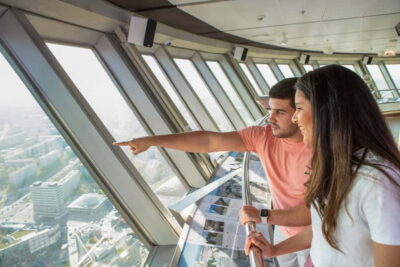 ★ 4.4TV Tower Standard Entrance TicketFrom $3315,883 reviews
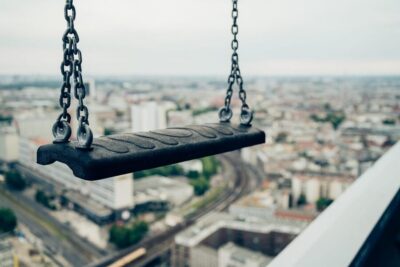 ★ 4.8Highest Swing in EuropeFrom $351,661 reviews
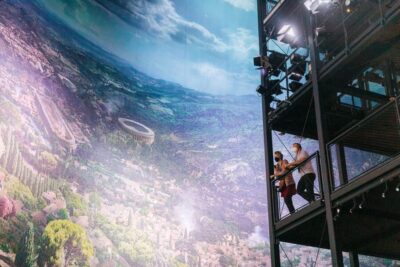 ★ 4.6“Pergamonmuseum. The Panorama” Exhibition TicketsFrom $161,245 reviews
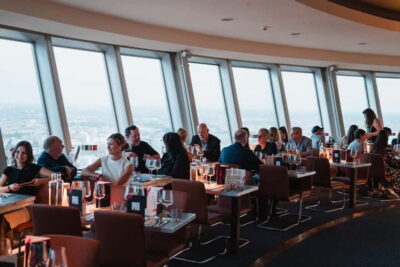 ★ 4.2TV Tower SPHERE Restaurant Tim Raue Entry TicketFrom $33940 reviews
 ★ 3.5Ticket for World Balloon with Perfect ViewFrom $37737 reviews
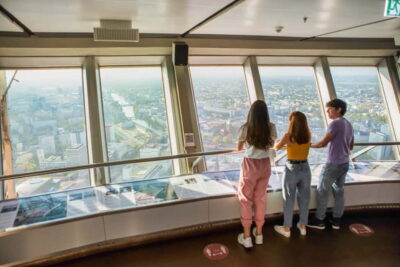 ★ 4.3TV Tower Entrance and VR Experience TicketsFrom $43611 reviews
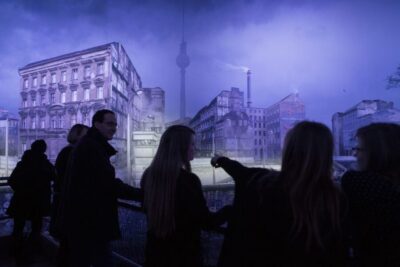 ★ 4.5THE WALL: asisi Panorama Berlin TicketFrom $16580 reviews
 ★ 4.3TV Tower Sphere Tim Raue Highest BreakfastFrom $76102 reviews
Browse the lists this tour appears in