
REVIEW · BERLIN WALL & COLD WAR
THE WALL: asisi Panorama Berlin Ticket
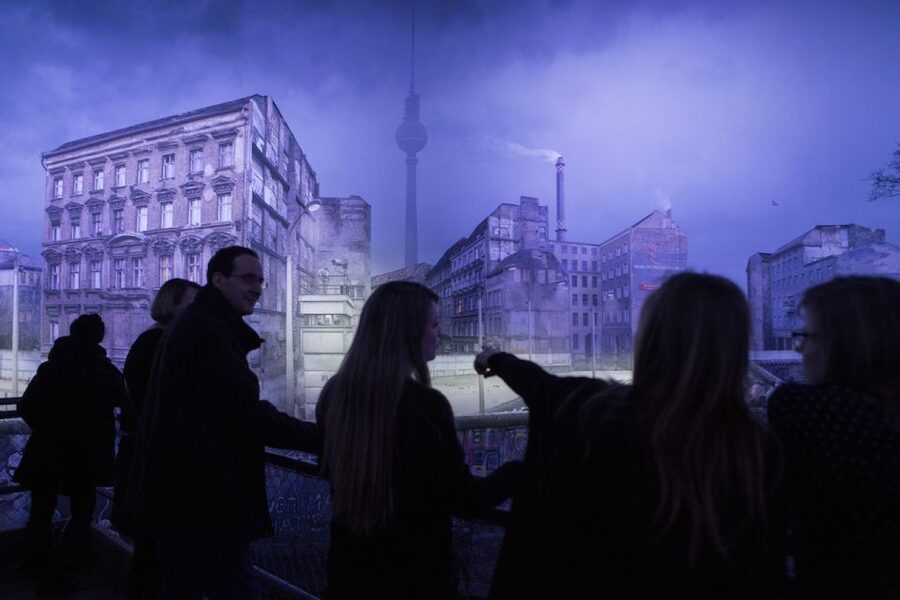
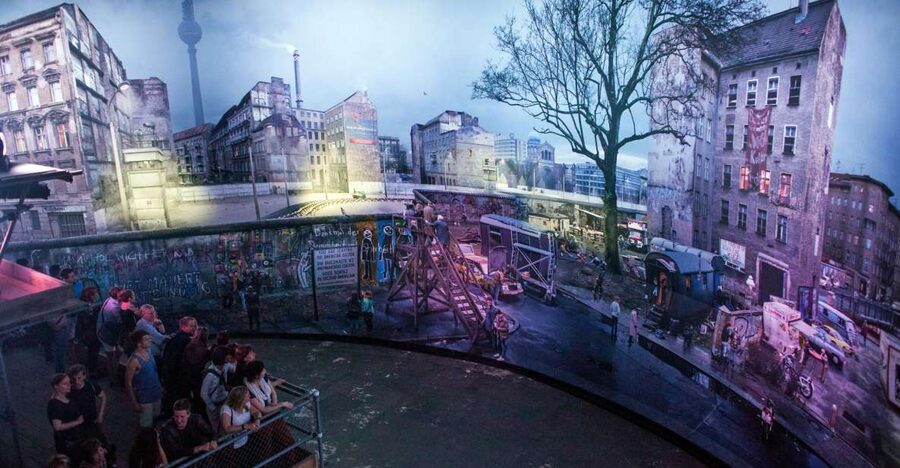
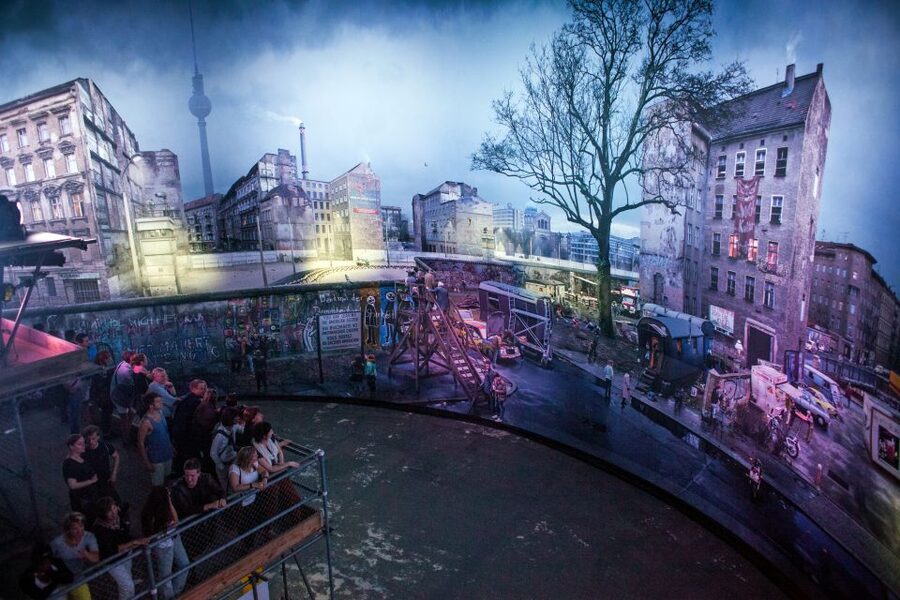
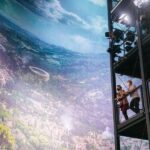
A wall you can almost hear. At asisi Panorama Berlin, you stand on a 4-meter-high visitor’s platform and watch Kreuzberg play out on a fictitious autumn day in the 1980s, including life from SO 36 in West Berlin close to the East and border facilities. What I like most is how the panorama makes everyday routines feel close and real, and how the Death Strip/border setup makes the separation feel uncomfortable in a way photos alone can’t manage. One possible drawback: the ticket is for entry only, so if you want a deeper, guided explanation of the German details, you’ll be leaning on the included info and your own reading.
This is one of those Berlin stops that’s easy to fit into a day because it’s straightforward: a 1-day ticket, chosen starting times, and skip-the-ticket-line entry, plus a free key folder to point you toward what to look for. If you’re an English speaker, there are translation options, which matters here since so much of the impact comes from noticing small details in context.
In This Review
- Key things that make this experience worth your time
- Seeing the Berlin Wall as a daily reality, not a museum idea
- The 4-meter platform: where the details start to land
- SO 36 and Kreuzberg in the 1980s: West life right up against the barrier
- The Death Strip and border facilities: why it feels gruesome, even when you stand still
- The documentary on Yadegar Asisi: how the artist built the effect
- What the space is like on the ground floor (and how to move through it)
- Value check: why the price feels fair for what you get
- Location at Friedrichstraße 205: pairing it with other Wall sites
- Who should book this ticket (and who might want a different option)
- The practical side: planning your visit without getting stuck
- Should you book the asisi Panorama Berlin ticket?
- FAQ
- Is the asisi Panorama Berlin ticket valid for just one day?
- Does the ticket include a guided tour?
- Does this ticket help you avoid waiting in line?
- Are pets allowed inside?
- Are there translation options for English speakers?
- Can I cancel for a full refund?
Key things that make this experience worth your time
- A 4-meter-high platform view that changes what you notice compared with looking from ground level
- West Berlin SO 36 vs East Berlin separation, shown as neighbors in different realities
- The Death Strip and border facilities, presented as part of daily life rather than a distant concept
- A documentary on Yadegar Asisi, tracing how the artist’s idea became the Panorama
- Free key folder that helps you read the scenes without needing a guide
More of the Wall and the divided city
- Berlin’s Best: 2 Hour Walking Tour Third Reich and the Cold War★ 5.0 · 5,486 reviews
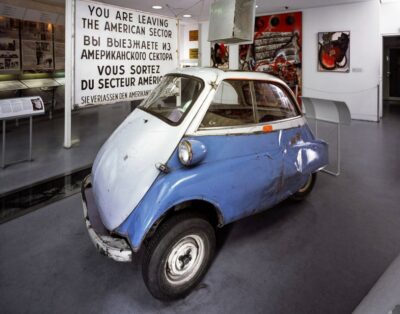
- Skip-the-Line: Berlin Wall Museum at Checkpoint Charlie★ 4.1 · 2,041 reviews
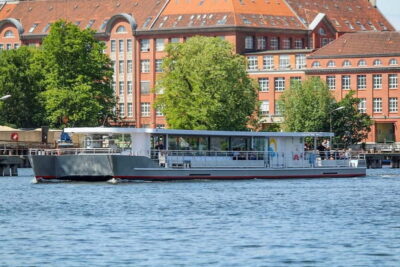
- Berlin: East Side Gallery Spree Cruise in a Solar Catamaran★ 4.1 · 1,086 reviews
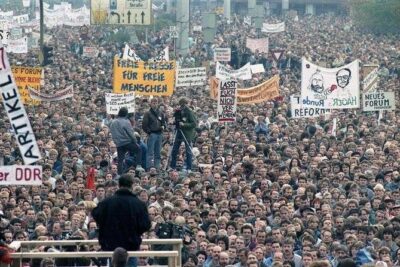
- Cold War, Berlin Wall, Spies and the East Side Gallery★ 5.0 · 1,024 reviews
Seeing the Berlin Wall as a daily reality, not a museum idea
asisi Panorama Berlin is built around one big idea: the Berlin Wall wasn’t only a political line. It was a physical presence that shaped what people did, where they stood, what they feared, and how ordinary routines continued—awkwardly, sometimes painfully, on both sides.
The artwork shows a fictitious autumn day in the 1980s in Kreuzberg. That word fictitious matters. You aren’t watching archival footage of one exact day; you’re seeing an artist’s reconstruction that tries to capture the feel of life in the shadow of the Wall. For me, that’s the strength: it turns the Wall from a headline into a lived environment.
The setup also nudges you into a specific mindset. From the visitor’s platform you’re at eye level with what the design wants you to notice. You’re not just observing scenes; you’re looking across a border that’s painfully close. When the exhibition gets quiet, you can really feel how engineered that distance was.
The 4-meter platform: where the details start to land
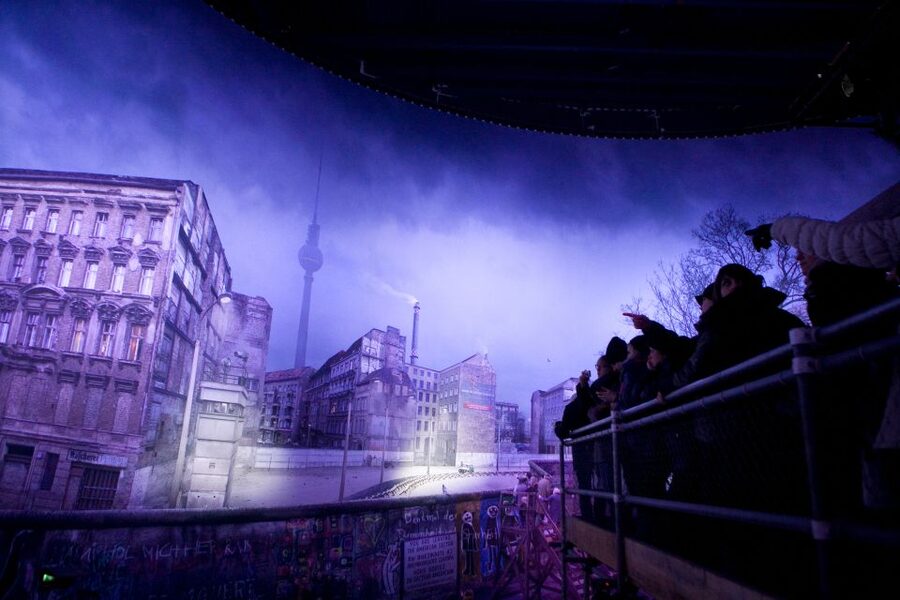
The headline feature is the viewpoint. You stand on a visitor’s platform that’s about 4 meters high—high enough that you naturally scan like you would if you were looking over a barrier in real life.
What makes this matter is that small things become important: the placement of people and objects, the way spaces funnel sightlines, and the contrast between “normal street life” and the presence of border infrastructure. People often think of walls as sheer rock, chain-link, or concrete slabs. Here, the wall experience includes the psychology of watching and being watched.
I also like that the platform forces you to slow down. You can’t rush your way through. Even if you came for a quick Wall fix, you’ll find yourself circling back to check what you missed the first time. That’s where the exhibition turns into a memory—because you keep catching new cues.
SO 36 and Kreuzberg in the 1980s: West life right up against the barrier
One of the most compelling parts of the Panorama is the way it presents West Berlin, especially the alternative life associated with SO 36, separated from East Berlin but only a stone’s throw away.
This isn’t just “two sides” as a concept. The exhibition frames separation as a neighborhood problem. You’re looking at streets where daily life happens in the same wider area, but under totally different rules and pressures. The illusion of closeness is part of what makes it hit. The Wall isn’t shown as a far-off boundary; it’s shown as the thing that sits between people who should, in any normal city logic, feel like they belong to the same world.
The Kreuzberg autumn day framing also helps. Autumn light and street life are familiar enough that you don’t immediately freeze into tragedy-mode. Instead, you register a tension: the everyday is present, but the shadow of the Wall changes how everything feels. That balance—ordinary routines plus a constant threat—makes this exhibition more than a history lesson.
The Death Strip and border facilities: why it feels gruesome, even when you stand still
The exhibition doesn’t shy away from the Death Strip and border facilities. But it also doesn’t treat them like a separate horror attraction. The design places them into the same overall scene as everyday street life, which is exactly why it feels so unsettling.
When people talk about the Wall, they often focus on dramatic moments: escapes, confrontations, broken fences. Here, the focus is on the infrastructure of control—the system that made movement risky and made surveillance feel constant. From the platform, it’s easier to understand why the Wall was more than architecture. It was procedure.
A practical tip for your own visit: don’t try to understand everything at once. Let yourself notice in layers. First, map where the “normal life” elements are in the scene. Then shift your attention to the border elements. That second sweep is when the discomfort lands.
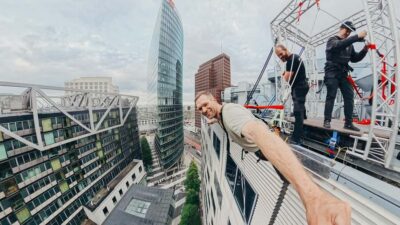
More of Berlin from up high



The documentary on Yadegar Asisi: how the artist built the effect
A key part of the experience is not just the panorama, but the process behind it. The exhibition includes a documentary about the artist Yadegar Asisi, from his early ideas through the creation of the Panorama.
That added layer is valuable because it explains what you’re looking at. You learn that this isn’t random art-world fantasy; it’s a carefully developed attempt to recreate the lived feel of the Wall era. Even if you already know the broad story of Berlin’s division, the documentary can sharpen your understanding of why the scenes are staged the way they are.
If you’re the type who likes context, plan to watch this documentary fully rather than treating it as a bonus. It’s the part that connects the visual illusion back to intent—how the pieces came together and what the artist was aiming to convey.
What the space is like on the ground floor (and how to move through it)
The experience is arranged so you can shift viewpoints and interpretations as you go. In practice, it helps to think of it as a small sequence rather than one huge room. One review described the layout as feeling like three rooms, which matches the way most visitors naturally approach it: (1) the panorama viewing, (2) supporting spaces with information, and (3) the documentary portion.
Here’s a simple movement strategy that works well:
- Start with the panorama platform and take your first scan without trying to decode every detail.
- Then return to the ground-level information where you can ground what you saw in explanations.
- Finally, watch the documentary so your brain has a “why” behind the visuals.
If you do it in that order, you’re less likely to miss the small cues that make the show effective.
Value check: why the price feels fair for what you get
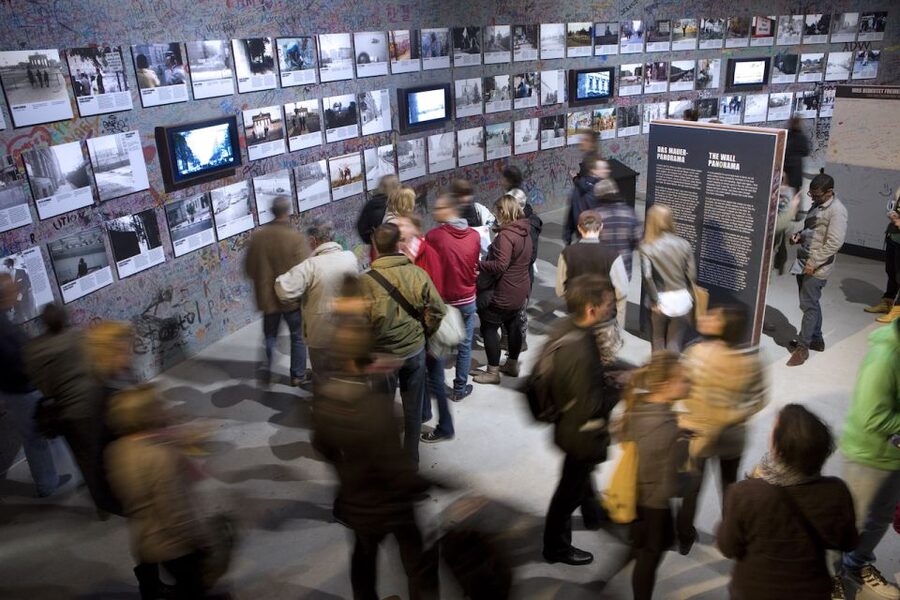
At around $16 per person for a day ticket, this is priced like a serious attraction, not a low-effort stop. The value comes from the combination of elements: the platform-based panorama, the border/Death Strip content, and the documentary on the artist’s process. Even better, the ticket includes a free key folder with extra information, so you’re not going in completely blind.
Also, skip-the-ticket-line matters more than it sounds. Berlin is busy, and a short museum-style visit can still get annoying if you have to queue. With a timed approach and line skipping, you can keep your day moving.
Is it expensive compared with free street-wall viewing? Sure. But it’s not trying to be free. It’s trying to show you the Wall in a specific artistic way, from a specific viewpoint, with context.
Location at Friedrichstraße 205: pairing it with other Wall sites
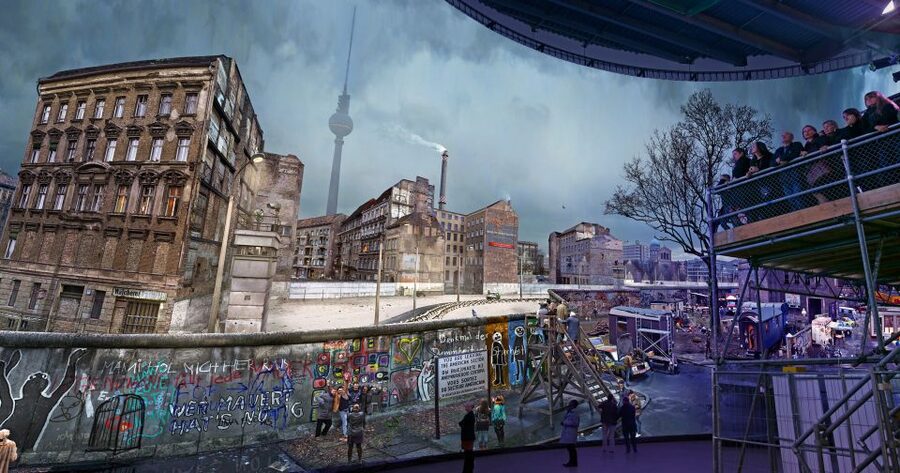
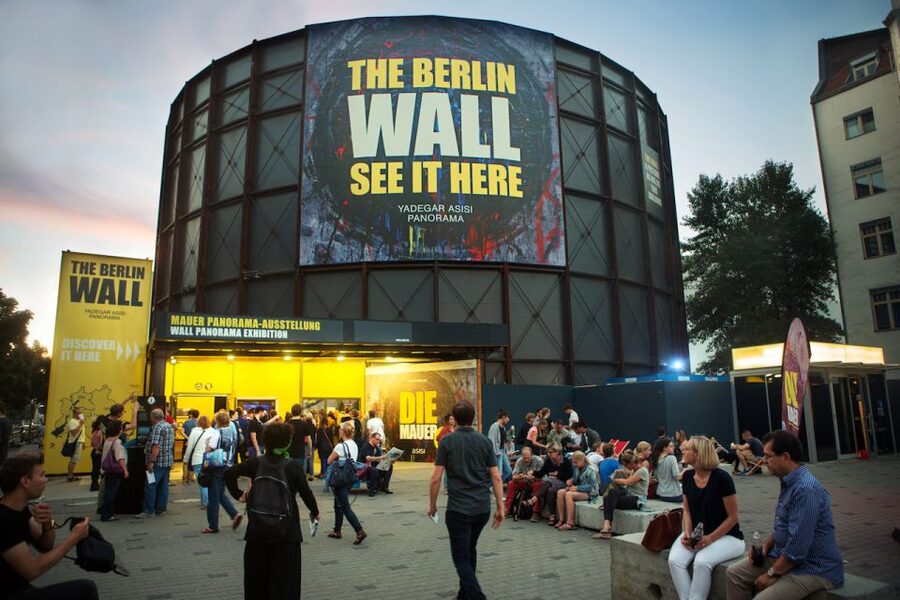
asisi Panorama Berlin is at Friedrichstraße 205, 10117 Berlin. That central location makes it easy to combine with other Berlin Wall-related stops in the same general area.
One particularly smart pairing is with a morning visit to Checkpoint Charlie. If you’ve already walked through one “officially famous” Wall site first, the Panorama can feel like the next layer: less about landmark-level storytelling and more about what separation felt like to live near it.
After you finish inside, you can also do a quick outside check for a remaining section of the original Wall nearby. It’s worth stepping out and looking, because it helps you reconnect the exhibit’s reconstructed world to Berlin’s real surviving fragments.
Who should book this ticket (and who might want a different option)
This works especially well if you:
- want a strong “see it, then understand it” experience with visual realism
- prefer learning through a scene rather than reading long text passages
- like context from an artist’s point of view, not only political timelines
- are short on time and want a focused, single-day stop
It may be less ideal if you:
- only enjoy guided tours and want someone to interpret every detail on the spot
- expect a hands-on, interactive workshop format (this is more observation than participation)
- want an extensive merchandise-focused shopping experience (some visitors have wished for more in the shop)
Since this ticket does not include a guided tour, your best plan is to treat the key folder as part of the experience and be willing to spend time noticing.
The practical side: planning your visit without getting stuck
You’ll buy a 1-day ticket with starting times, so I’d choose a time that won’t make you rush through. This is one of those places where your first scan is useful, but your second look is where it turns meaningful.
A couple of small notes that affect comfort:
- Pets aren’t allowed, so plan for that before you head over.
- If you’re an English speaker, translation options are available, which helps you catch the context behind what you’re seeing.
And if you’re visiting with a group of 10 or more, there’s a group rate available on site. That can make sense if you’re traveling with friends who all want the same Wall experience without the hassle of coordinating separate tickets.
Should you book the asisi Panorama Berlin ticket?
Yes, I think you should book it if you want a Wall experience that’s more about how it felt than about dates on a timeline. The combination of the 4-meter platform view, the scenes of Kreuzberg and SO 36, and the attention to the Death Strip/border facilities gives you a rare mix: daily life plus the machinery of control, held in one visual world. Add the documentary on Yadegar Asisi, and you get both impact and explanation.
Skip this only if you’re specifically hunting for a guided, speaker-led tour. Without that, the visit leans on you to read, watch, and reflect. If that sounds like your kind of travel, this is a strong, fair-value stop for a Berlin day.
FAQ
Is the asisi Panorama Berlin ticket valid for just one day?
Yes. The day ticket is valid for 1 day, and you can check availability for starting times.
Does the ticket include a guided tour?
No. A guided tour is not included with this ticket.
Does this ticket help you avoid waiting in line?
Yes. The ticket includes skip the ticket line.
Are pets allowed inside?
No. Pets are not allowed.
Are there translation options for English speakers?
Yes. Translation options are offered for English speakers.
Can I cancel for a full refund?
Yes. You can cancel up to 24 hours in advance for a full refund.
More Tour Reviews in Berlin


Berlin From Above
The Wall and the Cold-War City



Round out your days in Berlin

Berlin Wall & Cold War, compared.
 ★ 4.9Third Reich & Cold War Guided Walking TourFrom $238,378 reviews
 ★ 5.0Berlin’s Best: 2 Hour Walking Tour Third Reich and the Cold WarFrom $245,486 reviews
 ★ 4.1Skip-the-Line: Berlin Wall Museum at Checkpoint CharlieFrom $212,041 reviews
 ★ 4.1East Side Gallery Spree Cruise in a Solar CatamaranFrom $281,086 reviews
 ★ 5.0Cold War, Berlin Wall, Spies and the East Side GalleryFrom $181,024 reviews
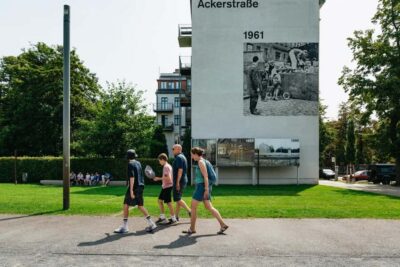 ★ 4.8Wall Tour – Fates, Love Stories, and HeroesFrom $282585 reviews
 ★ 4.8The Wall and Third Reich Guided Bike TourFrom $41578 reviews
 ★ 4.4German Spy Museum Flexible Entry TicketFrom $27472 reviews
Browse the lists this tour appears in