
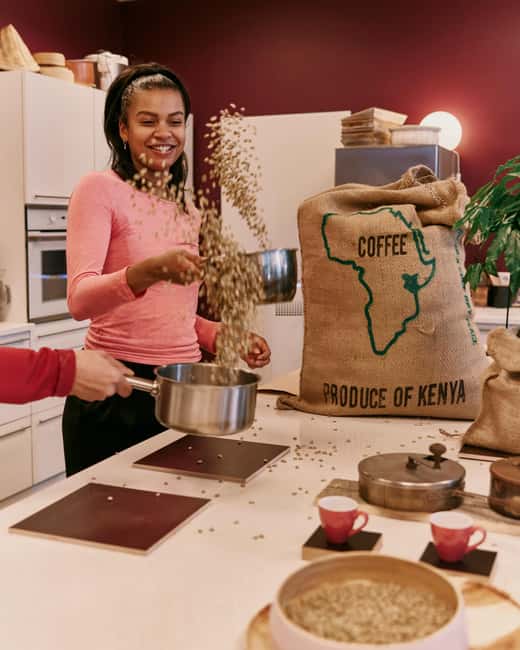
REVIEW · WORKSHOPS
Berlin: DIY Coffee Roasting Workshop
Your kitchen smells like a coffee lab. This DIY coffee roasting workshop in Berlin teaches roasting green beans in a pot and lets you taste your own coffee right away. I also like the added coffee culture context—especially the East Africa thread—because it makes the whole process feel meaningful, not just hands-on. One consideration: it’s not suitable for children under 16, so it’s a more grown-up workshop.
You’ll spend about 2 hours learning the steps, grinding and brewing the roasts on site, and then taking home your finished beans in trendy packaging. The format works well if you want a practical skill you can repeat later, not just a one-time demo. Language options are German and English, and the workshop is wheelchair accessible.
In This Review
- Key things to know
- Roasting green beans in a household pot (the real skill)
- The coffee cherry, East Africa roots, and the Kenya connection
- From roast to cup: grinding, brewing, and tasting two coffees
- What you take home: packaged beans made by you
- Price and value: what $81 buys you in Berlin
- Who should book, and who might skip it
- Should you book this DIY coffee roasting workshop in Berlin?
- FAQ
- How long is the Berlin DIY coffee roasting workshop?
- What does the workshop cost?
- Can I roast two different types of coffee during the workshop?
- Will I taste the coffee I roast?
- What language is the instruction available in?
- Is the workshop suitable for children?
- What do I take home?
- Is it wheelchair accessible?
- What is the cancellation and payment flexibility?
Key things to know
- Roast two coffee types using a household pot, then compare results during tasting
- Open a real coffee cherry, adding texture and origin to the story
- Grind and brew on site right after roasting, so you taste the changes immediately
- East Africa coffee culture + Kenya connection, tied to what you’re learning
- Take-home packaging so you leave with what you made, not just a new hobby
- Personal tips and tricks for roasting coffee at home, beyond the classroom steps
Still narrowing down your days in Berlin? Here are more tours to weigh up.
- Berlin: Reichstag, Dome and Government District Guided Tour★ 4.7 · 18,288 reviews
- Berlin: 1-Hour City Tour by Boat with Guaranteed Seating★ 4.3 · 16,993 reviews
- Berlin: TV Tower Standard Entrance Ticket★ 4.4 · 15,883 reviews
- Berlin: Boat Tour Along the River Spree★ 4.4 · 11,252 reviews
Roasting green beans in a household pot (the real skill)
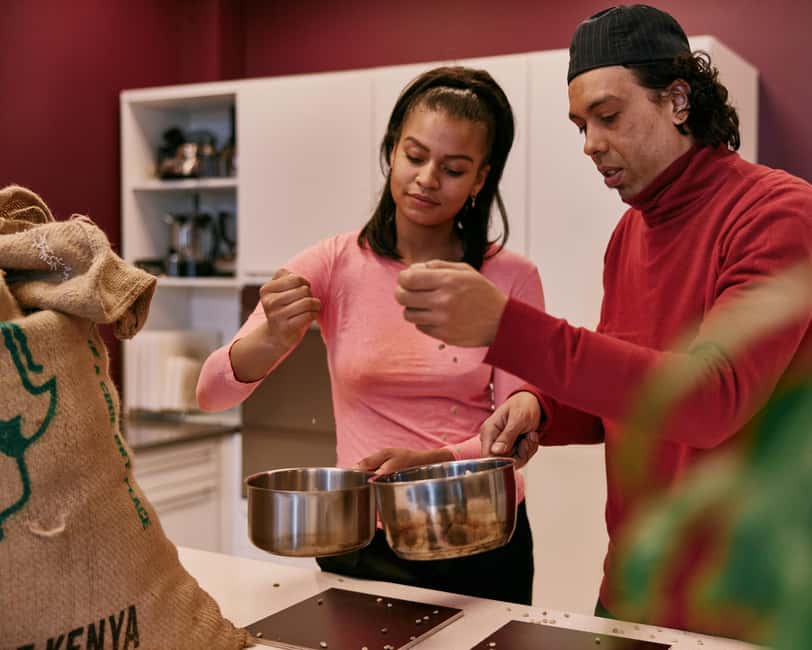
The heart of this workshop is simple: you learn to roast green coffee beans in a normal household pot, instead of relying on specialty machines. The instructor walks you through the process step by step, and you’ll roast two different types of coffee during the session. That matters because roasting isn’t one-size-fits-all—different beans respond differently to heat and time.
You’re not just watching from the sidelines. You’re actively involved in the roasting, and the room fills with that unmistakable scent of fresh roast. That smell isn’t just fun; it’s also part of learning. As the coffee changes, you start to understand how aroma and development show up while you’re working, which is the whole point if your goal is to roast at home later.
A useful detail is that the workshop focuses on flavor development, not only “how to roast.” That means you’re learning what to pay attention to beyond timing—how choices during roasting can influence taste. By the end, you’re better equipped to repeat the process in your own kitchen without guessing.
The biggest “practical win” here is that you leave with a method for a setup many people already have: a pot. If you’ve ever wondered whether roasting has to be complicated, this workshop is designed to knock that idea down quickly and realistically.
The coffee cherry, East Africa roots, and the Kenya connection
Coffee culture isn’t treated like trivia. You’ll get background information about coffee roasting and its broader story, including the idea that coffee culture originated in East Africa. It’s a nice reminder that coffee isn’t just a morning habit—it has deep roots and travel behind it.
A standout moment is that you’ll open an original coffee cherry as part of the experience. That’s one of those small, tactile activities that makes the chain from plant to cup feel real. Seeing the cherry up close helps you connect what you’re doing in a pot to the plant-level origin of the coffee you’re tasting.
The workshop also includes a personal angle: you’ll get a peek at the host’s own 20 coffee trees. Reviews connect this to Kenia (Kenya), and that’s exactly why this matters. When someone brings in a lived connection to growing coffee—rather than only talking about roasting—it makes the workshop feel grounded. You’re learning how roasting affects the cup, but you’re also learning where coffee comes from and why some communities invest in it.
This storytelling component is best for people who don’t want their workshop to be purely procedural. If you like understanding why the steps matter, this part will land with you.
From roast to cup: grinding, brewing, and tasting two coffees
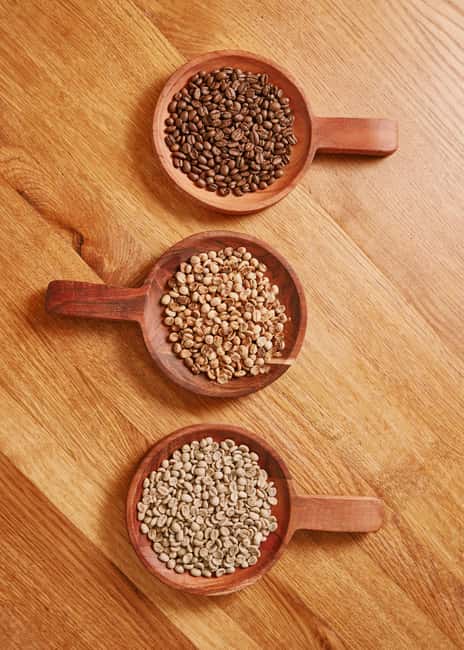
After roasting, the workshop moves into the part that coffee lovers care about most: drinking the results. You’ll grind and brew the freshly roasted beans in a relaxed atmosphere, then taste two different coffees that were roasted on site. That comparison is the easiest way to learn, because your palate and nose are working right while the knowledge is fresh.
The session isn’t just random sampling. You’ll also get a short presentation on coffee and roasting processes, which helps you connect the sensory experience to what you learned during roasting. This is especially helpful if you’re new to the world of coffee flavor. Even without technical jargon overload, you’ll get a framework for why one roast might taste different from the other.
And yes, tasting right after roasting changes the experience. Coffee tastes different depending on freshness and development, and roasting in the workshop gives you a front-row seat to that reality. It’s also a morale booster: you’re working, smelling, tasting, and learning in a single flow instead of waiting days for results.
One practical tip for you: pay attention to the differences between the two types while you’re tasting—don’t just hunt for “best” or “worst.” Try to describe what changes you notice (aroma intensity, flavor direction, overall impression). The workshop’s structure is designed to help you build that habit, so you can bring it into your own at-home roasting.
What you take home: packaged beans made by you
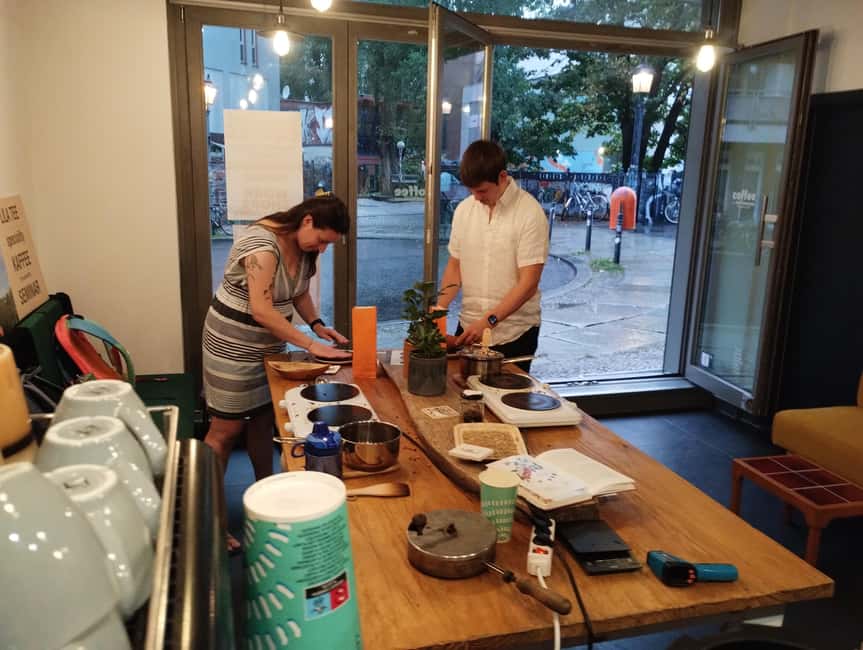
The workshop doesn’t end when the cups empty. You’ll leave with your own roasted coffee beans, packaged so you can take them home. In reviews, people mention bringing home two bags they roasted themselves, which is a fun way to share or to keep one roast for later comparison.
This is a big value point. For many food classes, you spend money on a memorable morning and a few photos. Here, you also get a tangible product you made: coffee you can actually brew at home. That makes the experience more “useful” than “just entertainment,” which is usually what I look for in classes like this.
The course also includes personal tips and tricks for roasting coffee at home, so the take-home beans aren’t just a souvenir. You’ll have guidance you can apply immediately. Even if your first attempt isn’t perfect, you’ll be able to adjust with more confidence because you learned what roasting changes in real time.
If you like hosting, this is also a smart buy. Bring one bag for friends or family, and keep one for your own experiments. You’ll have a built-in reason to re-roast and compare.
More Berlin tours to line up side by side





Price and value: what $81 buys you in Berlin
At $81 per person for a 2-hour workshop, the value is less about how long you stay and more about what you walk away with.
First, you get step-by-step instruction on roasting in a pot, which is the whole skill. You also roast two types of coffee on site, plus you grind and brew them and then taste both. That means the class isn’t only teaching theory—it’s giving you the sensory feedback loop that makes learning stick.
Second, you get extras that coffee lovers genuinely use: coffee culture history tied to East Africa, opening a coffee cherry, and the host’s coffee-tree connection. Those pieces don’t cost much to add, but they make the class feel like a story you can repeat, not a worksheet you forget.
Third—and this is the practical part—you take home packaged coffee you roasted. If you’d otherwise buy green or roasted coffee anyway, this workshop turns some of that “spending” into instruction plus product.
Is it expensive for a casual activity? Compared to a simple museum ticket, yes. But if you want an actual at-home skill and fresh coffee as proof of concept, this is priced like a hands-on food class, and the ingredients are the coffee itself—green beans, roasting technique, and then your final brew.
Who should book, and who might skip it
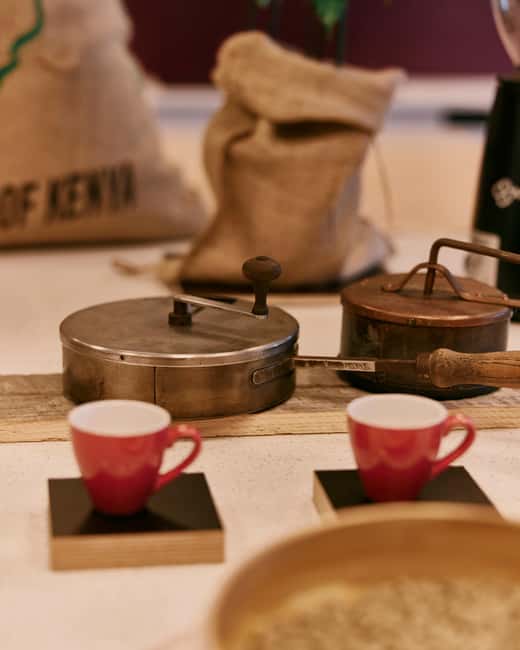
This workshop is best for coffee lovers who want more than a taste. If you enjoy hands-on learning and you like the idea of repeating a process at home, you’ll likely get a lot out of the pot-roasting method, the side-by-side comparison, and the home-roasting tips.
It’s also a good choice if you’re curious about coffee beyond the cup. The coffee cherry experience and the East Africa story, plus the Kenya connection through the host’s trees, add context that can deepen your appreciation quickly.
Skip it if you’re shopping for something kid-friendly. It’s not suitable for children under 16.
And one more “fit check” for you: this is not a fast tour of Berlin. It’s a focused workshop where you’ll spend your energy learning and tasting, not sightseeing. Plan your schedule accordingly.
Should you book this DIY coffee roasting workshop in Berlin?
I’d book it if you want a skill you can use the same month you come home: roast coffee in a pot, brew it, and understand what changed. The biggest reason to choose it is the structure—roast, learn, taste—so you’re not waiting to figure things out later.
I’d skip it if you only care about drinking coffee and don’t want to touch the process. Also, remember the age limit, because that single detail can make the whole experience a no-go for some families.
If your idea of a great travel day includes good smells, hands-on learning, and leaving with coffee you made, this one is a strong fit.
FAQ
How long is the Berlin DIY coffee roasting workshop?
It lasts 2 hours.
What does the workshop cost?
The price is $81 per person.
Can I roast two different types of coffee during the workshop?
Yes, you roast two different types of coffee on site.
Will I taste the coffee I roast?
Yes. After roasting, you grind and brew the beans and taste both types together.
What language is the instruction available in?
The instructor offers German and English.
Is the workshop suitable for children?
No. It is not suitable for children under 16.
What do I take home?
You leave with your roasted coffee beans in trendy packaging. In practice, people mention taking home two bags each.
Is it wheelchair accessible?
Yes, it’s listed as wheelchair accessible.
What is the cancellation and payment flexibility?
You can cancel up to 24 hours in advance for a full refund, and it offers a reserve now & pay later option.
More Workshops in Berlin
More Tour Reviews in Berlin





Round out your days in Berlin
Workshops, compared.
 ★ 4.6Self-Guided Family and School Class Scavenger HuntFrom $47128 reviews
 ★ 4.7Wine on Canvas – Paint Workshop and Wine TastingFrom $4759 reviews
 ★ 4.5Berlin Photography Masterclass – Private Photography LessonFrom $18023 reviews
 ★ 5.0Casting Workshop with Natural MaterialsFrom $3423 reviews
 ★ 5.0Eat Like a Berliner: Market Tour, Cooking Class and LunchFrom $27815 reviews
DJ workshop in BerlinFrom $1764 reviews
Sicilian Cooking Workshop in Berlin with unlimited drinksFrom $1474 reviews
★ 5.0Eat Like a Berliner: Market Tour, Cooking Class and LunchFrom $27815 reviews
DJ workshop in BerlinFrom $1764 reviews
Sicilian Cooking Workshop in Berlin with unlimited drinksFrom $1474 reviews
 ★ 4.0Graffiti Workshop Berlin with professional graffiti artistsFrom $1194 reviews
Browse the lists this tour appears in