
REVIEW · CITY TOURS
Night magic city tour in Berlin
Berlin looks different after dark.
This Night magic city tour mixes famous landmarks with quirky, very human details, from the Neptune Fountain’s allegory to the cute-and-controversial Ampelmännchen crossing signals. I really like the way the route stays walkable and focused, and I also love how the guide keeps things lively with audience interaction and visual storytelling. One thing to consider: it runs outdoors and the experience asks for good weather, so plan for cold or damp evenings.
You get about 1 hour 30 minutes of highlights in Berlin’s central Mitte area, and it caps at 20 people. The tour is offered in English and uses a mobile ticket, which makes it simple to show up and start walking.
In This Review
- Key highlights worth knowing before you go
- Berlin’s Mitte at night: why this route works
- Price and time: what you’re paying for
- Meeting at St. Marienkirche and ending by the Spree
- Stop 1: Neptune Fountain and Prussia’s rivers in stone
- Stop 2: Rotes Rathaus near Alexanderplatz
- Stop 3: Ampelmännchen and the story behind a tiny icon
- Stop 4: Nikolaiviertel, Berlin’s reconstructed old heart
- Stop 5: St. Nikolai-Kirche, Berlin’s oldest church area
- Stop 6: Humboldt Forum and Museum Island’s non-European focus
- Stop 7: Mühlendamm, Mill Dam Bridge, and the city’s river core
- The show factor: audio, actors, costumes, and treats
- Who should book this Berlin night walk
- Booking timing and planning with Farolero’s format
- Should you book Night magic city tour in Berlin?
- FAQ
- What is the duration of the Night magic city tour in Berlin?
- How much does the tour cost?
- Is the tour offered in English?
- Where does the tour start and end?
- Is there a group size limit?
- Do I need a printed ticket?
- What happens if weather is poor?
- Is free cancellation available?
Key highlights worth knowing before you go
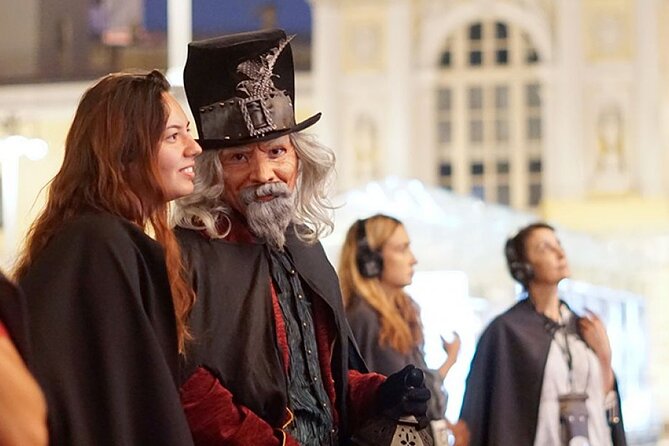
- Actor-style storytelling plus effects: The experience blends spoken narration with theatrical touches and visuals to make the route feel like a show.
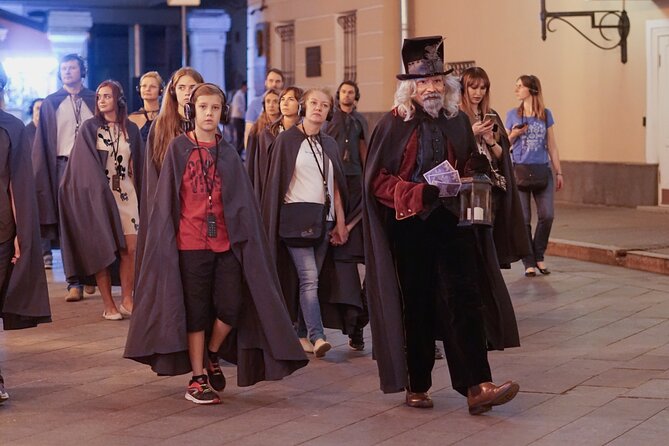
- Costumes and participation: You may get dressed up and pulled into small bits of interaction, which makes the tour more fun than a standard walk-and-listen.
- A stop at Nikolaiviertel and St. Nikolai-Kirche: This is where Berlin’s reconstructed medieval core feels most “old city” during the evening walk.
- Prussia symbolism at Neptune Fountain: The fountain isn’t just pretty; it’s packed with river allegories tied to the era’s geography.
- Café-style treats during the walk: Coffee and chocolate show up along the way, and there’s even a schnaps at the end.
- Tight group size: With up to 20 people, you’re less likely to get lost in the back.
More Berlin tours to line up side by side
- Berlin: 1-Hour City Tour by Boat with Guaranteed Seating★ 4.3 · 16,993 reviews
- Berlin City walk Government District and Places of Democracy★ 4.7 · 8,467 reviews
- Berlin: City Sightseeing Hop-On Hop-Off Bus Tour★ 4.1 · 4,233 reviews
- Berlin: 1-Hour City Sightseeing Cruise★ 4.4 · 2,210 reviews
Berlin’s Mitte at night: why this route works

If you’ve only seen Berlin’s “big sights” in daylight, this kind of evening route changes your perspective fast. The center of Berlin can feel like a checklist. At night, it feels more like a story you can follow—especially when the stops are close together and the guide is steering the flow.
What I like about this format is that it doesn’t try to cover everything. It focuses on a compact slice of Mitte, so you actually notice details: inscriptions, symbols, building materials, and small public icons. You’ll get a lot more from the streets than you would from a quick photo stop.
Price and time: what you’re paying for
At $46.99 per person for about 1 hour 30 minutes, you’re paying for two things: access to a curated route through central landmarks and a more performance-style approach than a typical walking tour. That matters here, because the tour leans into interaction—costumes, a mix of audio-style delivery, and theatrical elements.
Is it a bargain? Not exactly a “cheap casual stroll.” But it does feel like good value for what you receive: a tight route, high engagement, and multiple major stops in one go without long transit breaks.
If you’re the type who likes guided context—why a statue was built, what a symbol means, what changed after reunification—this price makes more sense.
Meeting at St. Marienkirche and ending by the Spree
The tour begins at St. Marienkirche, Karl-Liebknecht-Str. 8, 10178 Berlin. It ends at Ephraim’s, Spreeufer 1, 10178 Berlin.
A practical tip: arrive a few minutes early. This isn’t a “wander in whenever” situation. There’s a real-world downside to being late on any walking tour—one issue has popped up in past experiences when timing and the meeting point didn’t align, and it’s the kind of problem you can avoid just by showing up early and checking the exact address.
You’ll use a mobile ticket, and the tour is in English. Confirmation is provided at booking time in most cases, with faster turnaround exceptions if you book close to departure.
Stop 1: Neptune Fountain and Prussia’s rivers in stone
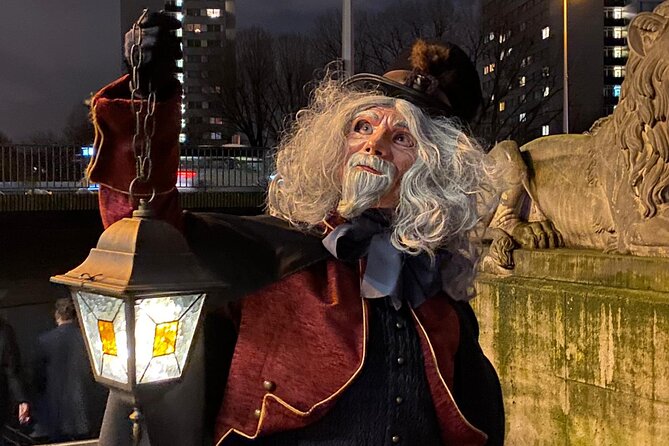
The tour starts strong with the Neptune Fountain, built in 1891 and designed by Reinhold Begas. In the center sits the Roman god Neptune—fine for photos—but the real story is in the four women around him. They represent major rivers of Prussia at the time the fountain was constructed:
- Elbe: allegorical figure holding fruits and ears of corn
- Rhine: fishnet and grapes
- Vistula: wooden blocks tied to forestry symbolism
- Oder: goats and animal skins
The neat part is how this symbolism turns geography into a visible map. You don’t just learn names; you see how an era wanted to frame nature and power.
If you enjoy “wait, what does that mean?” moments, this stop delivers. The drawback is simple: if you’re looking for brand-new modern Berlin only, this is decidedly historical and symbolic.
More Berlin tours to line up side by side


Stop 2: Rotes Rathaus near Alexanderplatz
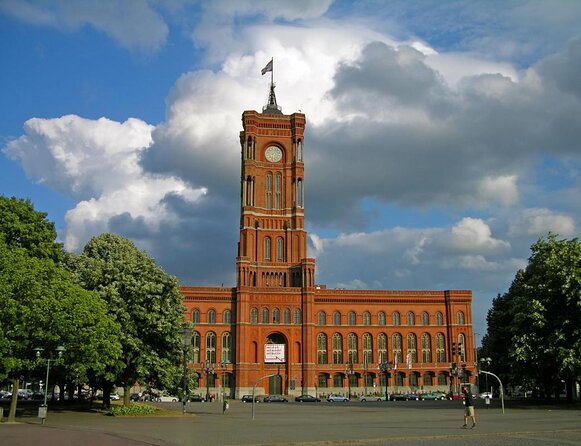
Next is Rotes Rathaus (Red City Hall) in Mitte, on Rathausstraße near Alexanderplatz. Even if you’ve walked past it before, this is the kind of building where a guide helps you notice what you would otherwise ignore.
The façade gets attention because it’s named for its red clinker bricks. Beyond the architecture, this stop also grounds the tour in the working heart of the city: the building is tied to Berlin’s governing mayor and the government (the Senate of Berlin) for the state of Berlin.
At night, the building’s material cues stand out more. I like that this stop doesn’t drift into vague “look at the building” talk. You come away with a sense of Berlin as both ceremonial and administrative.
Stop 3: Ampelmännchen and the story behind a tiny icon
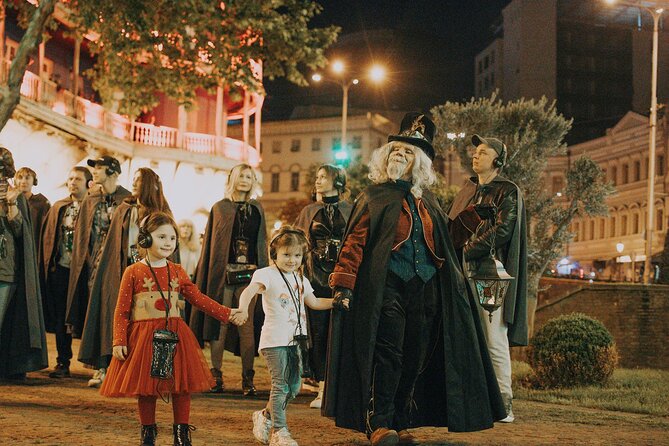
Then comes one of Berlin’s most fun mini-lessons: Ampelmännchen, the little traffic light man. It’s literally the symbol used on pedestrian signals across Germany.
This stop is worth it because it’s small but meaningful. Before reunification in 1990, East and West Germany used different versions. West Germany used a more generic human figure; East Germany’s version was typically more “male,” including a hat.
That’s a great example of how Berlin’s history shows up in ordinary street design. You’ll start looking at crossings like they’re cultural artifacts, not just safety devices.
One consideration: if you’re hoping for big interior access here, you won’t get that. This is an outside stop. But it’s also the kind of stop that makes the tour memorable later when you spot Ampelmännchen in the wild.
Stop 4: Nikolaiviertel, Berlin’s reconstructed old heart
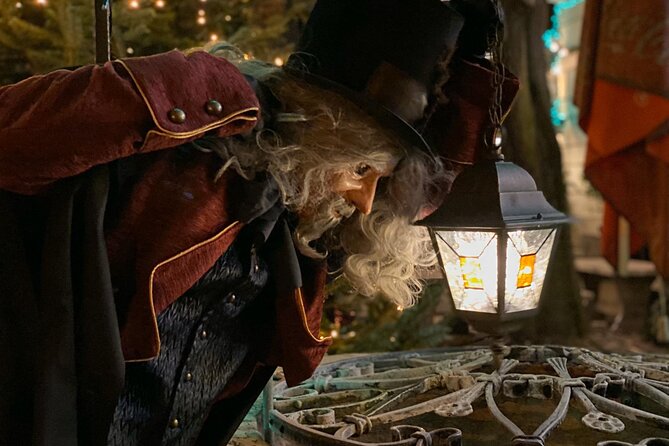
Now you shift into a more atmospheric pocket of central Berlin: Nikolaiviertel, the reconstructed historical heart of Alt-Berlin (together with nearby Cölln). The area is in Mitte and is about five minutes away from Alexanderplatz.
Nikolaiviertel is a “how Berlin tells its own past” kind of place. Built around what’s known as the medieval core of the city, it gives you that older-streets feeling without needing to hunt for it.
At night, the reconstructed medieval layout can feel extra intentional: alleys read differently in the dark, and the guide’s storytelling fits the setting. If you’re a fan of architecture that blends real history with later reconstruction, you’ll like this stop.
The only drawback? Because it’s a reconstructed heart, it won’t scratch the itch of someone who only wants untouched medieval fabric.
Stop 5: St. Nikolai-Kirche, Berlin’s oldest church area
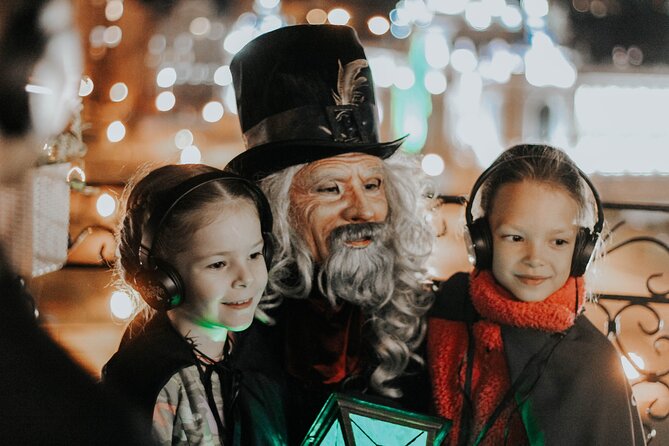
From Nikolaiviertel, the walk brings you to St. Nikolai-Kirche (Nikolaikirche or St. Nicholas’ Church). It’s described as the oldest church in Berlin, with construction dated between 1220 and 1230.
The church sits in the Nikolaiviertel area, and the surrounding zone—bounded by Spandauer Straße, Rathausstraße, the River Spree, and Mühlendamm—is often treated as the Nicholas quarter. Even when some buildings around it are restorations or recent imitations, the church itself gives you that strong sense of age.
Here’s what I find valuable: you’re not just hearing a date. You’re getting why that date matters for Berlin’s timeline—along with the nearby Church of Our Lady at Alexanderplatz, it’s among the oldest church anchors in central Berlin.
Night can add a quiet tone to church stops, but keep in mind you’re still outside and walking. Wear shoes you trust.
Stop 6: Humboldt Forum and Museum Island’s non-European focus
Next up: Humboldt Forum, on Museum Island in the historic center. The forum is named for Prussian scholars Wilhelm and Alexander von Humboldt and is built to combine features of the former Royal Palace.
The key idea is that you get a blend of:
- rebuilt baroque façades facing the Spree
- a contemporary exterior overlooking the river
- a modern interior designed by Franco Stella
The tour frames it as a major museum of non-European art, with collections and temporary exhibitions, plus public events. If you like museum power centers, this stop gives you a strong sense of how Berlin uses its landmark spaces today—not only as monuments, but as cultural crossroads.
A consideration: this is a “look and learn from the outside/context” type of stop in a walking tour format. If you want long gallery time, you’ll need a separate museum visit.
Stop 7: Mühlendamm, Mill Dam Bridge, and the city’s river core
The walk concludes at Mühlendamm, a main thoroughfare in Mitte. It runs from the historic quarters of Cölln and Fischerinsel, goes toward Molkenmarkt in Alt-Berlin, and crosses the Spree via Mühlendammbrücke (Mill Dam Bridge).
This is one of those “the street name is a time machine” moments. The site goes back to about 1200, when a historic causeway was laid out there as the nucleus of the late medieval city foundation. The name comes from watermills that once worked in the area.
Why it works as a finish: you end at a place that ties together the old city pattern (causeway and foundations) with the modern street system. You can feel the Spree as more than a backdrop.
The show factor: audio, actors, costumes, and treats
This tour isn’t only about facts. It plays with format.
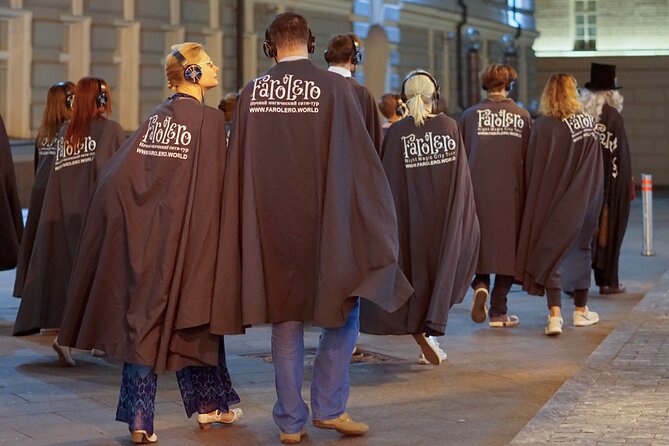
One of the most praised elements is the blend of audio-guide-style delivery with actors, plus visual effects that help you shift mindset as you move from stop to stop. That combination is handy: it cuts through the usual problem of night tours, where your brain gets bored with the same walking-and-lecture pace.
I also like the social energy the guide creates. Some participants get warm welcomes and even get dressed up as part of the experience. That turns the walk into something you do with people, not something you simply watch from the sidewalk.
And yes, there are practical comfort touches: coffee and chocolate during the tour and a schnaps at the end. That’s not just fluff. For a night walk in Berlin, a small warm drink (and a sweet) helps the whole experience feel smoother.
One word of caution: if you don’t like being included in interactive moments, tell yourself in advance that this tour leans that way. The payoff is fun and memorable; the tradeoff is less “quiet museum mode.”
Who should book this Berlin night walk
I’d point this tour at you if:
- you like history presented through symbols and stories, not long lectures
- you enjoy interactive experiences more than passive sightseeing
- you want a compact route through Mitte where you’ll hit major landmarks without planning logistics
It’s also a good choice for first-time Berlin visitors who want to understand what Berlin is made of—civic buildings, public icons, old city reconstructions, and museum culture—all in one evening.
I’d hesitate if:
- you need quiet, low-interaction sightseeing
- you hate outdoor walking in cold or damp conditions
- you’re only interested in modern Berlin and not the older symbolic layer
Booking timing and planning with Farolero’s format
The tour is capped at 20 people, which helps keep it feeling close rather than crowded. Average booking happens well in advance (around 53 days), so if your dates are fixed, I’d secure a spot early rather than waiting.
You’ll also want to plan around weather, since the experience requires good conditions. If it gets canceled for weather, you’re offered another date or a full refund.
If you’re traveling with a flexible schedule, booking an alternate date can be a lifesaver. Berlin evenings can change fast.
Should you book Night magic city tour in Berlin?
I think you should book it if you want Berlin facts plus an entertaining delivery style. The route hits a strong mix: Neptune Fountain with Prussian river allegories, Rotes Rathaus in Mitte, Ampelmännchen and the reunification contrast, then into Nikolaiviertel and St. Nikolai-Kirche before ending at Humboldt Forum-area context and the Mühlendamm/Spree river core.
The value angle is solid for a 90-minute evening format: you’re not just paying for landmark access, you’re paying for a performance-style guide experience with small treats along the way.
If you’re prone to last-minute travel chaos, arrive early and confirm the meeting point in your own directions app. And if the weather looks questionable, have a backup mindset. This is a night walk designed to work when the streets cooperate.
FAQ
What is the duration of the Night magic city tour in Berlin?
It lasts about 1 hour 30 minutes.
How much does the tour cost?
The price is $46.99 per person.
Is the tour offered in English?
Yes. The tour is offered in English.
Where does the tour start and end?
It starts at St. Marienkirche, Karl-Liebknecht-Str. 8, 10178 Berlin and ends at Ephraim’s, Spreeufer 1, 10178 Berlin.
Is there a group size limit?
Yes. The tour has a maximum of 20 travelers.
Do I need a printed ticket?
No. You’ll use a mobile ticket.
What happens if weather is poor?
The experience requires good weather. If it’s canceled due to poor weather, you’ll be offered a different date or a full refund.
Is free cancellation available?
Yes. You can cancel up to 24 hours in advance for a full refund.
More City Tours in Berlin


More Tours in Berlin




More Tour Reviews in Berlin

Round out your days in Berlin
City Tours, compared.
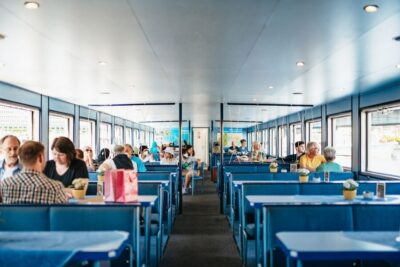 ★ 4.31-Hour City Tour by Boat with Guaranteed SeatingFrom $2516,993 reviews
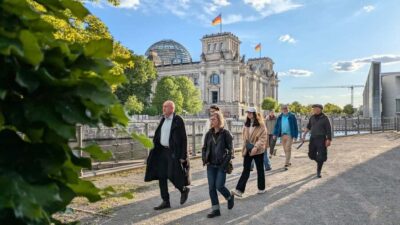 ★ 4.7Berlin City walk Government District and Places of DemocracyFrom $2948,467 reviews
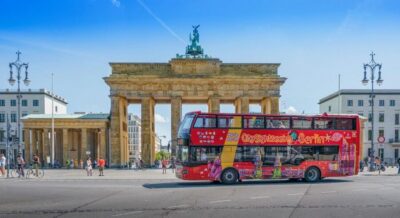 ★ 4.1City Sightseeing Hop-On Hop-Off Bus TourFrom $254,233 reviews
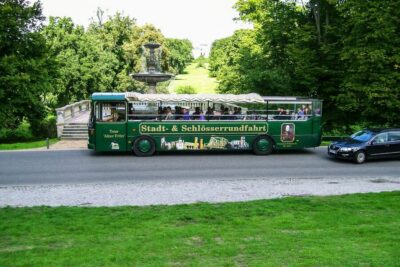 ★ 4.7Potsdam: City and Castles TourFrom $293,721 reviews
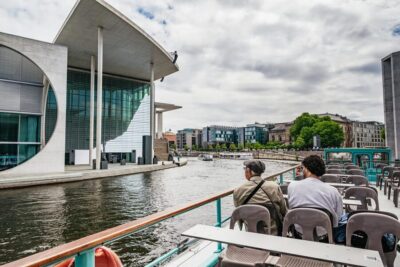 ★ 4.41-Hour City Sightseeing CruiseFrom $252,210 reviews
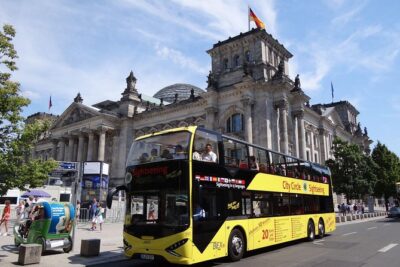 ★ 3.5Berlin City Hop-on Hop-off Tour with Optional CruiseFrom $311,155 reviews
 ★ 4.8City Street Art Guided Walking TourFrom $231,051 reviews
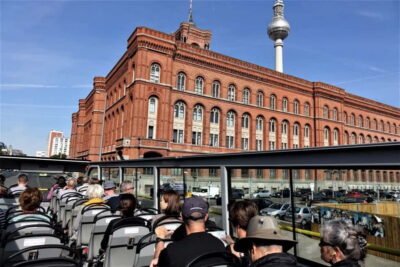 ★ 4.1Berlin Combo Package: City Tour & Spree Boat TourFrom $64996 reviews
Browse the lists this tour appears in