
REVIEW · POTSDAM DAY TRIPS
Potsdam Bike Tour with Rail Transport from Berlin
Palaces by bike beat bus tours. I love the small-group feel and the way the guide connects Frederick the Great’s palaces to later world events. I also like that train transport and bike rental are handled so you just show up and ride. The main drawback: it’s a long day with real biking time, so don’t book it if you hate getting your legs moving.
The route is packed with famous sights, but it stays practical—quick stops for photos, then back on the bike. You’ll see Sanssouci Palace from outside, roll through the parks, and reach the Bridge of Spies area that people associate with Cold War spy swaps.
You’ll get time for lunch in the Dutch Quarter, but it’s on your own tab. Most of the “palace time” is exterior viewing, so if you’re hunting for lots of inside touring, you may want to plan a separate museum day.
In This Review
- Key things I’d circle before you book
- Berlin to Potsdam by train, with Alexanderplatz as your launch pad
- Beach Cruiser bikes, helmets (optional), and a pace you can actually keep
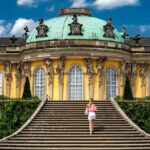
- Sanssouci Palace exteriors: the photos are the point, and the context makes them matter
- New Palace, Orangerieschloss, and the victory-laced Frederick story
- Cecilienhof and the Potsdam Agreement: WWII history, seen from the curb
- Bridge of Spies and the Cold War line between East and West Berlin
- Old Market Square, St. Nicholas Church, and the Prussia-to-everyday city connection
- Dutch Quarter lunch on your own dime, plus the Russian colony story
- Along Jungfernsee, the Havel River, and the Potsdam Berlin Wall remnants
- Price, value, and why it’s a smart day trip from Berlin
- Should you book this Potsdam bike tour with rail transport?
- FAQ
- How long is the Potsdam Bike Tour from Berlin?
- What time does the tour start and where do I meet?
- How do I get to Potsdam during the tour?
- Are bikes and helmets included?
- Is lunch included?
- What kind of bike riding should I expect?
- Is the tour offered in English, and how big is the group?
Key things I’d circle before you book
- Train to Potsdam + bike rental included so your day trip runs on rails
- About 17 km of riding (roughly 4.5 hours) with a moderate-fitness requirement
- English-speaking guide with stop-by-stop context across Prussia, WWII, and the Cold War
- Sanssouci Park highlights paired with quick, high-impact photo stops
- Cecilienhof and the Potsdam Agreement area viewed from the outside
- A Dutch Quarter lunch break (own expense) plus cycles along lakes and the Havel River
More of Berlin by bike
- Berlin: Sights and Highlights Bike Tour with a Local Guide★ 4.8 · 2,698 reviews
- Berlin Highlights 3-Hour Bike Tour★ 5.0 · 948 reviews
- Berlin Highlights: 3-Hour Bike Tour★ 4.9 · 809 reviews
- Berlin Highlights Sightseeing Bike Tour in Small Groups★ 5.0 · 652 reviews
Berlin to Potsdam by train, with Alexanderplatz as your launch pad
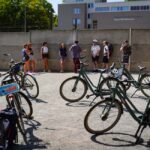
You start in central Berlin near Alexanderplatz, at the Unlimited Biking meeting point (Panoramastraße 1A). The morning begins at 9:30am with a meet-and-greet right by the tour’s starting area, where you’ll connect with the guide and the group.
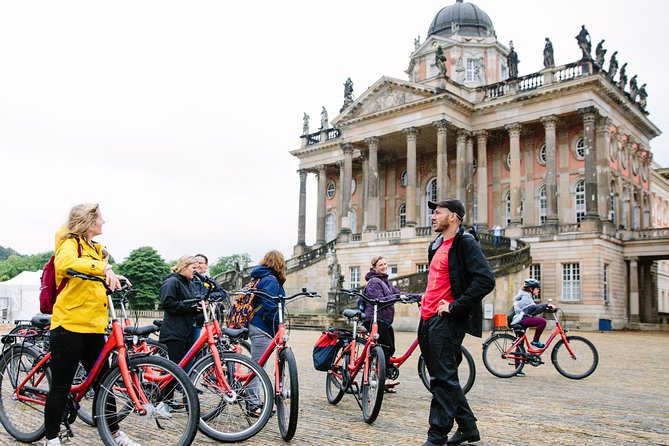
From there, the plan is straightforward: you get fitted for your bike—Beach Cruiser style with a helmet provided (optional)—and then you’re off on the train to Potsdam. This matters more than it sounds. Potsdam is a city of spread-out palaces and parks, and a rail-based start saves you the hassle of figuring out transit on your own while also keeping the day’s energy focused on riding.
Once you arrive, there’s a short Potsdam introduction before you roll out. That briefing is where the day clicks. Instead of seeing a palace, then another palace, then realizing you forgot why any of them mattered, you get a storyline you can carry into each stop—Frederick the Great’s era, Prussian ambition, and later the WWII aftermath that turns Potsdam into a global historical stage.
Beach Cruiser bikes, helmets (optional), and a pace you can actually keep
This tour runs about 6 hours 30 minutes total. The biking portion is around 10.5 miles (17 km) over approximately 4.5 hours. That’s enough time to feel like you did something real, not just took a casual spin around town.
The good news: the bikes are Beach Cruiser style, and the group size is capped at 18. Smaller groups tend to move more predictably, and that’s the difference between a tour you enjoy and one where you spend half your time waiting at the curb.
Helmet rules are simple. Helmets are provided, but they’re optional. I’d treat that as practical advice rather than a style choice. If you’re more comfortable wearing one, use it.
The main “consideration” is stamina. You’re not doing a short loop. You’ll pedal through Potsdam’s historic core, parks, and riverside stretches, and you’ll have quick breaks at many sights rather than long stops inside. If you bike only once a year, plan for it. If you can handle a half-day of steady riding at a comfortable pace, you’re in the sweet spot.
Sanssouci Palace exteriors: the photos are the point, and the context makes them matter
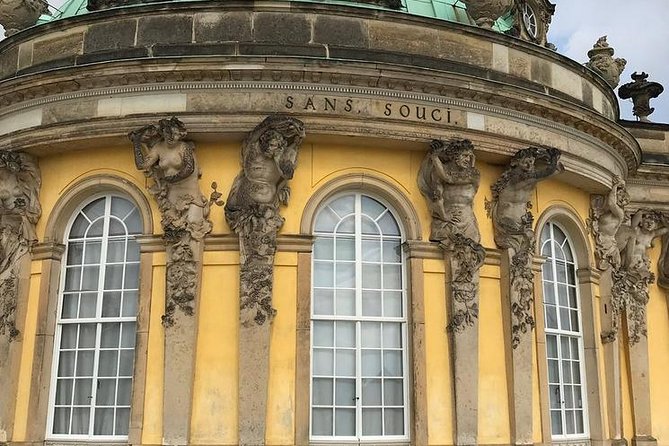
Sanssouci Palace is where the day really flexes. You see it from outside and get a focused explanation about Frederick the Great’s early life and why this whole palace-culture matters in the Prussian story. There’s also a prime photo moment built into the timing, so you’re not sprinting through a crowd just to catch a decent angle.
Right after that, you continue through Sanssouci Park with additional stops that keep the theme consistent: palaces as power symbols, gardens as political theater, and architecture as a way to say we can shape nature.
Orangerie im Park Sanssouci is one of those stops that works even if you’re not a “palace person.” You’ll have time for the windmill and gardens—another exterior viewing with quick photo opportunities rather than a long museum-style visit.
Then comes Potsdam Paradise Garden, followed by more garden cycling. This is where you get a good rhythm: small stretch of riding, short stop, quick context, back on the bike.
One thing I really like about this approach: it’s designed for understanding. You’re not just looking at fancy buildings. You’re learning what to look for—symmetry, garden planning, and why these royal residences were built with such confidence.
New Palace, Orangerieschloss, and the victory-laced Frederick story
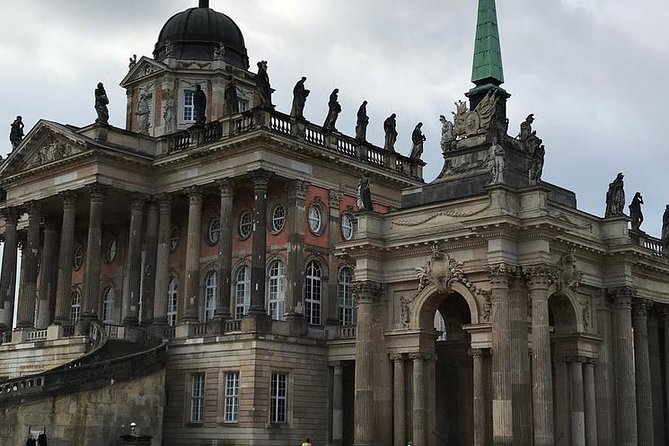
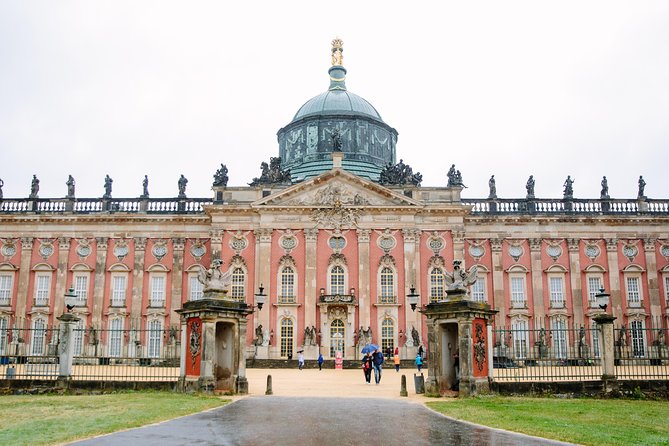
After the morning’s Sanssouci hits, the route shifts you toward the next big statement: Neues Palais (New Palace). You view it from outside and connect it to Frederick the Great’s victory in the Seven Years War. That detail changes how you see the building. It’s not only pretty—it’s propaganda in stone and scale.
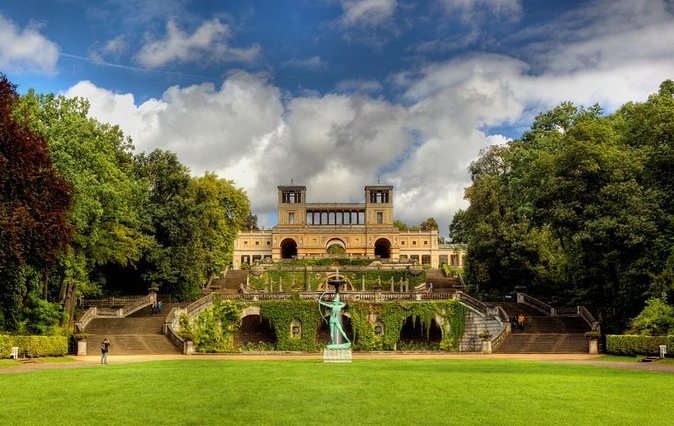
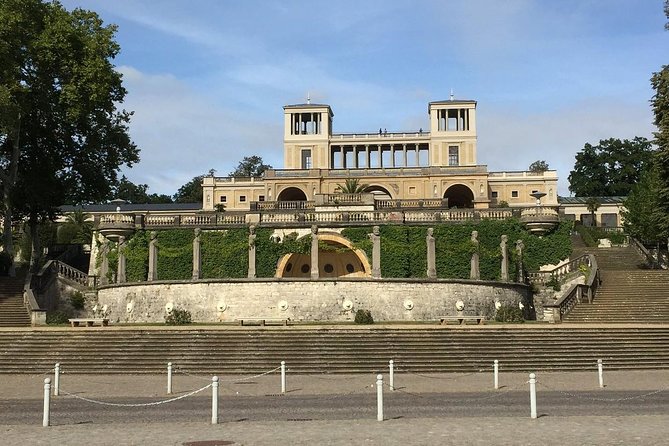
You also stop at Orangerieschloss. The explanation here is especially useful if you ever wondered why kings were so obsessed with exotic plants. This place is described as “Romantic on the Throne,” with an emphasis on the greenhouse concept—where Frederick-Wilhelm IV could grow items like oranges and lemons. Whether you care about botany or not, that little human detail makes the place feel less like a postcard and more like a ruler’s private ambition.
Short stops like these can feel fast on paper, but on a bike tour they’re the right length. You get to move, you avoid decision fatigue, and you still collect enough information to remember why the buildings are famous.
If you prefer slow travel, this pace may feel like you’re constantly leaving a view right as it starts to sink in. But if you want a strong overview—palaces plus meaning—this format fits well.
More palace-and-park days out in Potsdam
Cecilienhof and the Potsdam Agreement: WWII history, seen from the curb
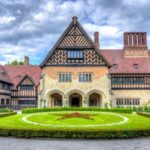
Cecilienhof Palace is another major highlight, though you’ll view it from the outside. You’ll get the story of the Marble Palace connection and the Potsdam Agreement, with the key names: Truman, Stalin, and Churchill. It’s a powerful reminder that Potsdam isn’t only about royal leisure. It also became a conference-stage for reshaping post-WWII Europe.
This kind of stop works best if you like big-picture history without sitting in a lecture hall. Instead, you stand where the events unfolded (or, more accurately on this tour, where the exterior gives the setting), and the guide supplies the chain of meaning.
Time at each site is brief, so I’d treat this as the “you should know this” portion of the day. If you want deep reading or inside rooms, you can add that later—but as a day trip from Berlin, this hits the essentials without turning the schedule into a slog.
Bridge of Spies and the Cold War line between East and West Berlin
Then the day turns into Cold War mode with a stop at the Glienicke Bridge area. You’ll hear explanations about the Bridge of Spies and the 1962 spy exchanges—well-known names like Rudolf Abel and Gary Powers come up in the story. This is one of those places where you don’t need extra context to feel the drama. The bridge and the setting do part of the work.
The ride segment also helps you “feel” the geography of the era. You coast along between the former East and West Berlin and connect the dots to what became a recurring Cold War flashpoint: that border tension where spies were traded like chess pieces.
Timing is short—around 10 minutes here—but it’s used well: a focused briefing, a moment to absorb the setting, then back to cycling.
If you’re a photography person, this is also a good chance to grab images that aren’t just palace façades. It gives you a different kind of Berlin-Potsdam contrast.
Old Market Square, St. Nicholas Church, and the Prussia-to-everyday city connection
The Old Market Square area (Alter Markt) shows a different side of Potsdam: the downtown center tied to Prussia’s civic life. You’ll stop around St. Nicholas’ Church for photos and explanations of the historical core. It’s the sort of pairing that helps you understand what “capital city energy” meant in a smaller setting than Berlin.
You’ll also visit an Obelisk where faces of Prussian electors and early Hohenzollern kings are mentioned in the description. That kind of detail can feel random when you’re touring alone, but here it becomes part of a coherent theme: who ruled, how they displayed power, and why the past is literally carved into the city.
Altes Rathaus (Old Town Hall) is another exterior stop, and you’ll hear that it now houses part of the private collection of Hasso Plattner. Even if you don’t plan to go inside, knowing what occupies the building today makes the stop feel less like a history set piece and more like a living city.
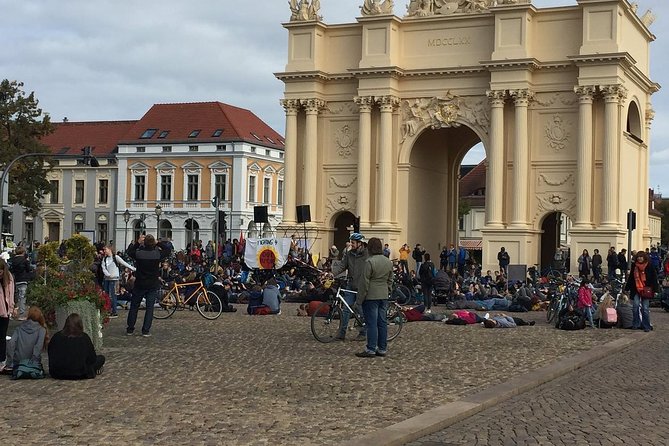
Luisenplatz rounds out the civic layer, tied to Queen Louise. And you’ll also ride by gates like Jägertor (Hunters’ Gate) and Nauener Tor, including a mention of its 1755 build date—small facts that give the city edges and shape.
These are short stops, but they matter. They stop the day from becoming only royal-palace scenery.
Dutch Quarter lunch on your own dime, plus the Russian colony story
You get a proper break in the middle of the day: time for lunch in the Dutch Quarter. Lunch is not included, so you’ll be paying your own way. This is also where the pacing becomes “pleasant.” You’ve been riding and collecting information since the morning, and now you get space to reset—walk a little, take a breather, and decide what you actually feel like eating.
The Dutch Quarter itself is part of what you’re learning. The area dates to Frederick-Wilhelm I (Soldier King), who built 134 Dutch houses to lure Dutch craftsmen—along with stone workers and linen weavers—so new immigrants would feel at home. The takeaway is simple: Potsdam wasn’t just built by monarchs commanding architects. It was also built through skilled people arriving, working, and shaping the city.
The guide also shares the Russian colony side of the story, originally ordered in the 1820s. That’s the kind of detail that can easily be missed on a fast sightseeing loop. Here, it’s folded into the riding so you leave with a fuller sense of how Potsdam grew.
If you want practical help, I’d treat lunch as a moment to ask your guide for suggestions before you scatter. The stop is planned, but you’ll still be picking a restaurant on your own.
Along Jungfernsee, the Havel River, and the Potsdam Berlin Wall remnants
After lunch and more cycling through the Dutch Quarter area, the tour shifts into scenic and reflective territory.
You’ll bike along Jungfernsee (Virgin Lake) and then along the Havel River. These river-and-lake stretches help you breathe between the palace-heavy first half and the history-heavy Cold War reminders later.
Then comes the part many people remember most: cycling along the Berlin Wall in Potsdam and seeing the site of the former No Man’s Land / Death Strip. It’s a stark contrast to the “pretty parks and palaces” image Potsdam often gets. The setting matters, and the guide’s explanation is what turns a segment of city infrastructure into a real historical reminder.
This section is also useful for framing everything you’ve seen earlier in the day. You get a sense of how rulers planned these landscapes, and then how later borders and conflicts scarred them.
By the time you roll back toward the end of the tour, the day feels like a loop through cause and effect: power, celebration, catastrophe, and then memory.
Price, value, and why it’s a smart day trip from Berlin
At $102.58 per person, this isn’t a “cheap and cheerful” activity. The value is in the bundle.
You’re paying for:
- Rail transportation to and from Potsdam
- A bike rental (city-cruiser style Beach Cruiser)
- An English-speaking guide
- Helmets provided (optional)
- A structured route that ties palaces and WWII/Cold War history into one ride
If you tried to replicate this alone, you’d likely spend time on logistics: booking rail, tracking down bikes, and figuring out the best order of palaces versus transit time. This tour simplifies that, then gives you stop-by-stop context so you’re not guessing what you’re looking at.
It also helps that the group is capped at 18. More people can still work, but smaller groups usually mean fewer delays and less crowding around tight viewpoints.
I’ve noticed a pattern in the guides’ strengths across past departures: names like Marco, Maggi, Simon, Alex, Nick, Jeff, Alicia, Brett, and Peter show up as lead guides. The consistent theme is clear storytelling and a pace that keeps most riders comfortable.
This is also a practical fit for your travel style if you want a full overview without spending the whole day standing in lines. Quick exterior viewing is intentional here.
Should you book this Potsdam bike tour with rail transport?
Book it if you want:
- A palace-and-history overview that’s actually usable in a single day
- To ride about 17 km with breaks that feel timed, not random
- An organized Berlin-to-Potsdam plan where rail and bike logistics are handled
- English narration with enough context that the sites feel connected
Consider skipping or pairing with a second trip if:
- You need a lot of inside viewing and long time in museums
- You don’t like long days or you struggle with steady cycling (the biking section is about 4.5 hours)
- You’re sensitive to crowds, since some spots involve busy sidewalks and streets
Bottom line: this is a strong day trip when you want to trade stress for motion. You’ll see the big names, learn why they matter, and get a Potsdam look that’s hard to copy by yourself in the same timeframe.
FAQ
How long is the Potsdam Bike Tour from Berlin?
The tour runs about 6 hours 30 minutes.
What time does the tour start and where do I meet?
It starts at 9:30am. You meet at Unlimited Biking, Panoramastraße 1A, 10178 Berlin.
How do I get to Potsdam during the tour?
Rail transportation to and from Potsdam is included, and the group meets near Alexanderplatz before taking the train.
Are bikes and helmets included?
Yes. The tour includes bike rental (city-cruiser style Beach Cruiser). Helmets are provided but optional.
Is lunch included?
No. There’s time for lunch in the Dutch Quarter, but food and drinks are not included.
What kind of bike riding should I expect?
You’ll ride about 10.5 miles (17 km) over roughly 4.5 hours. The tour recommends a moderate physical fitness level.
Is the tour offered in English, and how big is the group?
The guide speaks English, and the tour has a maximum group size of 18.
More Tour Reviews in Berlin

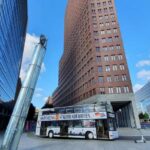
A Day in Potsdam
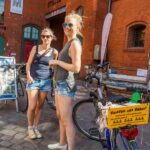
Berlin by Bike


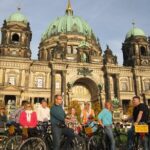
Round out your days in Berlin
Potsdam Day Trips, compared.
 ★ 4.7Potsdam: City and Castles TourFrom $293,721 reviews
 ★ 4.5Potsdam: Palace Tour by BoatFrom $272,369 reviews
 ★ 4.5Potsdam: Sanssouci Palace and Prussian Palaces Entry TicketFrom $252,101 reviews
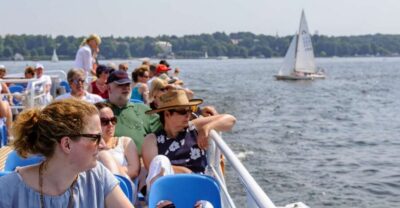 ★ 4.53-Hour World Heritage Cruise to PotsdamFrom $251,569 reviews
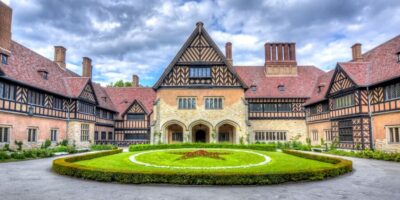 ★ 4.6Sachsenhausen Concentration Camp and Potsdam TourFrom $651,334 reviews
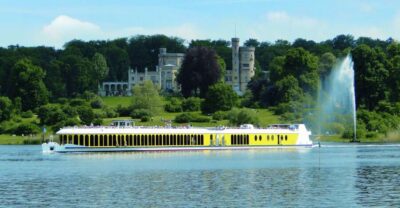 ★ 4.6Potsdam by Boat: Island CruiseFrom $421,308 reviews
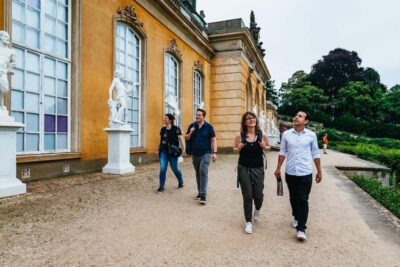 ★ 4.7From Berlin: Potsdam and Sanssouci Palace Tour with EntryFrom $751,219 reviews
 ★ 4.2Potsdam: City Sightseeing Hop-On Hop-Off Bus TourFrom $23864 reviews
Browse the lists this tour appears in