

REVIEW · POTSDAM DAY TRIPS
Women in socialist Potsdam – a feminist city tour
Potsdam turns feminist fast. This Women in socialist Potsdam tour uses city-center streets to explain how the GDR treated women, from official policy to everyday pressure. You cover the years 1949 to 1990 on an outdoor walk that stays grounded in real places.
I particularly like how Antonia makes the topic feel human, not like a textbook. Two things I really appreciated are her clear, visual explanations and her willingness to handle questions without getting vague, plus the fact that you connect women’s rights talk to the lived “triple burden” of working women. The only drawback to plan for is that the subject matter includes persecution and Stasi involvement, and the walk is exclusively outdoors with a bit of distance.
In This Review
- Key things I’d plan for on this Potsdam women’s history walk
- Why Socialist Potsdam Feels Personal on a 5 km Walk
- Max-Planck-Straße Start: Official Women’s Policy Meets Reality
- Working Women and the Triple Burden on City-Center Streets
- Stasi in Focus: Female Employees and Women as Persecution Targets
- Women’s Movement and the Peaceful Revolution Timeline You Can Actually Follow
- How Antonia Turns City Points Into Clear Historical Meaning
- Price and Value: Is $29 for 2.5 Hours Worth It?
- What to Wear, How Far You’ll Walk, and Who Should Go
- The Emotional Tone: Heavy Topics, Clear Framing, Smart Pace
- Should You Book Women in Socialist Potsdam?
- FAQ
- How long is the Women in socialist Potsdam tour?
- Where does the tour start and end?
- How far do we walk?
- How much does it cost?
- What language is the guide?
- Is the tour wheelchair accessible?
- Is the tour outdoors?
- Is it suitable for people with low fitness?
- What’s included, and do I need to bring provisions?
Key things I’d plan for on this Potsdam women’s history walk
- Official GDR women’s policy, explained through what you see in Potsdam’s center
- Triple burden of working women, tied to the wider idea of equality
- Ministry for State Security (Stasi) staff and how women were affected
- Female victims of persecution by the Stasi, handled as part of the historical reality
- Women’s movement before, during, and after the Peaceful Revolution
- A mostly street-level experience, walking about 5 km over roughly 2.5 hours
More palace-and-park days out in Potsdam
- Potsdam: City and Castles Tour★ 4.7 · 3,721 reviews
- Potsdam: Palace Tour by Boat★ 4.5 · 2,369 reviews
- Potsdam: Sanssouci Palace and Prussian Palaces Entry Ticket★ 4.5 · 2,101 reviews
- Potsdam by Boat: Island Cruise★ 4.6 · 1,308 reviews
Why Socialist Potsdam Feels Personal on a 5 km Walk
This tour works because it refuses to keep the GDR in a museum box. You’re looking at the city itself and asking what power, work, and state control meant for women between 1949 and 1990.
You get a practical format: a focused theme tour (not general sightseeing), a set duration, and a clear walking arc. You’ll start at Max-Planck-Straße 8 and finish at Luisenplatz, so you can picture it as a single continuous historical walk rather than scattered stops.
One of the best parts is the balance of topics. It’s not only “policy on paper,” and it’s not only “Stasi horror” either. You also get the women’s movement timeline before, during, and after the Peaceful Revolution, which gives your brain a place to land.
Max-Planck-Straße Start: Official Women’s Policy Meets Reality
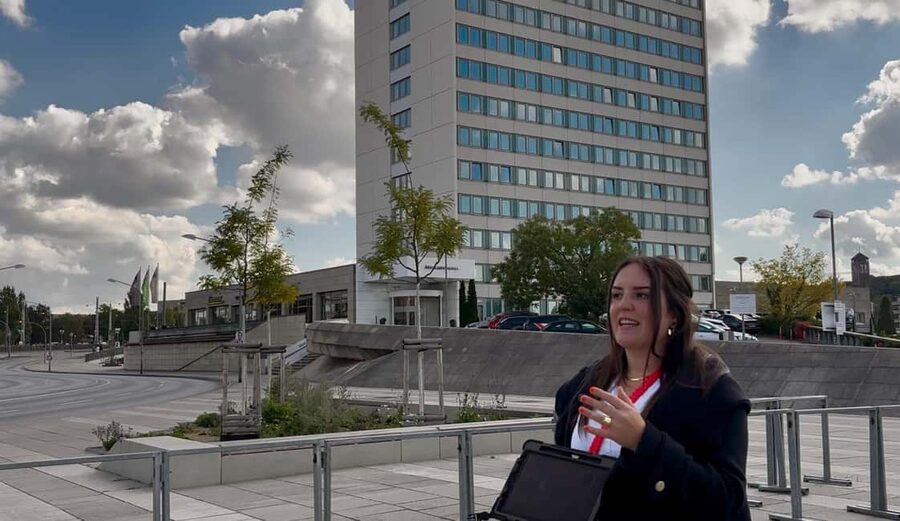
You begin at Max-Planck-Straße 8, at the stone benches, and that opening matters. Starting in a public, everyday spot signals the tour’s basic idea: women’s history happened in the same streets people walked every day.
The guide then frames the official women’s policy in the GDR. That’s important because it sets up the contrast the whole tour leans on: official promises versus actual treatment. You’re not just hearing slogans. You’re building a lens to judge what “equality” looked like when the state controlled key parts of life.
From there, you move through Potsdam’s city-center buildings and places. Even without a museum-style exhibit, the walk makes it easier to connect political systems to normal routines like work. If you like your history concrete and close-up, this format should feel like your kind of learning.
Potential consideration: if you’re expecting lightweight, casual storytelling, the early policy discussion can feel heavy once the tour starts connecting it to how women were managed in real life.
Working Women and the Triple Burden on City-Center Streets
One of the tour’s most useful concepts is the “triple burden” of working women. You’re not just told that work was hard. You’re guided to understand the overlapping expectations placed on women: paid labor plus additional responsibilities that shaped daily life.
This part is where the tour earns its feminist framing. Equality isn’t only legal language here. The tour pushes you to think about equal treatment as something that has to show up in daily reality, not only in official statements.
The city-center walk helps because you keep moving while the ideas land. You’ll gradually notice how the tour ties women’s lives to the built environment you’re passing, rather than treating history like something that happened somewhere else and ended long ago.
If you’re the type who likes to connect history to “how people lived,” you’ll probably find this section especially satisfying. It turns abstract gender politics into something you can hold in your head while you walk.
Stasi in Focus: Female Employees and Women as Persecution Targets
The tour becomes sharper when it moves into the Ministry for State Security, known as the Stasi. You’ll hear about female employees at the Ministry for State Security, which is a detail worth paying attention to. It complicates the simple story of “perpetrator versus victim,” because it shows that repression wasn’t only run by men.
Then the tour addresses women as victims of persecution by the Stasi. This is the emotional core, and it’s also where you should pace yourself. The tour includes themes of imprisonment and persecution, so it’s not built for anyone who wants to keep feelings fully out of the experience.
What I like about the way this is presented (based on the guide’s approach) is that it’s handled as part of a broader system, not as isolated shock value. You’re learning how state power affected women directly, and you’re seeing how that ties back to earlier discussions of equality and official policy.
A practical thought: if you’re sensitive to dark history, plan a buffer afterward. A coffee stop near Luisenplatz can work well, because you’ll likely leave with a lot to process.
More Potsdam tours to line up side by side





Women’s Movement and the Peaceful Revolution Timeline You Can Actually Follow
Many history tours mention political change, but this one centers women’s activism around the Peaceful Revolution. You’ll talk about women’s movement before, during, and after the Peaceful Revolution, which gives the story a beginning, middle, and aftermath.
That structure helps you avoid the common problem of treating revolutions as sudden moments. Here, you can see change as something shaped by people organizing, arguing, and pushing for visibility. It also reframes “political courage” as something that isn’t limited to a single type of participant.
The tour uses individual biographies as examples, but keeps the focus on the general social situation of women in the GDR. That matters for value. Biographies can hook you, but the real payoff is when they help you understand the wider context.
You might also notice that the tour touches on the situation of women and queers in the DDR. That broader lens makes the experience feel more relevant and more complete, especially if you care about how gender and sexuality played out under socialist governance.
How Antonia Turns City Points Into Clear Historical Meaning
Antonia is the name to remember from this experience. The way she teaches seems built around accessibility: the history is delivered in a way that you can track from stop to stop, without turning the tour into a lecture that swallows your questions.
Two teaching habits stand out in what you can expect. First, she explains places in a way that makes familiar Potsdam corners feel newly meaningful. If you’ve already walked through Potsdam before, you’ll likely appreciate how this tour reframes what you’re seeing.
Second, she stays open to questions. That’s a big deal on a thematic tour like this, because visitors often want clarification on how policy and real life connected, or how specific themes like Stasi involvement fit into the broader story.
If you like a guide who handles both background and on-the-spot curiosity, this is exactly the kind of tour that will feel worth your time. You don’t have to check your brain at the door.
Price and Value: Is $29 for 2.5 Hours Worth It?
At $29 per person for about 2.5 hours, you’re paying for a focused, expert-guided walking tour rather than generic sightseeing. The value comes from the theme density: women’s policy, triple burden, Stasi roles, persecution of women, and women’s movement around the Peaceful Revolution, all within a manageable time window.
It’s also good value because it’s location-based. You’re not spending time on transfers or adding extra tickets. You start in the city center at Max-Planck-Straße 8 and finish at Luisenplatz, and you’re on foot through roughly 5 km of outdoor space.
One more value angle: this is a feminist memory and urban history approach. Instead of only seeing monuments, you learn what institutions and social expectations meant for women. That’s often the difference between a tour that’s “interesting” and a tour that changes how you look at a place.
What to Wear, How Far You’ll Walk, and Who Should Go
This tour is exclusively outdoors, so your clothing matters. The basics are simple: dress appropriately for the weather, because you’ll be outside for the full duration.
You should also expect a real walking day, even if it’s not extreme. The tour length is about 5 km, and it runs for around 2.5 hours. If you have low fitness, this one may not suit you.
The tour is wheelchair accessible, which is a major plus. Still, the experience is structured as a walking tour, so you’ll want to consider comfort and pacing even if accessibility accommodations are in place.
Who this fits best:
- You want women’s history tied to real urban spaces in Potsdam
- You like feminist perspectives and want them applied to the DDR, not treated as an add-on
- You’re interested in urban history, institutional power, and the Peaceful Revolution era
- You prefer a guided theme walk in German, with room for questions
The Emotional Tone: Heavy Topics, Clear Framing, Smart Pace
Let’s be honest: this tour covers persecution by the Stasi, and it includes experiences of female prisoners and women involved with the Ministry for State Security. That’s heavy material, even when it’s explained with historical care.
The good news is that the tour doesn’t just stop at brutality. It also covers women’s movements around the Peaceful Revolution, which can help balance the emotional weight with a sense of agency and political change.
If you’re choosing this tour, decide what you want from your Potsdam day. If you want gentle, purely scenic sightseeing, you might feel out of place. If you want your city time to mean something and connect streets to the lived story of women, this will likely land well.
Should You Book Women in Socialist Potsdam?
Book it if you want a targeted Potsdam women’s history tour that links official GDR women’s policy to the reality of women’s lives. Antonia’s teaching style is a strong selling point: clear explanations, good background, and a guide who answers questions.
Pass on it if you dislike walking in the weather, have low fitness, or you know you struggle with content about state persecution and Stasi-related imprisonment. Also consider picking a time when you won’t need to rush afterward.
If you’re already curious about the DDR but want a perspective that focuses on women and social power, this is a smart use of your time in Potsdam.
FAQ
How long is the Women in socialist Potsdam tour?
It lasts about 2.5 hours.
Where does the tour start and end?
The tour starts at Max-Planck-Straße 8 and ends at Luisenplatz.
How far do we walk?
The tour covers about 5 km.
How much does it cost?
The price is $29 per person.
What language is the guide?
The live tour guide speaks German.
Is the tour wheelchair accessible?
Yes, it is wheelchair accessible.
Is the tour outdoors?
Yes. It takes place exclusively outdoors, so you should dress appropriately for the weather.
Is it suitable for people with low fitness?
No, it is not suitable for people with a low level of fitness.
What’s included, and do I need to bring provisions?
The guided city tour is included. Provisions are not included, so you’ll want to plan accordingly.
More Tours in Potsdam




More Tour Reviews in Potsdam



A Day in Potsdam
Round out your days in Potsdam

Potsdam Day Trips, compared.
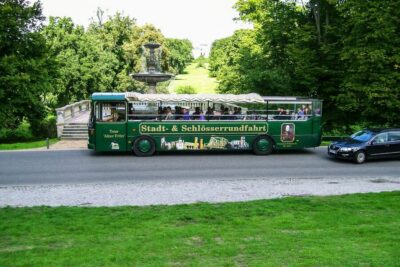 ★ 4.7Potsdam: City and Castles TourFrom $293,721 reviews
 ★ 4.5Potsdam: Palace Tour by BoatFrom $272,369 reviews
 ★ 4.5Potsdam: Sanssouci Palace and Prussian Palaces Entry TicketFrom $252,101 reviews
 ★ 4.53-Hour World Heritage Cruise to PotsdamFrom $251,569 reviews
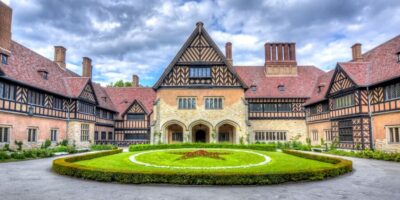 ★ 4.6Sachsenhausen Concentration Camp and Potsdam TourFrom $651,334 reviews
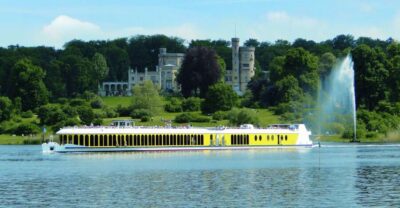 ★ 4.6Potsdam by Boat: Island CruiseFrom $421,308 reviews
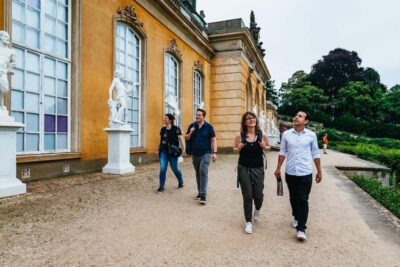 ★ 4.7From Berlin: Potsdam and Sanssouci Palace Tour with EntryFrom $751,219 reviews
 ★ 4.2Potsdam: City Sightseeing Hop-On Hop-Off Bus TourFrom $23864 reviews
Browse the lists this tour appears in