
REVIEW · BERLIN BIKE TOURS
3-Hour Bike Tour of Tiergarten and Berlin’s Hidden Places
Berlin hides in plain sight. This 3-hour Berlin bike tour takes you past the postcard sights and into calmer lanes where the city’s layers show up fast, especially around Tiergarten and the older core. You ride an urban cruiser with plenty of bike lanes, then stop often enough to make the history stick without turning it into a classroom.
I especially like two things: the way the route uses quiet side streets and garden paths (so you feel less stuck in traffic), and the fact that stops are short but focused, so you get context without losing the pace. The experience also lands in neighborhoods that feel lived-in rather than staged.
One possible drawback: it runs for 3 hours, and while the stops are well-timed, there may not be much slack for buying snacks or drinks along the way. If you’re picky about food timing, plan ahead.
In This Review
- Key highlights worth your attention
- Riding Tiergarten: a calmer way to feel Berlin’s scale
- Poststraße start: how the 3-hour pace really works
- Nikolaiviertel and Märkisches Museum: Berlin’s origin meets its constant reinvention
- Barenzwinger and the church stops: where names and survival stories intersect
- Global Stone Project and Hansaviertel: modern meaning in unexpected corners
- Clärchens Ballroom and Scheunenviertel: courtyards, culture, and a little dark charm
- What you’ll actually get from the guide (and why David comes up)
- Price and value: is $45.10 worth it?
- Who should book this Berlin bike tour
- Final call: should you book?
- FAQ
- How long is the bike tour?
- What does it cost?
- Where does the tour start and end?
- Is the bicycle and helmet included?
- Does the tour include food and drinks?
- What language is the tour offered in?
- Does it run in bad weather?
- Can I get a full refund if plans change?
Key highlights worth your attention
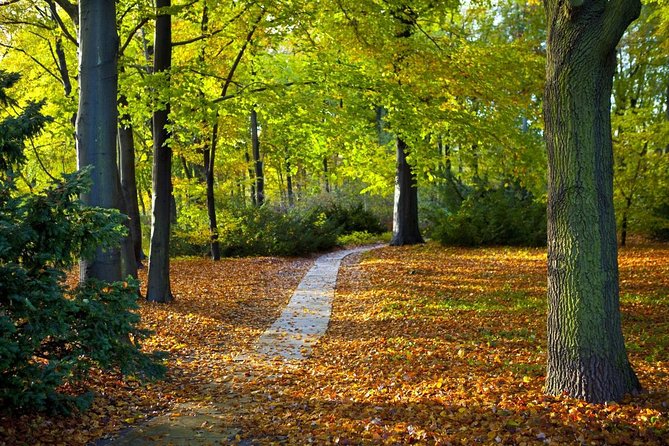
- Tiergarten on wheels: a central-park feel with bicycle-friendly routes, so you cover ground without rushing.
- Small-group feel (5–15): easier questions, smoother turns, and less waiting around.
- Big ideas at small stops: 3D city models, name origins, and surviving churches—explained in plain language.
- Berlin’s layers in sequence: medieval hints, World War-era rebuilding stories, and postwar housing visions.
- Helmet + bike included: you show up ready to ride, with less gear hassle.
More of Berlin by bike
- Berlin: Sights and Highlights Bike Tour with a Local Guide★ 4.8 · 2,698 reviews
- Berlin Highlights 3-Hour Bike Tour★ 5.0 · 948 reviews
- Berlin Highlights: 3-Hour Bike Tour★ 4.9 · 809 reviews
- Berlin Highlights Sightseeing Bike Tour in Small Groups★ 5.0 · 652 reviews
Riding Tiergarten: a calmer way to feel Berlin’s scale
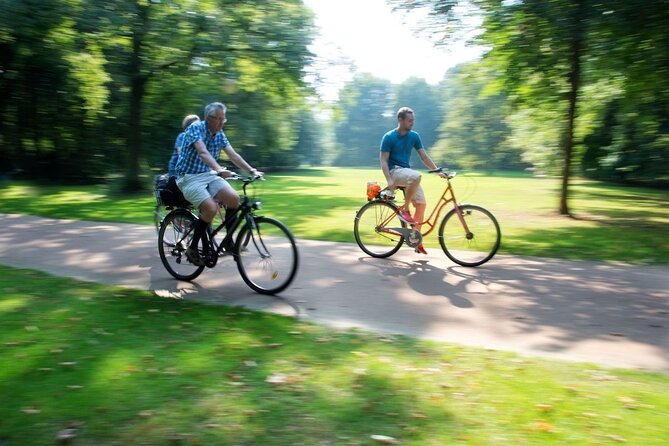
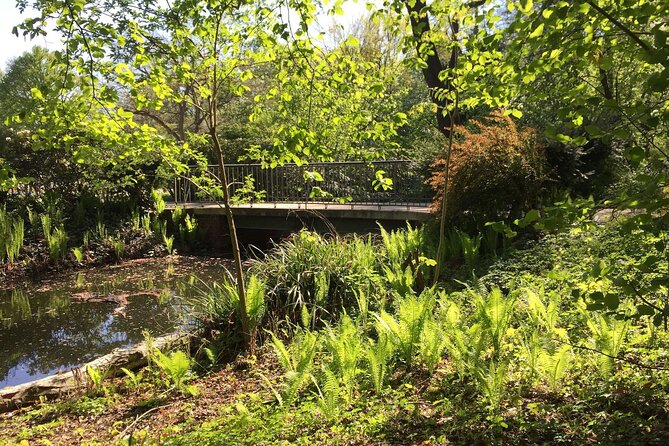
If you’ve ever tried to “do Berlin” by foot, you know the problem: you can walk for hours and still feel like you barely scratched the surface. Riding changes that instantly. The route spends time in Tiergarten, Berlin’s central park, and that matters because it gives you a different rhythm from the tight streets in the city center.
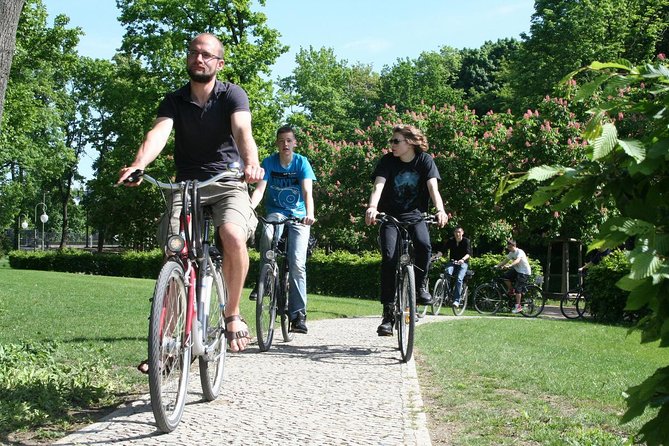
You’ll notice how much the tour leans on bicycle infrastructure. Bike lanes and smoother lanes mean you’re not constantly negotiating where to pedal next. That’s a big deal for confidence, too—especially if you’re not used to city cycling. The tour is set up so you can concentrate on the sights during short stops, then move on while the momentum stays good.
What I like about this approach is that Tiergarten isn’t just a green break. It’s a staging ground for understanding Berlin’s growth. When you move from a large green space into older quarters and museum-adjacent areas, the city’s “then and now” contrast lands harder.
Poststraße start: how the 3-hour pace really works
The tour begins and ends near Poststraße 11 (10178 Berlin). You’ll start with the bike handover and departure briefing, then head out on a loop that brings you back to the same meeting point. Since it’s about 3 hours, the plan is built around steady motion: ride, pause for a story, ride again.
You’re riding with a professional guide, and you get a helmet and bike included. There’s also a mobile ticket. That combination is practical: it reduces waiting time and keeps your focus on being outside rather than handling logistics.
Group size is capped at 15, and the typical minimum is 5. In real life, that usually means you get a more personal guiding style than you would on a giant bus tour. It’s also easier for the guide to manage crossings and keep everyone together without turning into a slow parade.
One small practical point: since food and drinks are not included, bring water if you like it. And if you want a coffee or snack, consider grabbing it before the tour or be ready to make do during the ride-time windows.
Nikolaiviertel and Märkisches Museum: Berlin’s origin meets its constant reinvention
A big part of why this tour works is the sequence. You don’t just jump from one famous stop to the next. You move from the idea of Berlin’s beginnings into a perspective on how the city keeps rebuilding itself.
In Nikolaiviertel, you’ll hear why it’s considered the place of Berlin’s origin and what makes the quarter feel special: it’s described as a lovely, quiet area in the center, and it was remodeled after destruction during the 1980s. That timing matters. It means the neighborhood isn’t presented as untouched old Berlin—it’s more like Berlin’s memory, reshaped by more recent history.
Then you move toward Märkisches Museum, where you’ll get a look at big 3D-city models of Berlin. Even if you don’t know much about the city going in, these models help you connect the dots: parts of Berlin look the way they do because the city has been changing again and again. The stop is short, but it’s the kind of visual aid that makes later streets feel less random.
A drawback of focusing on models and reconstruction stories is that you need to pay attention during the stop to get the full payoff. The upside is that the rest of the ride turns those ideas into something you can actually see from the street.
Barenzwinger and the church stops: where names and survival stories intersect
Some tours stick to big monuments. This one looks at smaller, odd, and specific places that carry big meaning.
Near the Barenzwinger, you’ll hear the story behind the name Berlin and what it has to do with bears. That kind of question sounds like a fun trivia prompt, but on this tour it becomes a way to connect language, local legend, and the city’s past. Even if you’ve lived in Berlin for years, it’s the sort of origin question that can still surprise you.
Then the route brings you into the Parochialkirche stop, where the theme is religion and the city’s hard resets: destruction, rebuild, and designated survivors. The point isn’t just tragedy. It’s that the building (and the choices around it) becomes evidence—something Berliners can point to and say, this part endured or was kept.
After that, you’ll visit Franziskaner Klosterkirche, described as an abandoned place and a rare memorial to Berlin’s medieval history. “Abandoned” can sound depressing, but the way it’s framed here matters. You’re not only looking at what was lost; you’re seeing how medieval traces are preserved—or at least remembered—in a modern city that keeps moving.
If you’re the type who enjoys understanding how the past survives into daily streets, these stops are a strong reason to choose biking over a bus tour. You’re moving between them, which keeps the stories from feeling stuck in one place.
More Berlin tours to line up side by side
Global Stone Project and Hansaviertel: modern meaning in unexpected corners
Not all history here is centuries old. Some of it is attitude—how Berlin tried to imagine the future, and what that looked like in built form.
At the Global Stone Project, the stop is described as Berlin’s Stonehenge, with the theme that love can be difficult sometimes. You won’t come away with a textbook moral from a statement like that. Instead, you get a sense of Berlin’s playful, sometimes awkward way of putting big ideas into a single visible spot. It’s the kind of stop that works especially well on a bike tour because you can pause, look, then move on—no pressure to spend ages there.
Next up is Hansaviertel, tied to housing visions from 1957. The description points to the future of housing, at least from that period’s perspective. That’s a smart stop because it shows Berlin is not only a city of wars and rebuilds. It’s also a city that tried new concepts, experimented with urban planning, and built for what people hoped tomorrow would be.
One caution: if you don’t like architecture or city-planning themes, this is still worth it, but you should go in with a flexible mindset. These stops reward curiosity more than checklist completion.
Clärchens Ballroom and Scheunenviertel: courtyards, culture, and a little dark charm
The tour ends with a mood shift into spaces where Berlin feels human—less official, more day-to-day.
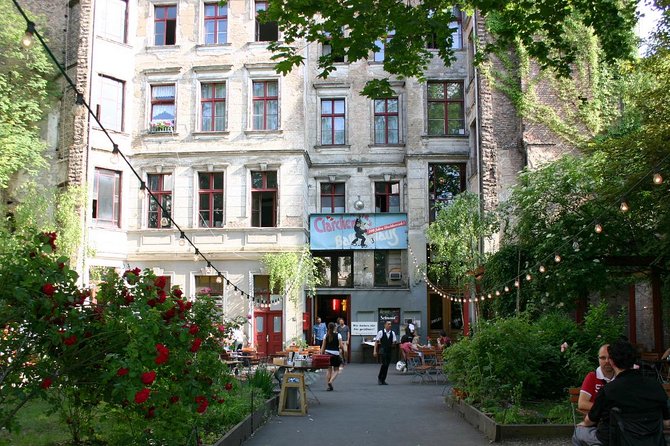
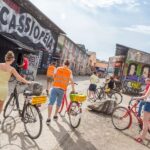
At Clärchens Ballroom, the focus is on its reputation for dancing and the surrounding morbid charme (dark charm). That combination is pure Berlin: something theatrical, slightly eerie, and unmistakably local. The stop is short, but it hints at the city’s creative nightlife energy without forcing you to commit to a night out.
Then you’ll roll into Scheunenviertel, described as an urban paradise for the posh, with courtyard oases, decent shopping, fine dining, culture, art, and party. Even if you don’t shop or party much, the wording points to the neighborhood’s vibe: inner courtyards and artsy density can make it feel like Berlin has two speeds—busy outside, calmer within.
This is a good place to absorb what the whole tour set up. You started with park space and origins. You moved through rebuilding stories and medieval traces. Then you end with a neighborhood where Berlin’s modern identity shows through in how people spend time together.
What you’ll actually get from the guide (and why David comes up)
A lot of bike tours are mostly driving from point to point. This one stands out because the guide’s role is central. In particular, the name David shows up in feedback, and the description is consistent: he’s both well-versed and humorous.
That combination matters. Humor helps you stay tuned during short historical stops, and clarity helps you connect details to what you’re seeing around you. Since the tour is only available in German (English is not offered on this specific format), the guide’s ability to explain clearly becomes even more important. If you’re comfortable with German enough to follow stories, you’ll likely feel like you’re getting the city’s “how” rather than just the “what.”
Practical tips for getting more value:
- Bring a willingness to listen during short stops; the timing is part of the design.
- If you understand some German, this is a good chance to practice. You don’t need every word, but you’ll benefit from the narrative flow.
- If you’re heat/cold sensitive, dress for all weather since it runs in all weather conditions.
Price and value: is $45.10 worth it?
At $45.10 per person for about 3 hours, this isn’t a budget bargain. But it can be very good value if you count what’s included and what you’re replacing.
You get:
- a professional guide
- use of bicycle
- a helmet
- a mobile ticket
When you’re paying for guided navigation plus equipment, you’re not just buying a route. You’re paying for interpretation: the quick stop stories, the context you can’t easily piece together on your own while biking. The small-group cap (5–15) also supports value. You get enough people that the ride feels lively, but not so many that questions get lost.
Timing-wise, the tour is often booked about 13 days in advance on average. That suggests it’s popular, so if you’re traveling in a high season window or on a weekend, try not to leave it too late.
The one cost you should plan for is food and drinks, since those are not included unless specified. If you hate making decisions on the spot, do a quick snack run before the start.
Who should book this Berlin bike tour
This works best if you want a guided, active way to cover a lot of Berlin without feeling trapped in a single neighborhood. It’s a nice choice for:
- first-timers who want orientation plus context
- people who prefer quiet sidestreets and bike lanes to big-vehicle crowds
- anyone interested in how Berlin rebuilds and rebrands itself over time
It may not be the best match if:
- you need English guiding on a bike tour format (this one is German only)
- you want long food/drink breaks during the ride
- you dislike historical themes that include destruction and rebuilding narratives
Still, with a little planning and a curious mindset, you’ll likely come away with that feeling you want from Berlin: you saw places that make the city make sense.
Final call: should you book?
I’d book this tour if you want to experience Berlin through a mix of Tiergarten, neighborhood origins, and a sequence of specific sites that explain how the city keeps reshaping itself. The included bike and helmet, the small-group size, and the guide’s well-informed and humor-forward style are strong ingredients.
Just go in ready for two realities: it’s German only, and it’s designed around moving steadily for 3 hours. If you handle those two points, you’ll have an efficient, fun way to see more Berlin than you can by foot in the same time.
FAQ
How long is the bike tour?
The tour lasts about 3 hours.
What does it cost?
The price is $45.10 per person.
Where does the tour start and end?
It starts and ends at Poststraße 11, 10178 Berlin.
Is the bicycle and helmet included?
Yes. The tour includes use of a bicycle and a helmet.
Does the tour include food and drinks?
No, food and drinks are not included unless specified.
What language is the tour offered in?
This tour is available only in German. For English, you need a private tour option.
Does it run in bad weather?
Yes, it operates in all weather conditions, so dress appropriately.
Can I get a full refund if plans change?
Yes. You can cancel up to 24 hours in advance for a full refund.
More Tours in Berlin


More Tour Reviews in Berlin
Berlin by Bike


Round out your days in Berlin
Berlin Bike Tours, compared.
 ★ 4.8Sights and Highlights Bike Tour with a Local GuideFrom $412,698 reviews
 ★ 5.0Berlin Highlights 3-Hour Bike TourFrom $42948 reviews
 ★ 5.0Berlin City Bike Tour with Beer Garden StopFrom $83917 reviews
★ 4.9Berlin Highlights: 3-Hour Bike TourFrom $37809 reviews
★ 5.0Berlin City Bike Tour with Beer Garden StopFrom $83917 reviews
★ 4.9Berlin Highlights: 3-Hour Bike TourFrom $37809 reviews
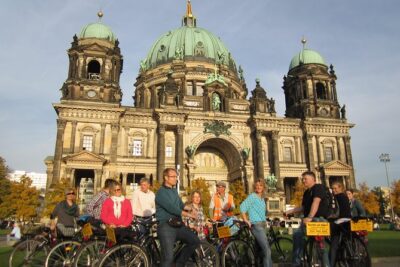 ★ 5.0Berlin Highlights Sightseeing Bike Tour in Small GroupsFrom $43652 reviews
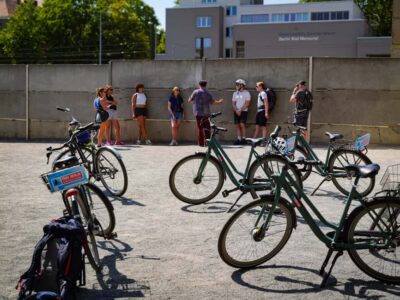 ★ 4.8The Wall and Third Reich Guided Bike TourFrom $41578 reviews
 ★ 4.7Alternative Bike Tour of Kreuzberg & FriedrichshainFrom $41548 reviews
 ★ 4.8Guided Bike Tour to Explore the HighlightsFrom $41506 reviews
Browse the lists this tour appears in