
REVIEW · BERLIN WALL & COLD WAR
Berlin: Cold War & Berlin Wall History Guided Bike Tour
Pedal power brings the Berlin Wall to life. You ride past the Cold War’s big symbols with a real Berlin guide, starting in Prenzlauer Berg at the 19th-century Kulturbrauerei and rolling along the old border line. I particularly love the way escape stories turn street corners into history you can actually picture, and I like the practical tour setup (bike, helmet, and weather gear when you need it).
The only catch is effort: you cover about 15 kilometers at a relaxed pace, so bring comfortable clothes and expect a proper ride, not a stroll. Also, it’s not for kids under 8.
In This Review
- Key highlights at a glance
- Starting in Prenzlauer Berg at Kulturbrauerei
- The former border line: Wall fragments you can follow
- Cold War symbols: Checkpoint Charlie and the watchtower
- Bernauerstraße and Mauerpark: where the story feels close
- Riding toward Brandenburg Gate: why the route ends here
- How long is it really, and how tough is the ride?
- What you’ll actually get with your bike and gear
- Weather and rules: what to plan for
- Value check: is $41 worth it for Cold War Berlin?
- Who this tour suits best (and who should skip it)
- Should you book this Berlin Wall History bike tour?
- FAQ
- What’s the duration of the Berlin Wall History Guided Bike Tour?
- How far do we ride?
- Where do we meet?
- How do I get there from Alexanderplatz?
- What languages are available for the live guide?
- What’s included with the ticket?
- Is helmet use included?
- Can children join?
- Is alcohol allowed during the tour?
- What should I wear or bring?
Key highlights at a glance
- Kulturbrauerei start in Prenzlauer Berg: a local-feeling launch pad before you hit the Wall sites
- Real Berlin Wall fragments and border-crossing points: places you’d miss without a guide
- Cold War symbols in context: Checkpoint Charlie and a surviving watchtower
- Escape-attempt stories with emotional weight: both successful and tragic cases
- Route connects multiple eras: from Bernauerstraße and Mauerpark toward Brandenburg Gate
More of the Wall and the divided city
- Berlin’s Best: 2 Hour Walking Tour Third Reich and the Cold War★ 5.0 · 5,486 reviews
- Skip-the-Line: Berlin Wall Museum at Checkpoint Charlie★ 4.1 · 2,041 reviews
- Berlin: East Side Gallery Spree Cruise in a Solar Catamaran★ 4.1 · 1,086 reviews
- Cold War, Berlin Wall, Spies and the East Side Gallery★ 5.0 · 1,024 reviews
Starting in Prenzlauer Berg at Kulturbrauerei

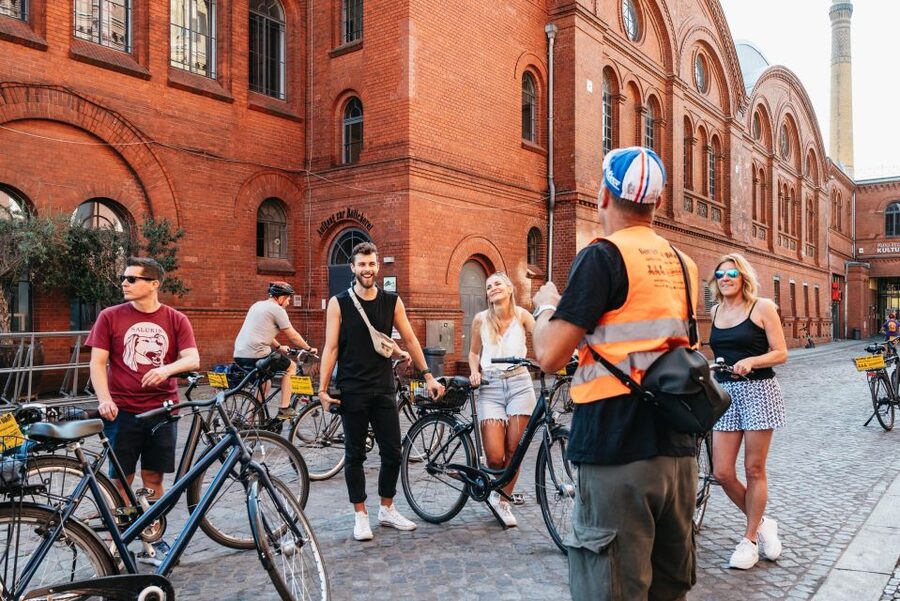
Most Berlin Wall tours start with a concept. This one starts with a place. You meet at the Berlin on Bike depot inside the Kulturbrauerei complex in Prenzlauer Berg—an old brewery area that still feels like a neighborhood hangout. It’s a good warm-up: you’re not rushed into the history right away, and you get time to pick your bike and get comfortable before you hit the streets.
Bike choice matters more than people think. The tour runs with a wide selection of bikes, and you’ll want one that fits you well for the full ride. One practical tip from past riders: if you’re used to certain bike controls, double-check what you’re getting. A review mentioned avoiding a coaster-brake bike unless you already know how it feels and behaves. That’s sound advice if you’re picky about how you brake and coast.
Once you’re set, your guide pulls the group together and gets moving at a relaxed pace—enough to keep everything safe and readable, without turning it into a workout. And because Berlin has strong cycling infrastructure in many areas, the ride feels smooth compared with what you might expect from a city tour.
The former border line: Wall fragments you can follow
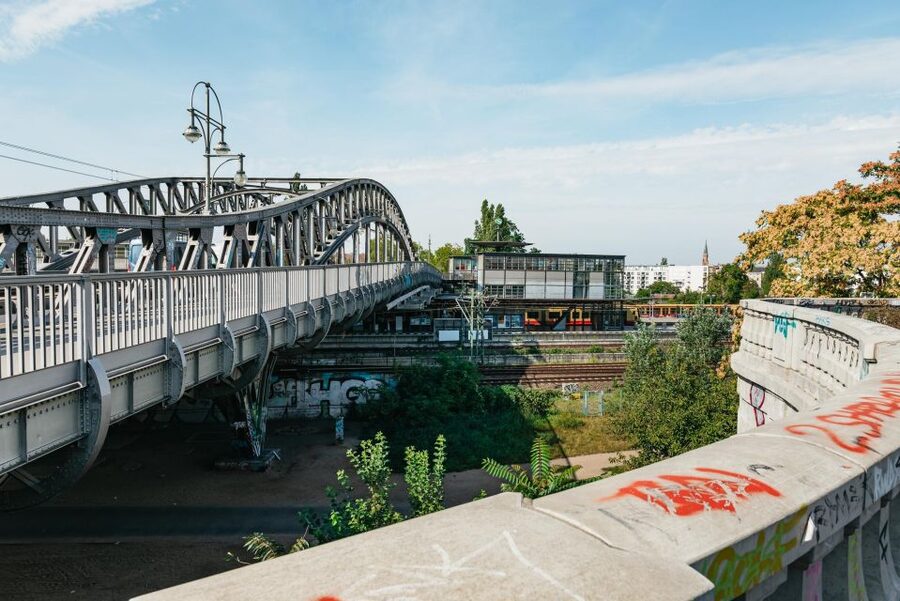
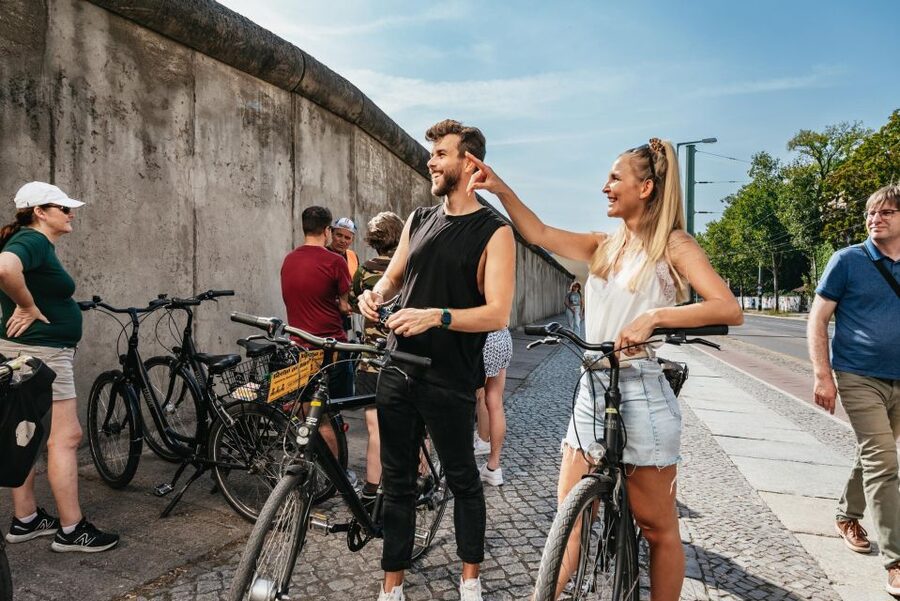
The backbone of this tour is the ride along the former border, where East and West Berlin were separated for decades. You don’t just look at a monument from a distance. You pedal through the city using the kind of alignment that makes the geography click: where the wall ran, where crossings existed, and how the border shaped everyday movement.
Along the way, you see remains of the Berlin Wall and former border crossings. A key stop is Bornholmerstraße—named for its role in the border story—and you’ll also pass by the infamous Checkpoint Charlie area. These aren’t treated like isolated photo stops. Your guide connects them to why the wall existed, how it was controlled, and what it meant for the people living on both sides.
Here’s why this part is so valuable: Berlin can look normal now. Cars, cafes, parks—life is right there. But when you’re moving along the line and hearing what used to be here, the city changes shape in your mind. A guide helps you notice details you’d otherwise walk right past, like where the “Wall logic” would have affected sightlines and escape planning.
Cold War symbols: Checkpoint Charlie and the watchtower
Checkpoint Charlie is famous enough that it’s easy to treat it like a set piece. On this tour, you get the bigger framing. You see the Cold War symbols not as costumes, but as tools—props of power, used for control and messaging. Your guide explains the mindset on both sides and what made these crossings so loaded.
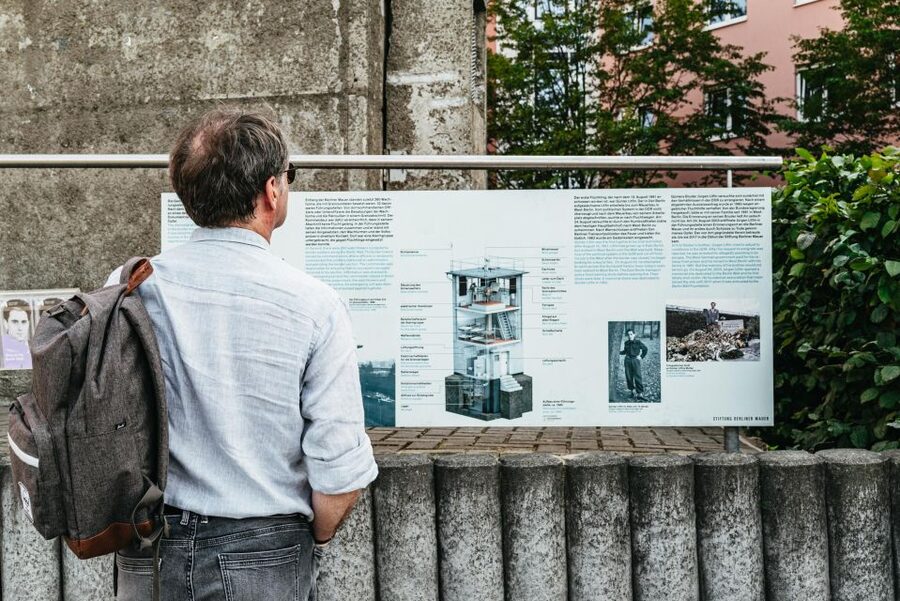
Another highlight is seeing one of the last watch towers. Surviving structures like this help you grasp what “security” looked like in physical form. You’ll hear stories of escape attempts—both successful ones and those with tragic outcomes. That mix matters, because it shows the wall wasn’t just an idea. It affected real bodies, real families, and real choices.
If you’re hoping for history without politics, this tour isn’t that. The wall is politics. But you do get a way to understand it that stays human. Past guides on this tour have been strong storytellers—people like Jacob and Isabelle were singled out for turning facts into clear narratives, including why the wall came about and how it eventually collapsed. And that’s exactly what you want here: not just dates, but cause-and-effect you can hold onto.
Bernauerstraße and Mauerpark: where the story feels close
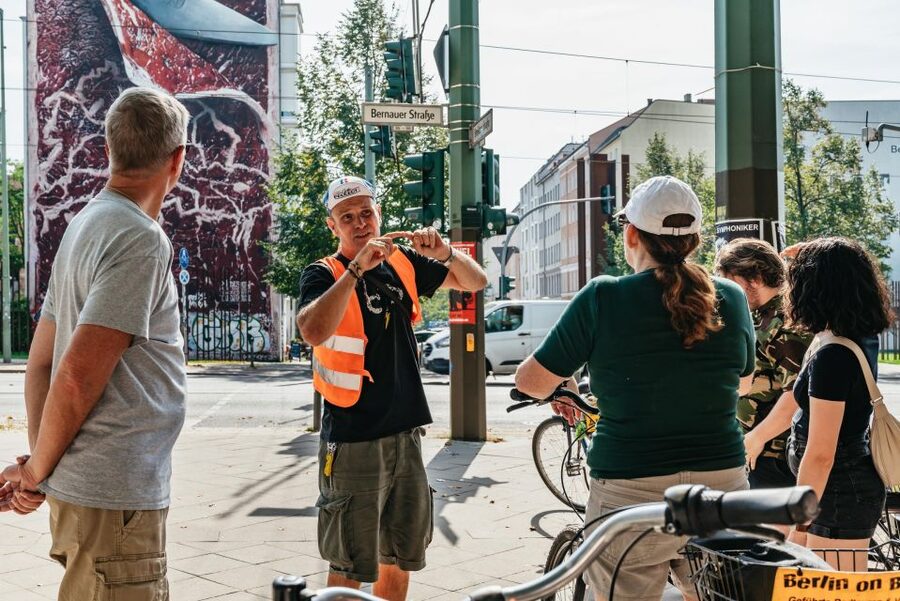
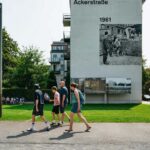
One of the best parts of this ride is that it doesn’t stop at the obvious landmarks. You also travel through the corridor where the story feels most immediate—around Bernauerstraße and into Mauerpark.
Bernauerstraße is important because it’s tied to the wall’s impact on buildings and movement patterns. When you’re biking past it, the lesson is hard to ignore: the wall wasn’t only a wall. It was wrapped into the city fabric. You’ll hear how the border system worked in daily life, not just how it looked in photos.
Then there’s Mauerpark, which adds a clever contrast. You move from a past of enforced separation into a present where people gather in green space. That doesn’t erase the past—it reframes it. When your guide explains the wall’s legacy while you’re riding through a lively area, you start to understand why Berliners talk about memory so openly.
Past riders praised guides like Paul for humor and clear storytelling, and guides like Ana for adapting the tour based on interests. You’ll feel that flexibility in how the guide chooses which details to linger on—whether you’re more into mechanics of border control or into personal stories of people who tried to get out.
More of Berlin by bike


Riding toward Brandenburg Gate: why the route ends here
By the time you reach the Brandenburg Gate, the ride makes thematic sense. The gate is iconic, but in this context it becomes more than a postcard. Your guide explains its 18th-century origins, then you connect that earlier history to the wall era and the later reunification moment.
This is where the tour’s structure pays off. You don’t just bounce between famous sites. You move along a thread: separation, control, failed attempts, eventual collapse, and then a new Berlin trying to live with what happened. Cycling helps because you’re not stuck inside a single museum timeline. You’re letting the city’s geography tell you what was connected—and what wasn’t.
In practical terms, it’s also a good way to finish. Brandenburg Gate is a natural landing zone: easy to orient yourself afterward and easy to continue your day on foot or by transit. You return to the shop to drop off your bike when the tour ends.
How long is it really, and how tough is the ride?
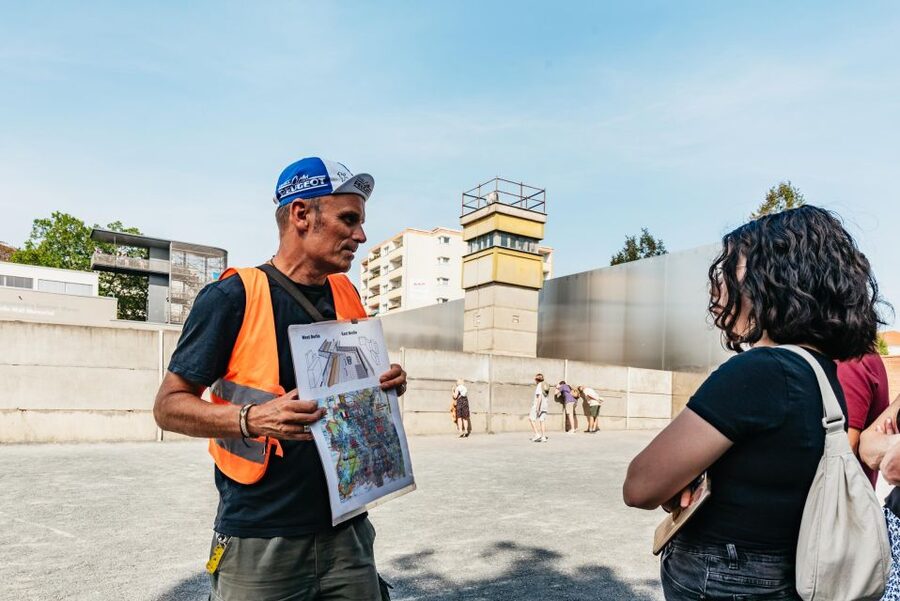
The tour runs for 210 minutes (about 3.5 hours). It covers roughly 15 kilometers at a relaxed pace, so you’re not racing the clock. Still, you’ll feel it in your legs if you’re not used to cycling.
What I like about this setup is that it gives enough time to learn without turning the ride into a lecture marathon. You’re stopping, listening, and then moving again. That rhythm is ideal for complex history like Cold War Berlin, where you need both context and time to process the meaning of what you’re seeing.
A couple of helpful details from past riders add realism:
- There’s often a break mid-tour for coffee, sandwiches, and restrooms if you want them.
- If something big happens on the road—one rider mentioned the Berlin half marathon—your guide may adjust the route on the fly to keep things smooth.
Safety is handled by the guide keeping the group together and navigating streets. You should still expect urban riding: keep an eye out, don’t drift, and follow the guide’s cues.
What you’ll actually get with your bike and gear
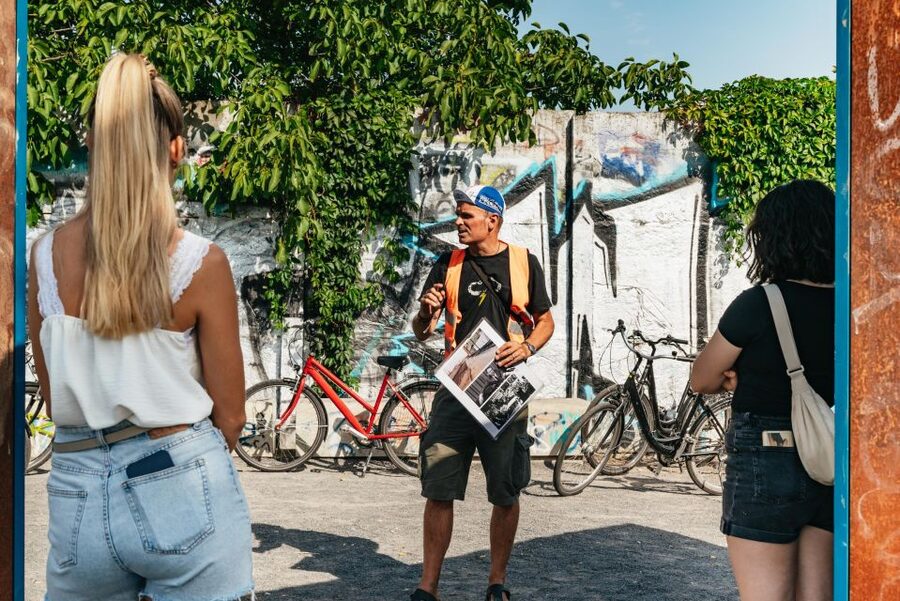
This tour includes the basics that make your day easier:
- A bicycle
- A guide
- Bicycle helmet and gloves available on request
- Sunscreen
- Trouser clips
- Rain ponchos available if the weather turns
Those small inclusions matter. Trouser clips are the kind of thing you don’t think about until your pant legs get caught or drag—then you’re suddenly glad they exist. And rain ponchos mean you don’t have to abandon the tour the moment the sky gets moody. One rider specifically called out having a great time despite rain, which matches the fact that ponchos are provided.
Comfort is also part of the deal. Bring comfortable shoes and clothes, because you’re cycling a real distance.
Weather and rules: what to plan for
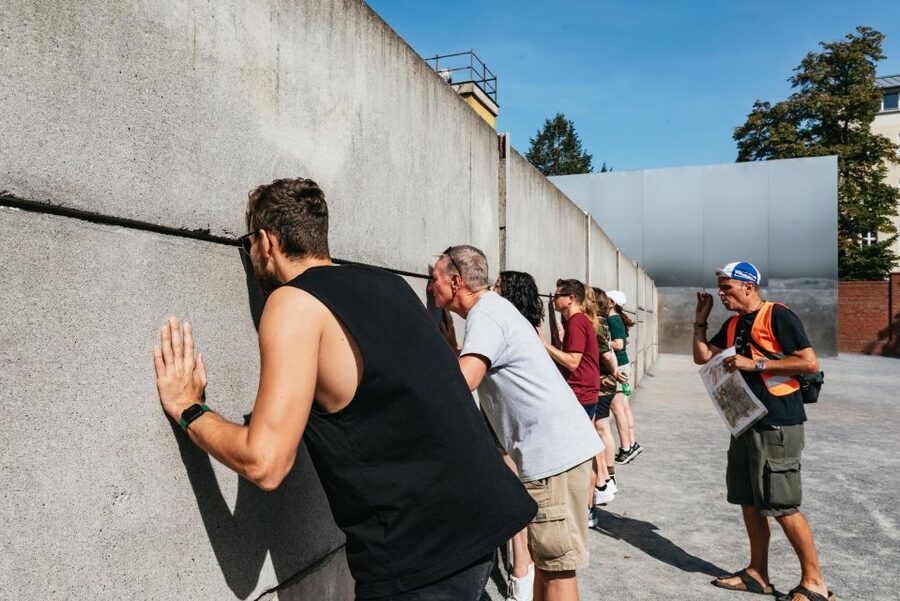
Berlin weather can change fast, and this tour is designed for that reality. If rain shows up, you have ponchos. If you get sun, you have sunscreen. Still, I’d dress like layers are your friend. You’ll be outside for a few hours.
One clear rule: alcohol and drugs aren’t allowed. It’s a history tour on bikes, so the expectation is that you stay alert and respectful of the setting.
Value check: is $41 worth it for Cold War Berlin?
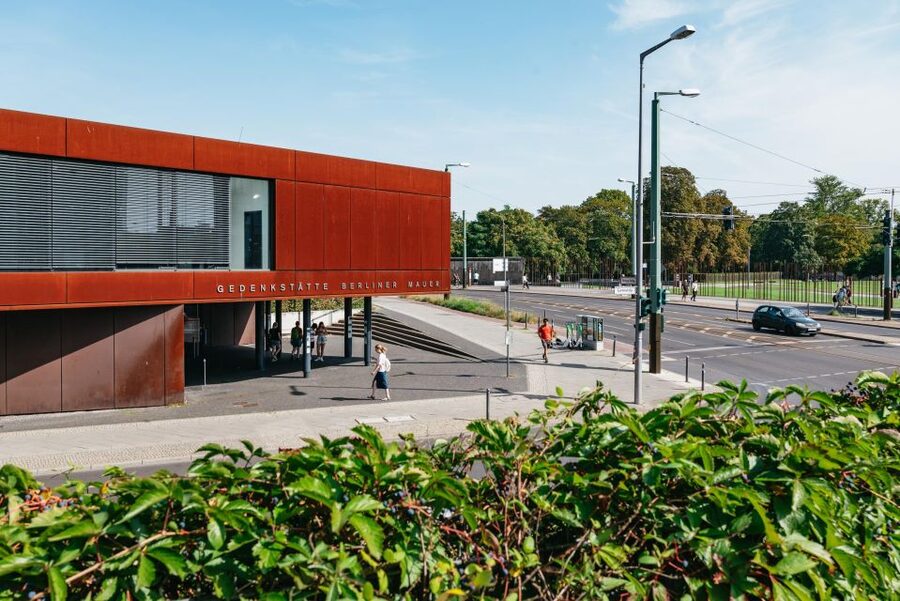
At $41 per person for a 210-minute guided bike tour, this is priced like a smart deal—especially when you factor in what’s included. You’re not only paying for narration. You’re paying for:
- A bicycle for the full ride
- Helmet and gloves available
- Weather support (ponchos)
- A guide who connects multiple sites into one story
The real value is how the guide’s explanations make the city readable. Past riders consistently praised guides like Guv for using bike paths people wouldn’t find on their own, and Emily for unique stories. That’s the difference between seeing landmarks and understanding them.
Also, the overall rating is strong: 4.8 across 422 reviews. That doesn’t replace your judgment, but it does suggest you’re likely to get a well-run experience.
Who this tour suits best (and who should skip it)
This tour is a great fit if:
- You want to see Berlin Wall-era sites without spending the whole day on public transit
- You like learning history through place-based storytelling
- You’re comfortable cycling around a city and can handle 15 kilometers
It’s less ideal if:
- You want a fully accessible stroller-friendly pace (it’s not suitable for children under 8)
- You’re looking for a strictly flat, ultra-easy walk substitute
Language coverage is solid: live guides are available in French, English, Dutch, and German. If you’re booking with a group, there’s also a private group option.
Should you book this Berlin Wall History bike tour?
Yes—if you want a practical way to understand Cold War Berlin, this is one of the best formats. Cycling gives you distance and context. A good guide gives you meaning. And starting from Kulturbrauerei keeps the day from feeling like a checklist.
I’d book it if you care about how the wall worked, how escapes played out, and how the city re-made itself afterward. You’ll leave with a mental map, not just photos—and that’s the payoff.
FAQ
What’s the duration of the Berlin Wall History Guided Bike Tour?
The tour runs for 210 minutes (about 3.5 hours).
How far do we ride?
You’ll cover approximately 15 kilometers at a relaxed pace.
Where do we meet?
Meet at the Berlin on Bike depot. The nearest metro station is Eberswalder Straße.
How do I get there from Alexanderplatz?
Take U2 (red line) toward Pankow and get off after 3 stops at Eberswalder Straße. Exit on the opposite direction of travel (signposted Kulturbrauerei), walk along Danziger Straße, then turn right onto Knaackstraße and follow the route to the Kulturbrauerei complex and the yellow signs to the bicycle depot.
What languages are available for the live guide?
The guide is available in French, English, Dutch, and German.
What’s included with the ticket?
Included are the bicycle and guide, plus bicycle helmet and gloves (upon request), sunscreen, trouser clips, and rain ponchos available in bad weather.
Is helmet use included?
Yes. Helmet is included, and gloves are available upon request.
Can children join?
No, the tour is not suitable for children under 8 years.
Is alcohol allowed during the tour?
No, alcohol and drugs are not allowed.
What should I wear or bring?
Bring comfortable shoes and comfortable clothes. If the weather is bad, rain ponchos are available.
More Tour Reviews in Berlin
Berlin by Bike
The Wall and the Cold-War City
Round out your days in Berlin
Berlin Wall & Cold War, compared.
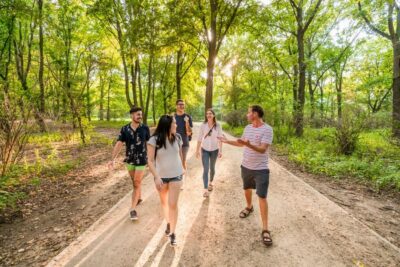 ★ 4.9Third Reich & Cold War Guided Walking TourFrom $238,378 reviews
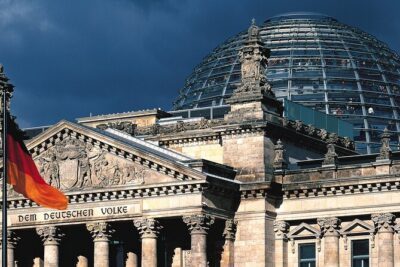 ★ 5.0Berlin’s Best: 2 Hour Walking Tour Third Reich and the Cold WarFrom $245,486 reviews
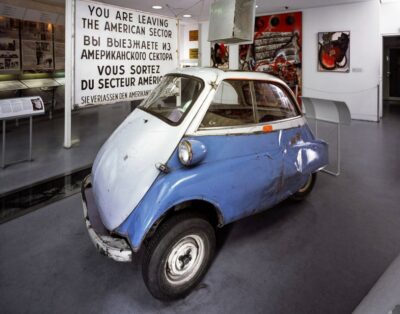 ★ 4.1Skip-the-Line: Berlin Wall Museum at Checkpoint CharlieFrom $212,041 reviews
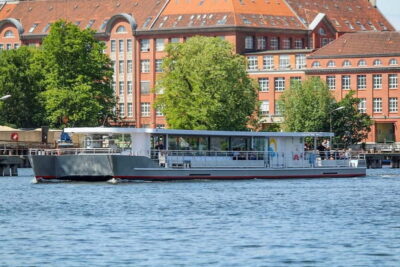 ★ 4.1East Side Gallery Spree Cruise in a Solar CatamaranFrom $281,086 reviews
 ★ 5.0Cold War, Berlin Wall, Spies and the East Side GalleryFrom $181,024 reviews
 ★ 4.8Wall Tour – Fates, Love Stories, and HeroesFrom $282585 reviews
 ★ 4.5THE WALL: asisi Panorama Berlin TicketFrom $16580 reviews
 ★ 4.8The Wall and Third Reich Guided Bike TourFrom $41578 reviews
Browse the lists this tour appears in