
REVIEW · TOURS
Berlin Battlefield Tour – Operation Berlin 1945 (Small Group)
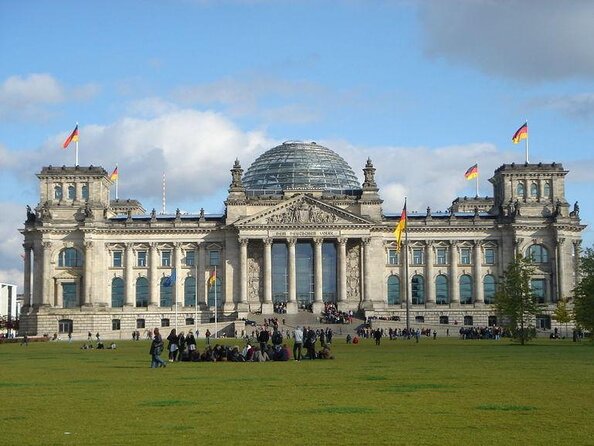
Berlin’s WWII story is all around you. This tour turns street-level landmarks into a clear, step-by-step walk through Operation Berlin 1945. You’ll move from Berlin Main Station across the Moltke Bridge, then toward the Reichstag, tying each location to what the front lines were trying to do in the final days.
I especially like how the guide frames the fighting with specifics, like the Soviet 3rd Shock Army axis of advance and what defenders faced at the bridge crossings. I also like the small-group feel, capped at 15 people, which means you’re not stuck passively listening—questions and back-and-forth happen. In the reviews, Jochen came up repeatedly for giving fast, solid explanations and keeping history buffs engaged.
One possible drawback: this is an outdoor route tied to real streets, so you’ll want to be ready for weather swings. The tour also focuses on violent moments, including room-to-room fighting and a breakout attempt, so if you prefer lighter sightseeing, this may feel heavy.
In This Review
- Key Things I’d Pay Attention To
- Why This Route Feels Different Than a Generic History Walk
- Starting at Berlin Main Station: Getting Your Bearings Fast
- Moltke Bridge: The Red Sandstone View With Real-World Consequences
- The “Himmler House” Stop: Knowing What Point-Blank Means
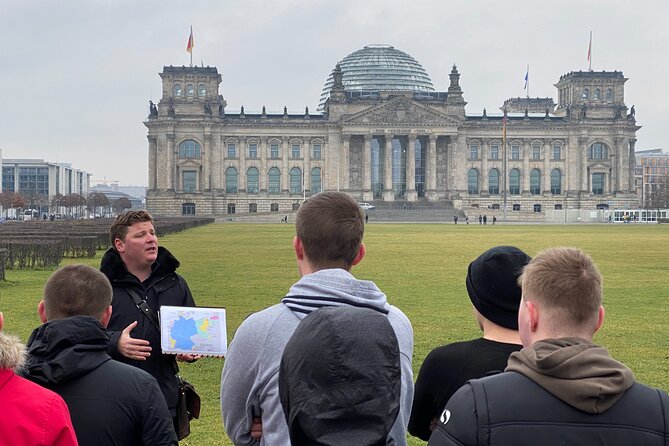
- Platz der Republik and the Reichstag: The 300m Problem
- Weidendammer Brücke: Ending at the Bridge That Wasn’t Supposed to Break
- Price and Value: What $54.01 Buys You in Two-and-a-Half Hours
- What It’s Like During the Walk (So You Can Decide Quickly)
- Who This Tour Suits Best
- Should You Book the Berlin Battlefield Tour: Operation Berlin 1945?
- FAQ
- FAQ
- How long is the Operation Berlin 1945 tour?
- How much does the tour cost?
- What language is the tour offered in?
- Is it a small group tour?
- Where do I meet, and where does it end?
- Is the tour affected by weather?
Key Things I’d Pay Attention To
- A timed walk through the last push of the battle, not a vague overview
- Moltke Bridge explained as part of the Soviet advance plan and German resistance
- The tour’s stop at the “Himmler House” (the then Interior Ministry) with context for artillery and close fighting
- The 300m problem on the way to the Reichstag, tied to specific rifle divisions
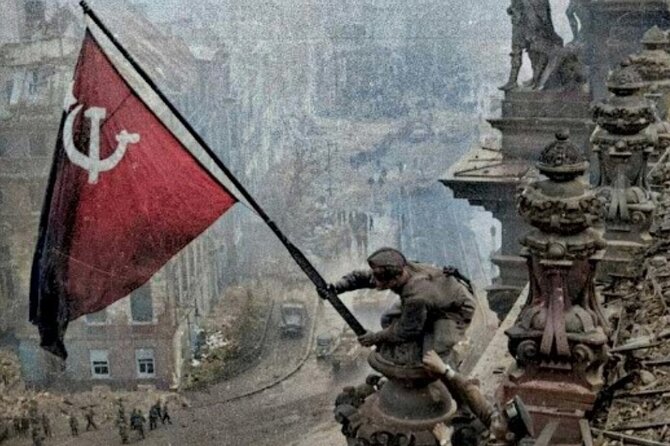
- Stories at the Reichstag roof about Sergeant Yegorov and Sergeant Kantariya and banner No.5
- End at Weidendammer Bridge, near major transit, so you’re not stuck far from the city
Still narrowing down your days in Berlin? Here are more tours to weigh up.
- Berlin: Reichstag, Dome and Government District Guided Tour★ 4.7 · 18,288 reviews
- Berlin: 1-Hour City Tour by Boat with Guaranteed Seating★ 4.3 · 16,993 reviews
- Berlin: TV Tower Standard Entrance Ticket★ 4.4 · 15,883 reviews
- Berlin: Boat Tour Along the River Spree★ 4.4 · 11,252 reviews
Why This Route Feels Different Than a Generic History Walk
The Battle of Berlin can sound like a headline. This tour makes it physical. You’re walking between places that still mark the city’s wartime geography, and you’re given enough context to understand what mattered there—bridges, government buildings, approaches, and the short distances that decided outcomes.
What makes it more valuable is the way the guide links each stop to the problem the attackers and defenders were solving. You’ll hear about axes of advance, the brutal reality of point-blank artillery, and why a location that looks calm today was intensely contested then. That structure turns “Berlin WWII” into an understandable sequence.
Because the group is small, you also get a better rhythm. You can ask questions as you go, instead of saving everything for the end when you’re tired and the crowd moves on.
Starting at Berlin Main Station: Getting Your Bearings Fast
You meet on the southern side of Berlin Hauptbahnhof, the modern main station that anchors the area. There’s a short orientation right away—about ten minutes—to set the scene before you start moving. That matters, because the later stops are connected like a chain, and you’ll want the links to make sense.
From there, the route heads toward Moltke Bridge. Even if you’re familiar with the river and major streets, the tour helps you see them in terms of movement and vulnerability. In other words, you’re not just looking at architecture; you’re learning why certain crossings were decisive.
This first segment is quick and easy to follow, which is great if you don’t want a slow start. It also means your biggest walking time comes later, when you’ll be fully oriented.
Moltke Bridge: The Red Sandstone View With Real-World Consequences
Moltke Bridge is one of those places that looks straightforward on a map. On the tour, it becomes something else. You’ll talk about why this specific crossing became the setting for brutal fighting and how the Soviets approached it.
A key moment here is orienting yourself to the Soviet 3rd Shock Army axis of advance. That’s the kind of detail that makes the rest of the walk click. Once you understand the direction of pressure, you’ll start seeing the city’s layout as a set of constraints—routes attackers could use, areas defenders had to cover, and the points where movement slowed.
One practical note: this is an exterior stop with about ten minutes of focus. You’ll want to keep a reasonable pace and be ready to move when the group does. The payoff is that you’re not stuck at one spot while everyone else waits.
The “Himmler House” Stop: Knowing What Point-Blank Means
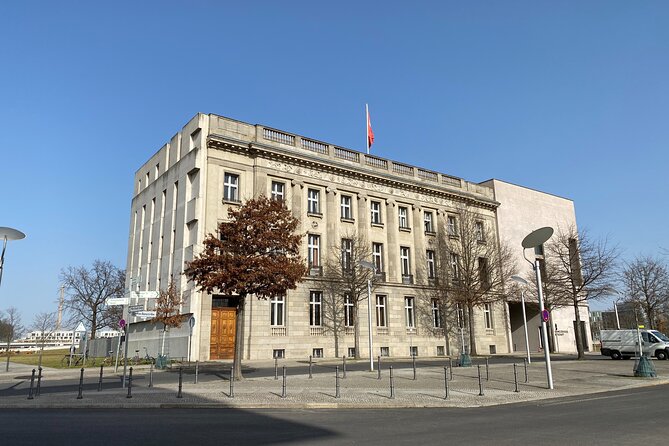
After crossing Moltke Bridge, you reach the then Interior Ministry area, nicknamed the “Himmler House” in the old diplomatic quarter. The tour uses this stop to explain the conditions for the fight inside major government structures.
You’ll hear about a Soviet artillery barrage at point blank range and what that kind of damage does to a building and the people in it. Then the discussion shifts to room-to-room fighting—one of the ugliest parts of urban warfare because it eliminates distance and turns buildings into traps.
Why I think this stop is worth your attention: it doesn’t treat the site like a postcard. It uses the building’s role to make the battle’s timeline feel realistic. You’re shown how a place that housed power became a battlefield problem—one that couldn’t be solved quickly.
The time here is brief, around ten minutes. If you like deep detail, you’ll likely want to ask questions, which the small-group size makes easier.


Platz der Republik and the Reichstag: The 300m Problem
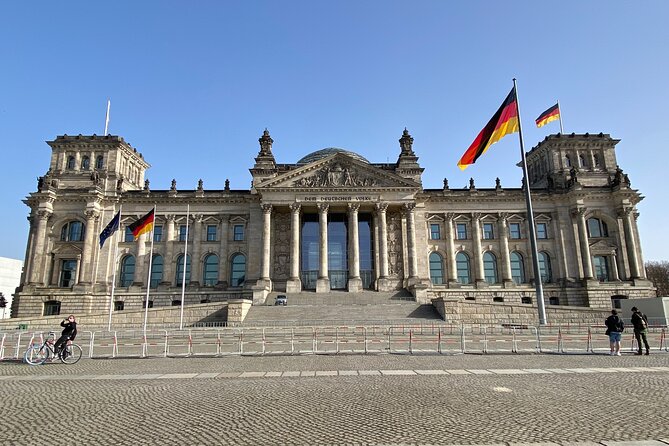
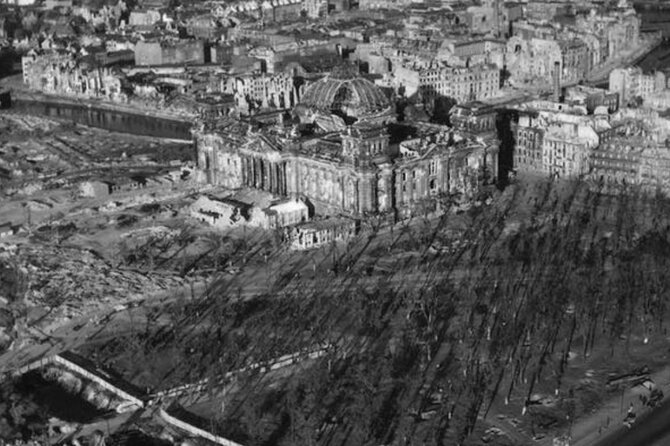
Next you head toward Platz der Republik, where you stand on the former Königsplatz and get a sense of the open ground between positions. The tour highlights an almost cruel detail: a roughly 300m stretch—described as a moon scape—before forces reached the Reichstag.
This part is where the walk stops being sightseeing and starts feeling like math. You’ll talk about the 207th and 150th rifle divisions and what they would have had to cross. Even if you’ve never studied WWII tactics, the guide’s framing helps you understand why short distances can still be deadly when everything is controlled by fire.
Then comes the Reichstag. As you walk toward it, the tour discusses Hitler’s final moments in the Führer bunker a few hundred meters away—again, tying the geography to the timeline you’re learning. This stop includes the stories of Sergeant Yegorov and Sergeant Kantariya, and how they raised special banner No.5 on the roof, signaling the end.
If you like history that has named people and specific turning points, this is the emotional center of the tour. It’s not just what happened, but who did what, and how it became symbolic.
The Reichstag portion runs about twenty minutes, so you get a bit more time here than earlier stops. Still, it moves at a guided pace—perfect if you want focus without committing to an all-day memorial crawl.
Weidendammer Brücke: Ending at the Bridge That Wasn’t Supposed to Break
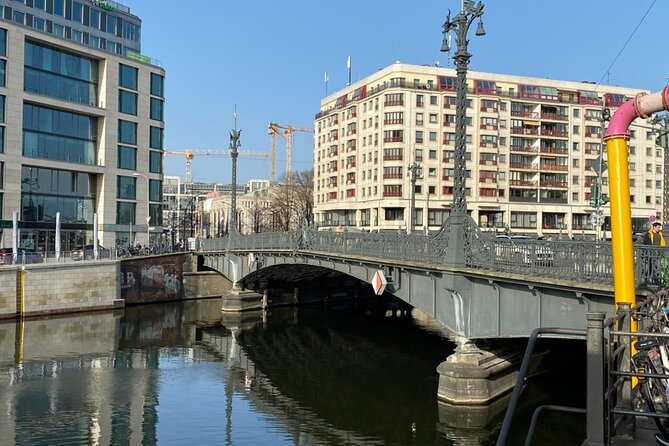
The tour finishes at Weidendammer Brücke, one of the few bridges still intact over the Spree during the final days. That detail sets up the meaning of the stop: you’re ending where a key breakout attempt was tied to the fate of the Führerbunker.
The guide explains that on the night of May 1st, 1945, the bridge was the scene of terrible carnage following a breakout attempt from the bunker. Standing there, you get a strong sense that the city’s geography helped decide who could move, who couldn’t, and how quickly events turned.
This is the kind of ending that sticks. It closes the loop from government buildings and open ground to a crossing point where desperation met reality.
Logistically, you’ll appreciate that the bridge is very transit-friendly. It’s about 50m from the S+U Friedrichstraße station, which makes it easy to continue your day without long transfers.
Price and Value: What $54.01 Buys You in Two-and-a-Half Hours
At $54.01 per person for about 2 hours 30 minutes, this is priced for people who want a guided, structured story without spending half a day. You’re not paying for museum entry tickets at each stop; the stops are admission-free, and the focus is on what the guide helps you see and understand outside.
I also think the included extras matter more than they sound. Bottled water and rain ponchos are provided if needed, which is a small comfort that can make or break an outdoor walk in Berlin. You’re less likely to get derailed by a drizzle, and you can keep listening instead of hunting for supplies.
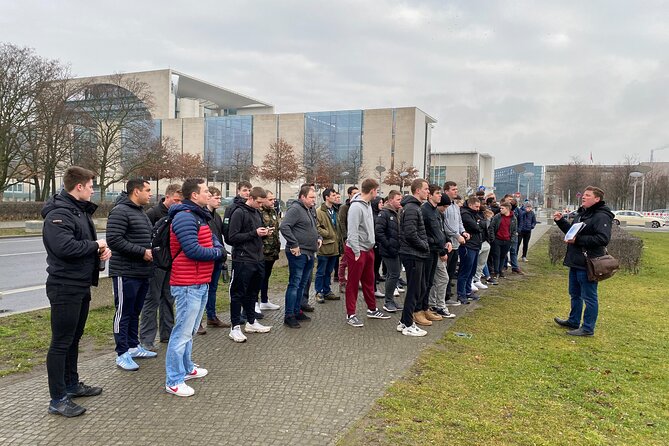
The small-group cap of 15 travelers is where the real value often hides. When the group is small, you get better interaction, and you feel like the guide is managing a class—not herding a crowd. In the reviews, the guide’s ability to support questions and keep history buffs engaged came through clearly.
If you’re booking on a busy schedule, it’s also worth noting that this type of tour tends to be snapped up around a month ahead on average. If Berlin’s WWII history is on your list, plan early rather than hoping for last-minute spots.
What It’s Like During the Walk (So You Can Decide Quickly)
Expect a focused, moving tour with multiple short stops rather than long waits at one monument. Each stop is set for orientation and explanation, usually around ten to twenty minutes depending on what’s there. That pacing helps you stay engaged, especially if you’re traveling with limited time.
You’ll also be standing and walking outdoors for stretches, so wear shoes you trust. This route crosses key points in central Berlin and ends at a major transit hub, but it’s still a real walk.
Emotionally, be prepared: the tour includes descriptions tied to violence, artillery, close combat, and the end-of-war collapse around the Führerbunker. It’s history with weight, not a casual sightseeing loop.
Who This Tour Suits Best
This tour is a strong fit if you want Berlin WWII history with clear structure and street-level context. It’s especially good for history-minded travelers who like when names, units, and specific moments get connected to real locations.
If you’re traveling with a kid or teen who enjoys historical details, the small-group format can help. In the reviews, a parent-and-son dynamic came up, with conversations running deeper than a typical group explanation.
On the other hand, if you want lighter themes or prefer museums over outdoor walking, you might find this too intense. Also, because it requires good weather, you’ll want flexibility if Berlin’s forecast looks messy.
Should You Book the Berlin Battlefield Tour: Operation Berlin 1945?
I’d book it if your goal is to understand the Battle of Berlin in a way that actually makes sense on the ground. The guided linking of bridges, government buildings, open approaches, and the end at Weidendammer Brücke turns scattered knowledge into one understandable story.
Skip it only if you strongly dislike walking outdoors, hate heavy WWII topics, or want purely visual sightseeing without tactical context. For most people who want a high-impact, time-efficient history walk in Berlin, this one is easy to recommend.
FAQ
FAQ
How long is the Operation Berlin 1945 tour?
It runs for about 2 hours 30 minutes.
How much does the tour cost?
The price is $54.01 per person.
What language is the tour offered in?
The tour is offered in English.
Is it a small group tour?
Yes. The tour has a maximum of 15 travelers.
Where do I meet, and where does it end?
You start at Ella-Trebe-Straße 9, 10557 Berlin, and you end at Weidendammer Brücke, 10117 Berlin.
Is the tour affected by weather?
Yes. The tour requires good weather. If it’s canceled due to poor weather, you’ll be offered a different date or a full refund.
More Tours in Berlin


More Tour Reviews in Berlin
Round out your days in Berlin

Tours, compared.
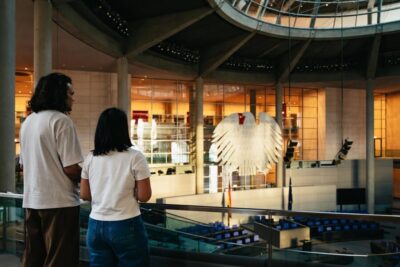 ★ 4.7Reichstag, Dome and Government District Guided TourFrom $1818,288 reviews
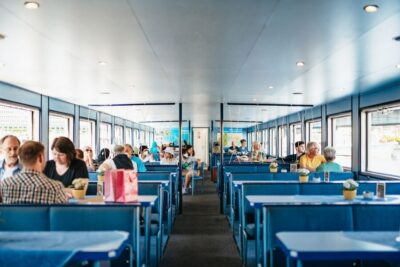 ★ 4.31-Hour City Tour by Boat with Guaranteed SeatingFrom $2516,993 reviews
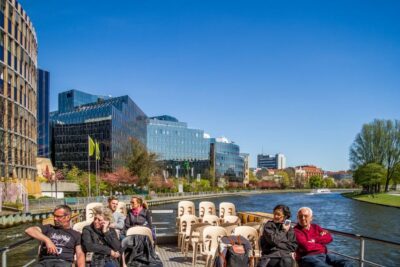 ★ 4.4Boat Tour Along the River SpreeFrom $3411,252 reviews
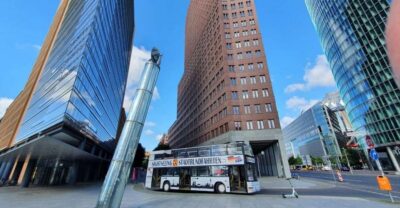 ★ 4.3Hop-on Hop-off Bus Tour with Live CommentaryFrom $228,579 reviews
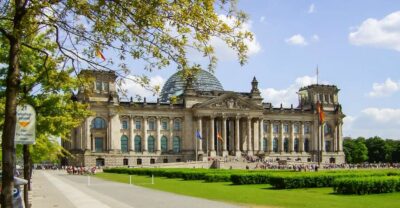 ★ 4.6Reichstag, Plenary Chamber, Cupola & Government TourFrom $188,422 reviews
 ★ 4.9Third Reich & Cold War Guided Walking TourFrom $238,378 reviews
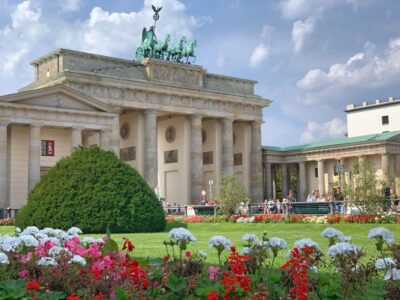 ★ 4.9Discover Berlin Walking TourFrom $235,998 reviews
 ★ 5.0Sachsenhausen Concentration Camp Tour in EnglishFrom $365,711 reviews