
REVIEW · GUIDED
Berlin: Decolonial Berlin Castle/ Humboldt Forum Guided Tour
A museum tour with teeth. This guided visit to the Humboldt Forum uses a decolonial and Afrocentric lens to rethink Berlin’s rebuilt palace and the ethnological collection inside. You come out with more questions, and better ones.
I especially like how the guide links the palace story—about 500 years of history—to the machinery of colonialism, missionaries, and symbolism. I also like the way you’re guided through the ethnological collection with an audio component, so you’re not just reading object labels—you’re learning to ask who benefited and how meaning gets assigned.
One drawback: this is not a comfortable, neutral “view it and move on” museum tour. If you prefer history told as settled fact, the tone may feel challenging. Also, you’ll spend time seated outside first, so plan for weather and don’t miss the meeting point near the reconstructed Sanchi Gate.
In This Review
- Key tour takeaways
- Entering Humboldt Forum Through a Decolonial Lens
- Starting at the Reconstructed Sanchi Gate (and why the first hour counts)
- The Berlin Palace story: 500 years, and a sharper connection to colonialism
- Missionaries, the roof cross, and the meaning you might miss
- Inside the ethnological collection: critical reading with audio support
- Humboldt brothers: why they matter, and what the tour questions
- Price and timing: is $41 a good value?
- Who this tour suits best
- Booking question: should you book this tour?
- FAQ
- How long is the Humboldt Forum Decolonial Berlin Castle tour?
- Where do I meet the guide?
- Is the tour in English?
- What’s included with the tour ticket?
- Is the ethnological collection included?
- Is the tour wheelchair accessible?
- Are food and drinks allowed during the tour?
- What should I bring and avoid bringing?
- What about cancellation and payment flexibility?
Key tour takeaways

- Afrocentric framing of the Humboldt Forum rather than a purely traditional museum walkthrough
- Colonialism explained as part of building history, not only “background context”
- Missionaries and symbolism get attention, including the meaning of the cross on the roof
- Humboldt brothers in focus, with their importance to German science discussed directly
- Ethnological collection with a critical audio layer, aimed at reading between the lines
- Some visitors may feel the Forum time is short, since history gets a lot of emphasis
More guided walks through Berlin
- Berlin: Reichstag, Dome and Government District Guided Tour★ 4.7 · 18,288 reviews
- Berlin: Third Reich & Cold War Guided Walking Tour★ 4.9 · 8,378 reviews
- Berlin: 1-hr Boat Tour with Bilingual Live Guide (DE/EN)★ 4.7 · 5,653 reviews
- Berlin: Hidden Backyards Guided Walking Tour★ 4.8 · 5,360 reviews
Entering Humboldt Forum Through a Decolonial Lens

Berlin has a talent for making you look twice at the same building. The Humboldt Forum is one of those places: it’s museum space, palace symbol, and political statement all at once. This tour is built for people who want more than “what you’re seeing.” You’re asked to connect what’s on display to how European power collected, sorted, and narrated the world.
What works is the tour’s clarity: it doesn’t treat colonial history as a vague fog. Instead, it lays out key facts about colonialism and ties them to the Berlin Castle narrative you see in the rebuilt palace context. Then it flips the perspective toward Afrocentric insights, with the goal of creating new narratives rather than simply swapping one slogan for another.
You’ll also hear why the Humboldt Forum’s ethnological exhibitions can be understood differently depending on who is telling the story. That matters because museums don’t only preserve objects. They preserve interpretations. This guide pushes you to notice that, then asks what that means today.
And yes, the topic is serious. Still, the format helps: the tour is short at two hours, with a guided structure plus an audio element inside the collection. That mix tends to keep things from feeling like a long lecture with no movement.
Starting at the Reconstructed Sanchi Gate (and why the first hour counts)
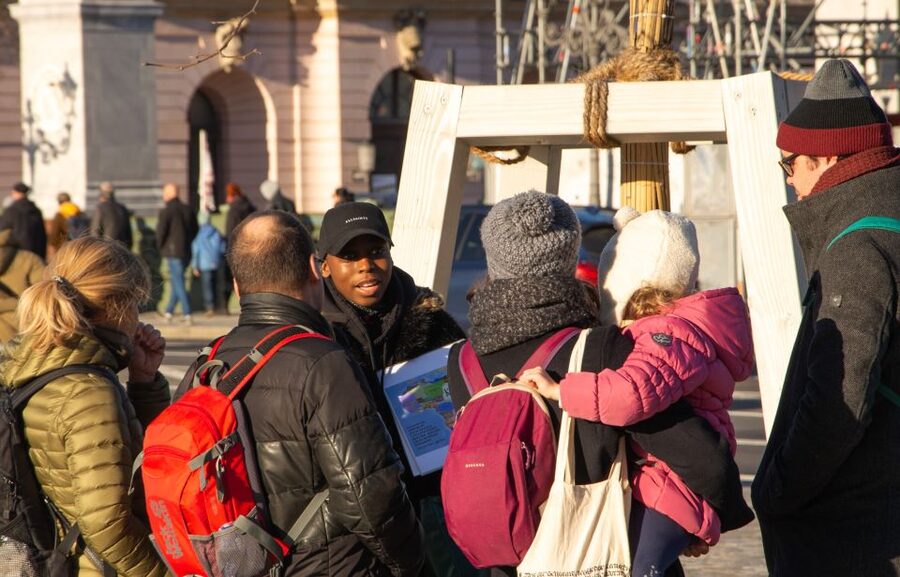
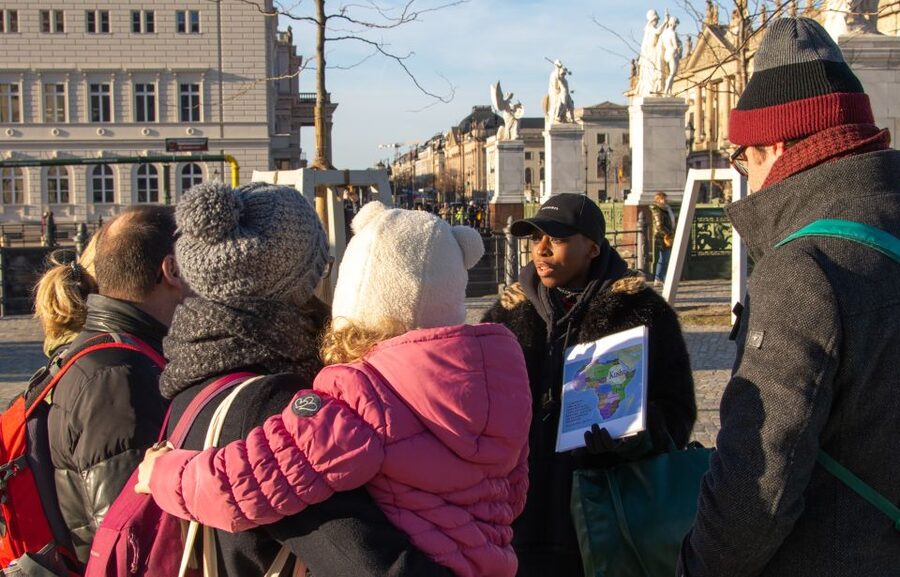
Your tour begins near the reconstructed Sanchi Gate, where there are white chairs to sit down. It sounds like a small detail, but it actually shapes the whole experience. You’re seated outside for about an hour before heading into the museum.
That time outside can be a blessing if you use it right. Arrive early enough to settle in, look around, and get your bearings before you step into the museum environment. You’ll be in the right mental mode for what comes next: big-picture context about Berlin Palace history, colonialism, and the museum’s meaning.
It can also be a drawback if you’re unprepared for weather. Since you’ll likely spend a chunk of time sitting outside, bring weather-appropriate clothing and comfortable shoes. This is one of those tours where “I’ll just wear whatever” can quickly become “why did I choose today.”
Also, the meeting point is specific. One past booking issue involved confusion about the real provider or getting to the correct event. So take the meeting location seriously: head to the reconstructed Sanchi Gate, not just the general area.
The Berlin Palace story: 500 years, and a sharper connection to colonialism

The tour’s backbone is the Berlin Palace history, presented through a decolonial perspective. The palace is described as around 500 years old, and you’ll get the story in a way that highlights how power and culture traveled together during colonial eras.
Instead of treating the palace as only architecture, you’ll see it as a symbol that can be read politically. Colonialism isn’t handled as an isolated chapter. It’s tied back to how collections were formed, how missionaries played roles in colonial structures, and how cultural heritage gets framed later as something neutral.
This is the point where the tour tends to land hardest. The subject matter can feel heavy, but the best part is that the guide turns it into a framework you can carry into the exhibitions. You start asking different questions before you even enter the ethnological collection: Who had the authority to name and classify? What was left out? Who benefits when a story becomes the default story?
There is one balance to consider. One critique was that the historical background took more time than the museum visit itself, so the Forum section can feel a bit shorter for people who wanted more object-level time. If you’re a museum “go slow” person, keep that in mind.
Missionaries, the roof cross, and the meaning you might miss
A standout detail you’re meant to notice is the symbolic meaning of the cross on the roof of the museum. That might sound like a quirky architecture fact, but in this tour it’s treated as a clue.
Symbolism matters because it tells you what kind of story the building wants to project. A cross on a roof is easy to ignore if you’re scanning only for exhibits. Here, you’re guided to treat that symbol as part of the larger narrative surrounding religion, empire, and cultural authority.
You’ll also hear about the role missionaries played in establishing colonial structures. The idea isn’t to reduce everything to one villain or one institution. It’s to show how religious activity, empire, and knowledge-gathering often braided together—then how those patterns echo into modern museum presentation.
If you like tours that connect physical details to big ideas, you’ll probably appreciate this part. It helps you see the building as an argument, not just a container.




Inside the ethnological collection: critical reading with audio support
The heart of the experience is the ethnological collection visit. The tour includes entry and uses a guided approach plus an audio walk component to help you analyze the collection from a critical perspective.
That means you’re not only asked to look. You’re asked how to look. You’ll be encouraged to think about colonial history and its cultural legacy in modern day terms—how the past shapes present interpretation, and how museum narratives can carry the weight of old power structures.
Practically, this matters because it changes your pace. Instead of reading labels like a checklist, you start noticing framing: what categories are used, what meanings are emphasized, and what stories might be flattened into “exhibit facts.”
Some visitors find this especially engaging because the tour helps you understand meaning beyond the surface. One positive comment specifically noted how the guide conveyed the view between the lines. That’s a good sign you’ll leave with tools, not just trivia.
It’s also worth knowing what not to expect. Since the tour is only two hours and the tour spends time outside at the start and on background context, the collection portion may feel like a guided overview rather than a long, room-by-room study.
Humboldt brothers: why they matter, and what the tour questions
The tour doesn’t treat the Humboldt brothers as distant names in German history. You’ll find out more about who they were and why they’re so important as scientists. That helps place the Humboldt Forum’s identity in a broader German science story.
But the decolonial perspective adds friction—in a good way. The guide frames the Humboldt brothers’ legacy with the question of how scientific exploration and collecting connected to colonial structures and knowledge systems.
If you know little about the Humboldt brothers, this section is likely to feel like “okay, now I get why this place is named the way it is.” If you already know their general biography, you’ll probably still find value in how this tour connects their legacy to museum meaning rather than treating it as purely scientific progress.
This is the kind of tour where you learn terminology and context, then you apply it immediately. You don’t have to wait until later to make sense of the symbolism inside the Forum.
Price and timing: is $41 a good value?
At about $41 per person for a 2-hour guided tour, the price feels fair for what you get: a live English-speaking guide, entry to the ethnological collection, and guided analysis plus audio support.
Here’s the value math you should do. You’re paying not only for access to a museum space, but for interpretation. The tour is designed around decolonial, Afrocentric framing of colonialism, missionaries, symbolism (like the roof cross), and the Humboldt brothers’ role. If you want that kind of guided meaning-making, the time and entry cost are reasonable.
If you’re expecting a slow “stand in every room and read everything” museum experience, you may feel shortchanged. One critique mentioned the Forum portion can feel brief compared with the amount of time spent on historical background. The tour’s structure is built to set up context first, then move into the collection—so the collection visit is likely more selective than exhaustive.
Also, remember the tour includes about an hour seated outside before entering. So the experience is not only about doors and galleries. It’s also about context-building and listening.
Who this tour suits best
This guided tour fits you if:
- You want Berlin museum culture explained with critical questions, not only “what it is” facts
- You’re interested in an Afrocentric perspective and decolonial storytelling approaches
- You like tours that connect architecture and symbols to bigger historical themes
- You enjoy audio support for museum analysis, rather than only verbal narration
It might not be the best fit if:
- You want a strictly neutral museum guide that avoids confrontation and challenge
- You dislike discussions that reframe older narratives as biased or incomplete
- You prefer spending more time deep in the ethnological rooms than in pre-museum context
And a practical note: since the meeting is near the reconstructed Sanchi Gate and there’s time seated outside, plan for comfort. Bring layers, wear sturdy shoes, and keep your bag situation simple because food and drinks are not allowed, and luggage or large bags are not permitted.
Booking question: should you book this tour?

If your goal is to understand why the Humboldt Forum feels so debated and how the ethnological collection can be read through a decolonial lens, then this is a strong pick. The tour’s biggest strength is its focus on the connections: palace history, colonialism facts, missionaries, symbolic architecture, and the Humboldt brothers’ legacy—then bringing those ideas into the collection itself with critical audio support.
My caution is about expectations. This isn’t a purely “museum facts” experience. It’s a perspective-driven tour that may feel uncomfortable if you prefer history presented without challenge. It also seems designed for a guided overview, not a long object-level deep study inside the ethnological rooms.
If you decide to go, do one simple thing that helps a lot: show up at the reconstructed Sanchi Gate early enough to get seated and ready before the museum time starts. When you’re present for the full flow—context first, analysis inside—you’ll get far more from the experience than if you arrive rushed.
FAQ
How long is the Humboldt Forum Decolonial Berlin Castle tour?
The tour duration is listed as 2 hours.
Where do I meet the guide?
Meet your guide near the reconstructed Sanchi Gate, where there are white chairs to sit on.
Is the tour in English?
Yes, the live tour guide language is English.
What’s included with the tour ticket?
It includes the tour guide, entry to the ethnological collection, and you’ll be seated outside for about 1 hour before heading into the museum.
Is the ethnological collection included?
Yes. Entry to the ethnological collection is included.
Is the tour wheelchair accessible?
Yes, it is wheelchair accessible.
Are food and drinks allowed during the tour?
No, food and drinks are not allowed.
What should I bring and avoid bringing?
Bring comfortable shoes and weather-appropriate clothing. Food and drinks are not allowed, and luggage or large bags are not allowed.
What about cancellation and payment flexibility?
Free cancellation is offered up to 24 hours in advance for a full refund, and you can reserve now and pay later.
More Guided in Berlin





More Tours in Berlin

More Tour Reviews in Berlin
Round out your days in Berlin
Guided, compared.
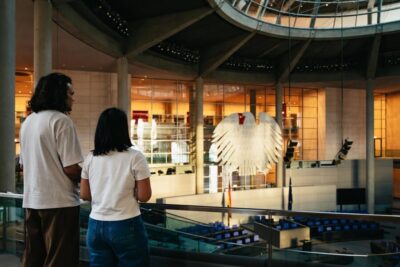 ★ 4.7Reichstag, Dome and Government District Guided TourFrom $1818,288 reviews
 ★ 4.9Third Reich & Cold War Guided Walking TourFrom $238,378 reviews
 ★ 4.71-hr Boat Tour with Bilingual Live Guide (DE/EN)From $225,653 reviews
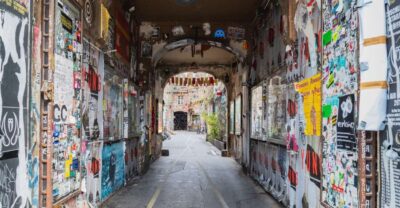 ★ 4.8Hidden Backyards Guided Walking TourFrom $235,360 reviews
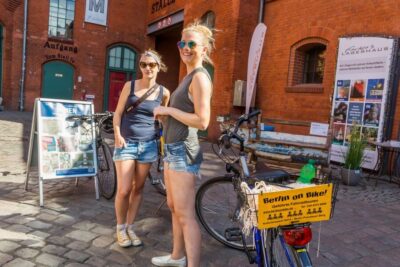 ★ 4.8Sights and Highlights Bike Tour with a Local GuideFrom $412,698 reviews
 ★ 4.8City Street Art Guided Walking TourFrom $231,051 reviews
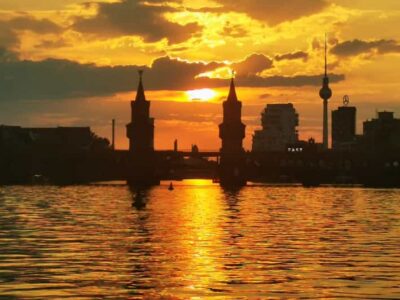 ★ 4.6Solar Powered Sunset Catamaran Cruise & Audio GuideFrom $421,043 reviews
 ★ 4.7History of the Third Reich Guided Walking TourFrom $30791 reviews