
REVIEW · TICKETS
Berlin: Deutsches Technikmuseum Entry Ticket
Berlin is full of history, but this one runs on engines. The Deutsches Technikmuseum is one of those rare places where you can walk through technology’s timeline and still feel like you’re in the middle of it, not staring at glass. I like that it covers major transport themes and ends up feeling practical, not just academic.
Two things I especially like: the mix of big, physical exhibits (planes, trains, ships) with hands-on, real-world live demonstrations like printing, papermaking, and blacksmith work. One thing to consider: this is a lot of ground to cover in a single day, so if you move slowly or want to read everything, you’ll want a longer visit than you planned.
If you’re planning a one-day tech day in Berlin Kreuzberg, this ticket is a strong way to pack it all in. You’ll get access to both Deutsches Technikmuseum and the Science Center Spectrum on your booked date, so you’re not choosing between museum history and hands-on science.
In This Review
- Key highlights to look for
- Deutsches Technikmuseum in one day: airplanes, trains, ships, and the first computer
- Start with the Candy Bomber and the Berlin Airlift context
- 40 airplanes: German aviation from pioneering breakthroughs to wartime lows
- Railways and steam locomotives: watching progress roll by
- Seafaring history: ships plus the tools that made navigation possible
- Zuse and 200 years of technical networking: the interactive brain-teaser zone
- Live demonstrations: printing, papermaking, and blacksmith work
- Spectrum Science Center next door: 150 hands-on experiments
- Museum park time in Kreuzberg: windmill, forge, pond, and breathing space
- Price and time planning for a $14 ticket
- Who should book and who should reconsider
- Book it or skip it?
- FAQ
- How long is the visit?
- What is included with the ticket?
- Is the location wheelchair accessible?
- Are pets allowed?
- Is flash photography permitted?
- Can I skip the ticket line?
- Is Spectrum accessible right now?
- Is there free cancellation?
- Can I reserve and pay later?
- What language support is available?
- Who should use the Student Ticket option?
Key highlights to look for
- 40 airplanes that track German aviation from early achievements through wartime lows
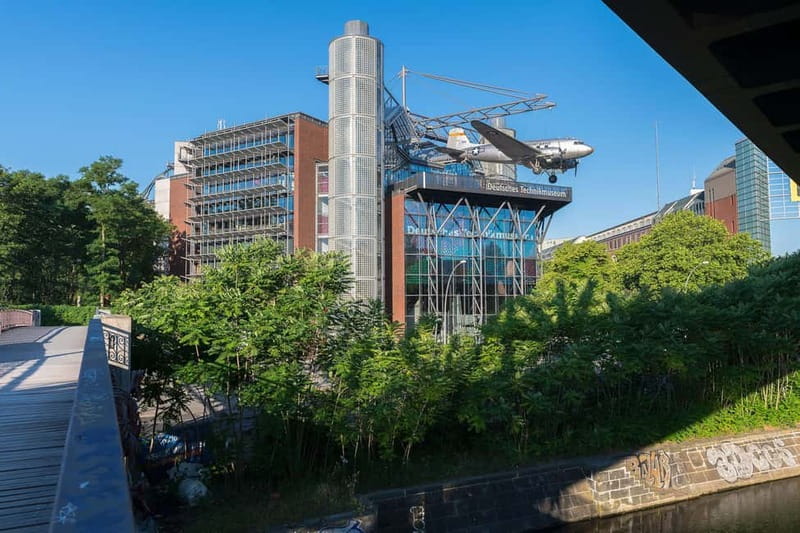
- The Candy Bomber on the roof, a Berlin Airlift landmark you’ll spot from across the city
- Zuse, the world’s first computer, plus an interactive 200-year look at technical networking
- Printing, papermaking, and blacksmith demos that turn old crafts into something you can watch
- 150 hands-on experiments at Spectrum right next door
More Berlin tours to line up side by side
- Berlin: TV Tower Standard Entrance Ticket★ 4.4 · 15,883 reviews
- Berlin: Berlin Story Bunker Entry Ticket★ 4.6 · 6,759 reviews
- Berlin: Illuseum Berlin Entrance Ticket★ 4.1 · 3,970 reviews
- Berlin: Madame Tussauds Admission Ticket★ 4.6 · 3,941 reviews
Deutsches Technikmuseum in one day: airplanes, trains, ships, and the first computer
The German Museum of Technology (Deutsches Technikmuseum) is built for people who like how things work. It’s not a single-theme museum. It’s a “how technology shaped daily life” museum that uses transportation—air, rail, and sea—as your main storyline.
What makes it especially good value for a one-day visit is the sheer variety. You can spend a morning on aviation, a chunk of the day on railways and steam locomotives, and still have time to shift gears into seafaring history. And then, right when you think it might be only about hardware, you get Zuse, the world’s first computer, which adds a totally different kind of “technology progress” moment.
My advice: treat this like a museum marathon with optional sprints. Pick your must-sees early, then roam the rest at your own pace.
Start with the Candy Bomber and the Berlin Airlift context
Before you get lost in the halls, take a minute to orient yourself with the museum’s most visible landmark: the Candy Bomber aircraft on the roof. It’s strongly tied to the Berlin Airlift, and even if you don’t know the details yet, seeing it from outside helps you connect the indoor exhibits to Berlin’s larger story.
Why I think this matters: it gives your visit a “why” before you dive into the “how.” Instead of walking through aviation exhibits in a vacuum, you’ll have a stronger sense of what technological capability meant during a real crisis.
If you like photo stops, this is the moment to slow down. Roof views and recognizable city landmarks make it easier to remember what you saw later.
40 airplanes: German aviation from pioneering breakthroughs to wartime lows
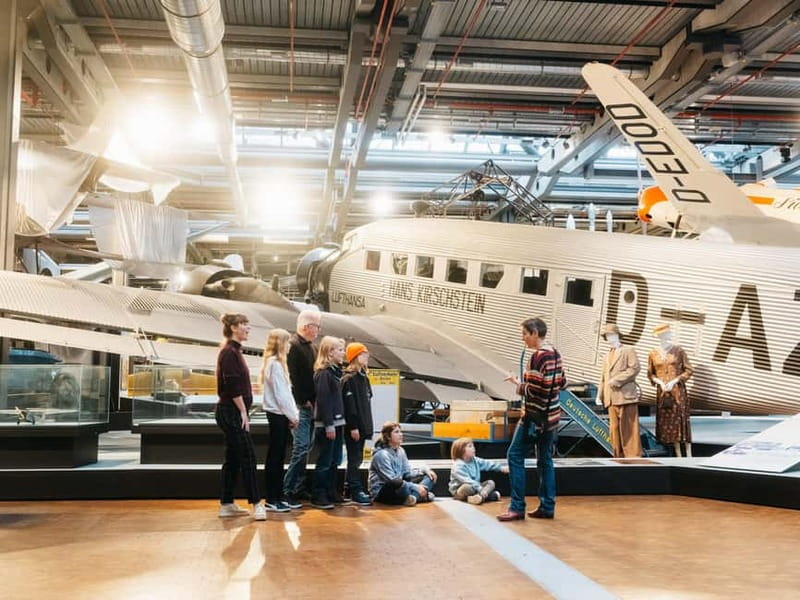
A big promise here is 40 airplanes, and the experience is most satisfying when you treat it as a timeline rather than a lineup. You’re not just looking at aircraft; you’re seeing how design, purpose, and capability changed over time.
Here’s what you’ll likely find compelling: the range in the story. The exhibits aim to cover everything from early German aviation feats to later, harsher outcomes in wartime. That contrast can feel heavy, but it’s also what makes the aircraft section more than a “cool plane” collection.
Practical tip: don’t rush this area if aviation is your priority. The museum does a good job making you understand the historical shift, not only the hardware.
Railways and steam locomotives: watching progress roll by
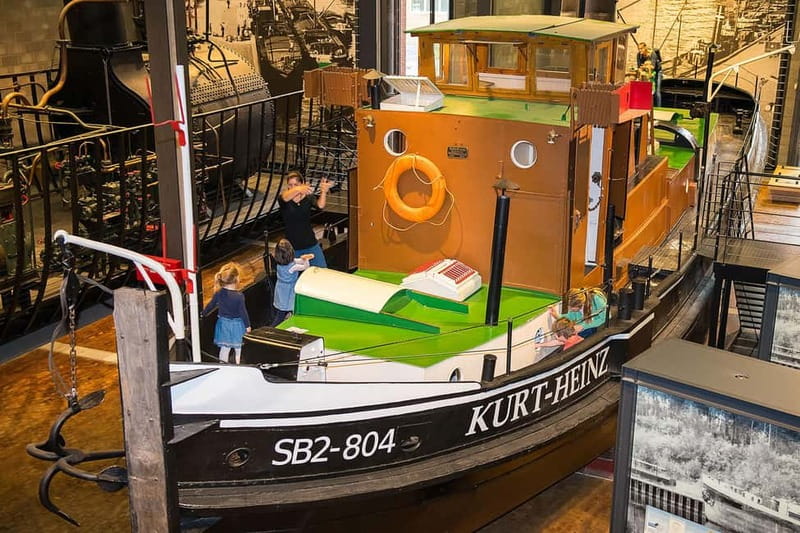
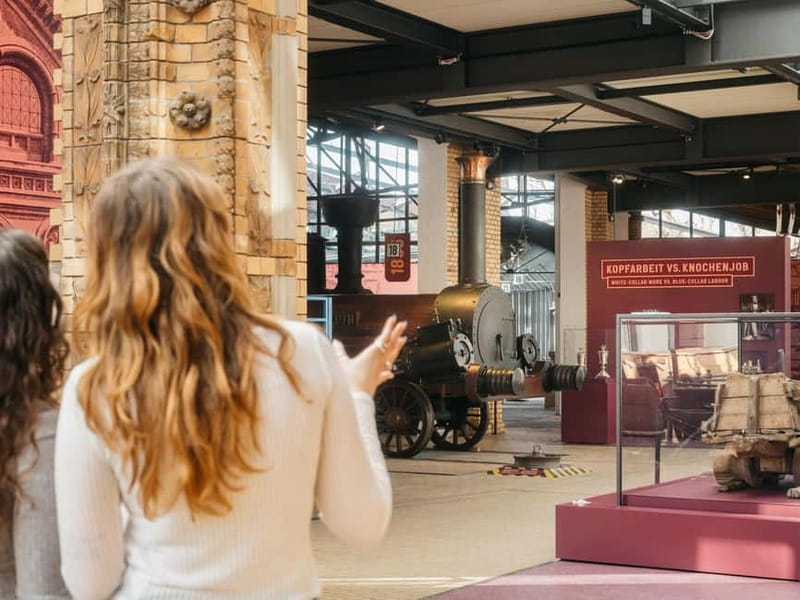
Railways at the Deutsches Technikmuseum are a great match for visitors who enjoy mechanical engineering, industrial scale, and the “feel” of old infrastructure. The museum’s railway collection is impressive, and steam locomotives are a major draw.
What I like about this section is how it connects technology to daily movement. Trains aren’t just impressive objects; they represent logistics, industry, and the way people and goods moved. When you’re in a Berlin museum, it also helps you make mental links to how rail shaped the city and region over time.
If you’re short on time: go through the railway highlights first, then circle back for details if you still feel energized.




Seafaring history: ships plus the tools that made navigation possible

The museum also covers seafaring, not just ships on display. You’ll find nautical instruments and historical elements tied to how people navigated and managed life at sea.
This part of the museum tends to reward curious readers. Even if you’re not a maritime expert, nautical instruments have that “this must have been painstaking to use” vibe that makes the history stick. It’s a different kind of technology story than aviation, more focused on measurement, navigation, and problem-solving.
If you’re deciding where to spend energy: seafaring is a good stop when you want something calmer than the airplane galleries, but still technical.
Zuse and 200 years of technical networking: the interactive brain-teaser zone

One of the most interesting shifts in the museum is moving from transportation to communication and computing. You get Zuse, noted as the world’s first computer, which anchors the story of how technology moved from machines you can point to, to systems you can’t see with your eyes.
Then comes the museum’s interactive section covering roughly 200 years of technical networking. Even if you only skim the visuals, the main takeaway is clear: networking isn’t just about cables or signals. It’s about coordination, speed, and how information changes what’s possible.
I like this zone because it gives you a modern connection. You’re effectively walking toward today’s constant connectivity, without needing a tech degree to follow the logic.
Live demonstrations: printing, papermaking, and blacksmith work
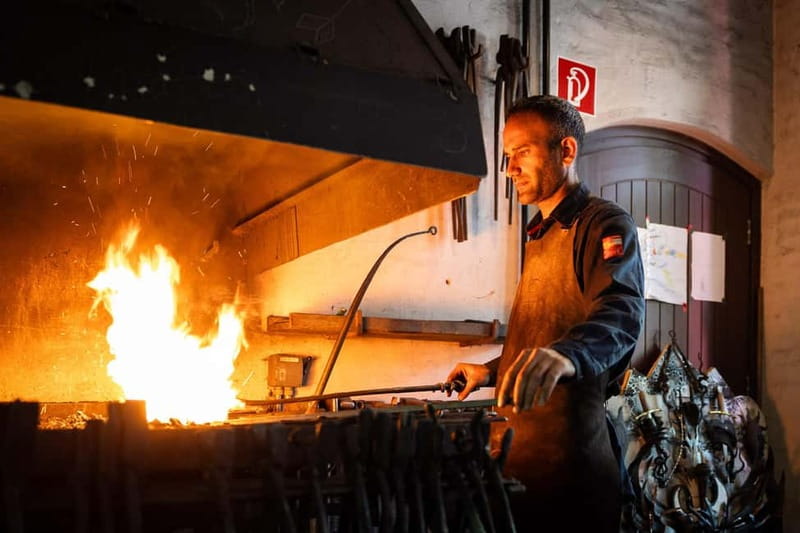
This is one of the museum’s strongest “value boosters.” Live demonstrations bring older technology to life, and they help you understand processes that museums often freeze behind glass.
From what the museum offers, you can expect demonstrations in areas like printing, papermaking, and blacksmith craft. Even when you’re not an expert, watching materials transform under real methods is a reminder that technology used to be physical labor as much as invention.
Best approach: plan to spend at least one session here without multitasking. You’ll get more from watching for patterns—how tools, time, and technique all fit together—than by trying to scan everything at once.
Spectrum Science Center next door: 150 hands-on experiments
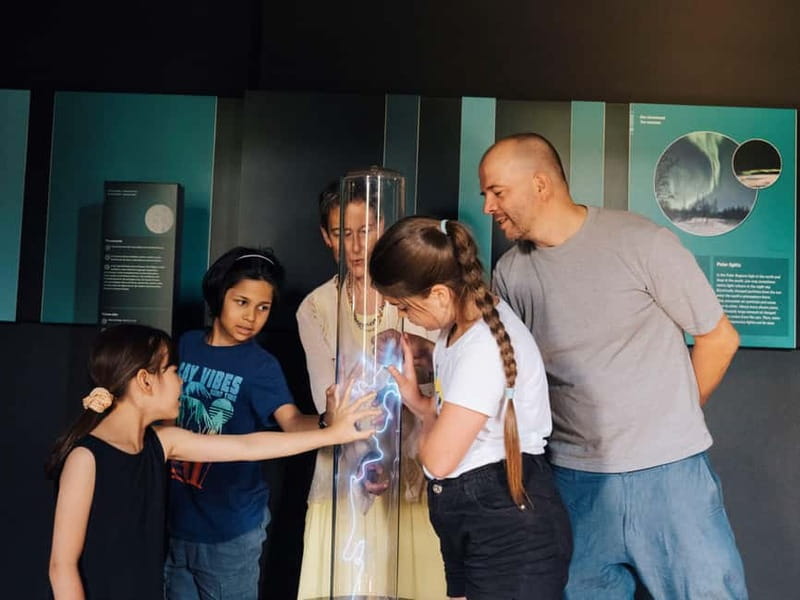
Your ticket includes the Science Center Spectrum on the same day, which is great because it balances the museum’s historical feel. Spectrum focuses on experiments—so instead of only learning how technology changed the world, you get to play with science.
You’re looking at more than 150 hands-on experiments, and that number matters. With that much to do, it’s realistic to have a “win” day even if you skip some parts. The key is to set your own rules: do the big, obvious stations first, then chase the experiments that genuinely spark curiosity.
Accessibility heads-up: the Spectrum elevator is out of service until the end of January 2026 due to repairs. During that period, Spectrum isn’t accessible from the 1st floor. If you need step-free access, plan your route carefully on arrival.
Museum park time in Kreuzberg: windmill, forge, pond, and breathing space

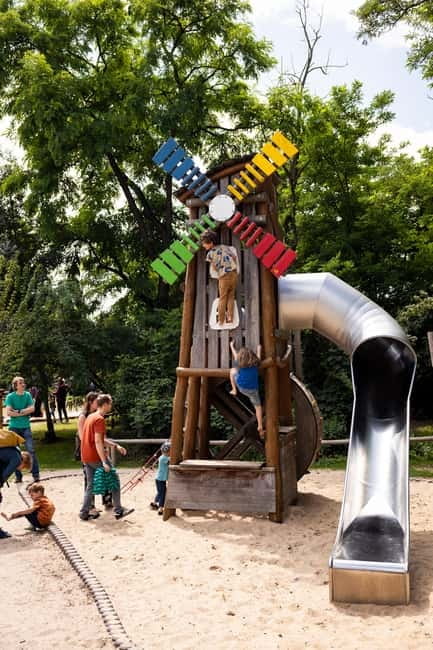
One thing I appreciate about the Deutsches Technikmuseum is that it doesn’t trap you indoors all day. The museum park adds a more relaxed layer in the heart of Berlin Kreuzberg, with features like a windmill, blacksmith’s forge, pond, and green spaces.
Why it matters: you’ll likely feel museum fatigue if you’re doing airplanes, trains, and ships back to back. A park break can make the rest of the day feel easier and clearer, not just longer.
If your group includes different interests, this is also a good “meet-in-the-middle” spot—some people will enjoy lingering outside while others take a second pass inside.
Price and time planning for a $14 ticket
At $14 per person, this ticket is priced as an affordable day of major museum content—especially because it bundles both Deutsches Technikmuseum and Spectrum on the same booked day.
Here’s how I think about the value:
- The museum covers multiple transport themes (air, rail, sea) plus computing and networking.
- Spectrum adds a full hands-on science layer with 150+ experiments.
- You get skip-the-ticket-line, which is a real quality-of-life feature when you’re trying to maximize your day.
Duration is listed as 1 day, and I agree with the practical reality: treat it as “1 day, many parts.” You can absolutely do it in a day, but you’ll enjoy it more if you plan for pauses and don’t try to speedrun every gallery.
My quick planning rule: pick 2–3 priorities for the museum (for example airplanes, Zuse/networking, and demonstrations), then let Spectrum be a choose-your-own-adventure block.
Who should book and who should reconsider
This works best for:
- Families who want variety without splitting up
- People who love engineering, transportation history, and hands-on learning
- Visitors who like interactive features and live craft demonstrations
You might reconsider if:
- You only want a short, focused museum about one narrow theme
- You have very limited mobility needs and rely on step-free access at Spectrum (since the elevator is out of service until end of January 2026)
If you’re coming from elsewhere in Berlin, this is still a smart day choice because it’s not just about one “signature exhibit.” It’s about how multiple technologies connect—and how old machinery and modern systems share the same core idea: solving problems.
Book it or skip it?
I’d book this ticket if you want a high-output day in Berlin that mixes big historical artifacts with interactive and live tech moments. The strongest reasons are the range (aircraft, trains, ships, and computing) and the experience’s ability to keep switching modes, from reading and observation to demonstrations and hands-on science.
Skip it only if you prefer ultra-focused museums or you know you won’t have the energy to cover more than one major venue in a day. Otherwise, this one-day ticket is a solid value and a fun way to understand how technology actually shaped people’s lives.
FAQ
How long is the visit?
The ticket is valid for 1 day.
What is included with the ticket?
Your admission covers Deutsches Technikmuseum and the Science Center Spectrum on your booked day.
Is the location wheelchair accessible?
Yes, it’s listed as wheelchair accessible.
Are pets allowed?
Pets are not allowed, but assistance dogs are allowed.
Is flash photography permitted?
Flash photography is not allowed.
Can I skip the ticket line?
Yes, the experience includes skip-the-ticket-line access.
Is Spectrum accessible right now?
The Spectrum elevator is out of service until the end of January 2026, and Spectrum is not accessible from the 1st floor during that time.
Is there free cancellation?
Yes. Cancel up to 24 hours in advance for a full refund.
Can I reserve and pay later?
Yes, you can reserve now and pay later.
What language support is available?
The provided information notes languages, but it does not specify which languages are offered beyond the cancellation/payment details.
Who should use the Student Ticket option?
Visitors with disabilities (50% or more) are advised to select the Student Ticket.
More Tickets in Berlin



More Tour Reviews in Berlin

Round out your days in Berlin



Tickets, compared.
 ★ 4.4TV Tower Standard Entrance TicketFrom $3315,883 reviews
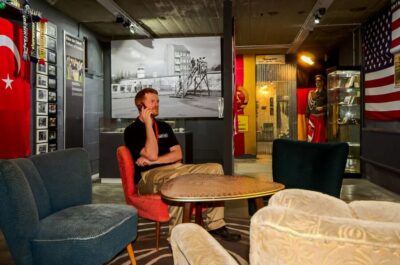 ★ 4.6Berlin Story Bunker Entry TicketFrom $216,759 reviews
 ★ 4.1Illuseum Berlin Entrance TicketFrom $183,970 reviews
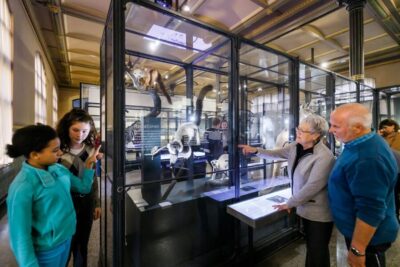 ★ 4.6Natural History Museum Entrance TicketFrom $123,382 reviews
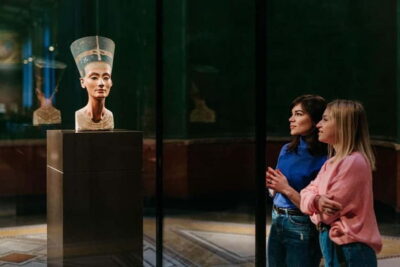 ★ 4.4Museum Island Multiple Museum Entry TicketFrom $282,861 reviews
 ★ 4.5Potsdam: Sanssouci Palace and Prussian Palaces Entry TicketFrom $252,101 reviews
 ★ 4.4Charlottenburg Palace Entry TicketFrom $222,076 reviews
 ★ 4.5Berlin Dungeon: Entrance TicketFrom $281,918 reviews