
REVIEW · MUSEUMS
Berlin: Natural History Museum Entrance Ticket
A museum that feels like time travel. The Museum für Naturkunde puts giant fossils, the wet collection, and modern research under one roof, and it moves fast enough to fit real travel days. I especially love the Dinosaur Hall with Giraffatitan brancai greeting you at full scale, and I’m also a big fan of the wet collection—about a million animals preserved in alcohol. One drawback to plan for: it’s not a guided tour, so if you want lots of hands-on interaction or deep explanations room-by-room, you’ll need to lean on the downloadable audio.
This is an easy ticket choice because you’re not just buying entry—you’re getting a multi-language audio guide plus access to some of Berlin’s most famous scientific displays. With a suggested visit window of 30 minutes to 1 hour, you’ll want a simple game plan so you don’t end up zig-zagging.
The museum’s big idea is exploration: it traces how scientists from Alexander von Humboldt and Charles Darwin helped shape the way we study life, then brings you to today’s teams working with collections of over 30 million items. If you like your sightseeing with a side of real science, this ticket hits the sweet spot.
In This Review
- Key Things You’ll Appreciate
- Getting In Fast at Museum für Naturkunde, Invalidenstraße
- A 30–60 Minute Fossil Sprint (With the Right Focus)
- Dinosaur Hall: Giraffatitan and Jurassic-Style Atmosphere
- Archaeopteryx Lithographica: Small Fossil, Big Reputation
- The East Wing’s Wet Collection: Why 80 Tonnes of Alcohol Exists
- Biodiversity Wall: 3,000 Species in One Breath
- Audio Guide on Your Phone: The Best Way to Make It Worth It
- Price and Value: $12 for Fossils, Research, and Biodiversity
- What to Expect Day-Of: Crowds, Orientation, and Family Energy
- Should You Book This Museum für Naturkunde Ticket?
Key Things You’ll Appreciate
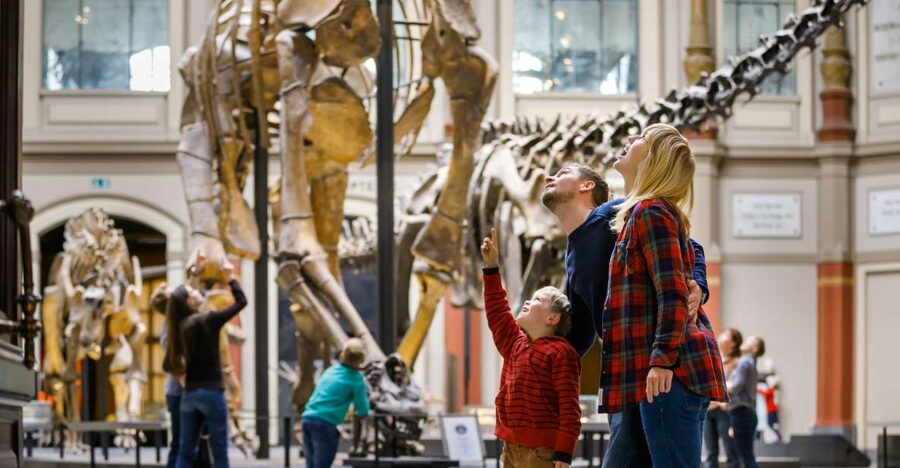
- Giraffatitan brancai: the tallest mounted dinosaur skeleton in the world, right in the center of the Dinosaur Hall
- The wet collection: about 1 million animals preserved in roughly 80 tonnes of alcohol
- Archaeopteryx lithographica: a famous fossil often called the Mona Lisa of natural history
- Biodiversity Wall: a single-glance display featuring more than 3,000 species
- Tristan Otto: one of the few original T. rex skeletons in existence
More Berlin tours to line up side by side
- Berlin: TV Tower Standard Entrance Ticket★ 4.4 · 15,883 reviews
- Berlin: Berlin Story Bunker Entry Ticket★ 4.6 · 6,759 reviews
- Berlin: Illuseum Berlin Entrance Ticket★ 4.1 · 3,970 reviews
- Berlin: Madame Tussauds Admission Ticket★ 4.6 · 3,941 reviews
Getting In Fast at Museum für Naturkunde, Invalidenstraße
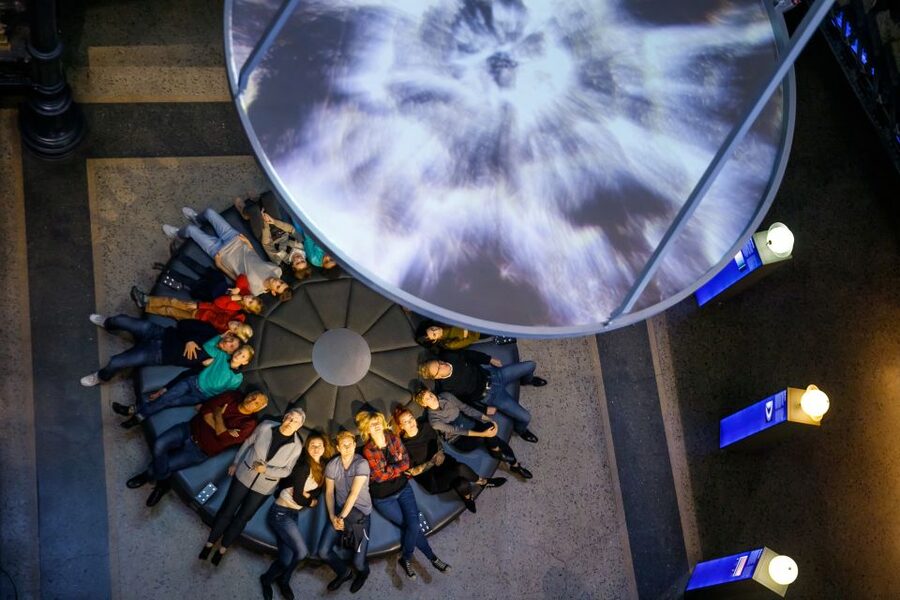
Your meeting point is the main entrance at Invalidenstraße 43, 10115 Berlin. The ticket is designed for quick entry, with skip-the-ticket-line support, which matters because this museum can run at full capacity.
You’ll also see a cloakroom is included. That’s handy in Berlin, where weather can swing—and you’ll likely end up carrying a bag while you’re scanning fossils and mineral displays.
If you’re getting reduced pricing, plan on bringing your passport or ID card, plus any proof of age/status required at entry. That’s not complicated, but it’s the kind of small detail that can spoil a day if you forget it.
A 30–60 Minute Fossil Sprint (With the Right Focus)
The experience is scheduled for 30 minutes to 1 hour. That time window is short enough that you should decide what “success” looks like for you: dinosaurs, biodiversity, or the wet collection.
A good approach is to treat it like a smart loop:
- Spend enough time to see the centerpiece fossils up close.
- Don’t get stuck reading every label if you’re with kids or on a tight timeline.
- Use the audio guide to fill in the “what am I looking at” gaps while you’re walking.
Some visitors manage to get through the museum in about 30 minutes, which tells me the ticket works best when you’re selective. If you try to do everything slowly, you can still enjoy it—you just need to accept that you’ll be moving at a museum pace.
Dinosaur Hall: Giraffatitan and Jurassic-Style Atmosphere
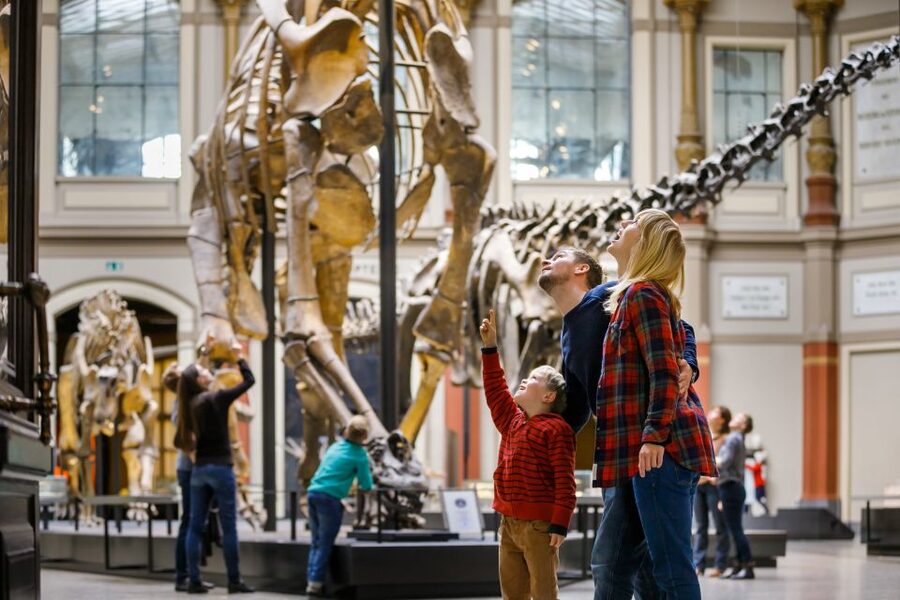
The Dinosaur Hall is the main event, built around life from the Upper Jurassic period, about 150 million years ago. The experience starts with Giraffatitan brancai, described as the world’s tallest mounted dinosaur skeleton, and it really sets the scale—this isn’t a “small display” kind of moment.
This hall also leans into storytelling: fossils aren’t just objects; they’re evidence. You’ll get that sense especially because the museum doesn’t treat dinosaurs as isolated relics. The exhibits connect the past to how science works today—how researchers keep learning new secrets from the same specimens.
One more detail I’d aim for if it’s on your list: look out for Tristan Otto, one of the few original T. rex skeletons. Even if dinosaurs aren’t your whole thing, a real T. rex skeleton is the kind of stop you remember later when you’re back in your hotel room.
Archaeopteryx Lithographica: Small Fossil, Big Reputation
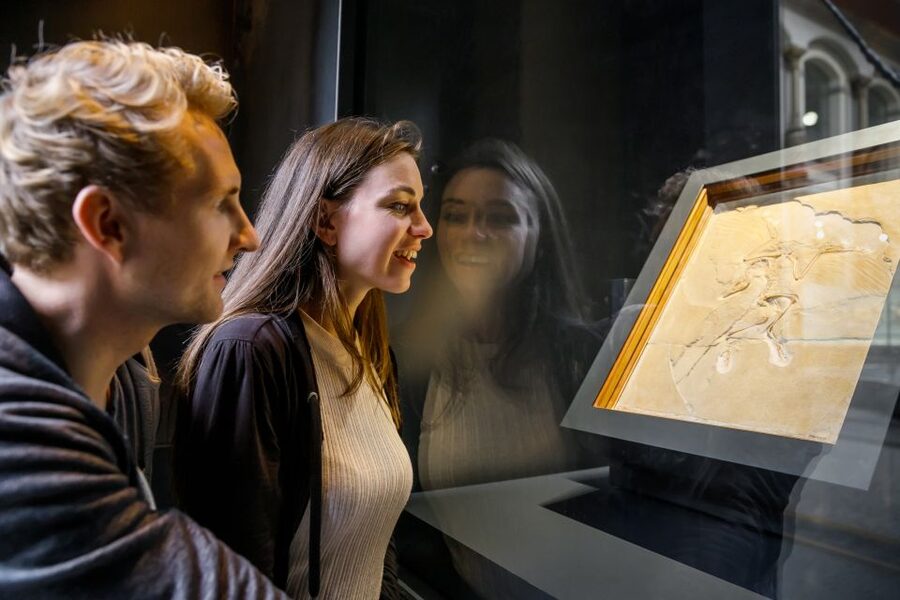
At the back of the Dinosaur Hall, you’ll find Archaeopteryx lithographica in a safety showcase. It’s often described as the Mona Lisa of natural history, and the point of calling it that isn’t marketing—it’s about importance.
This is one of those fossils that helps you connect dots. It’s not just “cool bones from the past.” It’s part of the broader story about how scientists think about evolution and how careful study can reshape what we believe.
If you’re only doing a quick pass, don’t skip it. It’s a small-looking object compared to the giants, but it’s the kind of display that rewards a minute of attention.
More of Berlin's long history, guided



The East Wing’s Wet Collection: Why 80 Tonnes of Alcohol Exists
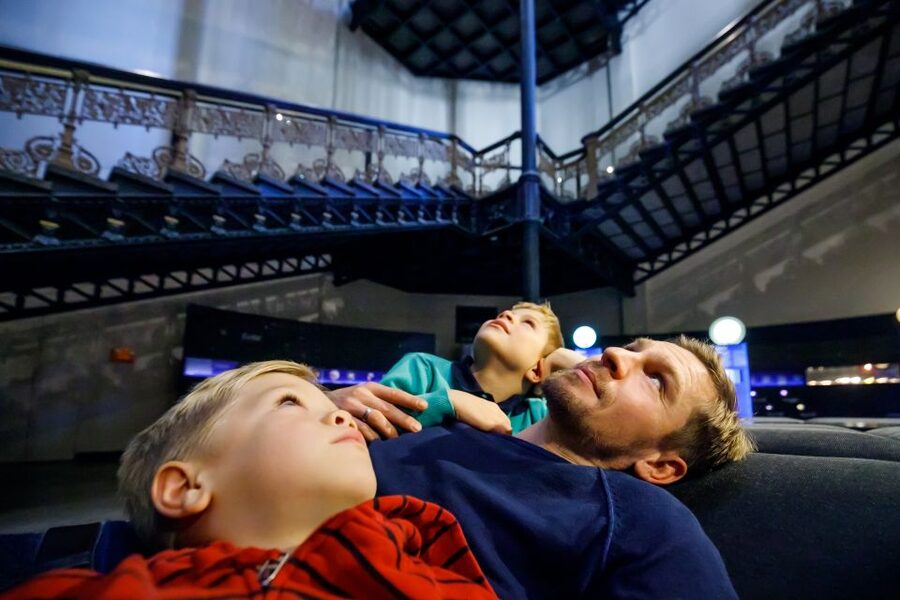
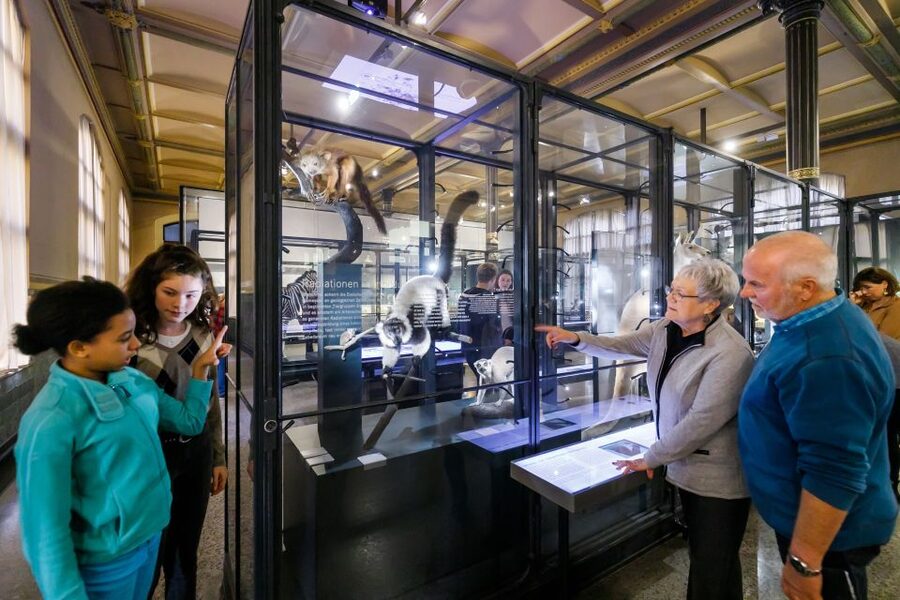
If your idea of a great museum day includes unusual science, you’ll like the East Wing. Here, you can see a genuine scientific research collection that’s known for its acclaim.
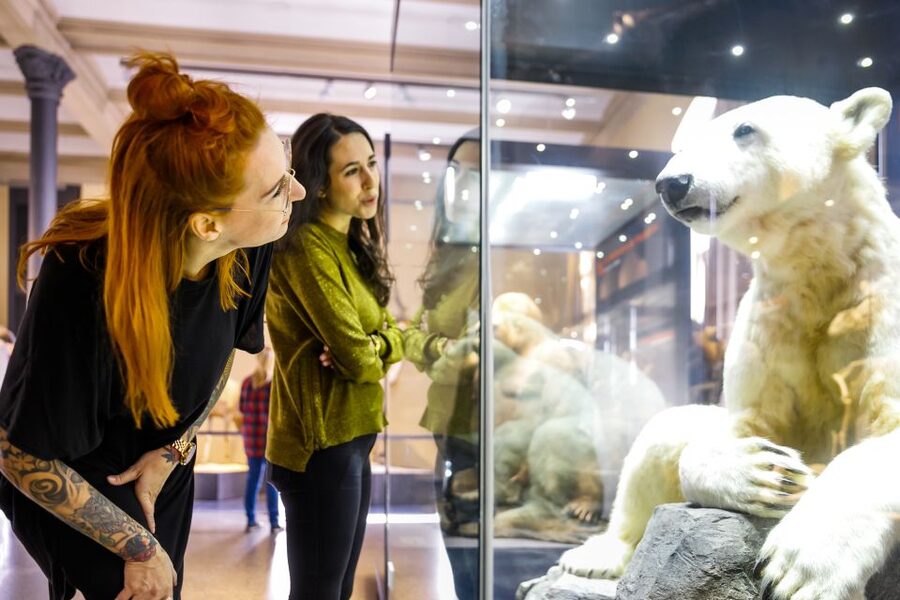
The standout detail is the wet collection: about one million animals stored in 80 tonnes of alcohol. That sounds wild, but it’s actually practical science. Preserving specimens this way helps researchers study details that dry displays can’t always show.
This is also where the museum earns its “more than fossils” reputation. It’s easy to walk into a natural history museum and only think about extinct giants. The wet collection shifts your brain toward biology, anatomy, and the slow work of research.
Biodiversity Wall: 3,000 Species in One Breath
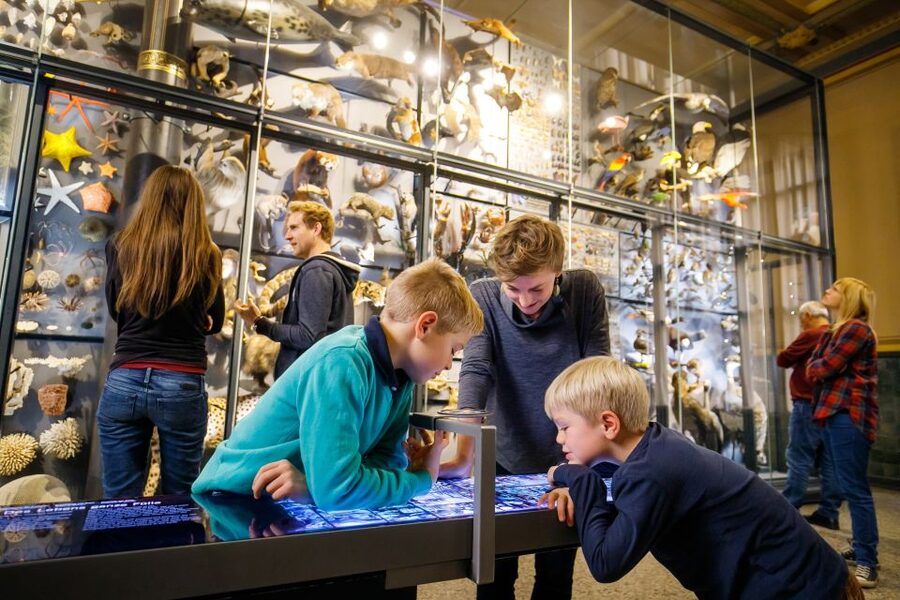
The Biodiversity Wall is the museum’s reality check. Instead of focusing only on one type of creature or one time period, it shows more than 3,000 species in one glance.
The installation is designed to spark a conversation about biodiversity and its loss, which matters because it connects the museum’s fossil past to the present. Even if you don’t read every label, you’ll feel the museum pushing you to think: what does it mean that life is changing?
If you’re traveling with kids, this is one of the best spots to turn it into a game. Ask them to point out differences, or guess what they think the museum is trying to teach. The wall gives you something concrete to talk about.
Audio Guide on Your Phone: The Best Way to Make It Worth It
The ticket includes downloadable audio content. That means you’ll need to access a website and log in. A physical audio guide is not included, so plan to use your own device.
The audio guide is available in multiple languages: English, French, German, Italian, Japanese, Polish, Portuguese, Russian, Spanish, Turkish. That’s a big deal in a museum like this, where not every label you see will match your language preferences.
Practically, I’d treat the audio guide like your “floating museum companion.” Use it for the major fossils and research sections, and don’t force it for every tiny label. A couple people also point out that having your phone and headphones ready makes the experience smoother, especially if you’re relying on the audio more than on reading small text.
Price and Value: $12 for Fossils, Research, and Biodiversity
At about $12 per person, this entrance ticket is strong value because it bundles several things that add up separately:
- Museum entry
- Audio content access (multi-language)
- Cloakroom
You’re not paying for a guided tour, though. That’s worth knowing upfront. If you love museums but get restless without narration, you’ll want to lean on the audio guide. If you’re the type who enjoys reading labels and looking slowly, you can still do that—but the 30–60 minute visit window means you’ll be selecting what to linger on.
Also, skipping the ticket line can be a hidden value. When museums run full, time becomes a bigger cost than the ticket price.
What to Expect Day-Of: Crowds, Orientation, and Family Energy
This museum can attract big crowds, including school groups and families. In the best-case scenario, it feels alive. In a busy moment, you may find yourself moving with the flow rather than taking your own slow route.
Some visitors also report that finding your way can be tricky without a plan, even with maps. So I recommend you pick a top three before you start:
1) Dinosaur Hall (including Giraffatitan and Tristan Otto)
2) Archaeopteryx showcase
3) East Wing wet collection or the Biodiversity Wall
That way, even if a certain area feels crowded, you still get your “must-see” highlights.
For families: it’s a good fit. Many people love it with small kids because you’re surrounded by large visuals—skeletons and specimens that don’t require pages of reading to enjoy. For adults: it works too, especially if you’re curious about how research collections are maintained and used.
Should You Book This Museum für Naturkunde Ticket?
Book it if you want a high-impact, science-forward museum visit in under an hour, and you like fossils plus the real-world research side of natural history. It’s especially worth it if dinosaurs, the wet collection, or the Biodiversity Wall are on your list.
Hold off if you’re expecting a lot of hands-on interaction or a fully guided, narration-heavy walkthrough. This ticket is about entry plus audio, so you’ll get the most satisfaction by using the audio and focusing your route.
My practical bottom line: if you’re in Berlin for a short time and want one museum stop that’s both visually unforgettable and intellectually grounded, this is a smart bet. Plan your “top three,” bring your ID if you need reduced pricing, and set your phone up for the downloadable audio before you arrive.
More Berlin History


More Tickets in Berlin




More Tour Reviews in Berlin





Round out your days in Berlin



Museums, compared.
 ★ 4.4Museum Island Multiple Museum Entry TicketFrom $282,861 reviews
 ★ 4.1Skip-the-Line: Berlin Wall Museum at Checkpoint CharlieFrom $212,041 reviews
 ★ 4.1Interactive DeJa Vu Museum Entrance TicketFrom $171,338 reviews
 ★ 4.6“Pergamonmuseum. The Panorama” Exhibition TicketsFrom $161,245 reviews
 ★ 4.1East Side Gallery Spree Cruise in a Solar CatamaranFrom $281,086 reviews
 ★ 5.0Cold War, Berlin Wall, Spies and the East Side GalleryFrom $181,024 reviews
 ★ 4.3Berlin WelcomeCard: Museum Island & Public TransportFrom $70999 reviews
 ★ 4.8From Berlin: Sachsenhausen Concentration Camp Museum TourFrom $17514 reviews
Browse the lists this tour appears in