
REVIEW · TICKETS
Berlin: Deutschlandmuseum – Flexible Entrance Ticket
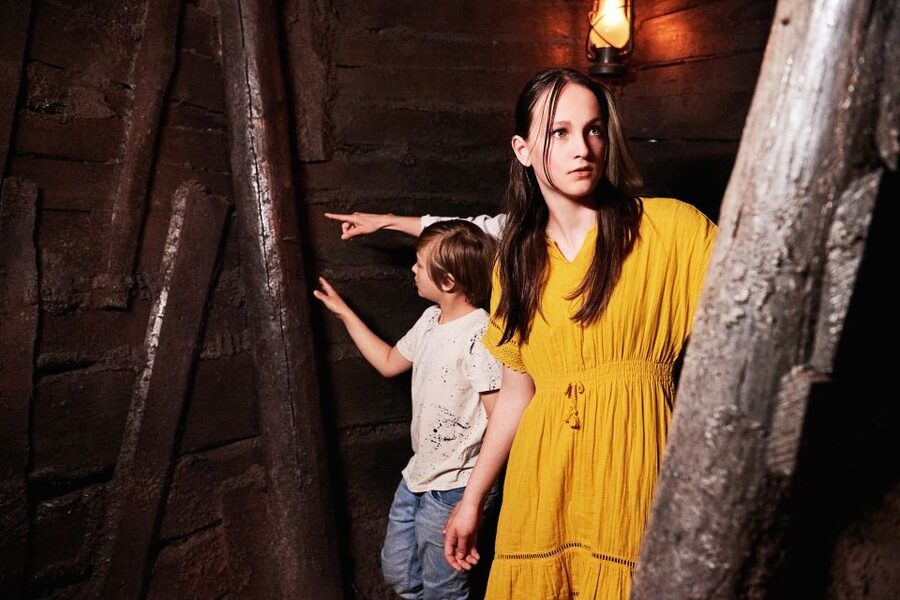
Berlin can be serious. This museum isn’t. You get a fun, high-energy way to work through 2,000 years of German history using interactive staging and period-style exhibits. Highlights run from the Battle of Varus to the 2006 summer fairy tale, all arranged as turning points you can actually see, touch (where available), and process.
What I like most is how the exhibits mix historical displays with interactive media, so the story doesn’t just sit there behind glass. I also like that it’s presented across twelve eras, with hands-on-style presentation that makes complicated time periods feel easier to follow. One thing to consider: if you want ultra-academic, deeply detailed history, this may feel more visual and approachable than scholarly.
In This Review
- Key Takeaways
- A Skip-the-Line Ticket to a 2,000-Year German Timeline
- How the Deutschlandmuseum Flexible Entrance Works
- What You’ll See: Twelve Eras From Varus to 2006
- The likely flow inside
- A drawback to keep in mind
- Interactive Media and Period-Style Staging (The Museum’s Real Strength)
- How to make the interactive parts work for you
- Is It Worth It for Families and Non-Historians?
- Price and Value: What $30 Buys You in Berlin
- Timing Tips: Avoiding the Crowded Feeling
- Who Should Book Deutschlandmuseum, and Who Might Skip It?
- Should You Book Deutschlandmuseum in Berlin?
- FAQ
- Where is Deutschlandmuseum located?
- How much does the Deutschlandmuseum flexible entrance ticket cost?
- How long should you plan to spend at Deutschlandmuseum?
- Does the ticket include entry to the museum?
- Do I need to pre-register to visit?
- Will I wait in line at the entrance?
- Is the ticket valid for more than one day?
- Is Deutschlandmuseum wheelchair accessible?
- Is free cancellation available?
- Is reserve and pay later available?
Key Takeaways
- Skip-the-line entry through a separate entrance
- Twelve eras spanning roughly 2,000 years of German history
- Interactive media + period exhibits to keep you engaged
- Family-friendly feel, with history explained in an easier way
- Can get crowded, so plan your timing if you’re sensitive to busy rooms
More Berlin tours to line up side by side
- Berlin: TV Tower Standard Entrance Ticket★ 4.4 · 15,883 reviews
- Berlin: Berlin Story Bunker Entry Ticket★ 4.6 · 6,759 reviews
- Berlin: Illuseum Berlin Entrance Ticket★ 4.1 · 3,970 reviews
- Berlin: Madame Tussauds Admission Ticket★ 4.6 · 3,941 reviews
A Skip-the-Line Ticket to a 2,000-Year German Timeline

The Deutschlandmuseum is built around a simple idea: history sticks better when you experience it, not just read it. With a one-day ticket, you can move through a long timeline of Germany’s past in a way that feels more like stepping into staged scenes than walking past quiet artifacts.
You’ll be looking at “turning points,” not just a list of dates. The museum uses detailed stagings connected to different eras, and each moment is supported with exhibits that match the time period you’re seeing. That approach matters because it helps you build a mental map of cause-and-effect: what changed, what it led to, and why later events make sense.
Also, the vibe is genuinely enjoyable. The museum isn’t trying to be stern. It uses interactive media and sensory presentation to keep you moving, which is a big deal when you’re covering that much history in one day.
How the Deutschlandmuseum Flexible Entrance Works

This ticket is designed for flexibility, which is great when your Berlin day is already busy. Your ticket includes entry to the Deutschlandmuseum, and it’s set up to avoid waiting in line.
Here’s what you should know before you go:
- You can enter through a separate entrance to skip the line.
- It’s described as flexible in appearance, without requiring pre-registration.
- Your ticket is valid for 1 day, and you’ll check availability for starting times.
If you’re traveling with a tight schedule, this “show up within the window” style is a relief. You can plan around meals, weather, or an earlier museum stop without feeling like you’ll miss your slot.
One more practical note: the information you have confirms the museum is wheelchair accessible, but it doesn’t list specific language options. If language support is important to you, it’s worth checking at booking for what’s offered on-site.
What You’ll See: Twelve Eras From Varus to 2006
The core experience is a chronological walk through twelve eras. The museum covers roughly 2,000 years of German history, with the storyline framed through major turning points.
Two bookend examples give you a sense of the range:
- It goes back to the Battle of Varus, one of the early anchors in the long narrative.
- It reaches forward to the 2006 summer fairy tale, bringing the story into modern cultural memory.
Between those points, you can expect multiple historical scenes where each era comes with supporting exhibits from the period and interactive elements. The format is less about lectures and more about structured “moments,” where you can connect the visual staging with the historical items and media.
The likely flow inside
Since you’re covering a long span, your best strategy is to treat it like a museum “route,” not a marathon:
- Start at the earlier sections and let the timeline build.
- Pause more at the turning points that feel personally interesting to you (conflict, politics, cultural change, everyday life—whatever grabs you).
- Don’t feel pressured to absorb every detail. The museum is designed for understanding, not homework.





A drawback to keep in mind
One of the trade-offs is that this kind of presentation can be less intensely detailed than you might hope if you’re a history specialist. If you’re the type who wants deep academic precision at every stop, you may come away feeling it’s more clear than exhaustive. Still, for most people, that’s exactly why it works.
Interactive Media and Period-Style Staging (The Museum’s Real Strength)

The Deutschlandmuseum’s signature move is the combination of:
- staged historical scenes tied to specific eras
- historical exhibits from those periods
- interactive media that helps you process the story
This mix is the reason the museum can work for both first-time visitors and people who have been to other museums in Berlin. Instead of forcing you to memorize information, it nudges you to understand.
Also, the museum leans into “all your senses.” You’re not just reading captions. You’re seeing and navigating scenes built for experience—so the story feels more immediate. That’s useful when you’ve had a long travel day and don’t want to be mentally exhausted by the time you reach an exhibit hall.
How to make the interactive parts work for you
Interactive displays can go two ways: either they help you learn, or they turn into distractions. To get the learning:
- Choose one or two interactive segments per era to take seriously.
- Keep moving, but slow down when an exhibit clearly explains the “why” behind the turning point.
- If you see a section that feels less relevant, you can skim it and focus on the ones that pull you in.
That’s not “missing” the museum. It’s using it for what it’s best at: a readable, engaging overview of Germany’s story.
Is It Worth It for Families and Non-Historians?
This is a museum that plays well with families. One of the consistent strengths from real-world feedback is that it can be a friendly way to explain history, including for children. The atmosphere tends to feel approachable, and the presentation is designed to make the big picture understandable without needing prior background.
If you’re traveling with kids, this can save you from the classic problem: you want history, but your child wants momentum. Here, the museum keeps changing the type of exhibit—staging, period exhibits, and interactive media—so attention is more likely to stay on track.
For adults, the same approach is a benefit, even if you’re going solo. It reduces the “I should read this carefully” pressure. You can learn while you wander, which is a nice change from museums that feel like study halls.
Price and Value: What $30 Buys You in Berlin
At about $30 per person for a one-day ticket, the value depends on how you like to learn.
This ticket includes:
- entry to the Deutschlandmuseum
- no waiting in line (skip-the-line via a separate entrance)
- flexible appearance without pre-registration
- wheelchair accessibility
When tickets are this straightforward, the main question becomes: will you enjoy this format? If you’re looking for a visual, interactive sweep through Germany’s past, $30 is reasonable, especially because you’re getting access to the full museum experience rather than a small guided highlight.
If, however, your goal is extremely detailed history from an academic angle, you might feel you’re paying for a guided-style overview rather than deep scholarship. In that case, you could still enjoy it for the visuals, but manage expectations.
My practical advice: if you’re spending one day in Berlin and you want a strong “big story” museum stop, this is a solid fit. If you already plan to spend your time on multiple heavy historical sites, you may want to mentally budget this as the more approachable option.
Timing Tips: Avoiding the Crowded Feeling
The museum can feel busy, and that can change your experience. When it’s crowded, interactive exhibits may take longer to use, and your pace slows down.
So here’s what I’d do:
- If you’re sensitive to crowds, aim for a time when you can get in and start moving early.
- Keep your expectations realistic about how fast you’ll go through twelve eras.
- Don’t force yourself to finish everything. Pick the sections that grab you and let the rest be a bonus.
Also, because your ticket is valid for one day with starting times, you have room to choose a practical entry moment that fits your day in Berlin.
Who Should Book Deutschlandmuseum, and Who Might Skip It?
This works best if:
- you want a clear, engaging overview of German history in one day
- you prefer interactive exhibits over long lecture-style rooms
- you’re traveling with kids or mixed-age group
- you like museums where the story changes as you move along
You might want to rethink it if:
- you’re expecting deep, specialist-level historical detail for every period
- you dislike crowded indoor spaces and don’t want to adjust your schedule
It’s not “either it’s everything or nothing.” It’s more like: this museum gives you a strong framework and a lot of visual momentum.
Should You Book Deutschlandmuseum in Berlin?

Book it if you want a fun, fast-moving history museum with interactive media and staged turning points across twelve eras. The skip-the-line setup and flexible entry style are practical extras, and the format is friendly for families while still satisfying for adults who want to learn without reading a textbook.
Skip or pair it carefully if you only enjoy history when it’s intensely detailed and academic. In that case, you can still take something from it, but you should arrive with the mindset that you’re getting an approachable overview—done well.
If you’re looking for one day in Berlin that makes German history feel understandable and enjoyable, this is a strong choice.
FAQ
Where is Deutschlandmuseum located?
Deutschlandmuseum is located in Berlin, Germany.
How much does the Deutschlandmuseum flexible entrance ticket cost?
The price is listed as $30 per person.
How long should you plan to spend at Deutschlandmuseum?
The experience duration is listed as 1 day.
Does the ticket include entry to the museum?
Yes. Entry to the Deutschlandmuseum is included.
Do I need to pre-register to visit?
The details state that it is flexible in appearance without pre-registration.
Will I wait in line at the entrance?
No waiting in line is included. You use a separate entrance to skip the line.
Is the ticket valid for more than one day?
No. It’s valid for 1 day, and you’ll check availability to see starting times.
Is Deutschlandmuseum wheelchair accessible?
Yes, it is listed as wheelchair accessible.
Is free cancellation available?
Yes. You can cancel up to 24 hours in advance for a full refund.
Is reserve and pay later available?
Yes. The offer is listed as reserve now & pay later, with booking flexibility.
More Tickets in Berlin




More Tour Reviews in Berlin

Round out your days in Berlin




Tickets, compared.
 ★ 4.4TV Tower Standard Entrance TicketFrom $3315,883 reviews
 ★ 4.6Berlin Story Bunker Entry TicketFrom $216,759 reviews
 ★ 4.1Illuseum Berlin Entrance TicketFrom $183,970 reviews
 ★ 4.6Natural History Museum Entrance TicketFrom $123,382 reviews
 ★ 4.4Museum Island Multiple Museum Entry TicketFrom $282,861 reviews
 ★ 4.5Potsdam: Sanssouci Palace and Prussian Palaces Entry TicketFrom $252,101 reviews
 ★ 4.4Charlottenburg Palace Entry TicketFrom $222,076 reviews
 ★ 4.5Berlin Dungeon: Entrance TicketFrom $281,918 reviews