
REVIEW · TOURS
Berlin during Nazism – Tour in Italian
History here hits close to home.
This Italian-guided walk through Nazi Berlin connects the rise of Hitler’s regime with the machinery that led to World War II, then lands on places tied to Jewish life, resistance, and deportations. I like how the tour is organized around specific sites, not vague talking points, with a small group size that keeps the guide’s attention on you and your questions.
My favorite part is the mix of major “named” locations with places that explain how everyday people got caught in the system—or fought it. You also get quick, free entry stops that still feel substantial, so you’re not just standing around waiting. The one drawback to consider: this is heavy material. If you’re sensitive to topics like persecution, forced transport, and Nazi medical killing, pace yourself.
Key Points at a Glance
- Small group size (max 20) helps you actually keep up and ask questions.
- Italian-language guide makes this a strong pick if you prefer or want practice in Italian.
- Free admission stops at several memorials and sites stretch your value.
- Tight 3-hour route packs major themes: rise to power, resistance, and Jewish landmarks.
- Potsdamer Platz to Hackescher Markt is a practical end point for continuing your day.
In This Review
- First Walk: Potsdamer Platz to a Berlin You Can Read
- German Resistance Memorial Center: Operation Valkyrie Starts as a Human Story
- The T4 Memorial: When Nazi “Care” Became Killing
- Anhalter Bahnhof Ruins: The Station That Sent People to Death
- Scheunenviertel and the Jewish Quarter: Berlin’s Jewish Life, Then and After
- Otto Weidt’s Workshop: The Schindler of Berlin Story, Without the Myth
- New Synagogue (Neue Synagoge) and Centrum Judaicum: Architecture as a Signal
- Old Jewish Cemetery: What’s Left When the Gestapo Came
- The Tour Pace, Walking Load, and Weather Reality
- Getting There: Public Transport (and a Simple AB Plan)
- Price ($27.87): Why This One Feels Like Real Value
- Who Should Book This (and Who Might Want to Think Twice)
- My Take: Should You Book Berlin during Nazism in Italian?
- FAQ
- How long is the Berlin during Nazism tour in Italian?
- Where does the tour start?
- Where does the tour end?
- Is the guide’s language Italian?
- How big is the group?
- Are admission tickets included for the stops?
- What’s included in the price?
- What is not included?
- Do I need a public transport ticket?
- Does it run in bad weather?
- Is free cancellation available?
First Walk: Potsdamer Platz to a Berlin You Can Read
The tour starts at Potsdamer Platz 10, right by the S/U-Bahn station. The meeting point is easy to find: look for the blue bicycle of Vive Berlin Tours and the logo flag. Starting there matters. Potsdamer Platz sits at the crossroads of modern Berlin—and it’s a good place to get your bearings before the history gets darker.
You’ll begin with a short orientation from the guide, then you’ll move through the city on foot with a structure that makes the story feel chronological and physical. That’s the trick with Berlin: you can walk past something every day and never know what it used to mean. This tour is designed to change that fast.
The ending point is Hackescher Markt. That’s a smart finish because the area is well connected for getting back to your hotel or linking to other sights in the Mitte/central zone.
Still narrowing down your days in Berlin? Here are more tours to weigh up.
- Berlin: Reichstag, Dome and Government District Guided Tour★ 4.7 · 18,288 reviews
- Berlin: 1-Hour City Tour by Boat with Guaranteed Seating★ 4.3 · 16,993 reviews
- Berlin: TV Tower Standard Entrance Ticket★ 4.4 · 15,883 reviews
- Berlin: Boat Tour Along the River Spree★ 4.4 · 11,252 reviews
German Resistance Memorial Center: Operation Valkyrie Starts as a Human Story
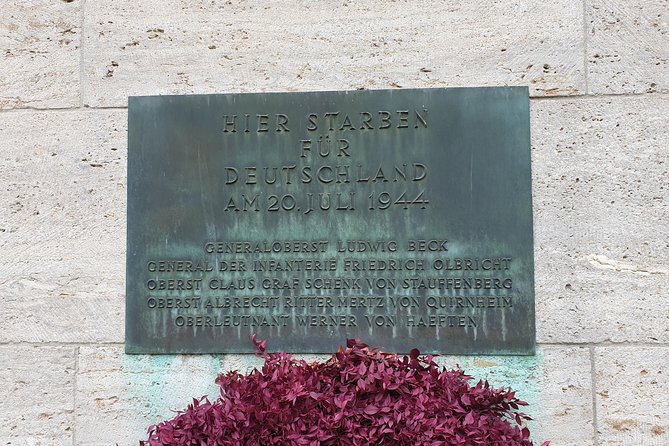
One of the best parts of the route is the stop at the German Resistance Memorial Center. You’re in the place from which Operation Valkyrie was directed, and the guide connects that fact to what resistance looked like from inside Nazi Germany.
This memorial focuses on individuals and groups who acted against the National Socialist dictatorship from 1933 to 1945. It isn’t presented as a lone-hero movie plot. Instead, you get a sense of the risk involved and why resistance could be so hard to imagine in real time. It also helps you understand something important: the Nazi regime didn’t just “happen.” People had choices, even if those choices came with terrifying consequences.
Time here is about 25 minutes. It’s enough to learn without turning the stop into a slow history seminar.
The T4 Memorial: When Nazi “Care” Became Killing
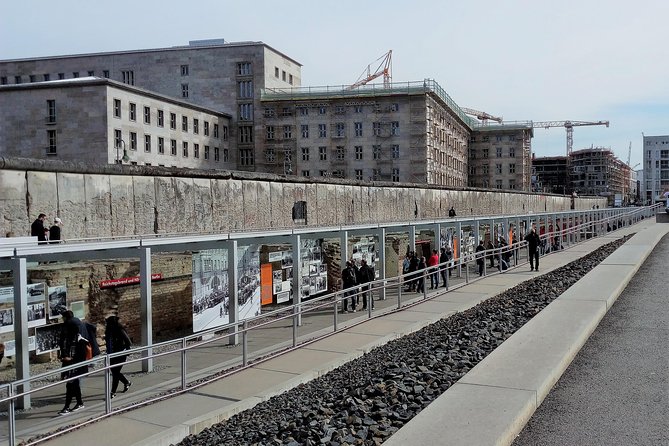
Next comes the T4 – Memorial for the Victims of the Nazi Euthanasia Program, a site that many people don’t know about until they see it in Berlin. The memorial remembers about 300,000 victims, including people killed because of mental and physical disabilities or chronic diseases.
The key detail to grasp is the name: the Nazi program was called T4, named for the office location on Tiergartenstraße 4. The tour’s framing also highlights why this mattered historically. The T4 program is considered a precursor to the Holocaust—because it shows how the regime used propaganda, bureaucracy, and state power to normalize mass killing.
This is a 15-minute stop, so you won’t drown in dates. Instead, you’ll leave with the big picture: the genocide wasn’t only about one category of victims, and the process grew in steps.
Anhalter Bahnhof Ruins: The Station That Sent People to Death
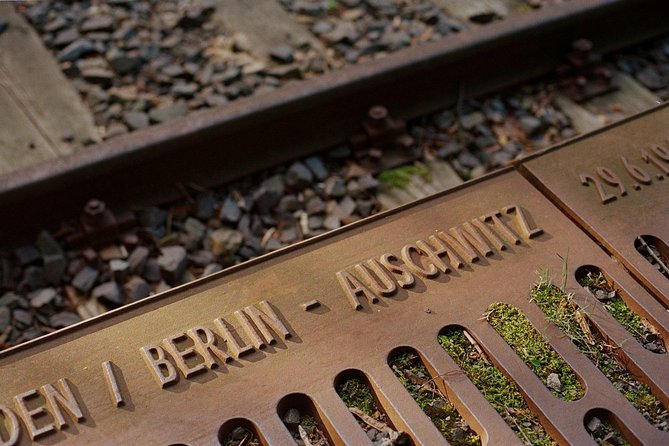
At the Anhalter Bahnhof ruins, Berlin does something rare: it keeps the scars visible. The station was once the biggest European railway station at the end of the 1800s, but today only the ruins remain after World War II.
What makes this stop heavy is what happened after 1942. From here, many “death trains” departed from 1942 to 1945. The guide uses the physical emptiness of the site to explain what trains meant in the Nazi system: not transport as a neutral act, but transport as policy.
It’s only about 10 minutes, but it’s the kind of short stop that sticks with you. If you’re the type who likes to understand why a place feels unsettling, this is the moment.
Scheunenviertel and the Jewish Quarter: Berlin’s Jewish Life, Then and After
After the rail-history shock, you shift into a different kind of understanding at Scheunenviertel—part of Mitte, known as the Jewish Quarter. You’ll spend about 45 minutes here, which is generous for a walking tour.
This area matters because it connects Jewish landmarks with a sense of community and learning, not only memorials. With your guide, you’ll visit Jewish institutions including the New Synagogue and the school founded by Moses Mendelssohn (as described in the tour information).
Berlin’s Jewish history is complex: thriving community life, brutal destruction, and long rebuilding. This stop gives you enough time to feel that the story wasn’t one single tragedy—it was a sequence that changed the city forever.


Otto Weidt’s Workshop: The Schindler of Berlin Story, Without the Myth
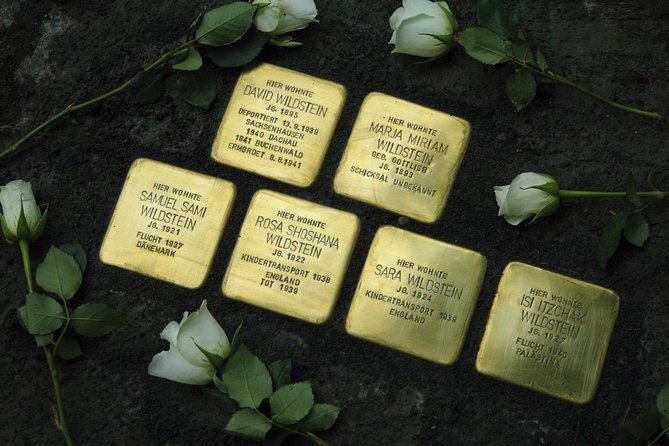
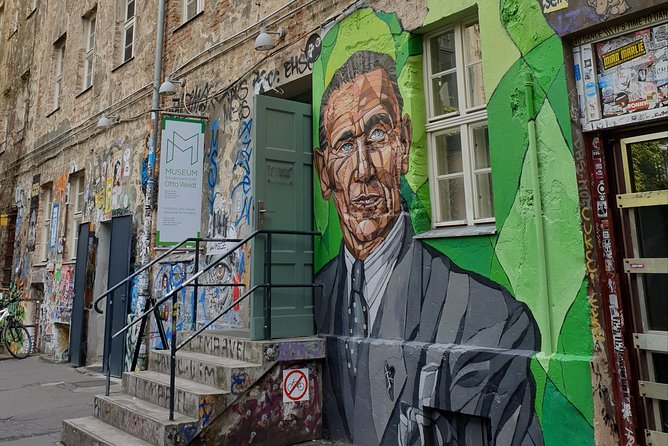
One stop I really value on this tour is Museum Blindenwerkstatt Otto Weidt. You’ll learn about Otto Weidt, sometimes called the Schindler from Berlin, who hired Jewish workers—including blind and disabled employees—to help save them from deportation to Nazi extermination camps.
The tour keeps it grounded by focusing on the original location of the factory owned by Weidt. That matters. When survival stories are tied to an actual workplace, the lesson feels less like legend and more like real-life decision-making under impossible pressure.
Expect around 15 minutes here. It’s long enough to understand the role he played, but short enough to keep the pace moving through a day that already carries a lot emotionally.
New Synagogue (Neue Synagoge) and Centrum Judaicum: Architecture as a Signal
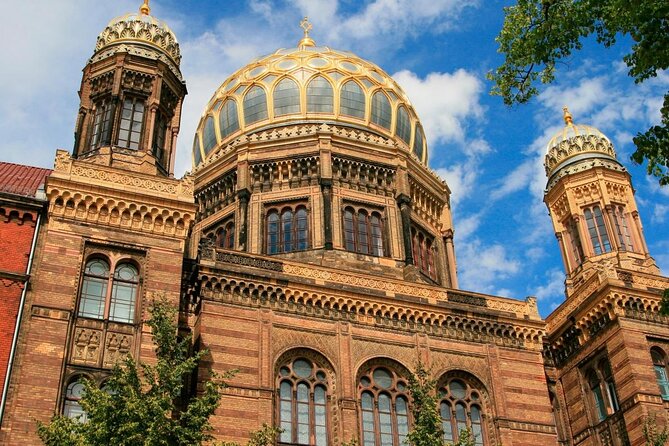
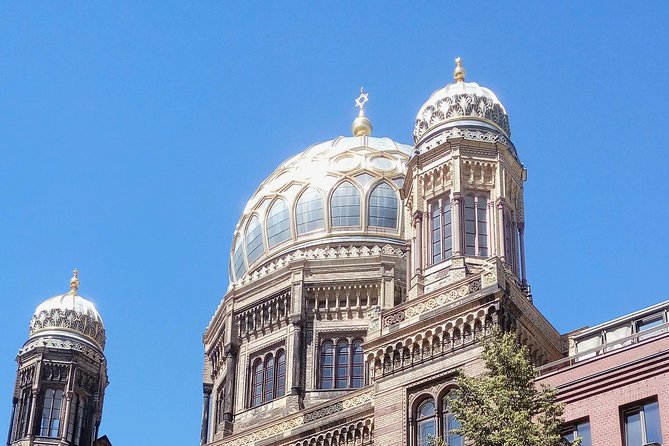
At Stiftung Neue Synagoge Berlin – Centrum Judaicum, you’ll reach one of Berlin’s most significant Jewish landmarks: the New Synagogue. Built in 1866, it seated 3,200 people and was described as the largest Jewish place of worship in Germany at the time.
The guide frames the synagogue as more than a building. It was a symbol of a thriving Jewish community, which helps you see why losing it (and what followed) wasn’t only cultural—it was structural, social, and personal.
This is about 10 minutes. You won’t have time to do a long museum-style visit, but you’ll leave with a clear sense of what the building represented before Nazi persecution hollowed out community life.
Old Jewish Cemetery: What’s Left When the Gestapo Came
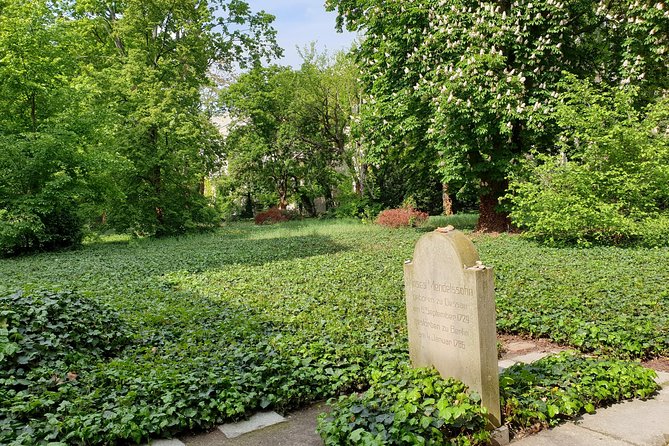
The tour ends with the Alter Judischer Friedhof (Old Jewish Cemetery) at Hamburger Straße. The cemetery is described as the oldest recognisable cemetery in inner-city Berlin, but here you’re seeing a place that has been destroyed during the Nazi period by the Gestapo.
This stop is about 10 minutes. It doesn’t try to overwhelm you with artifacts, because sometimes the lesson is the absence itself—what gets erased, what gets vandalized, and what’s left for later generations to remember.
If you’ve ever wondered why Berlin can feel both beautiful and unsettling at the same time, this is one reason. The city carries layers—some preserved, some deliberately broken.
The Tour Pace, Walking Load, and Weather Reality
This is a 3-hour experience. In a city like Berlin, that’s a fairly tight schedule, and the route includes multiple stops with short walking segments between them. Wear shoes that work on sidewalks and cobbles. Even on calm days, you’ll be moving.
The tour operates in all weather conditions, so dress for rain and cold when needed. The good news is that the stops are distributed so you get periods of standing, looking, and listening rather than only long stretches on the move.
Food and drinks aren’t included, so plan for a snack break either before or after. If you tend to get hungry while you read signs and listen closely, bring a bottle of water and keep an eye on your energy. This topic asks for attention.
Getting There: Public Transport (and a Simple AB Plan)
Transportation to and from attractions isn’t included, so you’ll handle it yourself. The tour suggests buying a Berlin day card for zones AB. That’s practical for a self-contained outing like this, especially since the route begins at Potsdamer Platz and finishes at Hackescher Markt.
One more practical point: the meeting point and route are near public transportation, so you’re not locked into a complicated transfer plan. You can also use the end point as your pivot—Hackescher Markt is an easy jumping-off place for continuing your day.
Price ($27.87): Why This One Feels Like Real Value
At $27.87 per person for a 3-hour guided experience in Italian, this is priced like a solid deal for what you get. The value isn’t just the guide time. The tour information says local taxes are included and that multiple stops have admission free—so you’re not paying extra at every memorial.
You’re also buying into a format that keeps the group size capped at 20. In practice, that usually means less “headphones on, eyes forward” crowd control and more chance to ask the guide about what you’re seeing.
The only cost you should budget for is the public transport day ticket (zones AB) and whatever you want for food and drink.
Who Should Book This (and Who Might Want to Think Twice)
This tour is a strong fit if you:
- want Nazi history anchored in places you can actually stand in
- prefer a guided, Italian-language explanation rather than a self-guided audio route
- like structured walks where the story makes sense stop to stop
- appreciate resistance history and Jewish history as connected themes, not separate checklists
Think twice if you:
- know you struggle with emotionally intense topics
- can’t focus well for 3 hours when the subject matter is bleak
- need a lot of sightseeing “relief time” between memorials
My Take: Should You Book Berlin during Nazism in Italian?
If you want one tour that gives you both structure and real Berlin specificity, yes, book it. The itinerary isn’t trying to sensationalize. It uses the city’s actual locations—memorial centers, a T4 killing program remembrance, the Anhalter Bahnhof transport site, and core Jewish landmarks—to build a story you can remember.
I especially like that the tour balances major historical themes with lesser-known Nazi crimes. You also get to do it in Italian, and based on guide feedback you’ll likely get explanations that are clear and engaging. (Guides on this company roster include people like Lorenzo, Silvio, Fabio, Vita, and Federica, who were singled out for being prepared and able to keep people focused.)
Just go in with the right mindset. This isn’t light entertainment. It’s education with a pulse.
FAQ
How long is the Berlin during Nazism tour in Italian?
The tour lasts about 3 hours.
Where does the tour start?
It starts at Potsdamer Platz 10, 10785 Berlin. Look for the blue bicycle of Vive Berlin Tours.
Where does the tour end?
It ends at Hackescher Markt, 10178 Berlin.
Is the guide’s language Italian?
Yes. The tour includes a guide in Italian.
How big is the group?
The tour has a maximum of 20 travelers.
Are admission tickets included for the stops?
Admission tickets are listed as free for the tour stops included.
What’s included in the price?
Included are local taxes, a professional guide, and the guide in Italian.
What is not included?
Transportation to and from attractions is not included, and you’ll also need to cover food and drinks. A tip for the guide is optional.
Do I need a public transport ticket?
Yes. The tour notes you should buy a day card for public transport in zones AB.
Does it run in bad weather?
Yes, it operates in all weather conditions, so dress appropriately.
Is free cancellation available?
Yes, you can cancel up to 24 hours in advance for a full refund.
More Tours in Berlin


More Tour Reviews in Berlin
Round out your days in Berlin
Tours, compared.
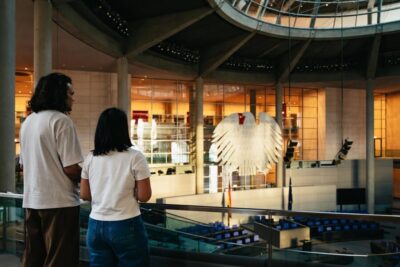 ★ 4.7Reichstag, Dome and Government District Guided TourFrom $1818,288 reviews
 ★ 4.31-Hour City Tour by Boat with Guaranteed SeatingFrom $2516,993 reviews
 ★ 4.4Boat Tour Along the River SpreeFrom $3411,252 reviews
 ★ 4.3Hop-on Hop-off Bus Tour with Live CommentaryFrom $228,579 reviews
 ★ 4.6Reichstag, Plenary Chamber, Cupola & Government TourFrom $188,422 reviews
 ★ 4.9Third Reich & Cold War Guided Walking TourFrom $238,378 reviews
 ★ 4.9Discover Berlin Walking TourFrom $235,998 reviews
 ★ 5.0Sachsenhausen Concentration Camp Tour in EnglishFrom $365,711 reviews