
REVIEW · TOURS
Berlin in a Day Compact Tour
One day in Berlin can feel like sprinting. This compact tour gives you a smarter route through the city’s biggest turning points, with a private guide and a pace that actually works. You’ll move from empire to dictatorship to democracy, then back into reunification-era change, all while the guide explains what you’re seeing and why it mattered.
Two things I especially like. First, the tour is built around free admission at the major stops listed, so you’re not scrambling for tickets while you’re sightseeing. Second, it’s private (up to 8), which makes it easier to ask questions and get explanations at the right level, whether you’re an adult on a short stay or bringing kids.
One drawback to consider: this is a 6-hour run of emotionally heavy sites mixed with lots of walking. Plan to take it slow at the Holocaust Memorial and the Berlin Wall remains, and if you need a break, you can build in a lunch stop during the day.
In This Review
- Key things that make this Berlin day tour work
- A tight 6-hour route that covers Berlin’s biggest themes
- Reichstag to Brandenburg Gate: symbols of power, fracture, and unity
- Holocaust Memorial and Berlin Wall remains: remembering what should never repeat
- Potsdamer Platz and Sony Center: how Berlin reinvented itself
- Checkpoint Charlie: Cold War tension in one place
- Hackescher Markt: the former East Berlin that feels like Berlin today
- Unter Den Linden and Alexanderplatz: the streets that show the city’s scars
- Museum Island ending: domes, reconstructed spaces, and a good launch point
- Price and value for a private up to 8 group
- Timing, walking, and how to get the most out of 10 stops
- Who should book this Berlin in a Day compact tour
- Should you book it?
- FAQ
- How long is the Berlin in a Day Compact Tour?
- What time does the tour start?
- Is this tour private?
- What group size is this tour priced for?
- What language is the tour offered in?
- Are admission tickets included for the stops?
- Does the tour provide tickets on a phone?
- Can I get hotel pickup?
- What physical fitness level is recommended?
- Is free cancellation available?
Key things that make this Berlin day tour work
- Private group of up to 8: easier conversation and more flexibility than a big bus group
- Six hours, timed to major landmarks: ten stops without feeling like nonstop sprinting
- Free admission at each listed stop: you can focus on the experience, not ticket logistics
- Cold War storytelling tied to the exact locations: Checkpoint Charlie and the Wall section come with context
- Family-friendly explanations are possible: guides can pitch the history so kids get it
- Ends near Museum Island and Alexanderplatz: you finish where it’s easy to keep exploring
Still narrowing down your days in Berlin? Here are more tours to weigh up.
- Berlin: Reichstag, Dome and Government District Guided Tour★ 4.7 · 18,288 reviews
- Berlin: 1-Hour City Tour by Boat with Guaranteed Seating★ 4.3 · 16,993 reviews
- Berlin: TV Tower Standard Entrance Ticket★ 4.4 · 15,883 reviews
- Berlin: Boat Tour Along the River Spree★ 4.4 · 11,252 reviews
A tight 6-hour route that covers Berlin’s biggest themes
Berlin has layers. The easiest way to wrap your head around them is to walk a route that links political power, wartime memory, and reunification changes. This tour does that in about 6 hours, starting at 10:00 am, with a guide who ties each location to the story it represents.
The structure matters. The stops aren’t random photo ops; they’re arranged so one theme leads into the next. You start with government symbolism, then shift to memory of Nazism, then to Cold War confrontation, and finally to the streets and squares that show Berlin’s rebuilding.
Also, you get English interpretation and a professional private guide for just your group. If you like asking questions, this format is built for it.
Reichstag to Brandenburg Gate: symbols of power, fracture, and unity

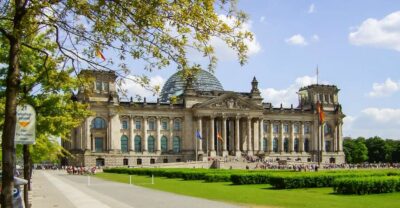
Your day begins at the seat of the German Parliament, the Reichstag. The key point here isn’t just the building; it’s the meaning. Your guide walks you through how the Reichstag reflects Berlin’s turbulent history, moving from empire to republic to dictatorship and then democracy.
Then you get the famous glass dome symbolism explained. That’s one of those “looks cool from outside” moments that becomes much more interesting once someone connects it to Germany’s democratic identity and transparency.
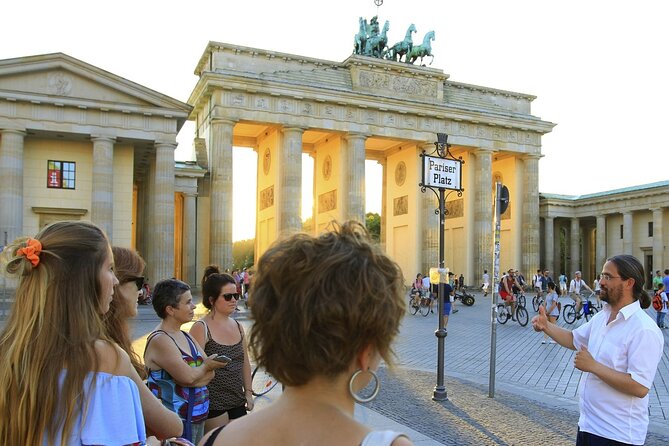
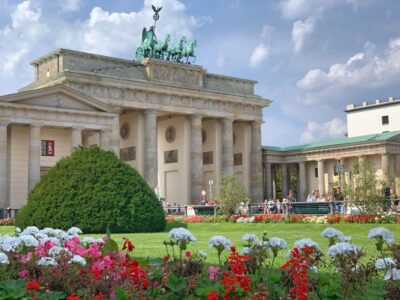
From there, you head to the Brandenburg Gate. This one’s instantly recognizable, but the guide makes it more than a postcard. You learn how it shifted from a Cold War symbol of division to a marker of unity and freedom once Germany changed direction.
A practical tip: spend a little extra time letting the meaning land. The gate and the Reichstag are easy to photograph fast, but they’re more powerful when you pause and connect their history.
Holocaust Memorial and Berlin Wall remains: remembering what should never repeat
Next comes the Holocaust Memorial (Memorial to the Murdered Jews of Europe). Even with a short time allocation, this stop is about emotional accuracy and respect. Your guide explains the stories tied to the site and frames it as a Berlin symbol remembering the greatest crime committed by the German state during Nazism.
If you’re sensitive to heavy history, keep your expectations realistic. You will not “solve” this topic in 15 minutes. What you can do is let the guide’s framing set you on the right path, then take a quiet moment for yourself as you move through the memorial space.
Later in the tour, you’ll see the Memorial of the Berlin Wall, including original remains of the wall. Here the explanation focuses on division and surveillance, then connects to the peaceful revolution that led to its fall. This pairing works well because you go from state crime and memory to how another system of control physically shaped daily life.
I’d treat the Wall stop as your “slow down” moment. Stand where you can read the context your guide provides, then decide how much more you want to absorb on your own after the tour.
Potsdamer Platz and Sony Center: how Berlin reinvented itself
Berlin loves reinvention, and Potsdamer Platz is one of the clearest examples you’ll see in a short span. You start with its past as a 1920s entertainment hub, then move into the Cold War reality of the area as a kind of no man’s land. The guide explains the dramatic transformation that followed.
Next you visit the Sony Center, described here as an architectural highlight of the newer Potsdamer Platz. The point is the contrast: this is Berlin showing what happens when the city pulls itself into the future after reunification.
Even if architecture isn’t your thing, this stop helps you understand a basic Berlin truth: change didn’t just happen politically; it reshaped the streets, built forms, and public spaces. You can see that logic play out as you move from the Wall-era story to modern design.
If the weather is bad, this is also a good area to handle it. The Sony Center zone gives you a chance to regroup while still staying in the flow of the tour.




Checkpoint Charlie: Cold War tension in one place
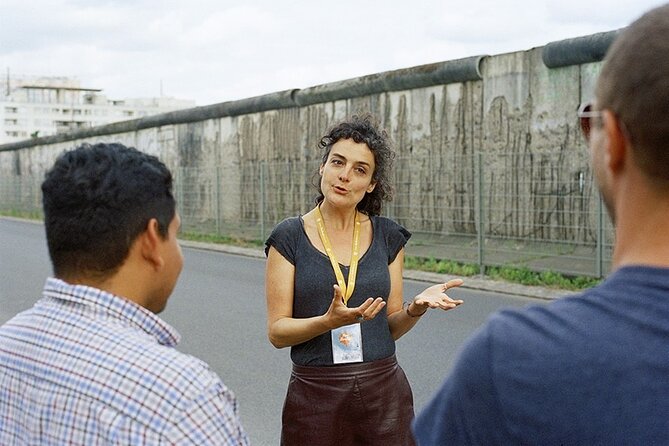
The tour includes Checkpoint Charlie, and it’s one of the stops where the guide’s storytelling really matters. This site symbolizes East and West confronting each other for four decades.
The guide shares dramatic escape stories and explains the tension that filled this place. Those escape stories are not just drama; they help you understand why this specific corner had outsized emotional weight for people trying to cross borders that were meant to stay closed.
It’s also a location where you’ll likely see tourists doing fast photos. If you want this stop to be more meaningful, keep your focus on what the guide says you’re actually standing next to, and how that local tension connected to the bigger Cold War system.
Hackescher Markt: the former East Berlin that feels like Berlin today
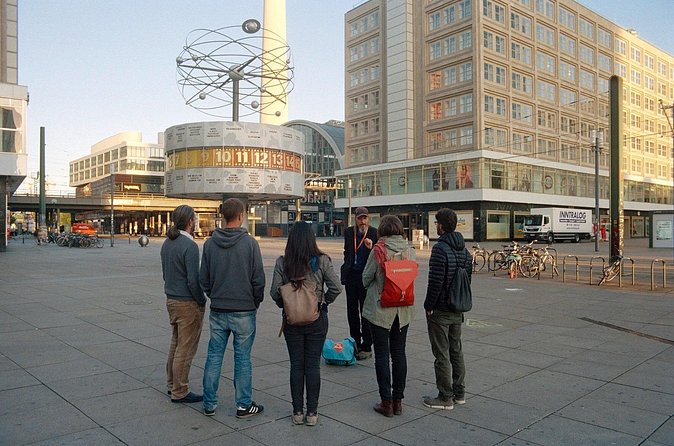
After the Cold War heavyweights, the route shifts toward a more human-scale Berlin at Hackescher Markt. This is described as a lively square in the former East Berlin, known for its courtyards, galleries, and nightlife.
That combination matters. It helps you see that Berlin wasn’t only divided and controlled; it also developed culture and street-level life inside those constraints. Your guide introduces how this area fits into Berlin’s cultural and urban transformation.
This stop is short, but it gives you a sense of where to wander after the tour if you want a more “in-the-neighborhood” vibe. If you like finding courtyards and small lanes off the main street, this is where you’ll spot that kind of Berlin texture.
Unter Den Linden and Alexanderplatz: the streets that show the city’s scars
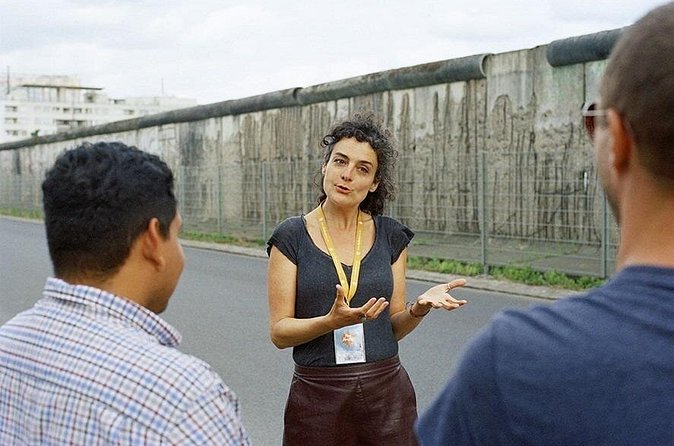
You then walk through Unter Den Linden, a major avenue with an imperial legacy. Your guide shows how it was once the access road to the emperor’s palace and helps you recognize different periods of construction.
Just as important, you learn about the wounds left by the war. This is one of those Berlin moments where you can see history in layers, not in a museum label.
Next comes Alexanderplatz, described as a central square in former East Berlin, shaped by socialist architecture and known for its TV tower and vibrant urban life. The guide explains how it evolved from a medieval market to a socialist showpiece.
Even in just 10 minutes, this stop gives you a mental map: where the city’s “East Berlin identity” concentrated, and how that identity still anchors the present-day skyline and street rhythms.
Museum Island ending: domes, reconstructed spaces, and a good launch point
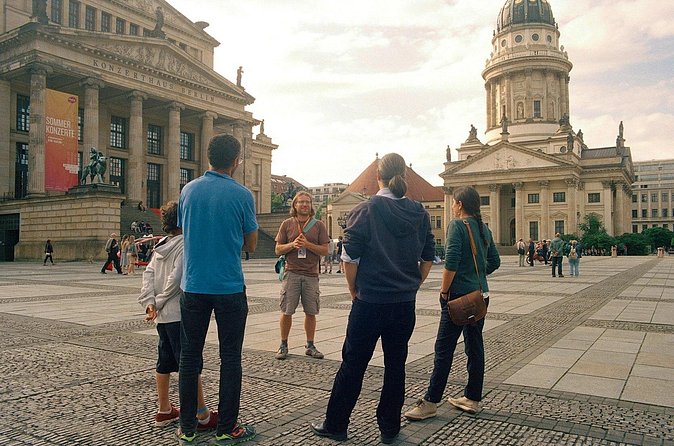
The tour ends near Alexanderplatz on Museum Island. You get a look at major anchors like the Protestant Cathedral (Berliner Dom) and the reconstructed Humboldt Forum, framed as a glimpse into Berlin’s architectural heritage.
This ending is smart for two reasons. First, you finish in an area packed with cultural context, so the day’s political and historical stories can naturally connect to art, architecture, and heritage. Second, it’s easy to keep moving afterward, since you’re still close to a central hub.
If you want to extend your day, Museum Island gives you a logical “next step” without forcing you to take a long transit journey right after the tour.
Price and value for a private up to 8 group
The price is $482.52 per group, up to 8 people, for about 6 hours with a private professional guide. That pricing can be a bargain if you’re traveling with family or a small group, because you’re splitting the cost.
Here’s the math you can use:
- If you fill all 8 spots, it’s about $60 per person.
- If you’re only 2 people, it’s about $241 each.
So the value depends on your group size. For solo travelers, this can be pricier than shared tours, but it buys you the private pacing and question time that big groups rarely deliver. For families and friends, it becomes much more reasonable fast.
Also, the tour lists free admission for every stop in the route. That matters because it keeps the day predictable and prevents spending time (or money) on ticket lines at the wrong moments.
One more practical point: you get a mobile ticket and optional pickup, which cuts down friction on a day where your schedule is already tight.
Timing, walking, and how to get the most out of 10 stops
This is a compact highlights route with multiple stops and short time slots at each location. That’s good for first-timers, but it also means you should set your expectations: you’re learning the “why,” not completing a deep study of each site.
The tour should work for moderate physical fitness. You’ll be on your feet in multiple neighborhoods, and you’ll likely spend time walking between the sights.
If you want the best results, do this mental checklist before you go:
- Wear comfortable walking shoes, especially for the Wall and memorial areas.
- Save your longest questions for when the guide has you grouped together.
- If you get overwhelmed, it’s okay to step back at the Holocaust Memorial and come back when ready.
And yes, you can plan a lunch break. Build it in if you need one, because it makes the afternoon-history portion easier to digest.
Who should book this Berlin in a Day compact tour
This tour is a strong match if you:
- Have a short stay and want an organized first pass through Berlin’s core landmarks
- Want a guide who ties symbolism to the place you’re standing in
- Travel with family or a small group, since the price is per group up to 8
- Prefer private pacing and real conversation over big-bus touring
It’s also a good pick if you care about understanding Berlin beyond the surface. The route explicitly connects government symbolism (Reichstag, Brandenburg Gate) with memory (Holocaust Memorial) and living geography of control and change (Wall, Checkpoint Charlie, reconstructed/repurposed areas).
Should you book it?
If you want a structured Berlin “one day, many meanings” introduction, I’d book this. The best reason is the way it links major sites into a coherent storyline, with a private guide and short, manageable visits at each stop.
I’d think twice if you need long, quiet time at memorials or if you’re hoping for a slow museum day. This is a tour that moves, and it covers heavy material in a condensed format.
FAQ
How long is the Berlin in a Day Compact Tour?
It’s listed as about 6 hours.
What time does the tour start?
The start time is 10:00 am.
Is this tour private?
Yes. It’s a private tour/activity, and only your group participates.
What group size is this tour priced for?
The price is per group up to 8 people.
What language is the tour offered in?
It’s offered in English.
Are admission tickets included for the stops?
The tour information lists admission ticket free for the stops included.
Does the tour provide tickets on a phone?
Yes. A mobile ticket is included.
Can I get hotel pickup?
Pickup is offered. If you want pickup, share your hotel name and address so the guide can meet you there.
What physical fitness level is recommended?
Travelers should have a moderate physical fitness level.
Is free cancellation available?
Yes. You can cancel for free up to 24 hours in advance for a full refund.
More Tours in Berlin


More Tour Reviews in Berlin
Round out your days in Berlin
Tours, compared.
 ★ 4.7Reichstag, Dome and Government District Guided TourFrom $1818,288 reviews
 ★ 4.31-Hour City Tour by Boat with Guaranteed SeatingFrom $2516,993 reviews
 ★ 4.4Boat Tour Along the River SpreeFrom $3411,252 reviews
 ★ 4.3Hop-on Hop-off Bus Tour with Live CommentaryFrom $228,579 reviews
 ★ 4.6Reichstag, Plenary Chamber, Cupola & Government TourFrom $188,422 reviews
 ★ 4.9Third Reich & Cold War Guided Walking TourFrom $238,378 reviews
 ★ 4.9Discover Berlin Walking TourFrom $235,998 reviews
 ★ 5.0Sachsenhausen Concentration Camp Tour in EnglishFrom $365,711 reviews