
REVIEW · TOURS
Berlin: Moabit Prison Tour of Crime and Punishment
Berlin’s prison walls still tell stories. This 2-hour, all-outdoor guided walk through Moabit lets you visit the remaining sites of two former prisons, and connect them to real political drama: the plot linked to 20 July 1944, the aftermath for resistance, and the unbelievable 1976 escape from a women’s prison. It also helps you understand why Moabit mattered as more than a backdrop, by tying the prisoner narratives to the character of one of Berlin’s older working-class neighborhoods.
I especially like how the tour moves across time. You’re not stuck in one era. You see how the prison site developed through the 19th and 20th centuries, then you trace how resistance and radical left politics played out inside those walls. I also like that the story doesn’t end at the gate—this area is used for film productions, including the TV show Babylon Berlin, which adds a strange contrast you can feel in your feet as you walk.
One thing to consider: this tour is completely outside, rain or shine, so plan for weather and bring shoes you don’t mind getting a bit dusty on an urban walk.
In This Review
- Key highlights you’ll notice on the walk
- Moabit’s prison sites in a city walk
- Where the tour starts by Berlin Central Station
- Moabit Historical Park cell prison: walls, time periods, and stories
- 20 July 1944: resistance inside the prison story
- Women’s prison and the 1976 escape that shocked Berlin
- RAF after 1976, film sets, and why the place still matters
- Lehrter Straße, working-class Moabit, and Klara Franke
- Price and timing: is $29 worth two hours?
- What to pack for an all-outdoor walk
- Who should skip this tour?
- Should you book this Moabit prison tour?
- FAQ
- Where does the tour start?
- How long is the tour?
- Is the tour indoors or outdoors?
- What language is the tour offered in?
- What is the price?
- Where does the tour end?
- Is the tour wheelchair accessible?
- Is it suitable for children?
- Can I cancel or change my plans?
Key highlights you’ll notice on the walk
- Two prison sites in one tour: you’ll move from the cell prison park to a former women’s prison area
- 20 July 1944 connections: you’ll hear how key plot members were tied to the site
- A 1976 prison break: four left-wing terrorists escaped from the women’s prison, and the story kept reverberating
- Resistance beyond headlines: you’ll learn about the left-wing militant world and how it gradually faded
- Moabit’s neighborhood layer: Lehrter Straße and the local legend Klara Franke bring the area’s communal side into focus
- A modern setting: parts of the former prison complex are used as a film set, including Babylon Berlin
Still narrowing down your days in Berlin? Here are more tours to weigh up.
- Berlin: Reichstag, Dome and Government District Guided Tour★ 4.7 · 18,288 reviews
- Berlin: 1-Hour City Tour by Boat with Guaranteed Seating★ 4.3 · 16,993 reviews
- Berlin: TV Tower Standard Entrance Ticket★ 4.4 · 15,883 reviews
- Berlin: Boat Tour Along the River Spree★ 4.4 · 11,252 reviews
Moabit’s prison sites in a city walk
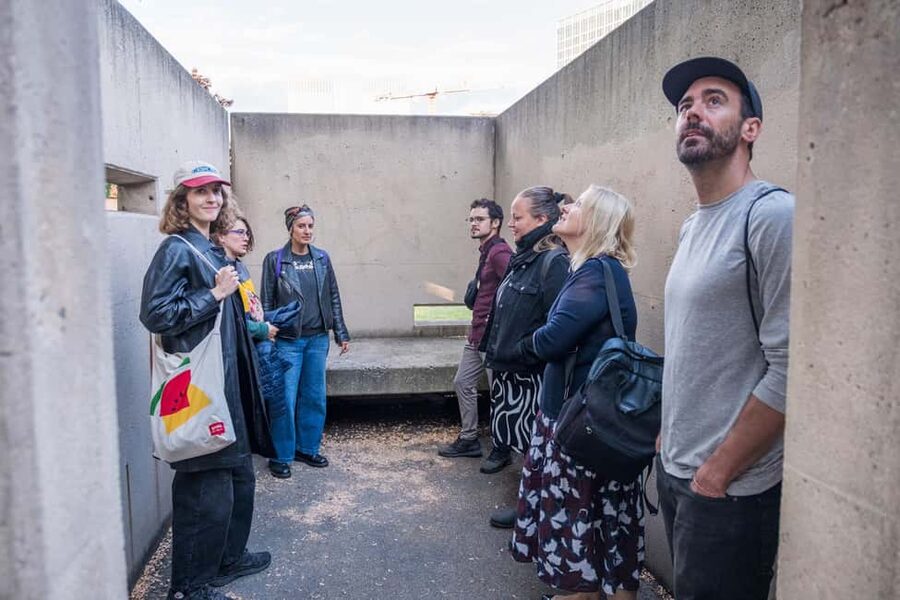
Moabit is the kind of Berlin district where you can go from ordinary streets to something heavy in a few minutes. That’s what I find powerful here: you’re not visiting a museum stuffed behind glass. You’re walking through a real neighborhood where the past leaves physical traces—ruins, walls, and site layouts that still shape how the space feels today.
What makes this tour work is the way it turns place into timeline. The guide links what you see—remaining structures, outlines, and spatial clues—to what happened across decades. You start with the cell prison area and then transition into the story of women prisoners and militant politics. Even if you already know the big dates, the route helps the events make more sense because you’re physically moving through them.
And yes, there’s also that Berlin oddness factor: a former prison site used for filming. Walking through a location tied to repression and then hearing how it became a production set gives you a jolt you can’t get from a brochure.
Where the tour starts by Berlin Central Station
You’ll meet at Lehrter Straße 4, by the bus stop called Seydlitzstr. Look for your guide holding an orange umbrella. This is set up for easy finding if you’re already near Berlin Central Station, which you likely are given how centrally Moabit sits.
Getting the start point right matters because the tour is outside and you’ll want to begin without rushing. I’d recommend arriving a few minutes early, especially if you’re looking around for that umbrella in a crowded transit area.
The tour’s finish is in Berlin Mitte, at the Klara-Franke-Spielplatz, about a 10-minute walk from Berlin Central Station. That makes the end convenient: you can keep exploring without having to backtrack across the city.
Moabit Historical Park cell prison: walls, time periods, and stories
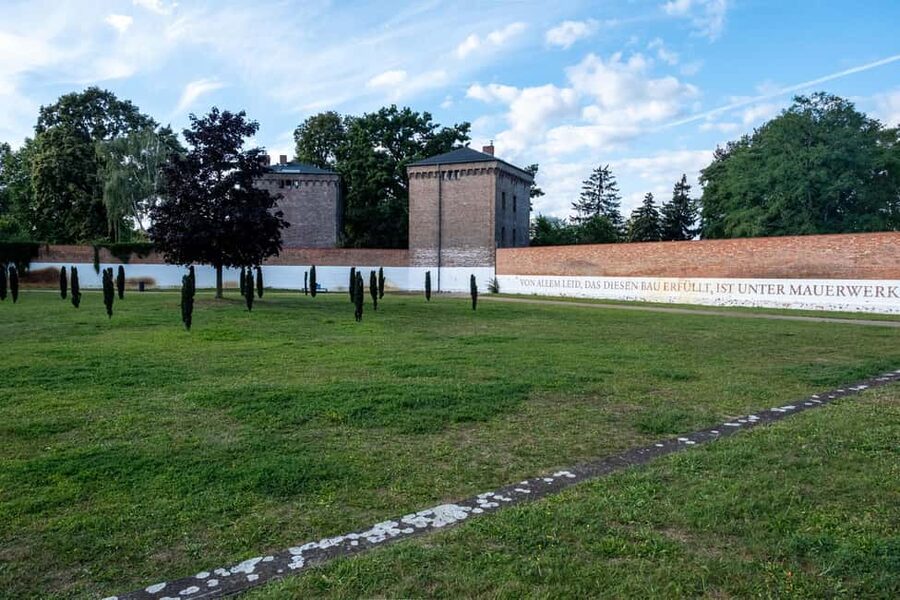
The first stop is the Moabit Historical Park Cell Prison, a peaceful park today but located on the site of a former prison. The contrast is immediate. You’re standing where people were confined, yet the space now reads as a calm pocket in the middle of the city.
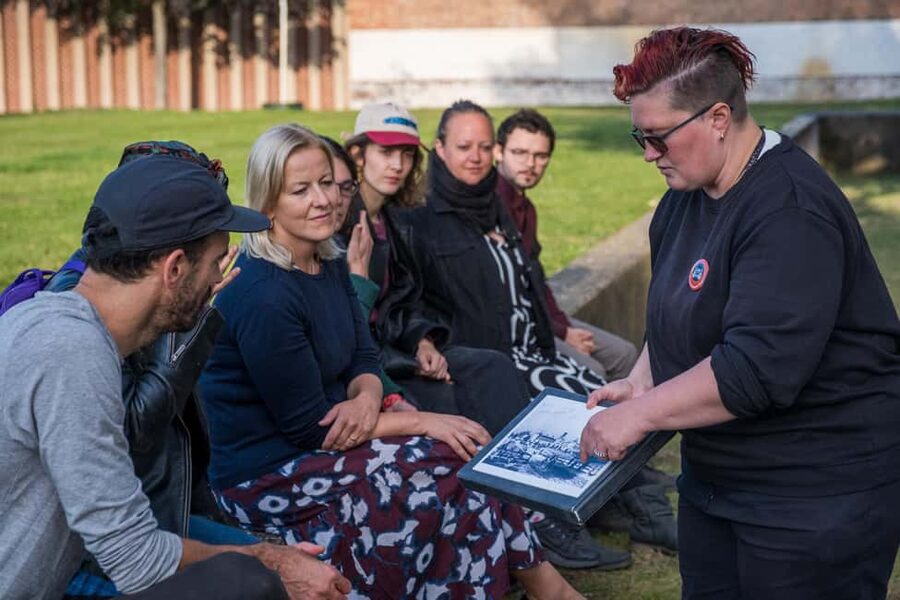
What I like here is how the guide uses the site itself as evidence. You’ll see the ruins of the original prison walls and then follow how the facility developed through the 19th and 20th centuries. That sounds basic, but it’s actually the key to understanding why prisons weren’t static. They evolved—architecturally and politically—and the tour helps you connect those shifts to changing regimes and changing targets.
You’ll also hear stories of people jailed there, with special emphasis on key plot members connected to the assassination attempt on Hitler on 20 July 1944. Even if you only know that date from history class, the fact that the prison is part of the story makes it feel more real than a timeline in a book.
Practical note: because this area is a park and outdoors, you’ll feel the walking rhythm more than the “tour museum” rhythm. The pace depends on the guide’s storytelling, but you’ll likely be moving steadily while also stopping to orient yourself with what you’re seeing.
20 July 1944: resistance inside the prison story

This is the part of the tour that people remember most, because it connects the prison landscape to a defining moment of Nazi-era resistance. You’ll hear how the guide ties key members of the 20 July 1944 assassination plot to the prison site.
I like that the tour frames it as resistance under pressure, not as abstract heroics. You get a sense of how repression shaped the lives of those who opposed the Nazi regime. The guide doesn’t just name the event; you’re given context for why imprisonment was part of the regime’s machinery and why resisting it carried enormous risk.
This section also sets up the emotional logic of the whole walk. Once you understand how resistance fighters ended up here, the later stories about left-wing militants and the 1970s escape land with more weight, not less.





Women’s prison and the 1976 escape that shocked Berlin

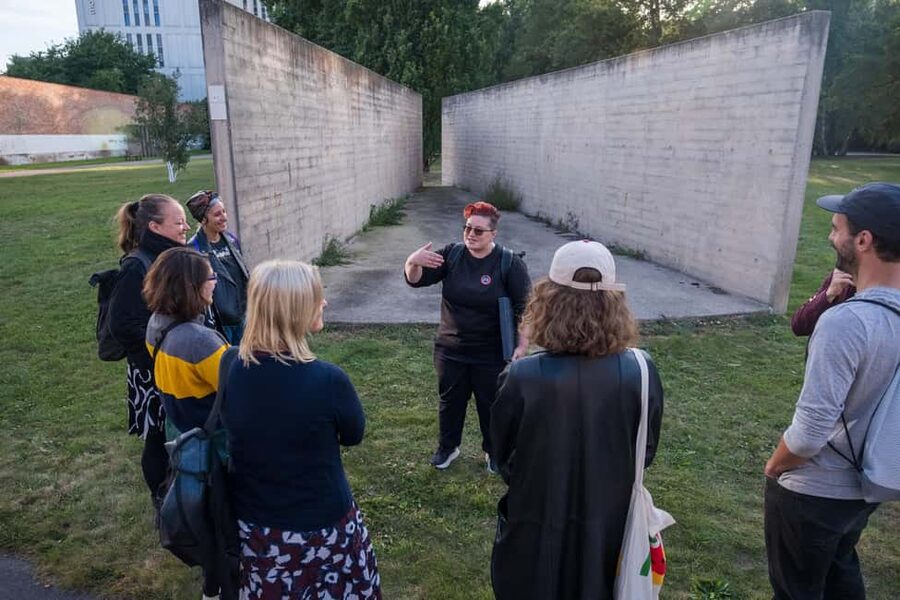
After the cell prison park, the tour shifts to a former women’s prison area. This is where the narrative turns from wartime resistance toward the postwar world of radical left politics.
The standout moment: this women’s prison made national headlines when four left-wing terrorists escaped in 1976. The guide presents it as an astonishing break, and it changes the tone of the tour. You’re no longer just thinking about punishment. You’re thinking about strategy, planning, and the chaos that follows when confinement fails.
This part of the walk is useful even if you don’t consider yourself a political-history person. The reason is simple: the physical setting makes the escape feel less like a newspaper item and more like a chain of decisions that played out in space—where people were, how movement worked, and why security matters.
If you’re the type who likes stories with momentum, this is the section to focus on. Listen closely when the guide links the prison layout to what the escape meant. It’s the kind of connection you can feel working in real time as you stand in the area.
RAF after 1976, film sets, and why the place still matters
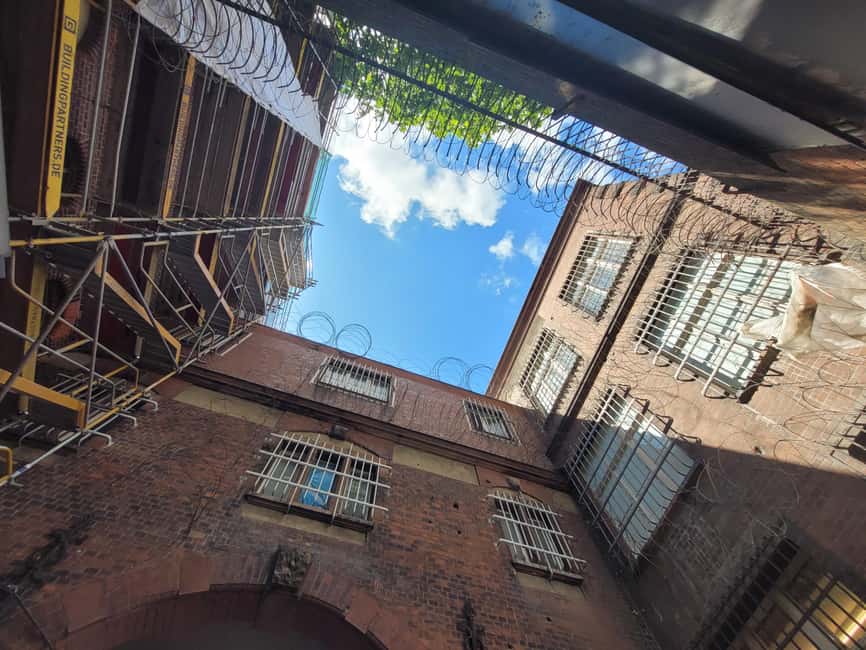
The tour doesn’t stop at the headline escape. It also explains how the prison site connects to the broader story of the Red Army Faction and the radical left student movement it emerged from. You’ll hear about the slow ending of this militant organization after 1976.
I appreciate this framing because it keeps the story from turning into pure sensationalism. The guide treats the escape as one chapter in a longer arc—one that includes radicalization, imprisonment, and gradual decline. That matters if you want the full picture rather than a single dramatic event.
Then comes the modern twist. The site now serves as a set for film productions, most recently featuring in the TV show Babylon Berlin. That detail works well on this tour because it forces you to think about how places get re-used by culture. You can enjoy the craftsmanship of filming, sure. But you’ll also notice the discomfort of watching a dramatic TV production occupy a space tied to repression.
That’s part of the value: the tour gives you context so you can see how art and history overlap, not just how they entertain.
Lehrter Straße, working-class Moabit, and Klara Franke
Between the prison stops, the tour also takes you into the story of the neighborhood. Lehrter Straße once functioned as an undesirable frontier of the sprawling city, and the guide uses this to explain how Moabit developed as a working-class area.
This is the section that turns the tour from political history into place-making. You’re not only learning about people who were locked up. You’re learning about the community around the prison. That’s important because prisons don’t sit in isolation. They affect local life, and local life shapes what you remember about the area.
You’ll also hear about a local legend: Klara Franke. The tour connects her to the activism and resistance threads in the district, giving you a human scale beyond the prison gates. By the time you reach the tour’s finish point at Klara-Franke-Spielplatz, the name isn’t just a stop on a map. It feels like a payoff: the story returns to the street level.
Price and timing: is $29 worth two hours?

At $29 per person for a 2-hour guided experience, the value is about what you get for your time: two distinct former prison sites, a tight narrative connecting major moments like 20 July 1944 and 1976, plus the neighborhood layer of Moabit and Klara Franke.
This is the kind of tour where “cheap” isn’t the goal. It’s priced for a live guide and for the work it takes to explain complex political storylines in a way you can follow on foot. If you want a quick, surface-level walk, this price won’t feel like a bargain. But if you want a guide who can connect dates to geography, $29 is pretty reasonable.
Duration note: the schedule runs about two hours total, with a guided walking portion around 1.5 hours. In practice, you’ll spend that time moving between key points and stopping to make sense of what you’re seeing.
Who this fits best:
- History-minded travelers who like stories grounded in specific locations
- People who want more than one era in a single walk
- Anyone who’s curious about Moabit as a working-class district, not only as a prison story
What to pack for an all-outdoor walk
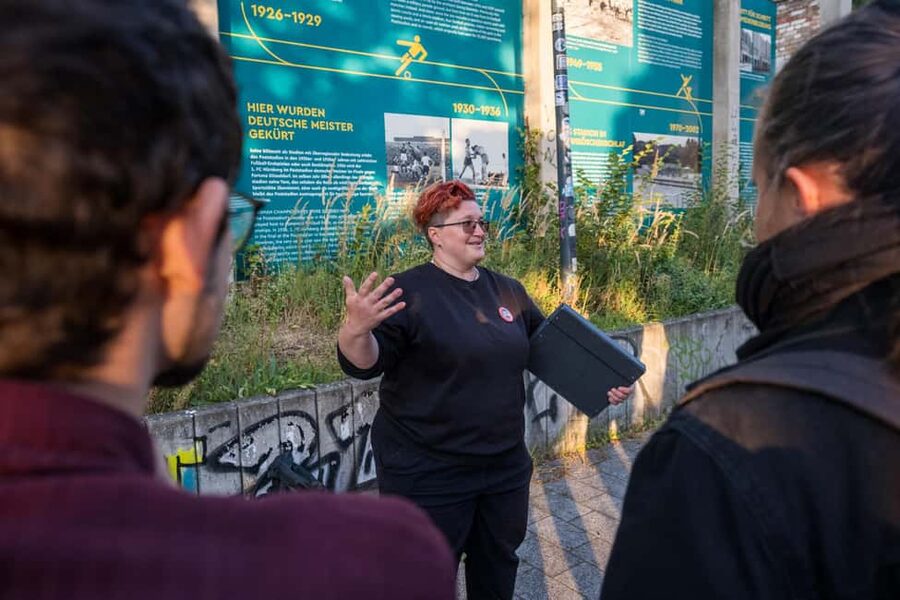
The tour happens completely outside, rain or shine. So bring what you’d bring for a Berlin day: weather-ready layers, and shoes that can handle a typical city walk and park paths.
There’s also a simple attention tip. In outdoor tours, your brain can drift because you’re seeing normal street life around you. I’d suggest you keep an extra-close focus during the transitions between sites—the guide’s pacing depends on you being ready to re-focus each time the story changes from cells to resistance to escapes to the neighborhood.
If you’re traveling with a group, this is also one to treat like a walking conversation rather than a photo-hunt. Some parts of the story land best when you pause, listen, and look at what the guide points out.
Who should skip this tour?
This one isn’t suitable for children under 10. That’s the right call here given the subject matter and the pace of political storytelling.
Also, if you strongly dislike political history or you’re looking for something purely light and scenic, you might find the themes heavy. The tour isn’t graphic, but it does deal with repression and radical militancy. If that’s your interest, great. If not, you’ll probably prefer a different Moabit walk.
Should you book this Moabit prison tour?
I think this tour is a strong booking choice if you want history that has a physical footprint. You’ll learn how the prison space developed across centuries, why 20 July 1944 matters in this location, what made the 1976 escape so shocking, and how the RAF story ties into the radical left student movement that fed it.
You’ll also walk away with something many prison tours miss: the neighborhood context. Moabit isn’t treated as an afterthought. The tour brings in Lehrter Straße and Klara Franke, so the final impression is not only about confinement, but about resistance and community memory.
Book it if you like guided storytelling on foot, and if you can handle an outdoor format. Skip it if you need a kid-friendly, casual sightseeing vibe or if you don’t want politically heavy themes.
FAQ
Where does the tour start?
You meet by the bus stop Seydlitzstr. at Lehrter Str. 4, at the northwestern corner of the Geschichtspark Ehemaliges Zellengefängnis Moabit. Look for your guide holding an orange umbrella.
How long is the tour?
The tour lasts about 2 hours total.
Is the tour indoors or outdoors?
It takes place completely outside, rain or shine.
What language is the tour offered in?
The live guide offers English and German.
What is the price?
The price is $29 per person.
Where does the tour end?
The tour finishes at Klara-Franke-Spielplatz, about a 10-minute walk from Berlin Central Station.
Is the tour wheelchair accessible?
Yes, the tour is wheelchair accessible.
Is it suitable for children?
It is not suitable for children under 10 years.
Can I cancel or change my plans?
You can cancel up to 24 hours in advance for a full refund. You can also reserve now and pay later to keep plans flexible.
More Tours in Berlin


More Tour Reviews in Berlin
Round out your days in Berlin


Tours, compared.
 ★ 4.7Reichstag, Dome and Government District Guided TourFrom $1818,288 reviews
 ★ 4.31-Hour City Tour by Boat with Guaranteed SeatingFrom $2516,993 reviews
 ★ 4.4Boat Tour Along the River SpreeFrom $3411,252 reviews
 ★ 4.3Hop-on Hop-off Bus Tour with Live CommentaryFrom $228,579 reviews
 ★ 4.6Reichstag, Plenary Chamber, Cupola & Government TourFrom $188,422 reviews
 ★ 4.9Third Reich & Cold War Guided Walking TourFrom $238,378 reviews
 ★ 4.9Discover Berlin Walking TourFrom $235,998 reviews
 ★ 5.0Sachsenhausen Concentration Camp Tour in EnglishFrom $365,711 reviews