
REVIEW · MUSEUM ISLAND & PERGAMON
Berlin’s Museum Island: A Self-Guided Audio Tour
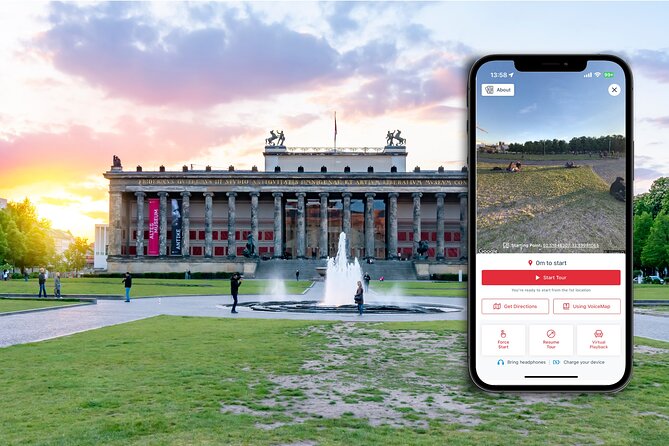
One hour can change how you read Berlin. This self-guided Museum Island walk uses GPS-triggered audio narrated by bestselling author Rory MacLean, turning the UNESCO site into a guided story you can follow at your own speed. You start on Schlossplatz beside the Lustgarten, then move through the layers of power, war, and the Age of Enlightenment that shaped Prussia and Europe.
I love that the audio plays automatically at the right time and place, so you are not fumbling with a guide on a schedule. I also like that it works with offline access through the VoiceMap app, which matters when your phone signal gets patchy around museums. The main drawback is tech-related: one recent experience shows the app may ask for an account setup or extra downloads, so it pays to sort everything out before you arrive.
In This Review
- Quick takeaways before you go
- Museum Island’s big idea in just 50 minutes
- Starting at Am Lustgarten 1: the square that frames everything
- Schlossplatz and the Berlin Palace: power, damage, and reinvention
- Crossing Schlossbrücke: spotting Prussia’s mindset in the details
- The architect’s vision and the Age of Enlightenment connection
- Pausing mid-walk: stepping into museum doors without losing the thread
- Altes Museum and the murals lost in 1944
- Ending at the Museum for Pre- and Early History
- Offline VoiceMap GPS: how to make sure it actually works
- Price and value: why $5 can be a smart move
- Who this self-guided audio tour suits best
- Should you book this Museum Island audio walk?
- FAQ
- How long is the Museum Island self-guided audio tour?
- Where do I start and where does the tour end?
- How much does the tour cost?
- Do I need museum tickets to do the tour?
- Does the audio work offline?
- What do I need to use the tour?
- Is it refundable if my plans change?
Quick takeaways before you go
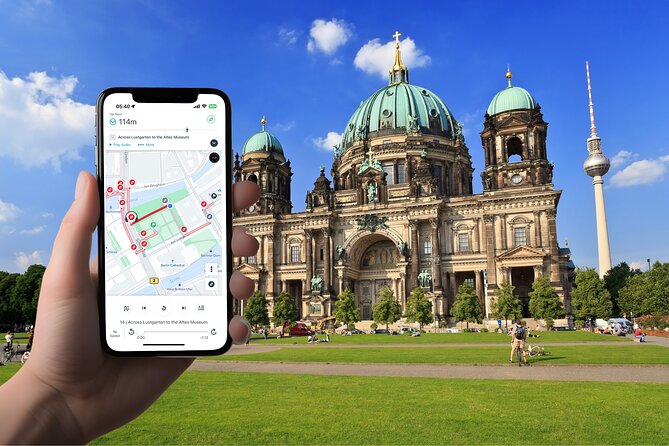
- GPS timing, not button-mashing: the audio is designed to start when you’re at the correct spot.
- Offline VoiceMap support: you get offline audio, maps, and geodata if you download properly.
- Rory MacLean narration: the walk connects architecture, rulers, and ideas through a single clear voice.
- Built-in stops for nearby museums: you can pause to enter institutions as you pass them.
- A strong thematic route: Prussian militarism and the Enlightenment are linked through the story of Frederick the Great and the Schloss.
- Short walk, real context: at about 50 minutes, it’s an easy way to understand what Museum Island represents.
Keep going on Museum Island
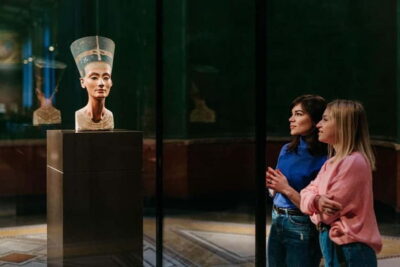
- Berlin: Museum Island Multiple Museum Entry Ticket★ 4.4 · 2,861 reviews
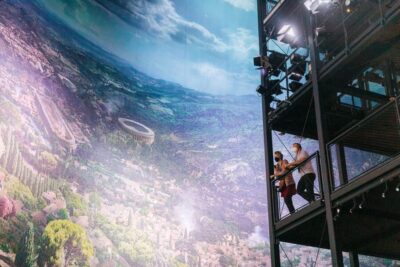
- Berlin: “Pergamonmuseum. The Panorama” Exhibition Tickets★ 4.6 · 1,245 reviews
- Berlin WelcomeCard: Museum Island & Public Transport★ 4.3 · 999 reviews
- Berlin: Museum Island Guided Walking Tour★ 4.9 · 38 reviews
Museum Island’s big idea in just 50 minutes

Museum Island is famous for being a UNESCO World Heritage site, but most people see it as a set of impressive buildings. This audio route treats the island like one long argument: how European power grew through ideas, institutions, and, yes, military ambition.
The timing is what makes it work. About 50 minutes is short enough that you’ll actually finish, yet long enough to connect landmarks to meanings—like why the rebuilt Schloss matters, and why figures such as Frederick the Great show up in the Enlightenment story.
Starting at Am Lustgarten 1: the square that frames everything
You begin at Am Lustgarten 1 (Schlossplatz/Lustgarten area), the place that for centuries functioned as Berlin’s seat of power. Even if you only skim the surroundings, the opening concept is clear: this walk is not starting at a museum door. It starts where rulers wanted their city to look and feel like authority.
From the start, the audio sets you up to notice symbolism. The narrator points to views and comparisons that link the area to famous European landmarks (including Westminster and St Paul’s) and even world-famous civic imagery like the White House, Smithsonian, and Pentagon. That might sound like a pop-culture shortcut, but it’s really a way to help your brain “map” what you’re seeing in familiar terms.
Schlossplatz and the Berlin Palace: power, damage, and reinvention

After you get oriented in the Lustgarten area, the walk shifts to the history of the Schloss and how it has been treasured and vilified at different times. This part matters because Berlin’s modern identity is tangled with its past, and the Schloss is one of the clearest places to feel that tension.
Then you zoom into a darker thread: the rebuilt Schloss is tied to the moment when Kaiser Wilhelm sent a million men to their deaths at Verdun, Ypres, and Passchendaele. The point here is not to re-litigate history for the sake of it. The point is to show how a setting can carry ideology forward, long after the original events are gone.
A practical benefit: because this is self-guided, you can linger where the story hits hardest, then move on when you’re ready.
Crossing Schlossbrücke: spotting Prussia’s mindset in the details
Once you cross Schlossbrücke, the audio starts pointing you toward features that reflect Prussia’s militaristic philosophy. The narration doesn’t treat the bridge as a neutral crossing. It frames it like a corridor where architecture and ideology share the same job: directing attention and reinforcing a worldview.
This section is where you’ll likely feel the “theme lock.” If you’ve ever toured Berlin and wished the buildings came with explanation beyond a quick label, this is the part that rewards you.
Tip for best results: keep your phone audio up just enough that you’re not straining, because the walk expects you to look up as the story refers to what you can see around you.
More guided walks through Berlin





The architect’s vision and the Age of Enlightenment connection
As you move along, the audio talks about keeping the history of the original building alive, including the architect’s vision tied to the rebuilt structure. It also connects this physical rebuilding to the broader intellectual currents of the Age of Enlightenment.
Frederick the Great shows up here for a reason. The walk uses his story as a bridge between two forces often treated separately: ideas of reform and progress, and the reality of power organized through state institutions. You’re not just hearing dates. You’re seeing how the same historical system could produce thinkers and soldiers under one umbrella.
If you like tours that explain why history makes sense (not just what happened), this is one of the stronger sections.
Pausing mid-walk: stepping into museum doors without losing the thread
One of the smartest parts of the experience is that it doesn’t force a “stand there and listen” rhythm. You can pause the audio tour anytime to enter the German Historical Museum or other institutions you pass along the Museum Island route.
That flexibility is a big value play. You can spend 10 minutes inside to check a specific gallery, then resume the walk and keep going with the story you already started. It helps you avoid the common problem of self-guided audio routes: either you keep walking and never look closely, or you stop too long and lose the narrative.
It also gives you a sensible way to match your energy level. If your feet or your attention span tap out, you can duck into a museum, reset, then continue when you’re ready.
Altes Museum and the murals lost in 1944
As you approach the museum portion of the walk, the audio highlights how many of Altes Museum’s great murals were lost in 1944. This is not just a fact drop. The story uses that loss to show how cultural spaces get reshaped by conflict—and how what remains influences how later generations interpret the past.
Then the narration adds something personal: you hear words spoken by a young 1850s factory worker describing his emotional first impression of the museum. That contrast—between a working-life viewpoint and the grand idea of museum culture—helps you understand who these institutions were built for, and who got left out.
If you’re hoping for more than sightseeing, this is the moment where the audio feels like it’s trying to make you see Museum Island as a lived place, not only a postcard.
Ending at the Museum for Pre- and Early History
The route concludes at the Museum for Pre- and Early History (Bodestraße 1-3). Ending here gives the walk a nice sense of downward time—so your final minutes echo the UNESCO framing: civilizations across ages, not only modern European power politics.
By the time you reach the end point, you should understand the island as a set of stories connected by themes: the rise of institutions, the power of states, and the ideas used to justify them.
Offline VoiceMap GPS: how to make sure it actually works
The audio is delivered through VoiceMap on your phone, using GPS to trigger plays automatically at the right locations. It also includes offline access to audio, maps, and geodata, which is a huge advantage for Berlin where your connection can be inconsistent.
Still, one important consideration came up in a user experience: the app asked for an account setup and additional downloads when the person reached the site, with no WiFi available. That’s a reminder that offline features often require a little prep first.
Here’s the practical way to reduce the risk:
- Download the tour audio before you leave (don’t assume it will work offline until you’ve confirmed it).
- If the app requests an account or extra components, do that earlier rather than at the starting square.
- Start the walk with a fully charged phone. This kind of GPS use can drain batteries faster than you expect.
If you do those basics, the GPS timing becomes one of the best parts of the whole plan—because you won’t be guessing which stop you reached.
Price and value: why $5 can be a smart move
At $5.00 per person, this is priced like a low-cost way to add meaning to a landmark area you’ll likely walk through anyway. The value is not that it replaces museum tickets. You still may want to enter museums separately.
The value is that you’re buying structure:
- A narrative link between power and ideas
- Location-based audio so you don’t drift
- Offline map support so you’re not stuck
- A manageable time commitment (about 50 minutes)
Think of it as a primer. You walk away understanding why Museum Island is UNESCO-worthy beyond “cool buildings,” and you’ll be more prepared to choose what to see inside if you want to go deeper.
Who this self-guided audio tour suits best
This works best if you like order. You want a guided story, but you don’t want to follow a human schedule. It’s also a good match if you enjoy architecture and how it reflects politics—especially when war history and the Enlightenment are tied together in the same narrative.
A moderate physical fitness level is recommended, and the route is described as an easy walk. So you can enjoy it without marathon stamina, but plan on spending real time outside.
It may be less ideal if you hate app-based experiences. If your phone setup is unpredictable, or you’re rarely able to download apps content in advance, you might end up fighting the tech instead of the story.
Should you book this Museum Island audio walk?
Book it if you want a fast, low-cost way to understand Museum Island as a single story—from Schlossplatz power symbolism through the themes of militarism and Enlightenment, and down to the Altes Museum murals and the ending at the Museum for Pre- and Early History. The price and offline GPS design make it especially appealing if you like self-paced walking with structure.
Skip or reconsider if your phone setup is a headache. The tour depends on the VoiceMap app working smoothly, and one recent issue showed the experience can get derailed by account setup or extra downloads on-site.
If you go prepared—download ahead, charge your battery, and start with the app ready—you’ll likely find this is one of the better ways to get real context quickly on Museum Island.
FAQ
How long is the Museum Island self-guided audio tour?
It lasts about 50 minutes (approx.).
Where do I start and where does the tour end?
You start at Am Lustgarten 1, 10178 Berlin and end at Museum for Pre- and Early History, Bodestraße 1-3, 10178 Berlin.
How much does the tour cost?
The price is $5.00 per person.
Do I need museum tickets to do the tour?
Tickets or entrance fees for museums are not included. You can pause to enter museums as you pass them, but you’d need any required tickets separately.
Does the audio work offline?
Yes. The VoiceMap Application includes offline access to audio, maps, and geodata.
What do I need to use the tour?
You need your smartphone to access the VoiceMap app and the audio. (A smartphone is not included.)
Is it refundable if my plans change?
According to the experience terms, it is non-refundable and cannot be changed for any reason.
If you want, tell me your travel dates and whether you prefer museums first or walking first, and I’ll suggest a simple way to pair this with time inside the nearby institutions.
More Tours in Berlin





More Tour Reviews in Berlin

Still on Museum Island




Round out your days in Berlin



Museum Island & Pergamon, compared.
 ★ 4.4Museum Island Multiple Museum Entry TicketFrom $282,861 reviews
 ★ 4.6“Pergamonmuseum. The Panorama” Exhibition TicketsFrom $161,245 reviews
 ★ 4.3Berlin WelcomeCard: Museum Island & Public TransportFrom $70999 reviews
 ★ 4.9Museum Island Guided Walking TourFrom $3438 reviews
 ★ 5.0Highlights Tour: Explore Berlin’s unique Museum IslandFrom $3430 reviews
★ 4.9Museum Island Guided Walking TourFrom $4328 reviews
★ 5.0Highlights Tour: Explore Berlin’s unique Museum IslandFrom $3430 reviews
★ 4.9Museum Island Guided Walking TourFrom $4328 reviews
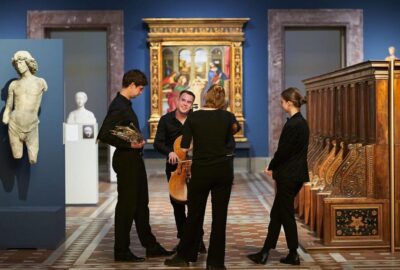 ★ 4.3Classical concerts at the Bode Museum BerlinFrom $3726 reviews
 ★ 4.6Short Expert Archaeological tour of the Pergamon PanoramaFrom $4720 reviews
Browse the lists this tour appears in