
REVIEW · MUSEUM ISLAND & PERGAMON
Berlin: Classical concerts at the Bode Museum Berlin
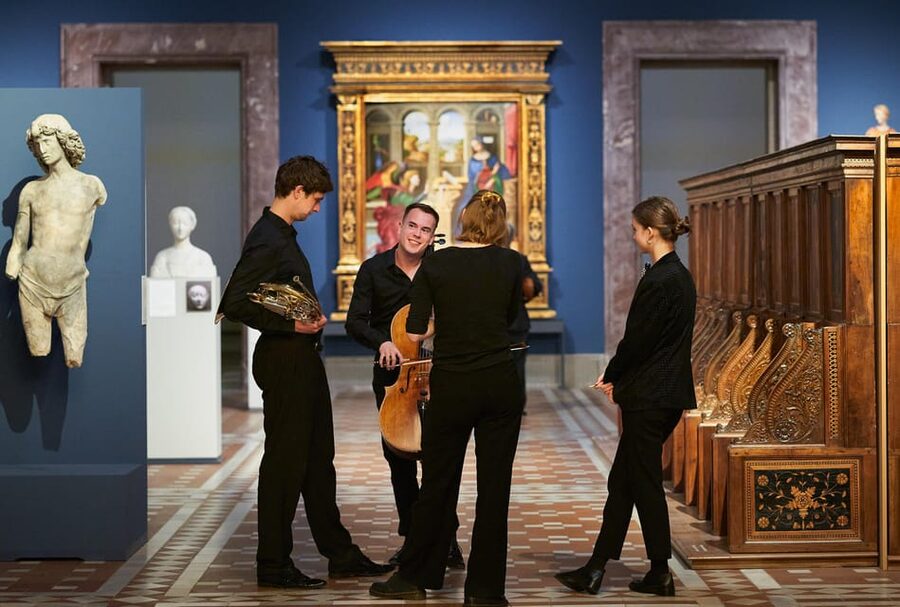
A museum hall, tuned for pure listening. This Bode Museum classical concert series brings you into the Gobelin Room for intimate evenings of Baroque, Mozart, and Romantic music.
I especially love the setting: you’re hearing music inside a historic space built to impress. I also like the way the program travels through styles, from Italian Baroque sounds to Romantic duets and Beethoven-Liszt conversations, with internationally known performers.
One thing to plan for: finding the right room can be tricky on arrival, and I’ve also seen tickets priced higher online than at the museum ticket desk.
In This Review
- Quick take: what makes these Bode Museum concerts worth your time
- Entering the Gobelin Room at the Bode Museum
- What the 90-minute concert really feels like
- Feb 14, 2026 and March 28, 2026: Baroque and the Birth of Romanticism
- Feb 14, Italian Masters of the Baroque
- March 28, The Birth of Romanticism
- April 1–6, 2026: duets, impressions, Haydn’s “Seven Last Words,” and the women-led Romantic arc
- April 1, Pure Romance Romantic Duets
- April 2, Italian Impressions
- April 3, The Seven Last Words by Joseph Haydn, Op. 51
- April 4, Piano music to dream to
- April 5, Romanticism in women’s hands
- April 6, Beethoven–Liszt in dialogue
- May 9–10, 2026: Bach violin sonatas and a staged Mozart program
- May 9, Bach Violin Sonatas 2
- May 10, Mozart: Bastien and Bastienne & Gluck: The Converted Drunkard
- Price and value: does $37 make sense?
- Finding the right room and arriving smart
- Who this is best for (and who might not love it)
- Should you book the Berlin Bode Museum classical concerts?
- FAQ
- Where is the concert held?
- How long is the concert?
- What is included with the ticket?
- Do I get free cancellation?
- Can I choose my exact seat?
- Where do I pick up my tickets?
- Is the venue wheelchair accessible?
- Can I book now and pay later?
- What concert dates are offered in 2026?
Quick take: what makes these Bode Museum concerts worth your time
- The Gobelin Room experience: classical performances staged in a historic hall on the first floor of the Bode Museum
- Top-billed artists: recorder, organ, harpischord, and singers from the included concert lineups
- 90 minutes with a break: plan for a second act feel, often with a 20-minute pause
- Varied repertoire across 2026: Baroque, Romanticism, Mozart, Bach, and a major Haydn work
- Value mix: concert ticket plus free museum admission, so you’re not choosing between music and sightseeing
- No seat picking: you choose a seating category, not an exact seat
Keep going on Museum Island
- Berlin: Museum Island Multiple Museum Entry Ticket★ 4.4 · 2,861 reviews
- Berlin: “Pergamonmuseum. The Panorama” Exhibition Tickets★ 4.6 · 1,245 reviews
- Berlin WelcomeCard: Museum Island & Public Transport★ 4.3 · 999 reviews
- Berlin: Museum Island Guided Walking Tour★ 4.9 · 38 reviews
Entering the Gobelin Room at the Bode Museum
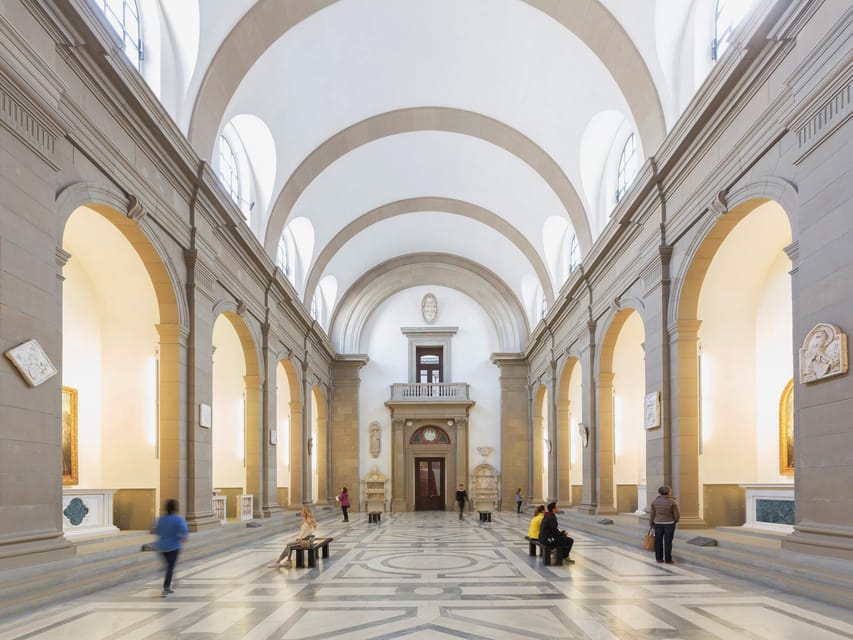
The Bode Museum is already a good reason to be in Berlin. But the real payoff here is the specific venue: the concert happens in the Gobelin Room on the museum’s first floor. That means your evening isn’t a generic concert hall stop. It’s a museum interior designed for display, but used as a listening room.
What I like about this kind of setting is the way it changes your focus. In a standard theater, you’re often looking forward, watching a stage. In the Gobelin Room, you tend to listen first. The architecture and decor support the feeling that you’re part of an event, not just passing through.
Also, you’re not forced to rush sightseeing. The ticket includes free museum admission, so you can do a quick museum circuit before the concert rather than treating the day like a taxi ride between highlights.
What the 90-minute concert really feels like
The concert runs about 90 minutes, with performances that usually include a break of around 20 minutes. Practically, that means you should expect two sections of music and a natural reset in the middle. If you’re the type who gets restless during long classical pieces, this format helps.
You also don’t have to stress about choosing the exact seat. You can select a seating category, but not a specific seat. That’s common for museum concerts, but it’s still worth knowing. If you’re sensitive to sightlines or want to be close to the musicians, arrive early so your assigned category has the best options available.
And yes, the program can change. That’s not unusual for live classical events, but it’s a real planning point if you’re traveling specifically for one date. If your schedule is flexible, pick the date that gives you the repertoire you most want.
Feb 14, 2026 and March 28, 2026: Baroque and the Birth of Romanticism

If you’re starting your 2026 Berlin music trip, these first two dates make a strong entry point because they show a clear shift in mood.
Feb 14, Italian Masters of the Baroque
This program pairs Susanne Ehrhardt on recorders with Christian Finke on chest organ. That combo matters. Recorders can sound airy and bright, and the chest organ brings a grounded, church-like presence. Together, they’re ideal for early music where rhythm and phrasing do a lot of the emotional work.
There’s also something satisfying about hearing Baroque in a museum hall rather than a church. The music still feels devotional, but the atmosphere becomes more “close listening” than “big sacred space.”
More of Berlin's museums and galleries




March 28, The Birth of Romanticism
On this date, you’ll hear the Mozart Ensemble Berlin in a program called The Birth of Romanticism. Even if you associate Romanticism with later composers, this theme is a useful framing. It helps you listen for the moment when musical language starts leaning toward stronger emotion, more color, and more contrast.
If you like when a concert turns into a guided listening experience, this one works well. The name alone suggests you’re not just getting random pieces; you’re getting a story arc.
April 1–6, 2026: duets, impressions, Haydn’s “Seven Last Words,” and the women-led Romantic arc
April is where this series becomes a full-on tour of moods and ensemble textures. You’re not repeating formats; you’re swapping instruments, voice types, and compositional eras.
April 1, Pure Romance Romantic Duets
Inês Pinto (soprano), Kristina Naudé (alto), and Beatrice Wehner-Schaller (piano) headline this evening. Romantic duets can be thrilling because you hear harmony from two vocal lines that don’t just blend—they interact.
For your listening, that means you’ll want to pay attention to how the piano supports the voices. When the piano is strong, the singers can lean into phrasing instead of simply carrying melody.
April 2, Italian Impressions
This one is a different sound picture: Marianne Boettcher on violin, Yasuko Fuchs-Imanaga on flute, and Karin Leo on guitar. Violin and flute often feel like they share the spotlight, while guitar adds a grounded, sometimes surprising texture.
If you like variety in timbre—brightness, lyrical lines, and then the warmth of guitar—this program is a great fit.
April 3, The Seven Last Words by Joseph Haydn, Op. 51
Haydn’s The Seven Last Words is built for dramatic attention. Even without you needing deep program notes, the title gives you a clear emotional route.
With Mozart Ensemble Berlin performing, you can also expect tight ensemble playing. This kind of music rewards a concert setting where you can hear articulation, not just volume.
April 4, Piano music to dream to
Just one instrument on the bill: Maria-Magdalena Pitu-Jokisch on piano. The attraction here is simplicity. When the lineup is “one voice,” the pianist has to carry everything—tone, pacing, and nuance.
If you want an evening that feels like a quiet landing after busy sightseeing, this is the date to consider.
April 5, Romanticism in women’s hands
Beatrice Wehner-Schaller performs again, this time in a program focused on Romanticism through her piano playing. The title is straightforward, and that’s part of its value: you’re being invited to listen for character and musical identity rather than treating “composer” as the only interesting label.
April 6, Beethoven–Liszt in dialogue
This is another piano date, with Naoko Fukumoto at the keyboard. Beethoven and Liszt can feel like opposites and partners at once—Beethoven for structure and weight, Liszt for color and virtuosity.
In a museum hall, that contrast can be even more noticeable because dynamics and detail travel well when you’re close enough to hear them clearly.
May 9–10, 2026: Bach violin sonatas and a staged Mozart program
May brings you two dates that will satisfy two very different classical tastes: careful Bach listening and playful, staged Mozart theater.
May 9, Bach Violin Sonatas 2
Marianne Boettcher plays violin, with Yuko Tomeda on harpsichord. This matters because the harpsichord is not just an accompaniment here. It helps define the harmonic rhythm and the feel of phrasing.
For your listening, focus on balance. In Bach, the violin lines often sound conversational, and the harpsichord keeps time with a bright edge. In a concert setting, that “push-pull” can be a joy.
May 10, Mozart: Bastien and Bastienne & Gluck: The Converted Drunkard
This is the most theatrical program on the list. You’ll get:
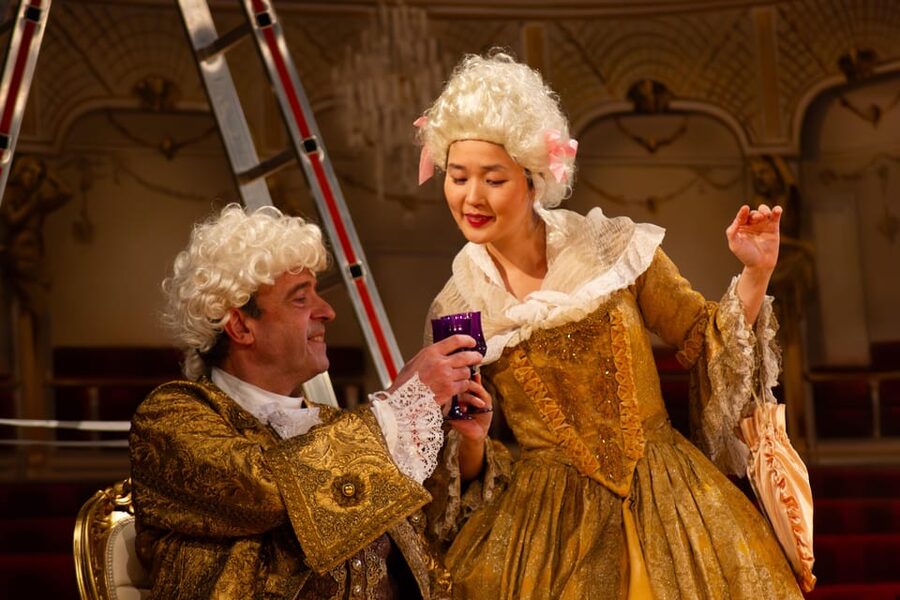
- Mozart: Bastien and Bastienne, with Yuri Mizobuchi (Bastien), Inês Pinto (Bastienne), and Stephen Barchi (the magician)
- Gluck: The Converted Drunkard, with Marcel Benedikt (Jacob Ofenloch), Kristina Naudé (Barbara), Inês Pinto (Bastienne), Yuri Mizobuchi (Bastien), and Stephen Barchi (Luke)
Staging is credited to Roland Treiber, with Mozart Ensemble Berlin.
When you see staging mentioned, you can plan to watch as well as listen. That said, it’s still a classical concert, so expect music-first moments rather than a full opera production with big set changes (nothing in the provided details suggests large scenery).
If you’re traveling with someone who’s not sure they like opera, this date can be a good bridge. Comedy and character roles often make classical music feel more human.
Price and value: does $37 make sense?
The listed price is $37 per person, and the key detail is what’s included. Your concert ticket comes with free museum admission. That can make a big difference for value, especially if you were planning to visit the Bode Museum anyway.
There’s also a practical warning from real-world buying: I’ve seen a case where the online price was higher than the museum ticket desk price. One recent buyer saw 64€ online compared with 48€ or 40€ at the box office. I can’t promise it’ll be the same for you, but it’s smart to check both options if you’re price sensitive.
So here’s the balanced takeaway: at $37, you’re paying for music plus a museum visit. If you were already going to the museum, that’s good value. If you’re only coming for the concert, still consider the total cost of getting there and arriving early, since seating isn’t selected down to a specific seat.
Finding the right room and arriving smart
Your meeting point is simple on paper: the Gobelin Room is on the first floor, and you should present your voucher at the box office to receive your tickets.
In practice, I’d treat this as the one part that can waste time if you don’t arrive with a plan. One experience highlighted that the search for the concert hall wasn’t obvious and that staff weren’t immediately easy to find. If that happens to you, don’t wander for long. Ask at the museum information desk or head straight to the box office line for directions to the Gobelin Room.
Timing helps too. Since the concert lasts between 90 minutes and two hours and usually includes a break, you’ll want buffer time for entry and finding your seating area. If you arrive late, you risk settling for whatever’s left in your seating category.
Who this is best for (and who might not love it)
This series fits best if you like classical music that’s performed in a close, listening-focused space. You’ll enjoy it most if you’re open to different eras—Baroque recorders and organ, Romantic duets with two voice colors, and piano nights that let one performer shape the evening.
It also works well for couples or pairs of friends who want a cultural activity that feels special without needing a full opera night plan. With free museum admission included, it’s also a good “one-stop culture day.”
You might not love it as much if you’re the type who needs perfect seat control. You can select a seating category, but you can’t pick the exact seat. And if you dislike any chance of program change, choose a date where the repertoire matches your must-hear list.
Should you book the Berlin Bode Museum classical concerts?
Yes, if you want a classical concert that feels like part of a museum visit, not a separate tourist stop. The Gobelin Room location, the mix of eras, and the fact that your ticket includes free museum admission are the big reasons to book.
I’d especially consider it for:
- a first Berlin “classical night” where the venue does the work for atmosphere
- listeners who like variety across instruments and voice types
- anyone who’s traveling on a tight schedule but still wants a meaningful cultural evening
If you’re going, show up early enough to find the room calmly and keep an eye on total pricing by comparing what you see online versus at the box office. Then relax. This is the kind of evening where listening is the main event—and the building helps.
FAQ
Where is the concert held?
The concerts take place in the Gobelin Room on the first floor of the Bode Museum in Berlin.
How long is the concert?
The concert lasts about 90 minutes, and it can run up to around two hours. It usually includes a break of about 20 minutes.
What is included with the ticket?
The ticket includes free museum admission and the concert ticket.
Do I get free cancellation?
Yes. You can cancel up to 24 hours in advance for a full refund.
Can I choose my exact seat?
You can select a seating category, but you cannot choose specific seats.
Where do I pick up my tickets?
Present your voucher at the box office to receive your tickets.
Is the venue wheelchair accessible?
Yes, the concert is wheelchair accessible.
Can I book now and pay later?
Yes. The option to reserve now and pay later is available.
What concert dates are offered in 2026?
Dates listed include February 14, March 28, April 1, April 2, April 3, April 4, April 5, April 6, and May 9 and May 10, 2026, each with its own named program.
Berlin's Museums and Galleries


More Tour Reviews in Berlin






Still on Museum Island


Round out your days in Berlin




Museum Island & Pergamon, compared.
 ★ 4.4Museum Island Multiple Museum Entry TicketFrom $282,861 reviews
 ★ 4.6“Pergamonmuseum. The Panorama” Exhibition TicketsFrom $161,245 reviews
 ★ 4.3Berlin WelcomeCard: Museum Island & Public TransportFrom $70999 reviews
 ★ 4.9Museum Island Guided Walking TourFrom $3438 reviews
 ★ 5.0Highlights Tour: Explore Berlin’s unique Museum IslandFrom $3430 reviews
★ 4.9Museum Island Guided Walking TourFrom $4328 reviews
★ 5.0Highlights Tour: Explore Berlin’s unique Museum IslandFrom $3430 reviews
★ 4.9Museum Island Guided Walking TourFrom $4328 reviews
 ★ 4.6Short Expert Archaeological tour of the Pergamon PanoramaFrom $4720 reviews
 ★ 4.0Neues Museum Tickets in BerlinFrom $225 reviews
Browse the lists this tour appears in