
REVIEW · TOURS
Dark Berlin Criminal Tour
Berlin has a crime story under every corner.
This 2-hour walking tour links the city’s criminal history to real places, moving from violent crimes and betrayal to greed, passion, and the occasional bizarre moment that actually makes you laugh. I especially like how the tour sticks to original locations and how the guide uses those settings to make the stories feel grounded, not like a lecture. One caution: the subject matter is dark, so if you prefer lighter sightseeing, this one may feel heavy.
You start at Rosa-Luxemburg-Platz 1/u and finish at Rotes Rathaus, close to the underground—easy on the feet for a central-city walk. You’ll be in a small group (max 25), with a certified guide, and you get a mobile ticket, which means less fuss and more time looking around. The route is also designed for most people, as long as you’re good with steady walking and you can handle outdoor time—this experience needs decent weather.
What makes the tour genuinely useful is the way it explains how organized crime took hold in Berlin—think protection money extortion, prostitution, and stolen-goods networks—then connects that to how the Berlin criminal police gained worldwide attention. Along the way, you’ll see how modern-looking spots still sit on top of shocking events.
In This Review
- Key things you’ll notice on this tour
- Why Berlin’s Crime Story Works on Foot
- The Simple Route: Rosa-Luxemburg-Platz to Rotes Rathaus
- Volksbühne Berlin: A 1931 Shooting That Still Feels Close
- Scheunenviertel: The 1920s Street Economy on a Single Block
- Alexanderplatz to Alex: How a Square Earns Its Name
- Alexa Shopping Center: The Pre-War Building Story You’d Miss Otherwise
- Littenstraße Court: Defense Attorneys, Lola, and 1920s Intrigue
- Rotes Rathaus and the 1920s Banking Scandal
- What You’re Really Paying For: Value at $18.52
- Timing, Weather, and Staying Comfortable
- Who This Tour Suits Best
- Should you book the Dark Berlin Criminal Tour?
- FAQ
- How long is the Dark Berlin Criminal Tour?
- What is the price per person?
- When does the tour start?
- Where do I meet the guide?
- Where does the tour end?
- Is the ticket mobile?
- How big is the group?
- What historical time period does the tour cover?
- Do I need to pay admission for the stops?
- What happens if the tour is canceled due to poor weather?
- Is the tour refundable if I cancel?
Key things you’ll notice on this tour
- Late-1800s to today: the story runs long, not just a single era
- Stop-by-stop locations: crimes are tied to the exact streets and buildings you see
- World-fame police angle: you get the wider system, not only individual crimes
- Free entry at listed stops: each stop is marked as admission ticket free
- Small-group pacing: max 25 keeps the guide’s explanations clear
Still narrowing down your days in Berlin? Here are more tours to weigh up.
- Berlin: Reichstag, Dome and Government District Guided Tour★ 4.7 · 18,288 reviews
- Berlin: 1-Hour City Tour by Boat with Guaranteed Seating★ 4.3 · 16,993 reviews
- Berlin: TV Tower Standard Entrance Ticket★ 4.4 · 15,883 reviews
- Berlin: Boat Tour Along the River Spree★ 4.4 · 11,252 reviews
Why Berlin’s Crime Story Works on Foot
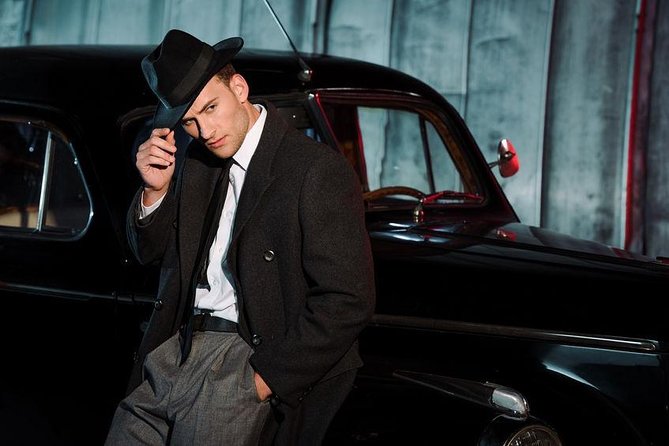
Berlin can be read like a map of power—who had it, who lost it, and who learned to exploit gaps. This tour leans into that idea by walking you through key neighborhoods and civic landmarks, not just museums. When you’re standing in the same general places where events unfolded, the details land faster: the geography makes the motives feel more believable.
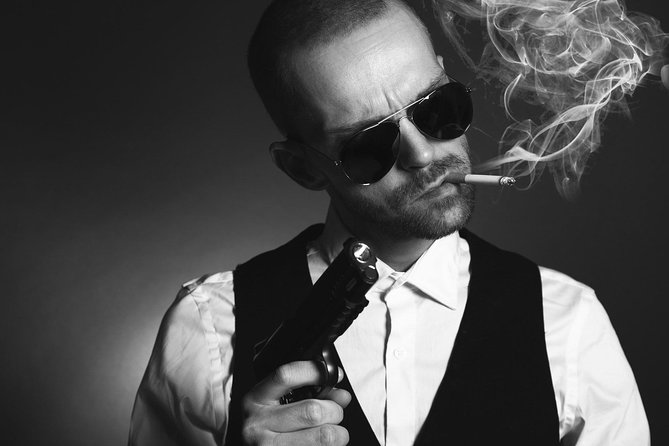
You’ll also get a style of storytelling that doesn’t treat crime as either pure horror or pure entertainment. It’s described as a mix of violence, death, betrayal, greed, passion, and—yes—comedy and bizarre moments. That balance matters. If you only focus on the brutal parts, your brain tunes out after a while. When the guide punctures tension with odd human details, you stay engaged and remember more.
The Simple Route: Rosa-Luxemburg-Platz to Rotes Rathaus
Logistics are straightforward. You meet at Rosa-Luxemburg-Platz 1/u (10178 Berlin) at 2:00 pm. The walk runs about 2 hours and ends at the Red City Hall entrance—Rotes Rathaus—where there’s direct access to the underground.
This matters because you can plan the rest of your day without guessing. You’re not ending somewhere remote, and you’re not stuck figuring out transit from scratch when you’re done. It also helps that the starting area is near public transportation, so you can arrive calmly and not sprint to the meeting point.
The tour is designed for a small group (up to 25), which typically makes it easier to hear the guide and keep the pace from turning into a long line.
Volksbühne Berlin: A 1931 Shooting That Still Feels Close
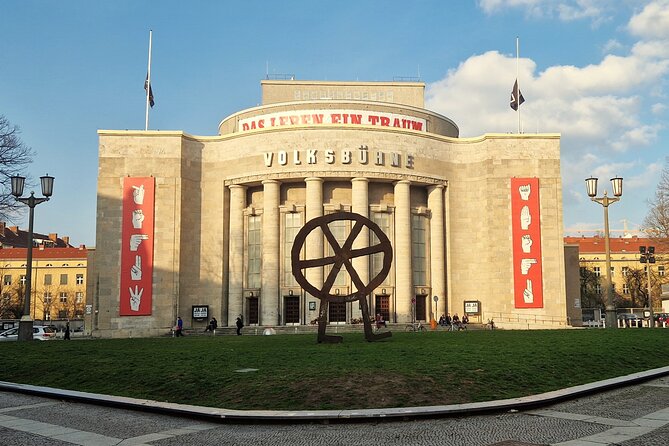
One of the first stops is Volksbühne Berlin, where a gruesome crime took place on August 9, 1931. The story centers on a later Minister for State Security of the GDR and his buddy, who shot two police officers there. Even without getting lost in names you don’t yet know, the point is clear: this is where political violence and street-level consequences collided.
What I like about this stop is the way it sets a tone early. You’re not starting with abstract crime stats. You’re starting with a specific moment tied to a real location. That makes the rest of the tour easier to follow, because you’ve already felt how Berlin’s past can be both civic and personal.
Scheunenviertel: The 1920s Street Economy on a Single Block
Scheunenviertel is the tour’s human-scale shift. In the 1920s, this area is described as packed with exhausted factory workers returning from shifts—shabbily dressed, worn down, and likely juggling whatever money problems reality allowed. At the same time, you get images of brightly made-up sex workers in tight clothing, office managers with worn jackets, and people living in the orbit of crooks and pimps.
This stop isn’t just about violence. It’s about how crime and vulnerability can become part of daily economics. When protection money, stolen goods, and exploitation are major income streams, the street becomes a marketplace of fear and bargaining. That’s the kind of context that helps you understand why organized crime gained traction in Berlin.
The drawback here is also the reality: the tour leans into uncomfortable details. If you’re sensitive to stories involving prostitution or exploitation, keep that in mind going in.





Alexanderplatz to Alex: How a Square Earns Its Name
At Alexanderplatz, you’ll hear it referred to affectionately as Alex by Berliners. The tour uses the square to explain how it got its name, then connects that identity to a darker period when a gang of young people could terrify the whole city during the war years.
This stop is useful even if you think you already know Alexanderplatz. Squares like this are built for everyday life now, so it’s easy to forget the fear that can also gather in public spaces. When the guide ties the name and the place to a gang-driven threat, the square becomes more than a transit hub. It becomes a stage.
You’ll likely find yourself looking at the area differently afterward, especially if you pass through Alex later during your trip.
Alexa Shopping Center: The Pre-War Building Story You’d Miss Otherwise
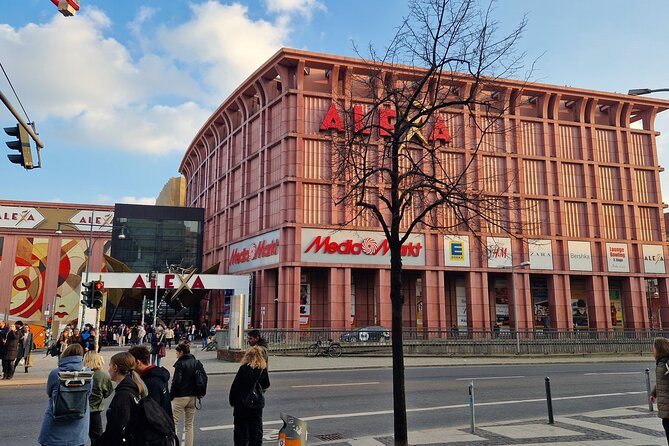
Next comes Alexa, the shopping center where you can shop and linger—one of the most modern-feeling stops on the walk. The twist is that few people still know which building existed here in the pre-war years and why that history led to world fame and high esteem.
That’s the whole point of this kind of tour: it forces you to notice how the city layers over itself. You see a place that feels like present-day convenience, then you get a reason to think about what stood there before and how reputation can attach to buildings as much as people.
Even if you’re not shopping that day, this is the kind of stop that gives you something to picture the next time you’re nearby. It turns a quick errand destination into a clue about Berlin’s past.
Littenstraße Court: Defense Attorneys, Lola, and 1920s Intrigue
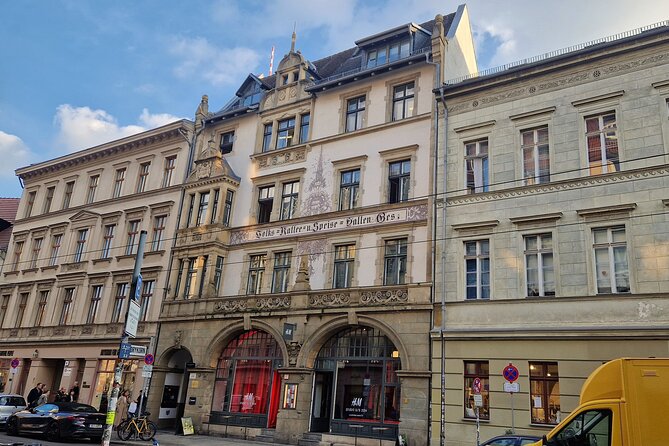
At Littenstraße, the tour focuses on the district court of Berlin Mitte. The story highlights one of the most famous defense attorneys of the 1920s in Berlin and points to how he was impressed by Lola—an intriguing detail that signals this wasn’t only legal maneuvering, but personal drama too.
Why it works: courts are where a city turns chaos into records. When you learn about a major defense attorney, you’re learning how crime stories can shift based on public image, argument strategy, and social influence. It also reminds you that the legal system isn’t just background—it’s part of the crime narrative.
The practical takeaway is that this stop gives you a different lens than the shooting-and-street-crime parts. It’s crime history with courtroom gravity, but anchored in an actual place you can point to.
Rotes Rathaus and the 1920s Banking Scandal

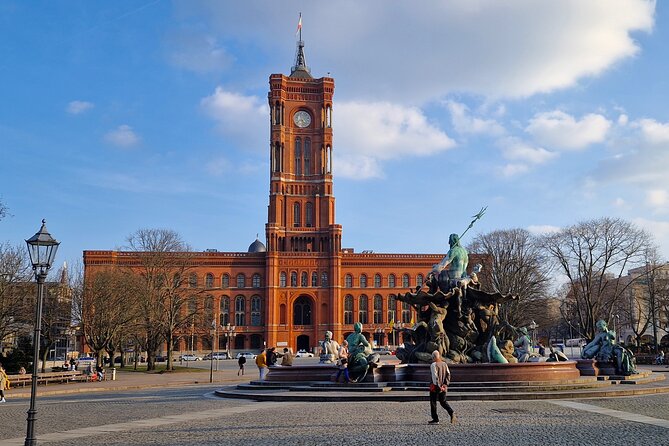
The tour ends at Rotes Rathaus, where the first banking scandal in Berlin’s history is tied to the 1920s. Here, you hear the background to a scandal that involved the mayor. That’s a big deal because it moves the conversation from street crime to institutional power—how money systems can be manipulated, and how high-ranking people can become tangled in it.
This stop is valuable because it broadens your understanding of organized crime. If you only focus on criminals in alleys, you miss how financial misconduct and political influence can create conditions where extortion, stolen goods, and prostitution networks flourish.
Finishing here also feels right. You’ve walked from criminal streets and charged neighborhoods to the kind of place where decisions and reputations are made.
What You’re Really Paying For: Value at $18.52
At $18.52 per person for about two hours, this tour is priced in the sweet spot for a city walk that uses multiple real stops. You’re not paying for an expensive museum ticket spree. Each listed stop is marked as admission ticket free, so the cost is mostly for the guide, the storytelling, and the route planning that connects those points into a single narrative.
The timing also helps. An afternoon start at 2:00 pm means you can pair this with morning museum time or an evening activity. And since it’s a walking tour, the cost is essentially buying you interpretation—turning what you see into what it means.
One more value clue: on average, this tour is booked about 44 days in advance. That suggests you should plan ahead if you’re traveling in a popular season or on a day with limited options.
Timing, Weather, and Staying Comfortable
This experience requires good weather. That’s not just a minor note. When you’re outdoors for roughly two hours, rain and wind can drain your attention and make it harder to hear details.
I’d treat this as a “put it on your best-weather afternoon list” type of activity. Bring a light layer you can adjust, and wear shoes you’re happy with for city walking. Since the tour ends at Rotes Rathaus with underground access, you can usually duck inside or reset your plans quickly after you finish.
Who This Tour Suits Best
This is for you if you like history you can see, not history trapped behind glass. It’s also a good fit if you enjoy crime stories that explain the system behind them—how protection money and stolen goods worked, and how policing evolved enough to gain world fame.
It may be less ideal if you want gentle, feel-good sightseeing only, because the tour openly includes violence, death, betrayal, and exploitation themes. But if you’re okay with dark topics and want a thoughtful way to understand them, you’ll likely appreciate the mix of grim and weirdly human moments.
Should you book the Dark Berlin Criminal Tour?
Yes—if you want a practical, story-driven walk that helps you read Berlin like a crime map, this one makes sense. For the money, you’re getting multiple central stops, free-entry locations, a certified guide, and a narrative that connects street crime to financial and political influence. The group size stays small enough that the experience doesn’t feel like noise, just focused storytelling.
If you’re the type who likes your history straightforward and light, skip it. If you’re curious about how organized crime gained ground in Berlin and how the city responded, this tour is a strong bet.
FAQ
How long is the Dark Berlin Criminal Tour?
The tour lasts about 2 hours.
What is the price per person?
The price is $18.52 per person.
When does the tour start?
The start time is 2:00 pm.
Where do I meet the guide?
You meet at Rosa-Luxemburg-Platz 1/u, 10178 Berlin.
Where does the tour end?
The tour ends at Rotes Rathaus 10178 Berlin, at the Red City Hall entrance with direct access to the underground.
Is the ticket mobile?
Yes, it is a mobile ticket.
How big is the group?
The tour has a maximum of 25 travelers.
What historical time period does the tour cover?
It follows traces of Berlin’s criminal history from the end of the 19th century to the present day.
Do I need to pay admission for the stops?
The listed stops are marked as admission ticket free.
What happens if the tour is canceled due to poor weather?
If it’s canceled due to poor weather, you’ll be offered a different date or a full refund.
Is the tour refundable if I cancel?
No. It is non-refundable and cannot be changed for any reason.
More Tours in Berlin


More Tour Reviews in Berlin
Round out your days in Berlin
Tours, compared.
 ★ 4.7Reichstag, Dome and Government District Guided TourFrom $1818,288 reviews
 ★ 4.31-Hour City Tour by Boat with Guaranteed SeatingFrom $2516,993 reviews
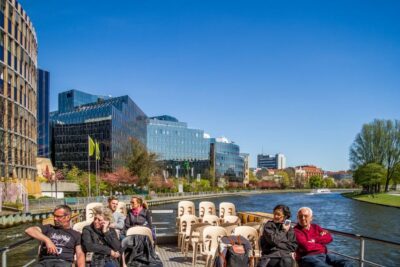 ★ 4.4Boat Tour Along the River SpreeFrom $3411,252 reviews
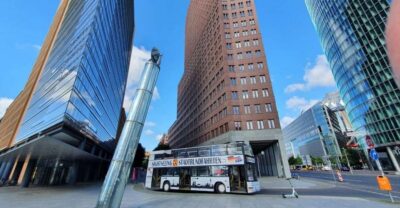 ★ 4.3Hop-on Hop-off Bus Tour with Live CommentaryFrom $228,579 reviews
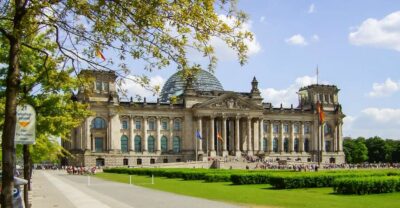 ★ 4.6Reichstag, Plenary Chamber, Cupola & Government TourFrom $188,422 reviews
 ★ 4.9Third Reich & Cold War Guided Walking TourFrom $238,378 reviews
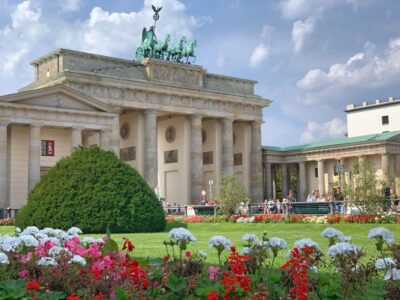 ★ 4.9Discover Berlin Walking TourFrom $235,998 reviews
 ★ 5.0Sachsenhausen Concentration Camp Tour in EnglishFrom $365,711 reviews