
REVIEW · TV TOWER & PANORAMIC VIEWS
Full Classical Experience – Altes Museum & Pergamon Panorama
Two museums, one hour of panorama wonder. I love the way Altes Museum’s Rotunda of the Gods turns sculpture into a living worldview, and you’ll also get Pergamon Panorama’s 360-degree sense of being inside ancient Pergamon. The main drawback to plan for: with just 150 minutes total, it can feel a bit tight if you like to linger over details.
With archaeologist guide Gali Jaffe (English or Hebrew), this isn’t a wandering audio tour. It’s a guided, story-led run through major finds—Greek and Roman statues, classical period pottery, Etruscan finds, and Roman period sculpture—followed by a focused look at the panorama exhibition. If you’re the type who wants context as you look, this fits well.
In This Review
- Key points worth knowing
- Why this tour feels different on Museum Island
- Meeting at the Altes Museum: the easy start that saves time
- Altes Museum tour stop: the Rotunda of the Gods up close
- What I like here
- A fair consideration
- The rest of the Altes Museum: pottery, Etruscans, and Roman sculpture
- Practical way to get more from this museum portion
- The quick walk to the panorama: short transfer, big mood shift
- Pergamonmuseum – Das Panorama: a 360° look at ancient Pergamon
- Why this works so well after the museum
- The main tradeoff
- Price and value: is $88 a good deal for this format?
- What to do before you go (so you don’t lose time)
- Who this tour suits best
- Should you book the Full Classical Experience: Altes Museum & Pergamon Panorama?
- FAQ
- How long is the tour?
- What are the main highlights?
- Where do we meet?
- What languages is the tour offered in?
- Is this a small group?
- Is the entry ticket included?
- Are bags, food, or drinks allowed?
Key points worth knowing
- Small group (up to 7) keeps the pace human and questions answerable.
- Rotunda of the Gods is a standout stop, not just a quick photo moment.
- You’ll see Greek and Roman statues in a guided interpretive way.
- The tour pairs museum objects with a 360° Pergamon setting so the ancient world feels connected.
- The schedule is compact, so it’s best if you’re okay moving along.
Keep going on Museum Island
- Berlin: Museum Island Multiple Museum Entry Ticket★ 4.4 · 2,861 reviews
- Berlin: “Pergamonmuseum. The Panorama” Exhibition Tickets★ 4.6 · 1,245 reviews
- Berlin WelcomeCard: Museum Island & Public Transport★ 4.3 · 999 reviews
- Berlin: Museum Island Guided Walking Tour★ 4.9 · 38 reviews
Why this tour feels different on Museum Island
Museum Island can be a lot. You get grandeur, marble, long halls, and then—if you’re on your own—things blur together fast. This tour stays focused by pairing two experiences with a clear theme: how the ancient Mediterranean world looked and how stories can be built from objects and space.
You start at the Altes Museum, then you move on foot to the Pergamonmuseum – Das Panorama. The whole experience is 150 minutes, led by a real archaeologist, not a general museum guide reading labels. That matters because you’re not just seeing what’s there; you’re learning how archaeologists think about what’s missing, what survived, and why the objects were made.
Meeting at the Altes Museum: the easy start that saves time
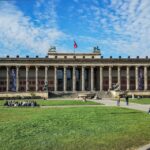
Your meeting point is at the top of the staircase of the Altes Museum. That’s helpful because it sets you up right where the action is—inside the museum complex, not searching around later.
One practical thing I suggest: arrive with your ticket situation solved in advance. The tour instructions stress that your entry ticket must be purchased by you either online in advance or at the ticket office at the beginning of the tour. Also, the tour provides a link for buying one ticket for both museums (Museum Island). If you get to the start without that ready, it can slow things down while you sort it out.
Altes Museum tour stop: the Rotunda of the Gods up close
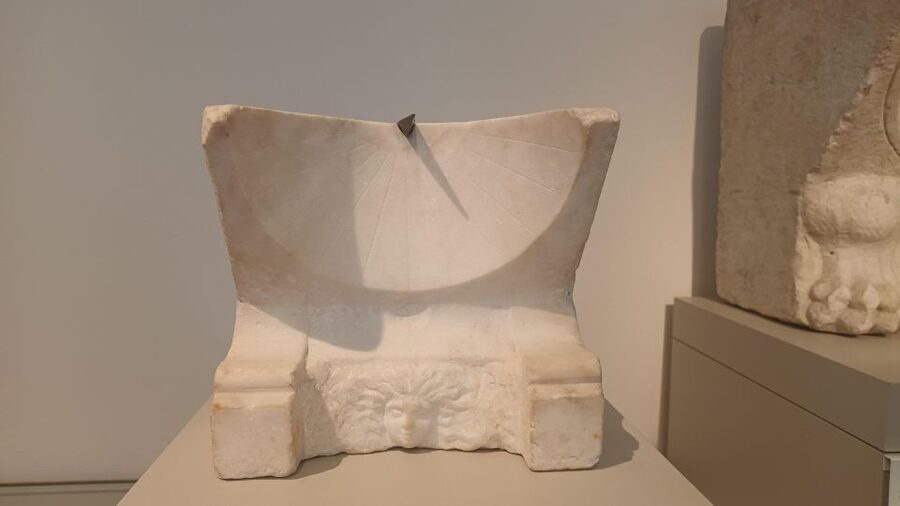
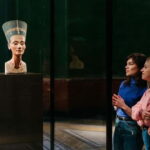
This is where the tour earns its keep. The Rotunda of the Gods is one of those spaces that can feel dramatic even if you only know it by reputation. The guided approach makes it easier to read what you’re seeing, because you’re not only looking at sculpture—you’re getting stories tied to how the classical world imagined the divine and how Roman-era collecting and display shaped what survives today.
The guide also sets you up to spot patterns across the collection. You’ll see Greek and Roman statues, and the talk links form to meaning—how posture, materials, and subject matter can signal the beliefs and aesthetics of the periods represented in the museum.
What I like here
- The Rotunda works as an anchor point. Instead of scattering attention, you build a mental map early.
- The focus on statues means you’ll look longer than you normally would, because you’re given reasons to pay attention.
More of Berlin from up high



A fair consideration
If you’re expecting a long, slow museum day, this stop can feel like it moves briskly. The tour is 150 minutes total, and the Rotunda is just one part of a full guided route.
The rest of the Altes Museum: pottery, Etruscans, and Roman sculpture
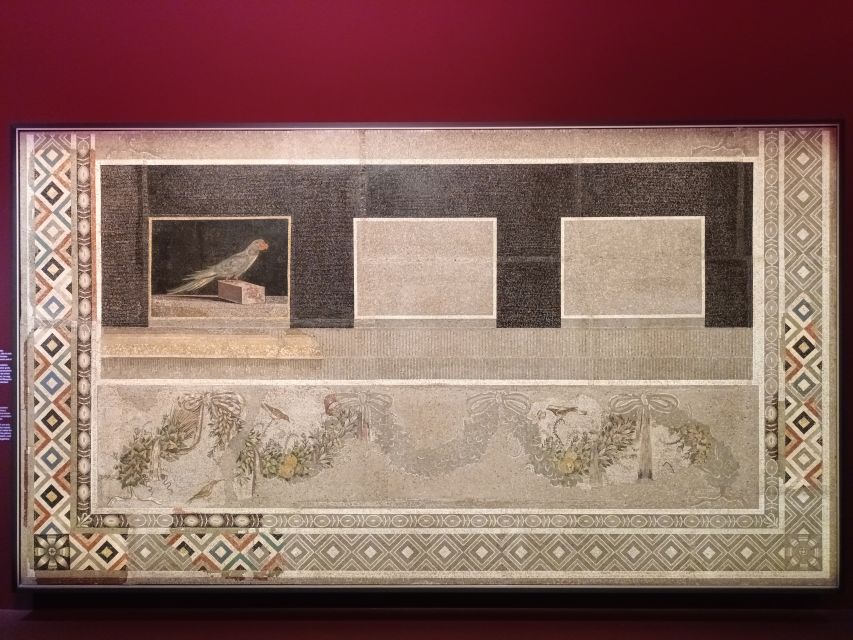
After the Rotunda, the tour expands across classical finds. You’ll spend time with:
- Classical period pottery (described as especially mesmerizing)
- Etruscan finds
- Roman period statues
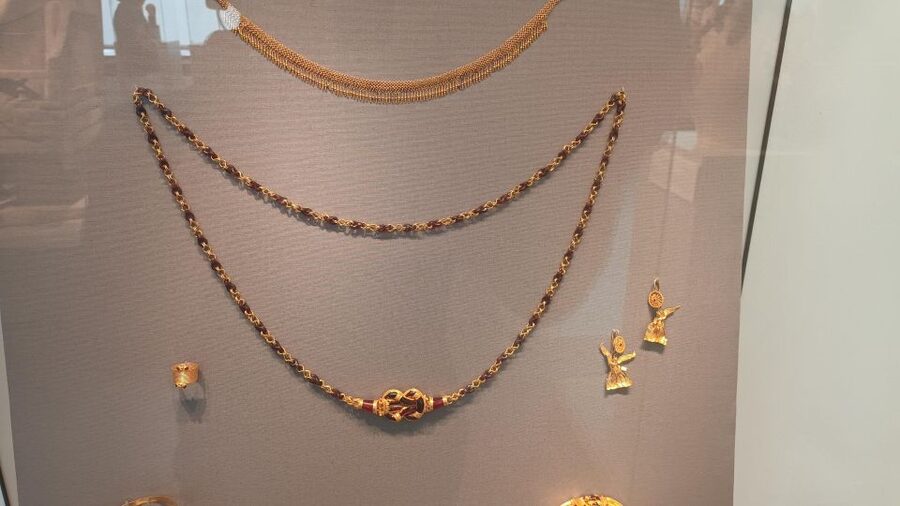
This mix is part of the value. It’s not one narrow lane of Greek-only objects. You get a wider ancient Mediterranean view, and that helps you understand why these collections feel layered. Pottery often gets overlooked by first-time museum-goers because it’s smaller than statues. But in a guided format, it can become the star: you learn how the vessel styles, decoration, and subject matter can reflect the social world of their time.
Etruscan finds are especially useful for many visitors because they add a second storyline to the classical narrative. You start to see the region as interconnected rather than boxed into one simple label.
Roman period sculpture ties the room together. Even when you’re looking at pieces that come from different moments, the guide’s structure helps you connect how Roman culture used inherited classical imagery while also projecting its own identity.
Practical way to get more from this museum portion
Keep your questions ready. This tour format is small-group (up to 7), and that means you can ask things like:
- Why certain objects were preserved and others weren’t
- How to interpret what you see without knowing every historical detail
- How the guide links one object to another
The guidance style is one of the tour’s most praised aspects—clear answers and strong explanations—so using that opportunity can make the whole visit feel much richer.
The quick walk to the panorama: short transfer, big mood shift
Between the museum and the panorama, you’ll go on foot for about 10 minutes. That small stretch matters more than it sounds. The lighting and atmosphere change, and then you’re in a different format: from objects behind glass to an exhibition built to recreate a whole environment.
If you’re taking photos, this is also where you can reset your brain. The museum experience trains your eye to look at details. The panorama asks you to look at space and movement instead—what it feels like to stand in a city rather than in front of a single artifact.
Pergamonmuseum – Das Panorama: a 360° look at ancient Pergamon
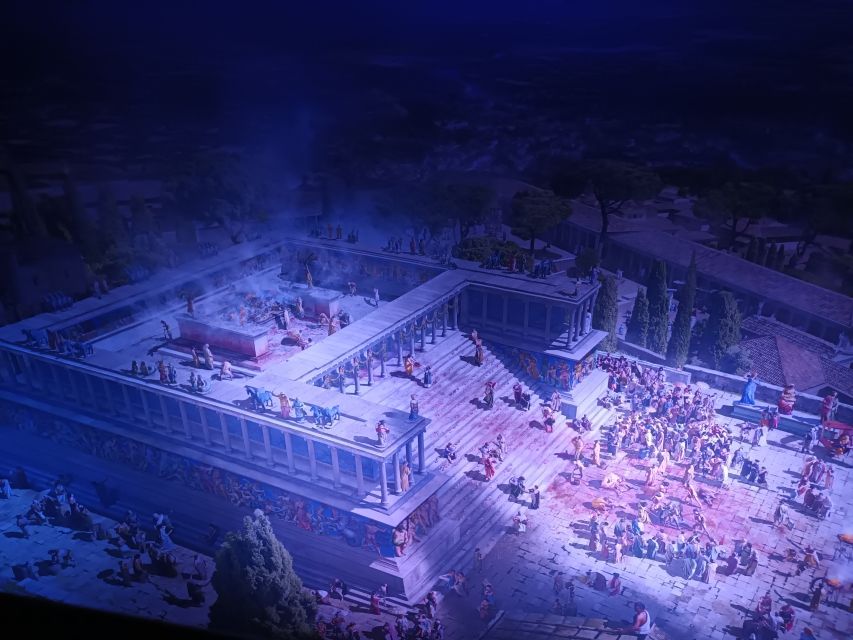
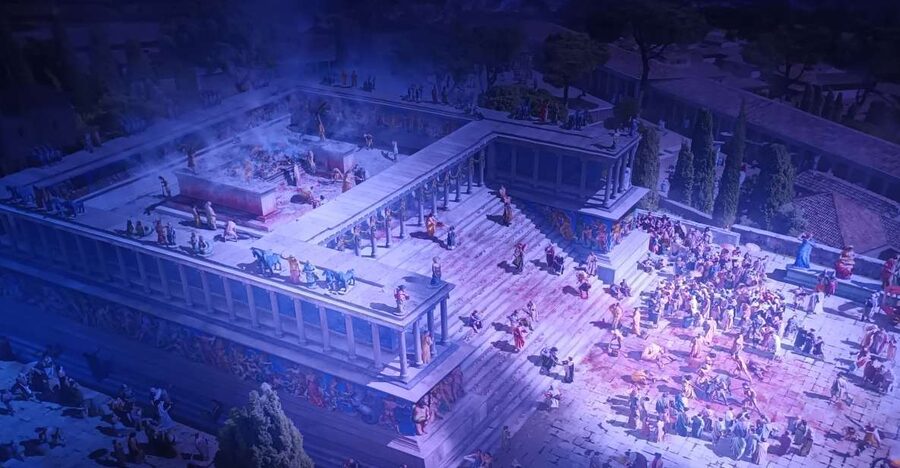
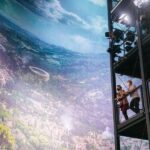
The guided panorama segment lasts about 45 minutes and is the emotional centerpiece for many people. The exhibition is described as a dazzling 360-degree experience that brings to life the life in the ancient city of Pergamon.
The guided approach is useful here because a panorama can be overwhelming if you don’t know what to focus on. With a guide, you’re not just absorbing visuals. You’re learning how the exhibition frames the city: how daily life is suggested, how the space is meant to be read, and how Pergamon’s ancient identity shows up in the layout and scenes you’re seeing around you.
Why this works so well after the museum
This pairing is clever: the museum gives you the object-based side of the classical world—statues, pottery, and sculpture with archaeological context. The panorama then gives you the lived-space side. Together, they help you connect artifacts to place, and that’s when the ancient world stops feeling like separate collections and starts feeling like one coherent setting.
The main tradeoff
The same thing that makes this tour efficient can be frustrating: if the panorama grabs you, time can feel short. You get an excellent, guided window, but you won’t have hours to sit and rewatch everything.
Price and value: is $88 a good deal for this format?
At $88 per person for a 150-minute guided experience, the value depends on what you want from your day.
Here’s what you’re paying for beyond museum entry:
- A live guide who is an archaeologist with long field experience and a track record of making archaeology accessible
- Small-group pacing (max 7 participants) that supports real questions
- A coordinated visit across two venues on the same thematic route
If you’re the type who reads labels and still leaves museums feeling like you saw a lot but understood little, the guide changes the outcome. You’re not just saving time; you’re buying clarity.
If you’re the type who wants to wander independently, pause for long sketch sessions, and spend extra time re-examining favorite sculptures, you might feel constrained by the schedule. In that case, the ticket cost is only part of the equation—you’re also paying for a structured pace.
What to do before you go (so you don’t lose time)
A few rules are worth taking seriously because they affect your comfort and timing.
You should plan for:
- No food and drinks
- No luggage or large bags (and no large coats)
- You must handle entry tickets yourself as instructed, either online in advance or at the ticket office at the start of the tour
Also, the tour is offered in English and Hebrew, and it’s wheelchair accessible. If you’re traveling with mobility needs, it’s a good sign that the tour explicitly supports accessibility.
The best prep move: bring a small day-bag (whatever fits comfortably within the museum’s constraints) and get your Museum Island ticket ready. That reduces the chance of a scramble during entry, which can be the most stressful moment of the day.
Who this tour suits best
This experience is a strong match if you:
- Want context with your museum viewing, not just object names
- Like classical art but appreciate it most when someone explains the why behind the look
- Enjoy a small-group setting where you can ask questions
- Want the rare combo of Altes Museum objects + Pergamon Panorama environment in one run
It may be less ideal if you:
- Want a long, quiet self-paced visit where you can linger for as long as you want
- Prefer to spend most of your time only on one museum space, rather than covering both quickly
Should you book the Full Classical Experience: Altes Museum & Pergamon Panorama?
Yes, I’d book it if you want a guided, high-impact introduction to Berlin’s classical collections with a cinematic finish. The standout strengths are the Rotunda experience, the way the guide connects Greek/Roman sculpture and other finds like classical pottery and Etruscan material, and then the big payoff of the 360° Pergamon Panorama.
I’d think twice if you’re deeply attached to slow museum pacing. With 150 minutes, this is more like a smart, focused sprint than a full-day gallery marathon.
FAQ
How long is the tour?
The duration is 150 minutes.
What are the main highlights?
The tour highlights include the Rotunda of the Gods, Greek and Roman statues, and the Pergamon Panorama experience.
Where do we meet?
You meet at the top of the staircase of the Altes Museum.
What languages is the tour offered in?
The live tour guide is available in English and Hebrew.
Is this a small group?
Yes. The group is limited to 7 participants.
Is the entry ticket included?
You need to purchase an entry ticket separately yourself (online in advance or at the ticket office at the beginning of the tour) using the provided Museum Island ticket link for access to both museums.
Are bags, food, or drinks allowed?
Food and drinks are not allowed, and luggage or large bags (and large coats) are not allowed in the museum.
More Tour Reviews in Berlin




Berlin From Above
Still on Museum Island

Round out your days in Berlin

TV Tower & Panoramic Views, compared.
 ★ 4.4TV Tower Standard Entrance TicketFrom $3315,883 reviews
 ★ 4.8Highest Swing in EuropeFrom $351,661 reviews
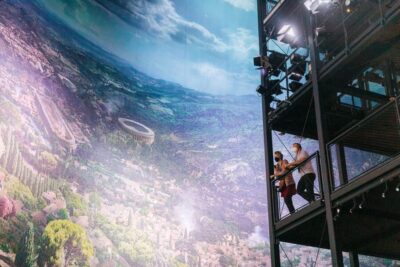 ★ 4.6“Pergamonmuseum. The Panorama” Exhibition TicketsFrom $161,245 reviews
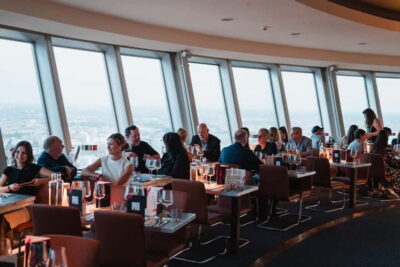 ★ 4.2TV Tower SPHERE Restaurant Tim Raue Entry TicketFrom $33940 reviews
 ★ 3.5Ticket for World Balloon with Perfect ViewFrom $37737 reviews
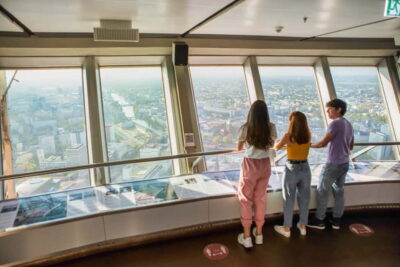 ★ 4.3TV Tower Entrance and VR Experience TicketsFrom $43611 reviews
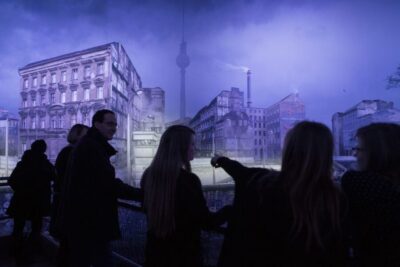 ★ 4.5THE WALL: asisi Panorama Berlin TicketFrom $16580 reviews
 ★ 5.0All of Berlin (city panorama)From $25181 reviews
Browse the lists this tour appears in