
REVIEW · TOURS
Rude Bastards tour of Berlin (CYHIT)
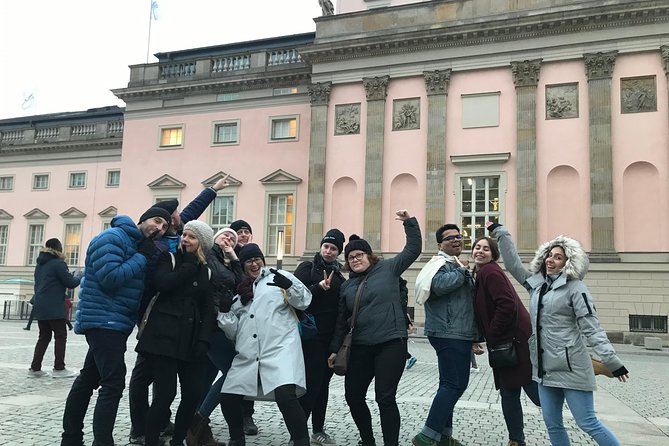
Berlin history hits different when it’s funny. This Rude Bastards tour turns heavy sites into a fast, street-level story, and I love the sharp pacing (you stay moving) plus the guide banter—like Kai and Alex—so serious moments actually land. The main drawback: it’s clearly adult-themed, so the humor and language won’t work for everyone.
You’ll be on a route built around major landmarks, from Potsdamer Platz and the Reichstag area to Checkpoint Charlie and ending at Bebelplatz. With up to 10 travelers, an English-speaking guide, and a mobile ticket, it’s a good way to get your bearings without getting stuck in a stuffy history lecture.
In This Review
- The core vibe: rude humor with real historical weight
- Key highlights at a glance
- Starting at Potsdamer Platz: your Berlin orientation
- Tiergarten and Soviet memorials: the hard geography of Berlin
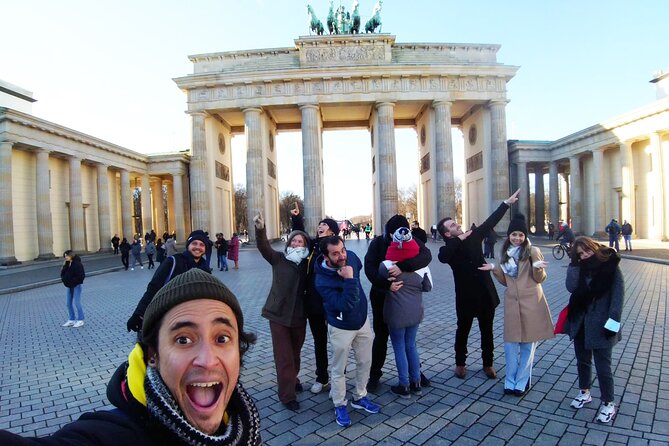
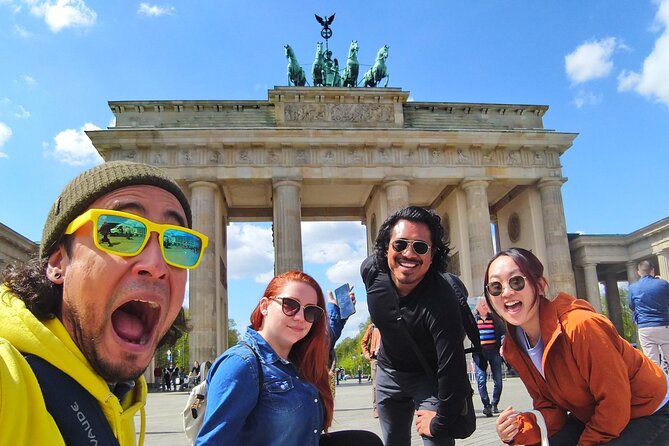
- Brandenburg Gate: the main entrance myth, plus the reality
- The Holocaust Memorial: what to expect and how to handle the tone
- Fuhrerbunker (hitler’s bunker location): short stop, huge emotional weight
- Checkpoint Charlie and the Wall route: where the Cold War becomes physical
- Reichstag, Brandenburg Gate context, and the Jewish memorial pairing
- Lunch-time energy without losing momentum: the 20-minute break
- Gendarmenmarkt, Bebelplatz, and the final shift to reflection
- Price and time on your feet: value for an orientation tour
- Who this tour suits best (and who may want a different option)
- Should you book Rude Bastards Berlin (CYHIT)?
- FAQ
- FAQ
- How long is the Rude Bastards tour of Berlin?
- What language is the tour offered in?
- Where do I meet the tour, and where does it end?
- Is there a ticket for the Holocaust Memorial included?
- Are any sites free to visit during the tour?
- How big is the group?
- What kind of ticket do I receive?
- Is free cancellation available?
The core vibe: rude humor with real historical weight
This isn’t a polite “look at the plaque” tour. The whole point is to tell Berlin’s story with comedy and attitude—sometimes off-color—while still keeping the serious facts in view. Guides like Arthur, Frey, Nichole, and Anna are repeatedly praised for doing exactly that: the jokes come, but the tone shifts when the subject gets darker.
That mix matters in Berlin, because you’re walking past sites connected to war, genocide, political terror, and propaganda. A straight lecture can feel distant. A guide who can slow down when it needs respect helps you remember what you’re actually looking at.
Also, Berlin is walkable and the tour sticks to a manageable loop. Expect a lot of outdoor time, so plan for weather.
Still narrowing down your days in Berlin? Here are more tours to weigh up.
- Berlin: Reichstag, Dome and Government District Guided Tour★ 4.7 · 18,288 reviews
- Berlin: 1-Hour City Tour by Boat with Guaranteed Seating★ 4.3 · 16,993 reviews
- Berlin: TV Tower Standard Entrance Ticket★ 4.4 · 15,883 reviews
- Berlin: Boat Tour Along the River Spree★ 4.4 · 11,252 reviews
Key highlights at a glance
A tight route through the city’s Cold War and Nazi-era landmarks
Small group size (max 10), which helps keep it conversational
A planned break around the Berlin mall area (about 20 minutes)
Stops that include the Holocaust Memorial and the Fuhrerbunker location
Adult tone: fun, irreverent, and not aimed at the easily offended
Starting at Potsdamer Platz: your Berlin orientation
You meet at Potsdamer Platz 10 and you finish at Bebelplatz Unter den Linden. That choice is smart. Potsdamer Platz sits at a crossroads of modern Berlin and the city’s divided past, so the first stretch gives you context fast. It’s also an easy place to organize a group meeting.
Early on, you’ll move from the “what the city looks like now” vibe into “how it got broken and remade.” Potsdamer Platz is a useful anchor because it ties together the story of reconstruction and the hard edges of mid-20th-century politics.
If you like tours that feel like they’re building a narrative rather than just listing famous buildings, this one’s for you.
Tiergarten and Soviet memorials: the hard geography of Berlin
One of the first big impressions is the walk through Tiergarten, Berlin’s central park (not a small garden, but a major green space). It helps to see this park early because it shows how “peace” and “memory” can share the same map. Berlin’s memorial culture isn’t tucked away—it’s often right in the middle of daily life.
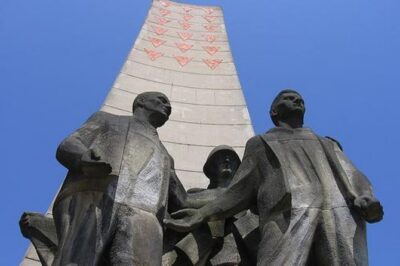
Then the tour brings you to a WWII memorial honoring Soviet soldiers, with statues, tanks, and an obelisk. This kind of stop can feel like it’s trying to be simple, but it’s really about power: who gets memorialized, what language a city uses to frame sacrifice, and how different countries tell the same era.
A drawback to keep in mind: outdoor memorials are exposed. If it’s rainy or cold, bring layers. Several guides are praised for keeping energy up in bad weather, but the sites themselves don’t get indoor shelter.
Brandenburg Gate: the main entrance myth, plus the reality
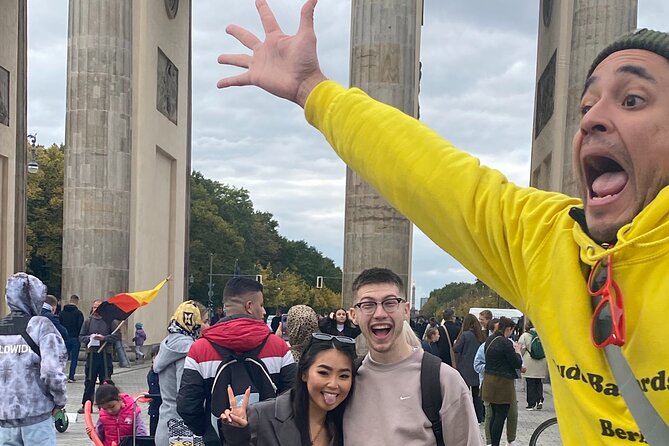
You’ll hit Brandenburg Gate as a major landmark with free admission ticket listed for the stop. The gate is famous enough that it can feel overexposed in photos—but on a walking tour it works because you’re getting the surrounding story too: the gate as a symbol of the city and the shifting meaning of that symbol over time.
Here’s the practical angle I love: standing at Brandenburg Gate is a quick “reset” moment. Even if the next stops get heavier, you leave this area with a clear visual reference point for the shape of Berlin’s center.
Spend your attention on details rather than just the big picture. The gate is a starting line for understanding why Berlin’s politics were always also about optics—who controls entrances, who controls narratives, and who gets to claim legitimacy.





The Holocaust Memorial: what to expect and how to handle the tone
Next is The Holocaust Memorial – Memorial to the Murdered Jews of Europe. The tour notes admission not included for this stop, so don’t assume you’ll have everything handled by the tour itself. If you’re planning your day tightly, this is the one stop where it’s worth checking what you’ll need onsite.
This is not a quick photo spot. Even if your time at the memorial stop is listed as around 10 minutes, you’ll want a moment to slow down and actually take it in. The memorial is designed to feel unsettling, and the tour’s value is that it frames the reason for the site without turning it into a punchline.
A good thing to know: guides on this tour are praised for knowing when to joke and when to hold space. That balance matters here. If you’re sensitive to dark humor, you may still find the serious parts of the story handled with care.
Fuhrerbunker (hitler’s bunker location): short stop, huge emotional weight
You’ll also stop at Fuhrerbunker, the location of Hitler’s bunker, with a listed free admission ticket stop. The tour frames it as the site where he spent his last months, which is the key idea: you’re looking at the ground level of a place tied to the final collapse of Nazi power.
Even though the stop is short (around 10 minutes), it’s powerful because of the contrast. Berlin often gives you layers: a beautiful cityscape on one street, then the reminder that the city’s modern look doesn’t erase what happened.
What you should bring: patience. This stop is one of those “your brain catches up later” moments. If you rush it, you’ll miss the point.
Checkpoint Charlie and the Wall route: where the Cold War becomes physical
The middle of the walk leans hard into the Cold War story, and you’ll see places that make the division feel real.
You’ll pass through the area described as an old customs checkpoint between Soviet communist and American capitalist sectors—that’s the heart of the Checkpoint Charlie concept. Then the route includes the Berlin Wall segment (not just a view of history, but a reminder that borders were lived, watched, and enforced).
Then comes the practical part. When you’re walking with a guide who can explain why these places mattered, the Wall stops being an idea and becomes a human system—who could go where, how pressure worked, and how propaganda traveled.
If you’ve seen Berlin from big buses or quick photo walks, this is where the tour adds value. It turns landmarks into cause-and-effect.
Reichstag, Brandenburg Gate context, and the Jewish memorial pairing
The itinerary also includes the Reichstag, plus the Jewish memorial area. Even if you’re not going inside any building during the walk (the tour listing only flags specific admission for certain stops), the exterior views are still useful.
Why? Because the guide ties the story together. The Reichstag area is a visual reminder that democracy and authoritarianism fought over the same city center. When you pair that with other memorial stops, you start to see Berlin’s modern political identity as something constantly negotiated, defended, and rebuilt.
If you like learning with a narrative thread—rather than random facts—this route works because the landmarks connect logically.
Lunch-time energy without losing momentum: the 20-minute break
You get a built-in 20-minute break around a Berlin mall area. That’s the kind of planning I appreciate on a 3-hour-plus walking tour. It means you’re not stuck “power walking” the whole time, and you can reset your feet and attention.
In your planning, treat this as your chance to grab water, use the restroom, and keep your pace steady for the final stretch. It’s also a good time to ask the guide quick questions—because the tone is conversational, not formal.
One note from the spirit of the guides: some routes pass by seasonal sights. For example, one group description mentions Christmas markets in December along the way, depending on timing and weather. So if your trip lines up with the holidays, you might get some extra Berlin atmosphere without changing your plans.
Gendarmenmarkt, Bebelplatz, and the final shift to reflection
Later, you’ll walk through areas like Gendarmenmarkt and Bebelplatz, and you’ll pass by Museum Island along the way. Even when the tour is focused on the 20th century, these stops help you remember this is still Berlin—still a city with culture, architecture, and civic spaces.
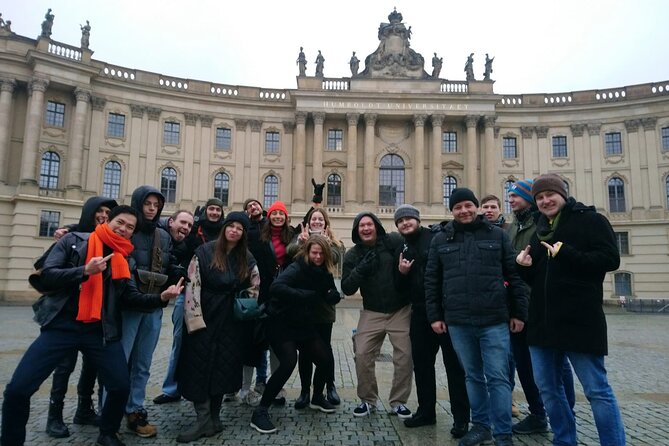
Bebelplatz is especially meaningful in a tour like this because it’s tied to a terrible Nazi episode in the tour’s framing. That doesn’t mean you’ll leave with a trivia dump. It means you end the tour with a place that makes the ideology feel tangible: public space was used as a weapon, not just a backdrop.
At the end, you’re back on Unter den Linden, which is a practical win. It’s easy to continue your day, catch transit, or walk to other sights you want to explore deeper.
Price and time on your feet: value for an orientation tour
The listed price is $3.63 per person, which is startlingly low for a 3+ hour guided experience. Even if you treat the number as a promotional figure, the key value question is still the same: do you get enough “guide time” and enough landmark coverage to justify it?
Here’s how this tour earns its spot:
- Time efficiency: about 3 hours 15 minutes overall, with a mid-tour break.
- Landmark density: you cover major symbols like Brandenburg Gate, the Holocaust Memorial, the Wall/Checkpoint Charlie area, and the Reichstag corridor.
- Group size: max 10 travelers, so you’re not swallowed by a crowd.
- Adult storytelling format: guides use humor and direct language to keep you paying attention. That can be more memorable than a standard script.
Is it worth it if you’re expecting a quiet, museum-style experience? Probably not. Is it worth it if you want a strong orientation into Berlin’s most important and disturbing chapters—delivered like a lively conversation—then yes, the value feels unusually strong.
Who this tour suits best (and who may want a different option)
This is a good fit if you:
- want a fast way to orient yourself to Berlin’s center and key historic landmarks
- enjoy guides who tell stories in a voice that feels modern and human
- are okay with an adult tone and occasional off-color jokes
This may not be your best match if you:
- prefer strictly formal narration and don’t want coarse language
- need a totally neutral atmosphere for heavy topics
- dislike walking in cold or wet weather (Berlin can do both fast)
One more practical tip: it’s a walking tour, so wear shoes you trust. Berlin is relatively flat, and guides are praised for keeping the group comfortable, but your comfort still comes down to your footwear.
Should you book Rude Bastards Berlin (CYHIT)?
If you’re planning your first day in Berlin and you want the big landmarks connected into a story you’ll remember, I’d book it. The combination of small group size, strong route coverage, and guides like Kai, Alex, Arthur, and others who can balance jokes with respect makes it one of the more engaging ways to understand the city’s modern identity.
Just be honest with yourself about the style. This tour is called Rude Bastards for a reason. If you want a serious, sanitized lecture, pick something else. If you want history that feels alive—sometimes with a wink, sometimes with the lights on—you’ll likely feel like you got more than your money’s worth.
FAQ
FAQ
How long is the Rude Bastards tour of Berlin?
It runs for about 3 hours 15 minutes.
What language is the tour offered in?
The tour is offered in English.
Where do I meet the tour, and where does it end?
You meet at Potsdamer Platz 10, 10785 Berlin, Germany, and the tour ends at Bebelplatz Unter den Linden, 10117 Berlin, Germany.
Is there a ticket for the Holocaust Memorial included?
No. The stop for The Holocaust Memorial – Memorial to the Murdered Jews of Europe lists admission as not included.
Are any sites free to visit during the tour?
Brandenburg Gate and Fuhrerbunker are listed with admission ticket free for the stop.
How big is the group?
The tour has a maximum of 10 travelers.
What kind of ticket do I receive?
You get a mobile ticket.
Is free cancellation available?
Yes. You can cancel up to 24 hours in advance for a full refund. If you cancel less than 24 hours before the experience starts, the amount you paid will not be refunded.
More Tours in Berlin


More Tour Reviews in Berlin
Round out your days in Berlin
Tours, compared.
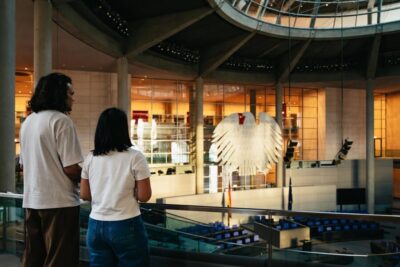 ★ 4.7Reichstag, Dome and Government District Guided TourFrom $1818,288 reviews
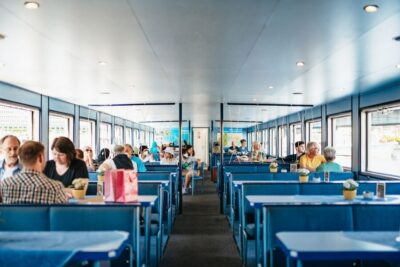 ★ 4.31-Hour City Tour by Boat with Guaranteed SeatingFrom $2516,993 reviews
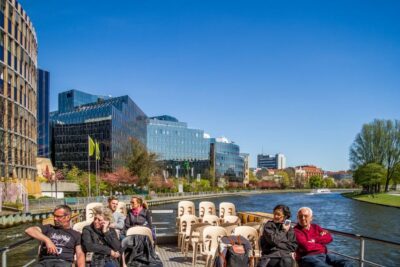 ★ 4.4Boat Tour Along the River SpreeFrom $3411,252 reviews
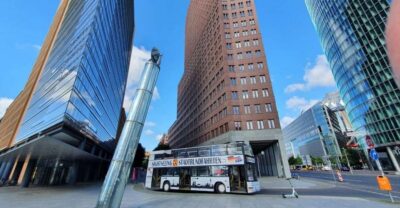 ★ 4.3Hop-on Hop-off Bus Tour with Live CommentaryFrom $228,579 reviews
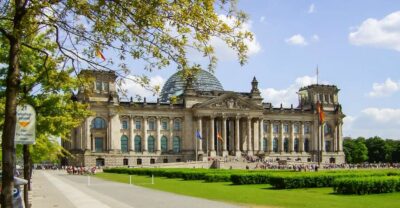 ★ 4.6Reichstag, Plenary Chamber, Cupola & Government TourFrom $188,422 reviews
 ★ 4.9Third Reich & Cold War Guided Walking TourFrom $238,378 reviews
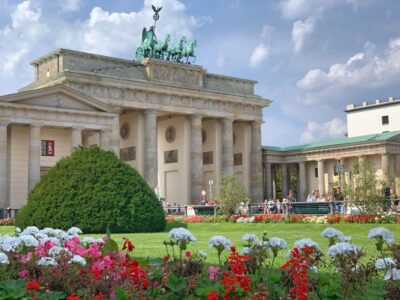 ★ 4.9Discover Berlin Walking TourFrom $235,998 reviews
 ★ 5.0Sachsenhausen Concentration Camp Tour in EnglishFrom $365,711 reviews