
REVIEW · TOURS
Rude Bastards tour of Medieval Berlin
Berlin’s medieval layer is hiding in plain sight. This Rude Bastards walk connects Protestant Reformation stories and church art, starting at the Luther Monument, then winding toward Nikolaiviertel with humor along the way. It’s history you can actually track while walking.
I love two things about how this tour is built. First, the small group limit (up to 20) keeps the vibe friendly and not overly “lectured.” Second, the guide style is story-forward—expect funny, picture-backed explanations that make the details easier to remember.
One thing to consider: most stops list admission not included, and there’s no set restroom break. Plan to move at a brisk walking pace and be ready to pay small entry fees if you choose to go inside.
In This Review
- Key highlights worth your attention
- Price and value: $3.60 sounds too good to be true
- Where you start and how the walk fits your day
- Stop-by-stop: reading Medieval Berlin from Luther to Nikolaikirche
- 1) Luther Monument: Protestant Reformation starts the story
- 2) St. Mary’s Church: the medieval art lesson (Dance of the Death)
- 3) Rotes Rathaus: the city tells jokes with naming
- 4) Franziskaner Klosterkirche: from old monastery to major Berlin figures
- 5) Palais Podewil: aristocrats, names, and the Soldier King era
- 6) Parochialkirche: Reformed faith plus cemetery history plus wartime scars
- 7) Memorial of the Berlin Wall: a medieval wall story (and why that matters)
- 8) Märkisches Museum area: the island origins of Berlin
- 9) Köllnischer Park: bears, strange zoos, and a very weird sculpture
- 10) Historischer Hafen Berlin: Hanseatic trade and canals
- 11) Humboldt Forum: the free indoor payoff
- 12) Museum Knoblauchhaus: Frederick the Great plus Ephraim and Jewish Berlin
- 13) St. Nicholas Church (Nikolaikirche): wrap-up from the 1200s to 1800s
- What you actually learn (and why it sticks)
- Practical tips so you enjoy the pace
- Who this tour suits best
- Should you book the Rude Bastards Medieval Berlin tour?
- FAQ
- FAQ
- How long is the Rude Bastards Medieval Berlin tour?
- How much does the tour cost?
- What language is the tour offered in?
- Is admission included for the stops?
- Does the tour include a public transport ticket?
- Is there a restroom break included?
- Where do I meet the guide?
- Where does the tour end?
- What’s the group size limit?
- Is free cancellation available?
Key highlights worth your attention
- Protestant Reformation in real locations: You start at the Luther Monument and work through Berlin’s church and civic story.
- Dance of the Death explained on-site: St. Mary’s Church brings the medieval art lesson to life.
- Reformed churches plus Cold War after-effects: Parochialkirche’s roof damage and DDR-era rebuilding add a modern layer.
- An old-town route with “why this place exists” answers: From Rotes Rathaus to Märkisches Museum, you learn how names and roles formed.
- A free indoor stop: Humboldt Forum entry is free on this experience, so you get a break from the street.
Still narrowing down your days in Berlin? Here are more tours to weigh up.
- Berlin: Reichstag, Dome and Government District Guided Tour★ 4.7 · 18,288 reviews
- Berlin: 1-Hour City Tour by Boat with Guaranteed Seating★ 4.3 · 16,993 reviews
- Berlin: TV Tower Standard Entrance Ticket★ 4.4 · 15,883 reviews
- Berlin: Boat Tour Along the River Spree★ 4.4 · 11,252 reviews
Price and value: $3.60 sounds too good to be true
At $3.60 per person, this tour is priced like a “try it once” deal. The key is what’s included versus what you may still pay for. What you’re buying is a guided walking experience, plus local know-how—entertainment ideas, cuisine suggestions, free museum leads, and night-life tips. You’re also getting a well-rounded view of the sights rather than bouncing between disconnected highlights.
The trade-off is that most of the stops don’t include entry tickets. So think of this as a guided tour where your base fee covers the storytelling and navigation, and you handle any optional entrances. The one clear exception is Humboldt Forum, where admission is listed as free.
For value, this tour works best if you want a guide to help you read Berlin’s medieval-to-early-modern clues in sequence—religion, city power, trade, and the occasional odd sculpture that makes you laugh mid-walk.
Where you start and how the walk fits your day
This tour starts at 11:00 am at Luther Monument, Karl-Liebknecht-Str. 8, 10178 Berlin. You’ll end in the Nikolaiviertel area at Rathausstraße 21, 10178 Berlin. The route is designed to be walkable and generally suitable for most people, with a group cap of 20 travelers.
You get a mobile ticket, so save it to your phone before you leave. Also, this experience doesn’t include a public transport ticket, so have yours ready if you’re taking the tram or subway to the meeting point.
Timing matters here: about 2 hours 40 minutes for roughly a dozen-plus stops means each place gets a short, focused explanation. If you like to linger, you’ll need to do that on your own before or after, not during the tour.
Stop-by-stop: reading Medieval Berlin from Luther to Nikolaikirche
Below is the flow you’ll experience, and why each stop matters beyond the postcard view.
1) Luther Monument: Protestant Reformation starts the story
You begin with Protestantism and the Protestant Reformation, plus the division of Germany. This opening sets your “lens” for everything that comes next—Berlin’s churches and civic institutions start to make more sense when you know the political-religious pressures behind them.
Why it’s useful: without this framing, it’s easy to treat churches as just pretty buildings. With the framing, you start to see how belief systems shaped power, art, and even daily life.


2) St. Mary’s Church: the medieval art lesson (Dance of the Death)
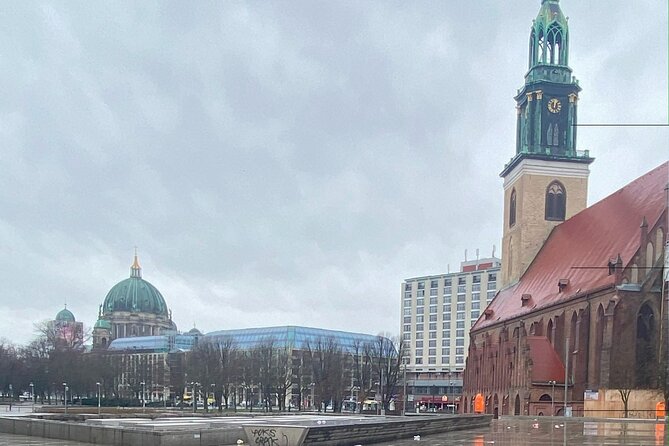
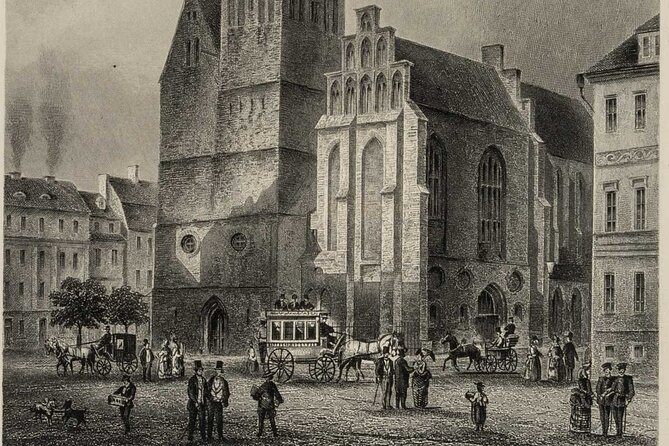
Next up is St. Mary’s Church, dating to 1270 and described as the 2nd oldest construction in Berlin. The standout here is the Dance of the Death, and you’ll get help understanding what the paintings are saying.
What I like about this stop: it’s not just “look at the old stuff.” The guide connects the art to meaning, so you leave with an image in your head—and a reason it was painted.
A practical note: the tour time here is short, so if you want extra time inside, arrive with realistic expectations. You may need to return later.
3) Rotes Rathaus: the city tells jokes with naming
You then reach Rotes Rathaus, where you’ll hear how it all came together—its functions and the logic (and humor) behind the naming. It’s a quick stop, but it’s valuable because it shifts from purely religious landmarks to how Berlin organized itself.
This is the moment where the medieval story starts turning into civic story. You’ll start noticing how the city’s identity gets packed into building names and roles.
4) Franziskaner Klosterkirche: from old monastery to major Berlin figures
At Franziskaner Klosterkirche, the guide points out its age—1250 to oldest preserved—and then jumps through time to its use in Berlin education: the Berlin High School at the Gray Monastery in 1574. You’ll also hear about major names tied to Berlin’s intellectual and political trajectory, including Karl Friedrich Schinkel, Friedrich Ludwig Jahn, and Otto von Bismarck.
Why this works: you get a sense of continuity. The building isn’t just a relic. It becomes a thread through Berlin’s changing priorities—religion, learning, and leadership.
5) Palais Podewil: aristocrats, names, and the Soldier King era
Then you move to Palais Podewil, erected by Berlin aristocrats in 1704. The story here is how the place got its name from a famous resident—Heinrich Graf von Podewils—living there in 1732. You’ll also connect this to the court of Frederick the Great and the era of the Soldier King.
This stop is good if you like “how power lived in buildings.” It’s not just architecture—it’s a lesson in who held influence and how the city’s elite footprint shaped the built environment.
6) Parochialkirche: Reformed faith plus cemetery history plus wartime scars
At Parochialkirche you’ll hear it was built 1695–1705 and described as the oldest Reformed Church of Berlin. The guide ties in Friedrich III (I), plus the oldest well-preserved cemetery nearby, recorded as 1706.
Then the stop turns sobering: the roof was destroyed by an incendiary bomb. You’ll also hear that DDR reconstruction happened, but the roof wasn’t used as a church afterward, with later changes after unification and renovations.
This is a meaningful stop because it shows how Berlin layers time. Religious buildings don’t just age—they absorb history, including war and political regime shifts.
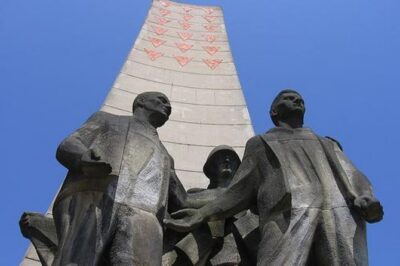
7) Memorial of the Berlin Wall: a medieval wall story (and why that matters)
You’ll then reach the Memorial of the Berlin Wall, but the explanation you get reaches back far earlier than the Cold War image most people expect. The story starts being erected in 1250, then used and improved until the 17th century.
Takeaway: Berlin’s “wall” story isn’t only modern. The idea of fortification and control changes over centuries, and the guide helps you notice the long arc rather than treating it as a one-era event.
8) Märkisches Museum area: the island origins of Berlin
At Märkisches Museum, the focus is on how the island formed and where the original Berlin center sat. The guide explains how Berlin changed over centuries—so you can see the city as an evolving settlement rather than a fixed map.
This stop is useful for perspective. After you’ve spent time on individual buildings, the museum area helps you zoom out and understand the “why here” of the whole region.
9) Köllnischer Park: bears, strange zoos, and a very weird sculpture
Next is Köllnischer Park, where you’ll hear about a bear cage and what’s described as German “bizarre zoos.” The guide also points out a big entrance sculpture tied to Hercules and a lion-fight theme.
I like stops like this because they break the heavy mood. Medieval Berlin isn’t only grim morality plays and church politics. It also has public absurdity, humor, and spectacle—and the city remembers that too.
10) Historischer Hafen Berlin: Hanseatic trade and canals
At Historischer Hafen Berlin, the tour explains the Hanseatic League connection. Berlin’s geography made membership possible, but it wasn’t portrayed as a major player at first. Commerce improved later when the Great Elector began creating canals that connected main rivers in the state, raising Berlin’s status.
This stop gives you a practical economic idea: Berlin didn’t rise just because kings liked it. It rose because trade routes and transport mattered. You’ll carry that thought as you move into the more “palace and museum” era.
11) Humboldt Forum: the free indoor payoff
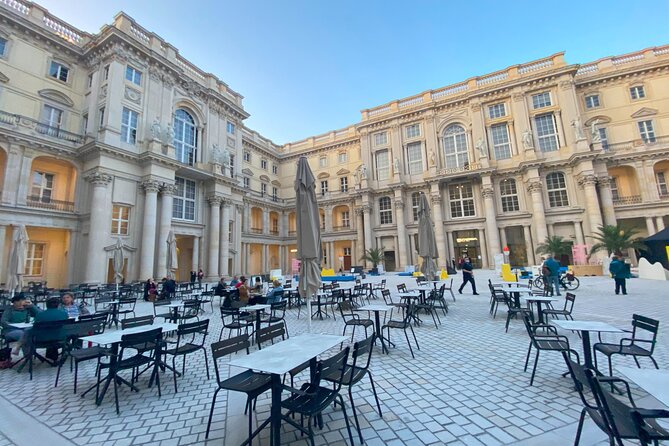
One of the best mid-tour breaks is Humboldt Forum, where admission is listed as free. You’ll go inside the old (but newly reworked) palace and hear about the money spent on the building’s cosmetic restoration.
This is where the tour gives you a breather from outdoor walking. It also turns the “history” theme into a modern question: how do we pay to rebuild what we think we want to show?
12) Museum Knoblauchhaus: Frederick the Great plus Ephraim and Jewish Berlin
Then comes Museum Knoblauchhaus. Here the story is tied to Ephraim, described as the jewelry maker for the court of Friedrich the Great in the 1700s. The house at this location is part of that story, and you’ll hear that there was a silver refinery in the backyard.
The guide also frames the stop around two themes: Friedrich the Great and the history of Berlin Jews. Even with short time here, the point is clear: Berlin’s medieval and early-modern story includes Jewish artisans and court life, not just royal lines and church wars.
13) St. Nicholas Church (Nikolaikirche): wrap-up from the 1200s to 1800s
The tour ends at St. Nicholas Church (Nikolaikirche). This is where the guide wraps up the story from the 1200s through the 1800s, bringing the medieval-to-early-modern thread full circle.
Ending here also helps you keep your bearings. You finish in the Nikolaiviertel area, which is a good zone to wander afterward on your own.
What you actually learn (and why it sticks)
This tour does something smart: it mixes belief, art, politics, and economics instead of treating Berlin history as separate boxes.
You start with religion and reformation logic, then see how church art like the Dance of Death creates a shared emotional language. You move into civic function and naming, which is a reminder that history isn’t only churches and kings—it’s city administration too. Then you hit economic reality through Hanseatic trade and canals, so the city’s growth has a mechanism.
The “edutainment” style—humor plus clear explanations—helps the facts land without turning into a classroom. The guide pacing also matters in a walking tour like this: you get short stops with enough time for the story, but the route keeps moving so you don’t lose the thread.
Practical tips so you enjoy the pace
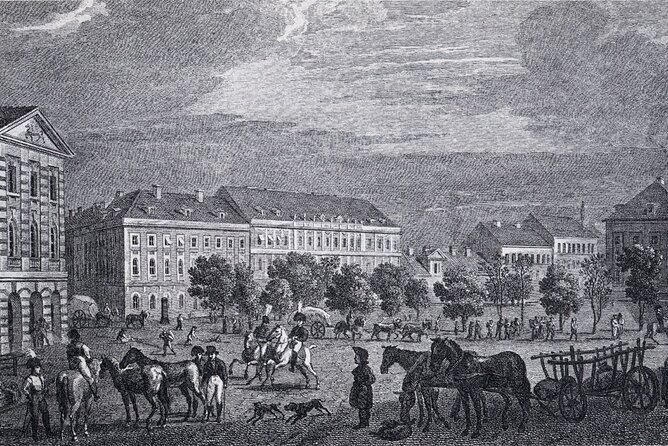
Because the tour is designed for multiple stops in about 2 hours 40 minutes, small planning choices make a big difference.
- Wear comfortable shoes. This is a walking route with limited linger time at each point.
- Budget for optional entries. Most stops say admission is not included; only Humboldt Forum is listed as free.
- Plan for no restroom break. If you need breaks, you’ll have to manage them yourself.
- Have your transport sorted. A public transport ticket is not included, so arrive ready to get there.
- Book ahead. The experience is commonly booked about 28 days in advance, so popular dates can fill.
Also, the tour runs best in good weather, and the experience is designed around that reality.
Who this tour suits best
This is a good fit if you want:
- A guided way to understand medieval-to-early-modern Berlin without reading a guidebook for hours.
- A route built around multiple themes: Protestant history, church art, civic structures, and trade.
- Humor and interaction that keeps the group comfortable (especially since the group size is kept small).
It’s also a decent choice if you’re someone who doesn’t love being stuck in one spot. You’re moving city to city—symbolic Berlin, not only museum Berlin.
Should you book the Rude Bastards Medieval Berlin tour?
I’d book it if you want a guide to connect the dots fast: Luther’s Reformation framing, Dance of Death art, Reformed church stories, Berlin’s civic naming quirks, and the trade-and-canal explanation behind Berlin’s rise. The $3.60 price makes it especially attractive, as long as you’re okay handling optional entries at the stops and managing your own restroom timing.
I’d skip or choose a different option if you strongly prefer deep, long indoor time at major sites. This tour is structured for quick, story-rich stops—not extended museum wandering.
If you’re booking for the experience in English and you like walking-history with jokes, this one is a strong, low-cost way to get oriented fast in central Berlin.
FAQ
FAQ
How long is the Rude Bastards Medieval Berlin tour?
It lasts about 2 hours 40 minutes (approx.).
How much does the tour cost?
The price is listed as $3.60 per person.
What language is the tour offered in?
The tour is offered in English.
Is admission included for the stops?
Admission ticket inclusion varies by stop. Most are listed as Not Included, while Humboldt Forum is listed as Free.
Does the tour include a public transport ticket?
No. Public transport ticket is not included.
Is there a restroom break included?
No, restroom break is not included.
Where do I meet the guide?
The start point is Luther Monument, Karl-Liebknecht-Str. 8, 10178 Berlin.
Where does the tour end?
It ends at Nikolaiviertel, Rathausstraße 21, 10178 Berlin.
What’s the group size limit?
The maximum group size is listed as 20 travelers.
Is free cancellation available?
Yes. Free cancellation is available, and you can cancel up to 24 hours in advance for a full refund. The experience may also be rescheduled or refunded if canceled due to poor weather.
More Tours in Berlin

More Tour Reviews in Berlin
Round out your days in Berlin
Tours, compared.
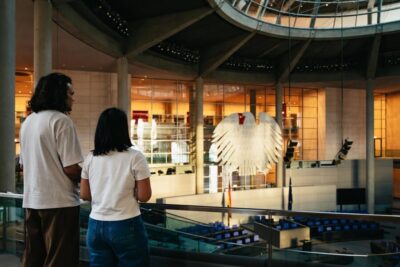 ★ 4.7Reichstag, Dome and Government District Guided TourFrom $1818,288 reviews
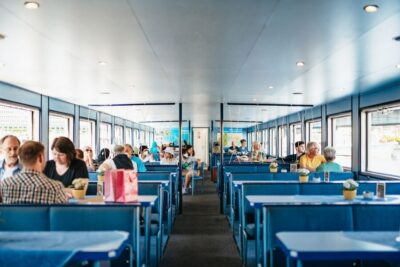 ★ 4.31-Hour City Tour by Boat with Guaranteed SeatingFrom $2516,993 reviews
 ★ 4.4Boat Tour Along the River SpreeFrom $3411,252 reviews
 ★ 4.3Hop-on Hop-off Bus Tour with Live CommentaryFrom $228,579 reviews
 ★ 4.6Reichstag, Plenary Chamber, Cupola & Government TourFrom $188,422 reviews
 ★ 4.9Third Reich & Cold War Guided Walking TourFrom $238,378 reviews
 ★ 4.9Discover Berlin Walking TourFrom $235,998 reviews
 ★ 5.0Sachsenhausen Concentration Camp Tour in EnglishFrom $365,711 reviews