
REVIEW · BERLIN BIKE TOURS
Small-Group Historical Bike Tour in Berlin
Berlin history clicks into place on two wheels. You get a guided sweep through Berlin’s most powerful landmarks, mixing street-level views with the story behind each one. It’s an efficient way to see major sights in one ride without spending your whole day in transit.
I love the small-group feel and the way the guide keeps the pace friendly. I also love that the tour covers big-ticket stops like the Berlin Wall Memorial and the Holocaust Memorial with time to actually look around.
One consideration: Berlin can be flat and the ride is usually easy, but the bikes may use a back-pedal braking setup. If you’re even a little unsure on a bike, take the first few minutes to practice braking before you roll deeper into the route.
In This Review
- Key highlights I’d plan around
- Why This Berlin Bike Route Works for First Timers
- Getting Oriented at Alexanderplatz: TV Tower and St. Nicholas Church
- Oranienburger Straße and the Jewish New Synagogue Area
- From the Wall Memorial to the Reichstag: Division to Reunification
- Holocaust Memorial, Topography of Terror, and Checkpoint Charlie
- Gendarmenmarkt to Bebelplatz: Berlin’s Cultural Side After the Heavy Stuff
- Wrap-Up at Museum Island and the Return Ride
- Price and What You Actually Get for $54.42
- The Guide Factor: How Jerry, Pablo, and Demetrios Shape the Tour
- Bike Gear, Pace, and Riding Notes in Central Berlin
- Who This Tour Suits Best (and Who Might Want Something Else)
- Should You Book This Berlin Historical Bike Tour?
- FAQ
- How long is the Berlin historical bike tour?
- Where does the tour start and does it end nearby?
- Is food included in the tour price?
- Are bikes and safety gear provided?
- What language is the tour offered in?
- What’s the minimum age, and can children join?
Key highlights I’d plan around
- Flat, easy cycling through central Berlin, with regular stops to absorb the sights
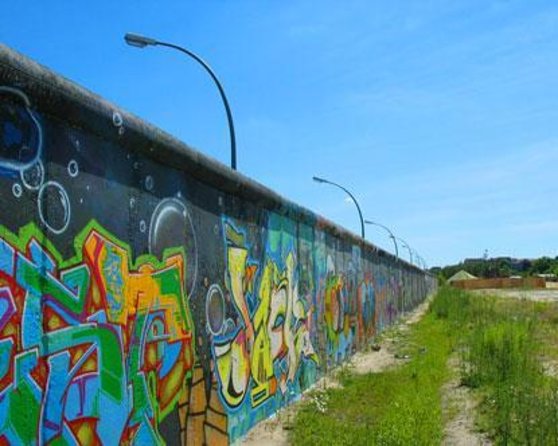
- Berlin Wall Memorial with a preserved stretch that helps you picture how the border changed
- TV Tower area orientation that frames Alexanderplatz and the city’s early story
- Sobering sequence of Holocaust Memorial, Topography of Terror, and Checkpoint Charlie
- Cultural finale at Gendarmenmarkt and Bebelplatz after the heavy history
- Local storytelling led by guides such as Jerry, Pablo, and Demetrios
More of Berlin by bike
- Berlin: Sights and Highlights Bike Tour with a Local Guide★ 4.8 · 2,698 reviews
- Berlin Highlights 3-Hour Bike Tour★ 5.0 · 948 reviews
- Berlin Highlights: 3-Hour Bike Tour★ 4.9 · 809 reviews
- Berlin Highlights Sightseeing Bike Tour in Small Groups★ 5.0 · 652 reviews
Why This Berlin Bike Route Works for First Timers
This tour is built for people who want Berlin’s key chapters in one morning or early afternoon block. You bike for about 3 to 4 hours, and the route stays in central areas that you can easily miss on foot.
It also helps that the city is famously bike-friendly in practice: flat streets, lots of bike lanes, and frequent room to regroup. Your guide keeps the group together at a steady rhythm, so you’re not sprinting between stops or losing time to navigation.
Another value point is the structure of short stops with enough time to look. The itinerary doesn’t just toss you at famous places; it gives you brief windows to understand what you’re seeing, then move on.
Getting Oriented at Alexanderplatz: TV Tower and St. Nicholas Church
You start near Panoramastraße 1 and head into the Alexanderplatz area, where the Berlin TV Tower (Berliner Fernsehturm) becomes a real visual anchor. From there, you get a view over the square and learn how the surrounding neighborhood fits into Berlin’s bigger story.
Right in this zone, you’ll also hear about St. Nicholas Church (Nikolaikirche), a landmark in Berlin’s center for over 800 years. The way the tour links the church to early “birth of Berlin” themes makes the area feel less like random architecture and more like a timeline.
One practical tip: the TV Tower area has more than one “side” people can gather from. Plan to arrive a few minutes early and orient yourself to the main entrance so you’re not wasting time circling.
Oranienburger Straße and the Jewish New Synagogue Area
Next comes Oranienburger Straße, where you’re in the orbit of the Jewish quarter story and the Jewish new synagogue area. This stop is short, but it’s pointed: the guide focuses on context, connecting the street-level setting to Jewish history in Berlin.
I like this segment because it prevents the tour from becoming only a Berlin Wall and WWII story. Berlin’s twentieth-century trauma happened in a city with many layers of community life, and this stop nudges you to remember that.
It’s also a good moment to ask questions. With a small-group format, you usually have time to get clarification without the tour feeling rushed.
From the Wall Memorial to the Reichstag: Division to Reunification
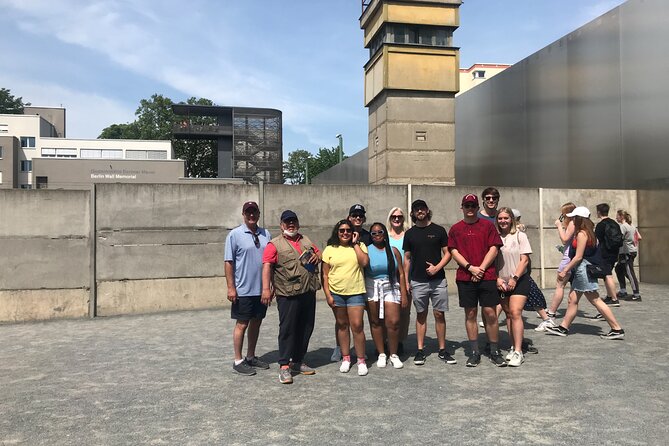
This is the heart of the tour for most history lovers. You spend time at the Memorial of the Berlin Wall, located at Bernauer Strasse. The memorial stretches about 1.4 kilometers along the former border strip, and you’re shown how the fortifications evolved toward the end of the 1980s.
What makes this stop more than a photo stop is the physical storytelling. The memorial includes the last piece of Berlin Wall, plus preserved grounds behind it, so you can picture what it meant to live near a barrier that wasn’t just political—it was concrete, watchtowers, and controlled movement.
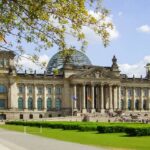
From there, you move to the Reichstag building, seat of the German Parliament. The guide connects it to the Weimar Republic era and its later seizure by the Nazis in 1933. The tour also points out the building’s story around the fire and what that period meant for German politics.
Then you ride through the Brandenburg Gate area, described as a defining symbol of Berlin, shaped by the idea of division and unification. The tour ties it to its 18th-century origins under Friedrich Wilhelm II, which adds a helpful layer: you’re not only seeing Cold War meaning; you’re also seeing how older power symbols got reused by later history.
More Berlin tours to line up side by side
Holocaust Memorial, Topography of Terror, and Checkpoint Charlie
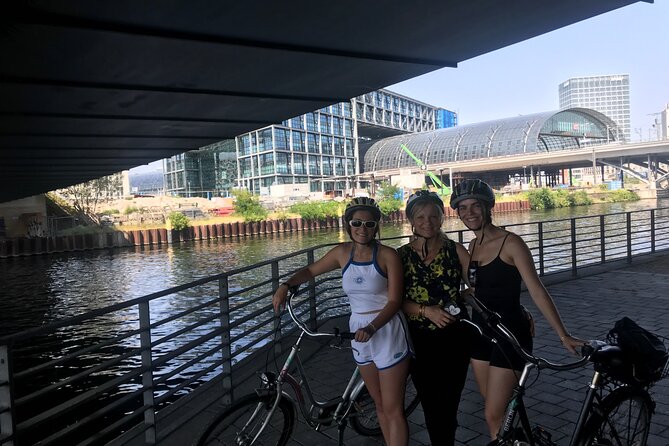
After the Wall and parliamentary sites, the tour shifts into the darkest portion of modern Berlin. First is the Holocaust Memorial (Memorial to the Murdered Jews of Europe). You’re encouraged to walk around it and take pictures, which can be useful if you need a few minutes to absorb the scale from different angles.
Next, you stop at Topography of Terror for a brief look and photos at where Gestapo headquarters once stood. Even with limited time here, the context matters: it frames the site as a place tied to fear, surveillance, and state violence.
Then you reach Checkpoint Charlie for a very short stop. It’s famous for a reason, but the tour’s goal is more about orientation than lingering. The short timing keeps the pacing moving while still giving you a chance to “locate” the Cold War in your head—where the border pressure and the show of power played out day to day.
If you’re sensitive to heavy subject matter, plan how you want to handle it. This route doesn’t soften the tone; it steps into it.
Gendarmenmarkt to Bebelplatz: Berlin’s Cultural Side After the Heavy Stuff
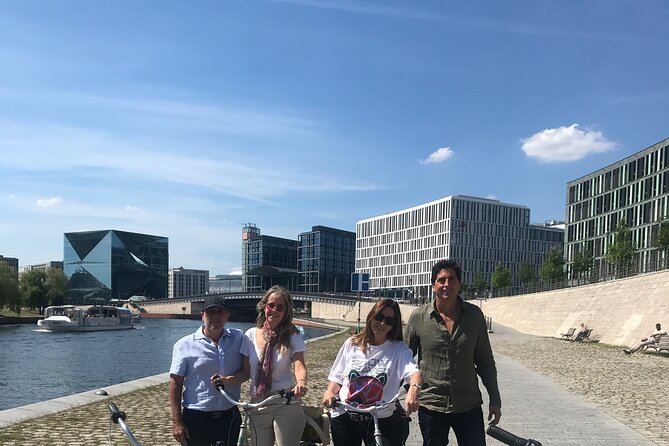
After the Cold War and WWII stops, you get a welcome shift to central Berlin’s culture and public spaces.
At Gendarmenmarkt, you ride through the square and take photos while learning about what makes it memorable. This kind of stop helps you regain balance: you move from memorial gravity back to civic architecture and the city’s public-facing identity.
Then you reach the Book Burning Memorial at Bebelplatz. This is another quick but meaningful moment where you see the memorial and get the explanation. It’s a different kind of “history of control,” showing how ideas were targeted, not just bodies and borders.
I like the placement of this part of the route. It reminds you that Berlin wasn’t only a stage for division and terror. It was also a place where culture, debate, and propaganda battles shaped everyday life.
Wrap-Up at Museum Island and the Return Ride
To finish, the tour returns toward the TV Tower area and then heads to Museum Island. Here you ride through and get shown the museums and the general story tied to the island.
You don’t have time for museum-ticket depth on this format, but you do get orientation. If you want to follow up later, Museum Island becomes a short list of “come back for this museum” targets instead of a confusing cluster of buildings.
The ride back to the meeting point is part of the experience too. It gives you a final chance to ask questions and get pointers on what to revisit after you’ve seen the bigger picture.
Price and What You Actually Get for $54.42
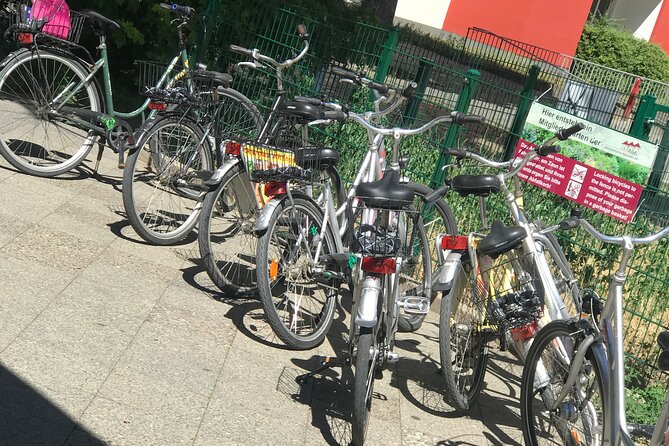
At about $54.42 per person, the value comes from what’s included and how the time is used. You get a local professional guide plus the use of a bicycle, which is the baseline that makes the sightseeing efficient.
You’ll also notice that many major stops are presented with admission tickets marked as free. That matters because it removes one common budget pain point on tours—fees that can quietly add up across multiple landmarks.
Food and drinks are not included, so you’ll want to plan a snack break before or after. The good news is the route doesn’t trap you in long museum lines; it’s built for cycling time plus short learning stops.
If you’re visiting for the first time and you’re short on days, this price often feels reasonable because it bundles transport-lite sightseeing with guided context.
The Guide Factor: How Jerry, Pablo, and Demetrios Shape the Tour
The standout theme across the best experiences is the guide’s ability to tell stories clearly and answer questions. Names that come up include Jerry, Pablo, and Demetrios, and the consistent thread is engagement.
Jerry gets especially strong praise for being attentive and patient when people ask all sorts of history questions. Pablo is repeatedly described as funny and story-focused, with facts, old photographs, and visuals used to explain what you’re seeing. Demetrios is praised for providing lots of city history context that helps the tour “click” into place.
Here’s the practical takeaway for you: if you have a theme you care about—WWII, the Cold War, Jewish history in Berlin, or postwar unity—bring it up early. In a small group, you can steer your guide toward what you want to understand most.
Bike Gear, Pace, and Riding Notes in Central Berlin
Equipment is included, and the tour is set up so most people can participate. That said, you should still treat the first minutes like a warm-up.
Berlin’s flat streets make the ride feel manageable, and bike lanes help you feel safe. Still, pay attention to the bike’s braking system. One important note from the tour experience: some bikes may use a back-pedal brake where pedaling backward slows or applies the rear brake. If that’s new to you, practice gently near the start before you join the main flow.
Dress code is casual, and the tour is timed for a start at 11:00 am. If the weather is cool, it’s smart to layer. You’ll be outside for a few hours, stopping often, and you don’t want to be chilled when you’re trying to listen.
Also, the meeting point is near public transportation, and service animals are allowed. The tour ends back at the meeting point, so you’re not stuck figuring out how to get home at the end.
Who This Tour Suits Best (and Who Might Want Something Else)
This is a great fit if you want a short, guided introduction to Berlin’s most important twentieth-century landmarks. It works especially well for first-timers who prefer moving city to city on a bike rather than hopping between buses.
It’s also a good option for people who like structure: a series of timed stops, clear stories, and enough time to take photos and ask questions without feeling like the tour is rushing you through.
It may be less ideal if you want long stays inside museums, because this is built around outdoor landmark viewing and guided context. If you prefer deep, multi-hour museum time at a calm pace, you’ll likely want to pair this with separate museum visits afterward.
Should You Book This Berlin Historical Bike Tour?
If your goal is to see Berlin’s big names—Berlin Wall Memorial, Reichstag area, Holocaust Memorial, Topography of Terror, and Checkpoint Charlie—in one efficient half-day, I’d book this. The price is attractive for a guided bike tour that includes bicycle use, and the stop-by-stop timing helps you learn without drowning in planning.
Go for it if you like learning through movement: you’ll understand the city’s layout better because you’re literally riding through the spaces where history happened. Bring a little curiosity, ask questions, and be ready for the heavier sites, which are part of the point of the route.
On the other hand, if you hate bikes or you’re uncomfortable with a back-pedal braking setup, you may want to consider a different tour style. For most people, though, this is an efficient and meaningful way to get your bearings fast.
FAQ
How long is the Berlin historical bike tour?
It runs for about 3 to 4 hours.
Where does the tour start and does it end nearby?
The tour starts at Panoramastraße 1, 10178 Berlin, and it ends back at the same meeting point.
Is food included in the tour price?
No. Food and drinks are not included.
Are bikes and safety gear provided?
Yes. The tour includes use of a bicycle, and the route is set up for biking.
What language is the tour offered in?
The tour is offered in English.
What’s the minimum age, and can children join?
The minimum age is 2 years, and children must be accompanied by an adult.
More Tours in Berlin
More Tour Reviews in Berlin
Berlin by Bike


Round out your days in Berlin
Berlin Bike Tours, compared.
 ★ 4.8Sights and Highlights Bike Tour with a Local GuideFrom $412,698 reviews
 ★ 5.0Berlin Highlights 3-Hour Bike TourFrom $42948 reviews
 ★ 5.0Berlin City Bike Tour with Beer Garden StopFrom $83917 reviews
★ 4.9Berlin Highlights: 3-Hour Bike TourFrom $37809 reviews
★ 5.0Berlin City Bike Tour with Beer Garden StopFrom $83917 reviews
★ 4.9Berlin Highlights: 3-Hour Bike TourFrom $37809 reviews
 ★ 5.0Berlin Highlights Sightseeing Bike Tour in Small GroupsFrom $43652 reviews
 ★ 4.8The Wall and Third Reich Guided Bike TourFrom $41578 reviews
 ★ 4.7Alternative Bike Tour of Kreuzberg & FriedrichshainFrom $41548 reviews
 ★ 4.8Guided Bike Tour to Explore the HighlightsFrom $41506 reviews
Browse the lists this tour appears in