
REVIEW · GUIDED
Traces Of Berlin: Guided Berlin Tour (English or German)
Berlin’s divided streets still talk to you.
This 2-hour guided tour follows the Wall through the places you’ve seen in photos, then explains what those locations meant for escape, repression, and resistance. You’ll visit major landmarks like Brandenburg Gate, Checkpoint Charlie, and Potsdamer Platz as the guide connects the dots between buildings, street details, and human stories.
What I like most is how strongly the tour anchors big history in visible details you can actually point to. You’ll get the story behind the famous symbols of division, including Ampelmann and even the difference in street lighting between East and West Berlin.
One heads-up: it’s a walking tour with outdoor time and uneven surfaces, so you’ll want comfortable shoes and you shouldn’t expect museum-style lounging. If you have mobility issues, this one is listed as not suitable.
In This Review
- Key things you’ll notice on the walk
- Starting at Die Mauer | The Wall and getting your bearings
- Leipziger Platz to the no-man’s-land zone: where the Wall’s logic becomes real
- Martin-Gropius-Bau and Bundesrat: architecture that carries political weight
- Topography of Terror: repression you can read in the setting
- Checkpoint Charlie: a famous name, explained with human stakes
- A secret stop and a viewpoint: when the tour adds perspective
- Platz des 17. Juni and the June 17th mural: ideology in public space
- Ampelmann and the street-lighting detail: the kind of trivia you’ll actually use
- Price and value: what you get for $41 in 2 hours
- Who should book this Wall tour (and who might not)
- Practical tips so the walk feels easy
- Language choice: English or German
- Should you book Traces Of Berlin?
- FAQ
- How long is the guided Berlin Wall tour?
- How much does the tour cost?
- Where does the tour start?
- What languages is the guide available in?
- Is transportation included?
- Are meals and drinks included?
- Can I take photos during the tour?
- Is the tour suitable for people with mobility impairments?
- What should I wear or bring?
Key things you’ll notice on the walk
- Die Mauer meeting point: you start at the Die Mauer | The Wall museum area, which helps you get oriented fast
- Ampelmann and street lighting contrasts: division shows up in small, everyday design choices
- Topography of Terror + Checkpoint Charlie: two heavyweight stops that explain what repression looked like in real life
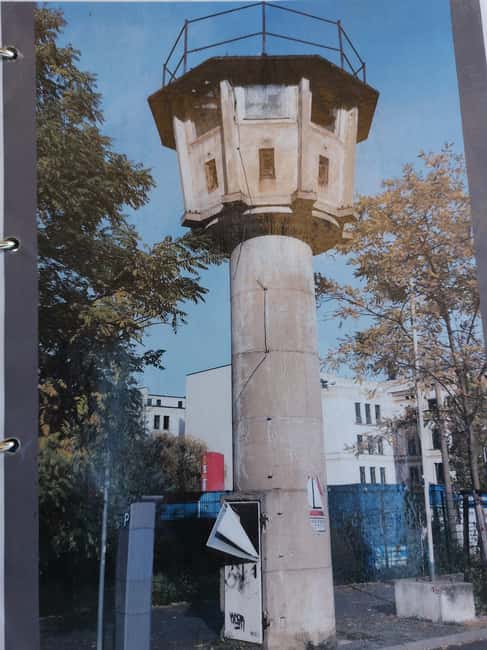
- A no-man’s-land-style detour: you’ll see the base of a former GDR watchtower area
- Martin-Gropius-Bau and Bundesrat: architecture gets pulled into the story, not left as scenery
- Panorapunkt viewpoint and Panoramacafè finish: you get a wider perspective after the history-heavy sections
More guided walks through Berlin
- Berlin: Reichstag, Dome and Government District Guided Tour★ 4.7 · 18,288 reviews
- Berlin: Third Reich & Cold War Guided Walking Tour★ 4.9 · 8,378 reviews
- Berlin: 1-hr Boat Tour with Bilingual Live Guide (DE/EN)★ 4.7 · 5,653 reviews
- Berlin: Hidden Backyards Guided Walking Tour★ 4.8 · 5,360 reviews
Starting at Die Mauer | The Wall and getting your bearings
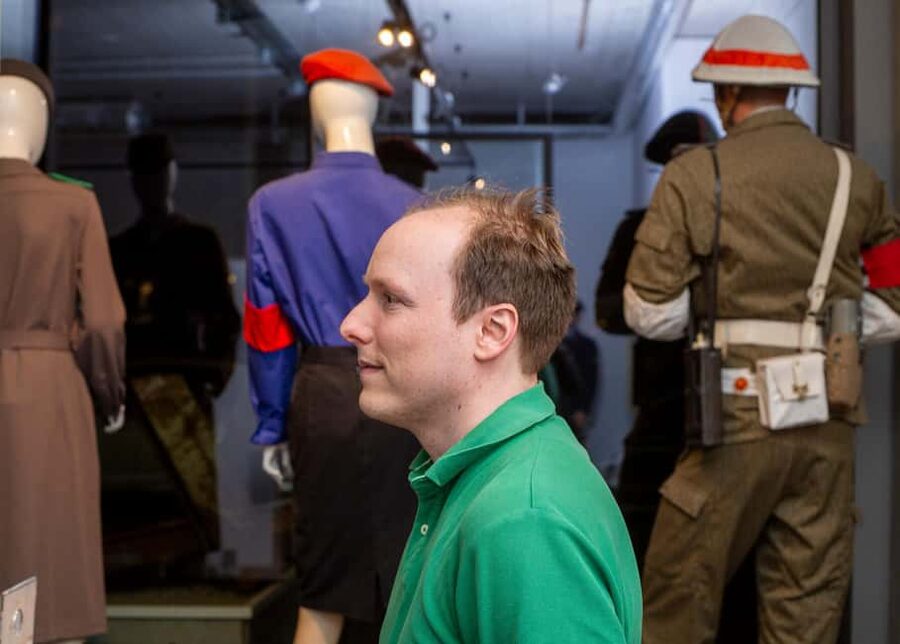
Your tour begins at the entrance to DIE MAUER | THE WALL – Das Museum am Leipziger Platz. That matters more than it sounds. Starting here helps you frame everything you see next: the Berlin Wall wasn’t just one wall, it was a whole system of control, fear, and improvisation.
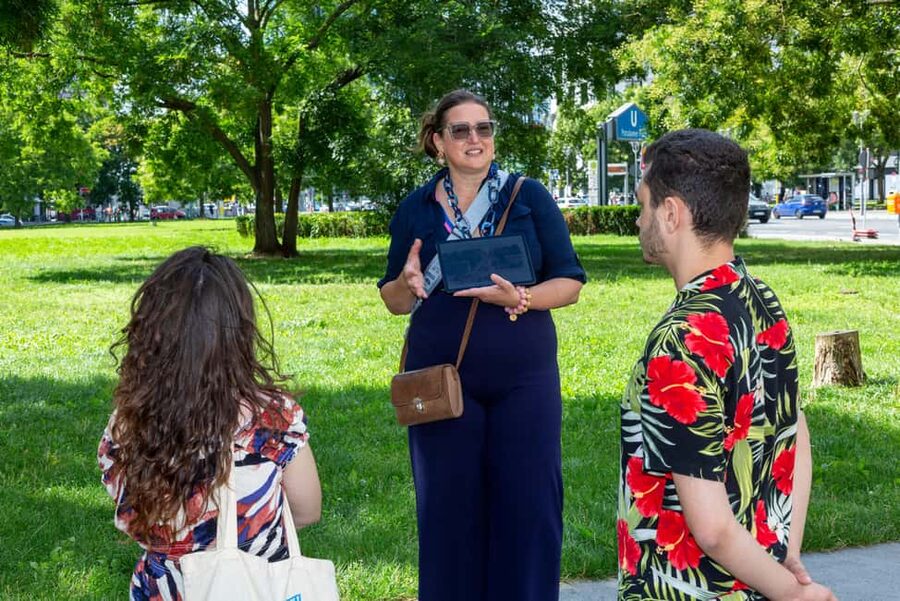
Once you’re on the move, the guide sets a clear rhythm for the next 2 hours. Expect short, timed stops where you’re not just staring at landmarks—you’re being shown what to look for and why the location is significant. This approach works well if you’re doing Berlin for the first time and want a “map in your head” by the end.
Leipziger Platz to the no-man’s-land zone: where the Wall’s logic becomes real
One of the tour’s strengths is how it makes “the divided city” feel physical. You won’t just hear abstract political history—you’ll stand in areas linked to the former boundary and the conditions around it.
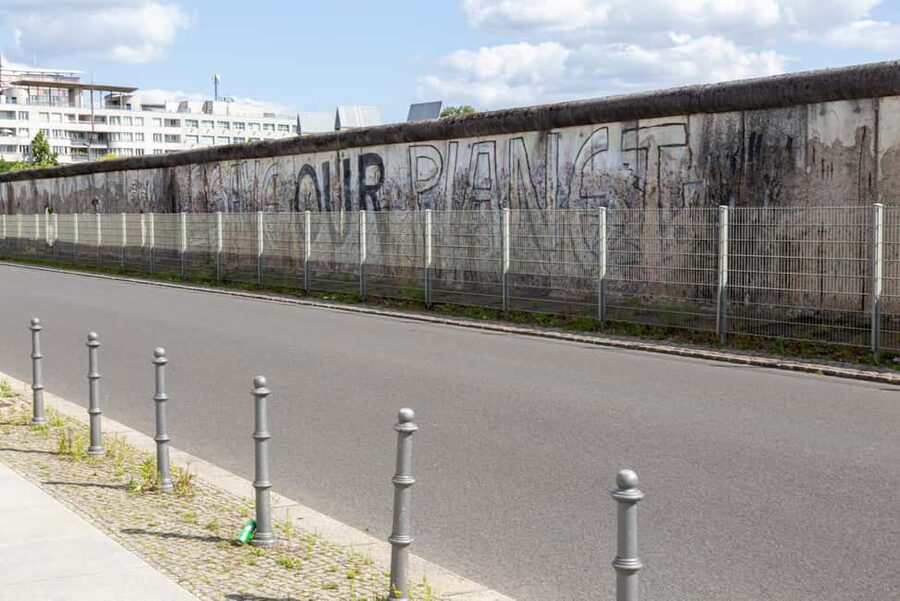
In the route you’ll visit Leipziger Platz and also make time for the base of the former GDR watchtower area. Even if you don’t have a perfect mental picture of what no man’s land looked like, seeing the watchtower base helps you understand why people couldn’t simply walk across. The Wall created distance on purpose—distance between families, between jobs, between futures.
You’ll also learn how visible symbols reinforced that separation. The tour specifically points out differences in street lighting between East and West Berlin, and that’s a clever detail. Street design is the kind of thing you usually stop noticing after a few days. Here, it becomes evidence.
Martin-Gropius-Bau and Bundesrat: architecture that carries political weight
You’ll spend time with Martin-Gropius-Bau, including a guided segment (about 15 minutes). This is one of those stops where the building isn’t just a photo opportunity. The guide uses the architecture as a jumping-off point for how power shows up in public spaces.
You’ll also visit the Bundesrat area as part of the same stop sequence. Expect historical anecdotes tied to what you’re looking at—how Berlin’s changing government and public life left traces in buildings, not just in headlines.
If you like history that explains the “why” behind the scene, this part is a good match. If you only want raw Wall remnants, it can feel a little more interpretive. Still, it helps connect the Wall era to what Berlin became afterward.
Topography of Terror: repression you can read in the setting
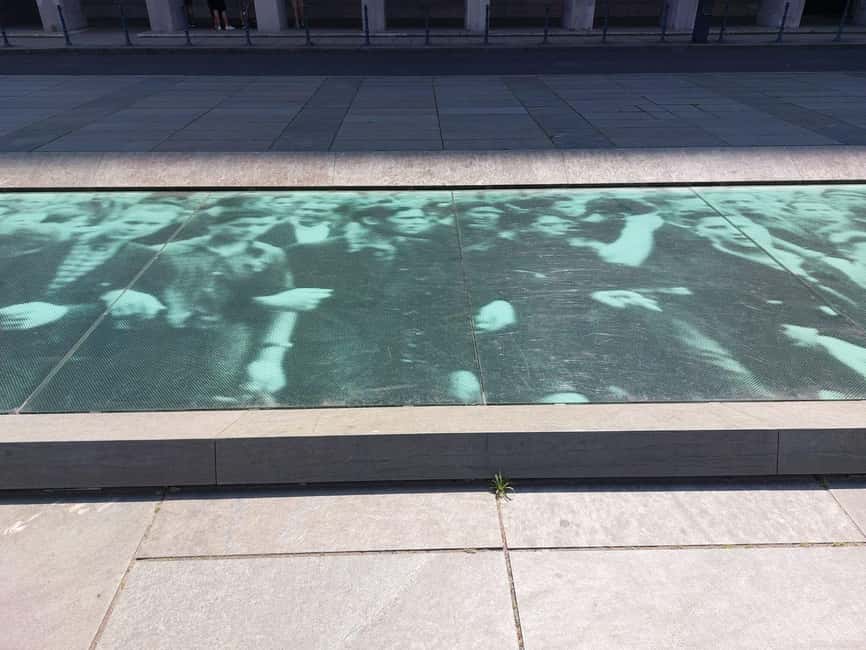
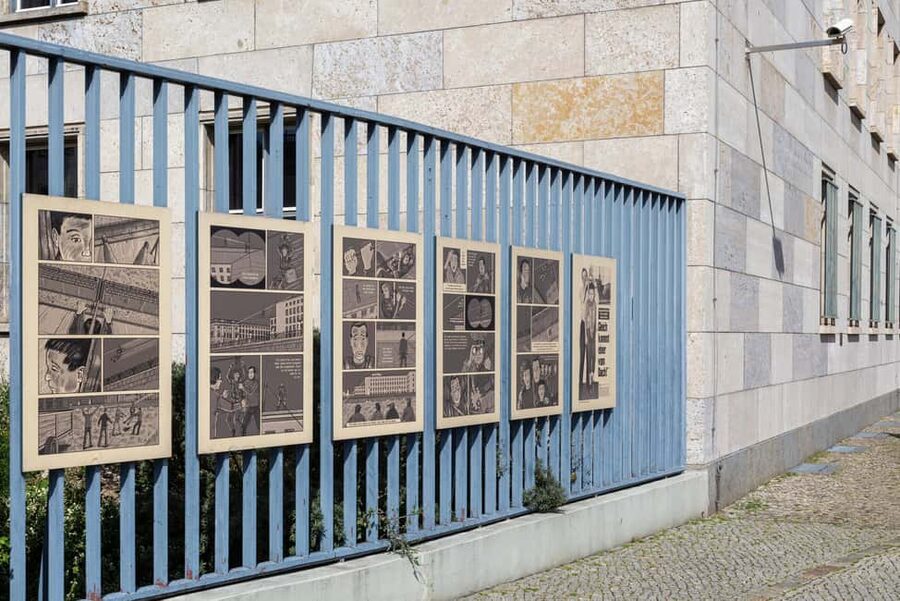
Next up is Topography of Terror. This stop is short (around 15 minutes), so it’s not meant to replace a longer self-guided visit. Instead, you’ll get the key background and the main ideas you need to interpret what you see.
The value here is context. The guide connects the site to the larger story of repression—what it looked like, how it functioned, and why the Wall-era atmosphere wasn’t only about borders. Berlin’s trauma is layered, and Topography of Terror is one of the places that makes that layering hard to ignore.
If you’re trying to understand how oppression translates into everyday life, this is one of the more important checkpoints on the walk.




Checkpoint Charlie: a famous name, explained with human stakes
You’ll then visit Checkpoint Charlie, another brief but meaningful stop (about 15 minutes). It’s easy to treat Checkpoint Charlie like a set piece because it’s so famous. The guide helps you avoid that trap by focusing on what the checkpoint represented: controlled movement, surveillance, and the constant calculation people had to make.
The tour also weaves in stories tied to escape and the risks involved in trying to cross. That’s the difference between “seeing a landmark” and understanding what it meant to ordinary people.
This is also a great time to take photos—photography is allowed—but don’t just shoot and move on. Pause, look, and let the guide’s framing sink in. In a short tour, that’s how you get the most for your time.
A secret stop and a viewpoint: when the tour adds perspective
The itinerary includes a secret stop (about 15 minutes). Because the exact location isn’t spelled out in your schedule ahead of time, it works like a mini plot twist. The purpose is clear though: one extra Wall-related moment that adds a different angle to the story you’ve already heard.
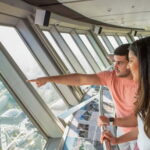
After that comes the view point segment (again, around 15 minutes). This is where the tour shifts from close-up history to broader understanding. You’ll get a sense of how neighborhoods, streets, and the Wall’s footprint shaped movement and life.
Finally, the tour ends at Panoramacafè, after time at Panoramapunkt. Finishing with a viewpoint is smart. After concentrating on walls, checkpoints, and control mechanisms, you want your eyes to widen and your brain to re-map the city.
Platz des 17. Juni and the June 17th mural: ideology in public space
The route includes Platz des 17. Juni and you’ll see the socialist mural of June 17th. That’s a key part of understanding division because it shows how ideology was painted into everyday Berlin.
This isn’t just about noticing a mural. The guide’s job here is to explain why these public images mattered and how they reinforced the official narrative of the time. For many people, this is one of the easiest stops to remember later because it’s visually distinctive.
Ampelmann and the street-lighting detail: the kind of trivia you’ll actually use
One of the most memorable themes of the tour is how the Wall era shows up in small details. The tour highlights the famous Ampelmann, which is a perfect example: street design that looks harmless becomes a symbol once you know the context.
The guide also shares fun facts like the idea that the first traffic light in Europe was here. Even if you’ve heard bits of this before, putting it into the Wall story makes it stick. It helps you see Berlin as more than monuments. It’s also signals, symbols, and design choices that guided people through daily routines.
And yes, you’ll also hear about the difference in street lighting between East and West Berlin. That’s the kind of detail you wouldn’t normally notice, but once you’re trained to look, you start seeing history in plain sight.
Price and value: what you get for $41 in 2 hours
At $41 per person for about 2 hours, this is positioned as a “hit the highlights with context” kind of tour. You’re not paying for a full-day museum sprint—you’re paying for a guided route that connects multiple iconic Wall-era sites.
The included stops cover a lot of ground in a short time:
- Leipziger Platz
- the base of the former GDR watchtower area
- Martin-Gropius-Bau and the Bundesrat visit
- Topography of Terror
- Checkpoint Charlie
- Platz des 17. Juni
- Panoramapunkt (plus the finish at Panoramacafè)
What you should know: transportation to the starting point isn’t included, and meals and drinks aren’t included. You’ll also be walking, so budget for comfortable shoes and outdoor weather.
Value-wise, I think the best part is the guide’s interpretation. The tour is short, so your money really goes toward helping you understand what you’re seeing, not just moving you from stop to stop.
Also, the feedback highlights guide quality. One standout point from the experience is how the tour can feel very supported, with multiple guides available for smaller groups, which can make questions and pacing easier.
Who should book this Wall tour (and who might not)
This tour is a great fit if you:
- want a first-time Berlin Wall overview without planning five separate visits
- like history that includes everyday details, not only dramatic landmarks
- enjoy guided storytelling that helps you interpret what you’re seeing in photos and in person
- can handle 2 hours of walking on outdoor surfaces
It may not be your best choice if you:
- need step-free access (it’s not suitable for people with mobility impairments)
- want a deep dive into museums at length (the time at each site is brief)
- dislike outdoor walking, especially if weather is warm or changeable
Practical tips so the walk feels easy
Bring comfortable shoes—this matters because the tour involves walking through historical sites with uneven surfaces. Wear comfortable clothes, and if the forecast looks sunny, bring a hat (and a sun hat if you run hot).
If you plan to read or focus on signs during stops, it’s also recommended to wear glasses for easier viewing. And yes, photography is allowed, so you can take pictures without feeling like you’ll get scolded.
If you want the best experience, take a small moment at each stop. Don’t treat it like a checklist. Let the guide tell you what to look at, then look.
Language choice: English or German
The tour runs with a live guide in English or German, so you can pick the language that helps you absorb the stories. Since the topics are emotional and specific, understanding the details matters. If your language skills are solid, you’ll get more from the small explanations that make the stops connect.
Should you book Traces Of Berlin?
Yes, I’d book it if you want a well-paced Berlin Wall overview that links the biggest landmarks to the smaller, symbolic details that made daily life under division feel different.
I’d skip it if you’re seeking long museum time or step-free access, because the format is built around a short walking route with brief visits at key sites. If you’re the type who enjoys seeing history in the streets—Ampelmann, street lighting, and the kind of architecture that still carries political fingerprints—this tour is a smart use of a couple of hours in Berlin.
And if your schedule is flexible, you’ll likely appreciate the ability to reserve first and pay later, plus free cancellation up to 24 hours in advance.
FAQ
How long is the guided Berlin Wall tour?
The tour lasts 2 hours.
How much does the tour cost?
It costs $41 per person.
Where does the tour start?
It starts at the entrance to DIE MAUER | THE WALL – Das Museum am Leipziger Platz.
What languages is the guide available in?
The live guide is available in English and German.
Is transportation included?
No. Transportation to the starting point is not included.
Are meals and drinks included?
No. Meals and drinks are not included.
Can I take photos during the tour?
Yes. Photography is allowed.
Is the tour suitable for people with mobility impairments?
No. It is not suitable for people with mobility impairments.
What should I wear or bring?
Wear comfortable shoes and comfortable clothes. Bring a sun hat or hat for outdoor weather, and consider glasses for reading or viewing.
More Guided in Berlin





More Tours in Berlin

More Tour Reviews in Berlin
Round out your days in Berlin
Guided, compared.
 ★ 4.7Reichstag, Dome and Government District Guided TourFrom $1818,288 reviews
 ★ 4.9Third Reich & Cold War Guided Walking TourFrom $238,378 reviews
 ★ 4.71-hr Boat Tour with Bilingual Live Guide (DE/EN)From $225,653 reviews
 ★ 4.8Hidden Backyards Guided Walking TourFrom $235,360 reviews
 ★ 4.8Sights and Highlights Bike Tour with a Local GuideFrom $412,698 reviews
 ★ 4.8City Street Art Guided Walking TourFrom $231,051 reviews
 ★ 4.6Solar Powered Sunset Catamaran Cruise & Audio GuideFrom $421,043 reviews
 ★ 4.7History of the Third Reich Guided Walking TourFrom $30791 reviews