
REVIEW · CITY TOURS
Berlin City Walking Tour of Scheunenviertel and Hackesche Höfe in Berlin Mitte
A surprising shortcut into Berlin’s Jewish story. This 2-hour private walk connects Scheunenviertel streets with the Hackesche Höfe courtyards, guided by real people-and-place stories.
I especially liked how you get a close-up look at everyday life in the 1920s and later decades, not just big dates. I also liked the private-group feel, so you can ask questions and get tailored context as you go.
One watch-out: if you’re there on a Sunday, some shops and bars around the courtyards may be closed, which can limit what you can pop into for a quick drink.
In This Review
- Key highlights at a glance
- Scheunenviertel: Where the Jewish suburb used to feel like real neighborhoods
- Hackescher Markt and Haus Schwrzenberg: A clean time jump into East Berlin
- Hackesche Höfe courtyards: Architecture you can actually navigate
- Stiftung Neue Synagoge Berlin – Centrum Judaicum: Clärchens Ballhaus and the story of the New Synagogue
- The guide factor: Why Swen Goetz makes the walk feel personal
- Price and value: Is $289.95 per group worth it?
- Timing, duration, and how to make the walk work for your day
- Who should book this walk?
- Should you book this Berlin City Walking Tour of Scheunenviertel and Hackesche Höfe?
- FAQ
- FAQ
- How long is the Berlin walking tour of Scheunenviertel and Hackesche Höfe?
- What language is the tour offered in?
- Is the tour private?
- How many people are included per group?
- Where does the tour start and end?
- Do I need to pay admission fees at the stops?
- What’s included in the price?
- Is hotel pickup or drop-off included?
- Are there any age requirements?
Key highlights at a glance
- Scheunenviertel, the former Jewish suburb, brought to life with stories about organizations and people from about a century ago
- Haus Schwrzenberg as a time-jump point, with a look at what East Berlin felt like in the 1980s
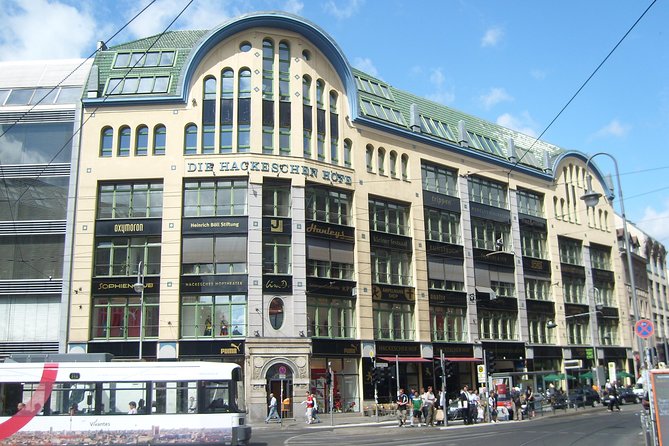
- Hackesche Höfe, 8 Art Nouveau courtyards and clear ways to read the architecture on foot
- Clärchens Ballhaus and Centrum Judaicum, where the atmosphere of the 1920s still feels present
- Swen Goetz as your guide, mixing photos, anecdotes, and detours to make the walk move fast
- Stop-by-stop free entry to the featured sights, so your money goes into the guide, not ticket fees
More of Berlin on foot
- Discover Berlin Half-Day Walking Tour★ 5.0 · 9,624 reviews
- Berlin City walk Government District and Places of Democracy★ 4.7 · 8,467 reviews
- Berlin: Third Reich & Cold War Guided Walking Tour★ 4.9 · 8,378 reviews
- Berlin: Discover Berlin Walking Tour★ 4.9 · 5,998 reviews
Scheunenviertel: Where the Jewish suburb used to feel like real neighborhoods
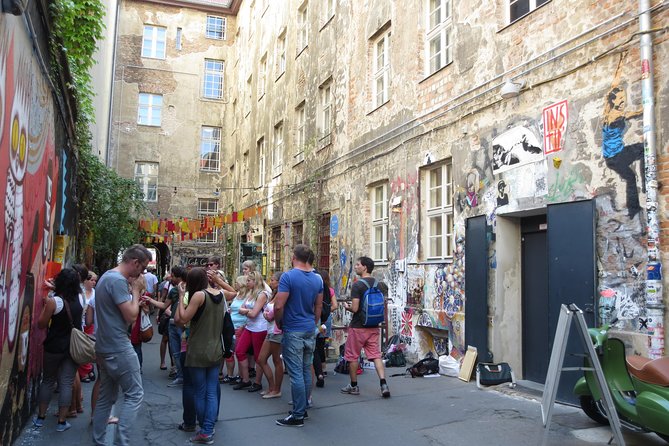
This tour starts with Berlin Mitte’s Scheunenviertel, a district that used to be tightly tied to Berlin’s Jewish community. The best part here is that you don’t just learn names from a textbook. You learn how people organized themselves, how they lived, and what the street-level vibe was like—then you carry that understanding forward into the rest of the walk.
You’ll get a feel for the twenties, when this area still had its own rhythm. The guide also points out stories around former prisoners and what the situation was about 100 years ago. That sounds heavy on paper, but on the sidewalk it lands differently: you can see the space where life unfolded, and you understand why today’s streets matter.
My favorite takeaway from this stop: you start noticing the difference between Berlin’s “monument view” and its “daily life view.” Scheunenviertel is more about how communities persisted and adapted, even as the world around them changed.
One practical note: this part is mostly about walking and listening. If you expect lots of built-in photo stops, you’ll still get pictures, but the core value is the stories and the way the guide helps you read the neighborhood.
Hackescher Markt and Haus Schwrzenberg: A clean time jump into East Berlin
Next comes Hackescher Markt, and with it, a noticeable shift in mood. You head to Haus Schwrzenberg, and the goal is simple: you should be able to picture how East Berlin looked and felt in the eighties. The tour uses that building and its surroundings as a kind of “visual anchor,” so you don’t just hear facts—you track them in your head as you walk.
From there, the walk connects to a former workshop for blinds with a hiding place. The point isn’t to make this sound like a movie set; it’s to show how ordinary workplaces could also be part of survival. You’ll hear how a Jewish family was hidden, and that detail changes how you see the surrounding streets. After you learn to look for these layers, you can’t unsee them.
I like this stop because it teaches a Berlin skill: learning to read a place as more than its current function. A workshop is a workshop—until you know what was hidden inside.
Hackesche Höfe courtyards: Architecture you can actually navigate
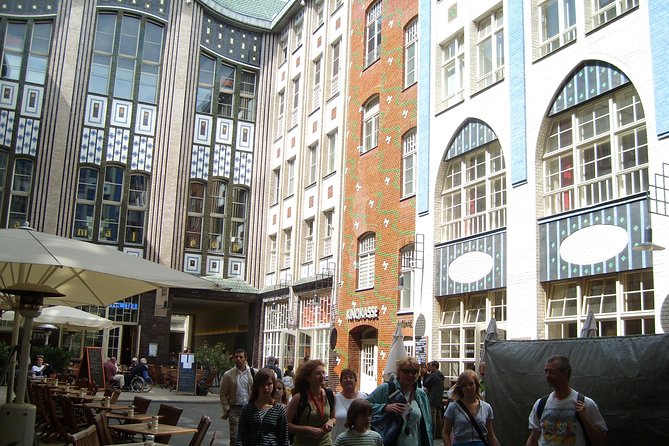
Then the tour hits Hackesche Höfe, one of Berlin’s most satisfying walking sights. You’re not just told they’re beautiful—you’re guided through them as a sequence of courtyards. The arrangement matters: 8 courtyards, constructed in Art Nouveau style, set around greenery with apartments, shops, bars, and cinemas around the edges.
Here’s why this part is so useful for planning your own time after the tour. The guide helps you understand how the courtyards work like little worlds inside the city. During the day you’ll see a steady flow of people coming and going, but in the evening the gates close. So if you want to roam freely on your own, you’ll know to visit earlier rather than drifting in after dark and expecting the same access.
One extra detail I found practical from this experience: some buildings show photos that highlight renovations. That gives you a real sense of continuity and change—what was kept, what was rebuilt, and why restoration choices shape how the area feels today.
And yes, this is where the photos come easily. The color, the repeating courtyard rhythm, the view lines between passages—Hackesche Höfe gives you a lot to frame without even trying.
Stiftung Neue Synagoge Berlin – Centrum Judaicum: Clärchens Ballhaus and the story of the New Synagogue
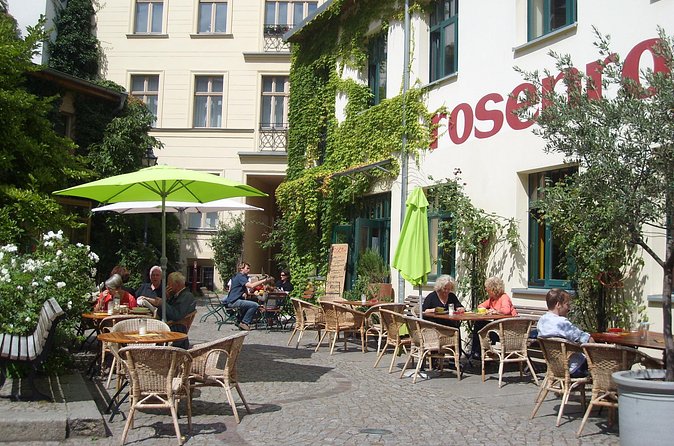
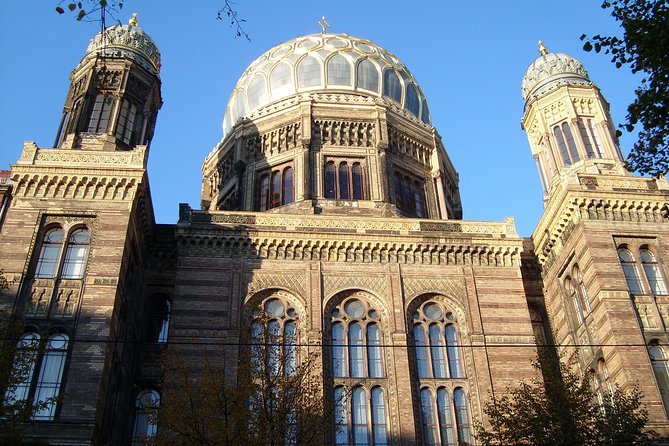
The last major block is Stiftung Neue Synagoge Berlin – Centrum Judaicum. This is where the walk turns more ceremonial, but it doesn’t get lost in solemnity. You visit a historic club called Clärchens Ballhaus, and the point is atmosphere. You should come away feeling like you can still sense the 1920s energy there, since so much of the setting appears to remain.
From the club area, the guide also explores the Heckmannhöfe, including a wonderful courtyard that you’ll experience as part of the same broader “place story.” Courtyards keep showing up for a reason: they’re a Berlin pattern, and they also let you understand how communities shared space, kept privacy, and built social life even inside the larger city.
Then the tour moves to the story of the New Synagogue. This is where you connect what you learned earlier—Scheunenviertel life, wartime realities, and hidden spaces—to a larger arc about rebuilding and remembrance. It’s not presented as a single dramatic moment. It’s explained as a process, with human choices and historical pressure shaping what came next.
This end section is valuable even if you’ve already read a bit about Berlin’s Jewish history. The guide’s job is to stitch it together into a route you can walk, so the information sticks.
More Berlin tours to line up side by side





The guide factor: Why Swen Goetz makes the walk feel personal
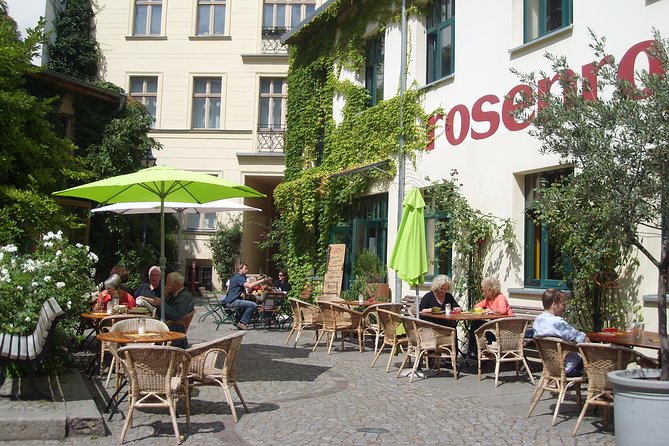
A big reason this tour works is the guiding style—especially if you get Swen Goetz. The experience is designed as a private tour for your group of up to 15 people, which changes the feel right away. You’re not competing with a big crowd for attention, and you’re more likely to get answers to your own questions as they come up.
In practice, the guide uses a mix of photos and anecdotes to keep the timing moving. One of the best signs is how quickly the time passes. This isn’t a slow, museum-room lecture. It’s structured, but it still leaves room for small detours and story-driven turns that make the streets feel connected rather than random.
I also liked that the walk can include references to places used as filming locations for Babylon Berlin. That kind of pop-culture connection isn’t the point of the tour—but it helps your brain remember the route. You’ll start to recognize the settings later as you move around Berlin.
Price and value: Is $289.95 per group worth it?
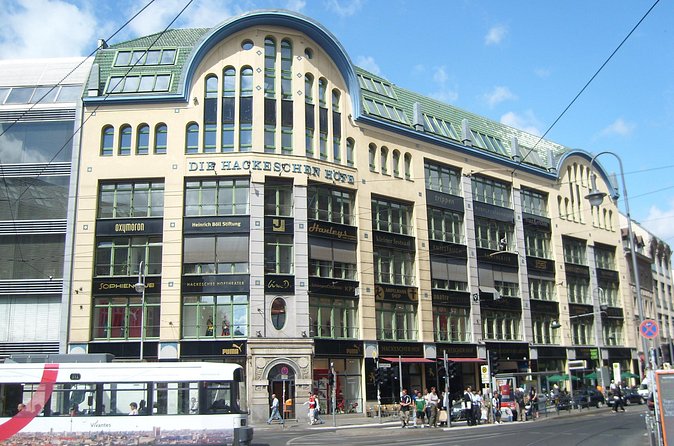
The price is $289.95 per group (up to 15), and that framing matters. This isn’t priced like a per-person ticket you’ll resent if you only do a couple of stops. It’s priced like a guide experience you’re buying for your whole group.
So the real value comes from three things you can’t replicate easily on your own:
- A guide who connects the dots between Scheunenviertel, hidden wartime details, and today’s courtyards
- A route that directs your eyes to specific buildings and courtyards in the right order
- Explanations that make you understand why places look the way they do now
If you’re traveling solo or as a couple, the price is still reasonable if you treat it as your “main guided experience” of the day—because the knowledge density per minute is high. If you’re a small group, it feels even better since you’re essentially splitting the guide cost across your group size.
One more subtle value point: all featured stops are listed as admission ticket free, so you’re not paying extra entrance fees to see the core sights. Your budget goes mainly into interpretation, not ticket lines.
Timing, duration, and how to make the walk work for your day
The tour runs about 2 hours. That’s a sweet spot. Long enough to feel like you’ve learned something real, short enough that you can still plan dinner or other sightseeing afterward.
Because the tour ends at New Synagogue Berlin – Centrum Judaicum (Oranienburger Str. 28-30), it’s easy to build the rest of your day around that area. If you want to keep your momentum, stay nearby. If you need a break, you’re in a spot where you can quickly reach other parts of Mitte using public transportation.
Since it’s offered in English, you should get a smooth flow of explanations without needing to “translate in your head.” And because it’s a private tour, your group stays together from start to finish.
One practical consideration: start at Rosa-Luxemburg-Straße 41 (10178). Plan to arrive a few minutes early so you’re not stressing out while the guide waits.
Who should book this walk?
You’ll probably love it if:
- You want context for places you might otherwise just pass by
- You care about Jewish heritage in Berlin and want a street-level route
- You like walking tours that include architecture plus stories, not just one or the other
- You prefer a private-group pace where you can ask questions
It’s also a good fit for people who like photography but don’t want to spend an entire day chasing viewpoints. Hackesche Höfe makes photos easy. Scheunenviertel and the synagogue-area stops make the photos meaningful.
If you’re going with children, the only rule given is that children must be accompanied by an adult. The tour is still described as suitable for most travelers, but you’ll want to gauge how your kids handle history-heavy topics.
Should you book this Berlin City Walking Tour of Scheunenviertel and Hackesche Höfe?
Book it if you want a guided walk that turns Berlin’s map into a story you can remember. The combination of Scheunenviertel’s community narrative, the time-jump points around Hackescher Markt, and the courtyard choreography at Hackesche Höfe makes this tour feel like more than a checklist.
Skip it only if you’re looking for purely visual sightseeing with minimal talking. This walk is story-forward. The payoff is that by the end, you’ll understand the places in a way that changes how you wander through Berlin afterward—whether you return to the courtyards for a second look or you keep noticing hidden layers in other neighborhoods.
If you do book, keep one thing in mind: if your schedule includes Sunday, plan extra time flexibility because some businesses in and around Hackesche Höfe may be closed.
FAQ
FAQ
How long is the Berlin walking tour of Scheunenviertel and Hackesche Höfe?
It’s listed as about 2 hours.
What language is the tour offered in?
The tour is offered in English.
Is the tour private?
Yes. It’s a private tour/activity, and only your group participates.
How many people are included per group?
The group size is up to 15 people.
Where does the tour start and end?
It starts at Rosa-Luxemburg-Straße 41, 10178 Berlin, Germany and ends at New Synagogue Berlin – Centrum Judaicum, Oranienburger Str. 28-30, 10117 Berlin, Germany.
Do I need to pay admission fees at the stops?
The listed admissions for the stops are free.
What’s included in the price?
A professional guide is included.
Is hotel pickup or drop-off included?
Hotel pickup and drop-off are not included if you don’t select that option.
Are there any age requirements?
Children must be accompanied by an adult.
More of Berlin on Foot




More Tours in Berlin




More Tour Reviews in Berlin

Round out your days in Berlin

City Tours, compared.
 ★ 4.31-Hour City Tour by Boat with Guaranteed SeatingFrom $2516,993 reviews
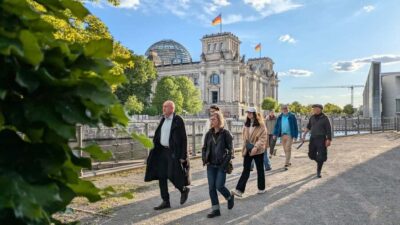 ★ 4.7Berlin City walk Government District and Places of DemocracyFrom $2948,467 reviews
 ★ 4.1City Sightseeing Hop-On Hop-Off Bus TourFrom $254,233 reviews
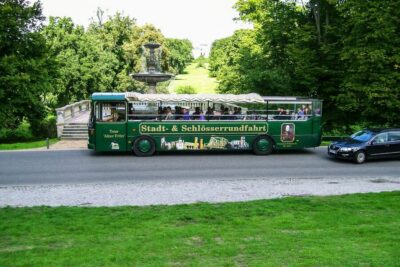 ★ 4.7Potsdam: City and Castles TourFrom $293,721 reviews
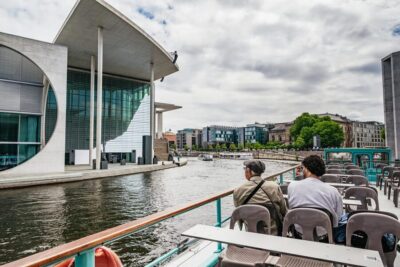 ★ 4.41-Hour City Sightseeing CruiseFrom $252,210 reviews
 ★ 3.5Berlin City Hop-on Hop-off Tour with Optional CruiseFrom $311,155 reviews
 ★ 4.8City Street Art Guided Walking TourFrom $231,051 reviews
 ★ 4.1Berlin Combo Package: City Tour & Spree Boat TourFrom $64996 reviews
Browse the lists this tour appears in