
REVIEW · BERLIN WALL & COLD WAR
Skip-the-Line: Berlin Wall Museum at Checkpoint Charlie
Berlin Wall stories hit fast, even years later. This Berlin Wall Museum packs original escape gear and real accounts into a tight, sobering visit, and I especially like seeing the original artifacts tied to successful flights to freedom. The biggest catch is it can feel reading-heavy, so give yourself time and a calm pace.
I also like how the museum explains the bigger picture: how East Germans tried to flee the GDR regime, and how the museum itself started as a protest right after the Wall rose. For a “ticket only” experience, that context matters. One more consideration: if you expect lots of hands-on stuff, you might feel a bit more like you’re studying than touring.
The upside? This is set up so you can skip the ticket line and get moving right away. If you want a meaningful Berlin Wall stop without wasting half your day in queues, it’s a strong choice.
In This Review
- Key things I’d plan for
- Where Checkpoint Charlie’s outside becomes a full Berlin Wall story
- Inside the museum: original escape artifacts you can see close up
- How the exhibits explain the GDR regime and the pressure to flee
- A practical self-guided route inside (so you don’t get lost in text)
- The skip-the-line ticket: price, value, and what’s actually included
- Photo rules, lockers, and the small stuff that saves your day
- When guided storytelling helps (and when it’s not necessary)
- Who this visit suits best
- Should you book the skip-the-line Berlin Wall Museum ticket?
- FAQ
- How long should I plan for the Berlin Wall Museum at Checkpoint Charlie?
- Is the ticket skip-the-line?
- What is included in the price?
- Do I get an audioguide with the ticket?
- Is there a guided tour included?
- Where is the museum meeting point?
- Is the museum wheelchair accessible?
- Do the exhibits have multiple languages?
- Is free cancellation available?
- FAQ
- Do I need a guided tour to understand what I’m seeing?
- Are there lockers for bags?
- Can I take photos inside?
- Is the museum only about Checkpoint Charlie?
- Should you book the skip-the-line Berlin Wall Museum ticket?
Key things I’d plan for
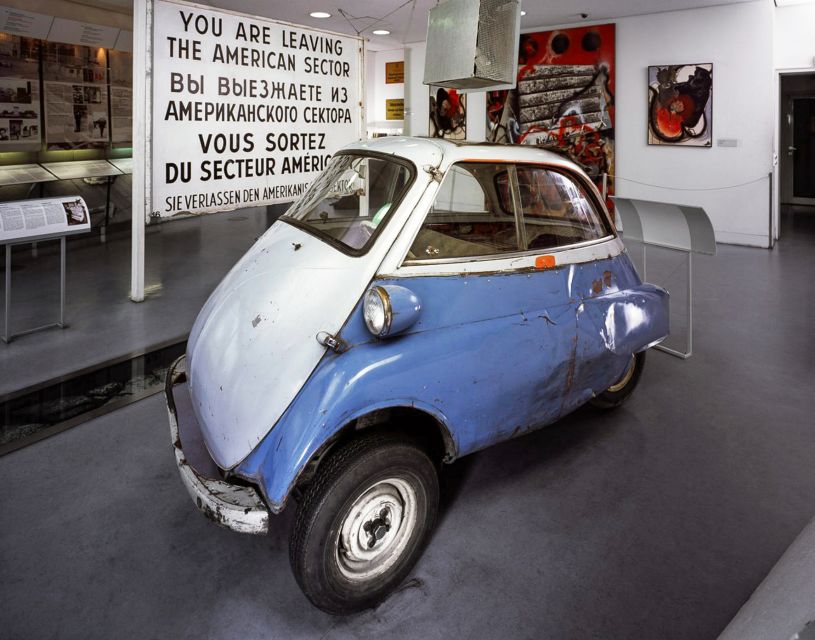
- Original escape artifacts: hot-air balloon, mini-submarine, cars, and airplanes tied to real escape attempts
- More than Checkpoint Charlie: the story stretches beyond the Wall’s rise and fall into later conflicts
- Translation support: explanations are provided in multiple languages across the exhibits
- Time to read: plan for roughly 2 hours or more if you actually want to absorb things
- Lofty moments: top-floor views help you connect the exhibits to the Checkpoint Charlie area
- Pacing on your terms: entrance ticket means you set the tempo, for better or worse
More of the Wall and the divided city
- Berlin’s Best: 2 Hour Walking Tour Third Reich and the Cold War★ 5.0 · 5,486 reviews
- Skip-the-Line: Berlin Wall Museum at Checkpoint Charlie★ 4.1 · 2,041 reviews
- Berlin: East Side Gallery Spree Cruise in a Solar Catamaran★ 4.1 · 1,086 reviews
- Cold War, Berlin Wall, Spies and the East Side Gallery★ 5.0 · 1,024 reviews
Where Checkpoint Charlie’s outside becomes a full Berlin Wall story
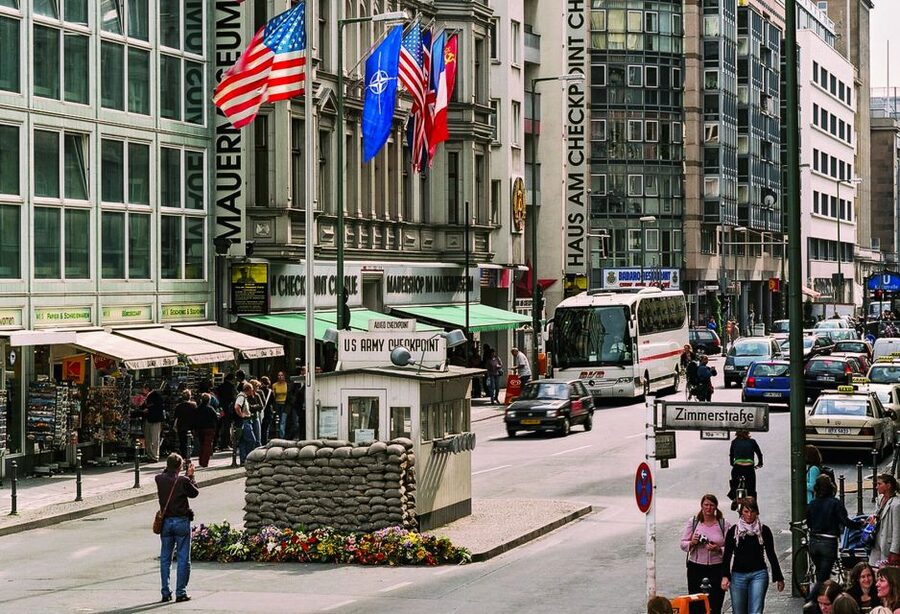
Checkpoint Charlie is one of those places that feels instantly famous. The area around it moves fast, full of tour groups and quick photos. What the Berlin Wall Museum at Mauermuseum-Haus am Checkpoint Charlie does well is slow you down inside and connect the legend to the human mechanics behind it.
I like that the museum doesn’t treat the Wall as a single dramatic moment. It’s more like a long cause-and-effect story. You start with the Wall as a system, then you see how people pushed against it—sometimes with help, sometimes with daring, and sometimes at huge risk. That structure matters because Berlin Wall history is easy to oversimplify when you only remember the headlines.
Also, the museum’s origin is part of the message. It was founded on October 19, 1962, shortly after the Wall went up, as a protest against it and as support for people seeking help. That tells you what you’re walking into: this place is not only about artifacts. It’s about resistance and human rights.
Inside the museum: original escape artifacts you can see close up
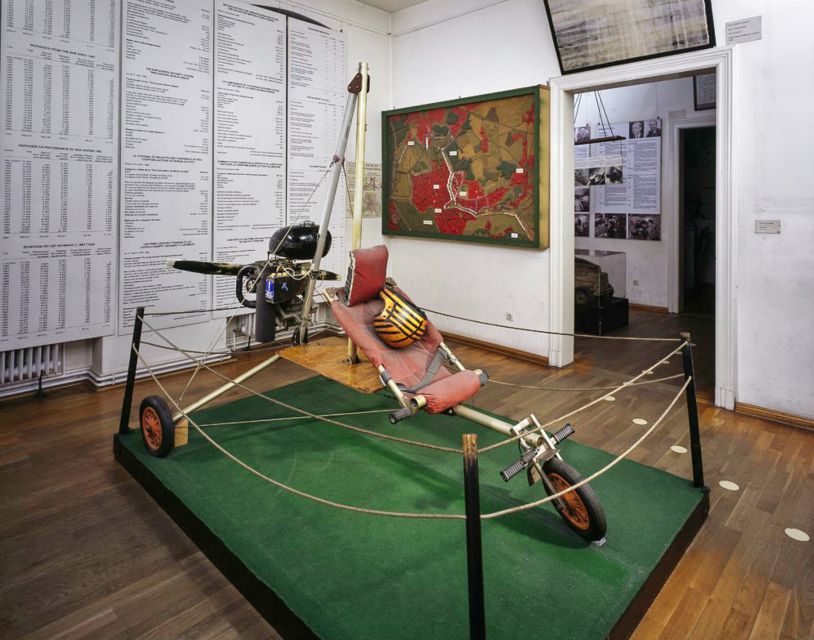
The standout for me is the physical proof: original artifacts connected to successful escapes. These aren’t just “Wall-era props.” The exhibits point you to actual methods people used to try to get out.
You’ll encounter objects linked to escapes like:
- Hot-air balloon
- Mini-submarine
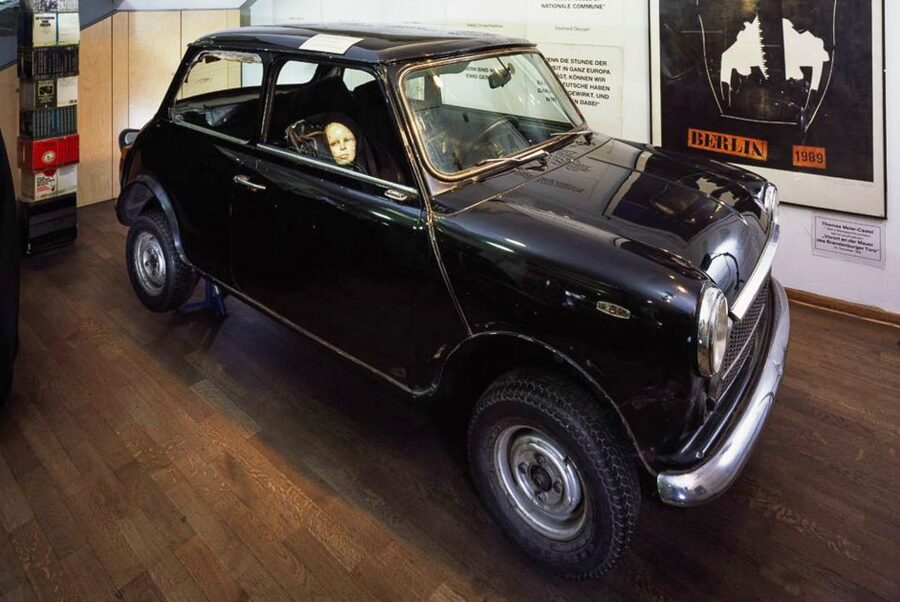
- Cars used in escape attempts
- Airplanes used in escape attempts
Seeing these items in person changes the tone of the visit. Reading about people attempting the impossible is one thing. Seeing a real object connected to that attempt makes it feel brutally plausible and painfully risky at the same time.
The museum also keeps the story grounded in who helped and how. People who assisted East Germans often used the museum as a base—organizing efforts and planning routes. Then, after escapes succeeded, helpers and refugees donated the means of conveyance and other items to the museum. So the building becomes part of the historical record, not just its container.
If you’re a “show me the evidence” kind of visitor, this is your stop. Many museums about the Cold War rely heavily on copies and panels. Here, the original objects make the whole thing harder to dismiss as distant or abstract.
How the exhibits explain the GDR regime and the pressure to flee
I like that the museum doesn’t stop at the dramatic escape stories. It also explains the wider reality of life under the unjust GDR regime and how the Wall functioned as a tool to control people.
You get a clear sense of why “escape” wasn’t just a romantic idea. It was often a last resort shaped by coercion, restriction, and the refusal of basic freedoms. The exhibits connect those pressures to the lengths people went to escape.
And here’s a smart detail: the museum’s scope grows as you move through it. The story begins with the Wall and the immediate pushback against it, then extends into broader documentation and archiving over time. One of the most convincing themes is continuity—how the world didn’t magically reset after the Wall fell.
In that spirit, you might even see items tied to later displacement and modern crises. For example, at least one exhibit includes a car associated with a family fleeing Ukraine, which makes the point that forced movement and human-rights violations didn’t vanish with 1989.
A practical self-guided route inside (so you don’t get lost in text)

This is an entrance ticket experience, so you’re self-guided. That sounds simple, but the museum is bigger than you might guess from outside. Several visitors note it feels much larger than expected, and time disappears quickly once you start reading.
A realistic plan:
- If you skim lightly, you can get through in about 1 to 2 hours.
- If you read carefully, you’ll likely land around 2.5 hours.
- If you linger over artifacts and context, it’s easy to spend longer.
The museum is also “reading heavy.” That’s not a criticism of the content—it’s just the format. Panels, explanations, and documentation take over. If you’ve got teens who want fast movement, you may need to set expectations and pick a pace together.
My favorite way to keep it from turning into a wall of text is to build your own mini-missions:
- Pick one escape method to focus on (like the balloon or mini-submarine).
- Follow it to see how it connects to planning, help networks, and consequences.
- Then zoom out to how the museum frames protest and resistance over time.
You’ll also benefit from the museum’s layout choices. Visitors mention top-floor viewpoints that help you connect the exhibits back to Checkpoint Charlie. That kind of visual anchoring breaks up the reading and makes the story feel spatial, not just historical.
More of Berlin's museums and galleries




The skip-the-line ticket: price, value, and what’s actually included

At $21 per person, this is one of those Berlin museum tickets that feels fair because of what you get for the money: a full entrance to a major site, with time to explore at your own pace.
What’s included is straightforward:
- Entrance ticket
What’s not included:
- Audioguide
- Guided tour
That matters for value. If you like to read and you don’t mind museums that rely on text, you’ll likely be fine without an audioguide. One visitor even reported being told an audioguide wasn’t worth it at the counter, and that there was plenty to read anyway.
On the other hand, if you want audio support or you’re more comfortable learning by listening, you’ll need to plan for that decision separately. Since the audioguide isn’t included here, treat it as optional, not assumed.
Also worth noting: language support seems strong. Reviews mention translations into multiple languages, and the explanations are available in different languages. So even if your German is rusty, you should still be able to follow along.
Photo rules, lockers, and the small stuff that saves your day
A few practical points can make your visit smoother.
First: check photo rules. One visitor said they weren’t allowed to take pictures. That doesn’t mean it’s banned everywhere, but it does mean you should expect possible restrictions and be ready to put your phone away when prompted.
Second: if you carry a bag, plan for storage. A visitor mentioned leaving a deposit—specifically a 2 euro coin for a locker. I’d bring the coin or be ready to improvise, because nothing kills a museum mood like realizing you can’t store your bag.
Finally: location is easy to anchor. The meeting point is Friedrichstraße 43–45, 10969 Berlin. If you’re already in the Checkpoint Charlie area, this is an easy add-on without complicated transit.
When guided storytelling helps (and when it’s not necessary)
This specific offering is entrance-only. So most of your experience depends on your own reading and attention span.
That said, guide-led visits exist in the broader museum experience. Reviews name guides such as Peter, Steve, and Louisa, with praise focused on pacing and making the stories feel real. If you’re the type who learns best when someone narrates the context and keeps you moving, it can help to consider a guided add-on when it’s available.
If you’re not planning a guide, don’t panic. The museum is organized with lots of information and translations. The main risk is simply time. You might want to set a timer for yourself and decide what you care about most, so you don’t get stuck reading every label at once.
Who this visit suits best
This museum works best if you want evidence-based history, not vague symbolism.
You’ll probably love it if:
- You enjoy Cold War history and want the human side of it
- You like museums where artifacts are front and center
- You want a meaningful lesson that links past repression to today’s displacement and rights issues
- You’re okay with a lot of reading and slower pacing
You might want to adjust your expectations if:
- You’re expecting lots of interactive elements. A couple of reviews mention interactive items that didn’t work.
- You hate reading-heavy exhibits. Even well-made displays can feel like homework if you’re rushing.
For families, it can work, but I’d treat it like a “pick your battles” museum: agree on a few must-see exhibits first, then let kids move at a pace that stays engaged.
Should you book the skip-the-line Berlin Wall Museum ticket?
Book it if you want a high-impact Berlin Wall stop that’s not just “Checkpoint Charlie photos.” The original escape artifacts, the clear connection to resistance, and the museum’s wider sweep beyond 1989 make this feel like more than a quick visit.
Skip it only if you’re short on time and absolutely need heavy hands-on interactivity, or if reading long labels is your personal nightmare. Otherwise, for $21 and a self-paced entrance, this is one of the best value ways to understand what the Wall was—and what it forced people to do.
If you can, plan about 2–2.5 hours so you’re not sprinting through the story. And yes: bring patience. This is history designed to slow you down, not decorate your photo album.
FAQ
How long should I plan for the Berlin Wall Museum at Checkpoint Charlie?
Most visitors report spending around 1 to 2.5 hours. If you want to read and absorb more of the exhibits, plan closer to the longer end.
Is the ticket skip-the-line?
Yes. This activity is listed as Skip the ticket line with an entrance ticket.
What is included in the price?
The included item is the entrance ticket only.
Do I get an audioguide with the ticket?
No. An audioguide is listed as not included.
Is there a guided tour included?
No. A guided tour is listed as not included.
Where is the museum meeting point?
The meeting point is Friedrichstraße 43–45, 10969 Berlin.
Is the museum wheelchair accessible?
Yes. It is listed as wheelchair accessible.
Do the exhibits have multiple languages?
The information and explanations are described as available in multiple languages, with translations mentioned across the exhibits.
Is free cancellation available?
Yes. Free cancellation is listed as available up to 24 hours in advance for a full refund.
FAQ
Do I need a guided tour to understand what I’m seeing?
No. Since this is an entrance ticket, you can explore on your own. The museum provides lots of information and translations throughout the exhibits.
Are there lockers for bags?
You might find lockers available, and one visitor specifically mentioned a 2 euro coin deposit for a locker.
Can I take photos inside?
Photo rules are not stated in the provided details, but one visitor reported being unable to take pictures. It’s smart to expect possible restrictions and follow on-site signage or staff directions.
Is the museum only about Checkpoint Charlie?
No. The museum context goes beyond the Checkpoint Charlie area and documents the Berlin Wall story and related developments, including material connected to later events.
Should you book the skip-the-line Berlin Wall Museum ticket?
I’d book it if you want original escape artifacts and a clear explanation of how people tried to flee the GDR regime, not just a quick stop at the famous checkpoint. The museum’s size and the amount of reading mean it rewards a calm schedule, so give yourself a couple of hours and go in ready to learn.
Berlin's Museums and Galleries


More Tour Reviews in Berlin






The Wall and the Cold-War City




Round out your days in Berlin




Berlin Wall & Cold War, compared.
 ★ 4.9Third Reich & Cold War Guided Walking TourFrom $238,378 reviews
 ★ 5.0Berlin’s Best: 2 Hour Walking Tour Third Reich and the Cold WarFrom $245,486 reviews
 ★ 4.1East Side Gallery Spree Cruise in a Solar CatamaranFrom $281,086 reviews
 ★ 5.0Cold War, Berlin Wall, Spies and the East Side GalleryFrom $181,024 reviews
 ★ 4.8Wall Tour – Fates, Love Stories, and HeroesFrom $282585 reviews
 ★ 4.5THE WALL: asisi Panorama Berlin TicketFrom $16580 reviews
 ★ 4.8The Wall and Third Reich Guided Bike TourFrom $41578 reviews
 ★ 4.4German Spy Museum Flexible Entry TicketFrom $27472 reviews
Browse the lists this tour appears in