
REVIEW · 2-HOUR EXPERIENCES
Berlin: Karl-Marx-Allee 2-Hour Tour
Karl-Marx-Allee reads like a storyboard. In two hours, you trace how this grand boulevard shifted from Frankfurter Allee to Stalinallee and then to today’s name, while admiring Frankfurter Tor and the surrounding post-war apartment architecture. I also like the way the expert guide (for example, Tobias is often mentioned) brings the street alive with historical photos and old posters as you walk.
You’ll cover a lot of ground along a long, mostly straight stretch, so the biggest drawback is simple: if you prefer lots of turns and variety every few minutes, this route will feel more like a focused corridor than a meandering neighborhood stroll.
In This Review
- Key takeaways
- Why Karl-Marx-Allee Feels Like a Living Timeline
- Frankfurter Tor Towers: The Start of the Grand Boulevard
- Friedrichshain Arcades and the Apartment Buildings People Moved Through
- Kosmos Cinema and Josef Kaiser’s Cultural Corner
- Hochhaus an der Weberweise and the Street’s Socialist Scale
- Church of the Resurrection Ruins and Strausberger Platz
- Price, Pace, and Who This 2-Hour Walk Suits
- Should You Book This Karl-Marx-Allee Tour?
- FAQ
- How long is the Karl-Marx-Allee tour?
- How much does the tour cost?
- Is hotel pickup included?
- What sights will we see during the walk?
- What language will the guide speak?
- Where is the meeting point?
- Is free cancellation available?
- Is reserve now and pay later available?
Key takeaways
- Frankfurter Tor towers give you an instant feel for Berlin’s grand scale
- Friedrichshain arcades show how people actually moved through everyday apartment life
- Kosmos cinema links socialist-era planning to street-level culture, designed by Josef Kaiser
- Karl-Marx-Allee is a near 2-kilometer monument, built as an intentional statement
- Strausberger Platz works like a gateway scene into the former socialist city center
More Berlin tours to line up side by side
- Berlin’s Best: 2 Hour Walking Tour Third Reich and the Cold War★ 5.0 · 5,486 reviews
- Berlin: 2-Hour Lake Oberhavel Cruise from Tegel★ 4.4 · 577 reviews
- Berlin 2-Hour Segway Tour★ 4.6 · 238 reviews
- East Berlin and the Berlin Wall 2-Hour Walking Tour★ 5.0 · 228 reviews
Why Karl-Marx-Allee Feels Like a Living Timeline
Karl-Marx-Allee is one of those places where the buildings do the talking. The street is almost 2 kilometers long, and it’s often treated like the largest monument in Berlin’s city center sense—big, planned, and meant to be seen. In this tour, you get the story behind the names too: it was Frankfurter Allee, then Stalinallee, and now it’s Karl-Marx-Allee.
That changing label matters, because it shows how power and ideology leave physical fingerprints. You’re not just looking at nice façades. You’re watching how a city rebrands itself, block by block. I like that the tour keeps you oriented: you learn what you’re looking at, then you see it again from a slightly different angle as the street’s rhythm continues.
One practical note: you’ll do this on foot, and you’ll be outside the whole time. So wear comfy shoes and plan for weather. It’s not a “sit and watch” experience—it’s walking with context.
Frankfurter Tor Towers: The Start of the Grand Boulevard
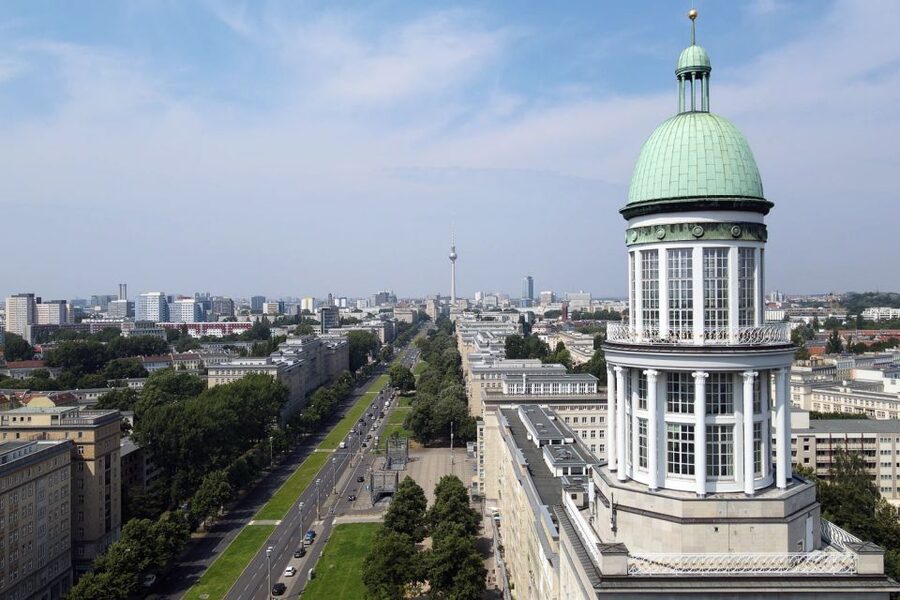
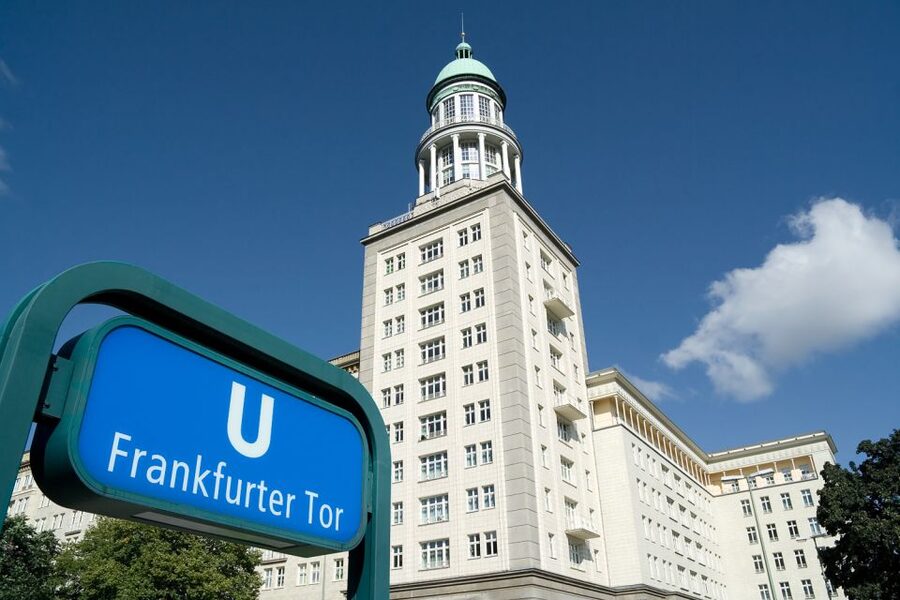
Most architecture tours begin with a landmark. This one starts with a star: Frankfurter Tor. The distinctive towers here act like a gateway, the kind of entrance that tells you the planners wanted the street to feel monumental from the first step.
As you approach, you’ll get the sense of why Karl-Marx-Allee became such an important axis. It’s not random. It’s designed. The view lines and the sheer scale help you understand how the street was meant to frame movement and public life, not just connect two points.
If you get a guide like Tobias (he comes up in the feedback for a reason), you’ll likely see historical photos or period posters used to explain what the space looked like in different eras. That sort of visual comparison helps you read the present-day buildings like they’re captions for the past.
Friedrichshain Arcades and the Apartment Buildings People Moved Through
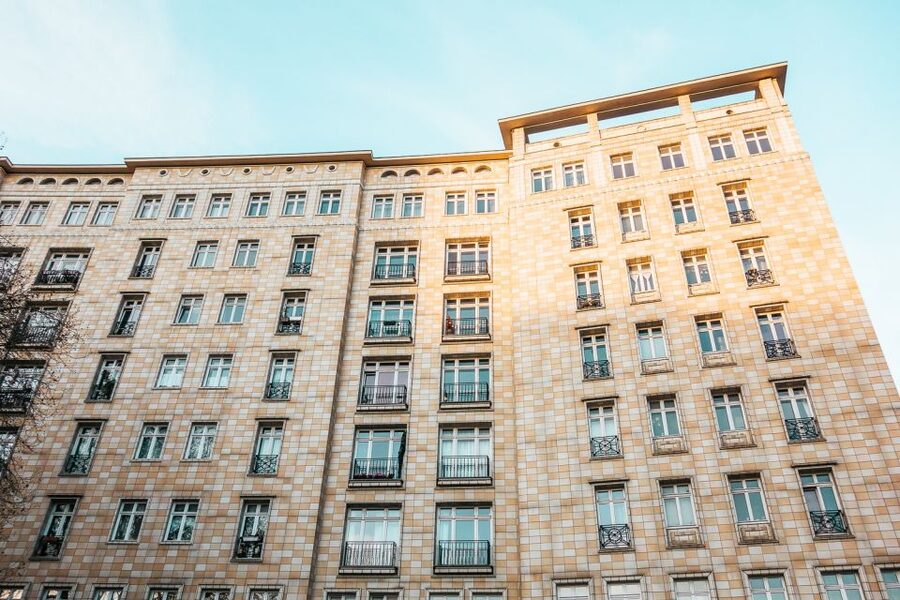
After the boulevard’s opening statement, you shift into a different kind of interest: how post-war housing was built for daily life. In the Friedrichshain stretch, the tour focuses on apartment buildings with arcades—covered passageways that make streets feel walkable even when the weather isn’t.
Arcades sound like a small detail until you realize what they do. They change the experience of moving through a neighborhood. They create sheltered “in-between” space. They also remind you that big political planning still had to function at human scale: entrances, walkways, circulation.
This is one of the tour’s best values for architecture lovers who don’t just want façades. You get to see how the design supports real behavior. You’ll also get guided context on why this kind of development mattered after the war, and why Karl-Marx-Allee became a showcase for that era’s urban approach.
Kosmos Cinema and Josef Kaiser’s Cultural Corner
Next up: Kosmos cinema, designed by Josef Kaiser. This stop changes the mood from housing to culture. A cinema is a public magnet—somewhere people go together—so it’s a perfect match for a street that was designed for collective urban life.
What I like about this part is that it stops the tour from turning into pure architecture-nerdery. Even if you’re not a “cinema building” person, you can still read the site as a slice of what the area was trying to offer: entertainment, gathering, and an everyday connection to the street’s grand character.
A good guide keeps this from becoming a detached fact list. With the kind of commentary mentioned in the tour feedback, you should expect anecdotes that tie the building’s purpose to the larger story of Berlin’s socialist-era development.
If you care about how ideologies translate into “where people spend evenings,” this stop will click.

Hochhaus an der Weberweise and the Street’s Socialist Scale
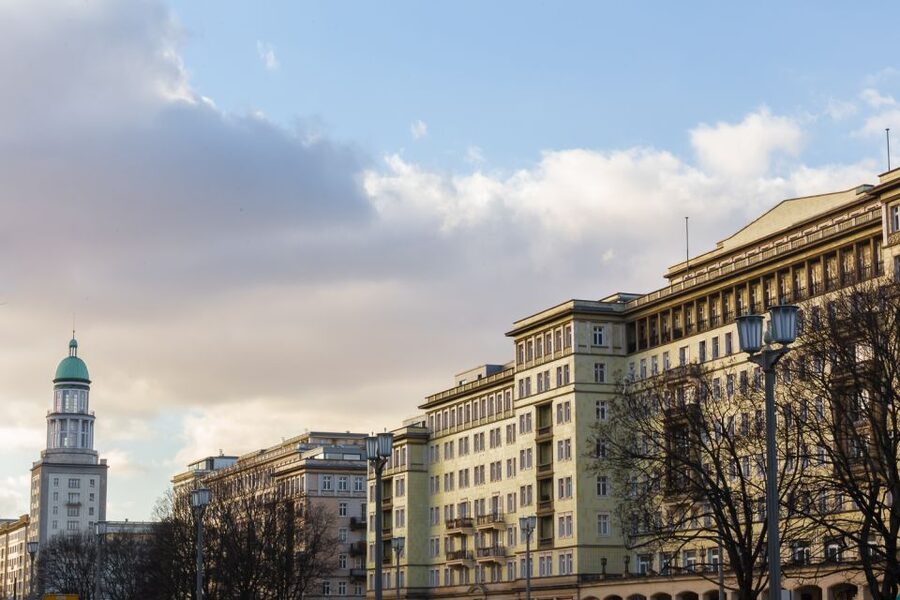
Karl-Marx-Allee isn’t just long—it’s deliberately dense with scale. One of the standout high-rise elements on the route is Hochhaus an der Weberweise. This is the kind of building that makes you rethink how a boulevard can function as an entire system: not only street-level façades, but vertical presence and skyline impact.
Standing near a high-rise like this, you start to understand why the boulevard feels like a monument. The street’s planning is visible in the way buildings relate to sight lines and spacing. Even if you don’t memorize measurements, you can feel the planning logic.
Then there’s the street itself: the boulevard’s identity is part of the experience. The guide walks you along the line of the corridor, so you don’t just “see” spots—you connect them. By the time you reach the next areas, you’re already thinking, How does this compare with what I saw earlier?
That’s a big reason a guided walk is worth it here. The architecture is doing the work, but the guide helps you notice the patterns instead of just admiring the individual blocks.
Church of the Resurrection Ruins and Strausberger Platz
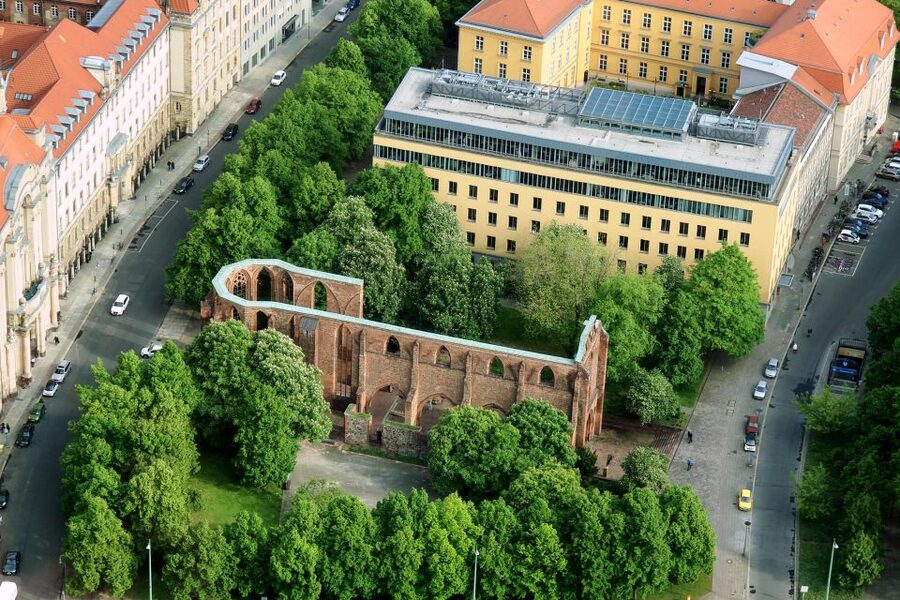
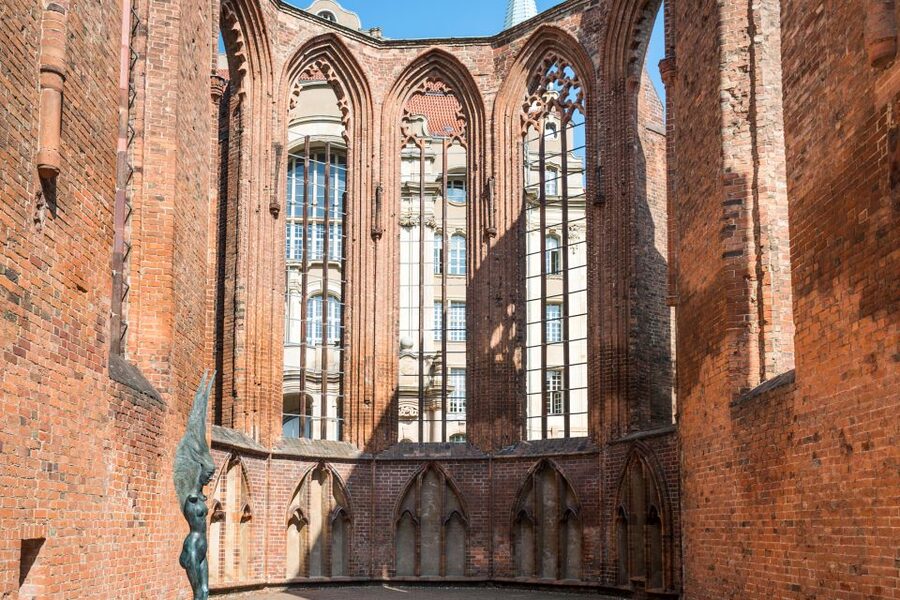
Not all the story is smooth. The tour includes the partial ruins of the Church of the Resurrection, which adds a more raw, human layer to the architecture theme. Ruins are a reminder that planning and ideology don’t erase war. They just sit beside it, and the city carries both.
This stop can be emotionally quiet, in a way that’s actually useful. It keeps you from treating the socialist-era buildings as the only chapter. You see how the present-day street holds fractures—literal ones—in the built environment.
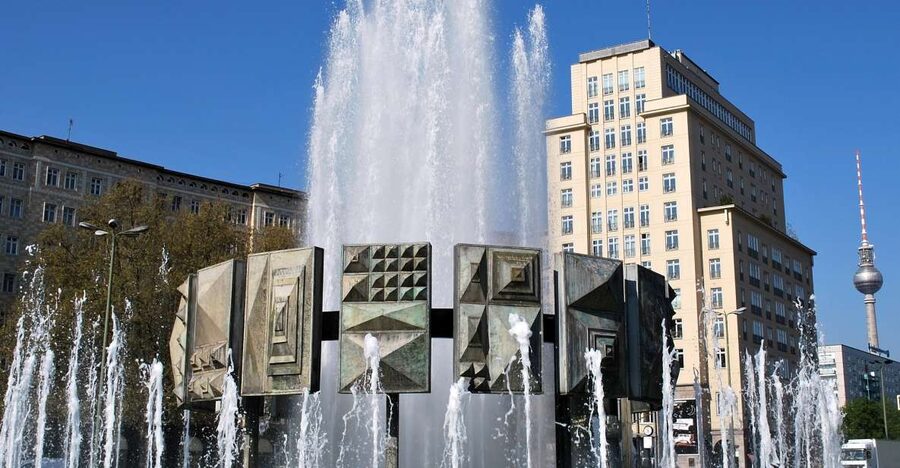
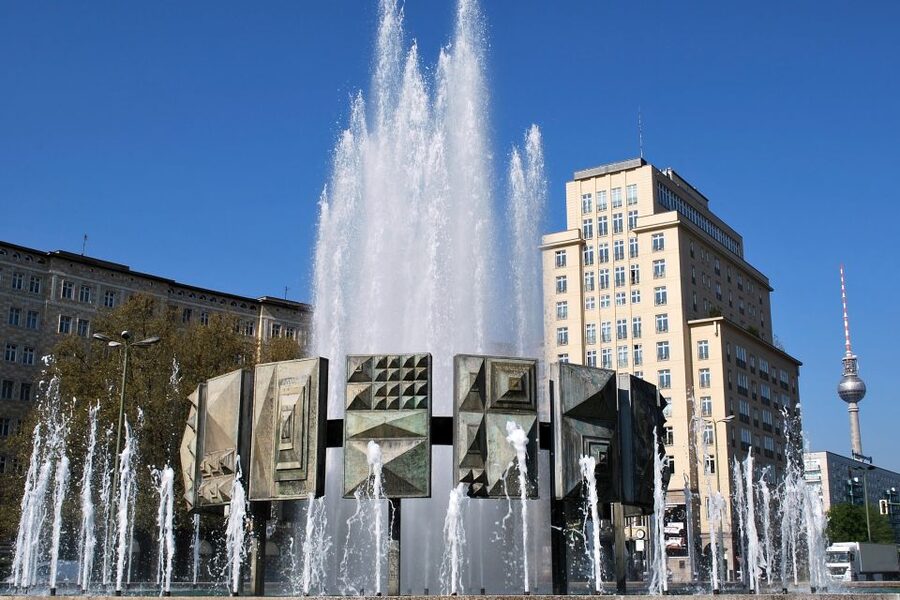
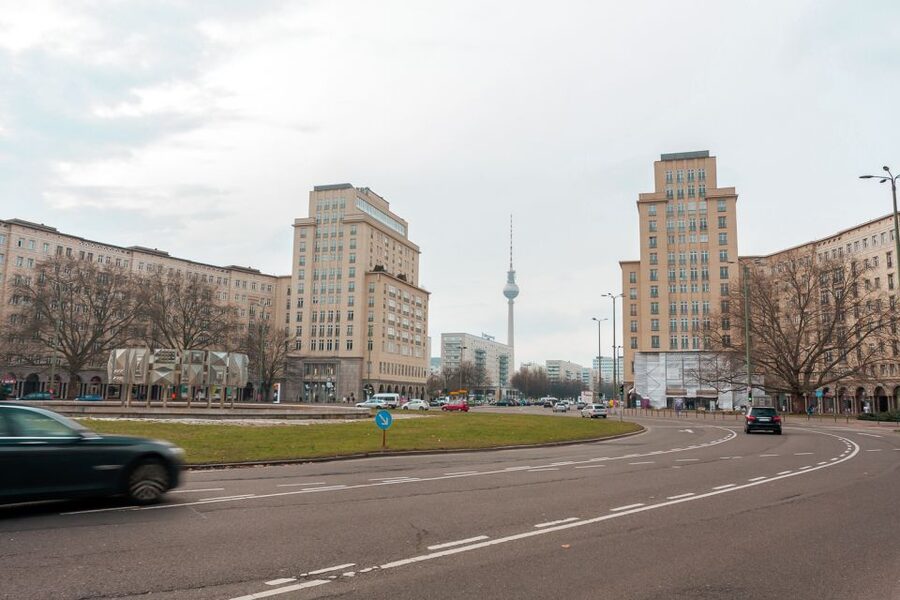
From there, you move to Strausberger Platz and its distinctive high-rise buildings. This area is described as a gateway into the socialist city center, and walking it helps you feel that transition. It’s less about one single view and more about how the space guides you, like a threshold.
If you like city-walking that changes your mental map as you go, this pairing works well. You start with the grand “statement” areas, then you hit the wartime reminder, and then you arrive at the gateway zone. The sequence makes the whole boulevard story easier to remember.
Price, Pace, and Who This 2-Hour Walk Suits
The price is $23 per person for a 2-hour walking tour with an expert guide. For Berlin, that’s a reasonable rate for an architecture-focused route, especially because you’re not only getting facts—you’re getting guided interpretation of why the street changed and what the design is trying to do.
This is also a “time-efficient” kind of tour. Two hours doesn’t sound huge, but on Karl-Marx-Allee it adds up fast, because the street is intentionally packed with meaningful architectural moments. You end up with a coherent story rather than a list of separated photo stops.
Pace is steady walking. You should feel comfortable on foot for long straight segments. Bring water, wear layers, and be ready for the wind that can come off open boulevards.
Who it suits best:
- You want architecture with political context, but explained in plain language
- You like seeing how housing and culture (not just monuments) fit into a city plan
- You enjoy guided storytelling, especially when a guide uses historical photos or period visuals
Who might find it less satisfying:
- If you dislike long corridor walks, or you prefer lots of small side streets and markets, this one may feel focused.
Should You Book This Karl-Marx-Allee Tour?
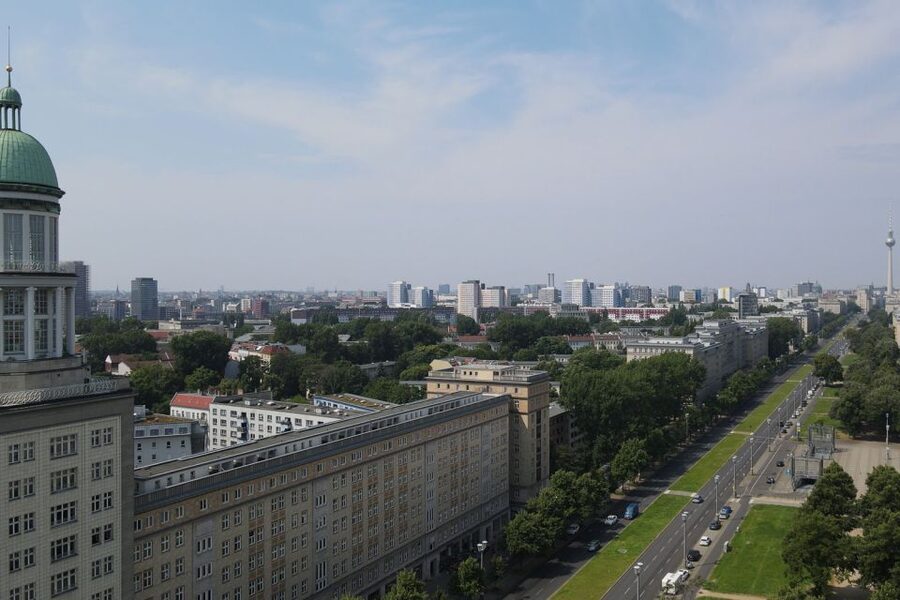
I’d book it if you want one of the clearest ways to understand Berlin’s post-war urban story in a short window. The mix is strong: a true architectural showpiece at Frankfurter Tor, lived-in apartment design in Friedrichshain, a culture stop at Kosmos cinema, and then the sobering note of the Church of the Resurrection ruins before ending at the Strausberger Platz gateway scene.
If you’re the type who likes your sightseeing to come with interpretation—why it looks like that, what changed, and how the city branded itself over time—this tour gives you that in a practical, 2-hour format.
FAQ
How long is the Karl-Marx-Allee tour?
It lasts 2 hours.
How much does the tour cost?
The price is $23 per person.
Is hotel pickup included?
No. Hotel pickup and drop-off are not included.
What sights will we see during the walk?
You’ll see Frankfurter Tor, apartment buildings in Friedrichshain with arcades, Kosmos cinema designed by Josef Kaiser, Karl-Marx-Allee, Hochhaus an der Weberweise, the partial ruins of the Church of the Resurrection, and Strausberger Platz.
What language will the guide speak?
The live tour guide is available in German and English.
Where is the meeting point?
The meeting point may vary depending on the option booked.
Is free cancellation available?
Yes. You can cancel up to 24 hours in advance for a full refund.
Is reserve now and pay later available?
Yes. You can reserve now & pay later, keeping your travel plans flexible.
More 2-Hour Experiences in Berlin

More Tours in Berlin


More Tour Reviews in Berlin
Round out your days in Berlin
2-Hour Experiences, compared.
 ★ 5.0Berlin’s Best: 2 Hour Walking Tour Third Reich and the Cold WarFrom $245,486 reviews
 ★ 4.42-Hour Lake Oberhavel Cruise from TegelFrom $22577 reviews
 ★ 4.6Berlin 2-Hour Segway TourFrom $69238 reviews
 ★ 5.0East Berlin and the Berlin Wall 2-Hour Walking TourFrom $21228 reviews
 ★ 4.52-Hour Premium Segway TourFrom $69185 reviews
 ★ 4.7Backyards of Berlin 2-Hour TourFrom $21163 reviews
 ★ 5.02-Hour Segway Discovery Tour BerlinFrom $83154 reviews
 ★ 4.5Berlin Small Group Segway Adventure: Explore in 2 Hours!From $84140 reviews
Browse the lists this tour appears in