
REVIEW · CITY TOURS
Charlottenburg: 2-Hour City Walking Tour
Berlin’s fancy side has a quieter story.
This Charlottenburg walking tour connects Prussian power, real neighborhoods, and everyday Berlin life in just 2 hours, starting at Rathaus Charlottenburg and ending at Charlottenburg Palace. I like how smoothly the route moves between landmark grandeur and lesser-seen blocks, and you also get practical context for what you’re actually looking at as the city changes over time.
Two things I especially enjoy are the guide’s structured way of explaining city history and the focus on details you might miss on your own, like Heinrich Zille’s art motifs near the Stadtbad and how 18th-century planning still shapes what you see. The one drawback to keep in mind: the tour is in German, and there’s no food stop or museum entry included, so plan for walking time and your own snack break if you need one.
In This Review
- Key highlights that make this walk worth your time
- Charlottenburg’s polite streets tell a different Berlin story
- Starting at Rathaus Charlottenburg: the symbol and the scale
- The medieval nucleus and old village square: where the story begins
- Heinrich Zille near the Stadtbad: art motifs from the working-class streets
- Luisenkirche and 18th-century planning: seeing the city’s design logic
- Housing styles and schoolhouses from 1786: the city’s everyday architecture
- Nehringstraße and Christstraße: the quaint corner where locals still live
- Villa Oppenheim and Schlossstraße: from private splendor to public culture
- Charlottenburg Palace finale and Stüler’s dome-topped lines
- Price, duration, and whether $23 is good value
- Who this tour fits best (and who might want a different one)
- Tips to enjoy the walk without stress
- Should you book the Charlottenburg 2-Hour City Walking Tour?
Key highlights that make this walk worth your time
- Rathaus Charlottenburg start: an easy, clear meeting point that puts you in the center of the story fast
- Old-village core to modern streets: you’ll see how a “small city” inside Berlin evolved through planning and housing
- Heinrich Zille motifs near the Stadtbad: art history meets the everyday working-class Berlin he drew
- Charlottenburg Palace finale: finish with palace splendor and Stüler architecture line-drawing the skyline
- Klausener Kiez street life: cafés, thrift stores, and corner shops help the neighborhood feel lived-in
- A route that avoids the obvious crowds: the pacing and sight choice keep it from turning into a checklist
More palace time at Charlottenburg
- Berlin: Charlottenburg Palace Entry Ticket★ 4.4 · 2,076 reviews
- Charlottenburg: 2-Hour City Walking Tour★ 4.8 · 47 reviews
- Berlin: Charlottenburg Palace & Gardens Ticket & Audio Tour★ 4.2 · 9 reviews
- Berlin: BRLO Charlottenburg Tasting Session★ 4.9 · 8 reviews
Charlottenburg’s polite streets tell a different Berlin story
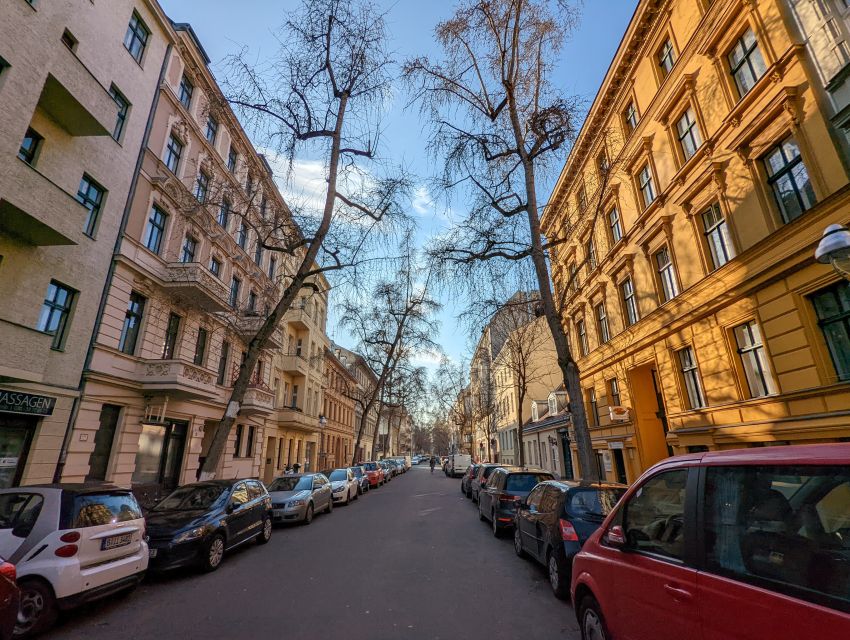
Charlottenburg is often treated like a palace-and-postcard stop. This tour nudges you past that idea. You’ll spend your time in the bourgeois neighborhood of Charlottenburg, but you won’t only see formal buildings. You get a guided path through the older village nucleus, the planning decisions that shaped streets and housing, and the day-to-day Berlin that still runs along these blocks.
What makes this work for you is the balance. You’ll have big architecture moments, but they come with enough context to make them make sense. You’ll also get the kind of neighborhood details that help you understand where people actually shop, chat, and spend time. In a short 2-hour window, that combination is the whole point.
And because it runs rain or shine, you’re not stuck waiting for a perfect day just to get oriented. Bring comfortable shoes and dress for weather, because this is a walking tour, not a sit-down lecture.
Starting at Rathaus Charlottenburg: the symbol and the scale
You meet your guide right in front of the main entrance to Rathaus Charlottenburg. That matters more than it sounds. It’s a visual anchor: you start with a building that signals prosperity and civic pride, and the tour uses it as a baseline for what comes next.
From there, the route sets up the big contrast that makes Charlottenburg interesting. Early on, you’ll move from a modern civic presence toward the medieval nucleus, including the old village square. The effect is like switching camera lenses. One moment you’re seeing the neighborhood as it’s organized for administration; the next you’re seeing the older bones of the place.
If you’re the type who likes to understand how a city grows, this opening is your best friend. Instead of jumping straight to a palace, you build a mental map: where the old center was, why the area developed the way it did, and how that history still shows up in street layout and building style.
The medieval nucleus and old village square: where the story begins
One of the most useful parts of this tour is that it takes you to the medieval nucleus and the old village square without rushing through it. You’re not just passing landmarks. You’re learning how the neighborhood’s identity formed, then transformed.
This matters because Charlottenburg’s story is not only about rulers and estates. It’s also about how ordinary space was organized over centuries. The medieval core gives you that baseline, and then later stops (housing styles, planning references, school buildings) become easier to interpret. You start to notice patterns instead of collecting random sights.
Think of this section as your framework. When you reach the more famous scenery later, you’ll know why those places belong to this particular part of Berlin, and you’ll spot the ways the city planned growth around existing structure.
Heinrich Zille near the Stadtbad: art motifs from the working-class streets
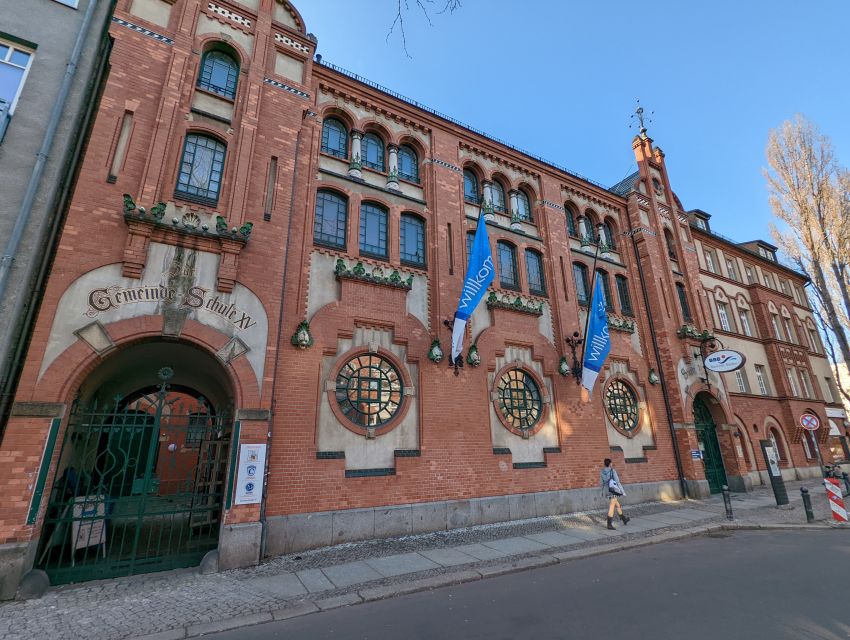
One of the more memorable stops is near the Stadtbad, where the tour connects the area to artist Heinrich Zille. Zille is known for drawing Berlin’s working class with a mix of affection and irony, and this tour uses that connection to shift your attention from castles to people.
You’ll hear how he found motifs here, and that changes how you look at the surrounding streets. Instead of only seeing architecture, you start noticing social space: the kind of environment where everyday scenes become the subject of art. It’s a reminder that Charlottenburg wasn’t always only about grand façades.
This is also where the guide’s storytelling style really helps. The tour doesn’t treat history like a list of dates. It translates history into images you can hold in your head. And if you enjoy questions, this is the segment where your curiosity is more likely to pay off, since the guide is set up to handle questions and explain connections as you go.
More of Berlin on foot


Luisenkirche and 18th-century planning: seeing the city’s design logic
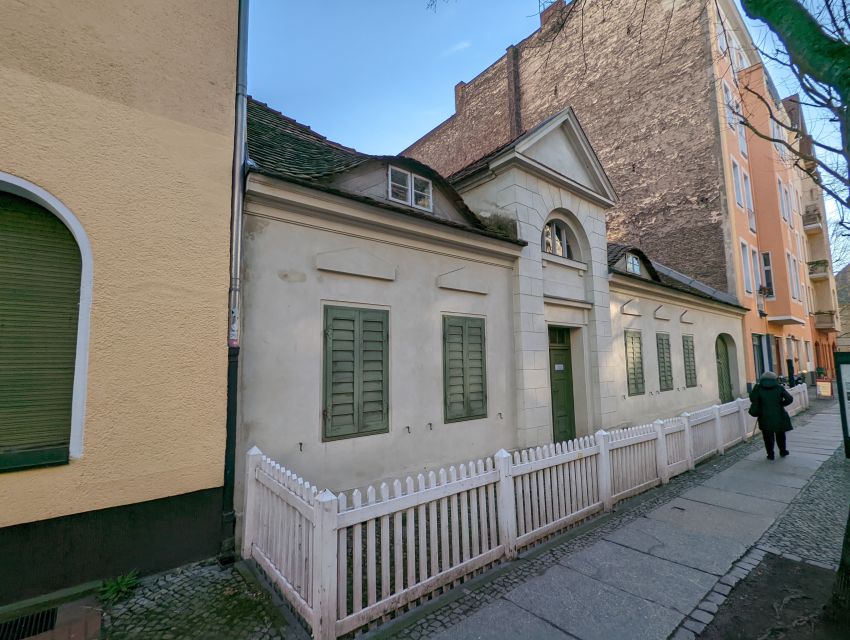
Next up is the architectural history around the Luisenkirche, tied to 18th-century urban planning. This is the kind of topic that can turn dry fast on other tours. Here, it’s presented as the “why” behind what you’re standing in front of.
You’ll get a clearer sense of how planning shaped the neighborhood. What makes that practical for you is that you begin to see street logic and building placement as intentional choices, not random outcomes. The 18th century was a major growth period, and the tour helps you recognize where that period left traces.
This part of the walk is also a good mental reset. You’ve had village-core context and art-world context. Now you get a planning lens that ties those threads together. Once you understand the planning decisions, housing styles and residential patterns later in the route start clicking into place.
Housing styles and schoolhouses from 1786: the city’s everyday architecture
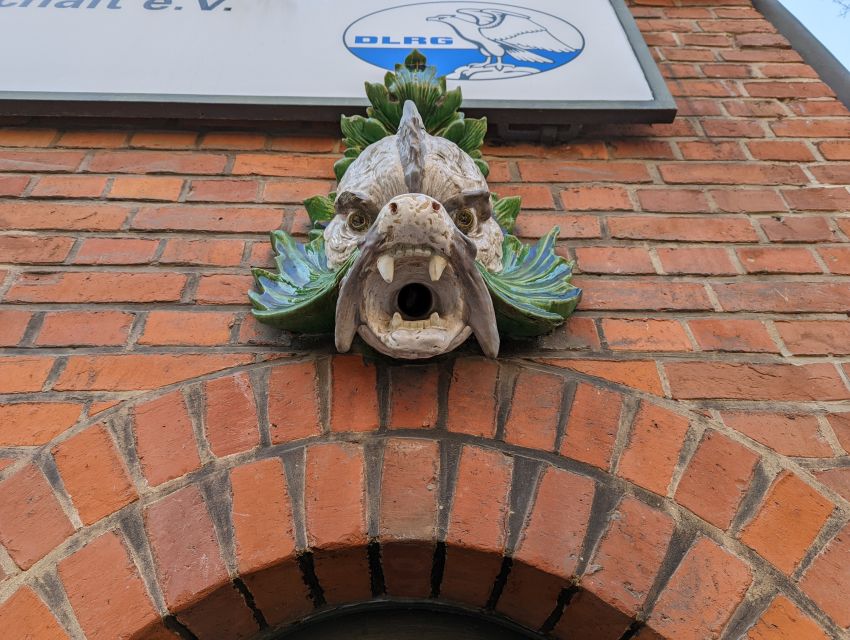
A big chunk of the experience is about Berlin’s housing character—how the neighborhood visually “feels” even today. You’ll see style examples that still define Berlin’s cityscape, plus preserved schoolhouses dating from 1786.
I like stops like this because they’re the opposite of “look and move on.” When you pause for a school building from 1786, you’re not only looking at old stone. You’re looking at public priorities: who education served, how communities planned for children, and how institutions were built to last.
The same goes for the housing styles. The tour helps you connect architectural choices to a broader urban development story. That’s especially helpful if you’ve spent time in Berlin only checking off big sights. Here, the “in-between” buildings are treated as important evidence.
If you prefer big views and palace interiors, this section may feel more conceptual at first. Stick with it. By the time you get toward the quieter corners of the route, you’ll understand why these humble structures are a key part of Charlottenburg’s identity.
Nehringstraße and Christstraße: the quaint corner where locals still live
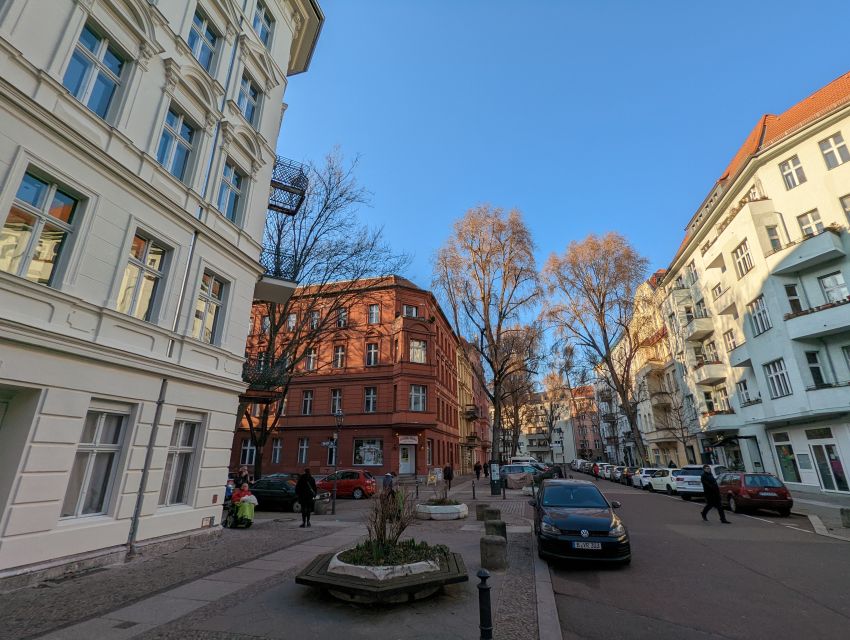
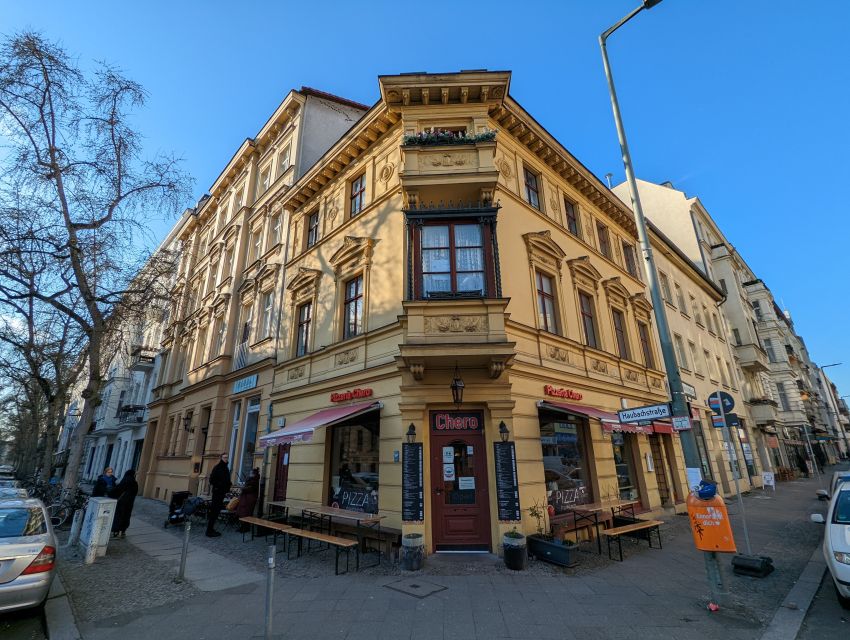
As you move into a quaint area at the corner of Nehringstraße and Christstraße, the tour shifts from architecture to street behavior. This section is where Klausener Kiez-style authenticity starts to show up in a way that feels real, not staged.
You’ll see locals mingle in cafés, thrift stores, and corner shops. The point isn’t just that these places are pretty. It’s that you’re watching how the neighborhood functions now, which makes the older history feel connected instead of museum-only.
This is also where the guide’s choices feel smart. The route avoids turning into a pure tourist strip. You get residential textures and everyday commerce, and that’s the fastest way to understand a neighborhood’s personality. If you want Berlin that feels like Berlin, not Berlin on rails, this is the moment you’ll feel it.
Villa Oppenheim and Schlossstraße: from private splendor to public culture
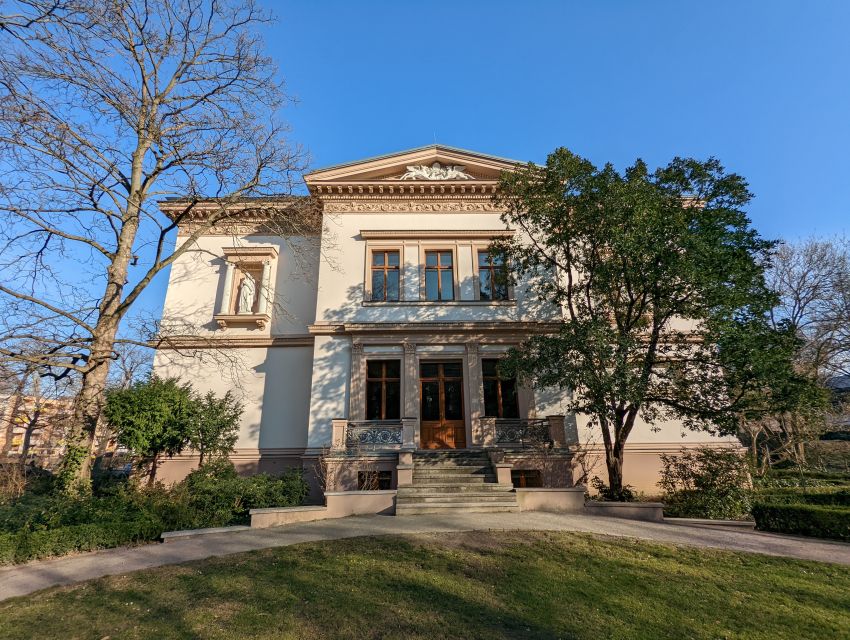
Then the tour begins to climb back toward grandeur. You’ll witness the splendor of Villa Oppenheim, and you’ll continue toward Schlossstraße, which now houses world-class museums.
That transformation—from a villa context to an institutional museum corridor—helps you understand how spaces change roles over time. It also gives you an easy next step. Even though museum visits are not included, you’ll finish the tour with clear motivation about what to see afterward and where to start looking.
If you’re planning your own follow-up, this is where the guide’s explanation pays off. The tour points you in the right direction for understanding what you’re about to pay to enter. You’re not guessing. You’re deciding with context.
Also, if you’re the kind of person who hates wasting time, you’ll appreciate that the walk ends at a major destination with a strong visual finish. It keeps your day efficient: you get story + location orientation, and later you choose how much time you want to spend inside.
Charlottenburg Palace finale and Stüler’s dome-topped lines
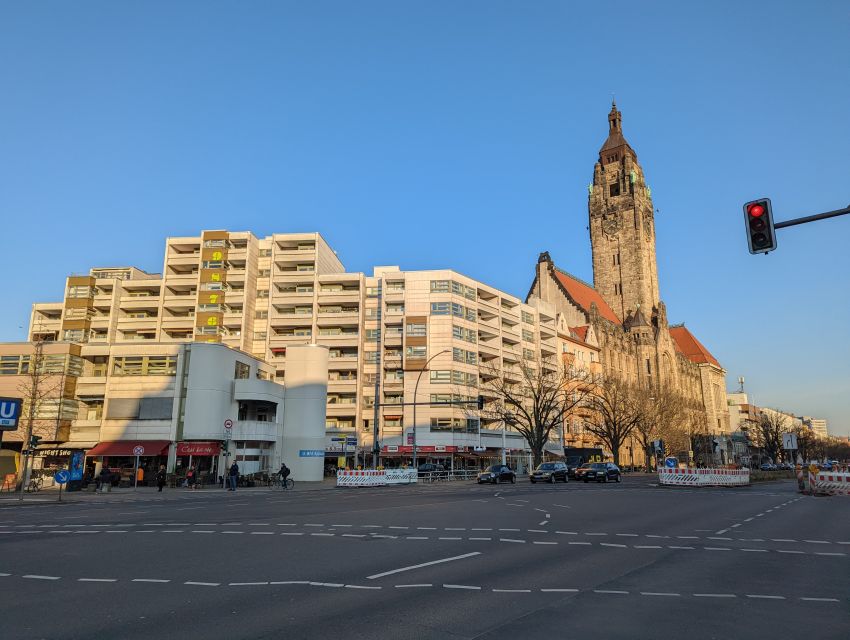
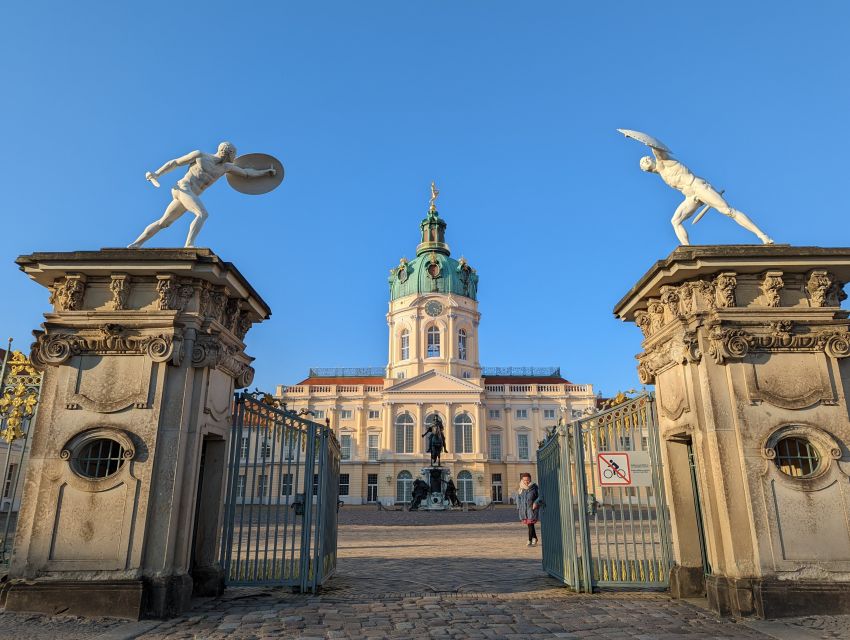
You end at Charlottenburg Palace. The palace is lined with magnificent dome-topped Stüler buildings, which give the finishing stretch a crisp architectural rhythm.
This finale works especially well after the earlier stops. By this point, you’ve seen civic authority, village origins, working-class artistic motifs, and planning patterns. So when the palace appears, it doesn’t feel like a random “big building.” It feels like the result of a long urban process—how power and prestige shaped a part of Berlin.
You’ll get a sense of what made Charlottenburg a former Prussian power center, and you’ll see why this area became a magnet for status and culture. It’s a satisfying payoff for a relatively short time on foot.
And because museum visits aren’t included, you’re left with freedom. You can keep walking, take photos, or decide whether you want to add an interior visit separately based on your interests and your schedule.
Price, duration, and whether $23 is good value
At $23 per person for a 2-hour guided walk, this is solid value if you want real orientation and historical context without spending half a day in museums. The tour includes a guided experience led by a professional museum expert, which matters because Charlottenburg has a lot of architectural and planning nuance. Without guidance, you’d likely miss the connections between buildings, streets, and time periods.
This price also makes sense for the kind of traveler who values efficiency. Two hours is enough to build momentum: start at Rathaus Charlottenburg, hit the old core and planning story, then finish at the palace area. It’s long enough to feel like an experience, short enough to fit between other Berlin plans.
One practical consideration: the tour is in German. If you’re comfortable with German or want exposure, you’ll probably enjoy the flow. If not, you may still catch visuals and basic points, but you’ll be less likely to get the full benefit of the guide’s explanations and anecdotes.
Who this tour fits best (and who might want a different one)
This walk fits you if you like history that connects to the streets you’re standing on. It’s great for first-time visitors who want more than the most obvious sights. It’s also a good choice if you’ve been to Berlin before and want a different angle on the city: Charlottenburg’s “other” face, with working-class and residential layers included.
It’s also a smart option for travelers who enjoy questions and conversation with the guide. The experience is designed to answer queries and keep explanations lively, with a pace that doesn’t bulldoze you through stops.
If you’re only interested in palace interiors and museum ticket time, you might feel shortchanged because museum visits aren’t included. You’ll still end at Charlottenburg Palace and see the architecture, but you’ll need to plan separate entry if you want the inside experience.
Tips to enjoy the walk without stress
Start with the basics: comfortable shoes and weather-ready clothing. The tour runs rain or shine, so bring layers and be ready for slick sidewalks.
Because you’re walking through residential streets and shop areas, it helps to wear something practical. You’ll spend time on a range of street surfaces, and you’ll likely want your phone charged for photos at the palace and architectural stops.
If you want a smoother day, schedule this early in your neighborhood exploration. You’ll get a sense of where things are—especially around Schlossstraße and the palace area—so your later wandering becomes more intentional.
Should you book the Charlottenburg 2-Hour City Walking Tour?
Book it if you want a high-quality, 2-hour guided route that mixes palace grandeur with neighborhood reality. The guide’s explanation style and firm grasp of city-and-architecture context are the main reasons to choose it, and the focus on streets like Klausener Kiez-style commercial corners makes the tour feel grounded.
Skip it only if you need an English-language guide or you’re specifically looking for museum entry time during the tour. If you’re flexible and ready to walk, this is a strong way to understand Charlottenburg as more than a palace stop.
More Tours in Berlin





More Tour Reviews in Berlin

More at Charlottenburg Palace





Round out your days in Berlin

City Tours, compared.
 ★ 4.31-Hour City Tour by Boat with Guaranteed SeatingFrom $2516,993 reviews
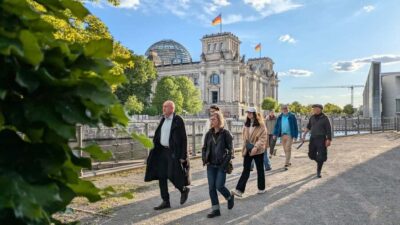 ★ 4.7Berlin City walk Government District and Places of DemocracyFrom $2948,467 reviews
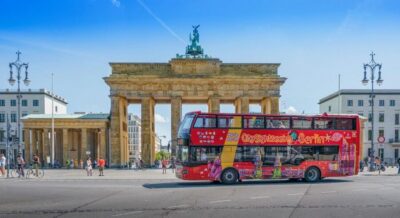 ★ 4.1City Sightseeing Hop-On Hop-Off Bus TourFrom $254,233 reviews
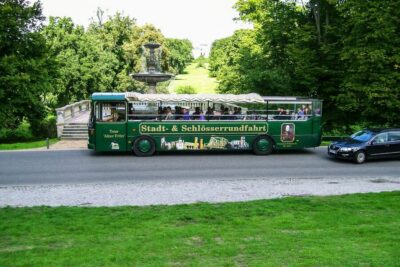 ★ 4.7Potsdam: City and Castles TourFrom $293,721 reviews
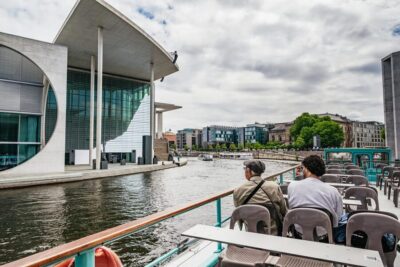 ★ 4.41-Hour City Sightseeing CruiseFrom $252,210 reviews
 ★ 3.5Berlin City Hop-on Hop-off Tour with Optional CruiseFrom $311,155 reviews
 ★ 4.8City Street Art Guided Walking TourFrom $231,051 reviews
 ★ 4.1Berlin Combo Package: City Tour & Spree Boat TourFrom $64996 reviews
Browse the lists this tour appears in