
REVIEW · MUSEUMS
Berlin: Samurai Museum – EMYA 2026 Nominated
Samurai armor in the middle of Berlin. You walk into Samurai Museum Berlin in Mitte and get straight to a private collection of 1,000+ original Samurai artifacts from Japan, presented with high-tech projections, interactive stations, and video guidance. One thing to plan for: you can’t bring food, drinks, or large bags, so pack light and plan your snack stop outside.
I especially like the way the museum moves from objects to meaning. The exhibits don’t just show armor, helmets, masks, katanas, and rare art pieces; they connect them to discipline, honor, aesthetics, tea-culture references, and myths that still show up in film and design. It’s also built for real-world Berlin travel—easy public transit access and a skip-the-line entry ticket.
If you want only traditional display cases with minimal tech, the media-heavy format may feel like more screen time than you expect. Still, for most people, the mix of artifacts and interactive storytelling is exactly the point.
In This Review
- Key things to know before you go
- Entering the Samurai Museum Berlin in Mitte (Auguststraße)
- The real draw: 1,000+ original Samurai artifacts
- High-tech storytelling: projections, interactive stations, and AI guidance
- A smart game plan for your 1–2.5 hour visit
- Start with the short video setup (about 8 minutes)
- Then move into the armor and “identity” section
- Use the interactive stations as breaks, not detours
- End with the cultural links
- Stop at the gift shop if you want souvenirs
- What the museum teaches: honor, discipline, aesthetics, and myths
- Price and value: Is $16 a good deal?
- Rules, packing, and what can slow you down
- Who should book this museum (and who may not love it)
- Should you book Samurai Museum Berlin?
- FAQ
- FAQ
- Where is Samurai Museum Berlin located?
- How much does the ticket cost?
- What’s included with the ticket?
- Is the ticket a skip-the-line option?
- How long is the ticket valid?
- What public transport stops are closest?
- Is the museum wheelchair accessible?
- Are pets allowed inside?
- Can I bring food, drinks, or large bags?
- Can I cancel for a refund?
Key things to know before you go
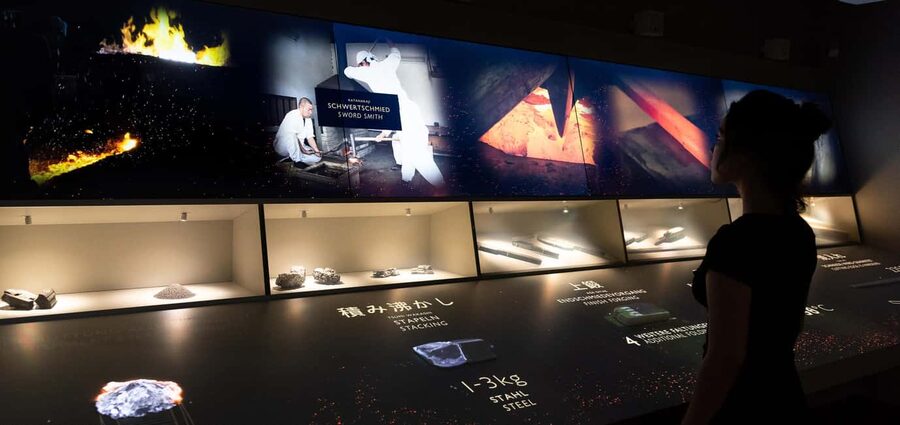
- 1,000+ authentic Samurai artifacts from Japan, including armor, swords, helmets, masks, and rare art pieces
- EMYA 2026 nominated, which usually means the museum’s presentation is taken seriously
- High-tech projections and interactive exhibits that explain context as you move through rooms
- Berlin Mitte location, close to Alexanderplatz and Museum Island so you can pair it with other sights
- Skip-the-line ticket for quicker entry during busy periods
- Language support in German and English, plus an AI fox-style guide mentioned in the museum experience
More of Berlin's museums and galleries
- Berlin: Natural History Museum Entrance Ticket★ 4.6 · 3,382 reviews
- Berlin: Museum Island Multiple Museum Entry Ticket★ 4.4 · 2,861 reviews
- Skip-the-Line: Berlin Wall Museum at Checkpoint Charlie★ 4.1 · 2,041 reviews
- Berlin: Interactive DeJa Vu Museum Entrance Ticket★ 4.1 · 1,338 reviews
Entering the Samurai Museum Berlin in Mitte (Auguststraße)
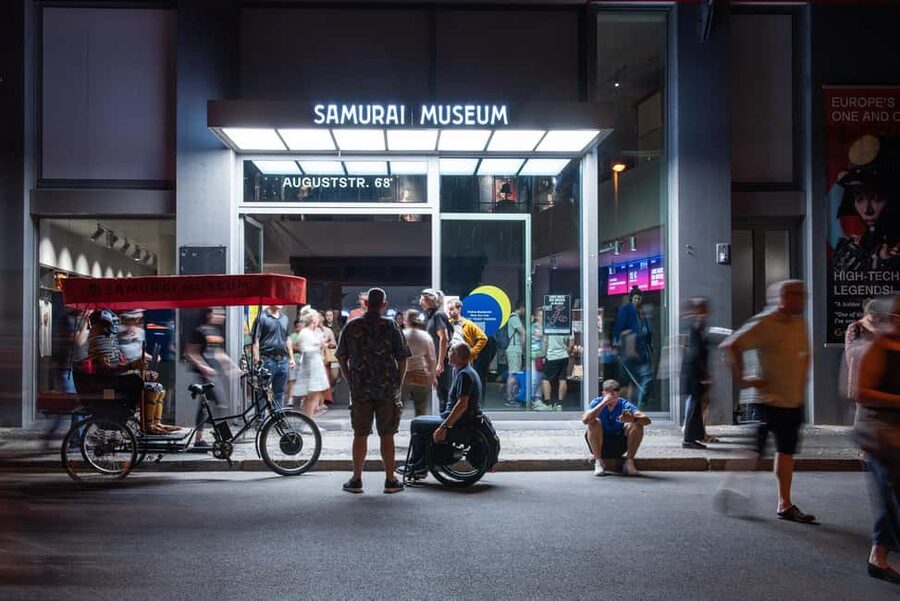
The Samurai Museum Berlin is in central Mitte, at Auguststaße/Mitte, and it’s close to the action around Alexanderplatz and Museum Island. That matters because you’re not planning a separate trip across town. You can fold this visit into a normal Berlin day and not feel like you’re racing the clock.
Getting there is straightforward on public transport. For the U-Bahn, the museum area is served by U6 Oranienburger Tor and U8 Rosenthaler Platz. If you’re on the S-Bahn, look for S1, S2, S25, S26 at Oranienburger Straße. Trams include M1 and M5 to Oranienburger Straße, plus M8 to Rosenthaler Platz. Bus 142 also stops at Tucholskystraße, and M41 at Abgeordnetenhaus.
Practical tip: since the museum doesn’t allow luggage or large bags, aim to arrive from the street with daypack-sized space. If you’re coming from a longer day outside, you’ll feel the “pack light” rule fast.
The real draw: 1,000+ original Samurai artifacts
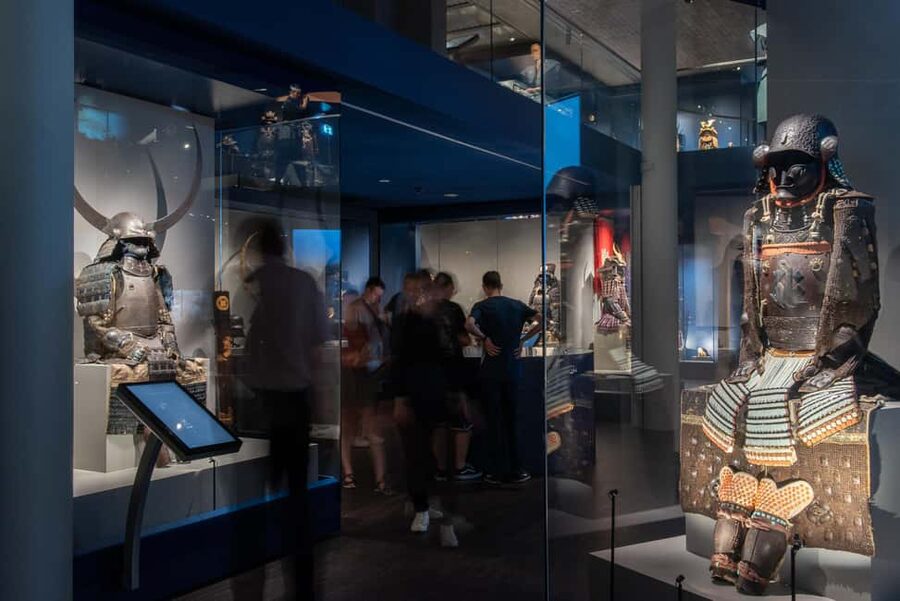
This museum’s heart is its private collection of over 1,000 authentic Samurai artifacts. When museums focus on one narrow story, they can get repetitive. Here, the range keeps you moving.
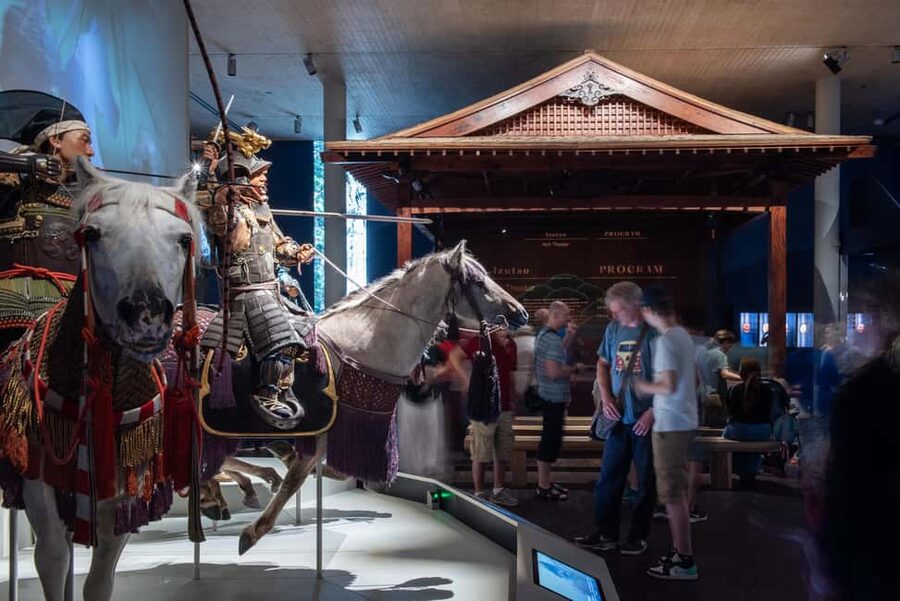
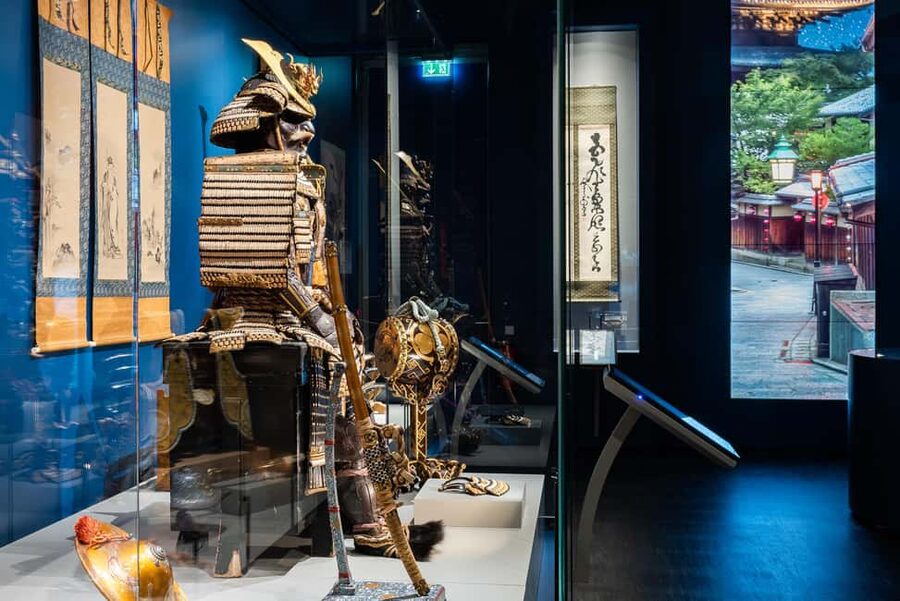
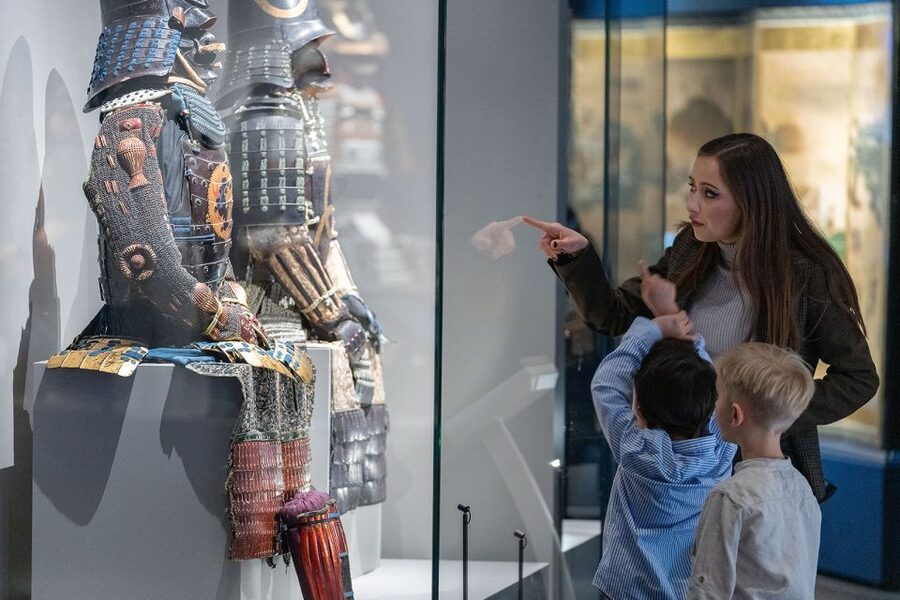
You’ll see historic armor pieces and how they were built for both function and identity. You’ll also find swords (including katanas), helmets, masks, and decorative objects—items that help explain how Samurai culture wasn’t only about fighting. It was about appearance, discipline, and social meaning.
What I like about this type of collection is that it’s visual evidence. Text is one thing. Objects are another. A helmet or mask isn’t just “gear” once you understand how it ties into honor, roles, and aesthetics. And because the collection traces Samurai culture from the early Middle Ages into later influences, the museum gives you a sense of continuity instead of a single snapshot.
If you’re into costume and craft, this is a strong match. If you’re more curious about cultural symbolism and how myths travel into modern life, the artifacts give you something concrete to anchor that curiosity to.
High-tech storytelling: projections, interactive stations, and AI guidance
This isn’t a museum that only relies on labels. It uses modern media to connect the objects to the larger story.
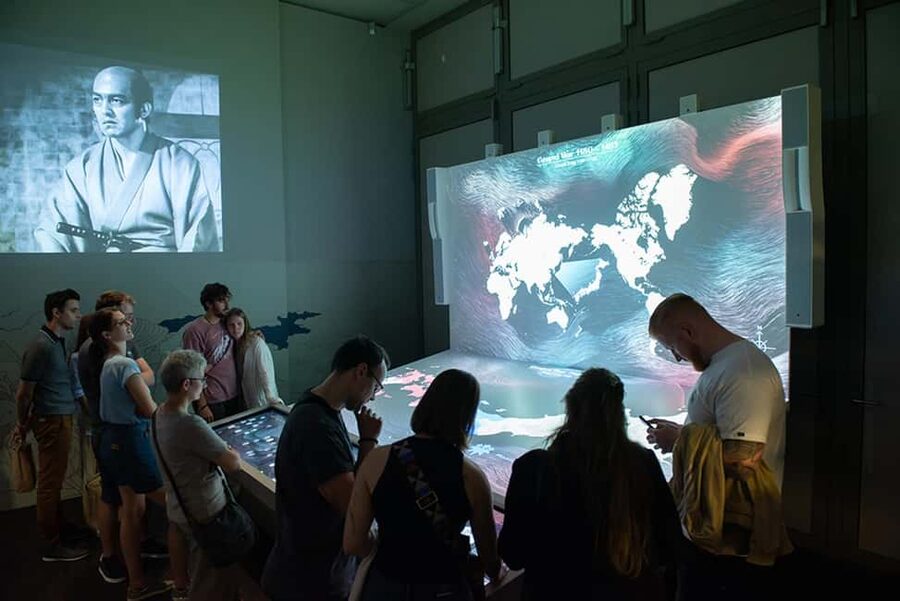
Expect immersive projections and interactive installations designed to explain themes as you walk through. That’s not just for “wow” factor. It’s helpful when you’re trying to understand cultural ideas—like honor systems, aesthetics, or how myths stick around—because it turns abstract concepts into something you can follow step by step.
One review-style detail that’s worth considering before you go: there’s an AI fox guide described as looking like Kurama from the anime Naruto. If you like playful learning tools, that kind of guide can make the experience feel less like homework and more like a story.
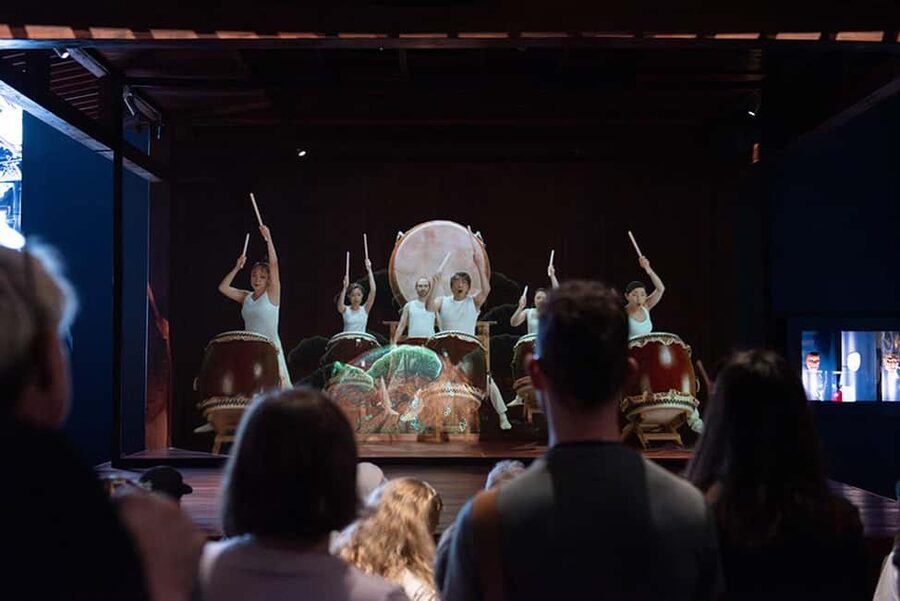
Also, the museum includes holographic music performances. That’s a great example of the tech being used as atmosphere, not just gadgets. It can help you slow down and look longer at objects instead of rushing from case to case.
If you’re worried about “too much tech,” the good news is that the artifacts still drive the visit. The media is there to explain what you’re seeing, not replace it.
A smart game plan for your 1–2.5 hour visit
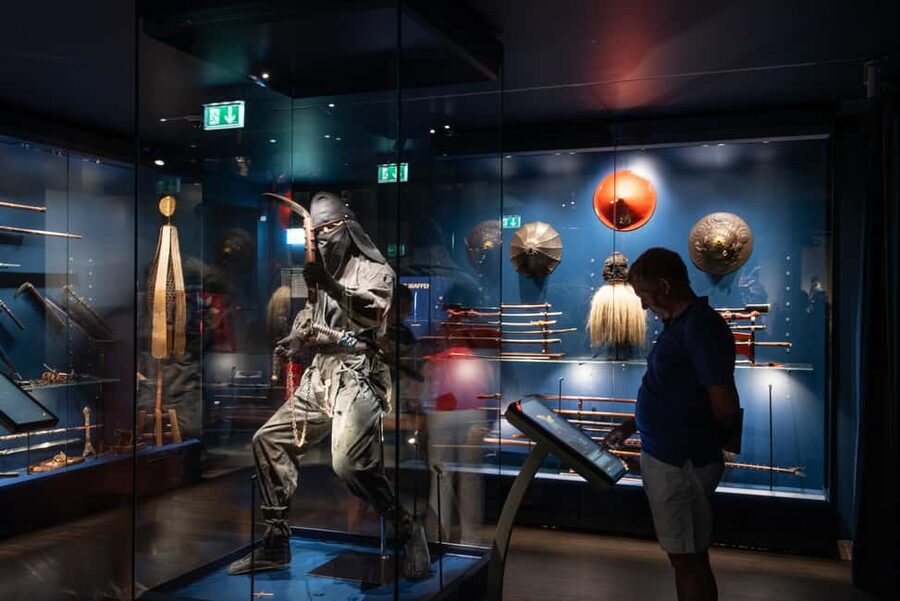
The ticket experience is designed for flexibility, and you can plan a short visit or a longer one. A common pacing for this kind of museum is about two and a half hours, especially if you stop for interactions and don’t speed through the videos. If you want a calm visit, give yourself breathing room—there’s a lot to read, watch, and respond to.
Here’s a practical flow that keeps things smooth:





Start with the short video setup (about 8 minutes)
A tip you’ll hear for a reason: consider an 8-minute video lecture about Japan before you hit the artifact rooms. It helps you set the terms so the armor and swords don’t feel like disconnected objects. Even if you’re not a Japan-history expert, you’ll likely pick up context fast.
Then move into the armor and “identity” section
When you first reach the main galleries, focus on armor, helmets, and masks. These items do double duty: they show craft and they show identity. Look at how parts relate to protection and presentation. This is where the museum’s interactive tools can help you connect “what you see” with “what it means.”
Use the interactive stations as breaks, not detours
The museum’s tech is most useful when you treat it like a pause button. If you rush through all the artifacts first, the explanations can blend together. If you mix artifacts with interactive moments, the story stays clearer.
End with the cultural links
The museum also points to cultural myths and how they influence film, design, and pop culture. Save that for the end so modern references don’t pull your attention away from the craft and historical objects that make them make sense.
Stop at the gift shop if you want souvenirs
There’s a mention of a really good gift shop. If you like museum-branded items or Japan-themed keepsakes, this is one of the easier places in Berlin to pick up something that actually fits the theme.
What the museum teaches: honor, discipline, aesthetics, and myths
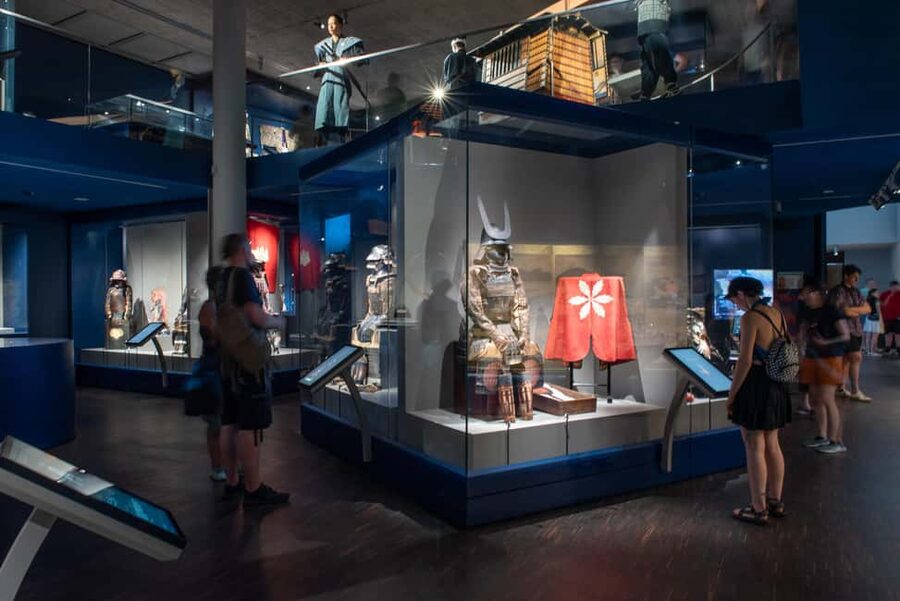
A lot of Samurai-focused content can turn into one-note “battle stories.” This museum tries to widen the frame.
As you move through, you’ll see connections to:
- Honor and discipline as cultural values
- Aesthetics as part of how Samurai culture expressed itself
- Tea-culture references and related traditions
- Cultural myths that continue to influence modern creative work
Why that matters for you: it changes the museum from “cool stuff” into “understanding.” You’re not only appreciating objects as artifacts. You’re learning how Samurai culture shaped behavior, style, and storytelling—then how those ideas got recycled into modern media.
If you’re traveling with friends who aren’t sure they’re into Samurai history, this approach can still work because it offers more than swords. It connects to design, performance, and symbolism—things people often enjoy even without deep background knowledge.
Price and value: Is $16 a good deal?
At $16 per person, this museum is priced like a serious “value ticket” for a specialist collection with real presentation effort behind it.
Here’s why the value holds up:
- You’re not paying for a generic exhibition. You’re paying for a collection built around 1,000+ authentic artifacts.
- The museum adds interactive media and video guidance, which can stretch your visit time without turning it into a gimmick.
- The ticket includes skip-the-line direct entry, which matters because this museum is in demand on weekends and during peak season.
If you compare it to other Berlin museum experiences, the price is accessible enough that you can justify going even if you’re only planning a half-day. And because you’re in central Mitte, you won’t spend half your day commuting just to reach it.
My rule: if you like culture that mixes art, craft, and story, $16 is fair. If your interest is strictly hands-off history, you may still enjoy the artifacts, but you might not use the tech-heavy parts as much.
Rules, packing, and what can slow you down
The museum has clear restrictions: no pets, no food and drinks, and no luggage or large bags. Wheelchair access is available, so the building is designed to handle mobility needs.
These rules are normal for museums, but here’s the practical effect: you should assume you’ll keep things minimal. A small day bag is easier than trying to drag bigger luggage through central Berlin streets and into gallery space.
Also, because the museum is near busy areas like Alexanderplatz, it’s easy to plan a snack stop before or after. Don’t count on in-museum food service.
Who should book this museum (and who may not love it)
This is a great fit if you:
- Want Japanese Samurai culture presented through both artifacts and modern explanations
- Enjoy interactive exhibits, video guidance, or AI-style learning tools
- Like traveling in the city center and want an easy add-on to a Berlin day
- Bring kids or friends who learn better with visuals and hands-on features
It may be less ideal if you:
- Prefer quiet, traditional museums with minimal screen time
- Want to wander with bulky bags or plan to eat inside the galleries
Should you book Samurai Museum Berlin?
If you’re in Berlin and you like museums that teach you something without feeling like a lecture, I’d book Samurai Museum Berlin. The combination of over 1,000 authentic artifacts, a high-tech presentation, and skip-the-line entry makes it a strong use of time in Mitte.
Book it especially if you’re visiting on a weekend or during busy travel weeks. With the museum’s popularity, direct entry can be the difference between enjoying your day and losing time waiting.
If your group includes different levels of interest in Samurai culture, this museum has enough variety—armor, swords, masks, cultural ideas, and media stations—to keep multiple tastes happy.
FAQ
FAQ
Where is Samurai Museum Berlin located?
The museum is located at Auguststaße/Mitte in Berlin, near the Alexanderplatz and Museum Island area.
How much does the ticket cost?
The price listed is $16 per person.
What’s included with the ticket?
The ticket includes entry only.
Is the ticket a skip-the-line option?
Yes, the skip-the-line ticket provides direct entry.
How long is the ticket valid?
The ticket is valid for 1–14 days, depending on your selected starting time.
What public transport stops are closest?
U-Bahn options include U6 Oranienburger Tor and U8 Rosenthaler Platz. S-Bahn options include S1, S2, S25, S26 at Oranienburger Straße. Tram stops include M1 and M5 at Oranienburger Straße, and M8 at Rosenthaler Platz. Bus options include 142 at Tucholskystraße and M41 at Abgeordnetenhaus.
Is the museum wheelchair accessible?
Yes, it is wheelchair accessible.
Are pets allowed inside?
No, pets are not allowed.
Can I bring food, drinks, or large bags?
No. Food and drinks are not allowed, and luggage or large bags are not allowed.
Can I cancel for a refund?
Yes. Free cancellation is available up to 24 hours in advance for a full refund.
Berlin's Museums and Galleries





More Tour Reviews in Berlin

Round out your days in Berlin




Museums, compared.
 ★ 4.6Natural History Museum Entrance TicketFrom $123,382 reviews
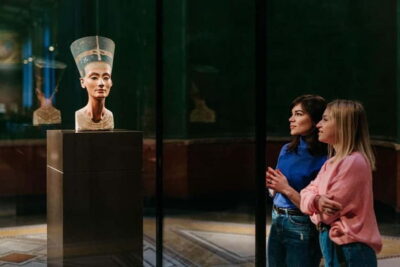 ★ 4.4Museum Island Multiple Museum Entry TicketFrom $282,861 reviews
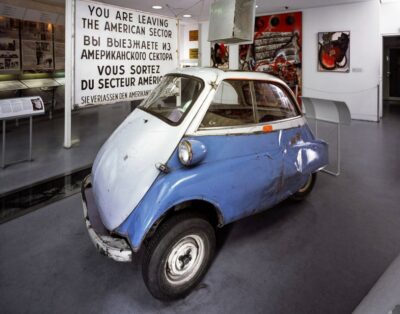 ★ 4.1Skip-the-Line: Berlin Wall Museum at Checkpoint CharlieFrom $212,041 reviews
 ★ 4.1Interactive DeJa Vu Museum Entrance TicketFrom $171,338 reviews
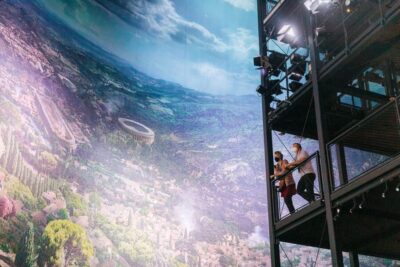 ★ 4.6“Pergamonmuseum. The Panorama” Exhibition TicketsFrom $161,245 reviews
 ★ 4.1East Side Gallery Spree Cruise in a Solar CatamaranFrom $281,086 reviews
 ★ 5.0Cold War, Berlin Wall, Spies and the East Side GalleryFrom $181,024 reviews
 ★ 4.3Berlin WelcomeCard: Museum Island & Public TransportFrom $70999 reviews
Browse the lists this tour appears in