
REVIEW · BERLIN HIGHLIGHTS & HIDDEN GEMS
Explore Berlin: See All The Iconic Sights & Some Hidden Gems
Berlin history shows up fast here. You’ll connect the dots between the Third Reich, Cold War division, and today’s Germany on a tight walk. The route hits the big names (Brandenburg Gate, Reichstag area, Checkpoint Charlie) plus the places that explain how ordinary life got pulled into extreme politics.
I especially love how the guide turns monuments into a timeline you can actually follow, not just a photo stop list. And I like that the tour moves at a practical pace, with frequent short pauses so you’re not stuck huffing for 3 hours straight. You’ll even see where major events happened, including the Berlin Wall remains and the site above Hitler’s bunker.
The main consideration is the walking. This is a city-stroll format, and the route covers a lot of ground in a short time; one mention notes around 3 miles, so comfortable shoes matter. Also, a few major museums are outside the included ticket price, so decide ahead if you want to pay to enter.
In This Review
- Key things to know before you go
- From Friedrichstrasse to Palace of Tears: the Cold War starts before the Wall
- Museum Island exteriors: seeing the grand buildings without the museum bill
- Bebelplatz book burning to Gendarmenmarkt: Berlin’s pressure-cooker culture
- Checkpoint Charlie and the Berlin Wall traces: Cold War Berlin in plain sight
- Fuhrerbunker site and the Holocaust Memorial: heavy topics, guided with focus
- Reichstag quarter and Brandenburg Gate finale: from division to modern unity
- Price and value: why this tour is a smart first Berlin move
- Who this tour fits best (and who should consider something else)
- Should you book Explore Berlin for the Wall, Nazi era, and memorial stops?
- FAQ
- How long is the tour?
- What language is the tour offered in?
- Where does the tour start and end?
- Do I need a printed ticket?
- Is admission included for all stops?
- What are the tour’s main highlights?
- Is the tour mostly walking?
- How big is the group?
- Is the tour suitable for most travelers?
- Are service animals allowed?
- Can I cancel for a refund?
Key things to know before you go
- A guided timeline, not a random checklist of Berlin’s 20th-century history
- Major Cold War stops like Palace of Tears and Checkpoint Charlie
- Memorial sites included, including the Memorial to the Murdered Jews of Europe
- Frequent short breaks that make the walk easier to handle in cool weather
- Some museum entry is not included, so you may only get exterior views at a few stops
- Small group size (max 25) helps keep the tour feeling organized
The big Berlin sights, and a few quieter corners
- Berlin: Discover Berlin Walking Tour★ 4.9 · 5,998 reviews
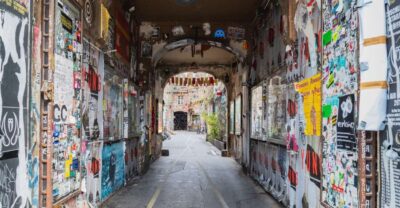
- Berlin: Hidden Backyards Guided Walking Tour★ 4.8 · 5,360 reviews
- Explore Berlin: See All The Iconic Sights & Some Hidden Gems★ 5.0 · 4,429 reviews
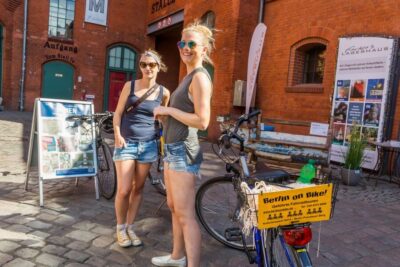
- Berlin: Sights and Highlights Bike Tour with a Local Guide★ 4.8 · 2,698 reviews
From Friedrichstrasse to Palace of Tears: the Cold War starts before the Wall
Most people begin with the same feeling: Berlin looks “normal,” then you realize how staged it all was. The tour starts in central Berlin near Friedrichstrasse, a fitting launchpad because this area lived and breathed the tension between East and West.
The first real “this is not a museum” stop is the Palace of Tears (also known as Traenenpalast). Even if you’ve seen photos of Berlin Wall-era crossings, this is where the story shifts from politics to people. Think about families, goodbyes, paperwork, and the emotional weight of crossing a line that wasn’t supposed to be crossed lightly.
Right after, you pass through Neue Wache, a national memorial that prompts a pause. It’s not there to shock you; it’s there to make you think about war and tyranny as forces that affect real lives, not just dates on a timeline.
Then the walk glides into a more intellectual Berlin moment at Humboldt University. You’ll hear how figures such as Marx, Engels, and Einstein studied or taught here—an interesting contrast to the later story. Berlin had ideas and ambition long before it had dictatorship. That context matters, because it makes the later “how did this happen?” questions land harder.
Practical tip: Bring a scarf or layer. Even with short stops, you’ll want something easy to adjust at memorial sites and open squares.
Museum Island exteriors: seeing the grand buildings without the museum bill
One of the smartest parts of this tour is that it pairs history with recognizable architecture. You’ll get a string of stops tied to Berlin’s museum and civic center—great for orientation if it’s your first time.
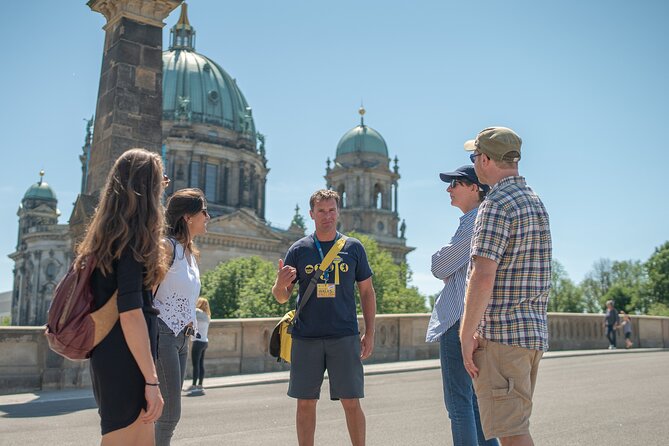
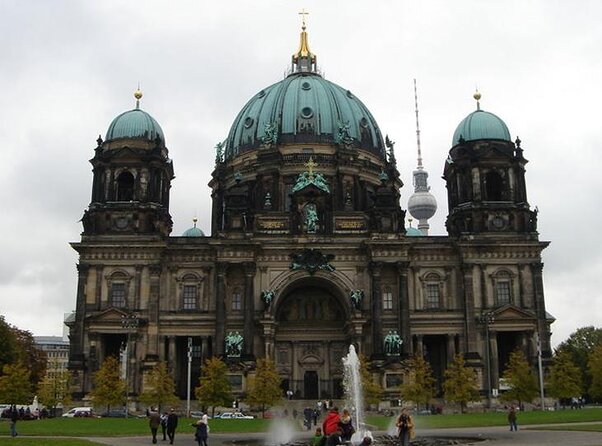
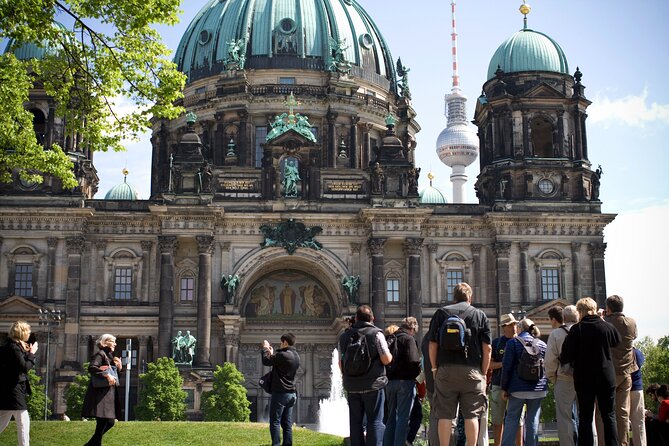
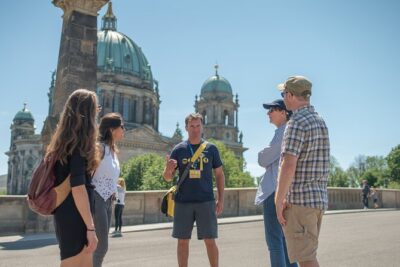
At Berliner Dom, you’ll see Berlin’s largest church and the surrounding landmarks tied to the Lustgarten area, City Palace (Stadt Schloss), and the Humboldt Forum. You may be tempted to think you’re “just looking.” But in Berlin, exterior views are often the real bargain: you understand the skyline and location before you spend time and money going inside.
Next, the tour quick-circles Pergamonmuseum, Neues Museum, and Altes Museum. The payoff here is what you learn about what those places hold—like Islamic art and major reconstructed gates associated with Pergamonmuseum, and the Ancient Egyptian collection tied to Neues Museum. The drawback: admission is not included for these museums, so you’ll likely get exterior-facing context rather than full galleries.
I like this approach. If you only have 1–2 days in Berlin, you get the meaning without being trapped in a timed ticket schedule. If you do want more, you now know which museum matches your interests and you can plan a second visit.
You’ll also stop at Stadtschloss Berlin, which is tied to the newly rebuilt Humboldt Forum and the reconstructed palace idea. That reconstruction theme fits the larger tour theme: Berlin repeatedly rewrites itself while trying to remember what came before.
Bebelplatz book burning to Gendarmenmarkt: Berlin’s pressure-cooker culture
After the museum quarter, you shift into spaces that show Berlin as a cultural crossroads, not just a political battlefield.
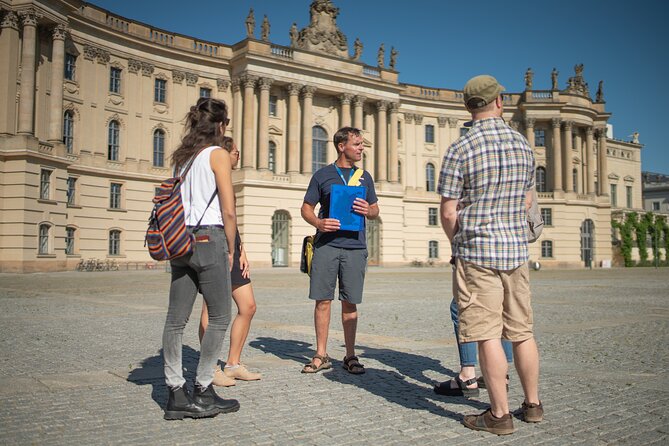
At Bebelplatz, you’ll stand in a beautiful 18th-century square and learn what happened here during the Nazi period. This stop includes the Book Burning Memorial, marking the location where books were burned in 1933. The point isn’t just that it happened. It’s that censorship was treated as normal public policy—performed in front of people who went along with it.
From there, the tour moves to Staatsoper and Konzerthaus, two major performance buildings. These are tied to the city’s long-running relationship with music and public life. Again, it’s a useful counterweight: art exists beside ideology, and both compete for attention.
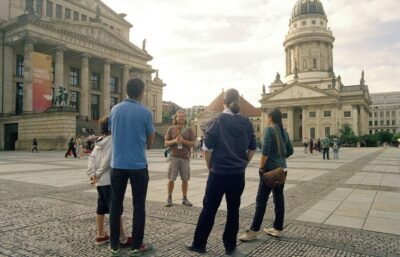
Then comes Gendarmenmarkt, where you’ll see the French Cathedral and German Cathedral forms that reflect a long tradition of religious tolerance. It’s a peaceful-looking square, but on this tour it’s never just pretty. You’re learning how tolerance and authoritarianism can share the same city.
Practical note: This is where the walking can feel a little heavier because squares don’t end until you reach the next street connection. Slow down, keep water handy if it’s warm, and don’t rush your photos—you’ll want them later.
Checkpoint Charlie and the Berlin Wall traces: Cold War Berlin in plain sight
Now the tour returns to what most people picture when they think of the Cold War: border tension.
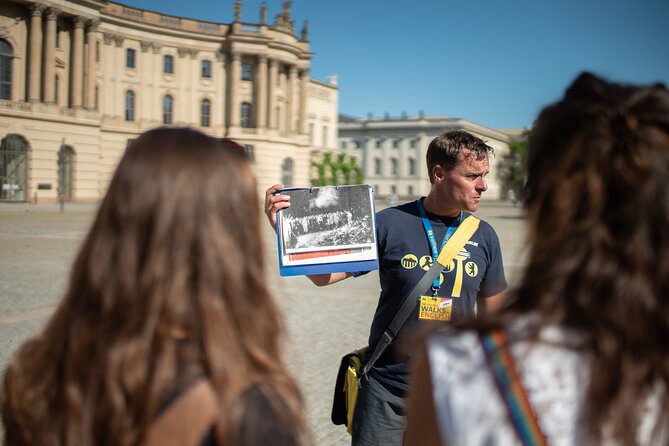
At Checkpoint Charlie, you’ll get the context of why it became the best-known crossing point between East and West Berlin. You’ll also learn what happened there in 1961 involving a tank standoff between Soviet and American forces. It’s dramatic history, but the guide’s job is to make it understandable—why those showdowns mattered and how civilians experienced them.
Next is Topography of Terror, where you’ll see a stretch of the Berlin Wall—around 200 meters. This isn’t the “perfect postcard Wall.” It’s a preserved reminder that the barrier was a real physical thing, not a concept. Seeing a piece like this helps your brain lock onto the timeline: division wasn’t symbolic. It was concrete.
The tour then points you toward the power structures behind the Wall story. You’ll pass the Aviation Ministry of Berlin site linked to Hermann Göring’s airforce ministry and later roles tied to East German and German finance governance. Even without going inside, you’ll get the sense of how government facilities shaped what people could do—and where.
Then the walk slows for one of the most intense stops.





Fuhrerbunker site and the Holocaust Memorial: heavy topics, guided with focus
At Fuhrerbunker, you stand above the location where Hitler spent his final days during World War II. The guide’s framing is what makes this stop work: it’s not just location knowledge. It’s the end of an ideological system, presented through a specific place tied to that final chapter.
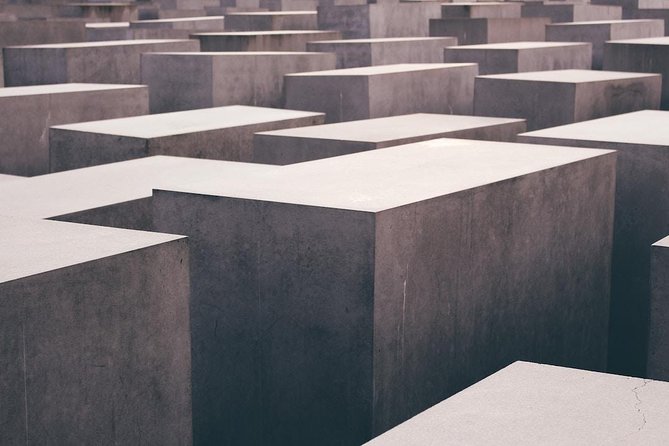
Then comes the Holocaust Memorial – Memorial to the Murdered Jews of Europe. You’ll walk through the memorial itself, and this portion of the tour is designed as reflection, not spectacle. Expect quiet intensity and a strong sense of scale.
This is also where a good guide makes a huge difference. In past departures, guides such as Grayson were noted for especially poignant explanations about the Holocaust, and other guides have been praised for handling complex themes in an understandable way. If you’re the type who gets overwhelmed by blunt facts, this guided structure helps keep the experience coherent.
How to prepare for this part: mentally plan for it to feel emotionally heavy. Bring a moment of patience—this isn’t the time to sprint from stop to stop for photos.
Reichstag quarter and Brandenburg Gate finale: from division to modern unity
The last stretch is where Berlin’s 20th-century storyline turns toward what’s possible afterward.
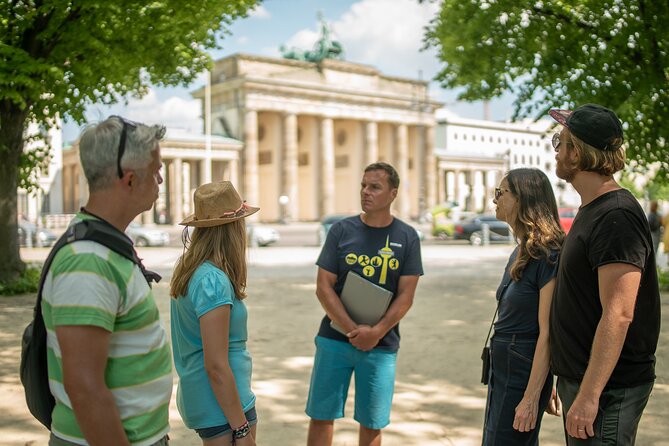
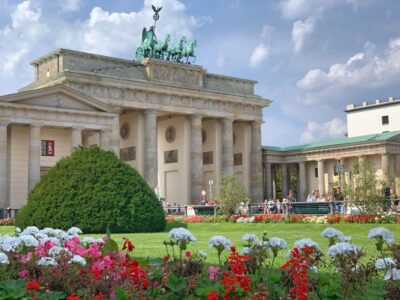
You’ll reach the German House of Parliament and the government quarter, then finish with the iconic Brandenburg Gate. This is the moment most people came for. During the Cold War, it represented division. Today, it’s treated as a symbol of peace and unity.
Along the way you’ll also notice diplomatic and historic surroundings, including the American Embassy, French Embassy, Hotel Adlon, and the Academy of Fine Arts area. The tour doesn’t just point at the Gate and move on—it ties the setting back to the political identity of the city.
The walk ends at Pariser Platz, again with the embassies and Hotel Adlon in view. It’s a clean finish line: you get your big finale, then you can continue on your own to whichever neighborhood you want next—dinner, museums, or a slower stroll to let the story sink in.
Price and value: why this tour is a smart first Berlin move
At about $24.07 per person for an approximately 3-hour guided walking tour, the value is strong—especially because many key stops are admission-free. You’re getting a guide to connect Nazi Germany, Cold War division, and memorial spaces into a single route.
The main thing to watch is the cost scope. Several major museums on the route—like Berliner Dom, Pergamonmuseum, Neues Museum, and Altes Museum—are marked as admission ticket not included. That means you’re not paying museum entry twice; you’re paying for orientation and context first. If you want to go inside later, you can add tickets based on your interests and time.
Also, you can book with confidence if you like planning ahead: on average, this is booked about 24 days in advance, and the tour has a max 25 group size, so it’s not a huge crowd stampede.
If you’re visiting Berlin for the first time and want your bearings, this is one of those purchases that pays off in future days. Once you understand the geography of the story, you’ll get more out of everything you see afterward.
Who this tour fits best (and who should consider something else)
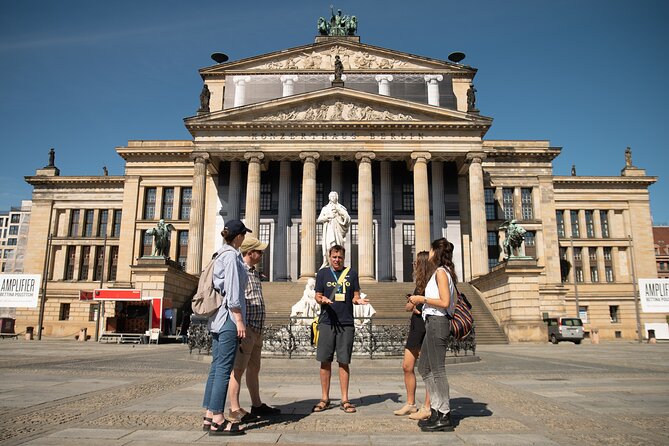
This works especially well if you:
- want an overview of Berlin’s 20th-century turning points without museum-hopping all day
- like guided explanations that make politics and architecture feel connected
- want a route that includes major sites like Checkpoint Charlie and the Holocaust Memorial
It might feel less ideal if you:
- prefer long time inside museums (since several museum stops are exterior-context only)
- have mobility limits or fatigue concerns due to the walking pace over a 3-hour span
Should you book Explore Berlin for the Wall, Nazi era, and memorial stops?
If you want the fastest way to understand why Berlin looks the way it does—and why the city carries its history so visibly—this is a solid choice. The guide-driven timeline, the inclusion of both Cold War and Holocaust memorial spaces, and the practical pacing make it the kind of tour that helps you enjoy the rest of your trip more.
Book it when:
- it’s near the start of your Berlin days
- you want context before you choose which museums to enter
Skip or pair it differently if:
- you only want light, entertainment-style sightseeing (this includes heavy subject matter)
- you expect museum admissions to be included across the route
If you do book, show up early, wear comfy shoes, and be ready for a route that takes you through Berlin’s toughest chapters with clarity—then hands you the city’s famous finale at Brandenburg Gate.
FAQ
How long is the tour?
It’s approximately 3 hours, walking through central Berlin.
What language is the tour offered in?
The tour is offered in English, with a local English-speaking expert guide.
Where does the tour start and end?
The start is listed as Reichstagufer 17, 10117 Berlin, Germany. The tour description also says the guide meets near Friedrichstrasse train station. The tour ends at Brandenburg Gate / Pariser Platz, 10117 Berlin, Germany.
Do I need a printed ticket?
No. A mobile ticket is provided.
Is admission included for all stops?
Not for everything. Some stops are free to visit, while entry to certain museums/churches like Berliner Dom, Pergamonmuseum, Neues Museum, and Altes Museum is not included.
What are the tour’s main highlights?
You’ll see landmarks such as Brandenburg Gate, the Reichstag area/government quarter, Checkpoint Charlie, remains of the Berlin Wall at Topography of Terror, the Holocaust Memorial, and the site above Hitler’s bunker.
Is the tour mostly walking?
Yes. It’s a 3-hour walking tour.
How big is the group?
The tour has a maximum group size of 25 travelers.
Is the tour suitable for most travelers?
The information says most travelers can participate, and it is near public transportation.
Are service animals allowed?
Yes, service animals are allowed.
Can I cancel for a refund?
Yes, free cancellation is available up to 24 hours before the experience start time for a full refund.
More Tour Reviews in Berlin

Berlin's Icons and Its Quiet Corners


Round out your days in Berlin

Berlin Highlights & Hidden Gems, compared.
 ★ 4.9Discover Berlin Walking TourFrom $235,998 reviews
 ★ 4.8Hidden Backyards Guided Walking TourFrom $235,360 reviews
 ★ 4.8Sights and Highlights Bike Tour with a Local GuideFrom $412,698 reviews
 ★ 4.9Explore Berlin: See All The Iconic Sights & Some Hidden GemsFrom $182,018 reviews
 ★ 5.0Berlin Highlights 3-Hour Bike TourFrom $42948 reviews
★ 4.9Berlin Highlights: 3-Hour Bike TourFrom $37809 reviews
★ 5.0Berlin Highlights 3-Hour Bike TourFrom $42948 reviews
★ 4.9Berlin Highlights: 3-Hour Bike TourFrom $37809 reviews
 ★ 4.9Berlin Historical Highlights Walking TourFrom $389657 reviews
 ★ 5.0Berlin Highlights Sightseeing Bike Tour in Small GroupsFrom $43652 reviews
Browse the lists this tour appears in