
REVIEW · SCOOTER RENTALS
Private Guide Up to Group 6 – ONE Rickshaw, (E)Bikes, E-Scooters
Berlin is more fun when you roll through it. This private 3-hour ride mixes e-bikes and rickshaw time so you see big landmarks and small details in one smooth sweep. I really like the way the guide keeps the group together for key photo stops, even when you split across vehicles.
One standout for me is the guide style: Levi (in past tours) is funny, personal, and happy to answer questions without rushing you. The main watch-out is that the route is busy, so you’re getting short, meaningful stop visits rather than long museum time.
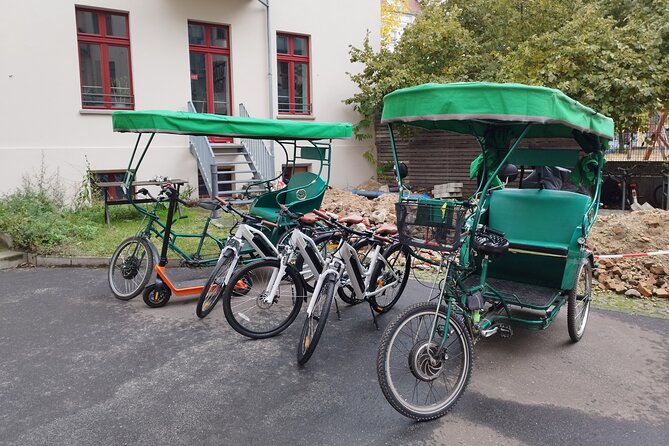
You also get practical perks that make sightseeing easier in real life: bottled water, WiFi on board, and air-conditioned comfort support. If you’re traveling with anyone with mobility limits, the rickshaw option is a huge plus because it helps you get close to monuments with minimal fuss. Just note that some parts of the experience involve getting in and out at steps, so it’s not a fully zero-effort setup.
In This Review
- Key highlights you’ll feel on the day
- Rolling past Berlin’s highlights without losing the plot
- Meeting at Fernsehturm: you start with the skyline, not the map
- Rotes Rathaus to Stadtschloss: power, palace, and post-war change
- Museum Island and Unter den Linden: culture and ceremony on foot
- Bebelplatz and Gendarmenmarkt: beauty with a hard edge
- Checkpoint Charlie to Topography of Terror: Cold War to Nazi terror
- Holocaust Memorial and Brandenburg Gate: the emotional arc of the route
- How much is $465.43 for a group of up to 6, and is it worth it?
- Who this rickshaw-and-e-bike tour fits best
- Should you book this Berlin rolling tour?
- FAQ
- How long is the tour?
- Where does the tour start?
- What types of vehicles are available?
- Is lunch included?
- Is this tour private?
- Is there any accessibility support for less mobile guests?
- Is free cancellation available?
Key highlights you’ll feel on the day
- Private group up to 6: your guide adapts the pace and answers questions as you go.
- Vehicle choice that keeps everyone included: e-bikes, regular bikes, e-scooters, or a rickshaw.
- Berlin Mitte landmark-to-landmark routing: you cover the city’s story arc efficiently in about 3 hours.
- Short stops with big context: you get enough time to look, absorb, and take photos.
- Accessible-friendly riding option: the rickshaw can bring you very close to monuments.
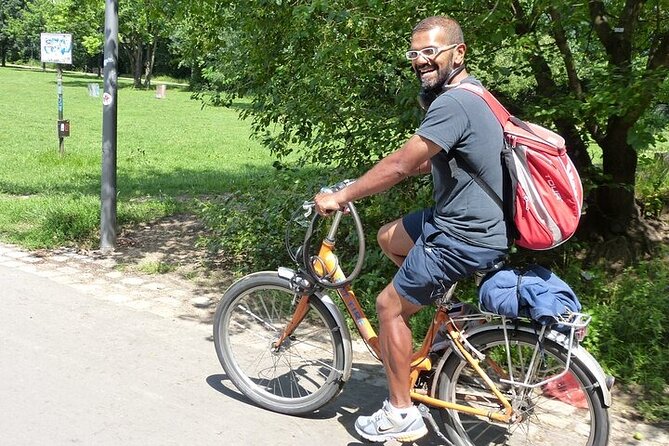
- A guide with humor: Levi’s style is part teaching, part comedy, and very “you can ask anything.”
More guided walks through Berlin
- Berlin: Reichstag, Dome and Government District Guided Tour★ 4.7 · 18,288 reviews
- Berlin: Third Reich & Cold War Guided Walking Tour★ 4.9 · 8,378 reviews
- Berlin: 1-hr Boat Tour with Bilingual Live Guide (DE/EN)★ 4.7 · 5,653 reviews
- Berlin: Hidden Backyards Guided Walking Tour★ 4.8 · 5,360 reviews
Rolling past Berlin’s highlights without losing the plot
Berlin can be a lot. History is everywhere, and if you’re on your own you might spend extra time figuring out logistics instead of reading the city. This tour solves that by blending guided storytelling with an efficient, vehicle-based route through Berlin Mitte.
What I like most is the rhythm. You ride, you stop, you listen, you take photos, then you move again. That keeps the experience fun and keeps everyone together, even when different people choose different vehicles.
And because it’s private for up to 6, the guide can work around your group. If someone wants a slightly slower pace, or your kid needs a quick explanation, you can steer the day without feeling like you’re trapped in a scripted group schedule.
Meeting at Fernsehturm: you start with the skyline, not the map
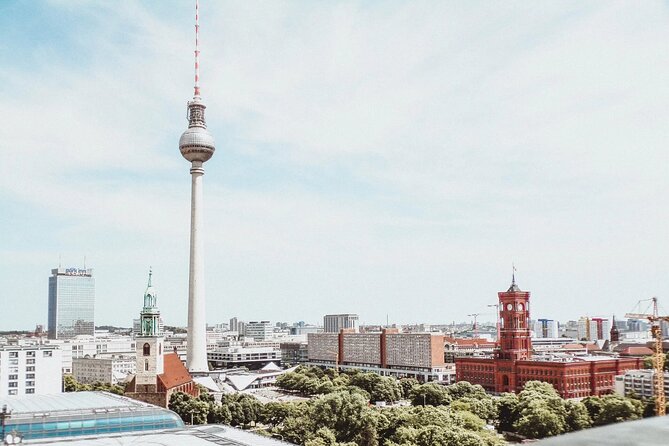
You meet near the TV Tower Berlin (Fernsehturm) at the start point by Weinbergsweg 6 (10119 Berlin). The TV Tower is an excellent “first scene” because it instantly orients you—high over Alexanderplatz, it’s one of those landmarks you can’t miss.
Expect a quick introduction to the tower’s role in Berlin’s modern identity and a clear sense of why it’s so tied to the city’s resilience. It’s also a practical visual anchor: once you’ve seen the tower, a lot of the route around central Berlin starts to make more sense.
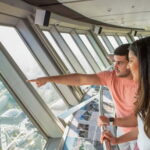
The tower is known for its height (about 368 meters) and for its distinctive top. And if you look toward the observation deck area (around 203 meters), you get a sense of how Berlin stretches out—helpful for understanding the layout you’ll cover next.
Rotes Rathaus to Stadtschloss: power, palace, and post-war change
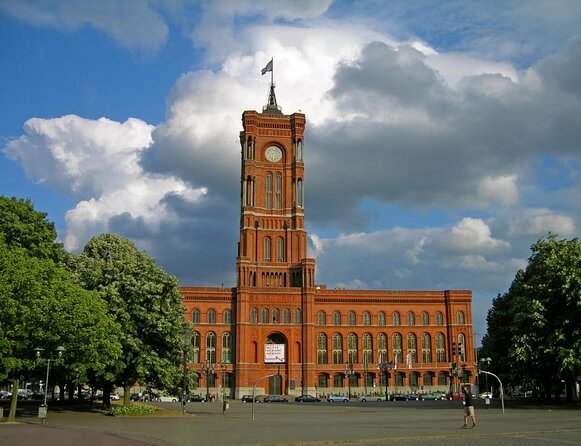
From the TV Tower area, the route heads toward the heart of government with a stop at Berlin’s City Hall, the Rotes Rathaus. This isn’t a “pretty façade only” moment. You’ll get why it’s a central hub for political activity and administration, and how that role shapes the city’s development and daily life.
Then you shift to Stadtschloss Berlin (the Berlin City Palace). This stop hits hard in a good way—its story is tied to royal residence, the Hohenzollern dynasty, World War II destruction, and the later debate about whether to rebuild. The palace today is connected to the Humboldt Forum project, with a rebuilt Baroque façade and modern interior use.
What’s valuable here is the cause-and-effect timeline. You’re not just hearing dates; you’re seeing how Berlin keeps rewriting itself after major breaks. It also sets you up for the next stops, where culture and memory sit side by side.
How long it takes: about 15 minutes here, with free admission noted. That’s enough for orientation, photos, and a guided overview, but don’t expect deep, slow wandering if you want more interior time.
Museum Island and Unter den Linden: culture and ceremony on foot
Next comes Museum Island, a UNESCO World Heritage site built around a concentration of major museums and historic collections. The tour time here is short (around 20 minutes), but the guide’s framing helps you understand why this small island matters so much in Berlin’s identity as a cultural capital.
Even if you don’t plan to enter multiple museums, Museum Island is great for a quick “what should I care about?” moment. You’ll get the sense that Berlin treats museums as public history, not just private collections.
After that, the tour moves onto Unter den Linden, one of Berlin’s best-known grand boulevards. This section works well because it’s both scenic and informational. You’ll pass architectural styles from Baroque and Neoclassical to more modern touches, and you’ll connect key landmarks along the street.
The practical benefit: Unter den Linden is a straight shot for understanding the city center. So when you later reach the Brandenburg Gate area, the story feels less random.
More private tours of Berlin



Bebelplatz and Gendarmenmarkt: beauty with a hard edge
Bebelplatz (historically Opernplatz) is one of those stops that shifts the mood fast. In May 1933, it became the site of Nazi book burnings—an event tied to intellectual suppression. Today, you’ll see the memorial designed by Micha Ullman: a glass plate in the square that reveals empty bookshelves below.
This is where a good guide matters. With sensitive sites, you need context that explains what you’re looking at, without sensational drama. The tour’s approach keeps the focus on meaning—preserving knowledge and protecting intellectual freedom.
Then you move to Gendarmenmarkt, a gorgeous square dominated by three iconic buildings. Here, Berlin relaxes visually: the Konzerthaus and the twin cathedral pair create a balanced, neoclassical look.
The French Cathedral and German Cathedral stories reinforce Berlin’s multicultural layers—French Huguenot refugees built the French Cathedral in the 18th century, and the tour explains the meaning of that heritage. Meanwhile, the Konzerthaus is tied to world-class music performances.
Time on these stops: about 10 minutes each for Bebelplatz and Gendarmenmarkt. It’s short, but the payoff is that you get both the emotional weight and the stunning architecture in a single pass through central Berlin.
Checkpoint Charlie to Topography of Terror: Cold War to Nazi terror
Checkpoint Charlie is next, and it’s iconic for a reason. It was a major crossing point symbolizing the division of East and West Berlin during the Cold War. Even today, the area is linked to reenactment-style presentation: actors dressed as U.S. military police staff the replica guardhouse.
What I like about including Checkpoint Charlie is that it’s visual and immediate. You don’t need a history degree to understand what a border crossing means, and the guide connects that meaning to reunification.
After that comes Topography of Terror, located on the historic grounds of Nazi Gestapo and SS headquarters. This museum is intense by design, using exhibits, documents, and remnants of original structures. You’ll walk away with a clearer picture of atrocities and the importance of human rights and justice.
And then the route continues to the Führerbunker area. The bunker site was the underground complex where Adolf Hitler spent the final months of World War II, located near the Reich Chancellery gardens. Today, there’s no visible trace because parts were removed after the war.
That combination is powerful: Cold War division, then Nazi persecution, then the specific fate of the final regime. It’s a lot of heavy history in a short 3-hour window—so if your group prefers lighter topics, this might feel like a punchy day.
Holocaust Memorial and Brandenburg Gate: the emotional arc of the route
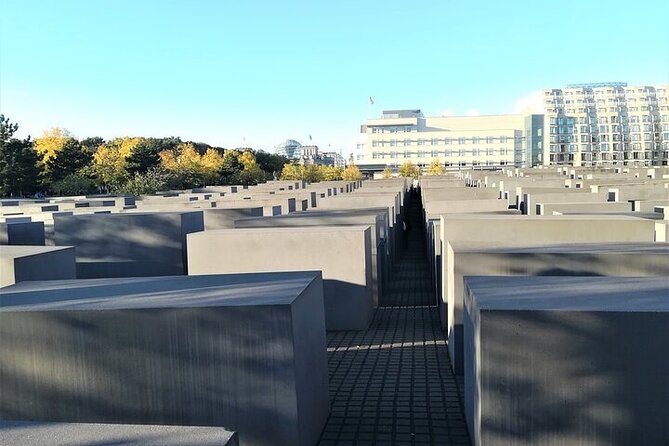
The Holocaust Memorial—officially the Memorial to the Murdered Jews of Europe—follows. It’s made of 2,711 concrete slabs of different heights across a sloping field. As you walk through the maze-like layout, the ground drops away underfoot and the city noise feels more distant.
This stop is brief (about 10 minutes), but even that short time can leave a strong impression if you slow down and actually look. The design is meant to create disorientation and unease, reflecting the dehumanization and mass scale of the tragedy.
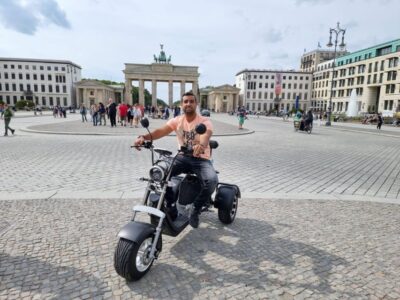
Finally, you wrap at Brandenburg Gate, Berlin’s most recognizable symbol. You’ll learn how it was completed in 1791 as a neoclassical triumphal arch, and how it later became tied to peace symbolism and major urban developments connected to Unter den Linden.
This end stop works because it brings the day back to the present tense of Berlin—resilience, reunification, and the city’s long memory. You get a “big photo” moment, but also a sense that the earlier stops weren’t random.
How much is $465.43 for a group of up to 6, and is it worth it?
Here’s the practical value calculation I’d do: you’re paying about $465.43 per group for roughly 3 hours, with a private guide and vehicle support. That means the cost scales by how many people you bring, so the same price can feel quite reasonable if you’re traveling as a small party.
You’re not just buying directions. You’re buying:
- a guide who handles the storytelling at each stop,
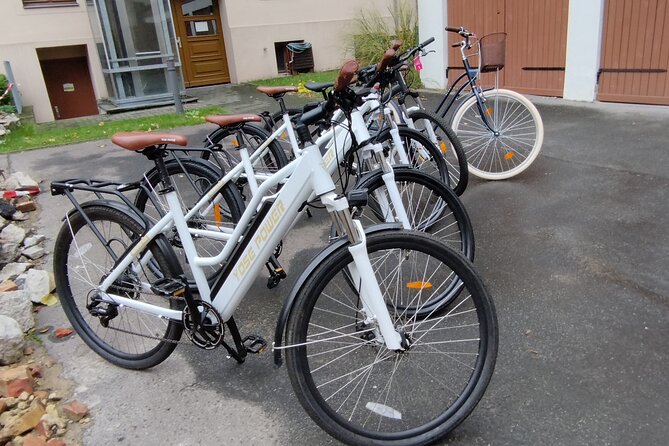
- a transport mix (bikes, e-bikes, e-scooters, or rickshaw),
- and on-board comfort perks like bottled water and WiFi.
The included vehicle support is especially useful in Berlin’s center, where it’s easy to lose time weaving between transit, crossings, and crowded streets. Short guided stop visits can also be a good match if you only have half a day and want a clear overview before picking what to return for later.
One consideration: because the stops are timed (often around 10–20 minutes), you may not get the “slow and deep” museum experience you’d get on a full-day culture pass. If your priority is long indoor time, you’ll want to treat this as orientation plus guided meaning—not your only deep dive.
Who this rickshaw-and-e-bike tour fits best
This is a great match if you want Berlin Mitte highlights without doing everything on foot. It also works nicely for families, and one past guide approach (Levi) is described as involving children in the process and keeping explanations lively.
It’s also one of the better options for groups that include someone with mobility limits. The rickshaw setup is designed for less mobile guests: you take only a few steps to enter, and the guide can stop for photos wherever you want. With the rickshaw, you can get very close to monuments, and the guide can help you manage photo moments without extra walking.
If your group is made of strong cyclists who want more speed and independence, you might prefer the bike or e-scooter choices. Still, the important thing is that you stay together for the key stops and you get the same core information at each location.
Should you book this Berlin rolling tour?
Book it if you like structured sightseeing with a friendly private guide, and you want a Berlin “story route” that covers both stunning architecture and major 20th-century history. It’s especially worth it if you’re traveling in a small group (up to 6) and want flexibility on vehicles, including a rickshaw for reduced walking.
Skip it—or at least pair it with a return plan—if you know you’ll want long museum hours or slow, independent wandering. This tour is designed for momentum, meaning the best way to get extra depth is to come back to the places you connect with most.
If you want a practical, memorable way to see Berlin Mitte in about three hours, this is the kind of tour that turns a list of landmarks into a real sequence of meaning.
FAQ
How long is the tour?
It runs for about 3 hours.
Where does the tour start?
The meeting point is Weinbergsweg 6, 10119 Berlin, Germany, and the tour includes a start area near the TV Tower Berlin.
What types of vehicles are available?
You can choose from e-bikes, regular bikes, E-scooters, or rickshaws. The tour also includes an air-conditioned vehicle, WiFi on board, and bottled water.
Is lunch included?
No, lunch is not included.
Is this tour private?
Yes. It’s a private tour/activity, and only your group participates.
Is there any accessibility support for less mobile guests?
Yes. The rickshaw option is described as ideal for less mobile guests, with only a few steps needed to enter. The guide can also stop for photos so you can get close to monuments without extra walking.
Is free cancellation available?
Yes. You can cancel for a full refund up to 24 hours in advance of the experience start time.
More Private in Berlin

More Guided in Berlin




More Tour Reviews in Berlin

Round out your days in Berlin
Scooter Rentals, compared.
 ★ 4.5Thrilling E-Scooter Adventure TourFrom $6471 reviews
 ★ 4.32-H Berlin: Top Sights Guided E-Scooter TourFrom $7648 reviews
 ★ 4.5Ultimate E-Scooter Adventure TourFrom $4835 reviews
 ★ 4.63-H Top Sights Guided E-Scooter TourFrom $8833 reviews
 ★ 4.63-Hour Guided Small Group Fat Tire E-Scooter TourFrom $9323 reviews
 ★ 4.8Berlin City: 2 Hour Guided Fat Tire E-Scooter TourFrom $6516 reviews
 ★ 5.048-Hour or 72-Hour Bike RentalFrom $3514 reviews
 ★ 4.62-Hour City Guided Tour on a Fat ScooterFrom $659 reviews
Browse the lists this tour appears in