
REVIEW · BERLIN HIGHLIGHTS & HIDDEN GEMS
Private Berlin: Iconic Sights and Hidden Gems Walking Tour
Berlin hits different with context.
This private tour uses hotel lobby pickup and a local guide to move you between the city’s major WWII and Cold War landmarks without the usual start-of-day chaos. I love that you can tailor the route to what you care about most, instead of being stuck with a one-size-fits-all script.
I also like that the walk connects headline icons with the sites where Berlin’s harder chapters happened. You’ll cover the arc from Brandenburg Gate and the Reichstag area to the Berlin Wall Memorial and the Empty Library memorial at Bebelplatz, so the big photos come with real meaning.
One possible drawback: even at 3 hours, you’re still on your feet in a dense central area. If you need a slower pace or frequent breaks, plan to communicate that ahead of time so the guide can adjust.
In This Review
- Key takeaways before you go
- Hotel lobby pickup means you start with momentum
- 3 hours vs 4 hours: choose the pace that fits
- Brandenburg Gate: the postcard view with the Cold War backstory
- Berlin Wall Memorial: where the story becomes personal
- Checkpoint Charlie: the border as a performance
- Gendarmenmarkt: the peaceful intermission
- Führerbunker area: history without the dramatic set
- Reichstag Building: modern glass over old political fires
- East Side Gallery: art turned into a wall of hope
- Museum Island and Berliner Dom: classic Berlin scenes, timed well
- Bebelplatz and the Empty Library memorial: intolerance, then and now
- Hackescher Höfe: architecture you can walk into
- What a private guide actually changes (beyond the obvious)
- Value check: what you’re really paying for
- Who should book this tour
- Should you book Private Berlin: Iconic Sights and Hidden Gems Walking Tour?
- FAQ
- How much does the tour cost?
- How long is the tour?
- Is this a private tour?
- What language is the tour offered in?
- Does the tour include hotel pickup and drop-off?
- Where do we meet the guide?
- What stops are included on the route?
- Are tickets or admission fees included?
- Are food and drinks included?
- What is the cancellation policy?
Key takeaways before you go
- Hotel pickup and drop-off keeps the tour smooth from start to finish
- 3-hour or 4-hour options let you match your time and stamina
- WWII + Cold War storyline ties sites together instead of treating them like disconnected stops
- Mostly free entry stops help you control costs while still seeing key places
- A guide who adapts makes it easier to ask questions and steer the day
The big Berlin sights, and a few quieter corners
- Berlin: Discover Berlin Walking Tour★ 4.9 · 5,998 reviews
- Berlin: Hidden Backyards Guided Walking Tour★ 4.8 · 5,360 reviews
- Explore Berlin: See All The Iconic Sights & Some Hidden Gems★ 5.0 · 4,429 reviews
- Berlin: Sights and Highlights Bike Tour with a Local Guide★ 4.8 · 2,698 reviews
Hotel lobby pickup means you start with momentum
Berlin can be confusing in the first few hours. The best part here is that the guide meets you in a central hotel lobby, with hotel transfer at both ends. That means you don’t burn energy figuring out meeting points, then rush across town to catch up.
On the day, you also get a choice of departure times. If you’re building this into a first-day plan, I’d pick a time when you’re alert but not right when you’re arriving exhausted from the airport. That way, the history lands instead of blurring.
3 hours vs 4 hours: choose the pace that fits
This tour runs about 3 to 4 hours, depending on the option you book. The 3-hour route works well if you want the main highlights with enough explanation to feel oriented. The 4-hour option is better when you want more breathing room and a deeper walkthrough of how Berlin shifted through dictatorship, war, division, and reunification.
Either way, it’s private, so you’re not competing with a large group’s pace. In reviews, guides like Tina and Ronja are praised for adjusting to how people move and how much detail they want—use that. Tell your guide what you prefer: quick hits and photos, or slower stops and questions.
Brandenburg Gate: the postcard view with the Cold War backstory
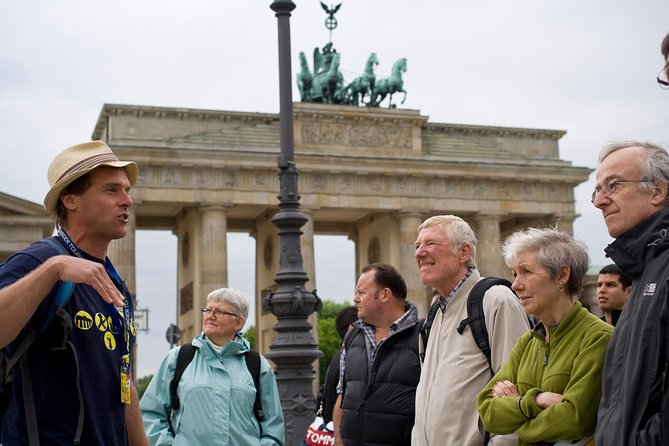
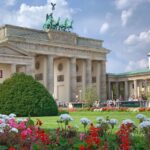
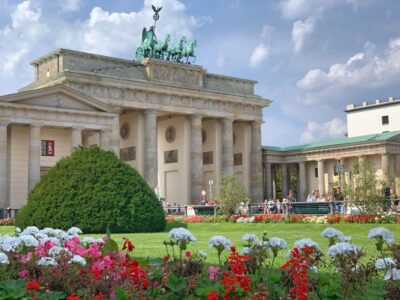
You begin at Brandenburg Gate by Pariser Platz. It’s easy to treat it like a skyline photo stop, but the guide uses it as a starting point for the idea of division versus reunification. The neoclassical arch is topped by the Quadriga—four horses symbolizing victory—which gives you a visual hook even before the political talk gets heavy.
You’ll also get a feel for the area around it. Pariser Platz has shops, cafés, and street energy, which helps the transition from “history class” to “this is still a living city.”
Practical note: arrive with decent photo timing expectations. You’ll get a short stop here, so if you want sunset shots, plan your day around it rather than relying on luck.
Berlin Wall Memorial: where the story becomes personal
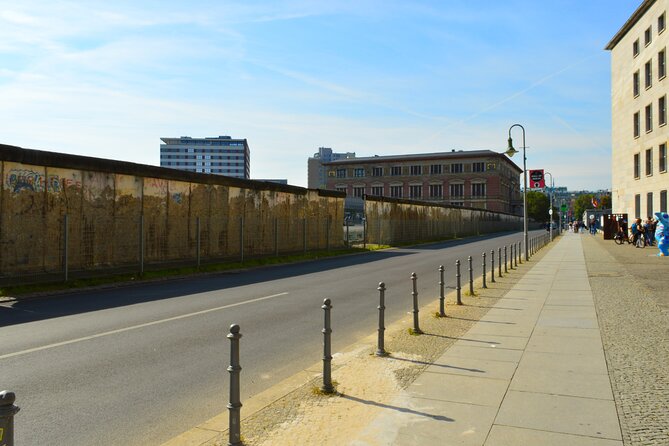
Next is the Berlin Wall Memorial along Bernauer Strasse. This stop is powerful because it’s not just a wall segment behind a fence—it’s a space designed for context. You’ll see preserved sections plus a visitor center area with exhibits and personal stories about attempts to escape.
Even in a walking tour format, this is the kind of place where your guide’s framing matters. A good guide connects the physical wall to the human consequences, so it doesn’t turn into a quick photo and move on.
Tip for your visit: treat the walk like a slow read-along. If you rush, you miss what makes it stick.
More of Berlin on foot

Checkpoint Charlie: the border as a performance
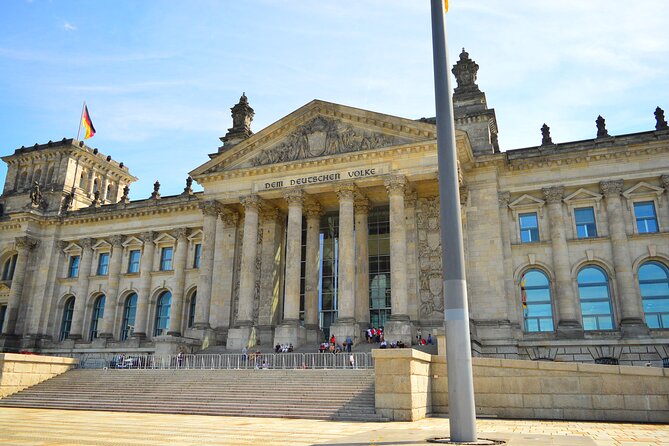
Then you head to Checkpoint Charlie at Friedrichstrasse. As one of the most famous crossing points between East and West Berlin, it’s staged in your mind even before you arrive. The classic wooden booth (and the museum setup around it) makes the history easy to visualize.
This stop helps you understand Cold War tension in concrete terms—how movement was controlled, how rules shaped daily life, and how the border became a symbol. The guide can also steer you toward the broader idea: the wall wasn’t only concrete, it was bureaucracy and fear.
A small caution: Checkpoint Charlie is a tourist magnet. If you want calmer photos, follow your guide’s timing and angles rather than trying to “out-snap” everyone.
Gendarmenmarkt: the peaceful intermission
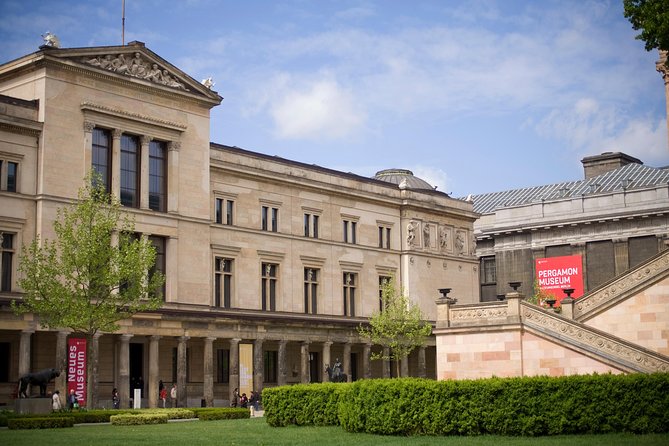
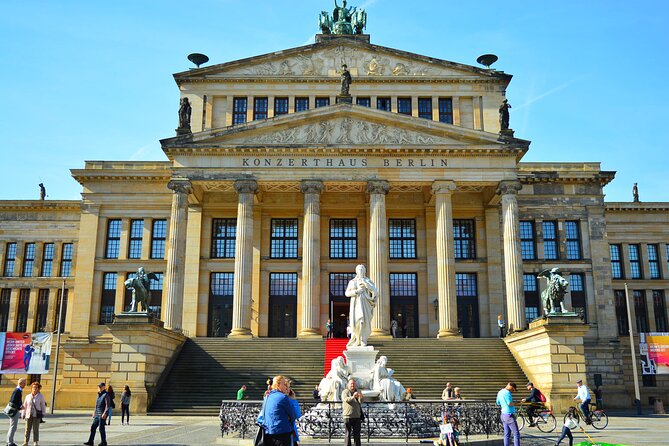
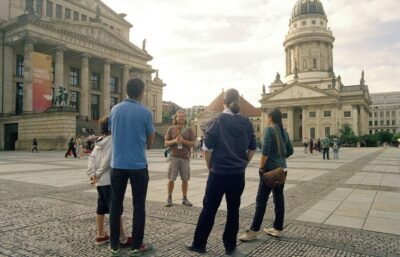
After the border sites, you get a breather at Gendarmenmarkt. This is one of Berlin’s most elegant squares, framed by the French Cathedral and the German Cathedral, with the Konzerthaus in the center. It’s a contrast stop, and it’s useful: after heavy WWII and division topics, your brain needs a visual reset.
You can also stroll through the cobblestone square and outdoor cafés for a moment of normal Berlin life. It’s quick, but it makes the overall route feel less like a straight march through painful stops.
Führerbunker area: history without the dramatic set
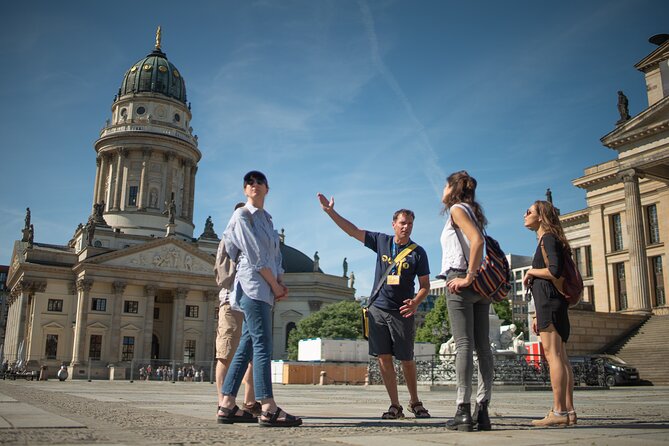
One of the most sobering stops is the Führerbunker beneath the Reich Chancellery gardens. The tour frames it as Hitler’s final refuge during the war’s last days, built in 1944. Today it’s largely unmarked, with only a small plaque.
That lack of spectacle is important. You don’t get a cinematic location; you get a reminder that major historical events often leave small physical traces. Your guide’s job here is to provide the connective tissue—what happened, why it mattered, and how Berlin’s end-game played out.
If you’re someone who likes facts, this stop will reward you. If you’re more emotionally sensitive to war sites, it’s still handled thoughtfully, and the private format gives you control over pacing.
Reichstag Building: modern glass over old political fires
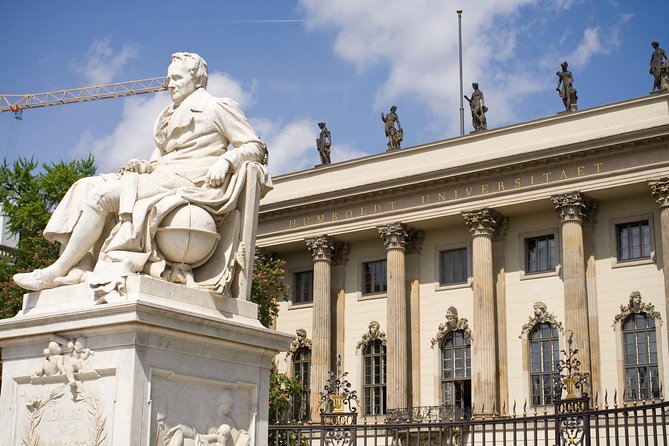
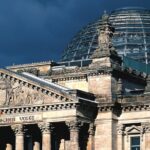
Next you’ll walk to the Reichstag Building, Germany’s historic parliament. The guide explains how the building moved from hosting the German Empire’s parliament to witnessing major events like the 1933 fire tied to the Nazi rise, then later restoration after WWII.
The big visual feature is the glass dome by Norman Foster. It’s not just an architectural flex—it’s designed so visitors can experience transparency and panoramic views of Berlin while looking toward the debates below. In practice, it’s one of the few stops where the tour can end on a “look out and breathe” note.
Time saver: even if you don’t go up, the dome and the exterior views help you place what you’ve been learning into the modern city.
East Side Gallery: art turned into a wall of hope
Then comes the East Side Gallery, a stretch of remaining Berlin Wall covered in murals. It spans about 1.3 kilometers and features over 100 artworks after the wall fell in 1989. You’ll see famous pieces like the Fraternal Kiss mural and other works that turned a symbol of division into one of freedom and expression.
This stop is different from the memorial sites. Instead of focusing on escape attempts and borders, you focus on how people reclaimed the wall with creativity. Your guide can connect the murals back to the broader political shift—what changed, and why art mattered after the fall.
If you like street-level details, this is a good moment to slow down and look at faces, styles, and themes rather than only reading plaques.
Museum Island and Berliner Dom: classic Berlin scenes, timed well
You also pass through Museum Island, a photo-friendly area along the Spree River. Even if you don’t go inside museums, the island’s surroundings and architecture make it feel like Berlin is still built for grand ideas.
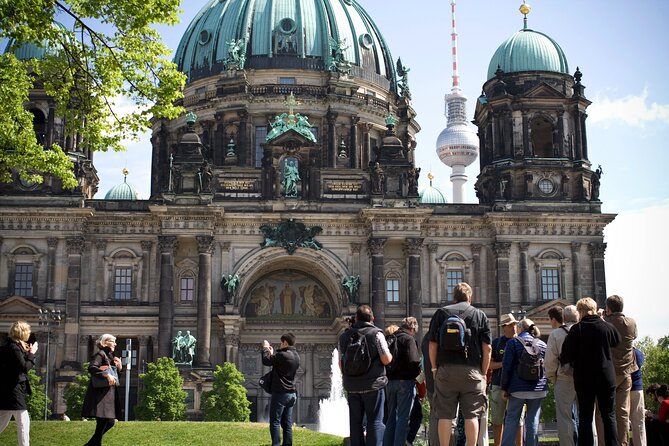
After that, the tour reaches the Berlin Cathedral, or Berliner Dom. Completed in 1905, it’s known for its Baroque design and tall dome rising about 98 meters. The interior includes mosaics and a major organ, and the dome climb is often the main draw for panoramic city views.
A realistic note: cathedrals can have lines or changing access. The tour gives you a chance to see the building and decide how much extra you want to invest on the spot.
Bebelplatz and the Empty Library memorial: intolerance, then and now
Bebelplatz is one of the heaviest stops on the route, and it earns that weight. The square is framed by landmarks like the State Opera House, St. Hedwig’s Cathedral, and Humboldt University, but its lesson is dark: it was the site of Nazi book burnings on May 10, 1933, where over 20,000 books were targeted as “un-German.”
At the center sits the Empty Library memorial by Micha Ullman—a room of empty bookshelves visible through a glass panel. This is the kind of place where the guide’s explanation matters more than the visuals. The tour connects censorship as policy, not just symbolism.
If you’ve never thought about intellectual freedom as a physical act, this stop will change how you see it.
Hackescher Höfe: architecture you can walk into
You end with Die Hackeschen Höfe, a cluster of courtyards in the Mitte area near Hackescher Markt. Built in 1906 with eight interconnected courtyards, it’s known for art nouveau details like tilework and wrought-iron ornamentation.
This is a fun “Berlin after class” stop. It mixes restaurants, independent shops, and cultural spaces, including older cinema and theater venues within the courtyards. Even if you don’t do much inside, the architecture and courtyard layout make it feel like you’ve stepped into a more local pocket of the city.
It also works as a mental landing: after all the WWII and Cold War learning, you get to enjoy design, street life, and small discoveries without pressure.
What a private guide actually changes (beyond the obvious)
Yes, it’s private. But the real value is how the guide connects dots as you walk. In reviews, guides such as Ariel and Will are singled out for making history feel relatable and for taking questions seriously. Other guides like Emma and Artie are praised for being structured enough to stay on track while still adjusting when someone wants deeper focus.
This is where tailoring matters. If you’re a WWII person, you can ask for extra time around the Nazi-era arc. If your focus is Cold War division, you can push more questions around the Wall Memorial and border crossings. If you’re traveling with kids, you can ask for simpler explanations and more story-driven moments—Xavier is a name that comes up for keeping the experience engaging for both children and adults.
Value check: what you’re really paying for
At $192.97 per person, this is not a bargain-bin add-on. But you’re paying for three things that often cost more separately in Berlin: a private guide, hotel pickup/drop-off, and a route built around major historical sites that are often spread out.
Also, the route includes stops marked as admission free in the itinerary, which helps keep spending predictable. Your biggest extra cost is typically time and convenience: snacks and water, plus any optional side visits you choose while you’re out.
If you’re booking a first-day orientation, private tours can save energy—especially with the pickup and the fact that your guide handles the narrative so you don’t have to assemble it yourself from guidebooks.
One more value tip: this tour is often booked around 50 days in advance on average. If your dates are fixed (holidays, big events, or a short trip), lock in sooner rather than waiting for a “better time.”
Who should book this tour
Book it if:
- You want a first-time Berlin orientation with context, not just landmarks
- You care about WWII and the Cold War and want a guided connection between stops
- You’d rather ask questions than read plaques for hours
- You like walking at a pace set for your group, not the average tourist herd
Skip it if:
- You hate walking or need a very slow, car-based format (this is still a walking tour)
- You only want lightweight sightseeing and no heavy topics
Should you book Private Berlin: Iconic Sights and Hidden Gems Walking Tour?
Yes—if your goal is to understand Berlin instead of just ticking boxes. The hotel pickup and drop-off remove friction, and the route pairs the city’s most famous monuments with the memorial spaces that give those monuments meaning.
If you book, do two smart things:
1) Send your preferences at booking (WWII vs Cold War vs architecture vs photos).
2) Tell your guide your walking pace and break needs early, so the 3-hour or 4-hour option actually matches your day.
FAQ
How much does the tour cost?
It costs $192.97 per person.
How long is the tour?
The tour runs about 3 to 4 hours, depending on the option you choose.
Is this a private tour?
Yes. It’s a private walking tour, and only your group will participate.
What language is the tour offered in?
The tour is offered in English.
Does the tour include hotel pickup and drop-off?
Yes. Hotel pickup and drop-off are included.
Where do we meet the guide?
The meeting is at a central-Berlin hotel lobby with a meet-and-greet.
What stops are included on the route?
The itinerary includes Brandenburg Gate, Memorial of the Berlin Wall, Checkpoint Charlie, Gendarmenmarkt, Führerbunker, Reichstag Building, East Side Gallery, Museum Island, Berliner Dom, Bebelplatz, and Die Hackeschen Hoefe.
Are tickets or admission fees included?
The itinerary lists admission tickets as free for the stops included.
Are food and drinks included?
No. Food and drinks are not included.
What is the cancellation policy?
You can cancel for a full refund up to 24 hours in advance of the experience start time. If you cancel less than 24 hours before, the amount paid is not refunded.
More Tours in Berlin



More Tour Reviews in Berlin
Berlin's Icons and Its Quiet Corners

Round out your days in Berlin
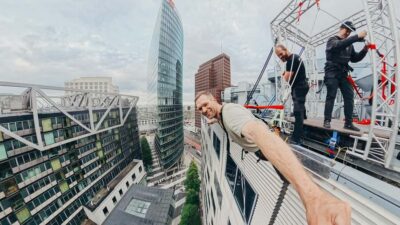
Berlin Highlights & Hidden Gems, compared.
 ★ 4.9Discover Berlin Walking TourFrom $235,998 reviews
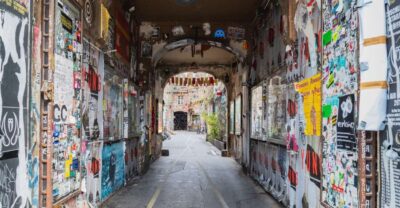 ★ 4.8Hidden Backyards Guided Walking TourFrom $235,360 reviews
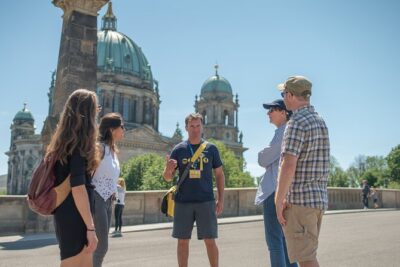 ★ 5.0Explore Berlin: See All The Iconic Sights & Some Hidden GemsFrom $244,429 reviews
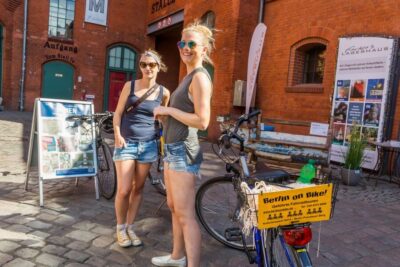 ★ 4.8Sights and Highlights Bike Tour with a Local GuideFrom $412,698 reviews
★ 4.9Explore Berlin: See All The Iconic Sights & Some Hidden GemsFrom $182,018 reviews
★ 4.8Sights and Highlights Bike Tour with a Local GuideFrom $412,698 reviews
★ 4.9Explore Berlin: See All The Iconic Sights & Some Hidden GemsFrom $182,018 reviews
 ★ 5.0Berlin Highlights 3-Hour Bike TourFrom $42948 reviews
★ 4.9Berlin Highlights: 3-Hour Bike TourFrom $37809 reviews
★ 5.0Berlin Highlights 3-Hour Bike TourFrom $42948 reviews
★ 4.9Berlin Highlights: 3-Hour Bike TourFrom $37809 reviews
 ★ 4.9Berlin Historical Highlights Walking TourFrom $389657 reviews
Browse the lists this tour appears in