
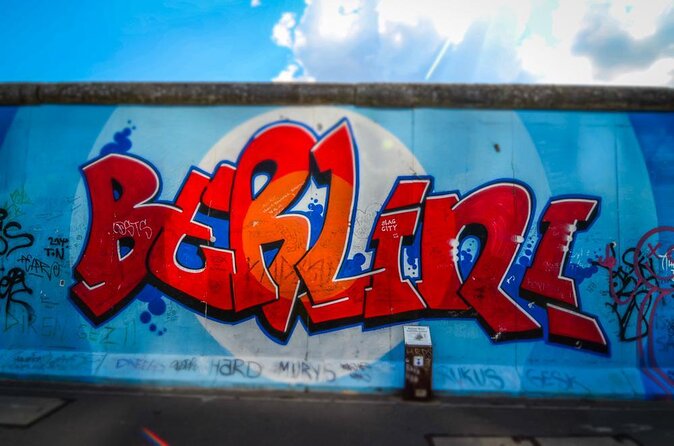
REVIEW · FOOD & DRINK
The Real Berlin Walking Tour: Art, Food and Counterculture
Berlin has two faces; this tour walks both. This one-day, private counterculture walking route strings together Berlin’s art scenes and subcultures across several neighborhoods, so you see both the pretty and the political in one flow. You also get the kind of street detail that turns generic Berlin facts into something you can picture fast.
I like two big things here. First, the neighborhood mix is spot-on: Prenzlauer Berg, Mitte, Friedrichshain, Kreuzberg, and the Yaam Beach area each bring a different flavor. Second, the tour doesn’t treat food like an afterthought; it builds stories around what you eat, including how currywurst became a beloved local snack, then pairs it with a real landmark beer garden visit at Prater Garten.
One possible drawback: this is a walking-oriented day with stops that may require AB public transport for certain stretches. If you’re expecting an easy, mostly-rolling tour with zero effort, you’ll want to adjust expectations and bring comfy shoes and a bit of stamina.
In This Review
- Key things I’d circle before you book
- A Berlin walking tour built around subcultures, not postcards
- Meeting at Alexanderplatz: the start that sets the tone
- Prenzlauer Berg, Mitte, and Friedrichshain: switching gears without whiplash
- Kreuzberg and its Turkish influence: culture shaped by change
- Yaam Beach: a Caribbean vibe inside Berlin’s creative circuit
- Street art, graffiti, and underground art stops you can actually read
- Currywurst lore and Prater Garten Berlin: the food stops with meaning
- How the walking tour stays flexible with your pace and interests
- Price and value: what $539.22 per group really means
- Practical planning: shoes, timing, and what to bring
- Who should book this Berlin counterculture walking tour
- Should you book it?
- FAQ
- Where does the tour start and when?
- How long is the walking tour?
- Is this tour private?
- What’s included, and what’s not?
- Do I need an AB public transport ticket?
- What’s the cancellation deadline for a full refund?
Key things I’d circle before you book
- Private + customized: only your group, and you can request focus areas with your guide
- Street art focus: graffiti, murals, and contemporary/underground art stops along the way
- Kreuzberg + Turkish influence: you’ll connect today’s culture to its shifting role in Berlin
- Yaam Beach energy: a Caribbean-style multicultural stop tied to Berlin’s arts scene
- Prater Garten visit: Berlin’s oldest beer garden (seasonal, April–September)
More of Berlin on foot
- Discover Berlin Half-Day Walking Tour★ 5.0 · 9,624 reviews
- Berlin City walk Government District and Places of Democracy★ 4.7 · 8,467 reviews
- Berlin: Third Reich & Cold War Guided Walking Tour★ 4.9 · 8,378 reviews
- Berlin: Discover Berlin Walking Tour★ 4.9 · 5,998 reviews
A Berlin walking tour built around subcultures, not postcards
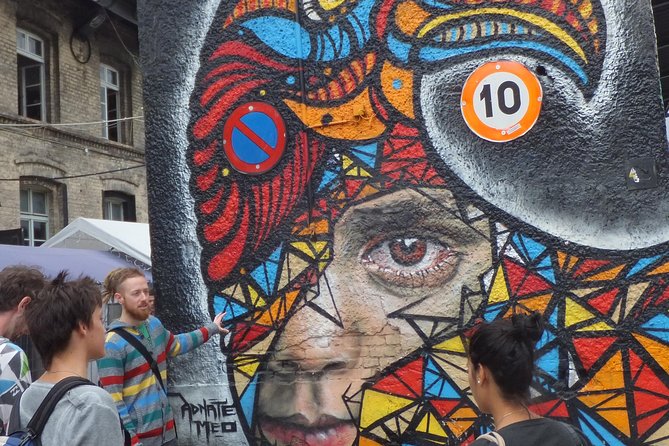
This is the kind of Berlin tour that respects what the city actually runs on: neighborhoods with personalities, people with opinions, and art that shows up in real life instead of only behind glass.
What makes it work is the balance. You get architecture and streets, sure. But the real thread is culture—how Berlin’s counterculture movements shaped everyday spaces and how the city’s identity still shifts district to district. The guide is the bridge between what you’re looking at and why it matters, turning murals, markets, and food stands into clues.
The route is also designed for variety. You’ll move through calmer residential streets, busy city-center arteries, and edges where creativity has long been part of the local survival strategy. Along the way, you’ll see everything from urban farms and guerrilla gardens to organic markets and underground art spaces, plus the kind of graffiti that makes you slow down without even trying.
Meeting at Alexanderplatz: the start that sets the tone
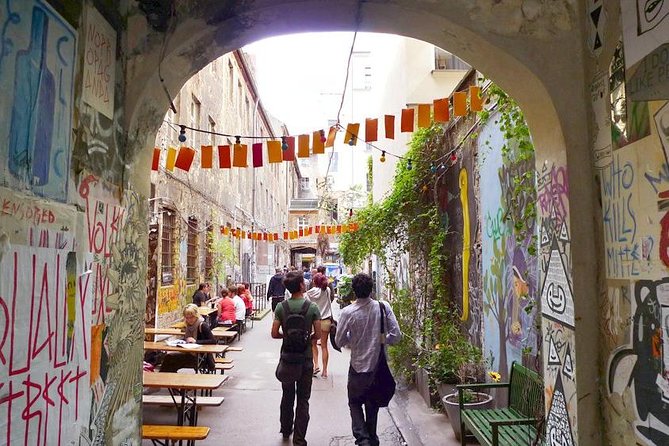
You start at Vapianoam Alex, Rathausstraße 6—right by Berlin’s TV tower area near Alexanderplatz. That choice is practical. It drops you into the middle of the city fast, so you’re not spending your morning figuring out where to begin.
Starting at 10:00am also helps because you can walk before the day turns hot and crowded. The experience is listed as about 4.5 hours, so it’s long enough to feel like a proper tour, but short enough that you still have energy left to keep exploring on your own afterward.
Your guide will lead a private experience for only your group (up to 12 people). That matters because Berlin neighborhoods can be confusing even when you know the geography. A guide can point out what to notice and what to ignore, and you can ask for adjustments.
And yes, this is offered in English, with a mobile ticket issued for the day.
Prenzlauer Berg, Mitte, and Friedrichshain: switching gears without whiplash
One of the best parts of this tour is how it handles transitions. The neighborhoods don’t change randomly. They change because Berlin has layers, and different layers show up in different streets.
Prenzlauer Berg is often calmer and more residential-feeling. In this tour, you’re not just walking pretty streets; you’re using that calm as contrast. It helps you understand what kinds of people moved in, what got preserved, and how culture changes when a neighborhood becomes more livable and less rough around the edges.
Mitte is the historical heart of Berlin, and it can feel like the city’s main stage. Here, the tour approach is to treat Mitte like a reference point: you see where big stories happened, then you connect those ideas to what you’ll notice later in Kreuzberg and around Yaam.
Friedrichshain rounds it out on the east-side energy. It’s the kind of area where modern Berlin attitude shows up in street art, food culture, and the way public space gets used for creative life. That’s useful context for what comes next, because it primes you to read the streets like a living timeline instead of a series of disconnected stops.
Kreuzberg and its Turkish influence: culture shaped by change
Kreuzberg is one of Berlin’s most famous alternative and counterculture zones, and this tour treats it like more than a label. The guide uses Kreuzberg’s story—moving from one of the city’s poorer areas to a globally known cultural favorite—to explain why the neighborhood attracts creative people and community-minded energy.
You’ll also get a cultural lens through the neighborhood’s Turkish influence. That’s where Berlin’s multicultural reality becomes obvious in daily life, not just in “world culture” talk. You’ll encounter street-level cues that explain why certain flavors and social habits became part of the local identity.
This is also where counterculture history becomes concrete. Berlin’s movements weren’t only protests and posters. They were also about who had space, who was pushed aside, and who found ways to build community in whatever corners they could access. Watching how that idea plays out in the streets helps you understand why graffiti, murals, and alternative food culture feel like long-running traditions rather than one-off trends.
More Berlin tours to line up side by side




Yaam Beach: a Caribbean vibe inside Berlin’s creative circuit
Then comes Yaam Beach, tied to the Young and African Arts Market. This stop adds a totally different mood. Instead of the classic museum-art rhythm, you’re stepping into a multicultural, outdoorsy kind of scene where creativity and food and street culture mix.
The value here is perspective. Berlin is famous for political history, but it’s also famous for how people celebrate now—how art fairs, markets, and pop-up energy can give a city its current personality. Yaam Beach gives you that angle, and it also helps you see why Berlin’s identity isn’t locked in the past.
If you’re the type who loves art but hates tours that only point at formal galleries, Yaam Beach is a strong mid-day reset. It’s fun, but it’s also a clue to how Berlin organizes culture through community spaces.
Street art, graffiti, and underground art stops you can actually read
A big promise of this tour is that you won’t just glance at street art—you’ll learn how to see it. As you walk through different districts, you’ll spot contemporary and underground art galleries, plus the street art and graffiti that often serves as Berlin’s most immediate visual language.
You’ll also get stops that highlight how creative people use the city itself. Urban farms and guerrilla gardens are the kind of things that look small on a map, but they change what you think of the neighborhood. They show that culture isn’t only something you consume; it’s something people grow, build, and protect.
This is where the guide’s personality really matters. In past versions of this tour, guides have included people like Reese, Jack, Kalum, and Jason—each bringing a mix of history and day-to-day Berlin color. The common thread in that style is clear: the walk stays fun, and the stories connect to what you can see in front of you.
Currywurst lore and Prater Garten Berlin: the food stops with meaning
This tour doesn’t treat food like a checkbox. It uses food as a shortcut to local culture.
You’ll learn about currywurst, a fried pork sausage with curry-seasoned ketchup, and how it became one of Berlin’s go-to snack foods. The practical benefit for you is that you’ll stop seeing currywurst as generic tourist food. You’ll understand why locals embraced it and why it ended up as a Berlin shorthand for comfort and everyday life.
Then you visit Prater Garten Berlin, which is described as the city’s oldest beer garden—open from April through September since 1837, under chestnut trees. That’s a big deal because it’s not just “another beer stop.” It’s a long-running piece of Berlin’s social fabric.
One key consideration: Prater Garten is seasonal (April–September). If you’re visiting outside that window, ask your guide what the plan is for that portion so you’re not caught off guard.
How the walking tour stays flexible with your pace and interests
This is a private tour, and the format is meant to feel adjustable. Before you set off, speak with your guide about what you want more of—whether that means street art, food culture, neighborhood history, or specific subcultures you care about.
That flexibility is useful because Berlin has so many different “Berlyns.” If you’re more into East vs West context, say that. If you want a sharper focus on art spaces and creative communities, ask for that too. The ability to personalize is a real value-add, especially in a city where a small routing change can completely change your day.
Also, because the tour includes time where public transport may be needed, you’re not stuck doing nonstop long-distance walking. You’ll need an AB public transport ticket for certain parts, and your guide can help with purchase if needed. Plan to use that time well and keep your energy for the walking segments.
Price and value: what $539.22 per group really means
The price is $539.22 per group (up to 12). That can sound high until you do the math.
- If you fill a group near the 12-person limit, you’re looking at roughly $45 per person. At that level, the “private guide” value can feel very reasonable.
- If it’s just a couple of people, the per-person cost climbs quickly. Then you’re paying mostly for access: a guide who can tailor the walk, choose the right streets, and keep you focused on counterculture and art instead of standard sightseeing.
So who should consider it? If you’re traveling with friends or family and you can bring your group size closer to the top end, it’s a better deal. If you’re solo or just two, I’d treat it as a premium day—one where the guide’s storytelling and neighborhood access are the whole point.
The high rating—4.9 with strong 5-star scores—fits the idea that this tour performs when you’re trying to see Berlin sideways: culture, neighborhoods, and street-level context.
Practical planning: shoes, timing, and what to bring
This is best enjoyed with the basics handled. Wear shoes that can handle cobblestones and lots of turns. The route covers multiple neighborhoods, and while you’re on foot often, you may also hop on public transport for certain stretches.
Because food and drinks aren’t included, it’s smart to plan for your own snacks and hydration. The tour does have food-related storytelling (like currywurst), but you should assume you’ll handle your actual meals separately.
Also, your mobile ticket will be part of your day. Keep it accessible on your phone so you can meet smoothly.
And since you’re walking across districts with different vibes, consider bringing a light layer. Berlin can shift in weather fast, and you’ll be outside through much of the experience.
Who should book this Berlin counterculture walking tour
This tour is a strong match if you like:
- Street art, graffiti, and how creative communities shape a neighborhood
- Food culture that has a story behind it, not just a menu description
- A guided explanation that connects history to what’s happening now
- A private format where you can adjust your focus
It’s also a good choice if you already know the big sights and want a different Berlin. Instead of another loop through famous landmarks, you’ll get a day that reads like “how Berlin became Berlin,” told through neighborhoods you can walk through.
If you’re the type who wants a totally easy stroll with zero stops for discussion, you might prefer a lighter option. The point here is interpretation, not just motion.
Should you book it?
I’d book this tour if you want Berlin that feels current and human: art on walls, community spaces, market energy, and neighborhoods explained in a way that sticks. The private format and the culture-focused route make it especially compelling when you’re traveling with a small group and can spread the cost.
I’d think twice only if you hate walking, don’t want any public transit in the mix, or you’re visiting outside April–September if Prater Garten is a must for you. If those are your constraints, you can still enjoy Berlin—just set your expectations for what this particular tour is built to do.
FAQ
Where does the tour start and when?
The tour starts at Vapianoam Alex, Rathausstraße 6, 10178 Berlin, near the Fernsehturm TV Tower area. The start time is 10:00am.
How long is the walking tour?
It runs for about 4.5 hours.
Is this tour private?
Yes. It’s a private tour/activity, and only your group participates. The group size is up to 12.
What’s included, and what’s not?
What’s included is a private guide. Not included are hotel pickup/drop-off, food and drinks, and the AB public transport ticket.
Do I need an AB public transport ticket?
You’ll need an AB public transport ticket for certain parts of the tour. Your guide can help you purchase one if needed.
What’s the cancellation deadline for a full refund?
You can cancel up to 3 days in advance for a full refund, as long as you cancel at least 3 full days before the experience’s start time.
More of Berlin on Foot

More Tours in Berlin




More Tour Reviews in Berlin

Round out your days in Berlin
Food & Drink, compared.
 ★ 5.0Berlin Center Food Tour with 8+ Authentic Local TastingsFrom $1181,227 reviews
 ★ 5.0Berlin City Bike Tour with Beer Garden StopFrom $83917 reviews
 ★ 4.5Kreuzberg: Culinary Food TourFrom $589770 reviews
 ★ 4.4BRLO BRWHOUSE Tour and Craft Beer TastingFrom $21654 reviews
 ★ 4.5Mitte Culinary Food TourFrom $57447 reviews
 ★ 5.0Berlin Craft Beer & Cultural Tour With SnackFrom $143343 reviews
 ★ 4.8Downtown Food Tour with 8 Authentic Local TastingsFrom $89342 reviews
 ★ 4.8Guided Street Food Tour with TastingsFrom $75310 reviews
Browse the lists this tour appears in