

REVIEW · KREUZBERG & ALTERNATIVE DISTRICTS
Kreuzberg: Culinary Food Tour
Berlin’s Kreuzberg has a pulse you can taste. This 3-hour walking tour threads together street history and 5 restaurant stops, so your meal experience comes with real context, from the working-class roots of the neighborhood to modern-day everyday life.
What I like most is how the guide builds a clear picture of Kreuzberg as a place shaped by housing scarcity, politics, and changing communities. You also get real food variety across international and local styles, rather than one big sit-down meal.
One thing to plan for: in exceptional cases, food may be served outside the restaurants and you’ll eat standing up. Not a deal-breaker, but it’s worth knowing if you prefer a more seated pace.
In This Review
- Key things you’ll notice on this Kreuzberg tour
- Kreuzberg, Kotti, and the food-tour mindset
- Price and what you actually get for the money
- The opening setup at Kotti (and why the timing matters)
- Oranienstraße: the street where the tour gets its engine
- SO36 and Rio-Reiser-Platz: history in public space
- Mariannenstraße 4 and the small pauses that give the tour weight
- Oranienplatz and the quick hops between meaningful streets
- Dresdener Straße and Admiralstraße: where street details become Berlin lore
- The five tastings: what you might eat and why it works
- Who this tour suits best (and who should pick something else)
- Guides and the storytelling style: what makes it feel well run
- How to get the most out of your 3-hour walk
- Should you book the Kreuzberg Culinary Food Tour?
- FAQ
- How long is the Kreuzberg Culinary Food Tour?
- Where do I meet for the tour?
- How many food tastings are included?
- Is there a vegetarian or vegan option?
- Are drinks included in the price?
- What languages is the tour offered in?
- Can food be served outside restaurants?
Key things you’ll notice on this Kreuzberg tour

- Kotti as the starting point, with a quick orientation to Kreuzberg’s feel and history before you start tasting
- Oranienstraße storytelling, including working-class life and the way the streets reflect the neighborhood’s politics
- SO36 and May Day march lore, tied to how the area’s left-wing heritage showed up in public life
- Small stops between big ideas, like the former GDR traffic-light men and other street-level details that make Berlin feel specific
- 5 tastings across distinct spots, with a mix of classic Berlin flavors and international crossover plates
- Food pacing that’s snack-sized, so you move through the neighborhood and keep your appetite for the next stop
Deeper into Kreuzberg and the eastern districts
- Berlin: Kreuzberg Guided Walking Evening Tour★ 4.7 · 555 reviews
- Berlin: Alternative Bike Tour of Kreuzberg & Friedrichshain★ 4.7 · 548 reviews
- Berlin: 2.5-Hour Walking Tour through Kreuzberg 61★ 4.9 · 525 reviews
- Berlin Off-the-Beaten-Path Walking Tour: Kreuzberg, Mitte and Friedrichshain★ 5.0 · 412 reviews
Kreuzberg, Kotti, and the food-tour mindset
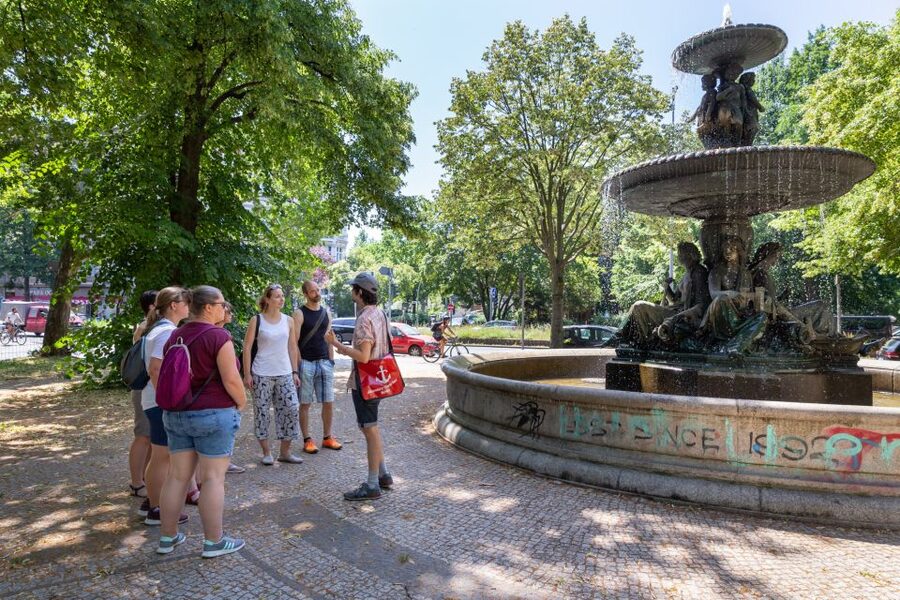
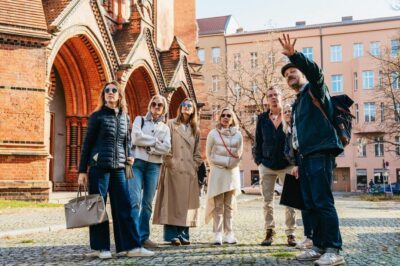
Kreuzberg works best when you stop treating it like one neighborhood and start treating it like several layers at once. This tour leans into that. You meet around Kotti in the center of the action, then your guide uses the streets as an open-air timeline. That means you’re not just eating snacks. You’re learning why the streets look the way they do, why certain places carry political weight, and why Berliners still argue, organize, and celebrate right here.
The best part is the pacing. The experience is built for movement: you walk, you pause for photo and story stops, then you eat at distinct places. Instead of one heavy meal, you get a sequence of tastings. That’s perfect if you want to sample without feeling stuffed, and it keeps you engaged because each food stop connects to something you’ve just heard on the sidewalk.
The tour lasts about 3 hours, so it’s not an all-day commitment. It’s long enough to cover history through the neighborhood’s key streets, but short enough that you can still do other Berlin plans the same day.
Price and what you actually get for the money
The price is $589 per group, up to 10 people. That’s how you should think about value here: you’re paying for a private-feeling guided experience (even if it’s not just you), plus 5 food tastings and a focused walk with a qualified guide.
If you’re traveling solo or as a couple, you’ll be glad it’s priced per group rather than per person like some tours. With up to 10 people, you can share cost if you can book with friends or another small group. If you’re the kind of traveler who hates wasting time hunting for places, the structure helps: you’re not deciding where to eat every stop. The guide does that and you get a mix of local and international choices.
Two more practical points matter for budgeting:
- Drinks aren’t included, so if you like to have a beer or soft drink with tastings, plan extra.
- Vegan isn’t available, but there is a vegetarian option. If your diet is strict, you’ll want to coordinate with the organizer in advance.
The opening setup at Kotti (and why the timing matters)
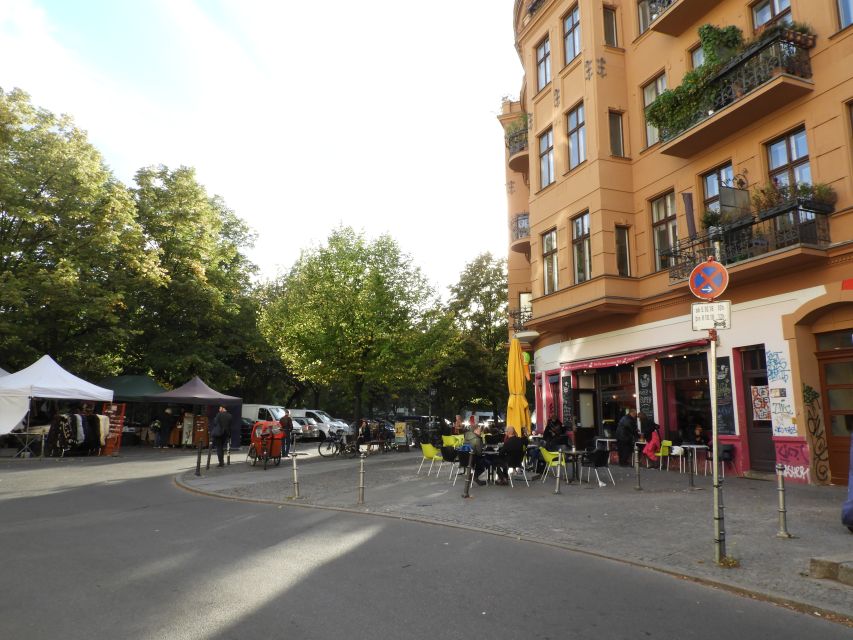
You start at a central Kreuzberg meeting area around Kotti. The exact meeting point can vary by the option you book, but the idea stays the same: you get oriented before you start walking. That first stretch is a big deal because Kreuzberg’s story isn’t something you can guess just by wandering.
You’ll get a broad overview of the neighborhood’s background, including how Kreuzberg formed as a typical working-class neighborhood in the mid-1800s. You’ll also hear about a world where many people didn’t rent a full apartment; instead, living arrangements could be closer to an 8-hour-stay on a mattress model. The tour doesn’t treat that as trivia. It uses it to explain why the neighborhood felt the way it did, and why later identity and politics took root.
You’ll also hear about Kreuzberg as a melting pot—different provenances, opinions, lifestyles, sexualities, and incomes living side by side. That matters because the food stops make more sense when you understand the neighborhood’s mix. You’re tasting that mix.
One small bonus: you’re meeting in an area that’s already lively. So even if you arrive early, you’ll find the neighborhood doing what it does—people around, street energy, and the feeling that life here isn’t staged.
Oranienstraße: the street where the tour gets its engine
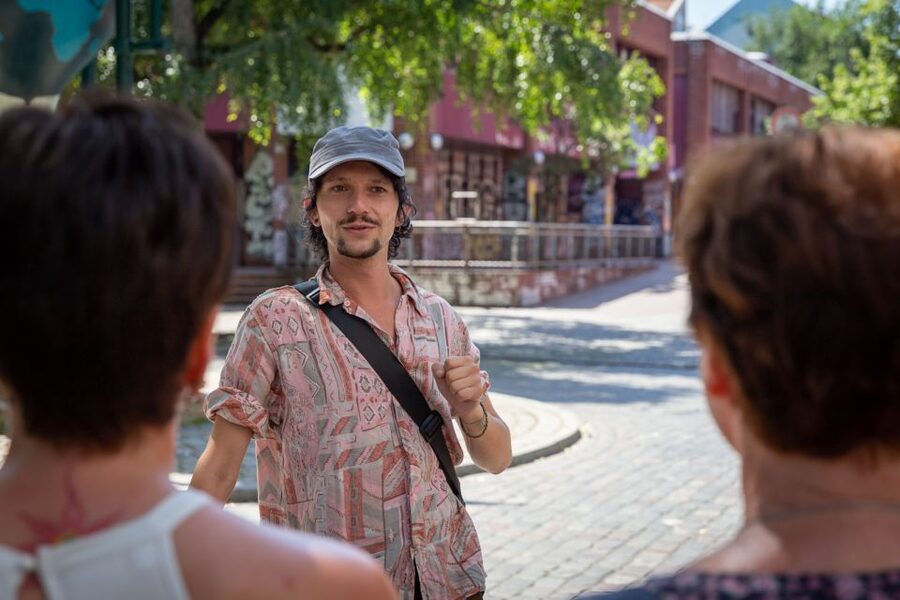
After your first orientation, you head into Oranienstraße, and this is where the tour starts feeling specific. Expect photo stops and a guided walk with history tied to what you see around you.
The guide invites you to imagine the past—not as a museum scenario, but as a daily-life reality shaped by housing and work. Oranienstraße becomes the thread connecting working-class roots to later political identity and demonstrations.
One practical reason I like this part: it doesn’t sit you in one spot. You learn, you walk, and you keep moving toward the next tasting. That keeps your energy up and stops the tour from becoming heavy.
Also, Oranienstraße is one of the streets where you can understand why Kreuzberg attracts people with different tastes. The street-level mixture is visible, and the tour uses that to explain how neighborhoods turn into food neighborhoods.
More tastings around the city



SO36 and Rio-Reiser-Platz: history in public space
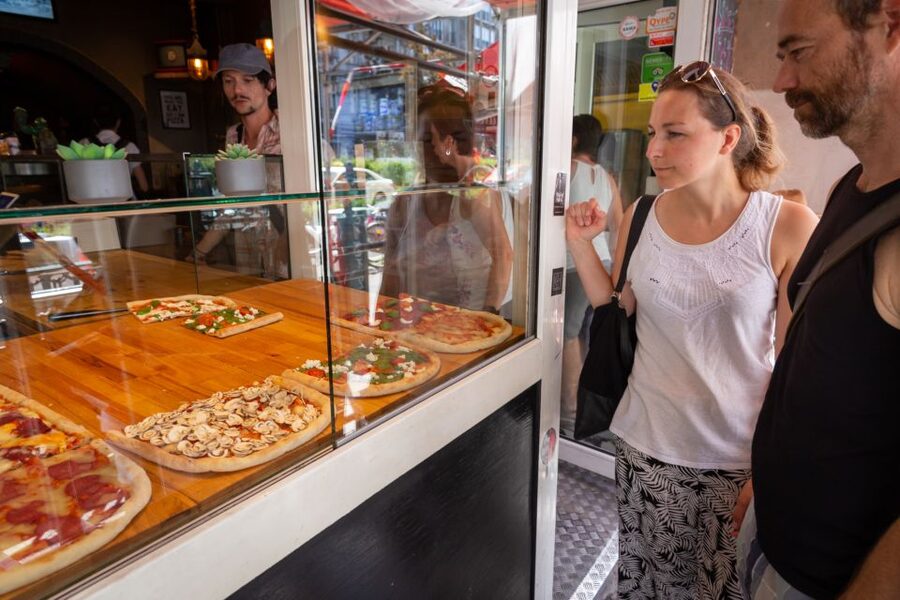
Next you’ll pass through Rio-Reiser-Platz, a short stop where the guide uses the place to connect past movements to the present tone of the area. You’ll also make a stop at SO36, tied to May Day demonstration lore.
The May Day story matters because it shows how Kreuzberg became associated with organizing and protest culture. That’s not just a vague political label; the tour frames it as part of everyday neighborhood identity—people showing up, making noise, and claiming space.
This segment is also where the tour’s storytelling style gets praised. Guides are described as prepared and able to connect the history to what’s happening in the neighborhood. I like that approach because it prevents the tour from feeling like dates and names with no meaning.
Mariannenstraße 4 and the small pauses that give the tour weight
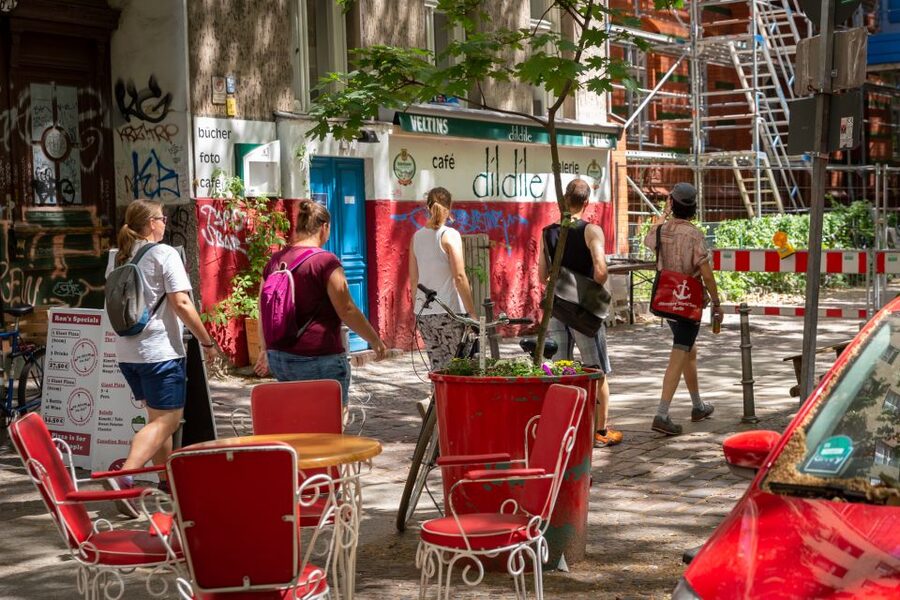
You’ll stop at Mariannenstraße 4 with a mix of photo time, walking, sightseeing, and a food tasting segment. Short pauses sound minor, but they change how you remember the tour. You’re not just sampling food; you’re tying it to a street corner and the story behind it.
This part of the walk is also where the neighborhood’s left-wing heritage shows up in how the guide interprets sites and public life. You’ll hear dramatic reports connected to attempts to escape the former GDR, which adds emotional weight. It’s handled as part of Berlin’s larger story of division and movement, not as sensational drama.
One more thing I appreciate: the tour doesn’t pretend everyone experiences history the same way. It frames Kreuzberg as a place where different communities overlap, including people with different political views and lifestyles. That’s why the food choices feel less random. They reflect that mix.
Oranienplatz and the quick hops between meaningful streets
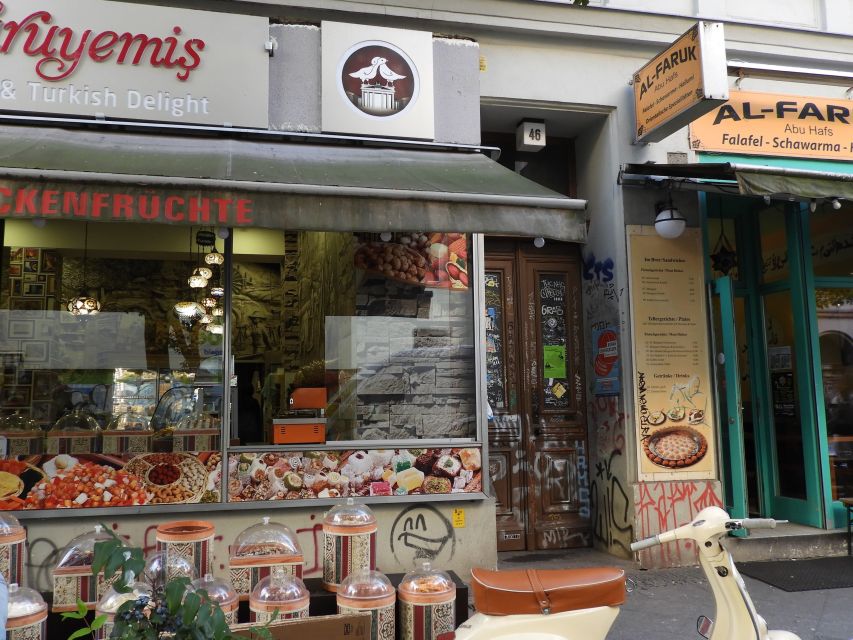
You’ll pass through Oranienplatz, which is one of those brief stops that still matters because it breaks the day into manageable sections. After the heavier history moments, a short walk pause helps reset your attention and keeps the pace friendly.
Even when it’s only a few minutes, the guide uses the stop to maintain the story thread. You’ll move from one street to the next with a sense that every location has a reason to be included.
Dresdener Straße and Admiralstraße: where street details become Berlin lore
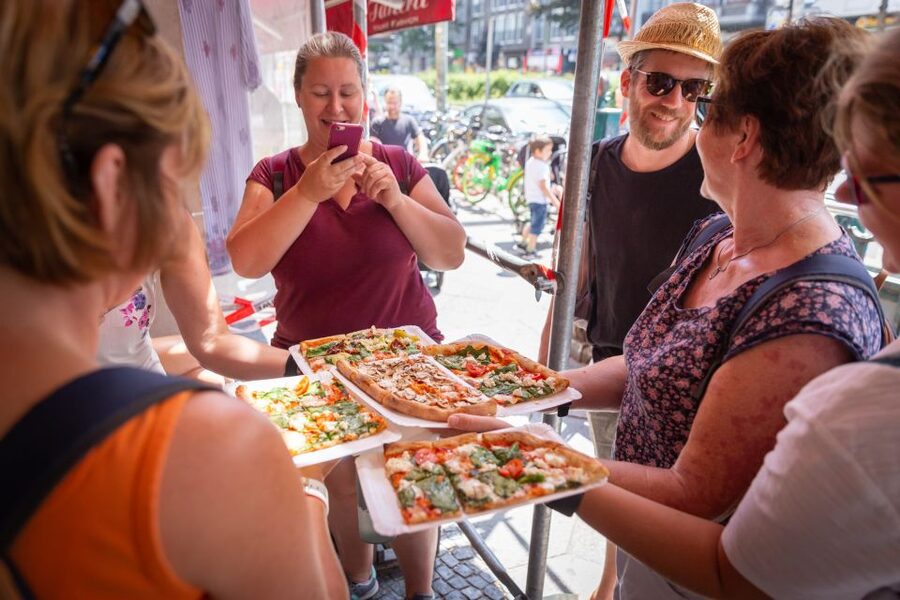
Later, you’ll walk along Dresdener Straße for about a 10-minute guided segment. Expect sightseeing and walking with context. This isn’t meant to be a long lecture—more like: slow down, look around, and notice how the neighborhood’s layout and feel contribute to its identity.
Then comes Admiralstraße, another longer stretch (with a 40-minute segment that includes photo stops, guided time, and a tasting). This is where the tour brings in extra street-level legends and historical references.
For example, the guide includes stories about former GDR traffic-light men—one of those Berlin details you’d probably miss if you were walking on your own. You’ll also hear a story line tied to Berlin’s Jack the Ripper connection. That’s a fun genre shift in the best way: the tour proves you can go from politics and housing history to darker city folklore without losing the thread of place.
And since it ends up at another tasting, these stories don’t just sit in your head. They land alongside something you can physically experience.
The five tastings: what you might eat and why it works
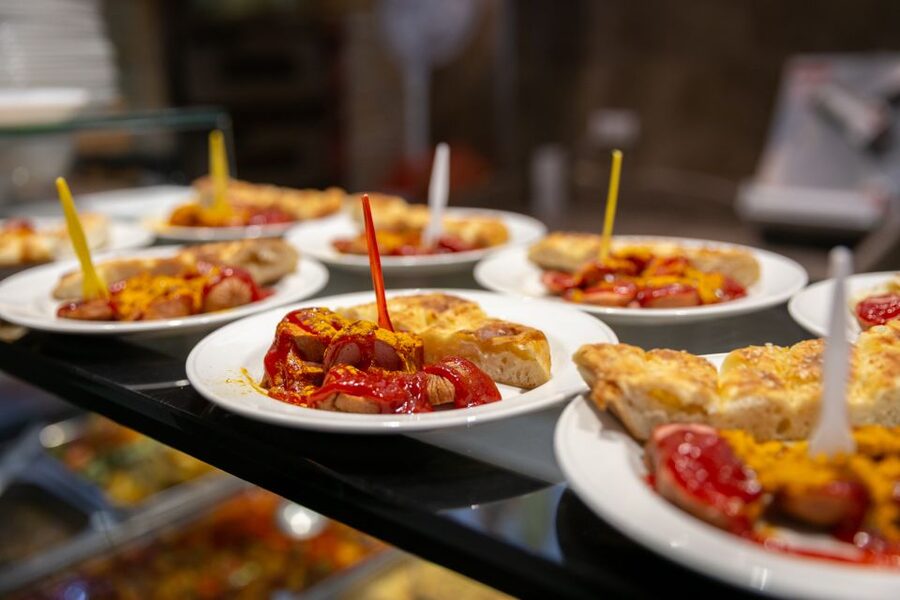
The tour includes 5 different food tastings in 5 distinct restaurants, plus you’ll have snack-sized portions rather than one big meal. This format is smart for two reasons:
- You get a broader slice of Kreuzberg’s food scene.
- You stay comfortable during a 3-hour walk.
Vegetarian options are available, but vegan isn’t. Since you’re sampling across multiple places, it’s worth thinking about how flexible your diet needs to be for cross-contamination or hidden ingredients. The tour is set up to be friendly to vegetarians, though.
What you’ll actually taste can vary by season and restaurant choice, but the food examples tied to the experience include:
- Döner/Dürüm (described as a standout)
- Currywurst
- Flammkuchen
- Baklava
- Vegetarian sushi
- Roasted nuts in sweet and savory styles
That mix gives you a real sense of Kreuzberg’s “local plus international crossover” identity. It also explains why the history segments matter: Kreuzberg’s food culture didn’t form in a vacuum. It reflects migration, working-class routines, and the neighborhood’s habit of mixing traditions.
One more detail that affects your comfort: in exceptional cases, food might be served outside and eaten standing up. It’s not the usual expectation, but it’s listed as a possibility—so if you don’t like eating on the move, you might want to go in with that mindset.
Who this tour suits best (and who should pick something else)
This is a strong match if you:
- want history with context, not just “look at that building” sightseeing
- like food tours where you walk between places
- enjoy neighborhoods with a distinct personality and political edge
- want a guided English or German experience with a professional guide
It’s less ideal if you:
- need a fully vegan diet (since vegan option isn’t available)
- dislike standing or eating on the go (because outside tastings can happen in exceptional cases)
- want a slower, sit-down meal day with drinks included (drinks aren’t included, and the tour is built for walking)
If you’re visiting Berlin for a few days and want one experience that mixes city story and edible sampling, this one is a practical choice.
Guides and the storytelling style: what makes it feel well run
The tour is led by a qualified, cheerful guide, and guide quality is a major part of why the experience scores well. People specifically call out how guides were prepared and able to connect lots of information about Kreuzberg and Berlin without losing the conversational thread.
Names that come up in the guide feedback include Niclas and Nike. Both are described as giving a clear mix of history and food recommendations, with an energy that keeps the walk from turning into a history class.
Even if your guide isn’t the same person named in those examples, the good news is the format is built for this combination: street stories plus snack stops. If you pick the tour because you want food and context, you’re picking the right structure.
How to get the most out of your 3-hour walk
A few simple habits will make this tour more enjoyable:
- Wear shoes you can walk in for 3 hours without thinking about it.
- Go with an appetite. The tastings are snack sized, but the point is to sample across the neighborhood.
- If you’re vegetarian, plan to clearly communicate that in advance. Vegan isn’t available.
- If you prefer drinks, budget for them separately since drinks aren’t included.
Also, arrive a little early. Starting right on time matters because you’ll want the full flow from Kotti through the key streets.
Should you book the Kreuzberg Culinary Food Tour?
I’d book this tour if you want a food experience that explains itself. The pairing of Kreuzberg’s working-class roots, political demonstrations, and street-level Berlin lore with five distinct tastings makes the time feel earned. And since the tour keeps meals snack-sized, it’s easier to enjoy without getting stuck in a long sit-down restaurant schedule.
I wouldn’t book it if you’re vegan, strongly prefer seated eating only, or you want drinks included as part of the package. In those cases, you’ll likely feel constrained by the structure.
If your ideal Berlin day mixes walking, stories, and multiple flavors, this is the kind of tour that helps you understand a neighborhood in less time than you’d spend trying to piece it together on your own.
FAQ
How long is the Kreuzberg Culinary Food Tour?
It lasts about 3 hours and is a walking tour through Kreuzberg with multiple guided stops and tastings.
Where do I meet for the tour?
You meet around Kotti in central Kreuzberg. The exact meeting point can vary depending on the option booked.
How many food tastings are included?
You get 5 different food tastings at 5 distinct restaurants.
Is there a vegetarian or vegan option?
A vegetarian option is available. A vegan option isn’t available.
Are drinks included in the price?
No. Drinks are not included.
What languages is the tour offered in?
The tour guide speaks English and German.
Can food be served outside restaurants?
In exceptional cases, food might be served outside the restaurants and eaten standing up.
If you tell me your travel dates and whether you’re vegetarian (or need vegan), I can help you sanity-check if this tour matches your needs and what to expect from the pace.
More Tour Reviews in Berlin






Eating Your Way Through Berlin

Kreuzberg and the Eastern Districts




Round out your days in Berlin
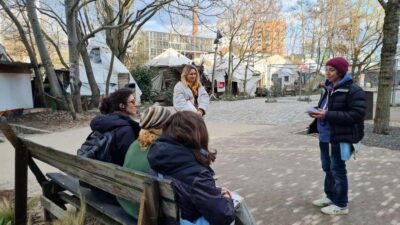
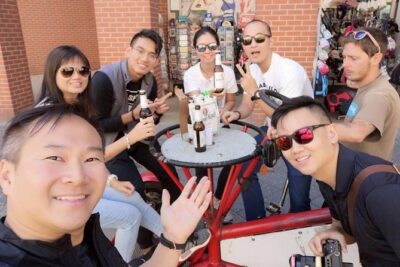

Kreuzberg & Alternative Districts, compared.
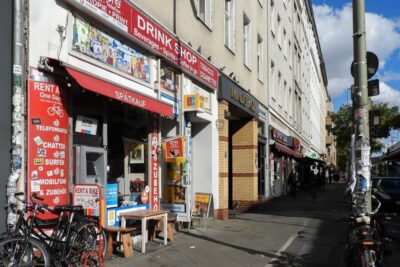 ★ 4.7Kreuzberg Guided Walking Evening TourFrom $27555 reviews
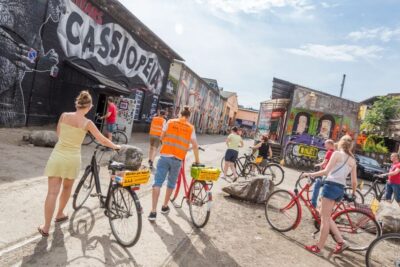 ★ 4.7Alternative Bike Tour of Kreuzberg & FriedrichshainFrom $41548 reviews
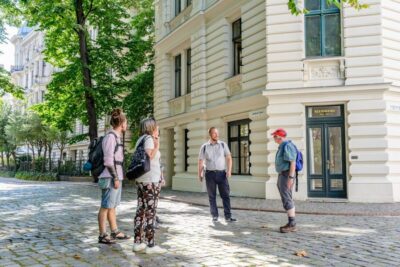 ★ 4.92.5-Hour Walking Tour through Kreuzberg 61From $23525 reviews
 ★ 5.0Berlin Off-the-Beaten-Path Walking Tour: Kreuzberg, Mitte and FriedrichshainFrom $30412 reviews
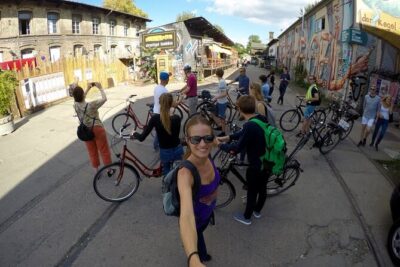 ★ 4.8Experience the Alternative Kreuzberg on a Bike TourFrom $41395 reviews
 ★ 4.9Prenzlauer Berg District Guided Walking TourFrom $23316 reviews
 ★ 4.8Gay Berlin Out in Schöneberg Walking TourFrom $23281 reviews
 ★ 5.0Hansaviertel “The City of Tomorrow” Guided TourFrom $23219 reviews
Browse the lists this tour appears in