
REVIEW · WALKING TOURS
An Introduction to Berlin Walking Tour
Berlin’s story changes every few steps. I love the 300-year sweep and how you follow the Berlin Wall route without feeling like you’re cramming facts. You get a historian-style walkthrough that connects big ideas to real places: Prussia’s rise, the Nazi era, and the Cold War, all stitched together through major landmarks.
I also like that the tour keeps you moving through different Berlin “eras” in a clear line, from Potsdamer Platz to the final crossing at Checkpoint Charlie. One thing to consider: the route uses public transport one or twice when distances get too long to walk.
In This Review
- Key things you’ll notice on this Berlin timeline tour
- A 3-hour timeline walk from Prussia to the Berlin Wall
- Meeting at Cafe Einstein on Unter den Linden
- Potsdamer Platz to Tiergarten: where Berlin redefines itself
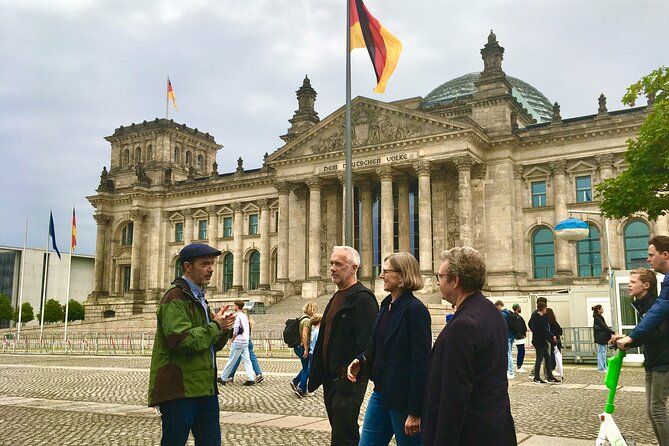
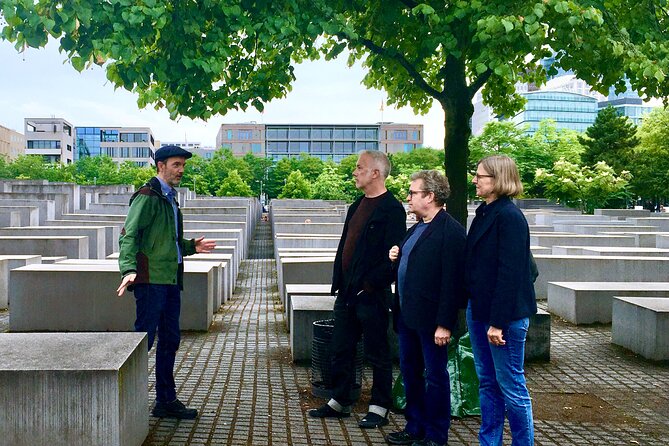
- The Holocaust Memorial and the Reichstag dome: democracy as a visible idea
- Following Napoleon and Prussian power through Brandenburg Gate and Unter den Linden
- Bebelplatz and Museum Island: the shift from destruction to institutions
- Hackescher Markt courtyards to Alexanderplatz: West meets East in one sweep
- Checkpoint Charlie: the Cold War’s ending in a single crossing
- Your guide: professors, doctoral students, and Dr. Martin Sauter
- Price and logistics: what $135 actually buys you
- Is this the right Berlin walking tour for you?
- Should you book this tour or skip it?
- FAQ
- How long is the Berlin walking tour?
- Where is the meeting point?
- Is the tour guided in English?
- What is included in the price?
- Do I need to buy public transport tickets?
- What public transport tickets are listed for this route?
- What places will the tour cover?
- Who are the tour guides?
- Is free cancellation available and can I pay later?
Key things you’ll notice on this Berlin timeline tour
- A historian guide leading the whole 3 hours, with a clearly academic tone
- Berlin Wall path segments, including the walk toward Tiergarten and Potsdamer Platz
- Reichstag plus glass dome with Foster’s 1992 design used as a democracy-and-symbols discussion
- Holocaust Memorial and Reichstag framed together so the politics of the 20th century feel grounded
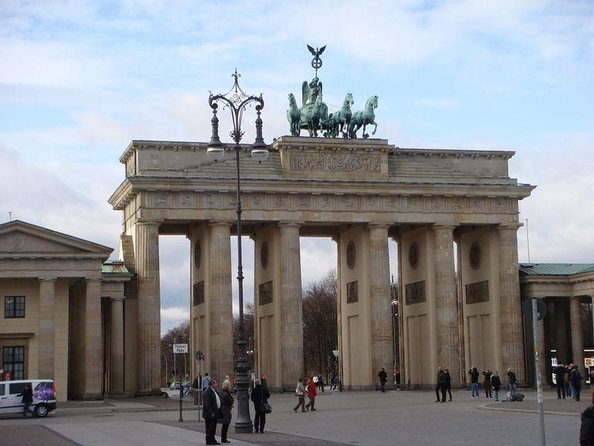
- Napoleon to Brandenburg Gate, then back to Prussian power along Unter den Linden
- Checkpoint Charlie at the end, timed to the 1989 moment thousands crossed and the Cold War shifted
More of Berlin on foot
- Discover Berlin Half-Day Walking Tour★ 5.0 · 9,624 reviews
- Berlin City walk Government District and Places of Democracy★ 4.7 · 8,467 reviews
- Berlin: Third Reich & Cold War Guided Walking Tour★ 4.9 · 8,378 reviews
- Berlin: Discover Berlin Walking Tour★ 4.9 · 5,998 reviews
A 3-hour timeline walk from Prussia to the Berlin Wall
This tour is built like a guided timeline you can physically follow. Berlin can feel like a set of disconnected sights if you visit solo. Here, the guide connects the dots: how Prussia’s violent transformation into a dominant military power set conditions for later catastrophes, then how the Nazi and Cold War years shaped what Berlin became.
The big value is the pacing of ideas. You don’t just stop and look; you stop and understand why each place matters to the story. The tour runs 3 hours, which is long enough to cover major ground and short enough that you won’t feel trapped in one museum room.
And the price, $135 per person, starts to make sense when you remember what’s included: you’re with a historian for the whole walk. In other words, you’re paying for interpretation and connections, not just proximity to famous buildings.
Meeting at Cafe Einstein on Unter den Linden
You start at Cafe Einstein, Unter den Linden 42, 10117 Berlin. That location matters because it puts you immediately on one of Berlin’s most symbolic corridors. Unter den Linden is introduced as Berlin’s royal boulevard, lined with palaces, museums, and theaters, so your first minutes already point toward the theme of power, culture, and nation-building.
The meeting setup is also practical: you’re in central Berlin where many key sites connect easily by transit. Just keep in mind the tour is not a pure walking loop. You’ll use public transport one or twice because some distances between key points are too far to do at street pace.
Potsdamer Platz to Tiergarten: where Berlin redefines itself
The tour opens at Potsdamer Platz, described as the business center that replaced the wasteland formerly known as East Germany’s Death Strip. That single detail sets the emotional tone. Even before you reach the Holocaust Memorial and the Reichstag, the guide is already showing you how Berlin rebuilt after division.
From Potsdamer Platz, you continue along the path where the Berlin Wall once stood, then move toward Tiergarten Park. This is where the tour’s “walkable history” idea really works. You get to see the city’s geography through a political lens: streets and green space that weren’t always “public” in the same way.
If you’ve ever struggled to imagine how the Wall cut Berlin apart, this section helps. The guide uses the route to make the idea of separation physical, not abstract.
The Holocaust Memorial and the Reichstag dome: democracy as a visible idea
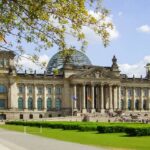
The dramatic Holocaust Memorial appears on the route along with the Reichstag. Having these two stops close together gives your brain a needed contrast: the memorial anchors the consequences of Nazi ideology, and the Reichstag brings you to Germany’s later political response.
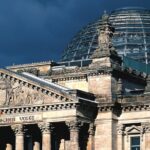
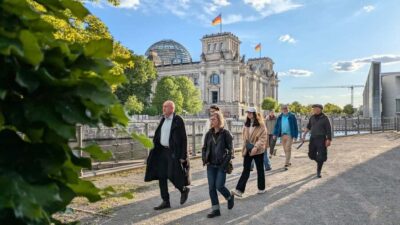
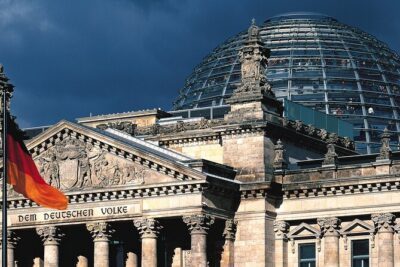
The Reichstag portion is especially memorable because it is anchored in events and symbolism. The tour explains how the fire in 1933 became a pretext for Nazis to suspend civil liberties and arrest political opponents. Then it pivots to what you see today: the grand glass dome added in 1992, designed by Norman Foster, with walkways that let you look down into Parliament.
The guide uses that structure as discussion material. The cupola becomes a metaphor for reunification, transparency, and Germany’s commitment to democracy. Even if you’re not a politics person, you’ll probably leave with a clearer sense of why architecture can act like a political statement.
One thing I’d flag: this segment packs big emotions and heavy history. The tour is structured to keep it coherent, but you should be ready for the subject matter.

Following Napoleon and Prussian power through Brandenburg Gate and Unter den Linden
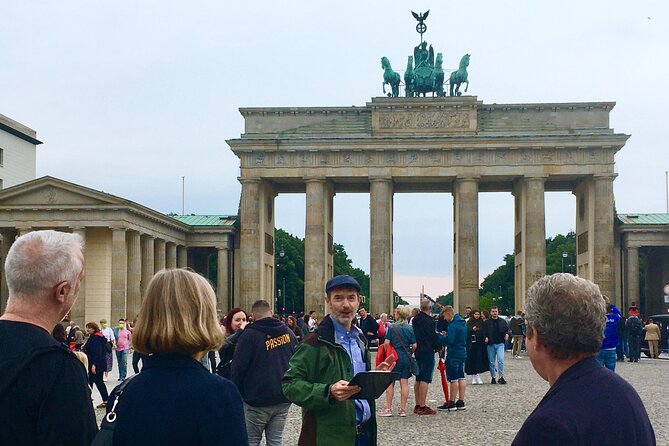
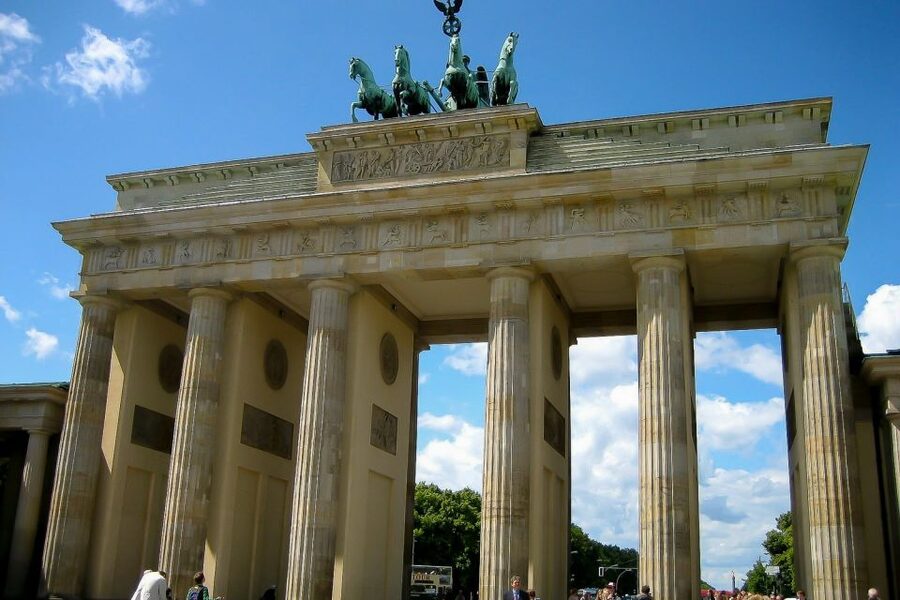
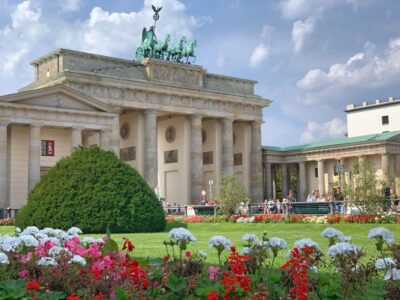
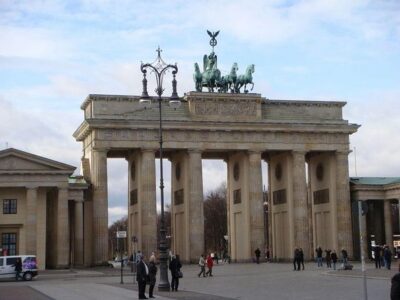
Next, the tour reaches back further by following Napoleon’s footsteps through the Brandenburg Gate. It connects the French Revolution to how it helped spark German nationalism. That matters because it puts Berlin’s later militaristic trajectory into a longer chain of cause and effect, not a sudden “right at 1900” story.
After Brandenburg Gate, you walk along Unter den Linden, introduced as a royal boulevard lined with palaces, museums, and theaters. This is where the Prussia theme becomes more specific. You pause at the famous equestrian statue of Frederick the Great and the guide discusses his role as the so-called Poet King—and how his influence shaped both militaristic and cultural directions that fed into what became the German Empire.
This is one of the tour’s smartest moves: it treats culture and power as intertwined. You don’t just hear about generals and wars. You also see how leaders and institutions shaped what Berlin valued, built, and celebrated.
Bebelplatz and Museum Island: the shift from destruction to institutions
At Bebelplatz, the tour marks the site of the 1933 Nazi book burning. From there, the guide links that moment to Hitler’s rise to power and the terrible consequences that followed. It’s a stark stop, but it’s also tightly connected to the rest of the walk.
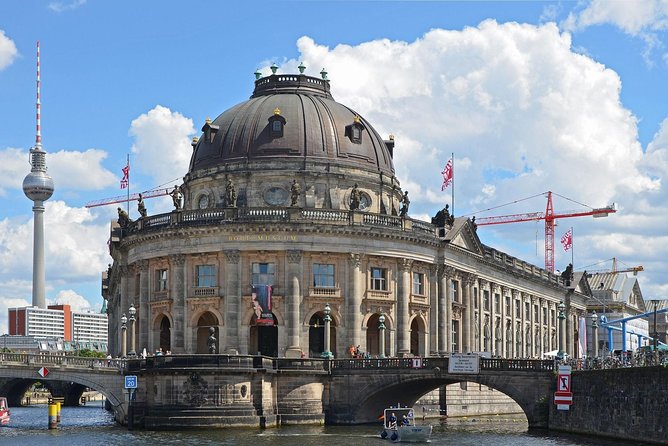
Then you cross Museum Island, described as Berlin’s answer to the Louvre. Here the emphasis shifts to the 19th-century development of Berlin into a cultural center. In practical terms, this part of the tour helps you see how one city can house both institutions of learning and scenes of ideological violence—sometimes only a short distance away, even when the world-changing causes are complex.
If you tend to think of history as either art-and-culture or politics-and-war, this section pushes you to hold both at once.
Hackescher Markt courtyards to Alexanderplatz: West meets East in one sweep
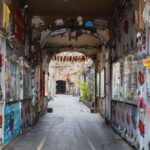
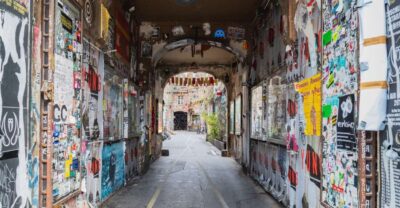
After Museum Island, you reach Hackescher Markt, described as a charming pocket of pre-war Berlin where you can ramble through a network of hidden courtyards. This is a lighter-feeling break in the timeline approach—more texture, less total seriousness, but still in the same guided story about what Berlin was before later disruptions hardened the city into divided zones.
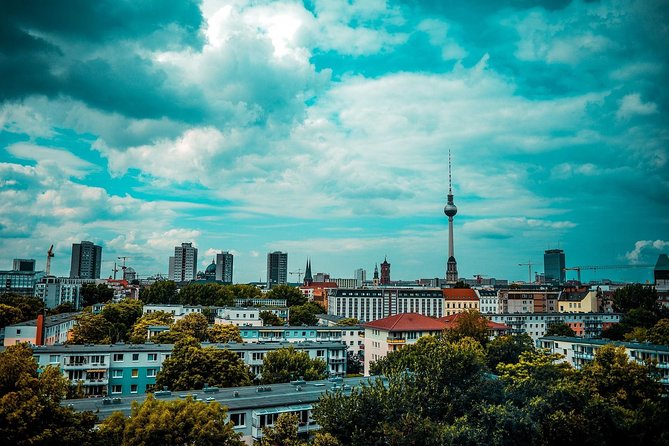
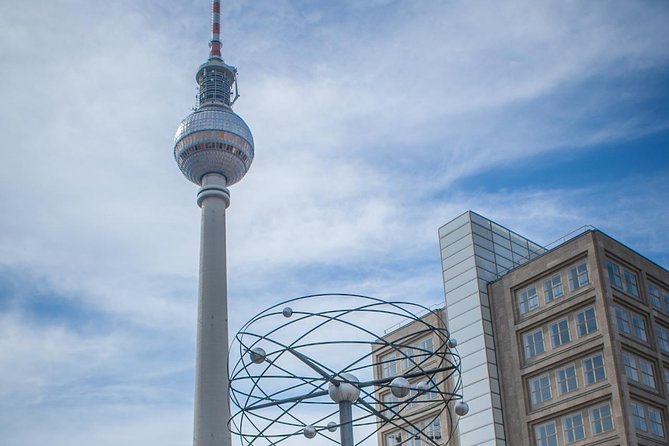
Then comes Alexanderplatz, which the tour frames as the counterpoint to what you just saw at Hackescher Markt. This is the East Berlin square rebuilt in the 1960s as a communist bloc showplace. You’ll also hear about the futuristic government buildings and apartment blocks, plus the iconic TV Tower as part of the area’s visual identity.
The contrast is the point. The walk doesn’t treat Berlin as one uniform “today.” It shows you Berlin as a layered city—each era trying to claim its own look and its own meaning.
Checkpoint Charlie: the Cold War’s ending in a single crossing
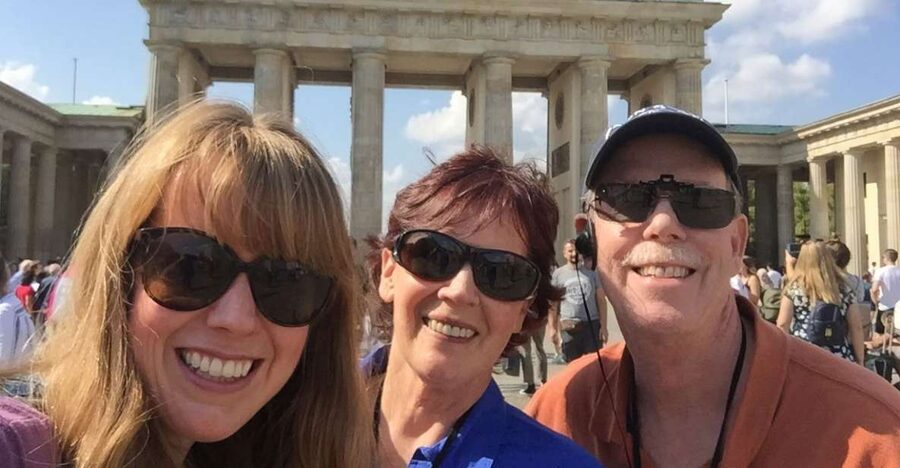
The tour finishes at Checkpoint Charlie, the legendary crossing point from West Berlin to East. It ties the location to 1989, when thousands of East Germans poured across the border. In tour language, that moment brings the Cold War to an end.
This ending works because it’s both concrete and emotional. You’re not just asked to understand geopolitical forces. You finish at a place associated with a dramatic human shift in movement and freedom.
If you’re trying to understand Berlin as a city that constantly reinterprets itself, ending here leaves you with a strong image: Berlin’s walls don’t last forever, but their logic can leave marks long after their removal.
Your guide: professors, doctoral students, and Dr. Martin Sauter
One of the most praised parts of this experience is the guide quality—serious expertise, presented in a way that still feels tailored. The tour notes that guides include professors, doctoral students, historians, journalists, art critics, and published authors. That range matters because it often changes how people explain places: you may get tight historical framing, but you also get thoughtful cultural and media angles.
A named example from real experience is Dr. Martin Sauter. One tour description specifically highlights how individual the experience felt and how smoothly the expertise translated into a great tour. That kind of guide profile is exactly why this is worth paying for versus a self-guided audio route.
Price and logistics: what $135 actually buys you
Let’s be practical about value.
You’re paying $135 per person for a 3-hour guided walk with a historian. What you get, based on how the tour is structured, is not only access to sites like the Holocaust Memorial, the Reichstag, Brandenburg Gate, and Checkpoint Charlie, but also a guided chain of explanations: Prussia’s evolution, the 1933 Nazi turning point moments, and the Cold War transition framed through Berlin’s physical layout.
The one logistics catch is transport. The tour explicitly says you’ll use public transport one or twice because some key sites would be too far to walk. Transport tickets are not included, but your guide will help you buy tickets in the first metro station.
If you don’t have a Berlin metro pass, this matters. You’ll want to budget a little time at those points for buying tickets and getting on the right line.
Here are the exact ticket options listed:
- Berlin Transit One Way Tarif AB Ticket: 2.8 EUR (Senior Discount 1.70 EUR)
- Berlin Transit Day Ticket: 7 EUR (Senior Discount 4.70 EUR)
That’s the kind of “pay attention early” detail that keeps the day from turning into stress.
Is this the right Berlin walking tour for you?
You’ll likely enjoy this most if you want Berlin history organized into a clear, guided storyline. It’s a good pick when you care about how ideology becomes policy, and policy becomes architecture, memorials, and street-level barriers.
It’s also a strong fit if you like big themes but still want them tied to recognizable places. This tour gives you that balance: Prussian power, Nazi-era triggers, Cold War divisions, then Berlin’s present-day reinvention.
You might think twice if you strongly prefer a lightweight sightseeing day. This walk is built for meaning, not just photos. It covers dark material, including the Nazi book burning site and the Holocaust Memorial, so it asks you to engage.
Should you book this tour or skip it?
If you want to understand Berlin beyond the postcard version, book it. The combination of major landmarks, a chronological structure, and a guide team drawn from historian and academic backgrounds is where the value lives.
My tipping point is this: you’re not just seeing sights. You’re getting the “why” behind the places, including the Reichstag dome symbolism and how the Berlin Wall line works as a physical reminder of division. With $135 for 3 hours, that’s a fair trade when you’re buying expert interpretation for a dense route across centuries.
If you’re traveling with someone who gets impatient with pure walking, check the small-group option when available. The tour’s own focus on professor-level guidance suggests they can keep the pace and explanations sensible for the group.
FAQ
How long is the Berlin walking tour?
It lasts 3 hours.
Where is the meeting point?
You meet at Cafe Einstein, Unter den Linden 42, 10117 Berlin, Germany.
Is the tour guided in English?
Yes. The tour has a live guide in English.
What is included in the price?
The tour includes a 3-hour tour of Berlin with a historian. Public transport tickets are not included.
Do I need to buy public transport tickets?
You’ll use public transport one or twice, and transport tickets are not included. Your guide will help you purchase tickets in the first metro station if you don’t have a Berlin metro pass.
What public transport tickets are listed for this route?
The listed options are Berlin Transit One Way Tarif AB Ticket (2.8 EUR, Senior 1.70 EUR) and the Berlin Transit Day Ticket (7 EUR, Senior 4.70 EUR).
What places will the tour cover?
The route includes Potsdamer Platz, the path where the Berlin Wall once stood (toward Tiergarten), the Holocaust Memorial, the Reichstag, the Brandenburg Gate, Unter den Linden, Frederick the Great’s statue, Bebelplatz (book burning site), Museum Island, Hackescher Markt, Alexanderplatz (including the TV Tower), and Checkpoint Charlie.
Who are the tour guides?
Guides are listed as professors, doctoral students, historians, journalists, art critics, and published authors.
Is free cancellation available and can I pay later?
Yes. There is free cancellation up to 24 hours in advance for a full refund, and you can reserve now & pay later.
More of Berlin on Foot

More Tours in Berlin

More Tour Reviews in Berlin
Round out your days in Berlin
Walking Tours, compared.
 ★ 4.7Berlin City walk Government District and Places of DemocracyFrom $2948,467 reviews
 ★ 4.9Third Reich & Cold War Guided Walking TourFrom $238,378 reviews
 ★ 4.9Discover Berlin Walking TourFrom $235,998 reviews
 ★ 5.0Berlin’s Best: 2 Hour Walking Tour Third Reich and the Cold WarFrom $245,486 reviews
 ★ 4.8Hidden Backyards Guided Walking TourFrom $235,360 reviews
 ★ 5.0Third Reich Berlin: Hitler and WWII Walking TourFrom $243,301 reviews
 ★ 4.9Third Reich, Hitler, and WWII Walking TourFrom $191,757 reviews
 ★ 4.6Alternative Berlin Walking TourFrom $291,204 reviews
Browse the lists this tour appears in