
REVIEW · THIRD REICH & WWII HISTORY
Berlin: Third Reich, Hitler, and WWII Walking Tour
Berlin turns grim on this Nazi-history walk. In just three hours, you follow the logic of power through real locations, from Hitler’s last days to the war’s brutal finish.
I really like the way the guides keep the pace tight and the story clear, with people like Maggie and Campbell drawing you in with questions and practical explanations. I also like the focus on specific sites, including the Führer Bunker area and the Topography of Terror, not vague “this is what happened” storytelling.
One heads-up: it’s a heavy topic and a lot of walking in real weather. If you want something pretty and light, this is not that kind of Berlin day.
In This Review
- Key Takeaways Before You Go
- What Makes This Tour Work in Berlin
- Finding Your Guide Outside Friedrichstraße (Fast)
- Friedrichstraße and Reichstag: The War’s Political Center
- Tiergarten and the Soviet War Memorial: WWII Remembered in Metal and Stone
- Holocaust Memorial: Turning the Corner from Power to Atrocity
- Hitler’s Bunker Area and the Germania Axis: Where Plans Met Reality
- Detlev-Rohwedder-Haus: The City’s Hard Edges
- Topography of Terror: The Exhibit That Puts Names on Systems
- Brandenburg Gate Mention and the Soviet Push Toward Collapse
- How Much You Walk in 3 Hours (And What That Means)
- Guide Style: Why You’ll Remember It (Not Just the Places)
- Price and Value: Why $19 Can Still Be a Big Deal
- Who This Tour Suits Best
- Should You Book It
- FAQ
- FAQ
- How long is the Berlin Third Reich, Hitler, and WWII walking tour?
- Where do I meet the guide?
- What languages are available?
- Does the tour run in bad weather?
- What should I wear or bring?
- Is pickup available?
- What major sites are included?
Key Takeaways Before You Go
- The route is built around power centers, from Nazi government planning sites to the bunker area.
- Topography of Terror gets your context right, helping you connect what you see outside with what the regime built.
- You’ll walk the war’s timeline, including the Soviet approach near major landmarks.
- The Soviet War Memorial at Tiergarten is striking, with T-34 tanks and Red Army howitzers framing the memorial space.
- Guides often keep groups involved, and several recent guides were praised for humor plus sensitivity.
- It’s a short, intense 3-hour format, so wear shoes you can trust.
More walks through Berlin's wartime history
- Berlin: Third Reich & Cold War Guided Walking Tour★ 4.9 · 8,378 reviews
- Berlin’s Best: 2 Hour Walking Tour Third Reich and the Cold War★ 5.0 · 5,486 reviews
- Third Reich Berlin: Hitler and WWII Walking Tour★ 5.0 · 3,301 reviews
- Berlin: Third Reich, Hitler, and WWII Walking Tour★ 4.9 · 1,757 reviews
What Makes This Tour Work in Berlin
This tour has a simple strength: it treats Berlin as a map of decisions. You’re not just looking at plaques. You’re standing near places where the machinery of the Nazi regime planned, broadcast, and finally collapsed.
I like that the guides slow down at key points and connect the dots. You can feel how Berlin’s shifting borders and bombed-out neighborhoods shaped what the city became after 1945. It’s history you can point at.
Finding Your Guide Outside Friedrichstraße (Fast)
Your meeting point is outside Friedrichstraße train station, on the square between the Tränenpalast (Palace of Tears) and the station. Look for guides with a blue lanyard and a yellow name tag plus yellow umbrellas.
This matters because the walking pace stays steady. If you’re late, you’ll miss the start. If you’re early, you can get your bearings fast and settle in.
Friedrichstraße and Reichstag: The War’s Political Center
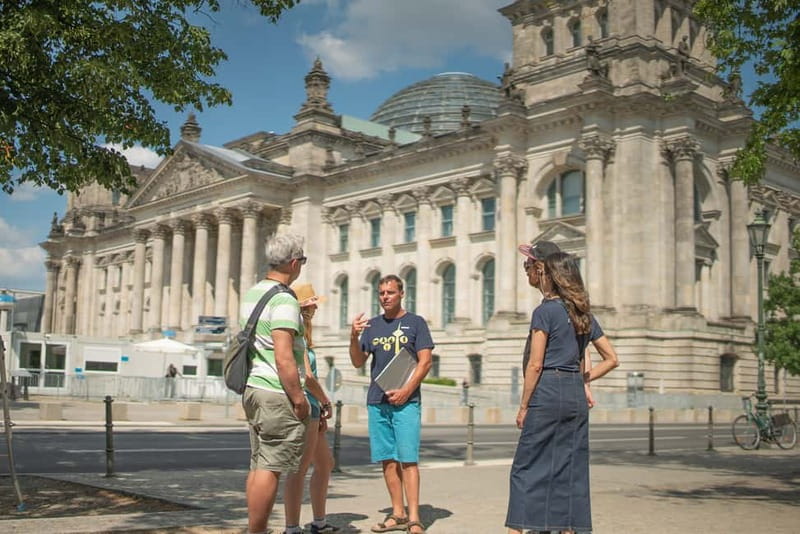
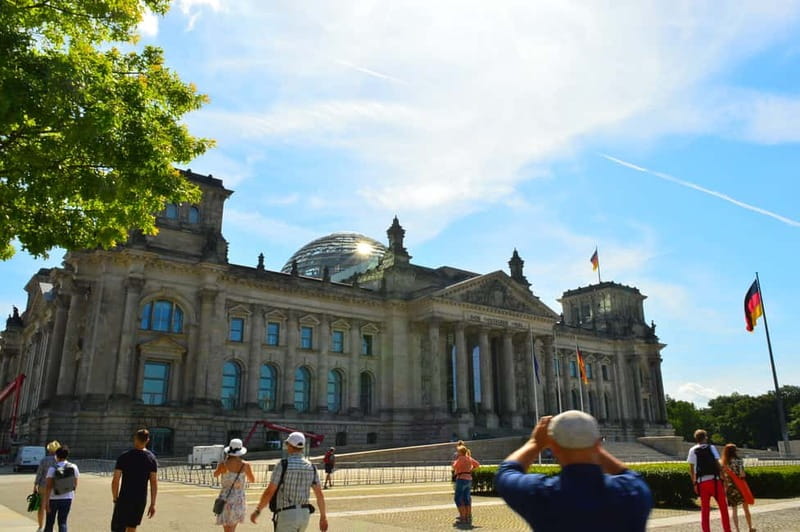
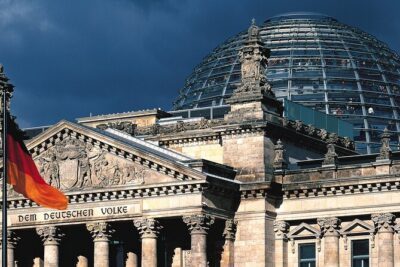
The tour starts with a photo stop at Friedrichstraße, then moves toward the Reichstag area. Those stops matter because the story isn’t only about Hitler’s personal life. It’s about how the Nazi state consolidated power and how Berlin became the stage for the endgame.
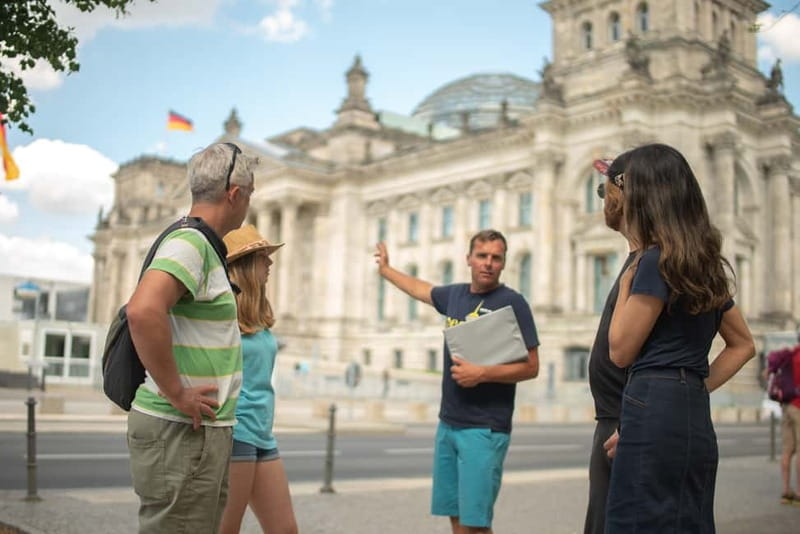
At the Reichstag stop, you’re shown how the final phase of the war played out around this symbol of German politics. Even if you’ve seen pictures of the building, hearing how it factored into the closing battle helps the site snap into focus. You’re also in the right part of central Berlin to understand why this area carried so much meaning before and after the regime.
Tiergarten and the Soviet War Memorial: WWII Remembered in Metal and Stone
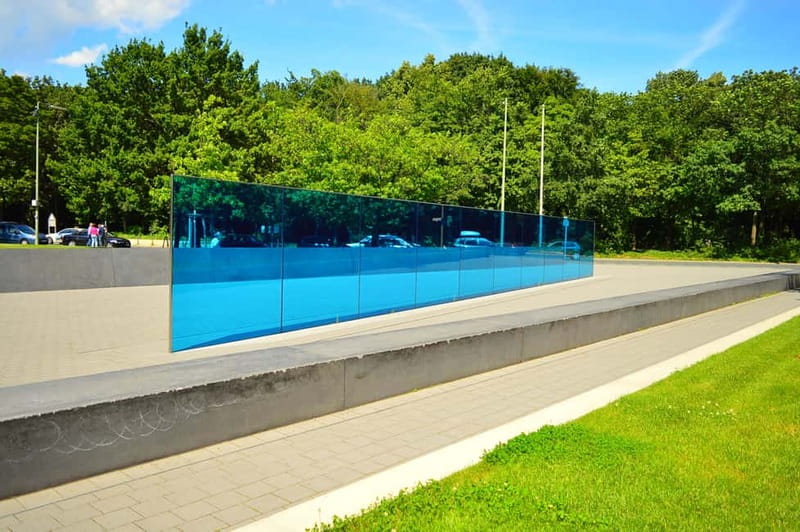
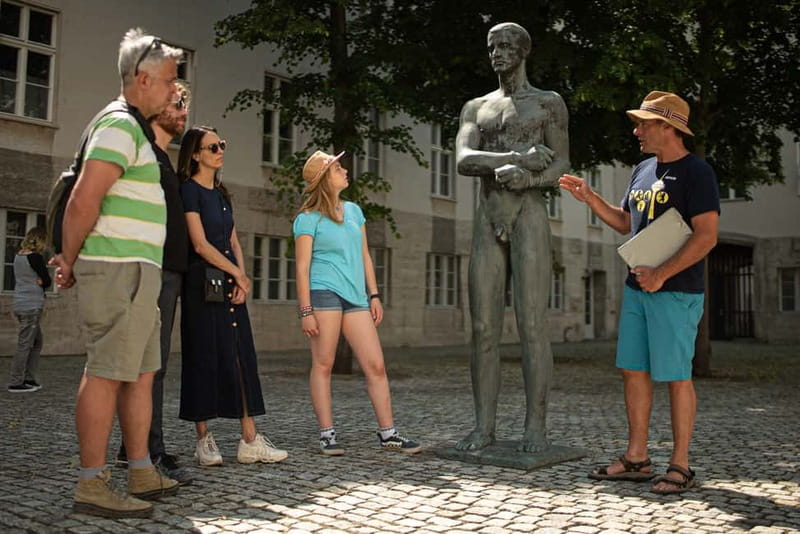
After the central landmarks, the walk brings you into the Tiergarten area and the Soviet War Memorial. This is one of the most visually direct stops on the whole tour. It’s flanked by T-34 tanks and Red Army howitzers, so the memory of the war isn’t abstract.
I like memorials like this because they force a different kind of attention. You can’t just read the past. You have to stand near it. The guide’s job here is to keep it respectful while still explaining what the memorial represents in the wider story of Berlin’s capture.
If you’re someone who tends to connect WWII history mostly to documents and photos, this stop will give your brain something physical to hold onto.
More of Berlin on foot


Holocaust Memorial: Turning the Corner from Power to Atrocity
The Holocaust Memorial stop changes the emotional temperature of the tour. The Nazi story is often told through leadership and battles, but this location brings the focus back to victims and the scale of what was done.
You’ll get short guided context here, and the pace stays appropriate. In several recent reviews, people praised guides for being brutally honest in a way that felt careful rather than sensational. That’s the tone you want on this stop: clear facts, no theatrics.
Wear a minute of silence into your day here. It helps the rest of the walk land in the right place.
Hitler’s Bunker Area and the Germania Axis: Where Plans Met Reality
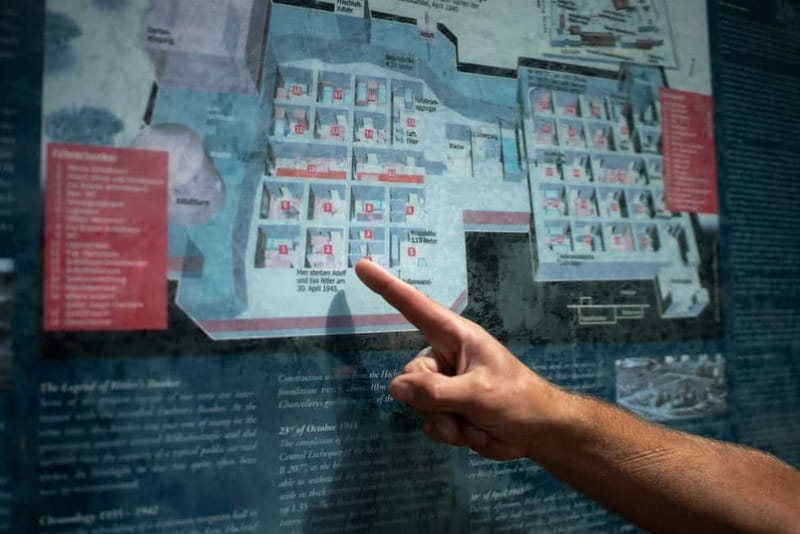
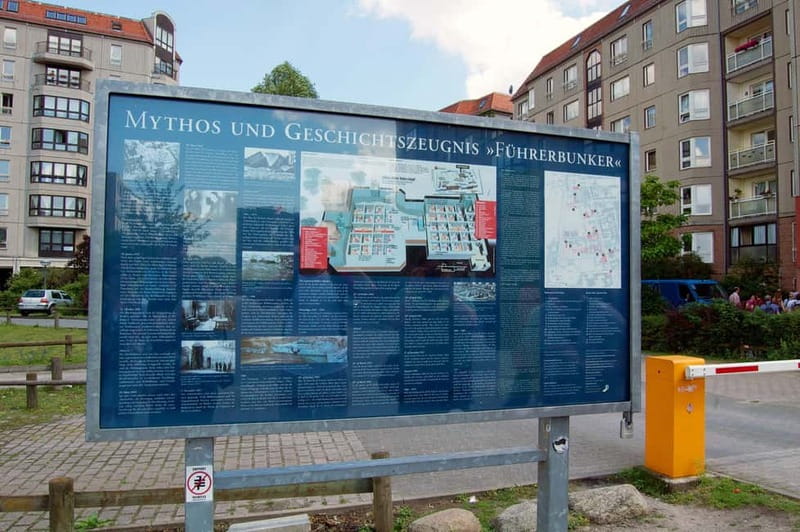
One of the biggest draws is the stop connected to Hitler’s suicide in the Führer Bunker. The guide will walk you through Hitler’s final days and the fate of his remains, step by step, while you stand above the bunker site.
What I appreciate is the framing: you’re not only hearing the end of the story. You’re also seeing how Nazi leadership tried to redesign Berlin into a world of its own. The tour follows Hitler’s planned Germania axis, associated with architect Albert Speer, so you understand the regime’s obsession with geometry, dominance, and control.
This part can feel unsettling because you’re dealing with a final chapter that’s both historical and personal. You’ll also notice how Berlin’s modern streetscape makes it harder to “see” what was there. That’s where the guide matters most: they help you reconstruct a vanished landscape without making it feel like a reenactment.
Detlev-Rohwedder-Haus: The City’s Hard Edges
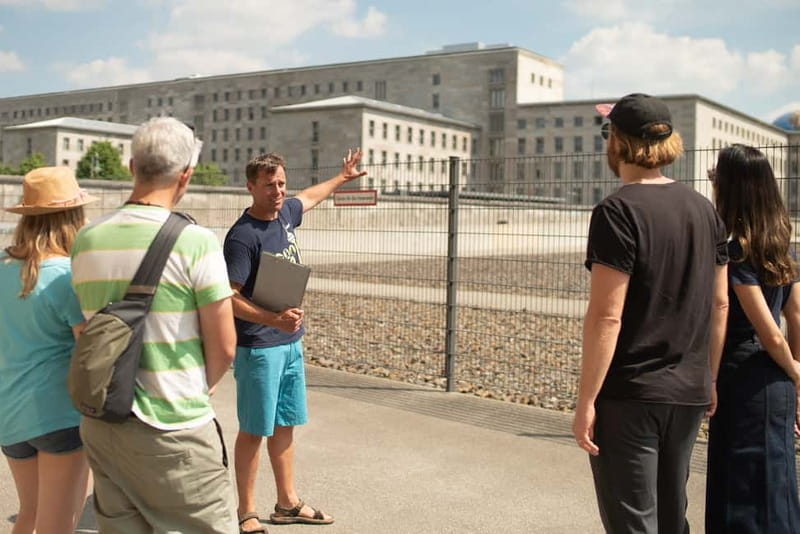
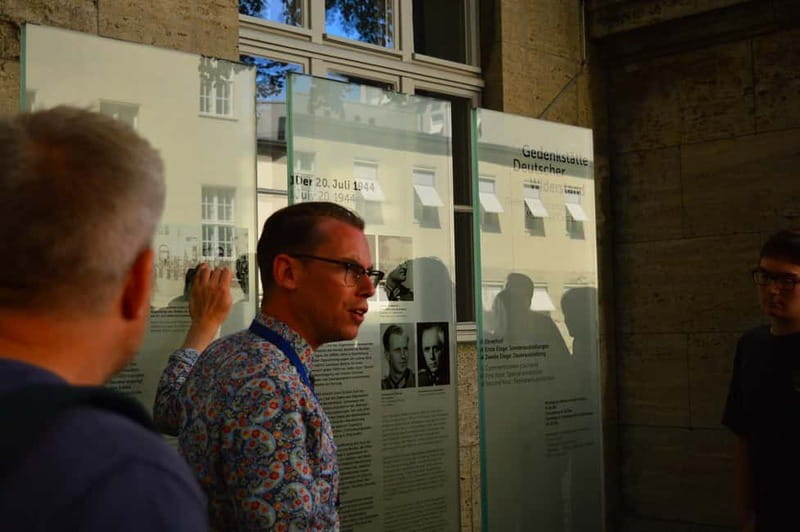
Next comes a stop at Detlev-Rohwedder-Haus. This location helps show how power structures occupy space and how later history layers new uses onto old ground.
It’s not a museum stop where you sit and stare at objects. It’s more like a checkpoint in the story: the guide uses the location to connect administrative power to propaganda, repression, and the daily workings of the system. If you like tours that explain how the machine worked, this is a key segment.
Topography of Terror: The Exhibit That Puts Names on Systems
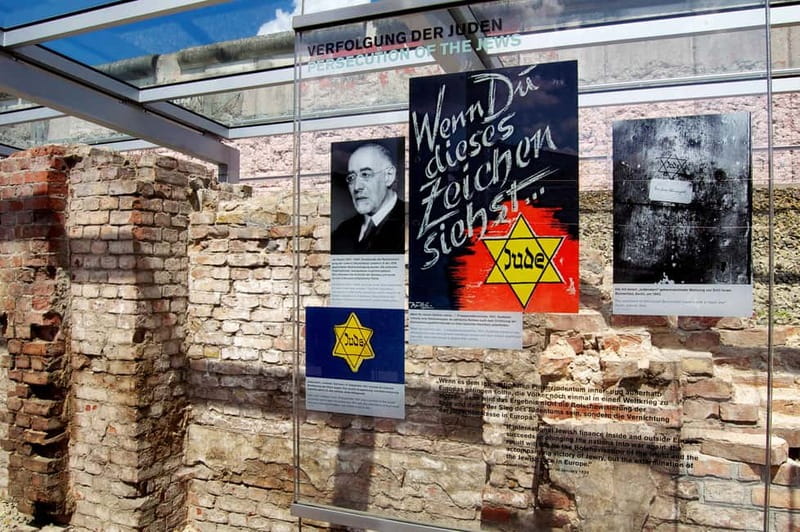
The tour includes time at Topography of Terror, where you’ll see the broader “why” behind the buildings and decisions. This exhibit is especially valuable because it links individuals, organizations, and policies to the terror they created.
You can think of this stop as your grounding point. Earlier stops create the geographic and political map. Topography of Terror helps fill in the mechanism: who ran what, how propaganda and policing fit together, and how Nazi power produced systematic violence.
If you’re hoping for “WWII facts” only, this is where you’ll get the harder stuff: the bureaucratic and organizational details that made the horror scalable. It’s heavy material, but it’s also clarifying.
Brandenburg Gate Mention and the Soviet Push Toward Collapse
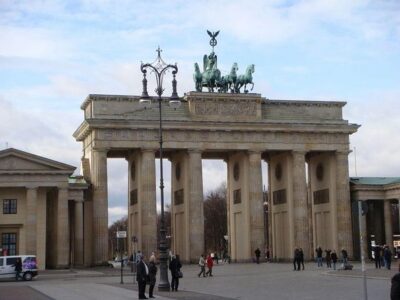
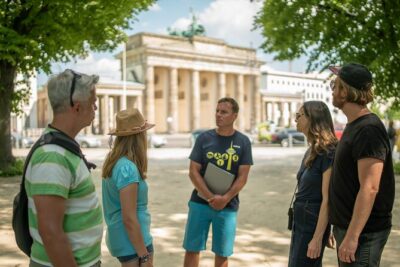
The narrative also touches the Brandenburg Gate, once a symbol of Nazi power and later a Cold War divide. Even if you’ve visited the gate before, hearing it explained through the war’s ending phases gives the site a second layer.
Then the tour follows the path of the Soviet assault as you reach the area near where the war’s final battles unfolded. The guide’s explanation helps you understand Berlin not as a single moment, but as a series of forces colliding—ground pressure, political breakdown, and the collapse of the regime’s last defenses.
This is the part that helps you stop thinking of WWII as a distant sequence of years and start seeing it as an event that happened at particular turns of a street.
How Much You Walk in 3 Hours (And What That Means)
This is a 3-hour walking tour with short guided segments—think photo-and-talk stops totaling roughly 15 to 16 minutes at major points. That structure is great if you want meaningful context without spending an entire day trudging across the city.
It’s also why comfortable shoes are non-negotiable. Several reviews mention cold weather and snow, and the guides still kept the tour moving while taking time at each stop. You’ll be outside most of the time, so plan for short sections of exposed walking, then rest and listen during the stops.
There may be a refreshment break depending on the guide and conditions. One recent review specifically mentioned a break after about two hours, plus helpful tips on nearby cafes and restrooms. If you want a predictable mid-tour pause, plan to bring a snack and water anyway.
Guide Style: Why You’ll Remember It (Not Just the Places)
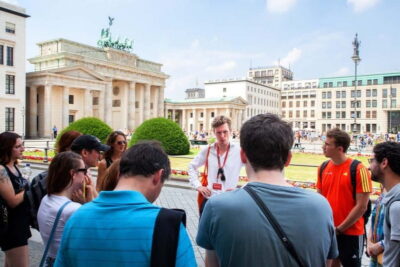
What comes through in the reviews is consistency in how guides teach: they’re friendly, they answer questions, and they keep the group involved instead of lecturing from a distance. People repeatedly mentioned guides like Maggie, Hannah, Campbell, Emma, Jimmy, Klaus, and Nikolai for clear explanations and the ability to keep even younger visitors engaged.
Even when the subject is dark, many guides used a careful kind of humor or conversational storytelling. It’s not comedy. It’s control: the ability to keep your attention without turning the past into a show.
For you, that means you’ll walk away with a “connected map.” You’ll know how propaganda, persecution, and military collapse fit together instead of treating each stop as a separate trivia fact.
Price and Value: Why $19 Can Still Be a Big Deal
At $19 per person for a 3-hour guided walk, the value is mainly in the human part. You’re paying for interpretation: a guide turning a city with missing pieces into a coherent story.
This is also a good-value format because you’re not paying for transport on top of the guide’s time. You cover key parts of central Berlin by foot, with guided stops that keep the time focused.
Just be honest about what you’re buying: you’re not buying a comfortable sightseeing circuit. You’re buying a structured route through some of the darkest chapters of modern European history. If you’re okay with that, the price feels very fair for what you learn and how it’s explained.
Who This Tour Suits Best
This tour is a strong fit if you want more than surface-level WWII photos and want Berlin’s specific sites to make sense. It’s especially good if you like historical context that connects politics, architecture, propaganda, and military collapse.
It also tends to work for mixed groups because guides often keep questions flowing and adjust the pace. Some reviews specifically praised guides for keeping pre-teens engaged, including one mention of a family with a younger student studying German history.
If you’re someone who wants silence and time to absorb on your own, you might find the moving pace a bit active. The same is true if you’re very sensitive to memorial content. This is respectful and fact-based, but it is still emotionally heavy.
Should You Book It
I think you should book this tour if your Berlin trip includes WWII history and you want your time to feel organized. The combination of Hitler’s bunker-related site, Topography of Terror, and the Soviet War Memorial gives you both sides of the story: Nazi planning and Nazi collapse, followed by how Berlin got remembered after.
Skip it if you want a light, scenic walk, or if long periods outside are a problem for you. Also skip if you want deep museum time, because this is designed as a guided route with short segments, not an all-day exhibition marathon.
If you do book, do this one thing: bring good shoes, keep an open mind, and ask questions when the guide invites them. This is the kind of tour that rewards participation.
FAQ
FAQ
How long is the Berlin Third Reich, Hitler, and WWII walking tour?
It runs for 3 hours.
Where do I meet the guide?
Meet outside Friedrichstraße train station, on the square between the Tränenpalast (Palace of Tears) and the station. Guides wear a blue lanyard and a yellow name tag, and they carry yellow umbrellas.
What languages are available?
The live tour guide is available in English, German, and Spanish.
Does the tour run in bad weather?
Yes. The tour operates rain or shine.
What should I wear or bring?
Wear comfortable shoes and weather-appropriate clothing.
Is pickup available?
Pickup is optional and only for private options. You’ll wait in the hotel lobby 5 minutes before the scheduled pickup time, and the guide will have a yellow name tag for easy recognition.
What major sites are included?
You’ll see key WWII-related Berlin locations such as the Hitler bunker area, Topography of Terror, the Soviet War Memorial at Tiergarten, and the Holocaust Memorial, along with additional surrounding sites connected to Nazi power and the war’s end.
More Tours in Berlin





More Tour Reviews in Berlin
Berlin's Wartime History

Round out your days in Berlin

Third Reich & WWII History, compared.
 ★ 4.9Third Reich & Cold War Guided Walking TourFrom $238,378 reviews
 ★ 5.0Berlin’s Best: 2 Hour Walking Tour Third Reich and the Cold WarFrom $245,486 reviews
 ★ 5.0Third Reich Berlin: Hitler and WWII Walking TourFrom $243,301 reviews
 ★ 5.0Berlin Third Reich Sites: Half-Day Walking TourFrom $21835 reviews
 ★ 4.7History of the Third Reich Guided Walking TourFrom $30791 reviews
 ★ 4.8The Wall and Third Reich Guided Bike TourFrom $41578 reviews
 ★ 4.8Hitler’s Germany: Berlin During the Third Reich & WWIIFrom $23476 reviews
 ★ 5.0Private Walking Tour Berlin Third Reich Hitler and World War IIFrom $192360 reviews
Browse the lists this tour appears in