
REVIEW · THIRD REICH & WWII HISTORY
Third Reich Berlin: Hitler and WWII Walking Tour
Berlin tells its darkest story on foot. This 3-hour Third Reich walking tour strings together the people, propaganda, and final battle sites so you can see how Nazi power worked in real space. I love the tight route that moves from Friedrichstraße and Wilhelmstraße toward the Reichstag and Soviet memorials, instead of treating Berlin like a random pile of stops.
Second, I like how the guides keep the story clear and human: they connect ideology (including Lebensraum) to everyday life under dictatorship, then to resistance leaders like Henning von Tresckow and Claus von Stauffenberg. The only real drawback is the subject matter is heavy, and it’s mostly outdoors—so cold weather and steady walking are part of the deal.
In This Review
- Key things you’ll notice on this tour
- How this 3-hour Berlin walk connects Nazi power to the city’s final collapse
- Friedrichstraße and Wilhelmstraße: the regime’s stage and the offices behind it
- Goebbels, the Luftwaffe, and how propaganda turned into policy
- The Holocaust memorials: Trains to Life, Trains to Death and the Memorial to the Murdered Jews of Europe
- Reichstag: the 1933 fire story and the Soviet flag moment in 1945
- Soviet War Memorial and the Brandenburg Gate: victory, defeat, and the view of power
- Where Hitler ended: the Fuhrerbunker area and the New Reich Chancellery zone
- Art institutions and Nazi architecture: why Akademie der Künste matters here
- Finishing at Topography of Terror near Checkpoint Charlie
- Price and Logistics: does $24.07 make sense for a 3-hour, English-led walk?
- Who should book this tour (and who might not love it)
- Should you book this Third Reich Berlin tour?
- FAQ
- How long is the Third Reich Berlin walking tour?
- What language is the tour offered in?
- Where does the tour start and end?
- Is admission included for all stops?
- What sites are part of the walk?
- Do I need to buy a ticket or can I use a mobile ticket?
- Can I cancel if plans change?
Key things you’ll notice on this tour
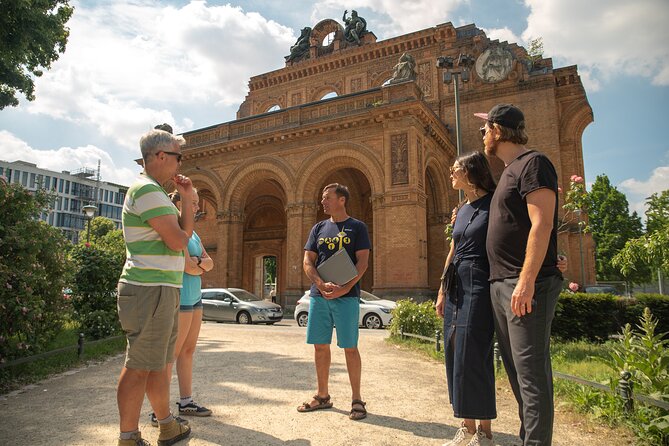
- From bunker to aftermath: you stand over the former bunker area and then walk into the places tied to the regime’s collapse
- Propaganda in real buildings: Goebbels’ Ministry of Propaganda and the air-power command world show up in the route
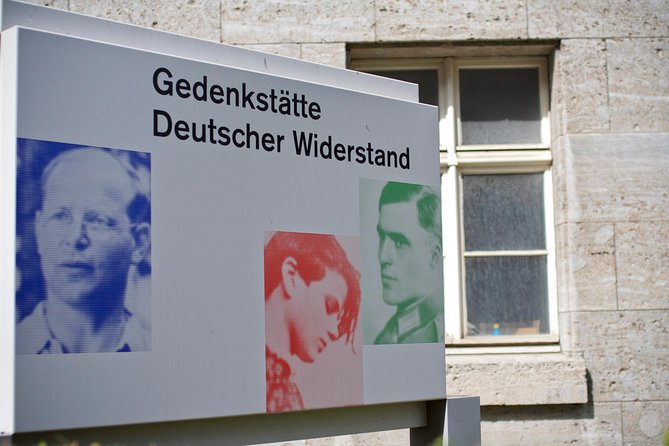
- Resistance gets named, not glossed over: Tresckow, Oster, and von Stauffenberg come up with context
- Memorials are not background noise: the deportation memorial and the Holocaust Memorial shape how you move and feel
- Battle of Berlin symbolism: the Reichstag’s 1933 fire story connects to the Soviet flag moment in 1945
- Small-group feel: capped at 25 travelers with a guide leading the pacing
More walks through Berlin's wartime history
- Berlin: Third Reich & Cold War Guided Walking Tour★ 4.9 · 8,378 reviews
- Berlin’s Best: 2 Hour Walking Tour Third Reich and the Cold War★ 5.0 · 5,486 reviews
- Third Reich Berlin: Hitler and WWII Walking Tour★ 5.0 · 3,301 reviews
- Berlin: Third Reich, Hitler, and WWII Walking Tour★ 4.9 · 1,757 reviews
How this 3-hour Berlin walk connects Nazi power to the city’s final collapse
You start in central Berlin and work your way through a corridor of sites tied to both Nazi rule and the final Soviet push. The whole point is cause-and-effect: you’re not just seeing monuments, you’re seeing the infrastructure of a dictatorship and the route history took when it crumbled.
The pacing is designed for a focused half-day. You’ll cover several major locations on foot (plan for a brisk walk), and you’ll get enough narrative to link them without feeling like you need a history degree in your pocket.
Friedrichstraße and Wilhelmstraße: the regime’s stage and the offices behind it
The tour kicks off at/near Reichstagufer 17, and then the story starts in the Friedrichstraße area. From there, the guide points you toward the core “command and decision” spaces: places where Berliners lived under pressure and where Nazi leadership planned military and political moves.
A big draw here is how the route highlights Wilhelmstraße, which functioned like a nerve center for the regime. You’ll hear how ministries and high-level offices shaped policy and enforcement—so when you later see memorials, you can better understand what was being carried out and why.
You’ll also spend time around the air-war command world. The tour includes the former German Air Force headquarters tied to the Luftwaffe—an important reminder that Nazi aggression wasn’t just political theater. It was operational, coordinated, and built to scale.
Goebbels, the Luftwaffe, and how propaganda turned into policy
One of the most useful parts of this walk is that propaganda doesn’t get treated as vague “bad messaging.” You’re shown where it was created—especially around the Ministry of Propaganda where Joseph Goebbels composed famous speeches.
Then the tour shifts gears to air power. The Luftwaffe connection helps you understand how Nazi Germany tried to win through war planning and national mobilization. That pairing—propaganda offices and operational command—makes the ideology feel less abstract.
If you care about details, this is where the guide’s style really matters. A tour with strong Q&A (and guides known for answering questions clearly) helps you build a mental map fast: who decided what, and where.
The Holocaust memorials: Trains to Life, Trains to Death and the Memorial to the Murdered Jews of Europe
This is where the tour earns its emotional weight. First comes the memorial called Trains to Life, Trains to Death, dedicated to victims deported from Berlin to Nazi concentration camps. It’s designed to keep the transportation element in view—like the machinery of murder had schedules and systems.
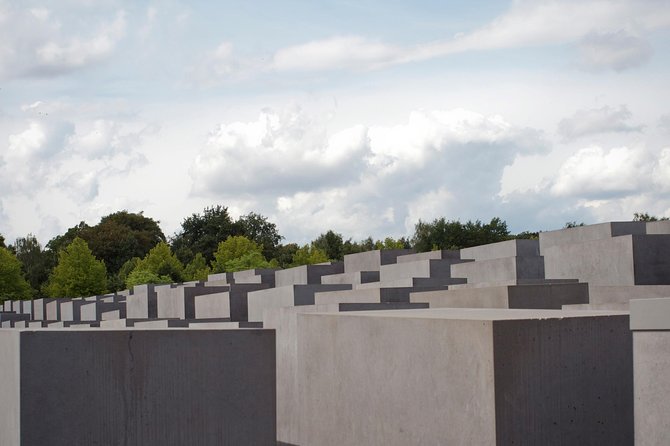
Then you move to the Holocaust Memorial, the Memorial to the Murdered Jews of Europe. The most striking feature here is the field of 2,711 concrete slabs of varying heights. The walk through them creates a disorienting feeling on purpose, which makes it harder to treat the topic like a quick photo stop.
My practical tip: don’t rush these. In a normal sightseeing loop, you keep moving. Here, you’ll get more out of slowing down just enough to feel the memorials’ effect on how you navigate space.
More of Berlin on foot


Reichstag: the 1933 fire story and the Soviet flag moment in 1945
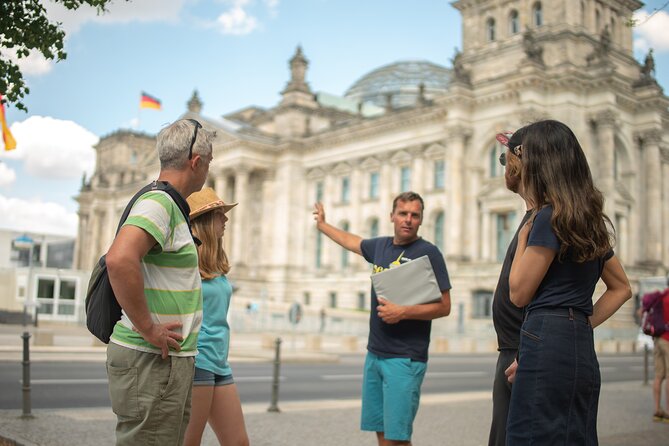
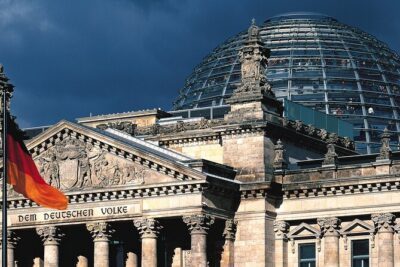
The Reichstag building is the tour’s symbolic hinge. You’ll learn that the 1933 fire was used as a pretext to dismantle democracy—civil liberties were suspended and dictatorship tightened its grip.
Then the guide brings you to the 1945 story: during the Battle of Berlin, the Soviet flag was raised over the Reichstag. The same building, two totally different meanings—power consolidates, and then power breaks.
The Reichstag stop may require extra planning if you want to go inside, since the Reichstag admission isn’t included. Even if you don’t enter, the exterior viewpoint plus the historical context is the key value.
Soviet War Memorial and the Brandenburg Gate: victory, defeat, and the view of power
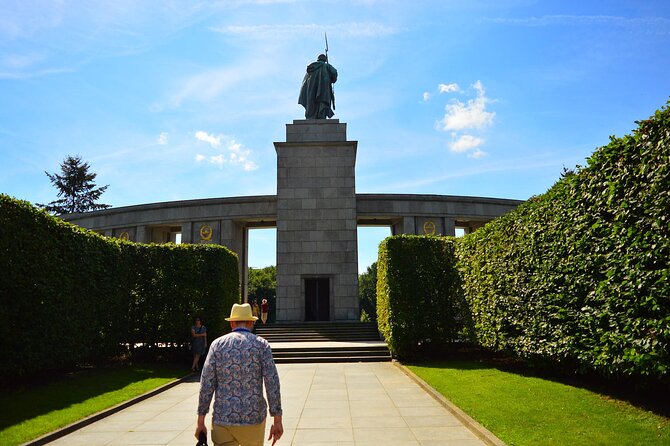
In the Tiergarten area, you’ll visit the Soviet War Memorial. The centerpiece is a large statue of a Soviet soldier holding a flag, positioned over two fallen Nazi soldiers. It sits among a military cemetery, so it reads as both commemoration and a brutal visual statement.
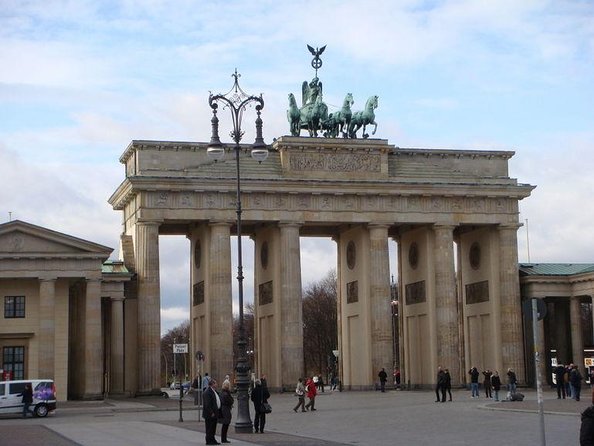
Next, the route touches Brandenburg Gate. In the Third Reich era, it was used for Nazi rallies, often decorated with swastikas. Today, it’s also a symbol of reunification—so you get a chance to hold two histories in your head at once.
I like that the tour doesn’t pretend the past vanished. It shows how certain landmarks can switch meanings without erasing what happened there.
Where Hitler ended: the Fuhrerbunker area and the New Reich Chancellery zone
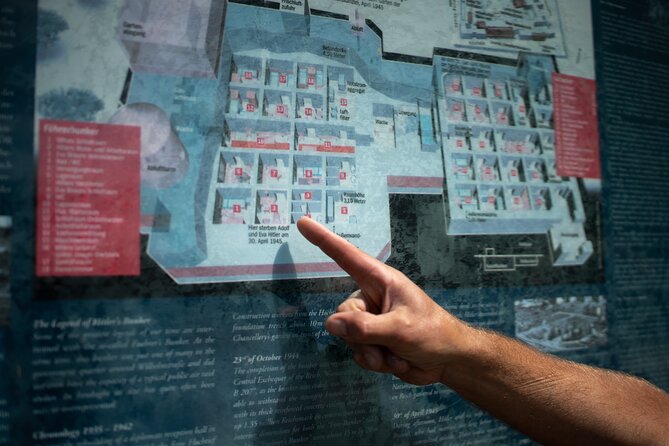
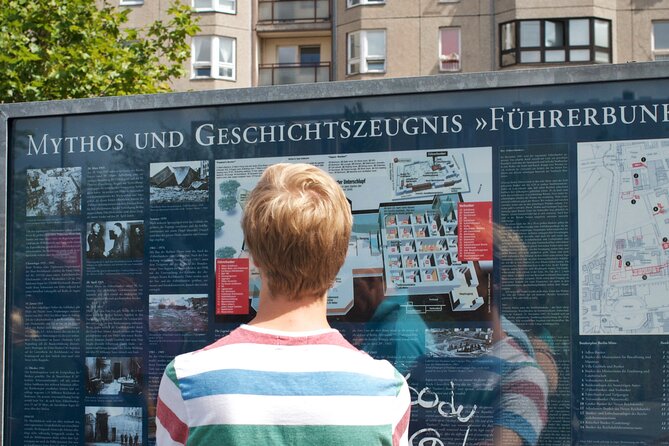
One of the most talked-about stops is standing above the former bunker area—Hitler’s bunker site—as well as the nearby location associated with Hitler’s last days in April 1945.
This section is powerful because it shifts from institutions to a final human timeline. You get the sense of the regime’s end: not in a museum display, but in the real geography of where leaders hid as the city fell around them.
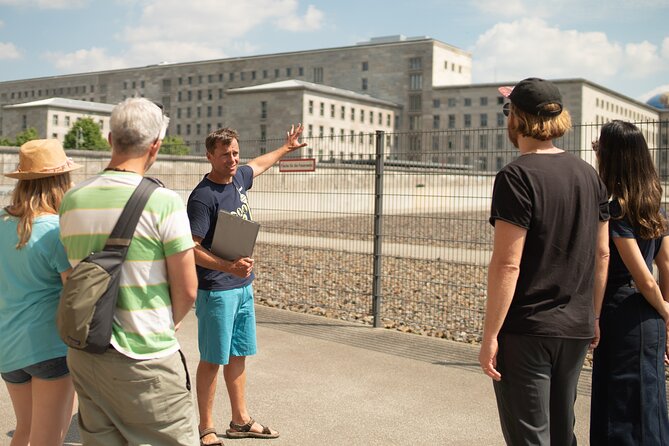
The tour also connects this to the surrounding power architecture, including the Reich Chancellery built by Albert Speer. When you hear about Albert Speer’s monumental design influence, the buildings around you start to feel like propaganda made physical—big, rigid, and built to intimidate.
Art institutions and Nazi architecture: why Akademie der Künste matters here
The tour includes a stop at the Akademie der Künste (Academy of Arts), and it’s a smart choice. Nazi Germany didn’t only control politics and policing. It also shaped culture, aesthetics, and the look of state power.
You’ll learn how Albert Speer influenced architectural direction through monumental, neoclassical ideals tied to Nazi power and authority. Even if this isn’t the kind of stop you’d add to a normal sightseeing day, it helps explain why Berlin’s architecture can feel so heavy when you know the context.
The post-war reckoning point matters too: the academy, like other institutions, had to deal with its Nazi-era entanglements. That’s one of the quieter lessons of Berlin—history is still negotiating its identity.
Finishing at Topography of Terror near Checkpoint Charlie
The walk culminates at Topography of Terror, located on the site of former SS and Gestapo headquarters. This is a museum and memorial space focused on state-sponsored terror: how the SS and Gestapo carried out repression and contributed to the Holocaust.
Practically, this ending works well because it turns the day’s story into documentation—photographs, documents, and accounts that show how the system functioned. After you’ve already walked the surrounding “decision” geography, the museum adds the missing mechanics.
It also lands near Checkpoint Charlie, so you’re not stranded after the tour. You can easily extend the day with a final walk or a meal in the central area.
Price and Logistics: does $24.07 make sense for a 3-hour, English-led walk?
At $24.07 per person for about 3 hours, this is strong value, especially in Berlin where good history experiences can cost more. What makes the price feel fair is the combination: multiple high-impact sites in one route plus a guide to connect them.
A few logistics points matter:
- The tour is offered in English and uses a mobile ticket.
- The itinerary includes mostly free admission stops; the Reichstag admission is not included.
- The group is capped at 25, which usually helps you ask questions without feeling lost in a crowd.
If you’re planning your time, this is the kind of tour that helps you get context fast. You’ll spend less time figuring out what you’re looking at and more time understanding what it meant.
Who should book this tour (and who might not love it)
This tour is a great fit if you:
- love WWII history or want a more structured way to understand Berlin in 1945
- care about how dictatorship operates: offices, propaganda, enforcement, and resistance
- want memorial context that goes beyond quick photos
It might be a rough fit if you:
- want a light, casual walking day
- don’t do well with heavy historical topics and visual memorial spaces
- hate cold weather or long outdoor walking (layer up)
One more thing: guides often keep a good pace and make room for questions. That matters a lot here, because the topic has names, policies, and timelines that are easier when explained in plain language.
Should you book this Third Reich Berlin tour?
Yes—if you want Berlin’s darkest chapter taught in a guided, organized way. This tour connects Nazi power centers, the final battle symbolism, and key memorial sites in a single run, so you leave with a clearer map of how events unfolded.
If you’re sensitive to difficult history, go in with the right expectations: this is not a quick history snack. Bring comfortable shoes, dress for the weather, and plan to slow down at the memorial stops. Do that, and you’ll get a day that’s both educational and genuinely memorable.
FAQ
How long is the Third Reich Berlin walking tour?
It lasts about 3 hours.
What language is the tour offered in?
The tour is offered in English.
Where does the tour start and end?
It starts at Reichstagufer 17, 10117 Berlin and ends near Topography of Terror, Niederkirchnerstraße 8, 10963 Berlin.
Is admission included for all stops?
Most stops list admission as free. The Reichstag admission is noted as not included.
What sites are part of the walk?
You’ll see major places tied to the Nazi regime and WWII’s final phase, including the Reichstag, the Soviet War Memorial in Tiergarten, Brandenburg Gate, the Holocaust Memorial, and the Topography of Terror area, plus sites connected to Goebbels’ propaganda work and Hitler’s bunker location.
Do I need to buy a ticket or can I use a mobile ticket?
You’ll use a mobile ticket.
Can I cancel if plans change?
Yes, free cancellation is available up to 24 hours in advance for a full refund.
More Tours in Berlin





More Tour Reviews in Berlin
Berlin's Wartime History

Round out your days in Berlin

Third Reich & WWII History, compared.
 ★ 4.9Third Reich & Cold War Guided Walking TourFrom $238,378 reviews
 ★ 5.0Berlin’s Best: 2 Hour Walking Tour Third Reich and the Cold WarFrom $245,486 reviews
 ★ 4.9Third Reich, Hitler, and WWII Walking TourFrom $191,757 reviews
 ★ 5.0Berlin Third Reich Sites: Half-Day Walking TourFrom $21835 reviews
 ★ 4.7History of the Third Reich Guided Walking TourFrom $30791 reviews
 ★ 4.8The Wall and Third Reich Guided Bike TourFrom $41578 reviews
 ★ 4.8Hitler’s Germany: Berlin During the Third Reich & WWIIFrom $23476 reviews
 ★ 5.0Private Walking Tour Berlin Third Reich Hitler and World War IIFrom $192360 reviews
Browse the lists this tour appears in