
REVIEW · PRIVATE
Architectural Berlin: Private Tour with a Local Expert
Berlin’s skyline reads like a design textbook. I like that it’s a private two-hour walk with a local expert, and you can steer it toward the buildings you care about most. The main consideration: it’s short, and museum or monument entry time is not included, so you may want to add extra time if you want inside access.
I also love the route logic: you start around Museum Island with neoclassical order, then move into Berlin’s bigger conversation—glass domes, modern office forms, and finally the Berlin Philharmonie’s tent-like shell built for sound. If you pay attention to what you’re seeing, you’ll leave with a quick, usable map of how Berlin thinks in architecture.
In This Review
- Key highlights worth planning around
- A Private Architecture Walk That Moves at Your Pace
- Museum Island Neoclassicism: The 19th-Century Art Gallery Connection
- Lustgarten Area Cathedral: Renaissance, Baroque, and That Big Dome Effect
- Eco-Office Berlin: Learning Modern Design by Looking Closely
- Reichstag and Norman Foster’s Dome: Politics Made Visible
- From Old Neighbors to New Shapes: Berlin’s Architecture Conversations
- Berlin Philharmonie: The Tent Shape and Why Acoustics Matter
- Price and Value: What $639.96 Buys for a 2-Person Group
- Practical Tips for Getting the Most From Your Two Hours
- Should You Book This Architectural Berlin Private Tour?
Key highlights worth planning around
- Private, local-led pacing: your itinerary adapts to your interests and walking pace.
- Museum Island to the Philharmonie: the route covers big architectural eras without feeling rushed.
- Reichstag + Foster dome: a clear lesson in how modern design meets political space.
- A modern, eco-minded office stop: you’ll see how Berlin frames sustainability in glass-and-steel.
- Berlin Philharmonie acoustics focus: the exterior shape matters because the sound system is the point.
- Skyline context via Berliner Fernsehturm: you’ll connect key landmarks to how Berlin’s silhouette changed.
More private tours of Berlin
- Berlin: Private Reichstag and Glass Dome Tour★ 4.8 · 2,226 reviews
- Berlin Private Complete History All Day Walking Tour★ 5.0 · 474 reviews
- Private Walking Tour Berlin Third Reich Hitler and World War II★ 5.0 · 360 reviews
- Private Berlin: Iconic Sights and Hidden Gems Walking Tour★ 5.0 · 292 reviews
A Private Architecture Walk That Moves at Your Pace
This is a 2-hour private architecture tour in Berlin, priced for a group up to 2 people. That matters, because you’re not sharing your questions with strangers, and your guide can slow down when a façade detail is worth a closer look (or speed up if your legs are telling you the truth).
Your route is planned around major architectural themes: historic civic and religious power, modern innovation, and the way Berlin puts politics and culture on display. You’ll also get recommendations for what to do next, which is handy on a first or second visit when you want a smart plan without overstuffing your day.
One thing to keep in mind: the tour ends at Herbert-von-Karajan-Straße 1, near the Philharmonie, and it starts at Bodestraße 1. That’s a built-in flow from Museum Island area toward the cultural core. If you need your tour to end somewhere else, you may want to plan transport after, since it’s designed as a point-to-point experience.
And because this is hosted by an independent local expert, the experience depends on who you get. Some guides are very architecture-focused and quick with details—like Georg, who impressed with being personable and well-informed. Another guide, Rüdiger, was noted for arranging a well-paced, varied route after pickup. The upside: you may get a great match. The practical downside: if your guide isn’t research-heavy, you’ll want to ask sharper questions early so the tour stays on track.
Museum Island Neoclassicism: The 19th-Century Art Gallery Connection
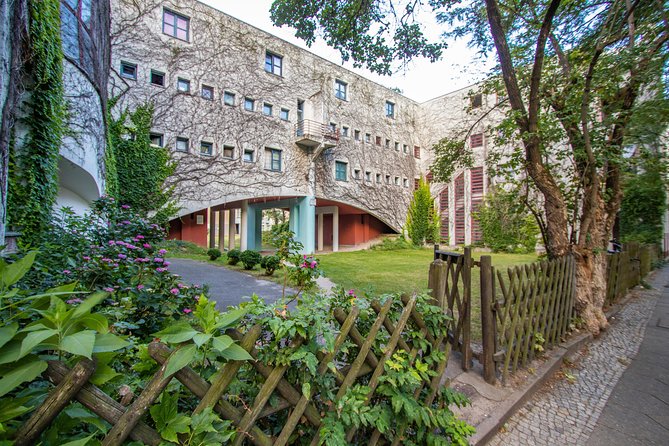
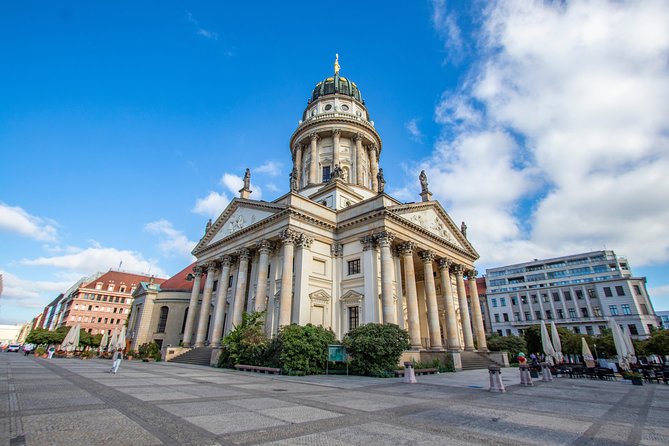
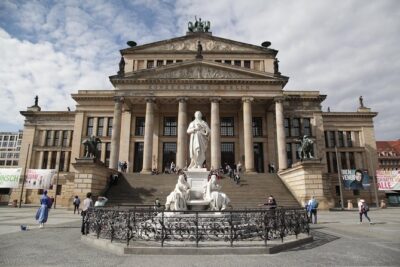
The tour kicks off around Museum Island with a stop tied to neoclassical architecture. Think clean lines, formal proportions, and that 19th-century belief that art deserves a serious stage. This gallery houses a collection of 19th-century art, so even before you step inside anywhere (or if you only view the exterior from the sidewalk), you’re already in the right mindset: Berlin using architecture to declare cultural importance.
Why this stop works: neoclassicism is often misunderstood as cold or plain. A good architecture guide helps you see the logic—how columns and symmetry create authority, and how the style fits Berlin’s ambition to stand alongside Europe’s major cultural cities. If you’re the kind of person who likes to notice material choices and “why this building looks like it belongs here,” this first stop sets you up.
A practical note: since museum and monument entry isn’t included, you may not get long inside time. You can still get a lot by asking your guide what to look for from outside and what’s inside if you want to return later. If neoclassical interiors matter to you, consider pairing this tour with a separate museum visit afterward.
Lustgarten Area Cathedral: Renaissance, Baroque, and That Big Dome Effect
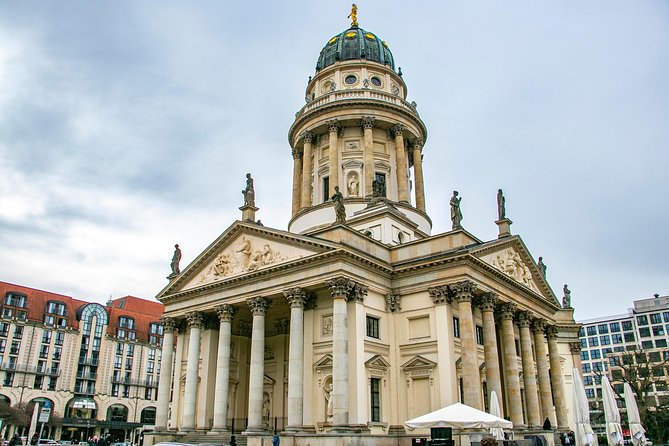
Next up is a landmark church near Lustgarten park. You’ll see Renaissance and Baroque architecture combined, plus a massive dome that functions like a skyline anchor for the area. This is the kind of building that teaches you quickly: Berlin didn’t build only for power and politics. It built for faith, ceremony, and visibility.
What makes this stop interesting is the mix. Renaissance and Baroque aren’t just “styles”; they’re different ideas about how buildings should make you feel. Renaissance brings a sense of proportion and clarity. Baroque adds movement and drama. When you look at the dome and the overall massing, you start understanding why this area feels monumental.
Possible drawback: domes and landmark churches can draw crowds and shifting light. If the weather is bad, your guide may adjust the route, and you could end up with more exterior viewing and less time for photo stops. Still, even a short look from a good angle can tell you a lot about how Berlin’s historic core wants to be seen.
Eco-Office Berlin: Learning Modern Design by Looking Closely
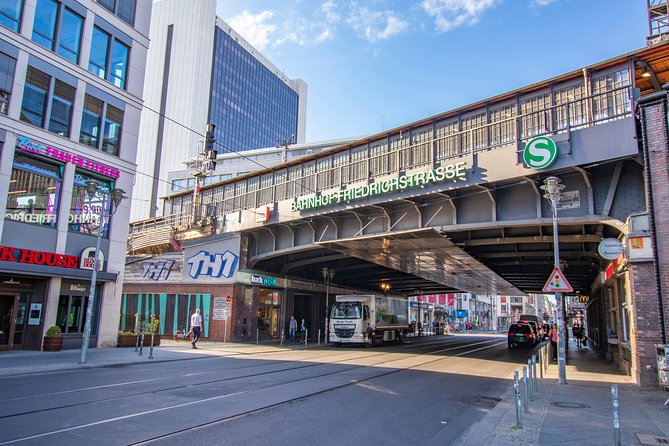
Then the tour moves into contemporary architecture with a modern office building described as innovative and eco-friendly. Even without inside access, the exterior can teach you Berlin’s modern priorities: function, energy-minded design choices, and an attitude that the city’s future should be practical, not decorative.
Here’s what I’d focus on during this stop:
- How the building’s form relates to the street and neighboring structures
- Whether the façade reads as transparent, efficient, or both
- How the design signals sustainability without needing to announce it with gimmicks
This is a great pivot point. The first stops teach you “how Berlin built identity.” This stop starts teaching you “how Berlin manages the future.” And since the tour is tailored, if you’re more into design or sustainability than history, you can ask your guide to spend extra time on this segment.
One consideration: modern buildings often reward close attention. If you’re with someone who wants only quick exterior photos, you may not get the most from this part unless your guide keeps the explanations tight and hands you specific things to look for.



Reichstag and Norman Foster’s Dome: Politics Made Visible
Now you hit one of the most important stops in the entire route: the historic German parliament building. You’ll spend time at the Reichstag with its iconic glass dome designed by Norman Foster. This is one of those architecture moments where the design isn’t just pretty—it’s a message.
The tour connects the building to the idea of political transparency. The glass dome visually links inside and outside, and it turns the act of seeing into part of governance symbolism. Your guide can help you interpret it: why a modern glass structure sits on top of older parliamentary power, and how Berlin uses architecture to control what people think they’re allowed to understand.
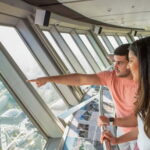
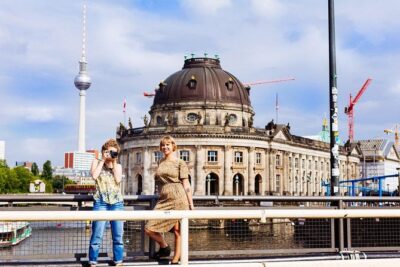
This stop also makes a natural place to talk skyline. The tour overview includes Berliner Fernsehturm (TV Tower) and how it shaped Berlin’s skyline. So you can expect the conversation to tie the city’s major visual landmarks together: the older civic core, modern political spectacle, and the iconic tower silhouette that makes Berlin’s skyline instantly recognizable.
Possible drawback: the Reichstag area can be busy and the walking pace matters. Since this is a private tour, you can adapt, but if your schedule is tight, plan for the fact that this is a high-interest zone.
From Old Neighbors to New Shapes: Berlin’s Architecture Conversations
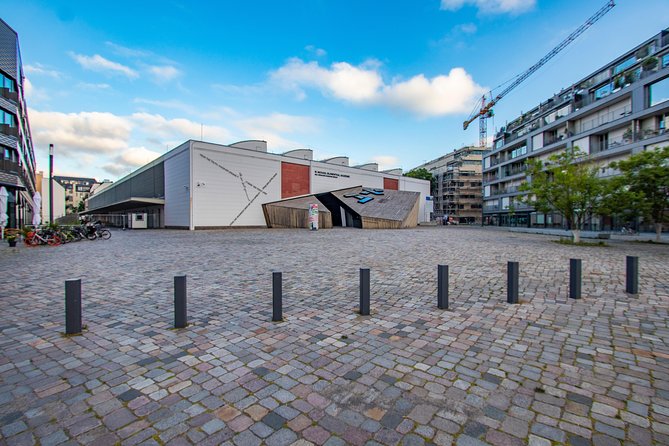
One stop in the middle is described as a building that blends modern architecture with the historical context of its surroundings. You don’t get a one-style Berlin here. You get a city that constantly negotiates between eras.
This is a key reason to book a guided stop like this instead of doing it alone. Without context, it’s easy to look at a modern façade and shrug. With a local expert, you can ask:
- What did designers try to preserve or echo?
- What did they refuse to compromise?
- How does this building change the way you experience the street?
This section also helps connect the emotional feel of Berlin. Some cities feel like one big museum. Berlin feels like a city with opinions—sometimes conflicted, sometimes practical, always rebuilding its identity. This stop is where you really start to see that “repairing” can mean designing new architecture that respects what’s around it.
Weather can change what you can do here. If visibility is poor, your guide may adjust sightlines and shorten or reroute photo time. Still, you can usually get the main lesson: Berlin doesn’t freeze time. It edits it.
Berlin Philharmonie: The Tent Shape and Why Acoustics Matter
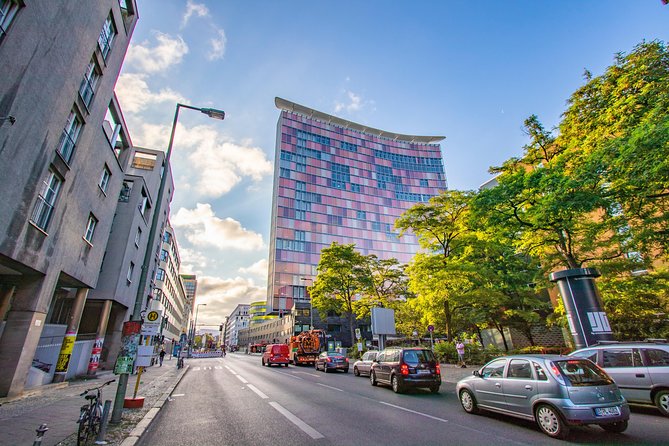
The final stop brings you to the Berlin Philharmonie, one of the most famous modern concert halls in the world. You’ll hear about its distinctive tent-like shape and brilliant acoustics, and it’s home to the Berlin Philharmonic orchestra.
This is where architecture becomes more than a visual lesson. The building is designed so sound behaves correctly, and that changes how you should look at it. The exterior form isn’t just an artistic statement. It’s a clue to why the hall is famous: geometry, surfaces, and the way the space is built to control sound.
Practical angle: even if you’re not going inside for a performance, this is still a worthwhile last stop because it reframes the entire tour. Earlier you were learning about politics and religious monuments. Here, the “power” is music, and the architecture is the instrument maker.
The tour ends at Herbert-von-Karajan-Straße 1, so you’re positioned perfectly for onward plans—whether that means grabbing a bite nearby, connecting to transit, or continuing with more music-and-arts stops in the area.
Price and Value: What $639.96 Buys for a 2-Person Group
The price is $639.96 per group for up to 2 people, for about 2 hours. On a per-person basis, that can feel high if you compare it to hopping on a train and walking the sights yourself.
But private architecture tours have a different value: time and interpretation. You’re not just moving between buildings. You’re getting an expert’s explanation of how the city’s forms evolved, why they look the way they do, and how different eras speak to each other in the same streets.
This tour is also tailored to your interests and walking pace. That’s not a small perk. If you care about civic design and want the Reichstag to be the centerpiece, or you’d rather focus on modern sustainability and the eco-office stop, the guide can shift emphasis. If you have mobility limits, the itinerary adapts to walking pace (with the general note that guests with impaired mobility are considered).
Where this price is most “worth it”:
- You want fewer stops but deeper meaning per stop
- You’re visiting with a partner and prefer one guide to yourselves
- You’re the type who loves details like domes, façades, materials, and design symbolism
Where it might not be worth it:
- You’re planning to spend hours inside museums or at multiple monuments. Since entry isn’t included, you’d add those costs and time separately anyway.
Practical Tips for Getting the Most From Your Two Hours
A two-hour architecture tour works best when you come prepared to choose what you care about. Here’s how to get more out of it:
- Wear comfortable shoes. You’re walking a route that starts at Bodestraße 1 and ends near the Philharmonie.
- Have one or two “must-see” interests ready. For example: Norman Foster’s glass dome, Berlin’s modern skyline shaped by Berliner Fernsehturm, or the Philharmonie’s acoustics-driven design.
- Bring a photo plan, not just a phone full of random shots. Ask your guide where the best angles are for dome silhouettes or the Philharmonie’s tent-like geometry.
- If weather is rough, don’t fight the adjustments. The itinerary may change based on conditions, and a good guide will still deliver the main architecture lessons with less outdoor time.
- Since transport and entry tickets for museums/monuments aren’t included, decide in advance whether you’ll treat this as a sight-and-explain tour or as a teaser for a return visit.
Should You Book This Architectural Berlin Private Tour?
Book it if you want a short, focused Berlin architecture lesson with a local expert and the freedom to shape the route to your tastes. This is especially good for couples and first-time visitors who want to understand why the city looks the way it does—neoclassicism at Museum Island, a church with Renaissance and Baroque drama near Lustgarten, the Reichstag and Foster dome, then modern Berlin landing at the Philharmonie.
Skip it (or at least adjust expectations) if you want long indoor museum time. The tour’s design is about explanation and street-level architecture, not ticketed sightseeing hours. Also, because it’s hosted by an independent local, pick your priorities for the tour early—ask questions right away so the guide stays locked onto architecture, not generic landmarks.
If you’re excited to connect Berlin’s past and modern identity in one compact route, this is a strong way to do it without turning the day into a checklist.
More Private in Berlin




More Tours in Berlin


More Tour Reviews in Berlin
Round out your days in Berlin

Private, compared.
 ★ 4.8Private Reichstag and Glass Dome TourFrom $2882,226 reviews
 ★ 5.0Berlin Private Complete History All Day Walking TourFrom $253474 reviews
 ★ 5.0Private Walking Tour Berlin Third Reich Hitler and World War IIFrom $192360 reviews
 ★ 5.0Private Berlin: Iconic Sights and Hidden Gems Walking TourFrom $192292 reviews
 ★ 5.0Berlin Private Half-Day Walking Tour: Discover the German Capital’s HistoryFrom $180244 reviews
 ★ 5.0Private Walking Tour: World War 2 and Cold War Sites in BerlinFrom $192230 reviews
 ★ 5.0The History of Berlin: WWII PRIVATE Walking Tour With LocalsFrom $143209 reviews
 ★ 5.0Private Sachsenhausen Concentration Camp tour with trainFrom $338205 reviews