
REVIEW · BERLIN HIGHLIGHTS & HIDDEN GEMS
Berlin: Guided Bike Tour to Explore the Highlights
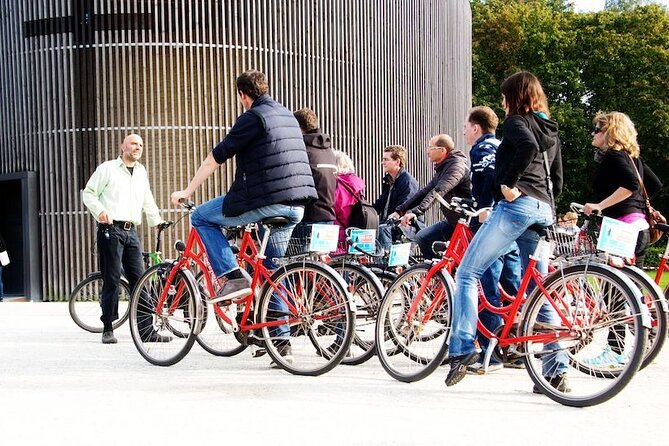
Berlin on two wheels is a smart shortcut. In about three hours, this guided bike tour strings together the monuments you actually want on a first trip, from Nikolaiviertel through the Cold War sites and up to the Reichstag. The pace is brisk enough to cover more than you could on foot, but the stops are frequent enough to make the meaning stick.
I especially love how the tour blends city orientation with story time. I found the narration from guides like Rufus and Simone especially effective at connecting what you see to why Berlin looks the way it does. And I like that the bikes are practical for a city ride—plus helmets are included—so you spend less energy wondering what’s safe and more on the view.
One consideration: this tour leans into the major 20th-century turning points, so if you’re hunting for more arts-and-culture variety, you might feel the balance is weighted toward WWII and the Cold War. Also, while English runs, the quality can depend on the guide that day.
In This Review
- Key takeaways before you pedal
- Berlin’s highlights in 3 hours: the real value of biking
- Price and what you actually get for it
- Where you meet and how the ride feels in practice
- Stop-by-stop: Nikolaiviertel to Bebelplatz book burning memory
- TV Tower viewpoint and the city under the Cold War lens
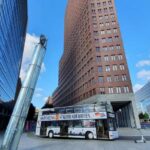
- Potsdamer Platz: no-man’s-land to reuniting energy
- The Holocaust Memorial: why this stop deserves your full attention
- Brandenburg Gate and the Reichstag dome: icon photos with real context
- Museum Island and the park stop that breaks up the intensity
- Prenzlauer Berg note: why your tour version might feel different
- Guides make the difference: the storytelling impact
- When this tour might not match your style
- Who should book this Berlin bike tour
- Should you book it?
- FAQ
- How long is the Berlin highlights bike tour?
- How much does it cost?
- What languages are available?
- What’s included with the tour?
- Is food included?
- How big are the groups, and is it weather-dependent?
Key takeaways before you pedal
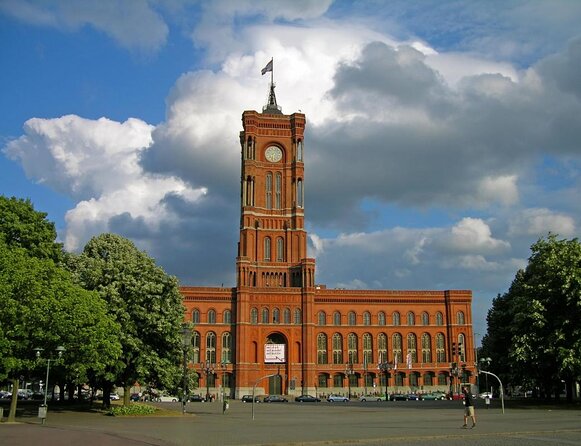
A tight loop of top landmarks: Brandenburg Gate, Reichstag, Holocaust Memorial, Museum Island, and Checkpoint Charlie all fit into one half-day.
Small group, easier rhythm: with 4–15 people, you’re not swallowed by a crowd. Stops feel timed rather than rushed.
Guide-designed routes: the Free Berlin concept means your exact mix can vary by guide.
Helmet and bike included: less hassle, more time for Berlin.
You’ll leave with a plan: by the end, you’ll know what to revisit for longer.
The big Berlin sights, and a few quieter corners
- Berlin: Discover Berlin Walking Tour★ 4.9 · 5,998 reviews
- Berlin: Hidden Backyards Guided Walking Tour★ 4.8 · 5,360 reviews
- Explore Berlin: See All The Iconic Sights & Some Hidden Gems★ 5.0 · 4,429 reviews
- Berlin: Sights and Highlights Bike Tour with a Local Guide★ 4.8 · 2,698 reviews
Berlin’s highlights in 3 hours: the real value of biking
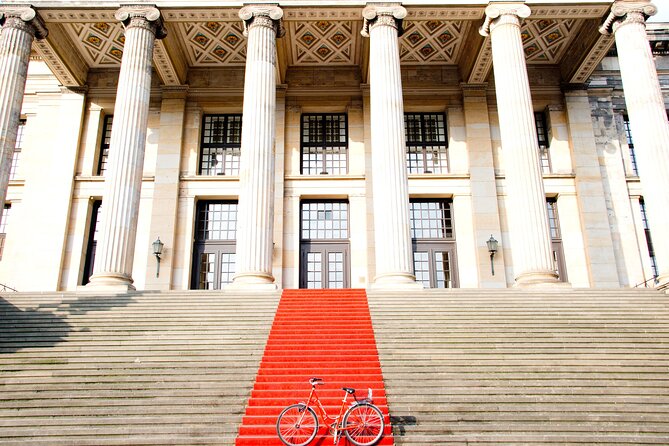
If you’re new to Berlin, you face a classic problem: the city is huge, but your time is not. A bike tour solves that math. In roughly three hours, you can cover multiple districts and monuments that normally take far longer to piece together with public transit and walking.
What makes this particular route work is that it focuses on places that act like anchors. Nikolaiviertel sets a historical mood right away with its old-town feel. Bebelplatz and the Book Burning Memorial give you a stark lesson about the Nazi era in a very tangible way. Then you swing into Cold War landmarks like Checkpoint Charlie and Potsdamer Platz. After that comes the emotional and symbolic core—Memorial to the Murdered Jews of Europe—before landing on the big visual icons like Brandenburg Gate and the Reichstag.
Biking matters here because it changes your experience of distance. You stop often, but you also keep moving enough that the city stays in motion. That makes Berlin feel less like a checklist and more like a place with momentum—especially around the major squares and the areas where you can see how streets cut through different layers of time.
Price and what you actually get for it
At $42.34 per person for about three hours, the value is mostly about what’s included: bicycle use, a helmet, and a professional guide. That’s the foundation. The guide’s job isn’t just to point and name; it’s to connect those names to what Berlin went through and how that history shaped the city you’re riding through now.
You also get structure that can save your brain. Berlin can be confusing for first-timers—where things are, how they relate, and what order to care about. A good guided loop gives you bearings fast. One of the strongest themes from people who finished this tour is that it helped them decide where to spend more time afterward.
Food isn’t included (unless specified), so plan on bringing a snack or buying something later. Water is smart too, because even a relaxed pace adds up when you’re sitting upright and pedaling through cool city air.
Where you meet and how the ride feels in practice
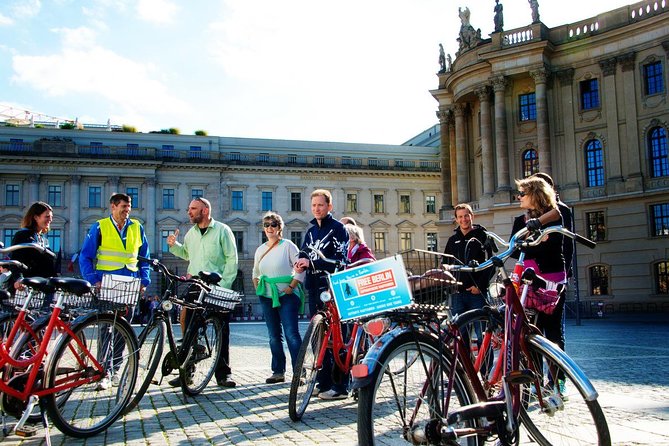
The tour starts at Free Berlin Bike Tours & Rental, Poststraße 11, 10178 Berlin and ends back at the same spot. That matters because you’re not calculating an out-and-back route across the city. It also makes it easier to plug this tour into the rest of your day.
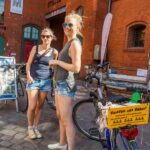
The group size is 4–15, which is a sweet spot: big enough to make it social, small enough that your guide can keep an eye on the pace and safety. Everyone gets a bike, and helmets are included, so you’re not digging for rental gear at the last minute.
This is also a tour you can do with kids. It’s family-friendly, with children welcome and infant seats available on request. The practical catch is timing: the stops are used for context, not just quick photos. If you’re traveling with very young kids, you may want to see how long your child can comfortably wait while the guide explains each location.
Weather is no big drama—the tour runs in all weather conditions—so dress like you’re riding a bicycle through the city, not like you’re sightseeing indoors. A hat and a light layer go a long way.
Stop-by-stop: Nikolaiviertel to Bebelplatz book burning memory
Your first stop is Nikolaiviertel, which feels like Berlin stepping back into an older setting. It’s a good opening because it gives you atmosphere before the heavier story beats. You start with something calmer and more “old town,” then you transition toward the political history that defined Berlin in the 20th century.
From there, you move to Bebelplatz and the Book Burning Memorial. This is one of those places that doesn’t need a lot of explanation to be powerful, but the guide’s context makes it hit harder. You’re looking at a direct reminder of how the Nazis targeted books and ideas, with a public act meant to shame and intimidate. It’s not the kind of memorial you rush through.
What I like about this segment is the contrast. Berlin’s story is full of reinvention, and starting at Nikolaiviertel and then shifting to Bebelplatz helps you feel how the city’s identity was forced and reshaped by power. It’s also a great moment to ask questions, because the tour format gives you a natural pause right in the middle of the action.
More of Berlin by bike


TV Tower viewpoint and the city under the Cold War lens
As you continue, the route passes the area around the TV Tower, which was the second tallest in the world when it opened in 1969. Even if you don’t go inside, this kind of viewpoint stop matters because it anchors you in a specific era. You start to see the skyline not as random buildings, but as evidence of what East and West wanted to project.
Berlin’s Cold War story is easier to grasp when you can see how the city was structured for division. That’s where your next major stop—Checkpoint Charlie—comes in. The route includes it in the English version, and that makes sense: it’s one of the clearest symbols of the border you’ve seen in documentaries and movies.
At Checkpoint Charlie, you’re not just looking at a famous name. You’re seeing how a “point” became a whole system of movement control, fear, and theater. A good guide helps you connect the idea of a checkpoint to the daily reality of people living in a split city.
Potsdamer Platz: no-man’s-land to reuniting energy
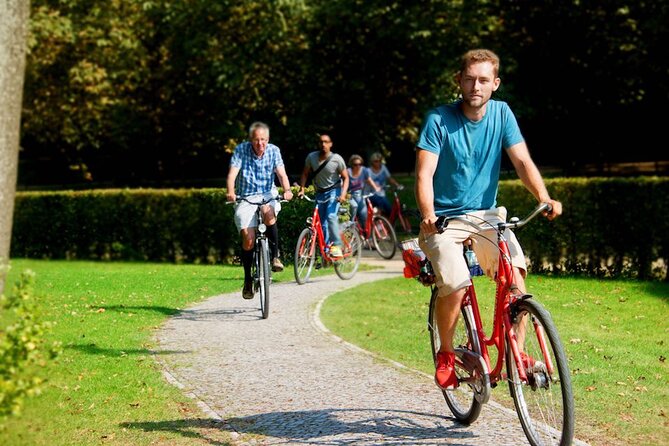
Next up is Potsdamer Platz, a place that sounds like a movie set and also tells a real story. One side of it is the energy of the “Roaring Twenties,” when this area mattered for business and nightlife. Then comes the second act: it was a defining no-man’s-land during the division of Berlin, and later it became Europe’s biggest construction site around the millennium as the city tried to reconnect itself.
On a bike, this stop is especially effective. You can approach it from angles that are hard to get on foot quickly, and you can feel how open space and traffic shape what you experience. You’re watching Berlin reassemble itself in real time.
This is also where your guide’s pacing really shows. If the group keeps moving, you get the sense of contrast without your mind going numb from monument after monument. If your guide slows down, you can absorb more of the emotional weight of the place.
The Holocaust Memorial: why this stop deserves your full attention
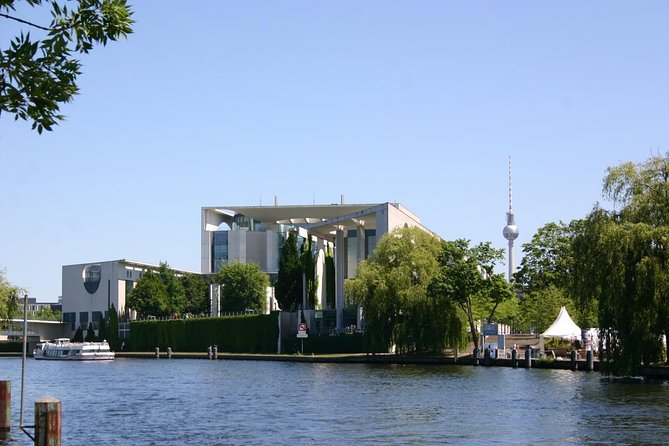
Then you reach the Memorial to the Murdered Jews of Europe. This is the emotional center of the loop. The setting is spare, but that’s the point: it forces you to confront the scale of what happened without distractions.
Your guide can’t turn grief into a “fun” story, and you shouldn’t want them to. What works here is respectful framing. The tour context is about how Germany carries this past—learning from it and not burying it under slogans. Seeing it in person is different from reading about it, and biking to the area makes the approach feel direct and immediate rather than like a museum detour.
Plan to stand, look around, and let your mind catch up. If your photos are a priority, you can still take them, but don’t treat this stop like a quick check mark.
Brandenburg Gate and the Reichstag dome: icon photos with real context
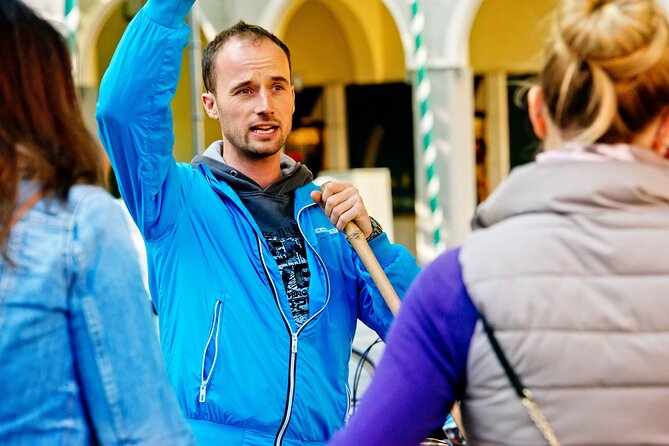
After the memorial, the tour hits the big visual icons.
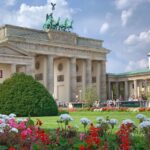
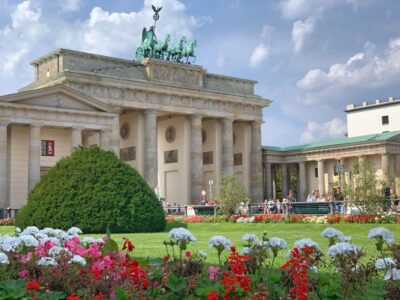
First is the Brandenburg Gate—the Berlin icon many people come to see. It’s easy to photograph because it’s visually dominant, but the guide adds meaning by placing it in the city’s political shifts. Standing near it on a bike tour also helps you understand how the monument sits among modern traffic and city life, not in a preserved bubble.
Then you ride to the Reichstag Building, Germany’s parliament. The highlight here is the modern element: the transparent dome. It’s symbol-heavy, and the guide’s job is to connect that transparency to the idea of public life and democratic accountability.
This segment is also where you can feel how Berlin blends old power and new governance. You’re not just taking a picture of a landmark; you’re watching the city show you its present while still pointing at its past.
Museum Island and the park stop that breaks up the intensity
The next area is Museum Island, with its impressive architecture along the Spree. This is a smart place to end your major monument run, because it gives your eyes a calmer “wow” moment. You can look at the buildings and think about how Germany preserves knowledge while it’s still dealing with painful memory.
And there’s one more thoughtful break in the itinerary: a stop in Berlin’s big park area, known as the Garden of the Animals, which, as the guide explains, has no connection to its former use as a zoo. That little clarification helps you notice how Berlin repurposes space. It’s also a nice moment to breathe before the final pieces of the loop bring you back toward the starting area.
If you’re the type who needs a breather after emotional sites, this park stop is a practical mercy.
Prenzlauer Berg note: why your tour version might feel different
One section of the tour is included only on the German version: Prenzlauer Berg. This neighborhood is presented as a real example of Berlin’s transformation since reunification, with a more livable, bohemian flavor.
So if you choose English, French, or another option, you might not see that exact neighborhood stop. That’s not a flaw—it’s part of the route flexibility. And because every guide designs their own route under the Free Berlin concept, you can also expect small differences between departures.
Guides make the difference: the storytelling impact
Across the tour, the guide is the “engine.” This is clear from how people talk about particular guides by name—Rufus, Luka, Jake, Reiko, Giuletta, Marius, Simone, and Simon show up in the feedback with praise for both facts and pacing.
What the strongest guides do well is keep the loop understandable. They don’t just list dates; they tie the buildings and squares to decisions and consequences. That’s especially important for Berlin, where the same street can tell multiple eras at once.
They also add practical tips—like what to see next, what’s worth extra time, and how to move around efficiently afterward. That’s not fluff. It helps you turn a short tour into a longer, smarter trip.
When this tour might not match your style
This tour is built around major landmarks and the stories behind them, which is a great match if you want an organized first look. But two situations could make you adjust expectations:
- If you’re hoping for lots of arts-focused stops, you may find the emphasis leans heavily toward WWII and Cold War themes rather than galleries or creative neighborhoods.
- If you’re very sensitive to language clarity, remember that the tour is offered in English (and other languages depending on option), but guide-to-guide delivery can vary. Choose your language option carefully and be ready to ask questions if something isn’t clear.
Also, because the tour includes substantial stop time for context, it’s not a “ride nonstop” experience. That’s a plus for learning, but not ideal if you want maximum motion with minimal speaking.
Who should book this Berlin bike tour
I’d put this tour near the top of the list if you:
- Are a first-time Berlin visitor and want major sights in a single half-day
- Like learning in small, frequent stop-and-go segments
- Want an active orientation so you know what to revisit later
- Prefer a small group (max 15) over big bus crowds
It also works well for families, since children are welcome and infant seats can be provided on request. Just keep in mind that the tour is structured around explanations at each stop, so plan snacks and patience for younger kids.
Should you book it?
Yes, if you want a fast, clear path through Berlin’s most important landmarks—and you like being guided through the meaning, not just the map. The value is strong because you get bike + helmet + a guide for a short block of time, which is exactly how Berlin rewards planning.
Book it especially if you arrive with questions like: Where do I start? What’s the story behind this wall and these monuments? What should I see again tomorrow? This tour is built to help you answer those in one ride.
If you already know Berlin well, you might prefer something more specialized. And if you want lots of arts variety, consider pairing this with another neighborhood-focused day so you don’t feel the emphasis is too heavy.
FAQ
How long is the Berlin highlights bike tour?
It runs for about 3 hours.
How much does it cost?
The price is listed as $42.34 per person.
What languages are available?
The tour operates in English, German, and French, depending on the option you choose.
What’s included with the tour?
You get bicycle use, a helmet, and a professional guide. The Free Berlin concept also means each guide designs their own route.
Is food included?
Food and drinks are not included unless specified.
How big are the groups, and is it weather-dependent?
Groups run from 4 to 15 people. It operates in all weather conditions, so dress appropriately for riding.
More Tour Reviews in Berlin


Berlin by Bike
Berlin's Icons and Its Quiet Corners
Round out your days in Berlin
Berlin Highlights & Hidden Gems, compared.
 ★ 4.9Discover Berlin Walking TourFrom $235,998 reviews
 ★ 4.8Hidden Backyards Guided Walking TourFrom $235,360 reviews
 ★ 5.0Explore Berlin: See All The Iconic Sights & Some Hidden GemsFrom $244,429 reviews
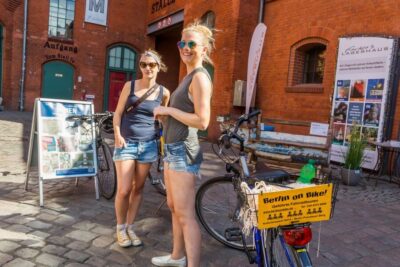 ★ 4.8Sights and Highlights Bike Tour with a Local GuideFrom $412,698 reviews
★ 4.9Explore Berlin: See All The Iconic Sights & Some Hidden GemsFrom $182,018 reviews
★ 4.8Sights and Highlights Bike Tour with a Local GuideFrom $412,698 reviews
★ 4.9Explore Berlin: See All The Iconic Sights & Some Hidden GemsFrom $182,018 reviews
 ★ 5.0Berlin Highlights 3-Hour Bike TourFrom $42948 reviews
★ 4.9Berlin Highlights: 3-Hour Bike TourFrom $37809 reviews
★ 5.0Berlin Highlights 3-Hour Bike TourFrom $42948 reviews
★ 4.9Berlin Highlights: 3-Hour Bike TourFrom $37809 reviews
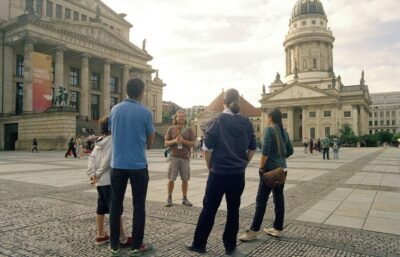 ★ 4.9Berlin Historical Highlights Walking TourFrom $389657 reviews
Browse the lists this tour appears in