
REVIEW · BERLIN HIGHLIGHTS & HIDDEN GEMS
Berlin: Guided Private Bike Tour to Explore the Highlights
Berlin clicks into focus when you ride. A private guided bike tour like this is one of the quickest ways to see the big Berlin icons and still get real context from a local. You cover key stops in about three hours, and you do it with a bike and helmet included, so you can focus on the stories instead of logistics.
What I like most is how the route balances famous sights with heavier history moments. You glide past places like the Bebelplatz book burning memorial and the Memorial to the Murdered Jews of Europe, where the guide’s explanations help you understand why these locations matter.
One thing to consider: the exact sights depend on the version you choose. For example, Checkpoint Charlie is listed for the English version, while Prenzlauer Berg is only included in the German version, so double-check language if those are must-sees.
In This Review
- Key highlights that make this tour worth your time
- Why a 3-hour private bike tour makes sense for Berlin
- Price and value: what you’re really paying for at $107.77
- Meeting on Poststraße 11 and keeping the day simple
- Stop-by-stop: Berlin’s center, from old-town vibes to Cold War edges
- Nikolaiviertel: where old Berlin vibes come from
- TV Tower area: a skyline marker with a date attached
- Bebelplatz book burning memorial: the view, then the shock
- The Nobel-and-ideas stop: where big names learned to think
- Checkpoint Charlie (English version only): the Cold War made physical
- Unter den Linden: Berlin’s grand boulevard with a modern add-on
- Potsdamer Platz: traffic today, division yesterday, rebuilding forever
- History that can’t be rushed: Holocaust Memorial and the Germany of today
- Holocaust Memorial: a place to pause, not just pass
- Reichstag Building: the transparent dome and the point of transparency
- Brandenburg Gate, Museum Island, and a quick taste of Berlin’s neighborhoods
- Brandenburg Gate: the icon with many reasons
- Tiergarten stop: the Garden of the Animals clue
- Prenzlauer Berg (German version only): reunification made visible
- Museum Island: Spree Athens architecture
- How to get the most from a short ride (without feeling rushed)
- Should you book this Berlin highlights bike tour?
- FAQ
- How long is the Berlin guided private bike tour?
- How much does the tour cost?
- Is the tour private?
- What’s included with the tour?
- Where does the tour start and end?
- What language is the tour offered in?
- Do kids get to join?
- Are food and drinks included?
- Is the tour affected by weather?
Key highlights that make this tour worth your time
- Private group experience: only your group rides with the guide
- Bike + helmet included for a hassle-free start
- Fast route in ~3 hours hitting Berlin’s most important landmarks
- Route designed by each guide under the Free-Berlin concept, so it won’t feel copy-paste
- Major history stops like Bebelplatz and the Holocaust Memorial, with guidance to make sense of them
- Language affects stops (Checkpoint Charlie in English; Prenzlauer Berg in German)
The big Berlin sights, and a few quieter corners
- Berlin: Discover Berlin Walking Tour★ 4.9 · 5,998 reviews
- Berlin: Hidden Backyards Guided Walking Tour★ 4.8 · 5,360 reviews
- Explore Berlin: See All The Iconic Sights & Some Hidden Gems★ 5.0 · 4,429 reviews
- Berlin: Sights and Highlights Bike Tour with a Local Guide★ 4.8 · 2,698 reviews
Why a 3-hour private bike tour makes sense for Berlin
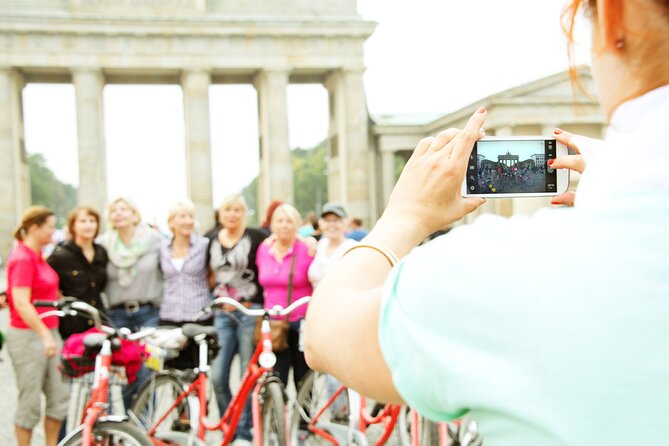
Berlin is big, and the center is spread out. On a bike, you get a practical sweet spot: enough time to move between major landmarks, without the fatigue of a half-day ride. This is especially helpful if it’s your first time in town and you want an overview that feels more than just postcard points.
The “private” part matters too. In a shared tour, you often spend time waiting or adjusting around other groups. Here, you ride with only your group, so your guide can set a pace that works for your comfort level and answer your questions as they come up. It also makes the experience feel less like a checklist and more like a guided walk, just with two wheels.
And yes, Berlin is a city where weather can change fast. This operates in all weather conditions, so you’ll want to dress for the day you get, not the weather forecast you hope for.
Price and value: what you’re really paying for at $107.77
At $107.77 per person for about three hours, this isn’t the cheapest way to see Berlin. But it can be good value because several cost drivers are handled for you:
- Bike and helmet are included, which saves you from rental hunting and timing delays.
- A professional guide is included, and that’s where the money tends to show. Berlin’s best moments are often the “why” moments, not just the “what.”
- The route follows the Free-Berlin concept, where each guide designs their own path. That helps prevent the feeling that you’re on a scripted drive-through.
There’s also a hint that demand is real: it’s booked on average 21 days in advance. If your dates are fixed, planning ahead pays off. Group discounts are part of the offer too, which can make the price feel more reasonable if you’re traveling with friends or family.
Meeting on Poststraße 11 and keeping the day simple
Your starting point is Free Berlin Bike Tours & Rental, Poststraße 11, 10178 Berlin. The tour ends back at the meeting point, so you don’t have to worry about figuring out a separate pickup location.
No hotel pickup or drop-off is listed, so you’ll want to arrive on your own using public transit. The good news: the meeting area is near public transportation, which is one of those small things that can turn a good plan into an easy day.
The tour is also flexible about timing in a practical way. If you want a different start time, the operator says you can email or call to request it. That matters in Berlin, where museums, meals, and evening plans can shift around.
Stop-by-stop: Berlin’s center, from old-town vibes to Cold War edges
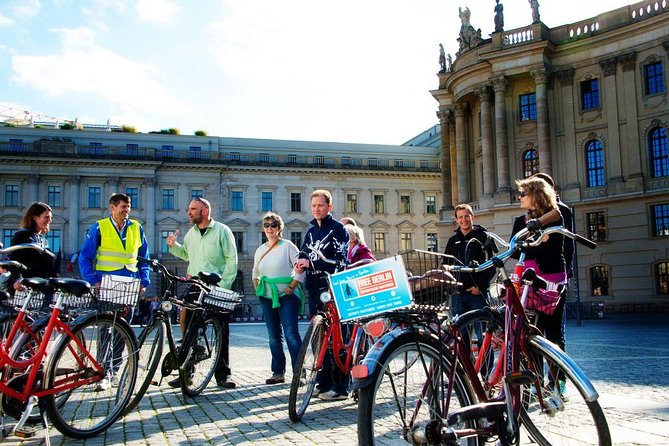
This tour is paced as short, focused stops—think quick orientation plus guide-led storytelling—so you don’t get stuck staring at one location for too long. Many stops are about 10 minutes, which keeps the tour moving while still giving you time to look up, not just bike forward.
More of Berlin by bike


Nikolaiviertel: where old Berlin vibes come from
You start at Nikolaiviertel, described as the place where it all began, with a lovely old-town atmosphere. The note about it being created in the late eighties tells you what to expect: this is a carefully shaped historic-feeling area rather than untouched medieval leftovers. Still, it’s a great warm-up. It gives you a human scale and a sense of Berlin’s layers before you hit the big political landmarks.
TV Tower area: a skyline marker with a date attached
Next, the TV tower is singled out, with the detail that it was the second tallest in the world at its opening in 1969. This is one of those facts that makes the skyline feel less random. When you know a building’s “first day” story, you start seeing it like a landmark, not just background.
Bebelplatz book burning memorial: the view, then the shock
At Bebelplatz, you’ll stop at the book burning memorial, including a wider panorama described with landmarks around the square: Berlin’s oldest university, the old opera, a Catholic cathedral, a hotel that once served as a bank, and a guard’s house shaped like a temple. It’s “classic center” geometry—axes, buildings, and institutions close together—so it’s a strong place for a guide to connect architecture to ideology.
Then comes the crucial part: this is also where the Nazis showed their evil nature by burning thousands of books in public. Because this kind of history is heavy, you’ll get more out of it if you give yourself a moment to slow down and let the explanation land before you move on.
The Nobel-and-ideas stop: where big names learned to think
A key stop follows with the claim that more than 25 Nobel Prize winners have been connected to the area, including Albert Einstein and Karl Marx. The point isn’t just star power; it’s the idea that Berlin became a magnet for scholarship and debate. When your guide ties this to what you’re seeing nearby, Berlin’s academic identity clicks into place fast.
Checkpoint Charlie (English version only): the Cold War made physical
Checkpoint Charlie is included only in the English version. If Cold War history is high on your list, this is the moment to choose the right language. It’s one of Berlin’s most recognizable border stations, but the real value is the way a guide helps you picture the geography of division and the lived pressure of that period.
Even if you’ve read about the Cold War before, this kind of place makes the story spatial. You can stand where people once had to decide what to do next.
Unter den Linden: Berlin’s grand boulevard with a modern add-on
At Unter den Linden, your guide frames it like Berlin’s Champs-Élysées, while also pointing out that a subway line has recently been added. That’s a good reminder: this city keeps changing while keeping the big avenues.
You’ll also hear a preference for biking off the busiest pedestrian paths. That matters. Berlin’s “main streets” can be loud and packed, so taking calmer routes helps you stay focused on what you’re looking at.
Potsdamer Platz: traffic today, division yesterday, rebuilding forever
At Potsdamer Platz, the tour connects three time layers: roaring street life, the “no man’s land” reality during Berlin’s division, and the huge rebuilding story around the turn of the millennium. This stop works well on a bike because the area is open enough for quick orientation, while the surrounding history is dense enough that your guide can do real work.
This is also one of the spots where you can feel how Berlin tried to patch together two halves—and how complicated that attempt still is in the streets around you.
History that can’t be rushed: Holocaust Memorial and the Germany of today
Two stops carry extra weight, and the tour format helps because you’re not forced to “power through” with zero context.
Holocaust Memorial: a place to pause, not just pass
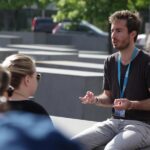
The Memorial to the Murdered Jews of Europe is the kind of stop where the guide’s framing matters. Germany’s approach here is described as a refusal to bury the dark past, paired with learning from it. You’ll get more from this if you let it be quiet in your head for a minute.
On a bike tour, it’s tempting to keep moving. But you’ll want to treat this as a short visit with full attention, not a quick photo stop.
Reichstag Building: the transparent dome and the point of transparency
At the Reichstag Building, you see Germany’s parliament and get the image of the modern government quarter around it. The transparent dome is mentioned directly, and that detail is key: it’s a physical symbol of openness, placed right where political decisions happen.
If you’re the kind of person who likes “what’s true” over “what sounds true,” you’ll appreciate the note that there are lots of jokes about the German White House, and many aren’t accurate. Your guide’s job here is to separate myth from reality, and that’s part of why the stop feels smarter than it looks.
Brandenburg Gate, Museum Island, and a quick taste of Berlin’s neighborhoods
The tour’s final stretch brings the skyline icons back into focus, then adds a cultural finish.
Brandenburg Gate: the icon with many reasons
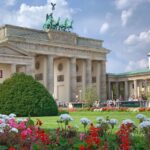
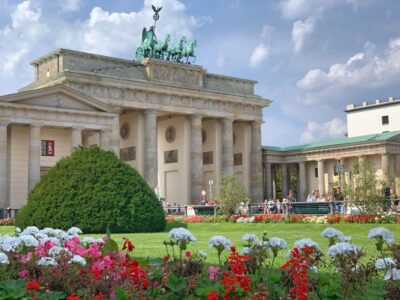
At Brandenburg Gate, you get the obvious title: THE icon of Berlin. But the guide’s job is to make sure it’s not just a photo moment. The location and the surrounding political history are part of the experience, and on this tour, you’ve already built up context from earlier stops, so it lands better.
Tiergarten stop: the Garden of the Animals clue
Then there’s a park break described as one of Berlin’s biggest parks, with the note that its name, Garden of the Animals, has no relation to its former use as a zoo. That’s an interesting little reality-check detail. In Berlin, names often keep old stories even when the actual use has changed.
This stop also functions as a breather. After the more intense history moments, a park pause helps you reset before the tour ends.
Prenzlauer Berg (German version only): reunification made visible
Prenzlauer Berg is included only in the German version. The tour describes it as a clear example of transformation since reunification, with a bohemian flavor that gives you answers about how the city evolved. If neighborhood feel matters to you, this is a strong reason to choose the version that includes it.
Museum Island: Spree Athens architecture
At Museum Island, you get architecture called “Spree Athens.” Even if museums aren’t your thing, the island’s building scale and style give you that big-city cultural sense in a short time. It’s a nice way to end with “Berlin’s mind” after seeing “Berlin’s politics” and “Berlin’s history.”
How to get the most from a short ride (without feeling rushed)
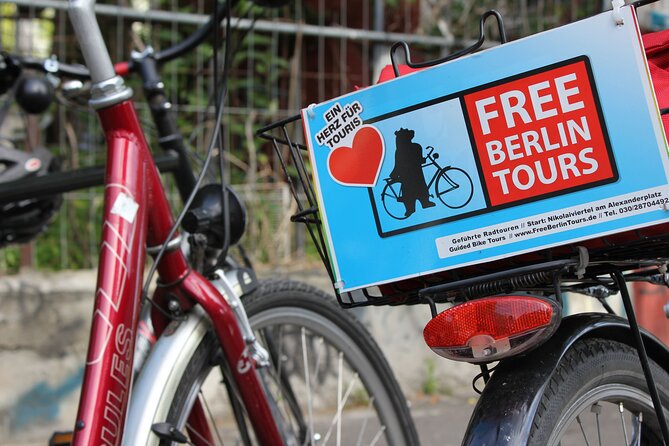
A 3-hour bike tour can feel like a whirlwind if you treat it like a marathon. The trick is to decide what you want from it.
If you want context fast, lean into the guide questions. The tour is private, so asking about why certain buildings or squares look the way they do is usually welcomed.
If you want photos, plan to take fewer, better ones. With short stops, you’ll enjoy yourself more if you get one or two strong images and then spend the remaining time listening.
Also, this is built for safe, easy pacing. Bike and helmet are provided, and the format is designed to be family-friendly—children are welcome, and infant seats can be provided on request.
One more practical note: the itinerary includes some very emotional stops. Don’t schedule anything intense right after the tour if you can help it. A long walk, a coffee, and a little quiet time can be a good follow-up.
Should you book this Berlin highlights bike tour?
Book it if you want a high-impact overview of central Berlin in about three hours, with a real guide and bike + helmet included. It’s also a smart choice if you like your sightseeing with explanations, not just visuals—especially around Bebelplatz, the Holocaust Memorial, and the Reichstag.
Skip or adjust if:
- You care specifically about Checkpoint Charlie or Prenzlauer Berg and need the right language version to include your must-sees.
- You prefer a slower pace with longer time at fewer sites. This tour is designed to move, and the stops are intentionally short.
If you’re planning your first Berlin days, I’d treat this as an opening chapter. You’ll leave with a clearer sense of where the city’s stories happened, and that makes the rest of your trip easier to navigate.
FAQ
How long is the Berlin guided private bike tour?
It runs for about 3 hours.
How much does the tour cost?
The price is $107.77 per person.
Is the tour private?
Yes. It’s a private tour/activity, so only your group participates.
What’s included with the tour?
You get a professional guide, use of a bicycle, and use of a helmet.
Where does the tour start and end?
The tour starts at Free Berlin Bike Tours & Rental on Poststraße 11, 10178 Berlin, and it ends back at the same meeting point.
What language is the tour offered in?
The tour is offered in English. The description also notes that certain stops are tied to the English vs German version.
Do kids get to join?
Yes, it’s family-friendly. Children must be accompanied by an adult, and infant seats can be provided on request.
Are food and drinks included?
Food and drinks are not included unless specified.
Is the tour affected by weather?
It operates in all weather conditions, so you should dress appropriately.
More Tour Reviews in Berlin

Berlin by Bike
Berlin's Icons and Its Quiet Corners
Round out your days in Berlin
Berlin Highlights & Hidden Gems, compared.
 ★ 4.9Discover Berlin Walking TourFrom $235,998 reviews
 ★ 4.8Hidden Backyards Guided Walking TourFrom $235,360 reviews
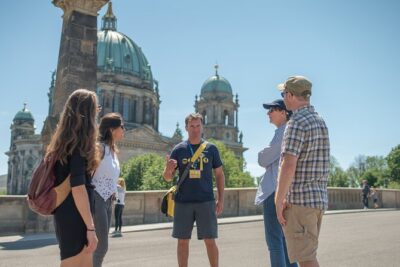 ★ 5.0Explore Berlin: See All The Iconic Sights & Some Hidden GemsFrom $244,429 reviews
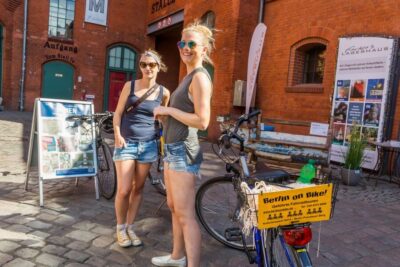 ★ 4.8Sights and Highlights Bike Tour with a Local GuideFrom $412,698 reviews
★ 4.9Explore Berlin: See All The Iconic Sights & Some Hidden GemsFrom $182,018 reviews
★ 4.8Sights and Highlights Bike Tour with a Local GuideFrom $412,698 reviews
★ 4.9Explore Berlin: See All The Iconic Sights & Some Hidden GemsFrom $182,018 reviews
 ★ 5.0Berlin Highlights 3-Hour Bike TourFrom $42948 reviews
★ 4.9Berlin Highlights: 3-Hour Bike TourFrom $37809 reviews
★ 5.0Berlin Highlights 3-Hour Bike TourFrom $42948 reviews
★ 4.9Berlin Highlights: 3-Hour Bike TourFrom $37809 reviews
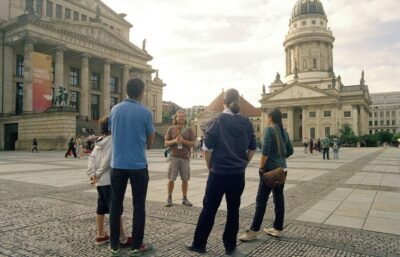 ★ 4.9Berlin Historical Highlights Walking TourFrom $389657 reviews
Browse the lists this tour appears in