
REVIEW · WALKING TOURS
Berlin: Guided Walking Tour in English
Berlin has layers. This walk makes them make sense. In just 2.5 hours, you’ll follow a clear timeline through the city’s most important places, with the guide’s stories stitching eras together. I love how the route balances famous landmarks with the logic of how Berlin changed over time, and I especially like the open-feeling stop at Museum Island, where the views feel like a breather between heavy topics. One thing to consider: it’s a walking tour, and one booking noted there isn’t much built-in time for a quick drink or restroom break, so plan accordingly.
What makes this experience particularly useful is that it’s not just a list of stops. You start near Alexanderplatz, work your way through central streets and major squares, then end at the Brandenburg Gate—so you don’t just see Berlin, you understand the sequencing. Guides reported on similar tours include JR (J.R.), Ru, Jule, and Will, and the common thread is how they connect big history to what you’re looking at right now. If you’re sensitive to cold or long stretches on foot, dress for weather and keep moving with the group.
In This Review
- A Timeline You Can Actually Follow (Not Just Photo Stops)
- Meeting at Rotes Rathaus: Easy Start, Clear Orientation
- Alexanderplatz to Berlin’s Old Roots: TV Tower Meets Medieval Bits
- The Hohenzollern Palace Controversy: Why Reconstruction Still Matters
- Museum Island and Berlin Cathedral Views: A Breathing Space
- Cutting Through Central Streets: How the City Shapes the Story
- Gendarmenmarkt: The Pretty Square That Carries Real Weight
- Checkpoint Charlie: Where Berlin Wall History Becomes Concrete
- The Place of Hitler’s Bunker: Remembering Without Theater
- Brandenburg Gate: The Tour’s Final Symbol of Unity
- Price and Value: Why $31 Works If You Want Context
- What I’d Do to Make This Tour More Comfortable
- Who This Tour Fits Best
- Should You Book This Berlin Walking Tour?
- FAQ
- How long is the Berlin guided walking tour in English?
- Where is the meeting point?
- Is the tour conducted in English?
- Is food or drinks included?
- Is there hotel pick-up?
- What should I bring?
- Is the tour wheelchair accessible?
- Is there free cancellation?
- Can I reserve and pay later?
- Is this a pay-what-you-wish style tour?
A Timeline You Can Actually Follow (Not Just Photo Stops)
The best walking tours do one job well: they help you see how the city developed. This one is designed as a chronological narrative, which means you’re constantly anchored in what came before and what changed next. That approach matters in Berlin, because it’s easy to look at a facade and miss the deeper context.
I also like the pacing of the “arc” of the tour. You start at the edges of the historical center, then move inward toward key cultural sites, then cut back to the most symbol-heavy modern landmarks. By the time you reach the Brandenburg Gate, the story has already built up momentum. It feels less like a graduation ceremony and more like watching a timeline click into place.
The day’s cast of characters isn’t just old kings and modern politicians. You’re also dealing with reconstructions, controversial choices, and places tied to Germany’s darkest chapters. That can feel heavy, but the route keeps the focus practical: you’ll know why these spots matter.
More of Berlin on foot
- Discover Berlin Half-Day Walking Tour★ 5.0 · 9,624 reviews
- Berlin City walk Government District and Places of Democracy★ 4.7 · 8,467 reviews
- Berlin: Third Reich & Cold War Guided Walking Tour★ 4.9 · 8,378 reviews
- Berlin: Discover Berlin Walking Tour★ 4.9 · 5,998 reviews
Meeting at Rotes Rathaus: Easy Start, Clear Orientation
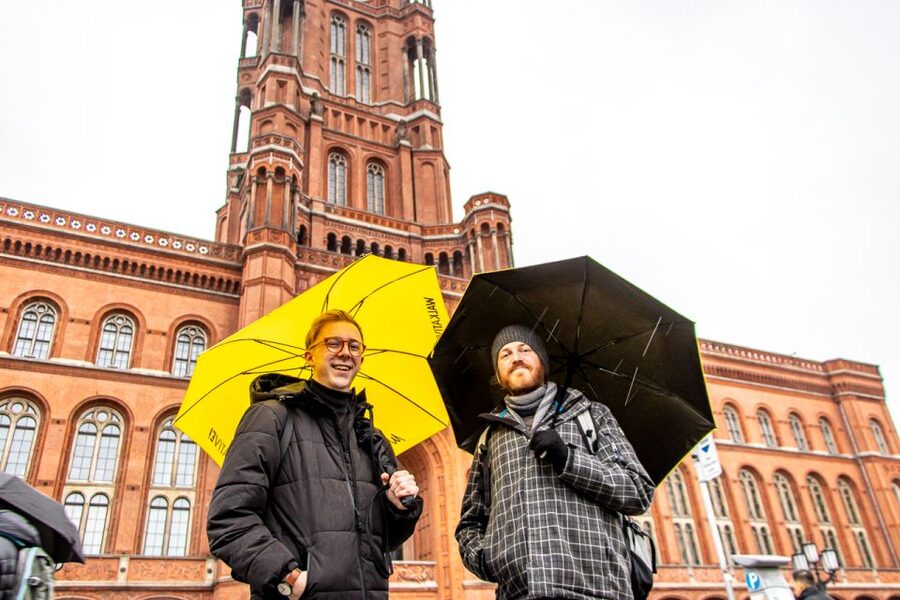
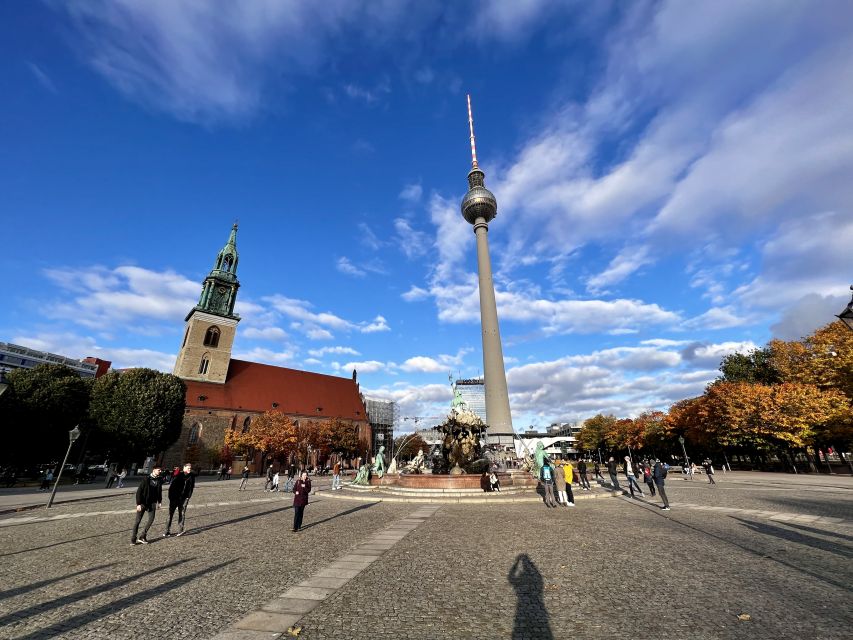
You meet in front of the Rotes Rathaus (Red Town Hall), close to the TV Tower and the Neptune Fountain. This is a good start point because it’s recognizable, central, and it helps you orient fast.
Arrive about 10 minutes early so you’re not rushing into the story. Starting on time matters on a walking tour like this, since your guide will likely want to hit key street segments while the group is still together. There’s no hotel pickup, so come ready to walk from the meeting area.
Also note the tour is in English and is wheelchair accessible, which is a real plus if you want a guided history without sacrificing mobility.
Alexanderplatz to Berlin’s Old Roots: TV Tower Meets Medieval Bits
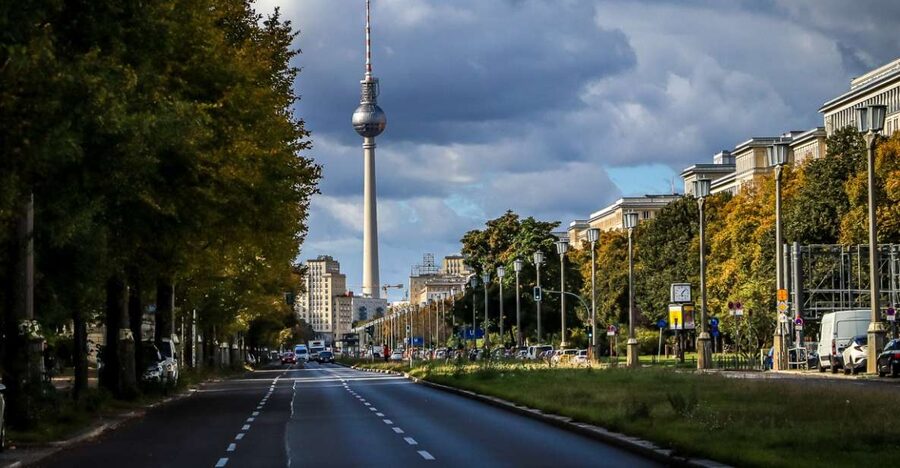
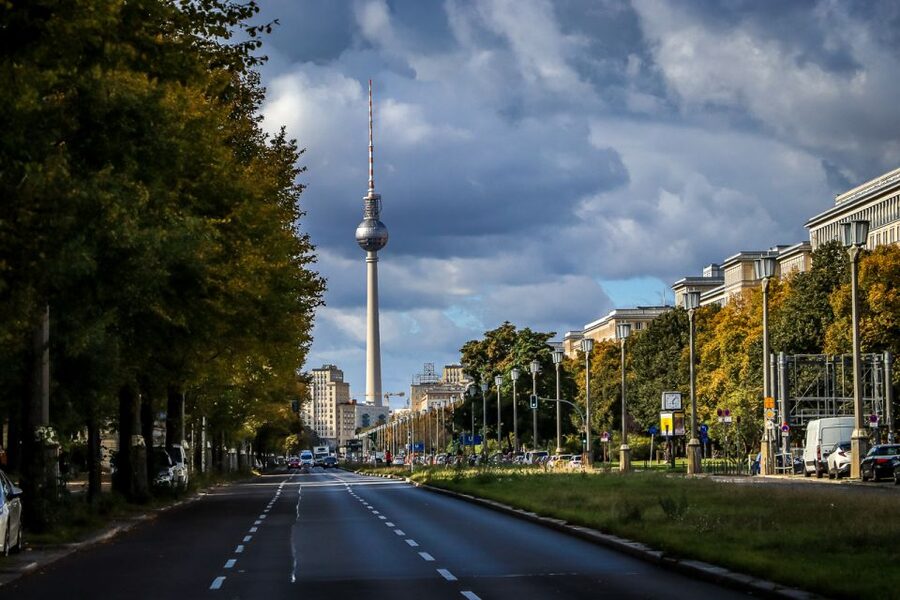
After the start near Rotes Rathaus, the route moves toward Alexanderplatz, one side of Berlin’s historical core. You’ll see the TV Tower, which is one of the most instantly identifiable silhouettes in the city.
Then you’ll also spot what’s left from the small town Berlin was for much of its early history—these are the kinds of remnants that can be easy to miss when you’re sightseeing on your own. What I like here is that your guide points out the contrast: modern Berlin isn’t just tall buildings; it sits on top of older layers.
Even if you know Berlin’s general outline, this part helps you build a mental map. You begin to understand where the city’s growth tightened and where it opened up.
The Hohenzollern Palace Controversy: Why Reconstruction Still Matters
Next, you pass by the reconstructed former Royal Palace of the Hohenzollern. The word controversial is part of the point here. Reconstructions in Berlin aren’t just aesthetic choices—they’re tied to how people want to interpret history now.
This is one of those moments where a guided explanation changes everything. Without context, you might treat it like any impressive building. With context, you’ll see it as a decision about memory: what gets rebuilt, what gets emphasized, and what message that sends.
It’s a good reminder that Berlin isn’t frozen in time. The city actively debates its own past.
Museum Island and Berlin Cathedral Views: A Breathing Space
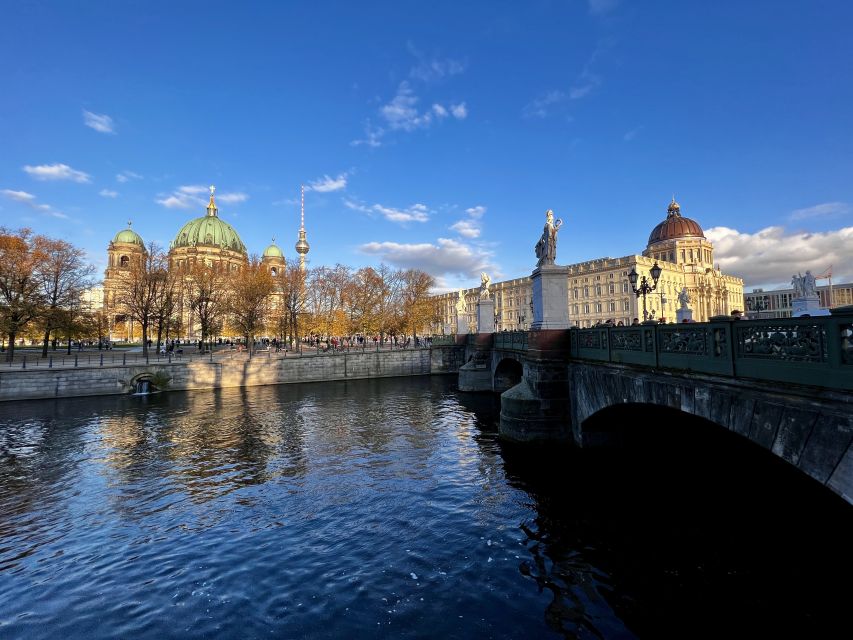
Then comes one of the most enjoyable sections of the route: the open space of Museum Island with a strong view of the Berlin Cathedral. This stop works on two levels.
First, it’s visually rewarding. Museum Island is the kind of place where the space around you helps the history feel more navigable, not cramped. Second, it functions like a reset button. After politically loaded themes, you get a wide horizon and a sense of scale.
You’ll also pass by Humboldt University, another anchor point in Berlin’s identity as a center of learning and ideas. Even if you don’t study your way through Berlin, you’ll feel how education and culture show up in the city’s layout.
More guided walks through Berlin





Cutting Through Central Streets: How the City Shapes the Story
Between the big anchor sites, the tour includes walking through the maze of central streets. This isn’t random. Guides use street patterns to connect you to how Berlin’s neighborhoods and centers operate in real life.
As you move along, you’ll be looking for squares and transitions—places where the city opens up and the architecture shifts. This is where the tour’s chronological format stays practical: you’re not just moving from one monument to another; you’re passing through the connective tissue of Berlin.
If you like learning how a city works day-to-day, this segment is where you’ll feel that “oh, that’s why the map looks like this” click.
Gendarmenmarkt: The Pretty Square That Carries Real Weight
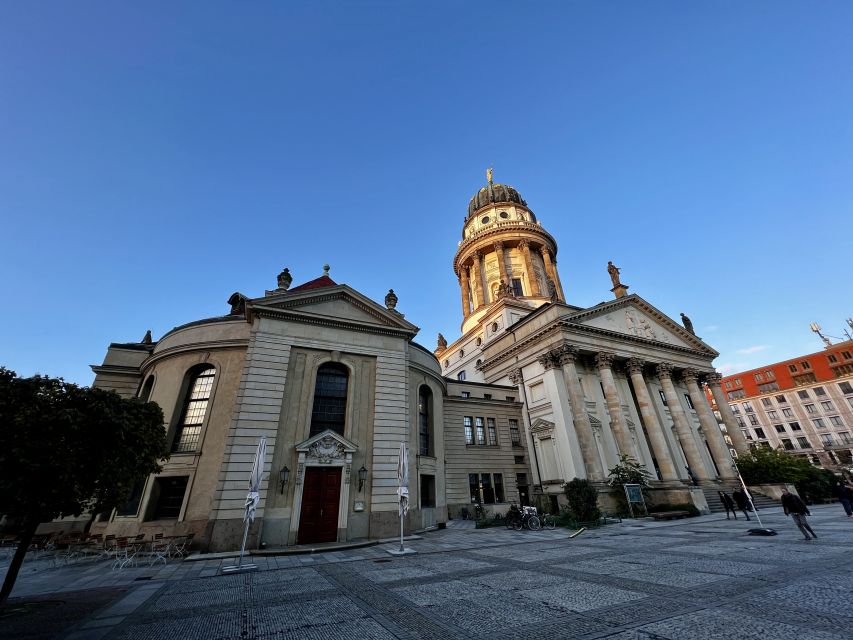
One of the highlights is Gendarmenmarkt, described as the prettiest of Berlin’s squares. It’s a beautiful stop, yes—but what makes it more interesting on a guided tour is the way beauty and history are sitting side by side.
Squares like this are often where Berlin displays identity through architecture and public space. In other words, this isn’t just a photo opportunity. It’s a place designed for people to gather, and it helps you understand how Berliners thought about order, culture, and public life at different points in time.
If your schedule is tight, you’ll still appreciate this stop because it gives your legs and eyes a positive moment in the middle of a heavier route.
Checkpoint Charlie: Where Berlin Wall History Becomes Concrete
After Gendarmenmarkt, you learn about the Berlin Wall at Checkpoint Charlie. This is one of the most symbol-heavy areas in the city. Standing near the spot where it’s explained, you start getting a clearer idea of what the Wall meant in daily life—how division wasn’t abstract, it was embodied in checkpoints and movement rules.
A guided walk is especially helpful here because you’re not just trying to figure out what you see. You need someone to connect the story to the exact location. The result is that the Wall becomes more than a dramatic image—it becomes a lived system.
If you’re fascinated by Cold War history, this section will feel like the tour’s central “turn.” It’s a pivot from the city’s cultural identity into the consequences of political power.
The Place of Hitler’s Bunker: Remembering Without Theater
Then you pass by the location where Hitler’s former bunker stood. This is the part of Berlin many people find emotionally difficult. The guide’s job here is to keep the focus on facts and meaning, not on spectacle.
What I appreciate about having this placed in the middle-to-late part of the timeline is that it avoids turning history into a disconnected horror stop. You’ve already seen the evolution of Berlin’s identity, the pressures that shaped Europe, and the Wall era that followed. So when you get to the bunker site, it feels like part of a chain, not a random shock moment.
It’s a tough segment, but it’s also an important one. You leave with a clearer sense of why Berlin’s later symbols of unity mattered so much.
Brandenburg Gate: The Tour’s Final Symbol of Unity
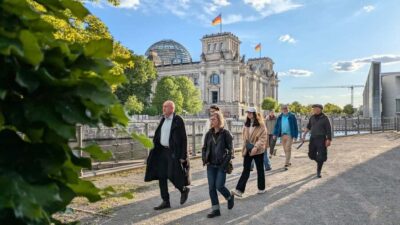
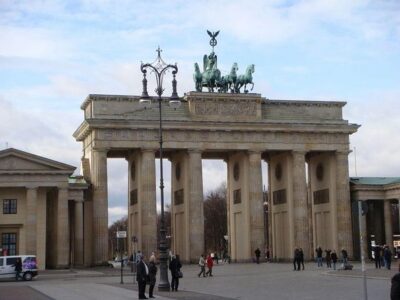
The tour ends at the Brandenburg Gate, a symbol of unity for Germany and Europe, with its open classical archways. This ending works well because you’ve already covered division (Checkpoint Charlie and the Wall era) and you’ve walked through Berlin’s shifting relationship with the past.
The gate is also a great final “reading” point. After the tour, you can stand there and think: how does the city want to be seen now? What does it choose to emphasize? What does it keep in view?
This stop is big and famous, yes, but it isn’t just about taking pictures. It’s about how the story you heard earlier changes what you notice in the architecture and setting.
Price and Value: Why $31 Works If You Want Context
At about $31 per person for a 2.5-hour guided walking tour, the value is strongest if you care about understanding more than collecting landmarks. Berlin’s history isn’t short, and on your own you’d likely spend time piecing together the timeline from multiple sources.
Here’s the practical angle: this tour gives you a structured story and an English-speaking local guide, which usually costs far more if you add up the time, effort, and head-scratching. Also, the tour is described as a general pay as you wish format: the amount you pay covers the reservation fee and the guide’s payment. That means the upfront cost isn’t meant to be the only financial support for the guide’s work.
If you enjoy asking questions and getting direction on what to explore next, you’ll feel like the money went to something useful. If you just want quick photos and zero talking, then you might feel the cost is less justified.
What I’d Do to Make This Tour More Comfortable
Comfort is the difference between a tour you love and one you tolerate.
Plan for real walking. The tour is 2.5 hours, and it moves through streets and squares. Wear weather-appropriate clothing and be ready for conditions—one booking specifically mentioned how the guide was mindful of cold weather, but that’s still on you to dress for.
Also, bring the basics you’d bring anywhere:
- Water you can carry if you need it
- A simple layer you can take on/off
- Patience around restroom timing, since one booking said it would have been nice to have planned time for a drink and restroom
If you’re traveling with kids, consider whether they can handle a history-focused walk. This is best for adults and older teens who want context and are comfortable moving steadily through central Berlin.
Who This Tour Fits Best
This walking tour is a great fit if you want:
- A chronological overview of Berlin’s history without doing research ahead of time
- Clear explanations tied to landmarks you can see and revisit later
- An efficient route: major sites, major themes, in one morning or afternoon window
You’ll especially enjoy it if Berlin’s history feels overwhelming. The guide’s structure helps you stop thinking in random facts and start thinking in sequences.
It may be less ideal if you want a casual stroll with minimal discussion, or if you need frequent breaks built into the schedule.
Should You Book This Berlin Walking Tour?
Yes—if you want context, this is an easy decision. Starting at Rotes Rathaus near the TV Tower and Neptune Fountain gives you a clean launch point. The route’s mix of Museum Island views, Gendarmenmarkt, Wall history at Checkpoint Charlie, the bunker site, and the Brandenburg Gate creates a full arc that stays coherent.
Book it if you value an English guide who can connect what you see to why it happened. Also, if you plan to explore Berlin for a few days after this, you’ll likely find the tour helps you navigate where to go next with more confidence.
Skip it only if you’re not interested in a history-led route, or if your priority is quick photos and rest breaks over guided storytelling.
FAQ
How long is the Berlin guided walking tour in English?
The tour lasts 2.5 hours.
Where is the meeting point?
You meet in front of the Rotes Rathaus (Red Town Hall), close to the TV Tower and Neptune Fountain.
Is the tour conducted in English?
Yes, the live tour guide speaks English.
Is food or drinks included?
No. Food and drinks are not included.
Is there hotel pick-up?
No, hotel pick-up is not included.
What should I bring?
Bring weather-appropriate clothing.
Is the tour wheelchair accessible?
Yes, the tour is wheelchair accessible.
Is there free cancellation?
Yes. You can cancel up to 24 hours in advance for a full refund.
Can I reserve and pay later?
Yes. You can reserve now and pay later.
Is this a pay-what-you-wish style tour?
It’s described as a general pay as you wish tour. The amount you pay covers the reservation fee and the guide’s payment, and you choose how to reward the guide.
More of Berlin on Foot



More Tours in Berlin




More Tour Reviews in Berlin

Round out your days in Berlin
Walking Tours, compared.
 ★ 4.7Berlin City walk Government District and Places of DemocracyFrom $2948,467 reviews
 ★ 4.9Third Reich & Cold War Guided Walking TourFrom $238,378 reviews
 ★ 4.9Discover Berlin Walking TourFrom $235,998 reviews
 ★ 5.0Berlin’s Best: 2 Hour Walking Tour Third Reich and the Cold WarFrom $245,486 reviews
 ★ 4.8Hidden Backyards Guided Walking TourFrom $235,360 reviews
 ★ 5.0Third Reich Berlin: Hitler and WWII Walking TourFrom $243,301 reviews
 ★ 4.9Third Reich, Hitler, and WWII Walking TourFrom $191,757 reviews
 ★ 4.6Alternative Berlin Walking TourFrom $291,204 reviews
Browse the lists this tour appears in