
REVIEW · BERLIN HIGHLIGHTS & HIDDEN GEMS
Berlin Highlights Private Guided Walking Tour
Berlin’s biggest symbols come fast on foot. This private walking tour strings together Berlin’s turning points, from Pariser Platz to the Reichstag, with the Cold War and WWII story explained between landmarks. I especially like that most major stops are free to enter, so you’re paying for the guide and the walking route, not ticket fees. I also like the way the tour can be tailored, with guides using questions, photography time, and an adjustable pace to keep your group engaged.
One thing to consider: this is still a walking experience. There are reports of timing running shorter than advertised, and a couple of guests were caught off guard when they expected a vehicle and had to handle the full walk themselves—so be clear about what you’re booking and bring comfortable shoes.
In This Review
- Key highlights to know before you go
- A 4-hour Berlin highlights walk built around meaning, not just stops
- The route: what you’ll see from Pariser Platz to Museum Island
- Pariser Platz: where the story opens
- Reichstag Building: power, fire, and the glass dome
- Brandenburg Gate: from division to reunified symbol
- The Holocaust Memorial: a place that refuses simple viewing
- Führerbunker: the final-days reality check
- Potsdamer Platz: from busy crossroads to modern Berlin
- Memorial of the Berlin Wall: what’s left and what it means
- Checkpoint Charlie: Cold War symbolism in plain sight
- Gendarmenmarkt: elegant squares, two cathedrals, one atmosphere
- Bebelplatz: a university square and a dark book-burning chapter
- Unter den Linden: the royal boulevard that ties it together
- Museum Island: UNESCO walls and curated memory
- Why the guides matter: pace, questions, and real storytelling
- Price and value: what you’re paying for with a $417 group rate
- Logistics you should plan for: walking, pickup, and start time clarity
- Who this tour fits best
- Should you book this Berlin Highlights Private Guided Walking Tour?
Key highlights to know before you go
- Private, small-group pace: your guide sets the rhythm for your interests and questions
- Iconic landmarks, mostly free entry: expect stops like Brandenburg Gate, Reichstag, and the Holocaust Memorial
- WWII and Cold War context in one route: stories connect the sites instead of treating them like checkboxes
- A guided photo-and-history approach: some guides actively help you find angles and details
- Good mix of monuments and daily-life city squares: from Gendarmenmarkt to Potsdamer Platz
The big Berlin sights, and a few quieter corners
- Berlin: Discover Berlin Walking Tour★ 4.9 · 5,998 reviews
- Berlin: Hidden Backyards Guided Walking Tour★ 4.8 · 5,360 reviews
- Explore Berlin: See All The Iconic Sights & Some Hidden Gems★ 5.0 · 4,429 reviews
- Berlin: Sights and Highlights Bike Tour with a Local Guide★ 4.8 · 2,698 reviews
A 4-hour Berlin highlights walk built around meaning, not just stops
This tour is built for people who want the famous Berlin landmarks, but also want the why behind them. You’ll move through the city’s key squares and memorials, and the guide ties each one to the political shifts that shaped modern Germany. Think of it like a timeline you can walk through: royal power, Nazi rule, destruction and division, then reunification.
Because it’s private (your group only), it’s not one of those tours where everyone gets shoved into the same pace. Guides can slow down for questions, speed up for photo breaks, and adjust to what matters most to you—history, culture, and even what you want to capture with your camera.
The route is also designed to make the big sights feel manageable. Most of the stops are close enough that you don’t lose the whole afternoon in transit. And with free admission at the listed sites, you spend your time on the streets and at the monuments rather than chasing ticket counters.
The route: what you’ll see from Pariser Platz to Museum Island
The tour starts at Brandenburg Gate, Pariser Platz (10117 Berlin) and ends back at the meeting point. Pickup is offered: you’ll be met at your accommodation or at a chosen meeting point before visiting several areas along the route. The tour is offered in English, and you’ll receive a mobile ticket.
The pacing includes short stops (often 10–20 minutes) that add up to about 4 hours. That duration is advertised as approx. 4 hours, but a few people have noted it can come in closer to 3. Build in some flexibility.
Here’s what the tour covers, in the order you’ll typically encounter it:
Pariser Platz: where the story opens
You start at Pariser Platz, Berlin’s prestigious square at the end of Unter den Linden. This is your launchpad toward the Brandenburg Gate, so your guide can set the scene before you even reach it. It’s also a good first stop to get your bearings: you’re positioned right at the edge of the boulevard that leads you straight into the heart of the city’s historic core.
Reichstag Building: power, fire, and the glass dome
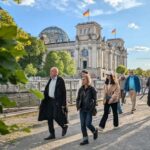
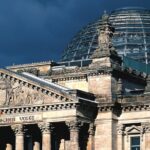
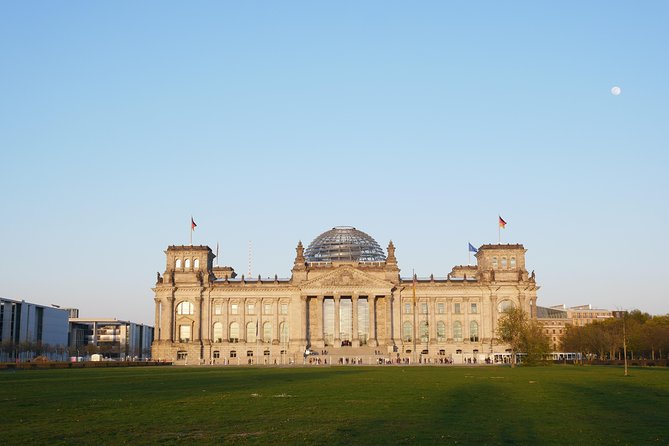
Next up is the Reichstag Building, Germany’s parliament building. You’ll hear the story behind the Reichstag fire and how it enabled Hitler to take control. You’ll also get context about how this area became a focus during the Battle of Berlin, with German and Soviet forces fighting for the city.
Even if you don’t go inside, the glass cupola designed by British architect Sir Norman Foster is part of the explanation—an architectural symbol used to communicate transparency and a different Germany after reunification.
More of Berlin on foot


Brandenburg Gate: from division to reunified symbol
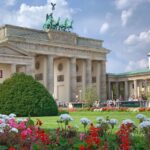
The Brandenburg Gate is the centerpiece. It started as a royal entrance for the Hohenzollern family and survived major shocks, including Napoleon-era turmoil and WWII. After the war, the Gate became trapped in the middle of the Berlin Wall for almost 30 years, turning into a powerful symbol of division.
Today, it’s presented as a symbol of a reunified Germany. The guide’s job here is to help you read the changes—what the stones mean after each era, and why this is still the postcard icon that matters.
The Holocaust Memorial: a place that refuses simple viewing
Then you’ll walk to the Holocaust Memorial (Memorial to the Murdered Jews of Europe), made up of massive stone stelae. It’s the central German memorial to Jewish victims of the Holocaust, and it’s designed so you can’t treat it like a sightseeing stop.
Expect reflective space and an explanation that connects the monument to the wider horror of Nazi persecution and genocide. This stop is short on the clock, but it’s not short on weight.
Führerbunker: the final-days reality check
The tour continues to Fuhrerbunker, the site where Hitler spent his final days and where he died by suicide during the last week of WWII in Europe. Today, it’s described as a parking lot with a simple sign, which makes the contrast hit harder.
That bluntness is often what makes the story stick: the guide explains how a place that was once central to Nazi control is now almost ordinary at street level.
Potsdamer Platz: from busy crossroads to modern Berlin
At Potsdamer Platz, you get a very different kind of history. The area was one of Europe’s busiest intersections in the 1920s with tens of thousands of cars crossing daily. Then WWII destroyed it almost completely. During the 1990s and early 2000s, it was rebuilt as one of Berlin’s modern precincts.
The guide’s explanations help you notice how the city layers time. You can look at something that feels contemporary and still understand it used to be a different world.
Memorial of the Berlin Wall: what’s left and what it means
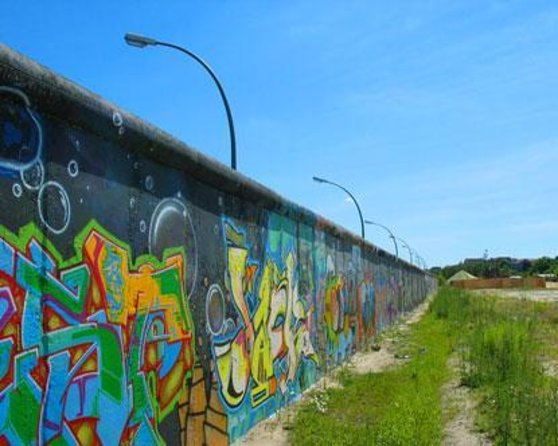
Next is the Memorial of the Berlin Wall, one of the three remaining stretches. This segment sits on the former site of Nazi power structures—SS and Gestapo headquarters—and it’s placed directly across from the monolith that was the Nazi Luftwaffe headquarters.
This is where the tour really becomes a lesson in geography. You’re not only visiting a wall; you’re standing between places of control and repression, and the guide helps you understand why the exact positioning matters.
Checkpoint Charlie: Cold War symbolism in plain sight
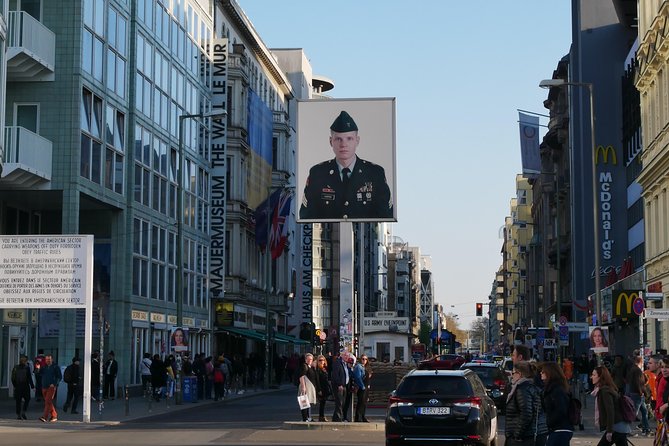
At Checkpoint Charlie, you’ll talk about the Cold War frontline. It was manned by the Americans and Soviets, and the guide helps you understand why this location became a worldwide symbol of tension.
Even with a short stop, it’s one of those places where your brain starts building the story back into the streets around you.
Gendarmenmarkt: elegant squares, two cathedrals, one atmosphere
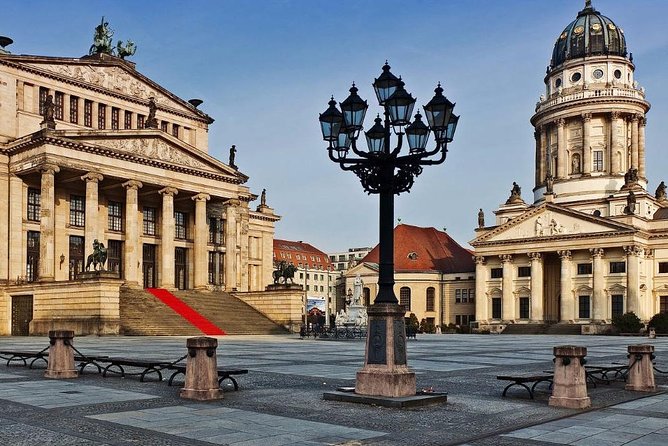
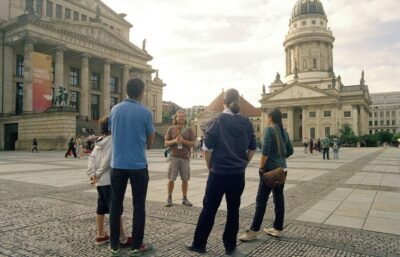
Then you reach Gendarmenmarkt, widely described as one of Berlin’s most beautiful squares. It’s home to the French and German Cathedrals and the Konzerthaus (Concert House). There are also gardens and statues, giving the area a calmer rhythm after the heavier sites.
This stop is valuable because it shows you Berlin’s cultural life, not only its political scars.
Bebelplatz: a university square and a dark book-burning chapter
At Bebelplatz, the guide connects old Prussian identity with later political manipulation. It was once Frederick’s Forum after Frederick the Great and is now linked with Humboldt University, the Opera House, the Royal Library, and Hedwig’s Cathedral.
This square is also where Nazi book burnings took place on May 10, 1933. The point is not just knowing it happened—it’s understanding how a society can turn knowledge into something to control.
Unter den Linden: the royal boulevard that ties it together
Finally, the tour moves along Unter den Linden, the royal boulevard connecting the Brandenburg Gate to Museums Island and the City Palace area. This segment is often less about one single monument and more about noticing the “spine” of Berlin—how the city was designed to project power, then rebuilt to project new values.
Museum Island: UNESCO walls and curated memory
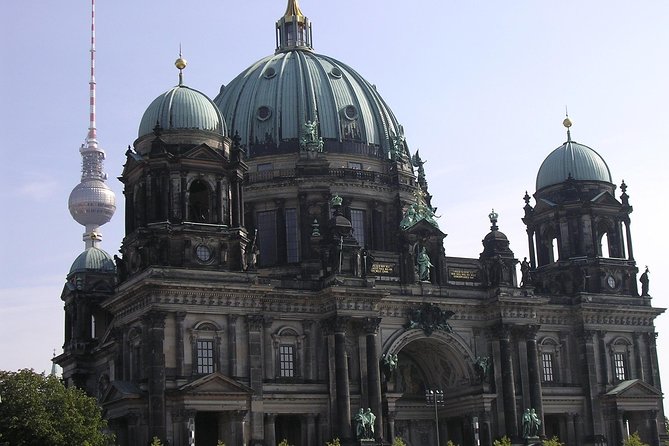
You end at Museum Island, a UNESCO World Heritage Site with six world-class museums. The area is also connected to the Berlin Cathedral and the newly rebuilt Hohenzollern city palace.
Even if you’re not entering museums, the guide’s explanation helps you see why this island matters. It’s both cultural prestige and a reminder that Germany’s story is told through institutions as much as through monuments.
Why the guides matter: pace, questions, and real storytelling
The strongest praise for this tour is consistently about the guide. People highlight guides who explain history in a way that feels connected, not memorized. Names that come up include Loana, James, Ben, Joana, Johnny, Sebastien, Pip, and Marcos.
Here’s what those guides tend to do well, based on the reported experience:
- They answer follow-up questions patiently, even when the questions get specific.
- They adjust pace based on what your group wants, including time for photos.
- They add side stories that help you understand the surrounding streets, not just the listed monument.
If you care about WWII and Cold War history, this is the sort of tour where the guide’s “thread” can make the city click. Instead of seeing 12 landmarks as unrelated photos, you start recognizing cause and effect—how one era’s decisions shaped what came next.
Price and value: what you’re paying for with a $417 group rate
The price is listed as $417.23 per group (up to 15) for about 4 hours. That means your cost per person depends heavily on how many people are in your group.
- If your group is small, the per-person cost is higher.
- If you’re traveling with others or can fill the group limit, the value can feel much stronger.
Either way, you’re paying for a private guide plus a walking route that covers major sites with free admission at each stop. In practical terms, that’s often cheaper than trying to piece together multiple individual experiences at each monument, plus it saves you from figuring out how to connect everything into a coherent story.
Also note: the tour is commonly booked about 21 days in advance on average. If your dates are tight, book early so you can choose the pickup arrangement that fits your location.
Logistics you should plan for: walking, pickup, and start time clarity
This experience is a private walking tour, and the description does emphasize pickup, meeting points, and mobile tickets. Still, it’s worth planning like it’s primarily a walk, not a ride.
A couple of practical tips based on what people ran into:
- Confirm the exact start address at Pariser Platz by the Brandenburg Gate.
- If you request pickup, make sure you understand whether it’s truly pickup at your accommodation or a meeting point along the route.
- Wear comfortable walking shoes. The itinerary is a lot of short walks between central locations.
If you have a knee or mobility issue, message the operator ahead of time. The tour says moderate physical fitness level is recommended, so you want a clear sense of pace and whether the route can work for you.
Who this tour fits best
This tour is a strong match if you:
- Want a Berlin highlights route without feeling like you’re fighting crowds.
- Like WWII and Cold War history but also want it connected to current city layout.
- Prefer a guide who can answer questions and slow down when you’re taking photos.
It’s also a good option for families, since some guides have kept a 12-year-old engaged while still delivering serious history to adults. If you’re traveling as a couple or small group, the private format can feel extra efficient because you aren’t waiting for a large group to catch up.
You might rethink it if:
- You’re expecting a vehicle/van tour rather than a walking one.
- Your mobility needs make long stretches of walking risky.
- Your schedule is strict to the minute, given that a couple of people noted the tour ran under the advertised 4 hours.
Should you book this Berlin Highlights Private Guided Walking Tour?
Book it if you want your Berlin day to feel like a guided story. The route hits the headline landmarks—Brandenburg Gate, Reichstag, Holocaust Memorial, and key Berlin Wall sites—while the guide helps you connect the political turns behind them. With mostly free entry at the listed stops and a private group format, it’s a solid value when you want both meaning and convenience.
Don’t book it if you’re not comfortable with walking or if you need a perfectly timed schedule with no flexibility. Also, double-check your pickup details and meeting location before you head out.
If you go in expecting a true walking tour with history as the main event, you’ll likely walk away with a much clearer sense of how modern Berlin was made.
More Tours in Berlin





More Tour Reviews in Berlin

Berlin's Icons and Its Quiet Corners

Round out your days in Berlin
Berlin Highlights & Hidden Gems, compared.
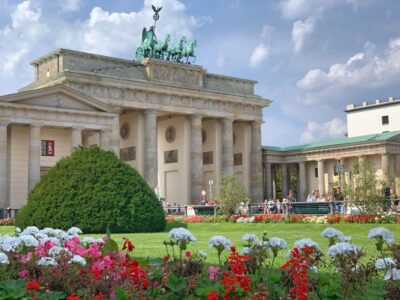 ★ 4.9Discover Berlin Walking TourFrom $235,998 reviews
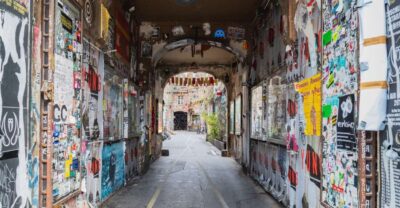 ★ 4.8Hidden Backyards Guided Walking TourFrom $235,360 reviews
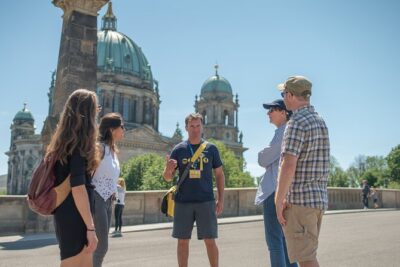 ★ 5.0Explore Berlin: See All The Iconic Sights & Some Hidden GemsFrom $244,429 reviews
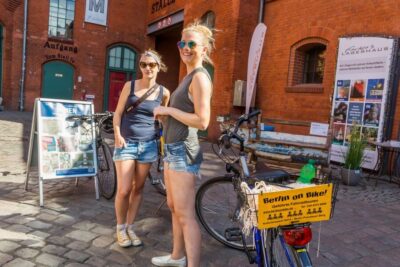 ★ 4.8Sights and Highlights Bike Tour with a Local GuideFrom $412,698 reviews
★ 4.9Explore Berlin: See All The Iconic Sights & Some Hidden GemsFrom $182,018 reviews
★ 4.8Sights and Highlights Bike Tour with a Local GuideFrom $412,698 reviews
★ 4.9Explore Berlin: See All The Iconic Sights & Some Hidden GemsFrom $182,018 reviews
 ★ 5.0Berlin Highlights 3-Hour Bike TourFrom $42948 reviews
★ 4.9Berlin Highlights: 3-Hour Bike TourFrom $37809 reviews
★ 5.0Berlin Highlights 3-Hour Bike TourFrom $42948 reviews
★ 4.9Berlin Highlights: 3-Hour Bike TourFrom $37809 reviews
 ★ 4.9Berlin Historical Highlights Walking TourFrom $389657 reviews
Browse the lists this tour appears in